Astronomical Events in February 2026: All About the Best Celestial Events This Month
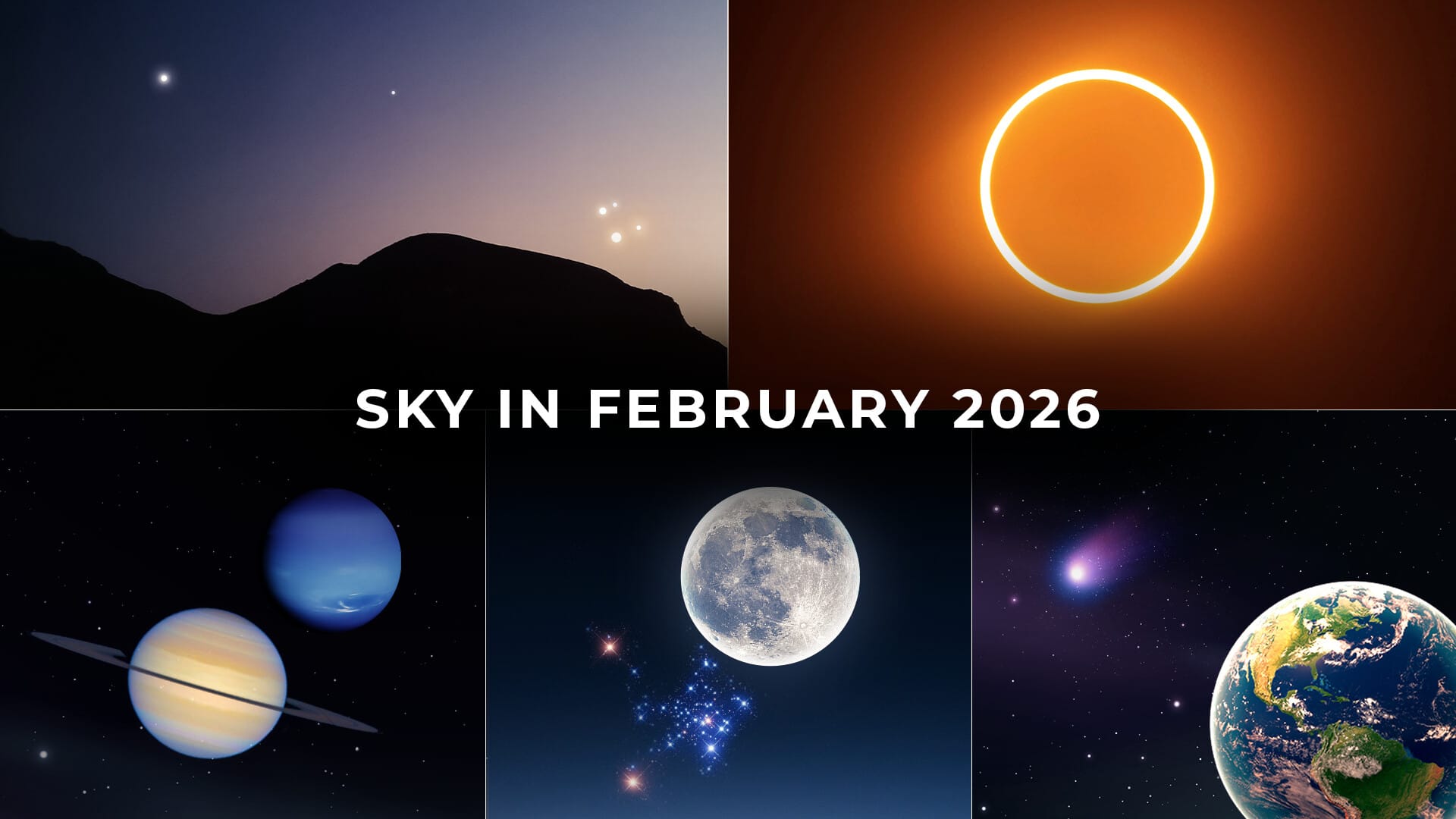
February 2026 gives skywatchers plenty of celestial events to enjoy. This month has it all: a solar eclipse and a rare six-planet lineup to Mercury’s prime time, and close encounters between the Moon, planets, and stars. In this guide, you’ll find the key dates, what to watch for, and when to look up — and you can use the Sky Tonight app to see exactly what’s visible from your location.
Contents
- Astronomical events in February 2026
- Moon events in February 2026
- Planet events in February 2026
- Constellations in February 2026
- Meteor showers in February 2026
- Comets in February 2026
- Deep-sky objects in February 2026
- What February sky events are visible from my city?
- February sky events 2026: bottom line
Astronomical events in February 2026
Here’s a quick calendar of all the astronomical events in February 2026. We’ve marked the most exciting ones with a star (🌟), but don’t skip the rest — they’re worth a look too! Tap any link to jump to an article with more details about the object or event, or keep reading to get a brief summary.
-
February 1:
-
February 3:
-
February 4:
-
February 7:
-
February 8:
Alpha Centaurid meteor shower peak (6 meteors per hour).
-
February 9:
-
February 11:
-
February 15:
-
February 16:
-
February 17:
-
February 18:
-
February 19:
-
February 20:
-
February 23:
-
February 24:
-
February 25:
-
February 27:
-
February 28:
Note that all event dates are given in GMT (Greenwich Mean Time), so the exact timing may differ depending on where you are. To get the date and time tailored for your location, just check the Sky Tonight astronomy app.
Top 5 celestial events of February 2026
Here are five sky events in February 2026 that are especially worth your attention:
- Full Snow Moon on February 1: Every month, we mark the Full Moon as a special event — and for a good reason. A large, bright Moon is one of the most universally loved celestial sights.
- Solar eclipse on February 17: Few events can top a solar eclipse — even this one, which will mostly be visible to penguins in Antarctica.
- Greatest elongation of Mercury on February 19: Mercury is usually tricky to spot because it stays close to the Sun. On February 19, it moves far enough to be easier to see.
- Pleiades near the Moon on February 24: One of the best deep-sky targets of the month, the Pleiades appear close to a half-lit Moon. In parts of the Americas, it will even pass in front of the cluster.
- Planet parade on February 28: Six planets and the Moon line up in the same part of the sky: perfect for a wide-field view and some casual skywatching.
More details on each event are covered later in the article.
Other February astronomy events
Here are a few notable February dates that aren’t sky events themselves, but are still worth remembering for anyone interested in astronomy and space history:
- February 2 – Groundhog Day: A North American tradition that falls halfway between the December winter solstice and the March spring equinox. According to folklore, a groundhog emerging from its burrow is said to predict the length of winter: if it “sees its shadow” (the day is sunny), winter will last six more weeks; if the sky is cloudy or snowy, an early spring is expected.
- February 15 – Galileo Day: This year marks the 462nd birthday of Galileo Galilei, one of the pioneers of modern astronomy and telescopic observation. Learn more about Galileo’s real discoveries — and the ideas often mistakenly attributed to him — in our article.
- February 18, 1930 – Discovery of Pluto: On this day, 96 years ago, the American astronomer Clyde Tombaugh discovered Pluto at Lowell Observatory. Learn about what this distant world is up to today in our dedicated article.
- February 19, 1986 – Launch of the Mir Space Station: 40 years ago, the Soviet space station Mir was launched into orbit, becoming a major milestone in long-term human spaceflight. Explore its story in our article.
Moon events in February 2026
Here’s a look at the Moon phases in February 2026 and the key events associated with them. You can also check the current Moon phase and find moonrise and moonset times for any day using our Lunar Calendar.
Moon phases in February 2026
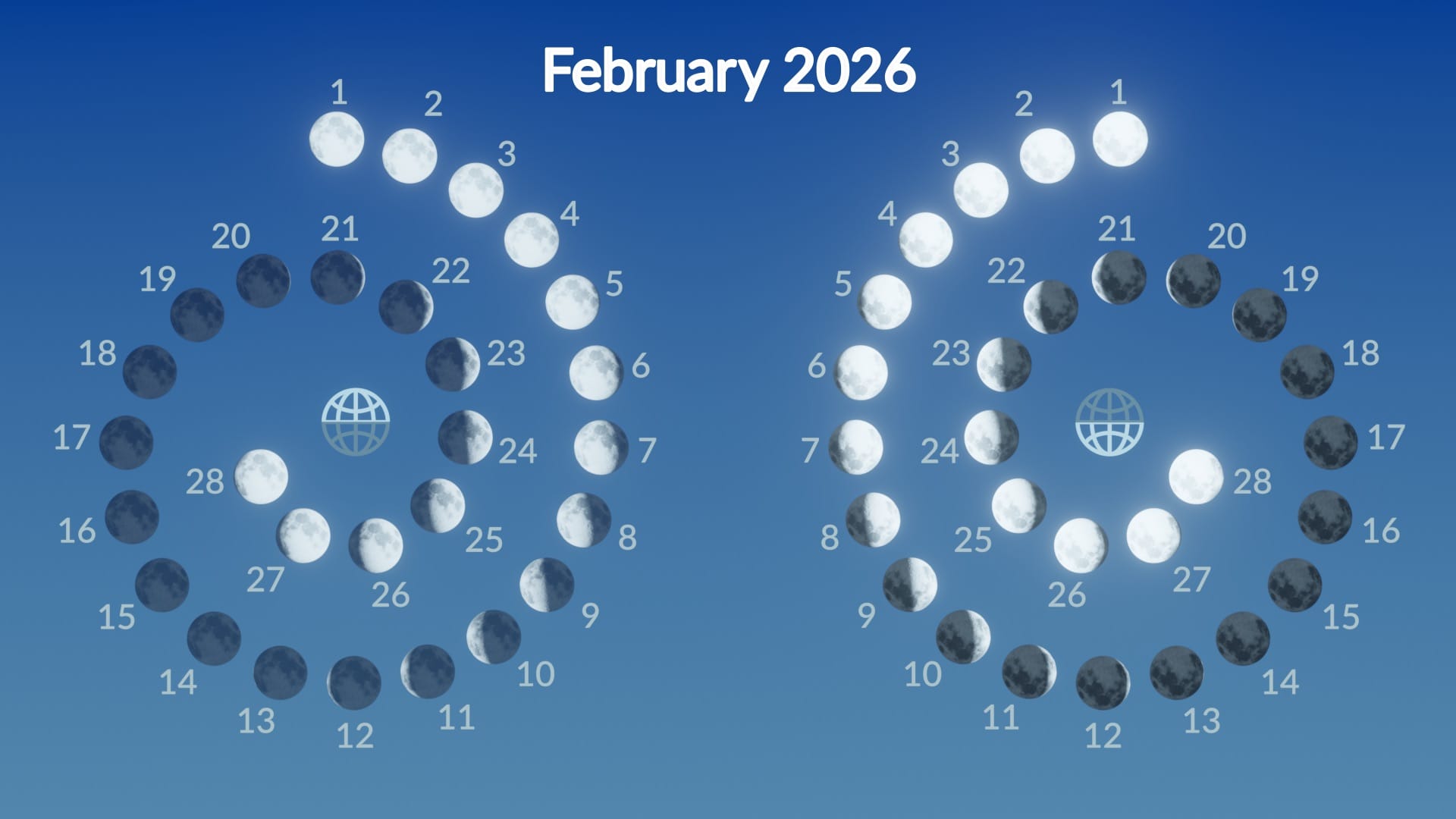
Here are the exact dates and times for the key lunar phases in February 2026:
- Full Moon: February 1, 22:09 GMT (17:09 EST)
- Last Quarter: February 9, 12:43 GMT (07:43 EST)
- New Moon: February 17, 12:01 GMT (07:01 EST)
- First Quarter: February 24, 12:28 GMT (07:28 EST)
Full Moon on February 1: Snow Moon
The February Full Moon, also known as the Snow Moon, will occur on February 1, at 22:09 GMT (17:09 EST). This Full Moon gets its name from the heavy snowfalls typical of February in the Northern Hemisphere. This year, the Snow Moon will appear in the constellation Cancer, shining near the bright Beehive star cluster.
Learn more: Full Moon February 2026 (Snow Moon)
New Moon on February 17: Solar Eclipse, Lunar New Year, Ramadan
The New Moon on February 17, 2026, coincides with several important, though very different, events. On this day, the Moon moves directly in front of the Sun, creating an annular solar eclipse, often called a “Ring of Fire,” when a thin circle of sunlight remains visible around the Moon. The path of this eclipse runs mostly over Antarctica and the surrounding southern oceans, making it a rare spectacle seen more by wildlife than by people.
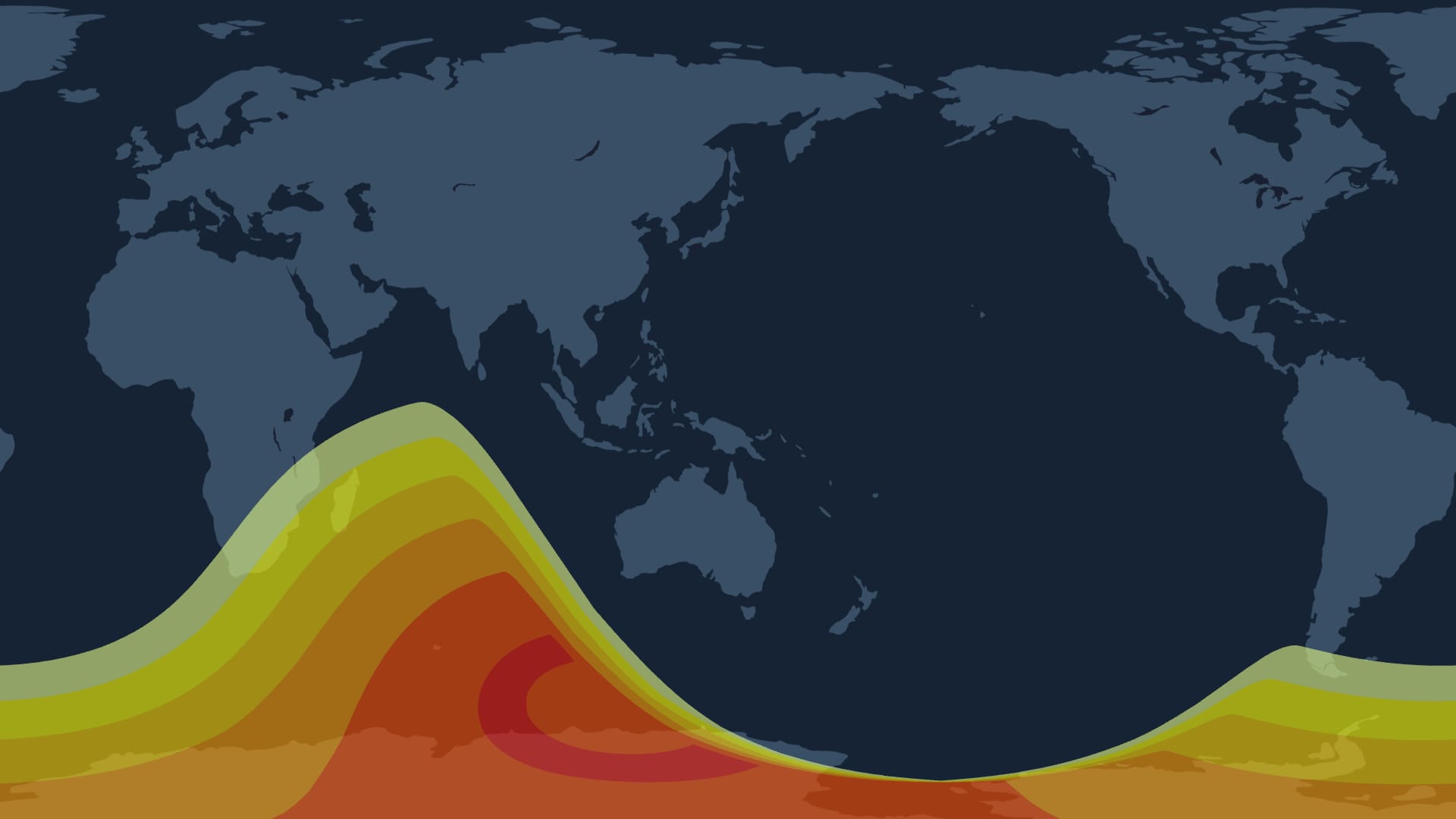
Learn more: Annular solar eclipse on February 17, mostly visible to penguins
This New Moon also marks the Lunar New Year, the most important holiday in many East Asian cultures, traditionally centered on family gatherings and the start of a new calendar and working year. Around the same time, the Islamic month of Ramadan begins, bringing a month of daytime fasting for Muslims worldwide and reshaping daily routines until the next New Moon.
Learn more: Lunar New Year 2026
Planet events in February 2026
Below is a general guide to planet visibility in both hemispheres, with directions and best viewing times.
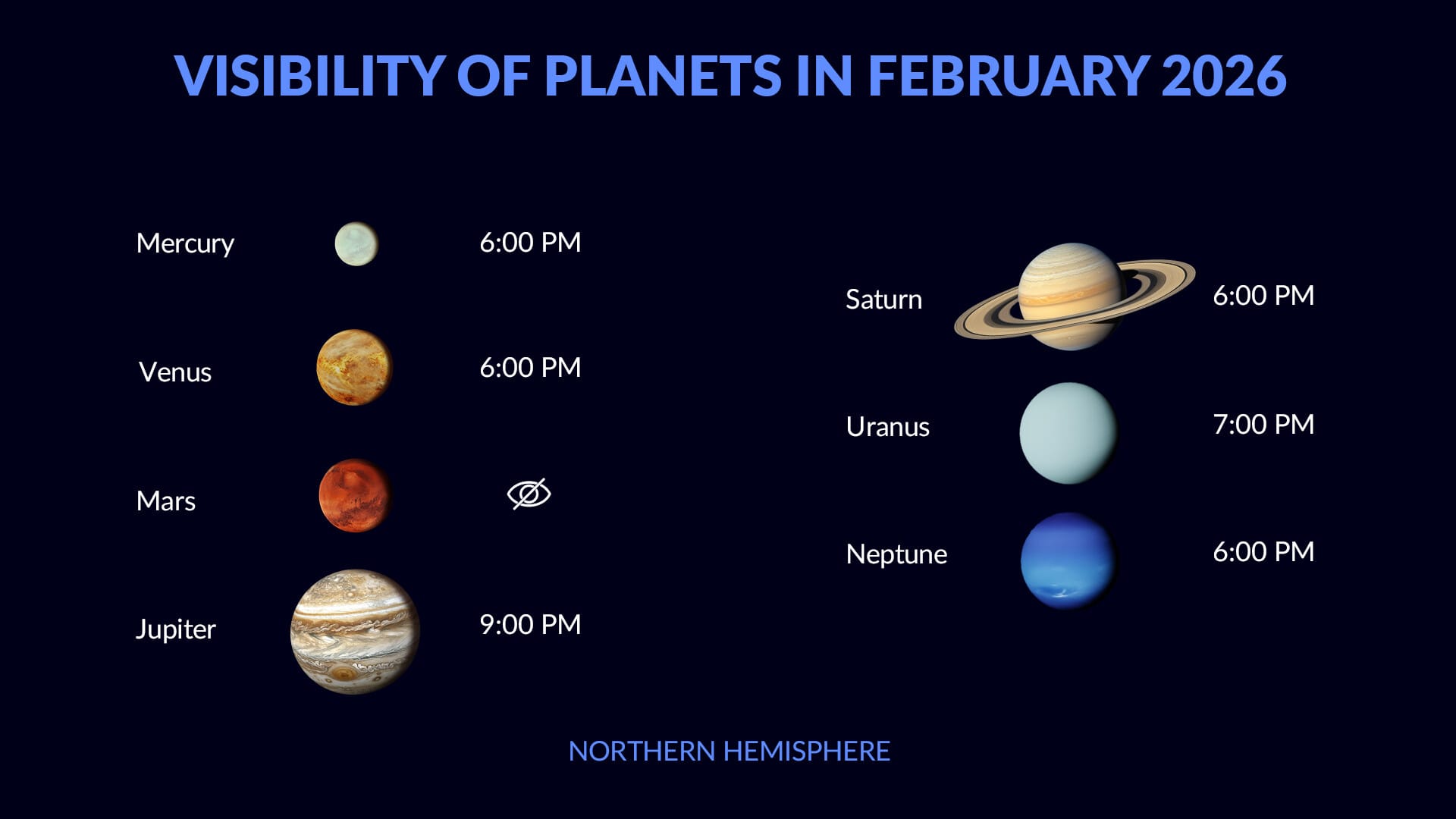
Planet visibility in February 2026: Northern Hemisphere
The information below works well for most mid-northern locations. For exact planet positions, rise and set times, and visibility details for your location, check the Sky Tonight app.
- Mercury (Capricornus, Aquarius, Pisces; mag. varies from -1.2 to 2.2): Gradually moves away from the Sun in the sky, reaching maximum apparent distance on February 19. Can be observed in the western evening sky for about 2 hours after sunset.
- Venus (Capricornus, Aquarius; mag. -3.8): Follows Mercury, moving farther away from the Sun. Visible in the evening sky, low in the west, for about an hour after sunset.
- Mars (Capricornus, Aquarius; mag. 1.1): After spending January close to the Sun, Mars is slowly pulling away. For now, it still rises almost at the same time as the Sun, making it difficult to spot.
- Jupiter (Gemini; mag. -2.5): Dominates the sky, outshining all the bright stars. It rises during the day and sets late at night, climbing nearly overhead by evening.
- Saturn (Pisces; mag. 1.0): Each night it sits a bit lower in the sky, and by the end of the month it slips into evening twilight. Look for it low above the western horizon after sunset.
- Uranus (Taurus; mag. 5.7): Visible in the northwestern evening sky. It’s faint, but can be spotted with binoculars or a small telescope.
- Neptune (Pisces; mag. 7.9): Hangs close to Saturn. Briefly visible in the evening western sky with strong binoculars or a telescope.
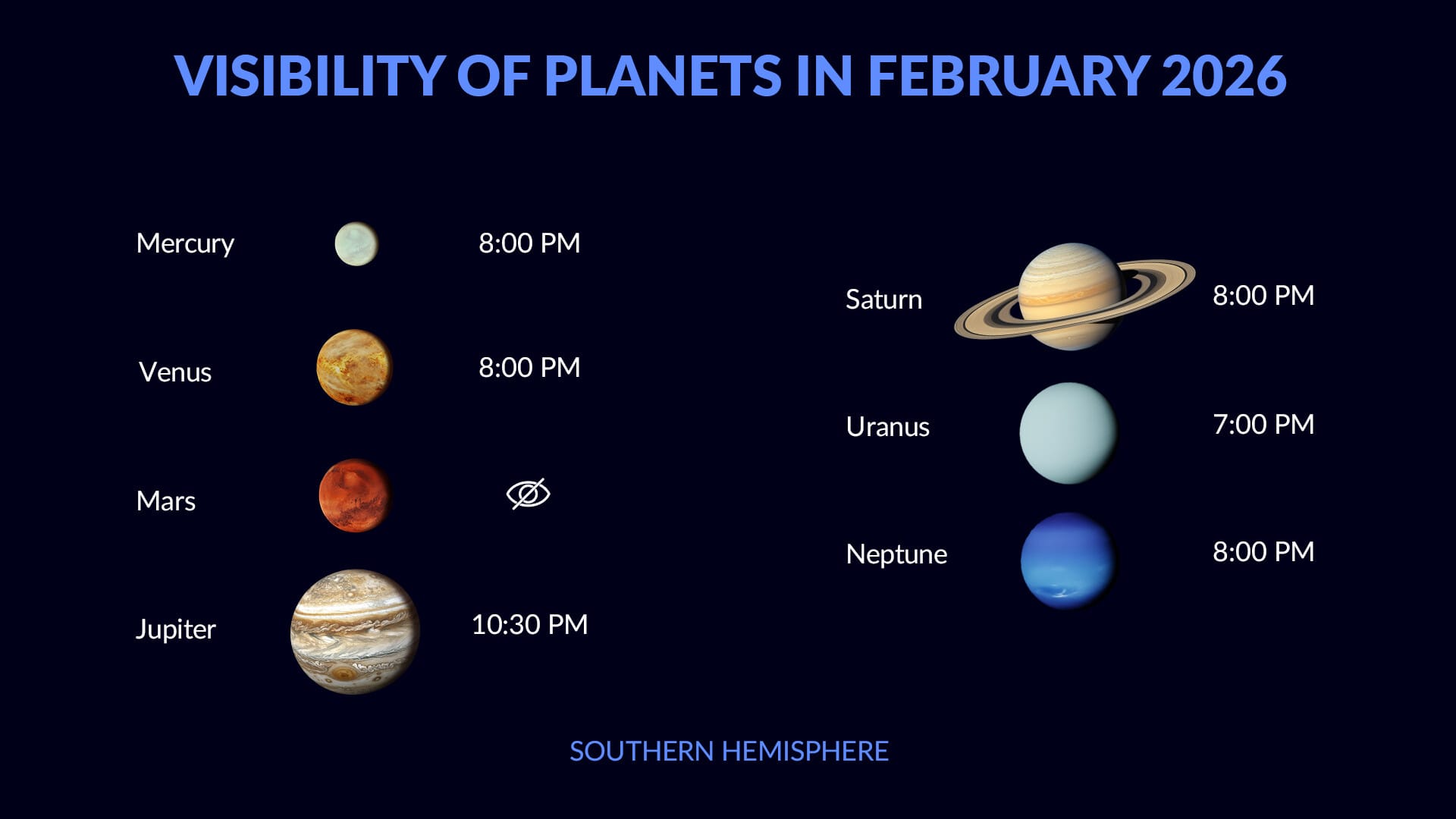
Planet visibility in February 2026: Southern Hemisphere
The information below reflects typical views from mid-southern latitudes. For exact planet positions, rise and set times, and visibility details for your location, check the Sky Tonight app.
- Mercury (Capricornus, Aquarius, Pisces; mag. varies from -1.2 to 2.2): Gradually moves away from the Sun in the sky, reaching maximum apparent distance on February 19. Can be observed in the western evening sky for about an hour after sunset.
- Venus (Capricornus, Aquarius; mag. -3.8): Follows Mercury, moving farther away from the Sun. Briefly visible in the evening sky, low in the west, for less than an hour after sunset.
- Mars (Capricornus, Aquarius; mag. 1.1): After spending January close to the Sun, Mars is slowly pulling away. By the end of the month, it shows up in the eastern morning sky about an hour before sunrise.
- Jupiter (Gemini; mag. -2.5): Dominates the sky, outshining all the bright stars. It rises during the day and sets late at night, best visible in the northern evening sky.
- Saturn (Pisces; mag. 1.0): Each night it sits a bit lower in the sky, and by the end of the month it slips into evening twilight. Look for it low above the western horizon after sunset.
- Uranus (Taurus; mag. 5.7): Visible in the northwestern evening sky. It’s faint, but can be spotted with binoculars or a small telescope.
- Neptune (Pisces; mag. 7.9): Hangs close to Saturn. Briefly visible in the evening western sky with strong binoculars or a telescope.
Best chance to see Mercury on February 19
On February 19 at 16:59 GMT (11:59 EST), Mercury reaches greatest evening elongation — the point when it appears farthest from the Sun in the sky, 18° away. This is the best evening appearance of Mercury in 2026 for the Northern Hemisphere (for observers in the Southern Hemisphere, Mercury’s best evening visibility comes later, in June 2026). After sunset, the planet can be spotted low in the western sky in the constellation Aquarius, making it a great opportunity to catch this usually elusive world.
Learn more: What is elongation in astronomy
Mercury goes retrograde on February 25
On February 25, Mercury switches from its usual forward motion to retrograde, meaning it appears to move backward in the sky, from east to west. This retrograde period lasts until March 19, 2026, and is simply a visual effect caused by the relative motion of Earth and Mercury, not an event to ruin your relationship or career.
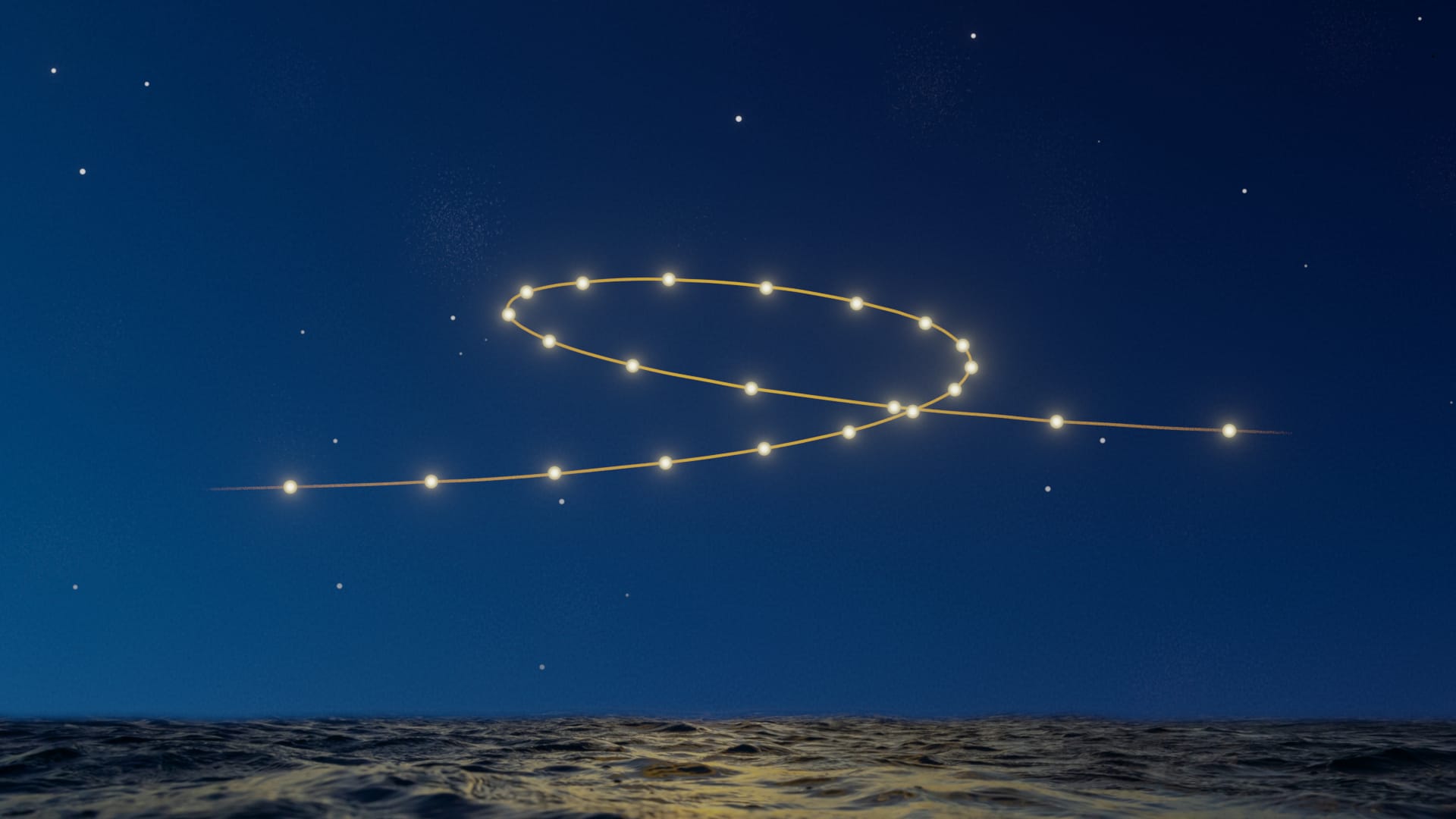
The change isn’t obvious right away — you’d need to track Mercury’s position over several weeks to notice it. For an easier way to see Mercury’s shift, open the Sky Tonight app, tap on Mercury on the sky map, and use the white camera icon to trace its motion across the sky.
Learn more: Planets in retrograde 101
Large planetary alignment on February 28
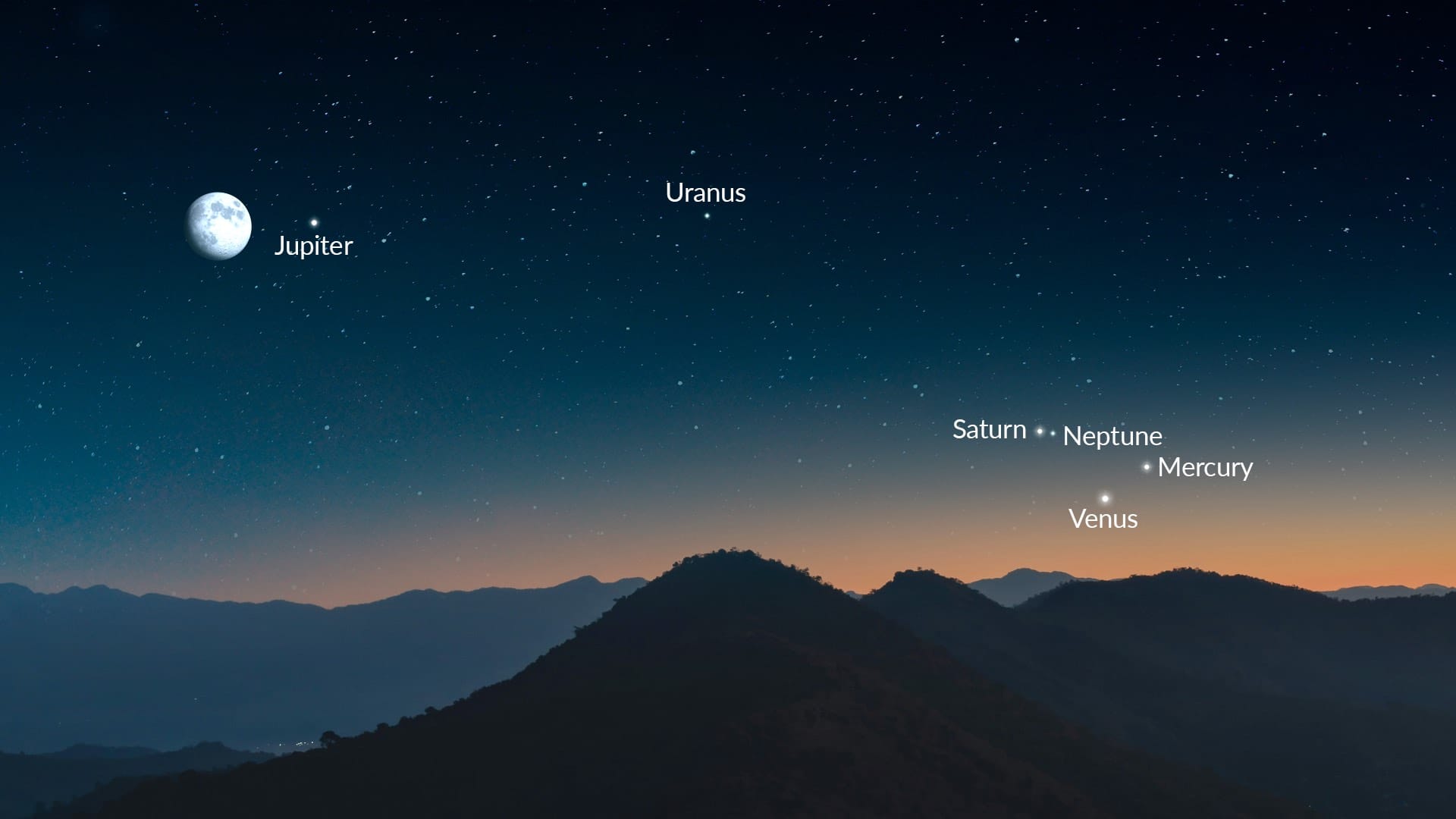
Around February 28, 2026, look for a large planetary alignment in the evening sky. About an hour after sunset, six planets — Jupiter, Uranus, Saturn, Neptune, Venus, and Mercury — will line up in the same part of the sky. Four of them — Jupiter, Saturn, Venus, and Mercury — will be visible to the naked eye, while Uranus and Neptune will require binoculars or a small telescope. A nearly full Moon (about 90% illuminated) will also join the scene, appearing very close to Jupiter and making the view especially striking.
Learn more: 6-planet alignment on February 28
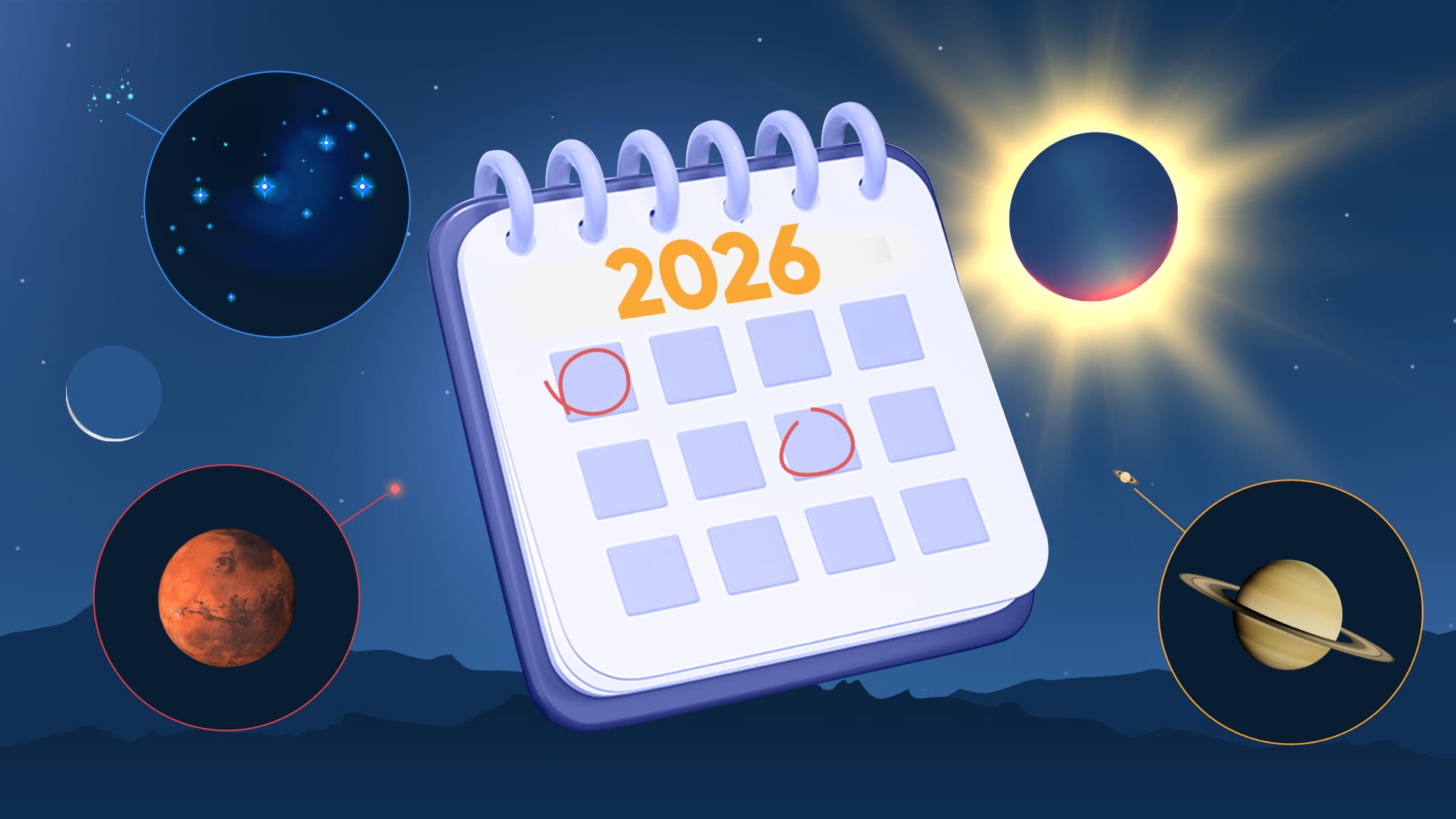
By the way, this upcoming planetary alignment made it into our list of the top 12 astronomical events of 2026, so it’s definitely not one to miss. You can also check out our infographic to see the other must-see events still ahead this year.
Constellations in February 2026
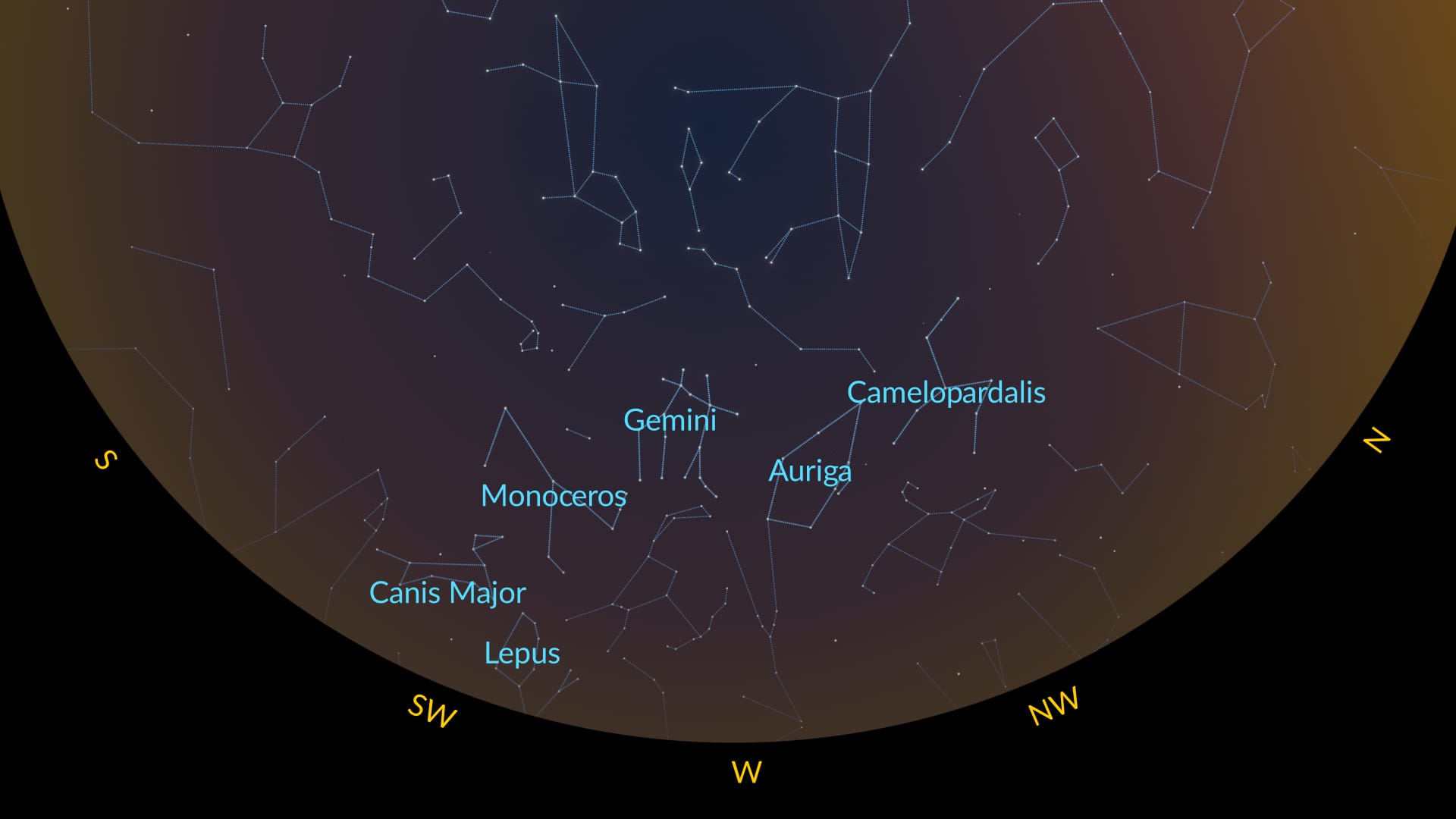
In February, several constellations are especially easy to spot in the evening sky. The ones listed below are high above the horizon around 9 p.m. local time, making them good targets for observing. Circumpolar constellations, which are visible all year round, are not included.
February constellations for the Northern Hemisphere
In the northern sky, look for bright patterns such as Canis Major, Auriga, and Gemini, along with fainter constellations like Lepus, Monoceros, and Camelopardalis.
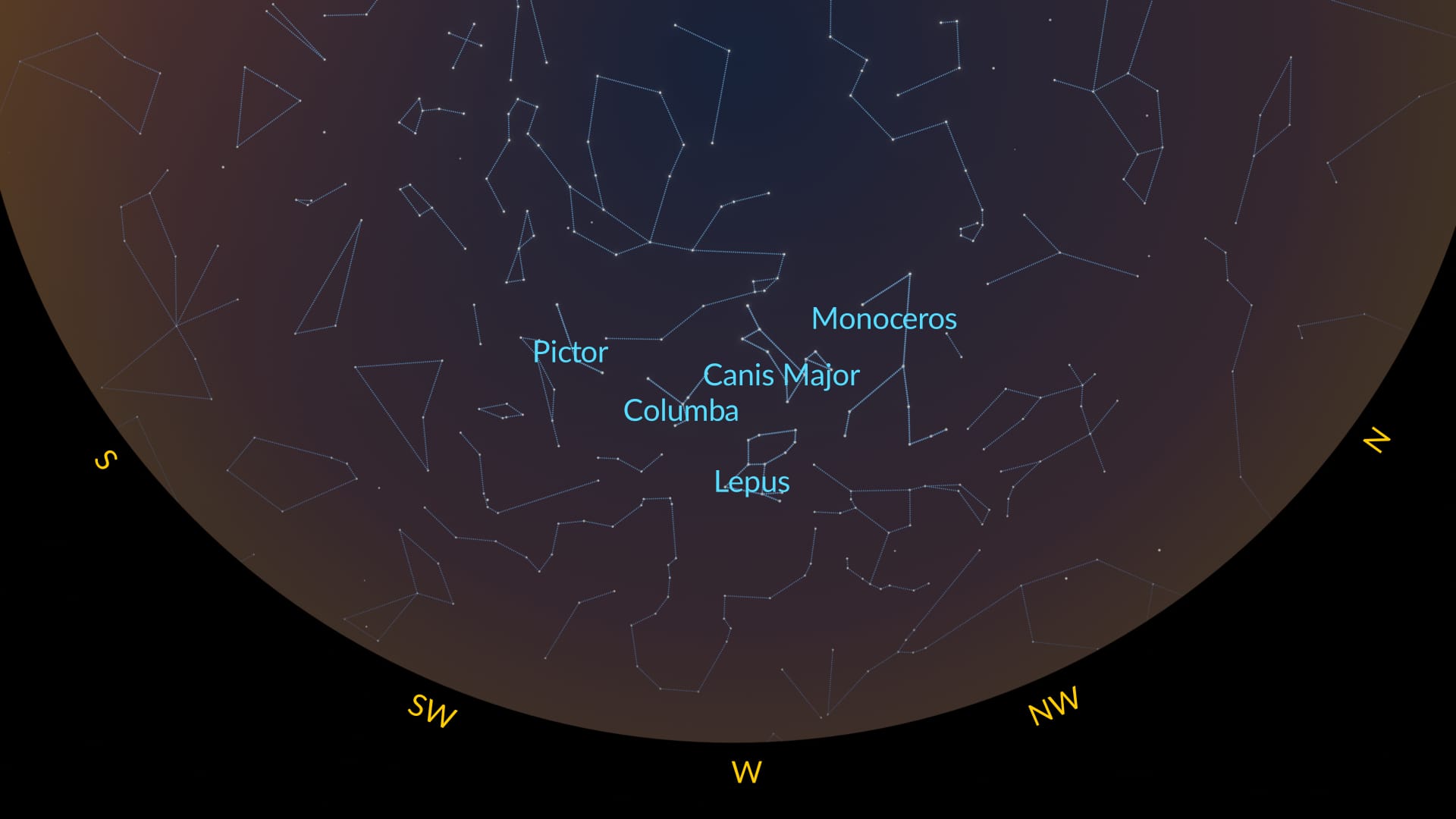
February constellations for the Southern Hemisphere
The best constellations to observe in the Southern Hemisphere in February include Canis Major, Lepus, Columba, Monoceros, and Pictor.
Learn more: Constellations to see in February
Meteor showers in February 2026
No major meteor shower peaks will be visible in the Northern Hemisphere this February, but don’t let that stop you from heading outside! Sporadic meteors, which aren’t tied to a specific shower, can appear at any time, especially under dark skies around the New Moon.
In the Southern Hemisphere, stargazers might spot a few meteors from the Alpha Centaurids. This minor shower produces up to six meteors per hour at its peak on February 8. In 2026, the peak occurs one day before the Last Quarter Moon, making conditions fairly favorable. For the best chance to catch some “shooting stars,” block the moonlight with a building, a hill, or a tree.
Learn more: Alpha Centaurids: the only major meteor shower in February 2026
Comets in February 2026
February also offers a few comet-watching opportunities. While none of them are bright naked-eye objects, several comets can be spotted with binoculars or a telescope under dark skies.
- C/2024 E1 (Wierzchos): After passing closest to the Sun in January, it will become visible from Earth again in February when it returns to Northern Hemisphere skies and can be picked up with binoculars or a small telescope.
- 24P/Schaumasse: This periodic comet remains visible throughout February 2026 and can be spotted with a telescope.
- 88P/Howell: This comet is expected to be visible from mid-February into April 2026. It’s a good target for telescopes.
There’s also a comet that won’t be observable yet in February, but it’s definitely worth keeping an eye on. If comet C/2026 A1 (MAPS) survives its close pass by the Sun in spring, it could become the brightest comet of 2026 — and possibly the most impressive one seen in over a decade.
Learn more: Comet visibility schedule 2026
Comets are unpredictable. Who knows, maybe some even brighter ones will appear in the sky this month! We'll keep you up to date. In the meantime, test your knowledge of the famous comets with our fun quiz.

Deep-sky objects in February 2026
February is a great month for deep-sky observing, with a wide variety of objects to see. In the northern sky, highlights include bright star clusters like the Pleiades (M45) — one of the most eye-catching clusters and easy to spot even without optical aid — as well as small nebulae and faint galaxies that work well with binoculars or a small telescope. In the southern sky, the Large Magellanic Cloud (LMC) steals the show: a huge nearby galaxy that’s an impressive sight under dark skies. February also brings several classic deep-sky favorites, including the Flame, Horsehead, and Monkey Head Nebulae, along with galaxies such as the Cigar Galaxy (M82), M106, and Bode’s Galaxy (M81), making it a rewarding month for casual skywatching and astrophotography alike.
Learn more: Best deep-sky objects to see in February
Pleiades near Moon on February 24
On February 24, at 02:43 GMT (February 23 at 21:43 EST), a half-lit Moon will approach the Pleiades by 1°06'. In North and Central America and the Caribbean, the Moon will even pass in front of the cluster, briefly covering and then uncovering its stars.
Learn more: Pleiades, one of the brightest star clusters
What February sky events are visible from my city?
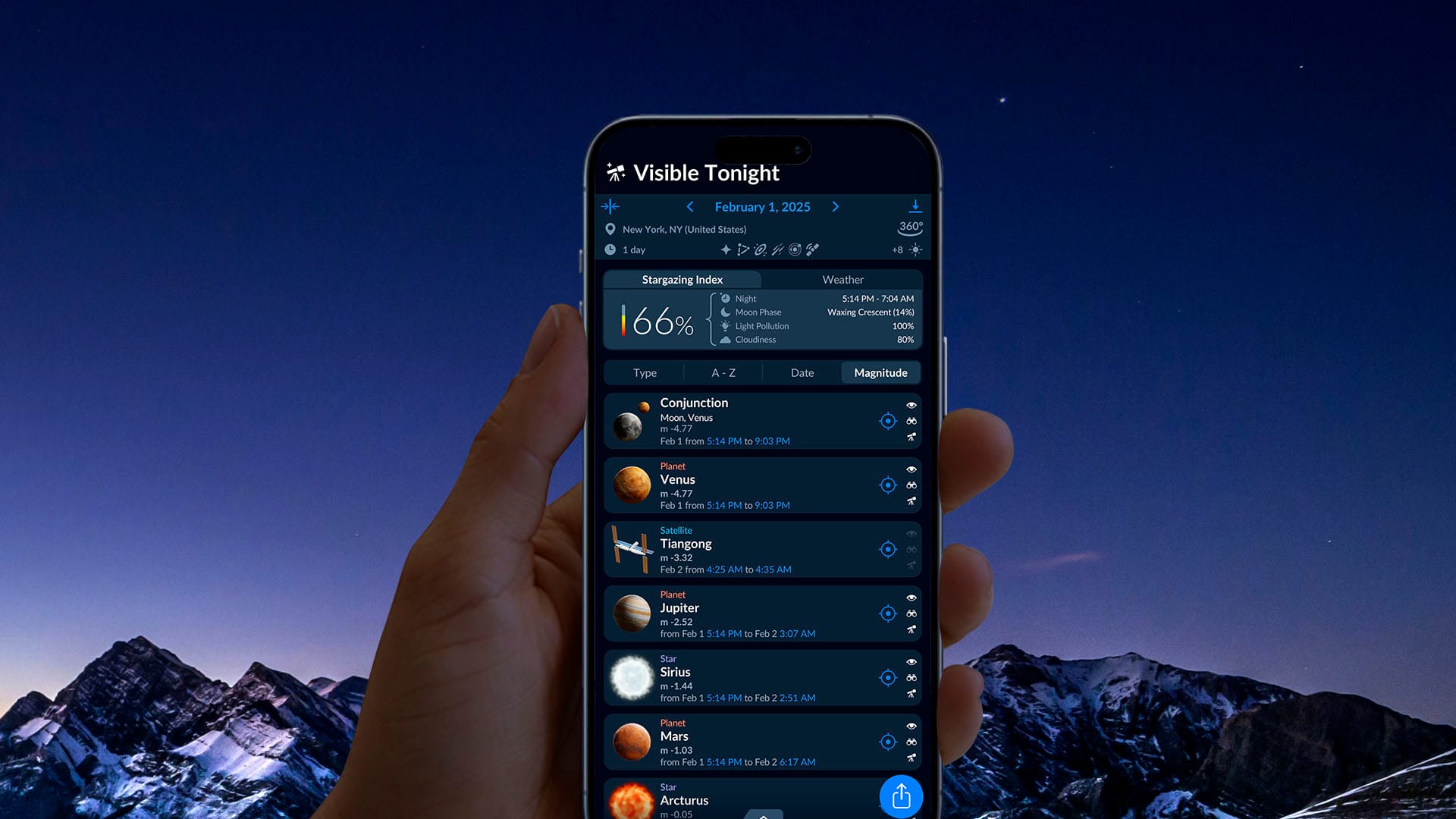
Curious if February’s celestial events will be visible from your location? Check out the Sky Tonight app! It provides a real-time view of planets, stars, constellations, and even deep-sky objects, all tailored to your location. Plus, it lists upcoming celestial events with precise timings for your area. Whether you’re planning a stargazing night or just want to know what’s up there, Sky Tonight makes exploring the night sky simple and exciting. Try it out and see what’s in store tonight!
February sky events 2026: bottom line
February 2026 is full of beautiful skywatching moments: a rare six-planet lineup, Mercury’s best visibility, and plenty of constellations high in the sky. Throughout the month, planets and bright stars gather near the Moon — and sometimes even slip behind it. Add a few visible comets and some deep-sky targets, and February gives you plenty of reasons to look up. To see what’s happening in your sky this evening, use the Sky Tonight app!