The Secret Side of Night Sky: Underrated Sky Events in 2026
Stop waiting for a “once in a lifetime” event and start enjoying everyday stargazing! Here is a list of beautiful astronomy events that might not be the headline makers, but are still worth your attention. Most of them don’t even require binoculars! To easily locate in your sky any space object listed in this article, get the free Sky Tonight app.
Contents
- Celestial events in 2026: Not the biggest, but still worth watching
- Astronomy calendar of notable celestial events 2026
Notable Moon events 2026
- January 14: Moon hides Antares in Australia
- March 18: Close approach of Moon, Mars, and Mercury
- June 17: Moon hides Venus during the day
- September 6–14: Moon visits planets all week long
- October 6: Moon hides Jupiter in the Americas and Africa
- December 24: The biggest Full Moon of the year
- December 26–28: Moon forms an arc with Jupiter, Regulus, and Mars
- Partial eclipse in 2026 that is still worth seeing
- Moderate but interesting meteor showers in 2026
- Planet events in 2026 worth watching
- Comets in 2026 that may offer pleasant views
- Bottom line: Don’t let 2026’s celestial events pass you by
Celestial events in 2026: Not the biggest, but still worth watching
2026 is packed with sky events — there’s almost always something to see. But a single “big” event can be spoiled by location, weather, or a busy schedule, so it’s smart to have more than one option. So here we’ve gathered lesser-known 2026 events that are unusual, beautiful, and unique to this year. Now you can choose from several astronomy events each month, and select the ones that fit your plans! To learn about the best astronomical events of 2026, read our dedicated article.
We focus on easy-to-see events visible in different locations, with short, clear explanations and links to deeper guides if you want the details. Let’s not wait only for rare spectacles and enjoy the night sky whenever we can, and see what makes 2026 special.
Astronomy calendar of notable celestial events 2026
January 2026
- 🌠January 3 – Quadrantid meteor shower peak (80 meteors/hour)
- 🌕January 14 – Lunar occultation of Antares
- ☄️January 20 – Comet C/2024 E1 (Wierzchos) reaches perihelion, mag ≈5, visible only from the Southern Hemisphere
February 2026
- ☄️February 17 – Comet C/2024 E1 (Wierzchos) comes closest to Earth, mag ≈8, visible from parts of the Northern Hemisphere and from the Southern Hemisphere
March 2026
- 🪐March 8 – Bright Venus close to Saturn in the evening sky
- 🌕March 18 – The Moon meets Mars and Mercury at dawn
April 2026
- 🪐April 18 – Morning planetary alignment of Saturn, Mars, Mercury, and Neptune
- 🌠April 22–23 – Lyrid meteor shower peak (18 meteors/hour)
May 2026
- 🌠May 6 – Eta Aquariids peak (50 meteors/hour)
June 2026
- 🪐June 12 – Evening alignment of Mercury, Jupiter, and Venus
- 🌕From June 16 – Thin crescent Moon joins the Mercury–Jupiter–Venus alignment
- 🌕June 17 – Daytime lunar occultation of Venus (best from most of the contiguous USA, parts of Canada, Brazil, Venezuela)
July 2026
- 🌠July 30–31 – Double meteor peak of Southern Delta Aquariids and Alpha Capricornids (25 and 5 meteors/hour)
August 2026
- ☄️August 2 – Comet 10P/Tempel 2 reaches perihelion, mag ≈8, visible in binoculars/small telescopes
- 🌕August 27–28 – Deep partial lunar eclipse
September 2026
- 🌕September 6–14 – “Week of the planets”: Moon meets Mars, Jupiter, Mercury, Venus one by one
October 2026
- 🌕October 6 – Lunar occultation of Jupiter
November 2026
- 🪐Around November 14 – Planetary alignment of Mercury, Venus, Mars, and Jupiter before dawn
- 🌠November 17–19 – Leonid meteor shower (15 meteors/hour; increased activity possible)
- 🪐November 25 – Uranus at opposition
December 2026
- 🌕December 24 – Largest Supermoon of the year
- 🌕December 26–28 – Moon forms a bright arc with Jupiter, Regulus, and Mars in Leo
Notable Moon events 2026
The Moon is the brightest and most eye-catching object in the night sky, and many of its events are easy to see without any equipment. But what are those bright “dots” next to the Moon? And what special Moon events can we expect in 2026? Let’s take a look.
January 14: Moon hides Antares in Australia
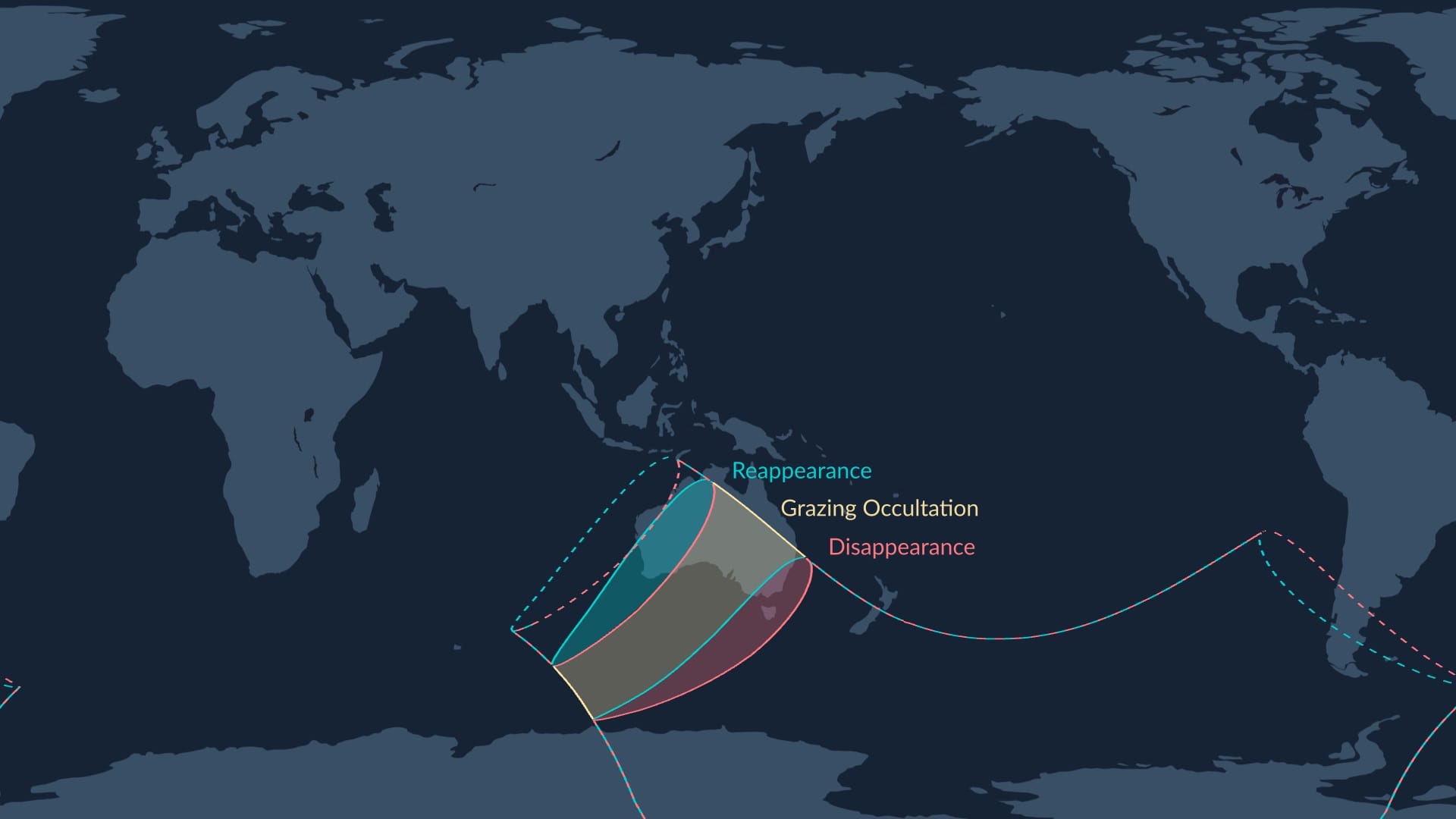
On January 14, 2026, observers in Australia will see the thin (14%-illuminated) crescent Moon pass in front of the bright red star Antares in Scorpius, briefly hiding it from view. The occultation happens between 18:05 and 21:55 GMT, depending on your location.
To see where exactly the event is visible, open the free Sky Tonight app and find it via Search or in the Calendar. Open the event, go to the Info tab, then swipe the top image or tap the blue map icon to view the visibility map.
Elsewhere in the world, the Moon will pass very close to Antares instead. Look for the pair in the morning sky in Scorpius on January 14 and 15. You can see them with the naked eye or through binoculars.
March 18: Close approach of Moon, Mars, and Mercury
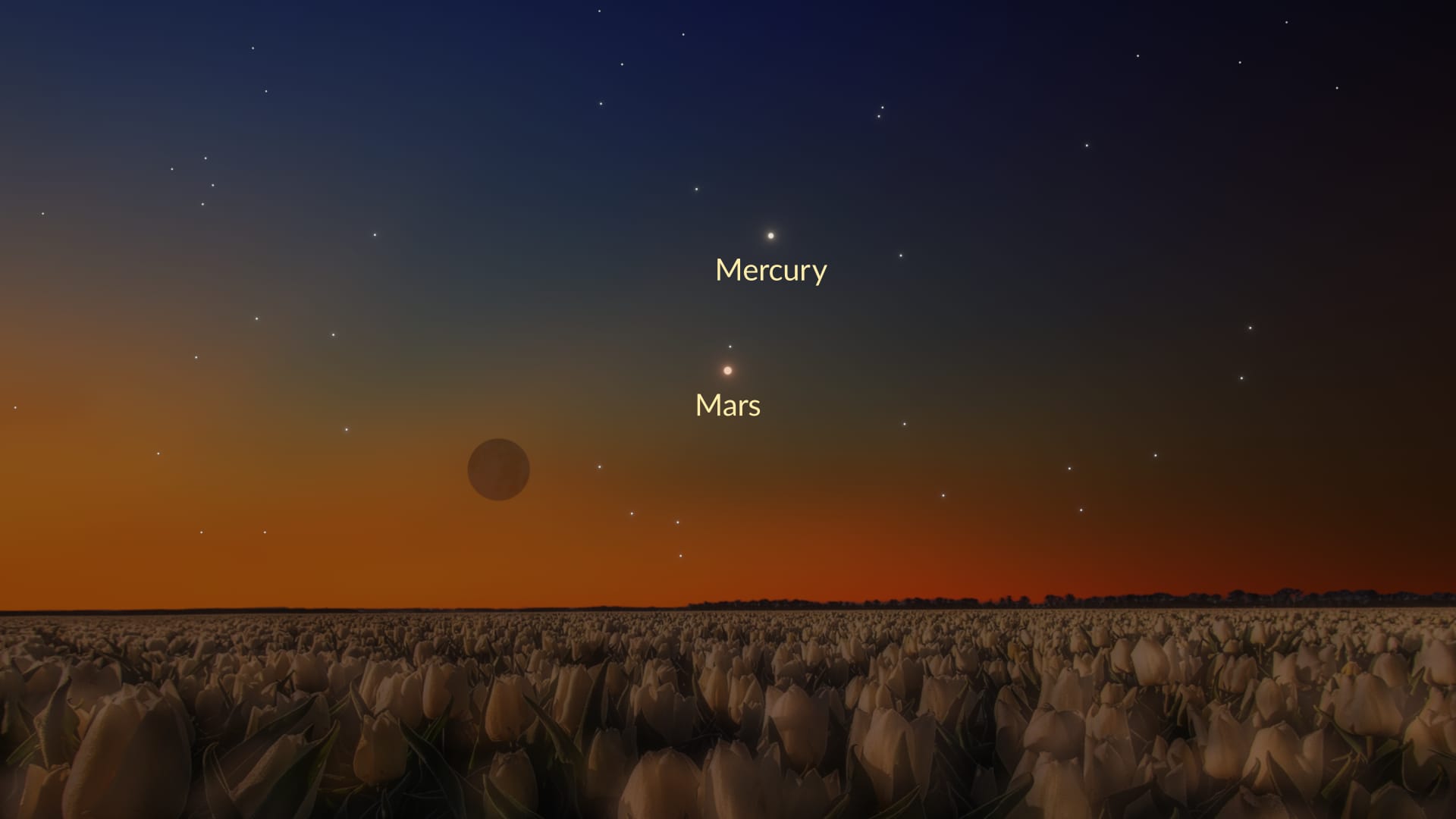
On the morning of March 18, you’ll see the Moon, Mars, and Mercury gathered close together, low above the eastern horizon in the constellation Aquarius. The view will be better from locations near the equator or from the Southern Hemisphere, where Mars and Mercury are located farther from the horizon in twilight.
Astronomically speaking, this isn’t a rare event. The Moon often crosses the ecliptic where the planets appear; however, it’s rather uncommon for it to meet two naked-eye visible planets so close together in the sky.
June 17: Moon hides Venus during the day
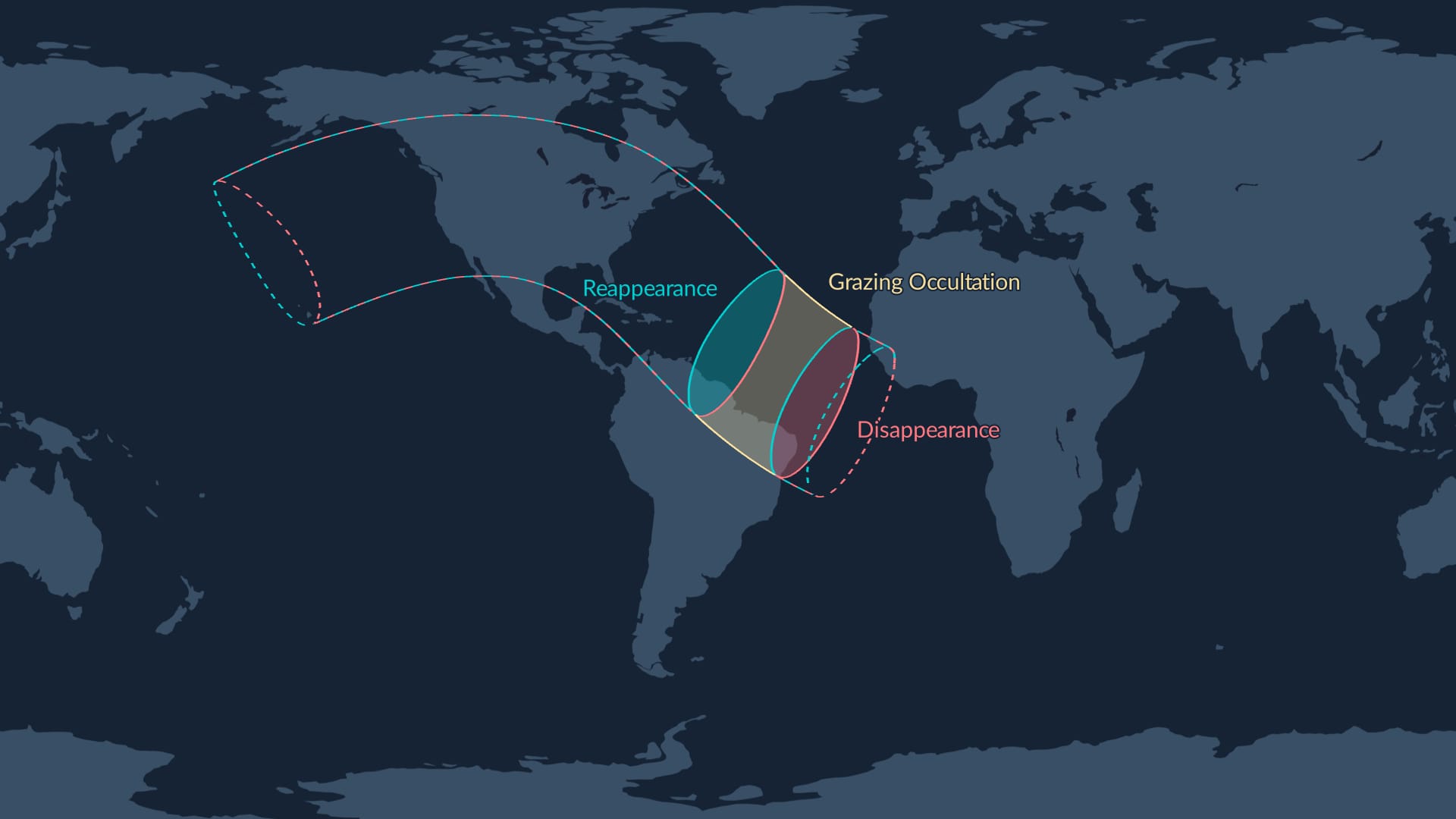
On June 17, the Moon will pass in front of Venus in broad daylight — a rare and spectacular sight. The event will be fully visible from most of the contiguous United States, parts of Canada, Brazil, Venezuela, and nearby regions.
Even though it happens in daytime, Venus is bright enough to see, as is the thin 8% crescent Moon, high in the sky. The best time to look is just before or just after the occultation. In general, the event runs between 18:17 and 22:43 GMT, but the exact times vary by location.
For example, in New York, USA, the lunar occultation of Venus will start at 15:54 EDT and end at 17:12 EDT. To find the timing for your area, open the Sky Tonight app, go to the Calendar, and check the event details.
September 6–14: Moon visits planets all week long
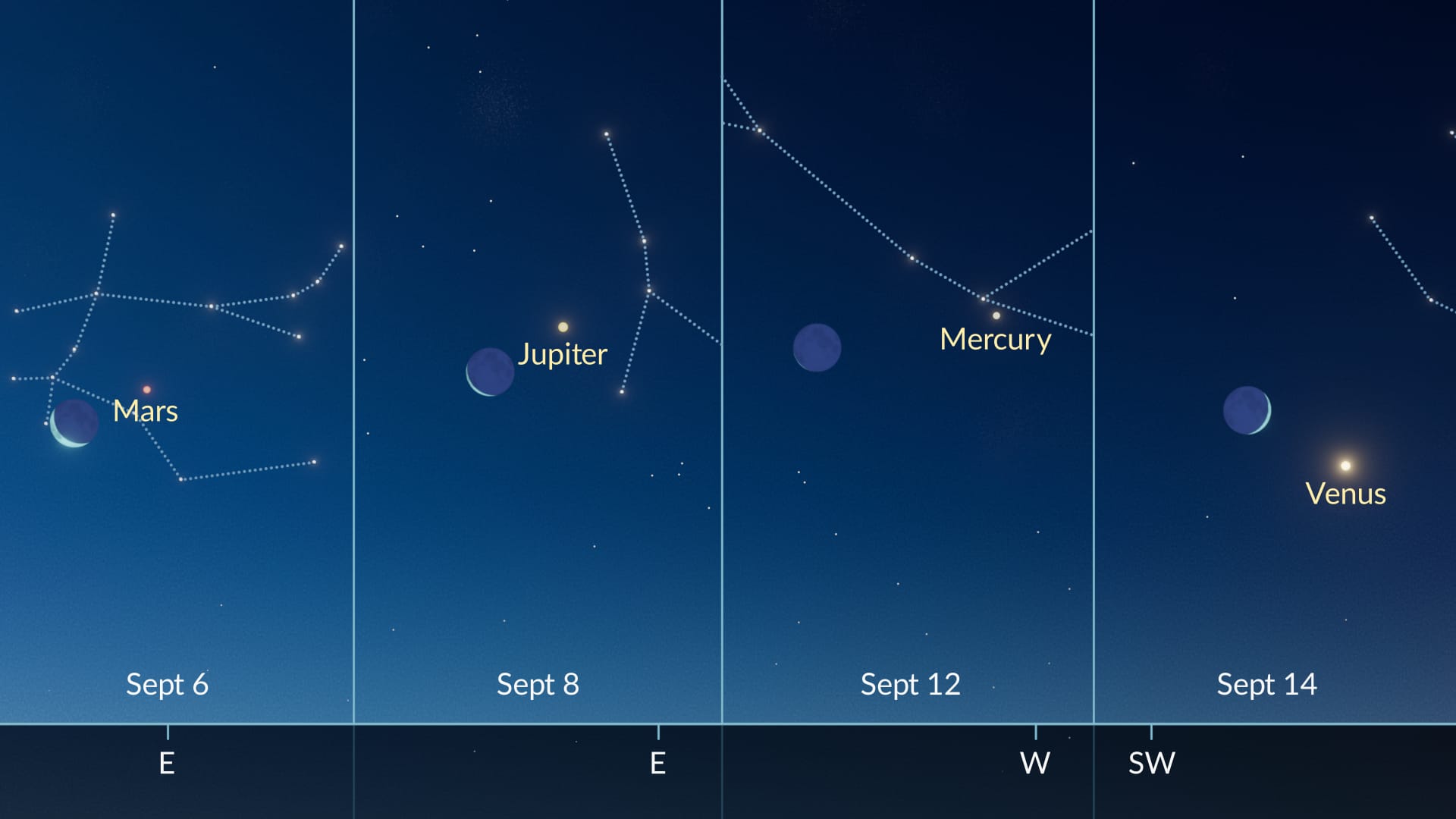
From September 6 to 14, the Moon will pass by Mars, Jupiter, Mercury, and Venus in turn, creating a series of consecutive close approaches.
On the morning of September 6, look low above the eastern horizon to see Mars near a 30%-illuminated Moon in Gemini.
On the morning of September 8, look in almost the same place: Jupiter will be close to a 10%-illuminated Moon in Cancer. Later that day, between 17:03 and 20:25 GMT, the Moon will hide Jupiter (a lunar occultation), visible from regions including Canada, Greenland, eastern Russia, and the contiguous United States. Because it happens in daylight, it won’t be easy to see — you’ll most likely catch Jupiter just before it disappears or right after it reappears. Use the Sky Tonight app’s maps to check visibility for your location.
On September 12, an extremely thin Moon, only 2% illuminated, will pass by Mercury in Virgo. Look for them very low above the western horizon in bright evening twilight. Southern latitudes will have a better view.
Finally, on September 14, the Moon will meet Venus in Virgo. A lunar occultation of Venus will be visible from most of Europe, western Russia, and large parts of Africa and Asia, happening between 09:26 and 13:42 GMT. Even though it occurs in daylight, Venus is bright enough to be spotted. Elsewhere in the world, observers will see a 13% crescent Moon close to Venus, low in the southwest in the evening.
October 6: Moon hides Jupiter in the Americas and Africa
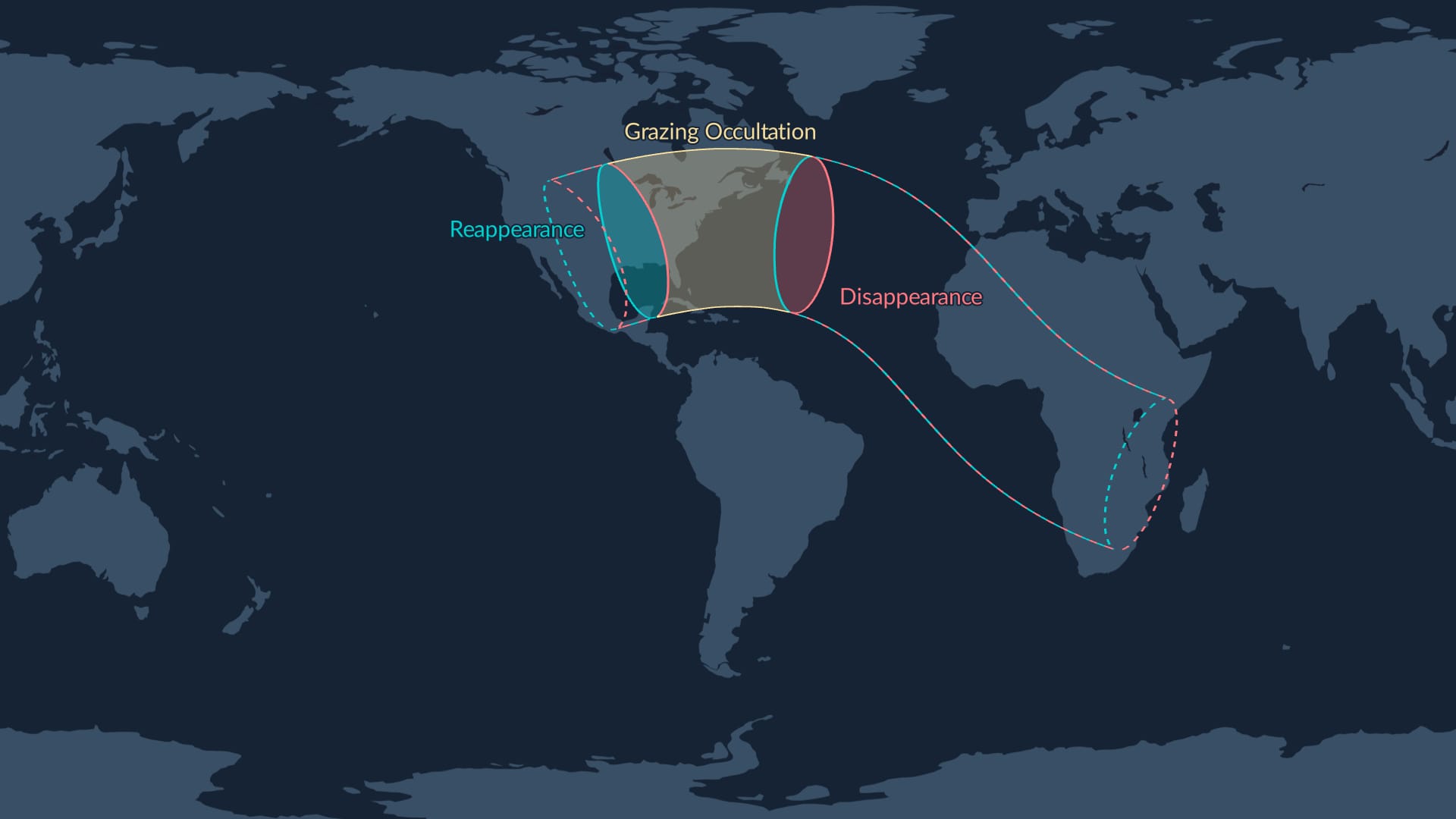
On October 6, between 08:14 and 12:32 GMT, the Moon will pass in front of Jupiter, creating one of the best lunar occultations of the year. Jupiter — the second-brightest planet — will slip behind a 20% illuminated Moon during astronomical twilight, when the sky is still dark enough for a clear view. The event will be visible from parts of the Americas and Africa.
Try not to miss the moments when Jupiter disappears behind the Moon and reappears on the other side — these are the most impressive parts of the event. Elsewhere in the world, observers will simply see bright Jupiter shining close to the Moon.
December 24: The biggest Full Moon of the year
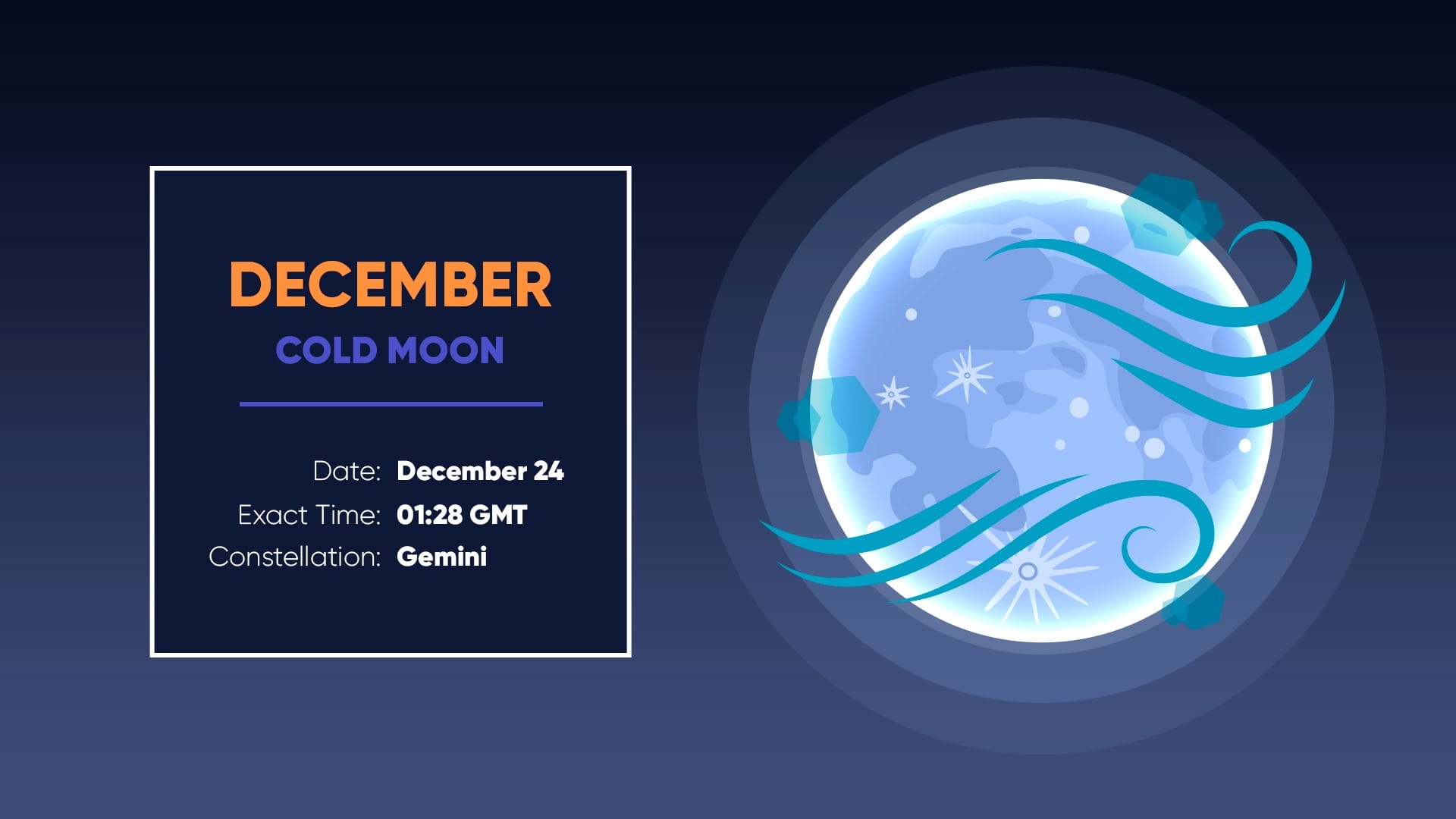
To finish 2026 with a surprise, the Moon will reach its full phase on December 24 — Christmas Eve in the Western Christian tradition. This doesn’t happen often: the last Christmas Eve Full Moon was in 1996.
It won’t be just any Full Moon, but a Supermoon — the biggest and brightest of the year. It will appear about 8% larger and 16% brighter than an average Full Moon, like a real Christmas gift in the sky.
The size change is quite subtle, though. You can still cover the whole Moon with your pinky finger at arm’s length. The best way to judge is simple: go outside and look up. Whether you notice the size difference or not, the year’s largest Supermoon will be a beautiful sight.
December 26–28: Moon forms an arc with Jupiter, Regulus, and Mars
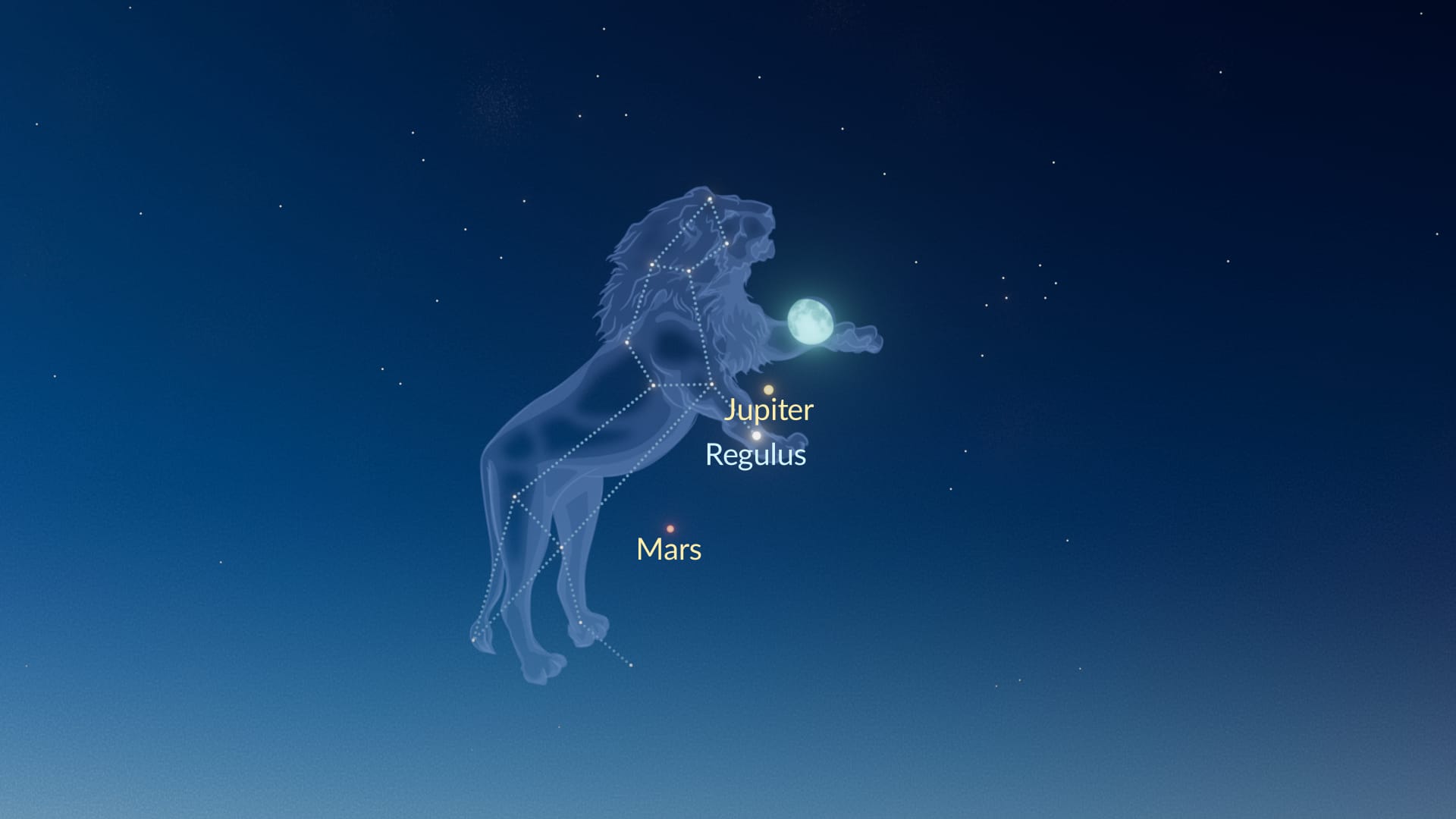
On the nights of December 26–27 and December 27–28, you’ll see the nearly full Moon lining up with Jupiter, Mars, and the bright star Regulus in Leo. This is one of the easiest sky events to watch — no equipment or perfect timing needed. Just go outside on the right night and look up!
On the first night, they will form a glowing arc across the eastern sky.
In the Northern Hemisphere, start watching in the evening. The Moon — bright and orange near the horizon — rises first. Next comes Jupiter, then the bluish-white Regulus, and finally Mars, glowing red. The full arc becomes visible by about 23:00 local time and stays in view all night, until morning twilight.
In the Southern Hemisphere, look above the northeastern horizon. The Moon rises first, followed by Jupiter, then Mars. Regulus will appear between the two planets with a bluish-white tint. The group will be highest above the northern horizon around 4:00 a.m.
If you miss the first night, don’t worry — on December 27–28, the Moon will move between the planets, bringing them closer together within Leo. Viewing conditions stay nearly the same. It’s a perfect chance for astrophotography — try capturing the bright arc in the night sky!
Partial eclipse in 2026 that is still worth seeing
Solar and lunar eclipses are some of the most exciting sky events. Two of them made it into our list of 2026’s top highlights:
- March 3, 2026: Total lunar eclipse (Blood Moon) visible from Asia, Australia, and North America;
- August 12, 2026: Total solar eclipse visible from Greenland, Iceland, Portugal, and Spain.
But there is another one that is surely worth your attention! To make sure you never miss an upcoming solar or lunar eclipse, check our regularly updated infographic.
August 27–28: Almost total lunar eclipse
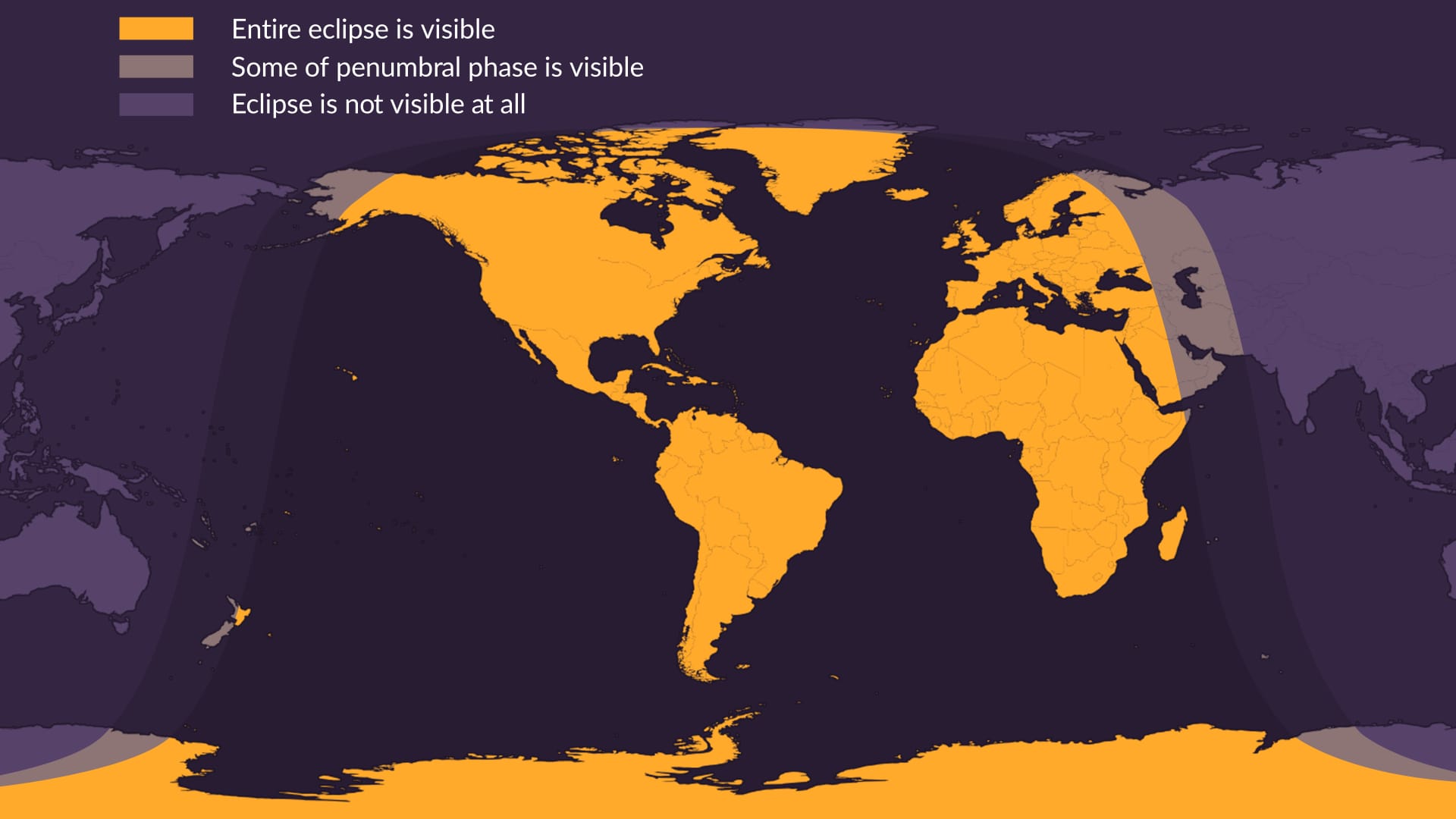
This partial eclipse comes very close to being total — 96.2% of the Moon will slip into Earth’s umbra, giving it a deep orange color rather than a full blood-red tone. The partial phase lasts 3 hours 18 minutes, from 02:33 to 05:51 GMT on August 28. Be sure to convert this to your local time.
The eclipse will be fully visible from North and South America, visible at moonrise in the Central Pacific, and at moonset across Africa, Europe, and the Middle East. In total, more than 40% of the world’s population will have a chance to see this striking partial eclipse!
Details: Рartial lunar eclipse on August 27-28, 2026
Moderate but interesting meteor showers in 2026
While you’re waiting for the famous Perseids in August, why not take a look at some of the lesser-known but still fascinating meteor showers? Each has its own charm and offers rewarding viewing opportunities. Below are the peaks of some noteworthy showers — for a full list of all the best meteor showers of the year, check out our dedicated guide.
January 3: Quadrantids peak (80 meteors/hour)
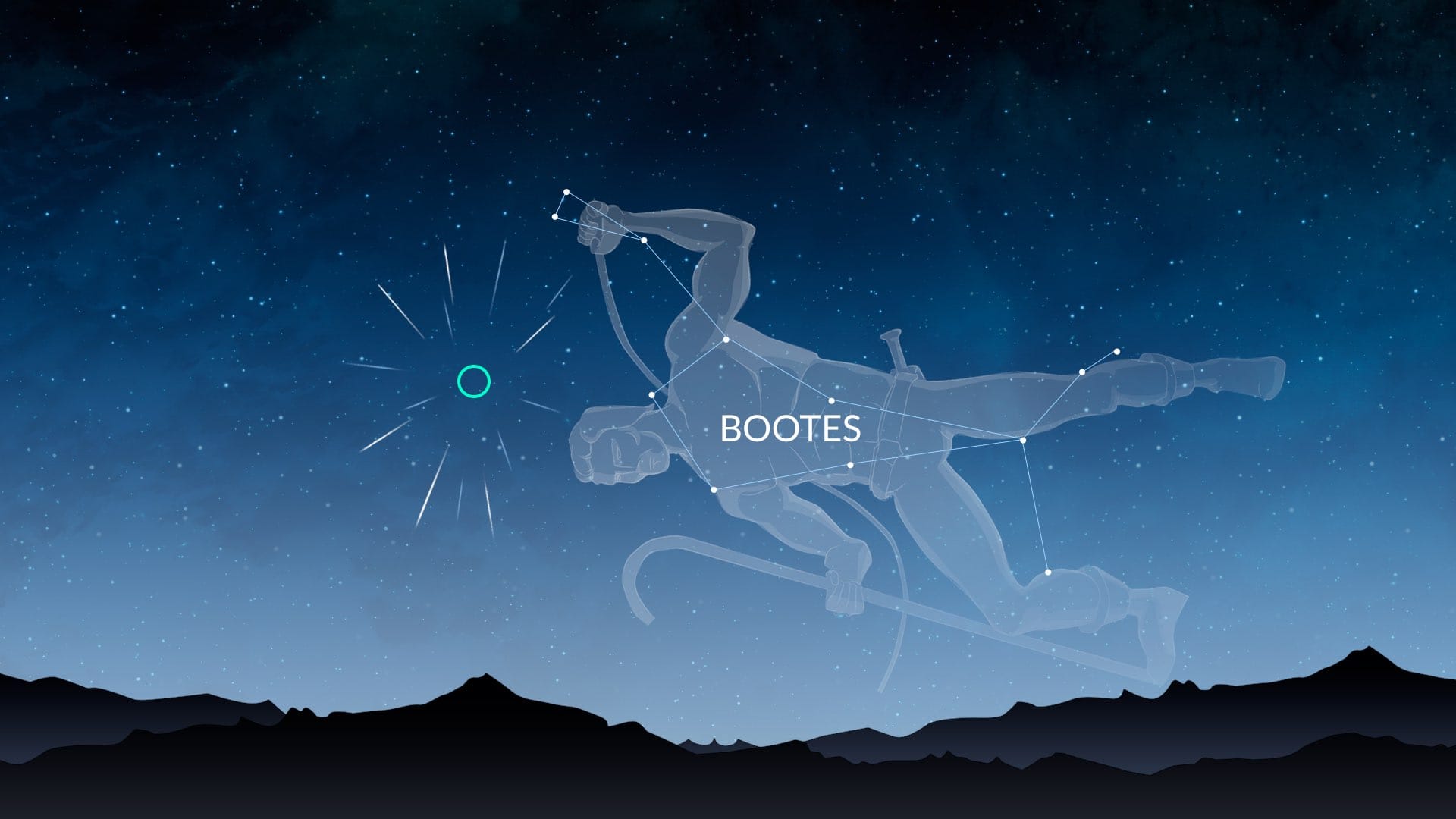
The Quadrantids peak on January 3 around 21:00 GMT and last for about 6 hours. This shower is usually one of the strongest of the year, but in 2026 the Full Moon will reduce the visible rate to about 10 per hour. Even so, a few bright fireballs may still appear if you block the Moon’s glare with a building, tree, or hill.
The shower is best seen from the Northern Hemisphere; in the south, only a few meteors will be visible.
Learn more: Complete guide to the Quadrantids 2026
April 22: Lyrids peak (18 meteors/hour)
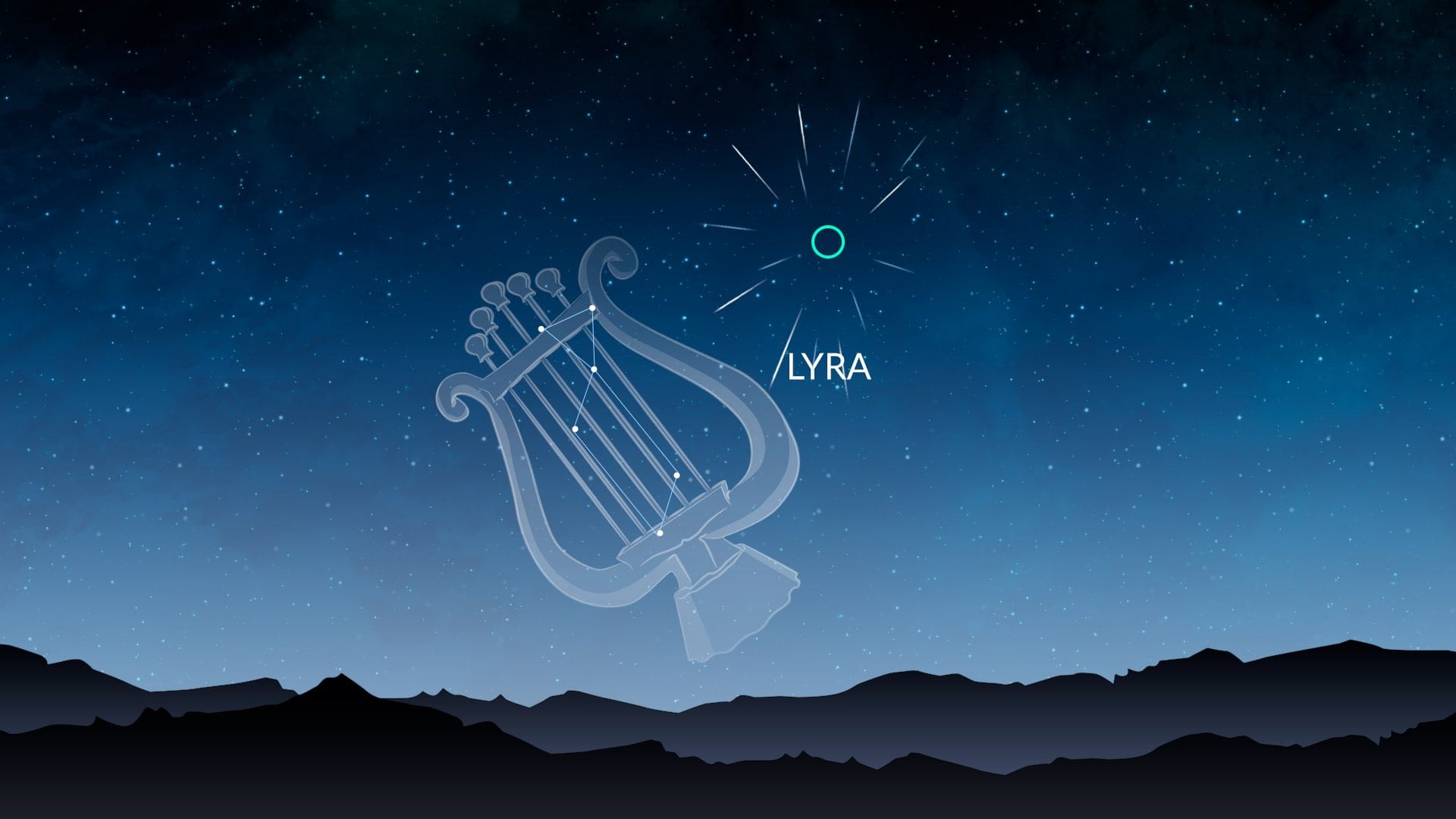
The Lyrids peak around April 22–23 with about 18 meteors per hour under perfect visibility conditions. This shower is one of the oldest ever recorded (observed for over 2,700 years) and also marks the end of the “dry” meteor season from January to April.
The Lyrids are best viewed from the Northern Hemisphere, though many southern locations can see them too. Watch from late evening through early morning. The Moon, near its first quarter, will not interfere much this year.
Learn more: All you need to know about the Lyrids 2026
May 6: Eta Aquariids peak (50 meteors/hour)
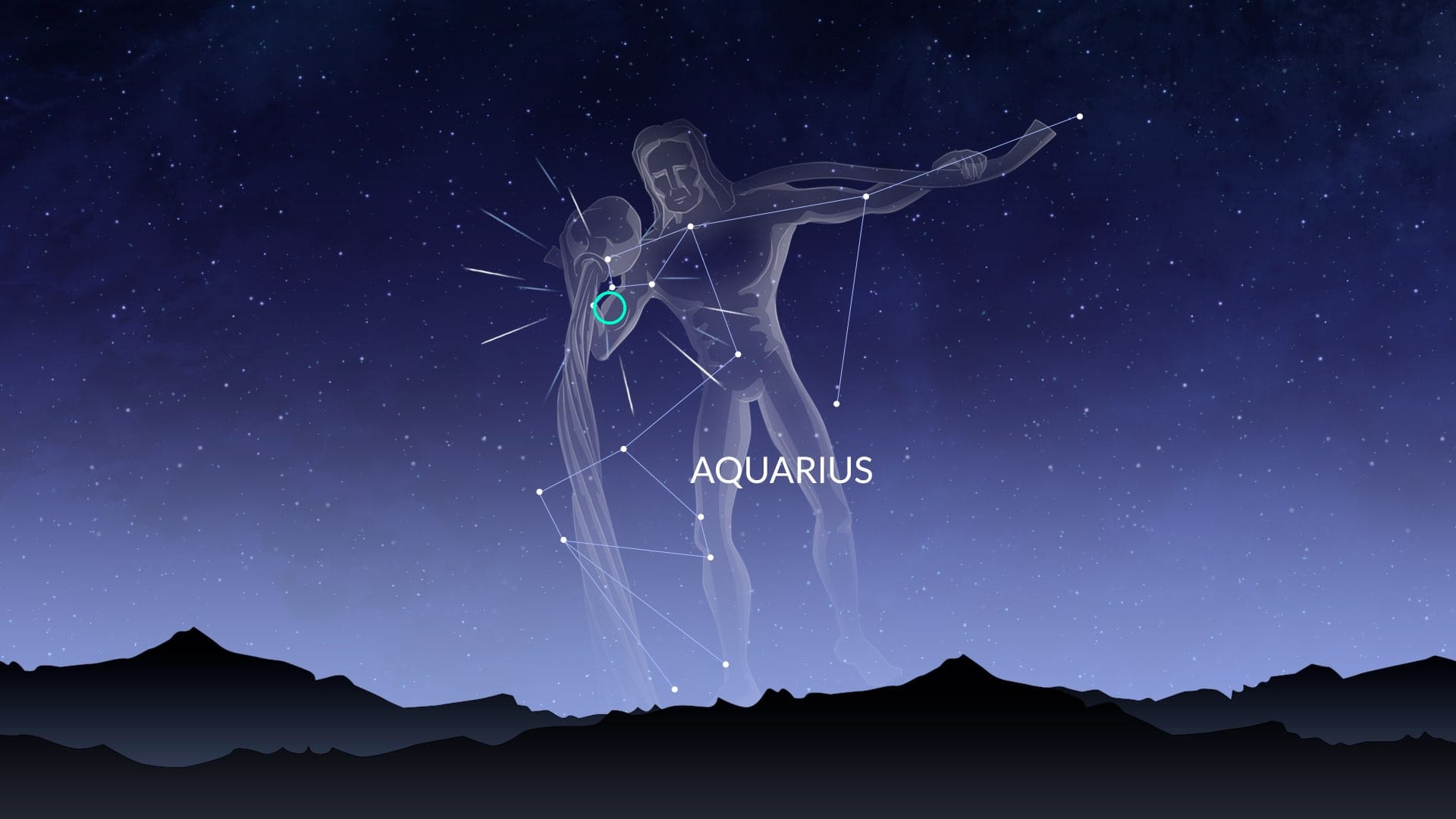
The Eta Aquariids — one of the best meteor showers for the Southern Hemisphere — will peak on May 6 in 2026, just five days after the Full Moon. Because the bright Moon will be above the horizon for most of the night, observing conditions won’t be ideal, especially for faint meteors. Therefore, the regular peak rate of 50 meteors per hour during the peak will likely drop. To improve your view, try to block the Moon with a tree, building, or nearby hill.
Although the Eta Aquariids strongly favor observers in the Southern Hemisphere, this meteor shower can still be seen as far north as 40°N, but the hourly rate there drops to around 10 meteors per hour. With the Moon’s interference, the Eta Aquariids will be very challenging to observe from the Northern Hemisphere in 2026.
Learn more: Eta Aquariids 2026: May’s Best Meteor Shower?
July 31: Southern δ-Aquariids and α-Capricornids peak (25 and 5 meteors/hour)
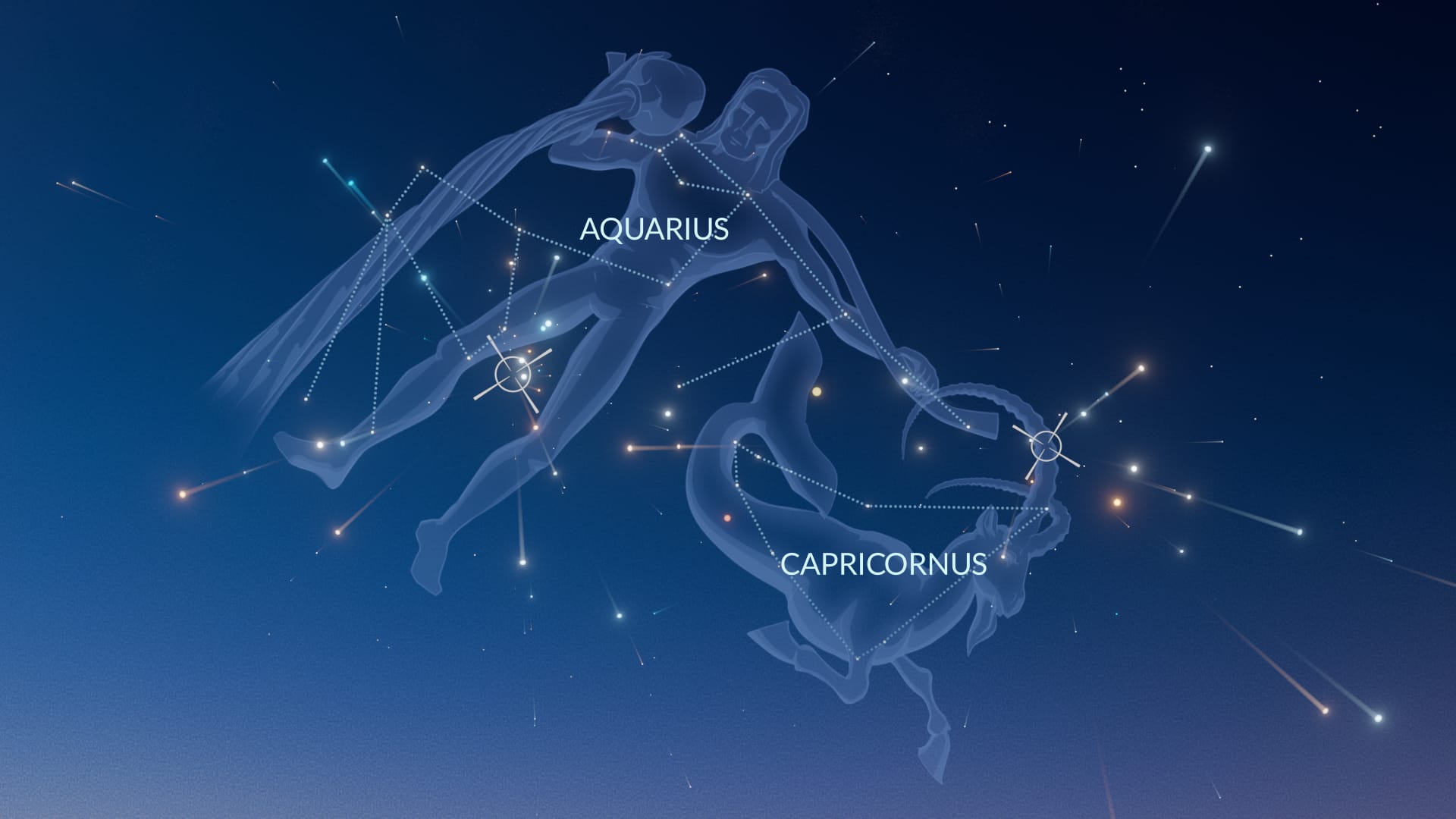
A “double” meteor shower peak occurs on the night of July 30–31, favoring the Southern Hemisphere. The Southern δ-Aquariids and α-Capricornids reach their maximum at the same time, normally producing about 25 and 5 meteors per hour, respectively.
In 2026, the Full Moon on July 29 will brighten the sky, so try blocking its glare with a building, tree, or hill. Both meteor showers are easier to observe from southern and mid-northern latitudes; far-northern regions see fewer meteors. Since these meteors are generally faint, moonlight will make spotting them harder than usual.
The δ-Aquariids are known for their steady activity lasting several weeks, while the α-Capricornids are famous for bright, slow fireballs, even though they produce fewer meteors.
Learn more: Meteor Showers in Late July 2026
November 17: Leonids peak (15 meteors/hour)
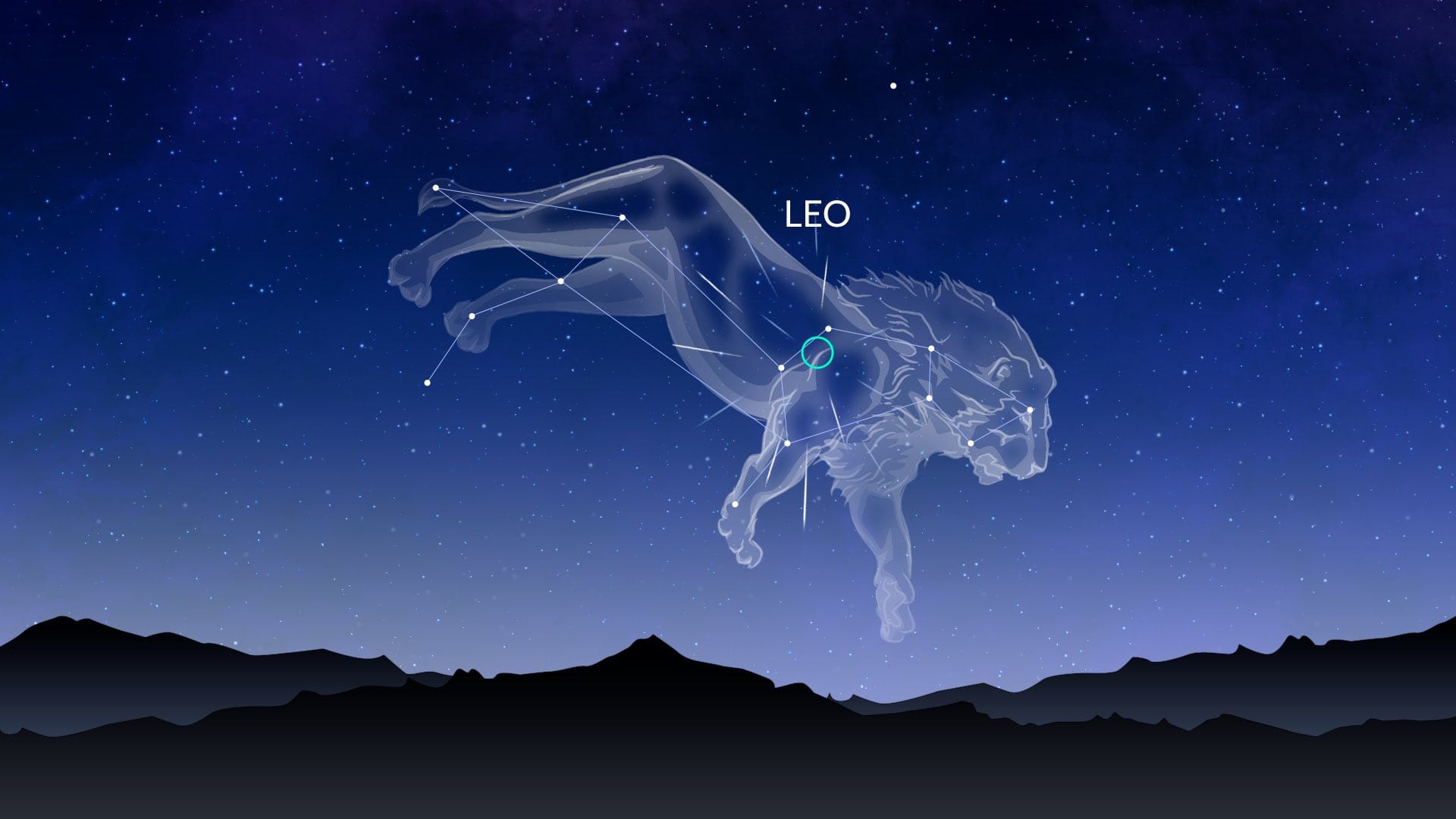
On the night of November 17–18, the Leonids reach their peak, usually around 15 meteors per hour. This shower is famous for its past meteor storms, and although none are expected in 2026, astronomers predict slightly increased activity between November 17–19.
The peak is forecast for November 17 at 23:45 GMT. The Moon, near its first quarter, will set around midnight, leaving darker skies for the second half of the night — just as the radiant climbs higher and reaches its best viewing position before dawn.
Learn more: Leonid Meteor Shower in November 2026
Planet events in 2026 worth watching
One of the easiest and most rewarding astronomical sights to observe or photograph is when two or more planets appear close together in the sky. To the naked eye, they look like bright points of light, but the fact that these are distant worlds is truly mind-blowing. You’re seeing across vast stretches of space with nothing more than your own eyes. Here are some of the most noteworthy planetary events in 2026.
March 8: Bright Venus close to ringed planet Saturn
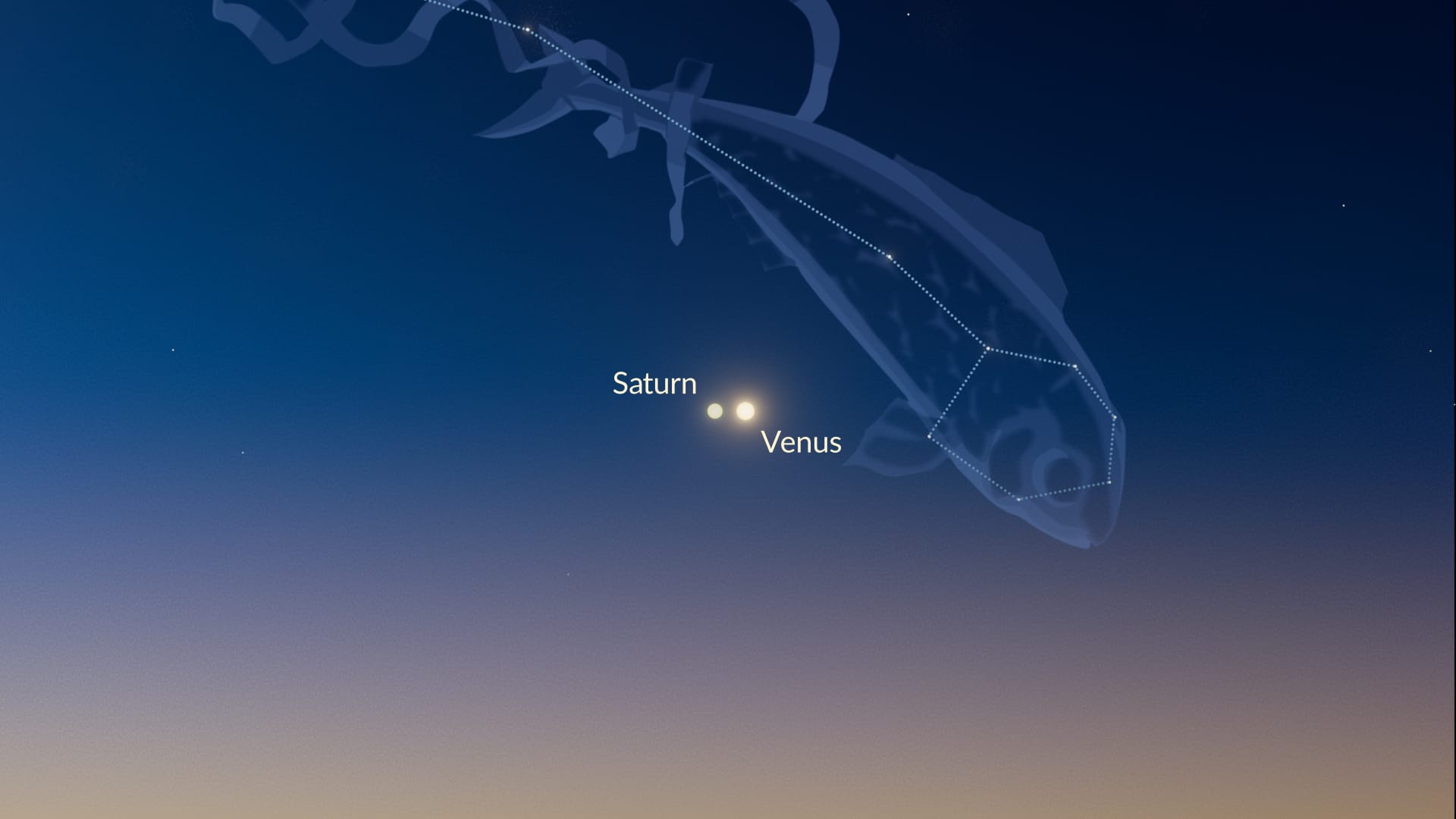
On the evening of March 8, look low above the western horizon, in the direction of sunset, to find brilliant Venus passing close to Saturn in the constellation Pisces. The pair will be visible about an hour after sunset.
Both planets can be seen without any optical aid, but binoculars or a telescope will greatly improve the view of Saturn. Through them, you may glimpse its iconic rings — countless fragments of ice and rock coated with dust and other material. It’s astonishing to think that you’re looking at an object roughly 1.4 billion kilometers away from your backyard.
Venus in binoculars will still appear as a bright point of light. Around March 8, it will be near its full phase, about 97% illuminated, so its shape won’t change much in optics — but its brilliance will make it stand out strikingly next to Saturn.
November 25: Uranus at opposition
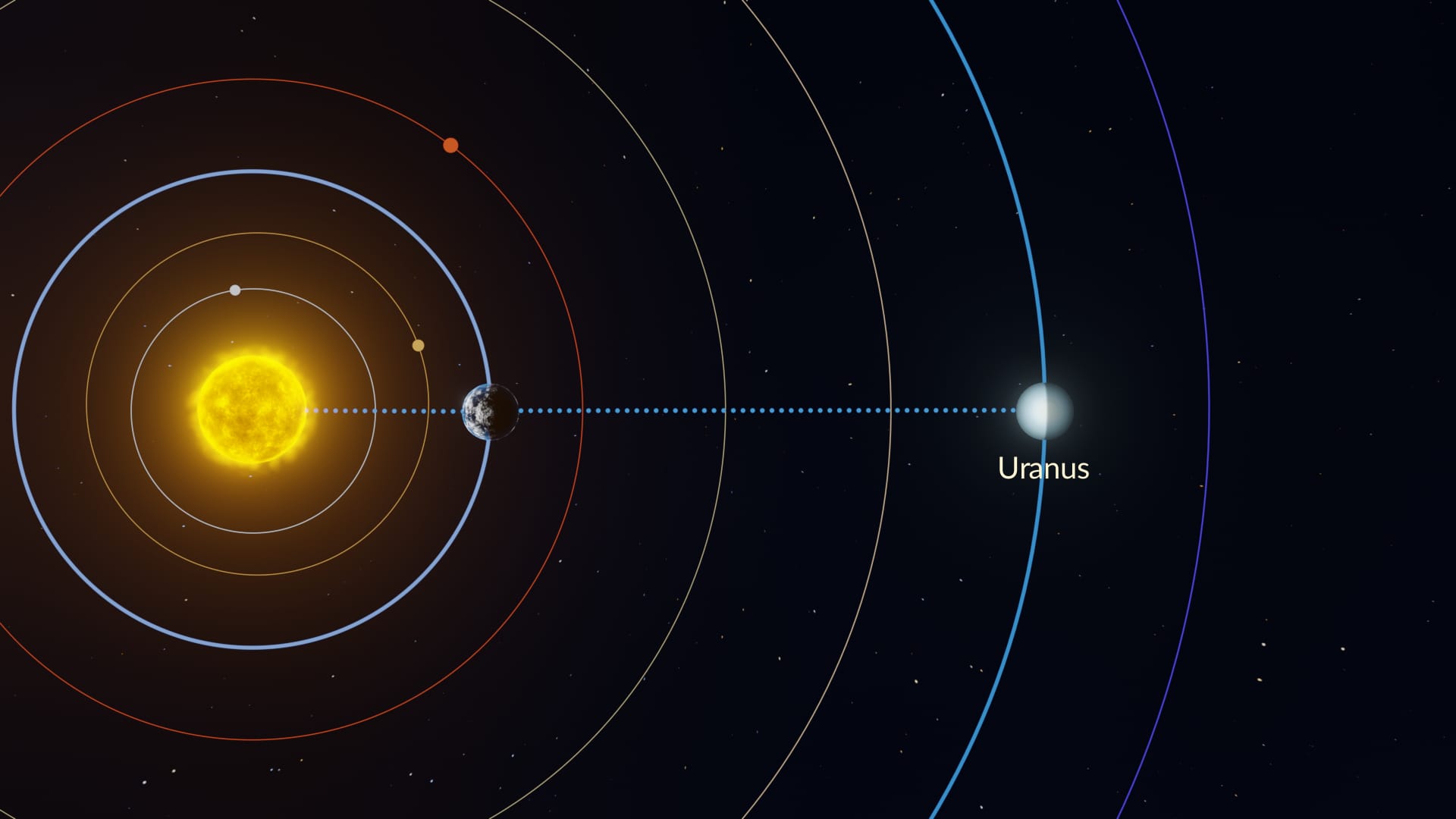
Uranus will be in opposition to the Sun on November 25, 2026, at 22:40 GMT, shining at magnitude 5.6 — its brightest for the year. On this night, the planet will rise in the east at sunset and remain visible all night in the constellation Taurus. In theory, Uranus can be glimpsed with the naked eye under very dark skies, but in practice it’s much easier to observe with good binoculars or a telescope. With a medium-sized telescope, you may even spot up to four of its moons: Titania, Oberon, Umbriel, and Ariel.
Around opposition, Uranus will also make its closest approach to Earth in 2026, at a distance of about 18.4 astronomical units. Its apparent disk will reach its largest size for the year, about 3.8 arcseconds across.
All outer planets can reach opposition, and this is generally the best time to observe them. Oppositions of the brighter outer planets, such as Jupiter and Saturn, are among the highlights of the astronomical events of 2026.
Planetary Alignments 2026
Planetary alignments are always exciting to watch. The big ones, involving five to seven planets, get most of the attention. In 2026, they will take place on:
- February 28, 2026 (a large evening alignment of Mercury, Venus, Neptune, Saturn, Uranus, and Jupiter);
- August 12, 2026 (a large morning alignment of Jupiter, Mercury, Mars, Uranus, Saturn, and Neptune).
However, smaller alignments can look even more elegant because the planets gather in a tighter part of the sky. Here’s what 2026 has in store.
Planetary Alignment in April 2026

On the mornings around April 18, Saturn, Mars, Mercury, and Neptune will line up in a very small sector of sky, about 4° wide (depending on your location). This alignment will be hard to see, since all the planets will lie close to the Sun. Try looking low above the eastern horizon about an hour before sunrise. Viewers in the Southern Hemisphere will have a better chance, as the planets sit slightly higher while the sky is still dark.
Saturn, Mars, and Mercury will be visible to the naked eye. Neptune can normally be seen with a small telescope, but with the brightening morning sky, it will likely be too faint to spot even with optics.
Planetary Alignment in June 2026
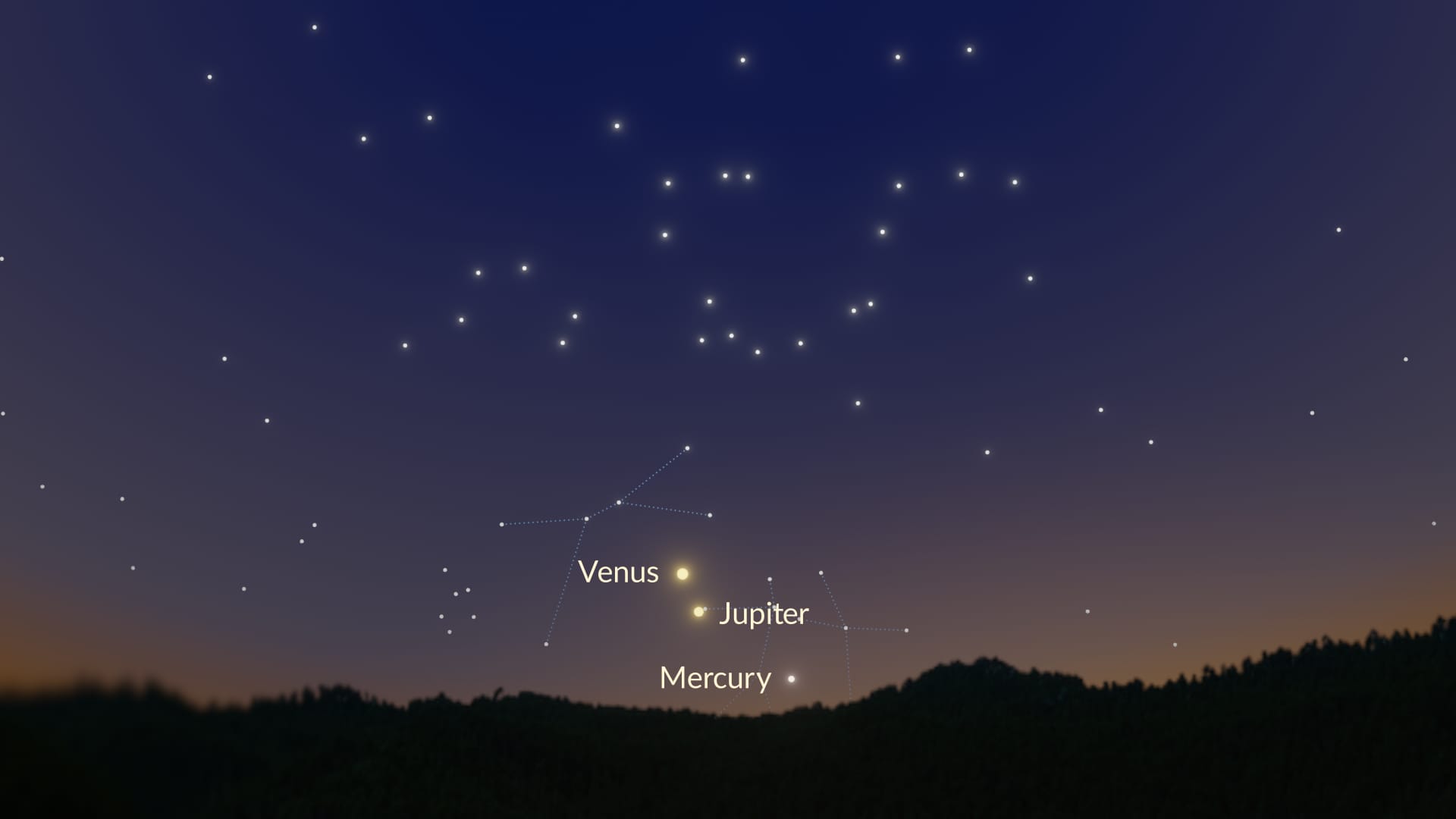
Around June 12, a mini three-planet alignment will take place. About an hour after sunset, look above the western horizon to see Mercury, Jupiter, and Venus lined up in the sky. All three will be easy to spot with the naked eye, gathered in about a 10° sector (roughly the width of your fist at arm’s length).
Starting from June 16, a very thin crescent Moon will also join the scene, making the view even more beautiful.
Planetary Alignment in November 2026
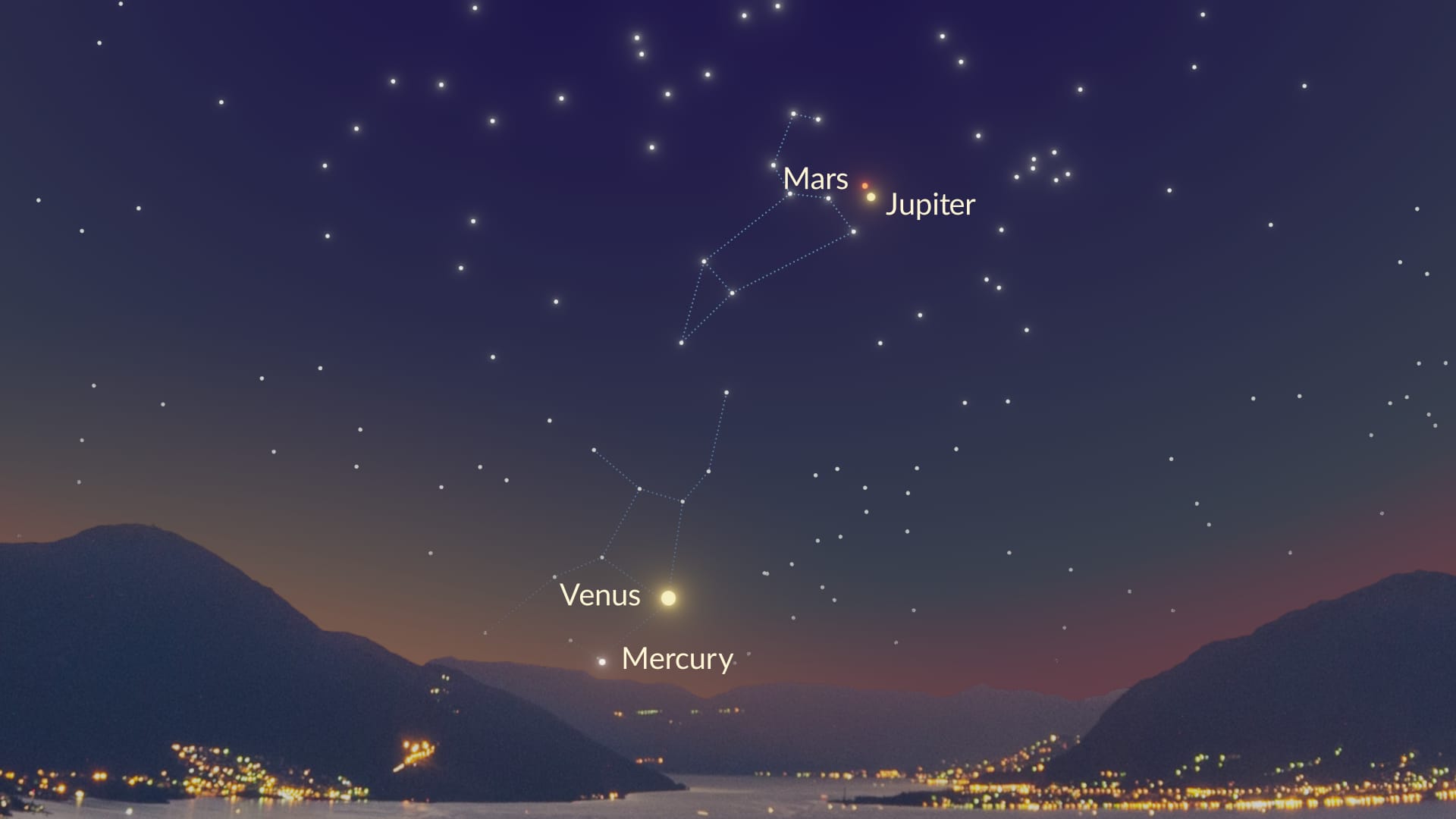
Around the mornings of November 14, Mercury, Venus, Mars, and Jupiter will line up in the southeastern sky in the Northern Hemisphere and the northeastern sky in the Southern Hemisphere. The planets will span about a 50° sector of the sky.
Near the horizon, you’ll find Mercury and bright Venus, both staying close to the Sun. Higher up, Mars and Jupiter will appear close together. All four planets will be visible to the naked eye, but you’ll need to look for Mercury shortly before sunrise, while the sky is still dark enough.
The view will be much better in the Northern Hemisphere. In the south, Mercury will be too close to the Sun and will be almost invisible.
Comets in 2026 that may offer pleasant views
Comets are famously unpredictable — even those expected to shine brightly may fade or break apart, while faint, unremarkable ones can suddenly flare and become worldwide sensations. As of now, the brightest comet of 2026 is expected to be C/2025 R3 (PANSTARRS), with the most optimistic forecasts placing its peak brightness around magnitude 3.7 near April 25, 2026, which means it may become visible to the naked eye under dark sky. But who knows what surprises the Universe might have in store?
Here’s a look at other comets that may also offer rewarding views in 2026.
For the most up-to-date information on potentially bright comets, be sure to check our Upcoming Comets Calendar.
January–February 2026: Comet C/2024 E1 (Wierzchos)
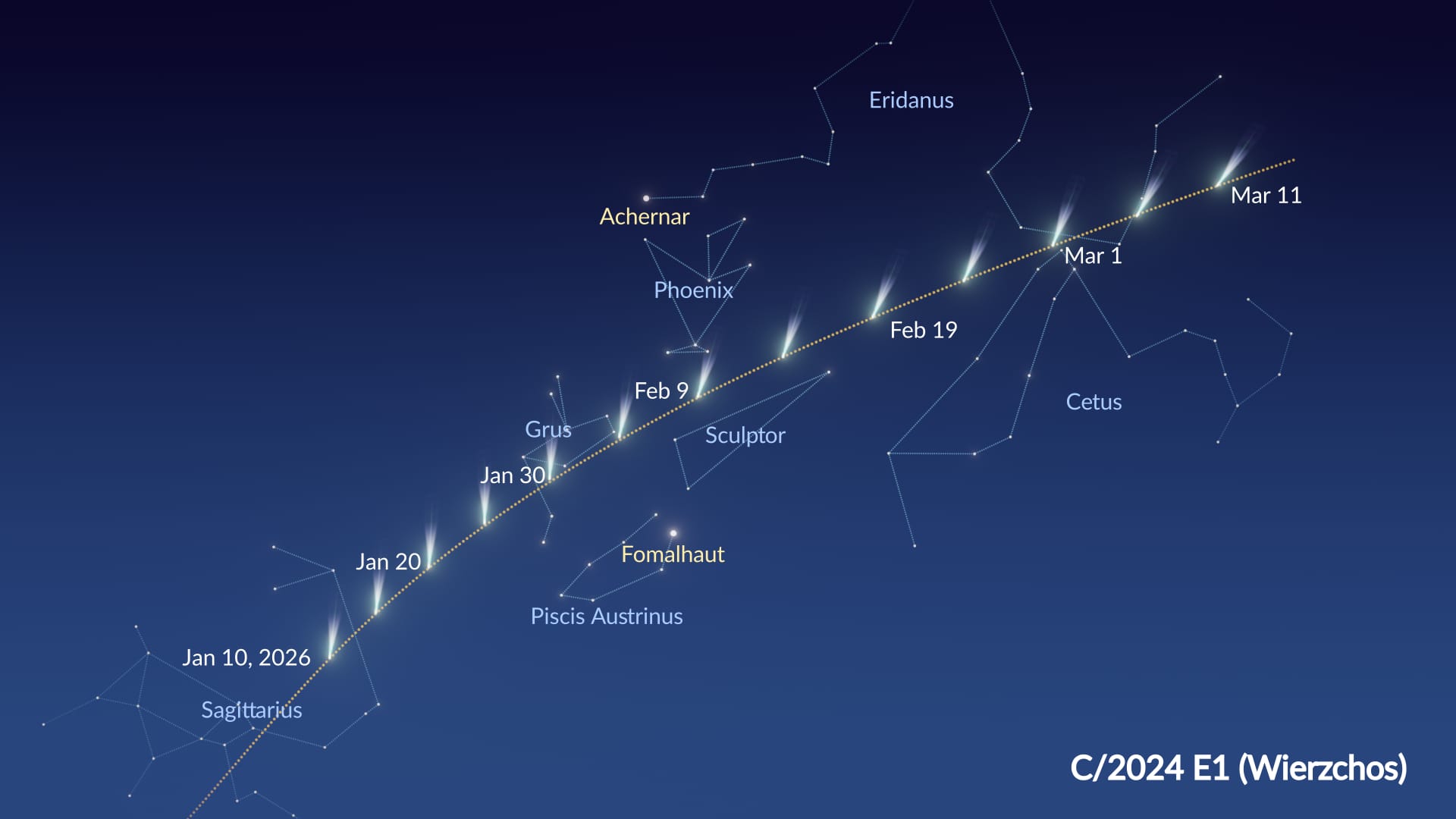
Comet C/2024 E1 (Wierzchos) will be one of the most interesting celestial objects in early 2026.
It will reach perihelion on January 20, 2026, passing 0.56 astronomical units (about 85 million km) from the Sun. Around this time, Comet Wierzchos is expected to peak at about 5th magnitude, making it an easy target for binoculars or a small telescope. On the day of perihelion, it will appear roughly 22° away from the Sun in the evening sky, very low above the southwestern horizon and visible only from the Southern Hemisphere. In most locations in the Northern Hemisphere, it will either rise during daylight or not rise at all.
The comet will become accessible to observers in the Northern Hemisphere later, near its closest approach to Earth on February 17, 2026. By this time, the comet will move farther away from the Sun’s glare in our sky and will return to the evening sky for some northern locations (around 42°N and farther south), appearing very low above the southwestern horizon about an hour after sunset. In the Southern Hemisphere at this time, Comet Wierzchos will be positioned relatively high in the southwestern sky.
By the time of perigee, the comet will have faded to about 8th magnitude, but it will still be an easy object to spot with binoculars or a small telescope under dark skies.
July–August 2026: Comet 10P/Tempel 2
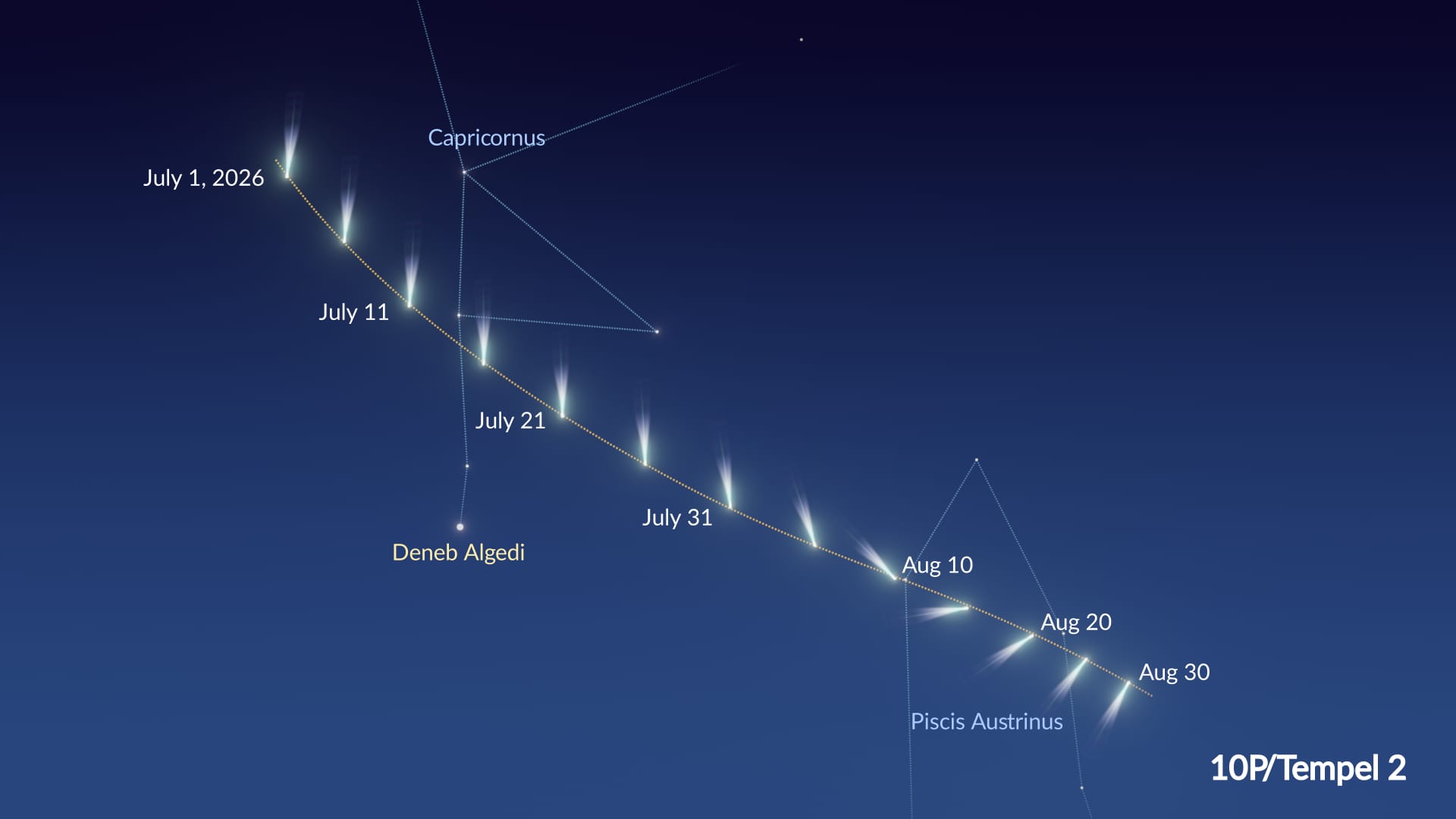
Comet 10P/Tempel 2 will be well-placed for observation in July and August 2026, becoming visible in the evening sky shortly after sunset. Observers in both hemispheres will have a chance to see it, though it will appear higher above the horizon for those in the Southern Hemisphere. Around its perihelion on August 2, 2026, the comet is expected to reach a brightness of about magnitude 8, making it an easy target for binoculars or a small telescope under dark skies. Its closest approach to Earth will follow the next day, on August 3, when it will pass at a distance of 0.41 astronomical units (about 62 million km).
Comet Tempel 2 is a well-known periodic Jupiter-family comet, first discovered on July 4, 1873, by Wilhelm Tempel. It completes one orbit around the Sun roughly every 5.37 years, traveling between 1.42 AU at perihelion and 4.71 AU at aphelion. The 2026 apparition will offer favorable conditions for observers and a good opportunity to study this returning comet.
Bottom line: Don’t let 2026’s celestial events pass you by
2026 offers many sky events that are not record-breaking, but still rare in their own quiet way — a crescent Moon hiding a bright planet, a modest meteor shower on a clear night, a comet in binoculars after sunset. Together, they create a year full of small celestial “bonuses” that you can enjoy without special equipment or complicated preparation.
To make sure you actually see them — not just read about them afterward — use the free Sky Tonight app. It will show you exactly where each object is in your sky, help you convert times to your location, and keep all these events in one convenient calendar. Instead of waiting for the next “once in a lifetime” spectacle, install Sky Tonight, step outside, and let 2026 surprise you again and again.
More Astronomical Calendars: