Top Astronomical Events 2026: Best Celestial Wonders For Every Month
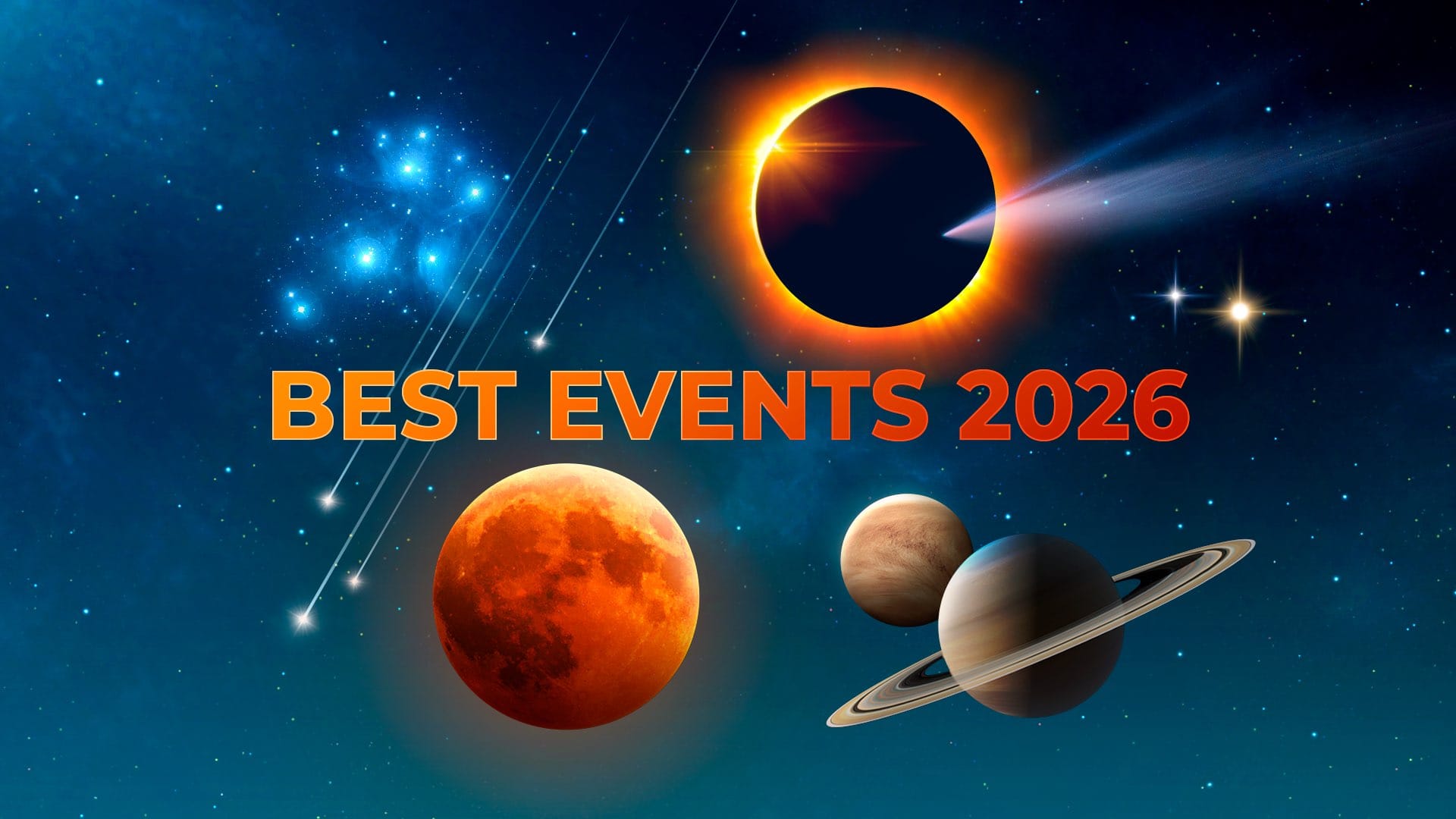
The sky of 2026 will be nothing short of spectacular. To help you keep track of the most exciting moments, we’ve created a special stargazing calendar — one must-see event for every month of the year. Explore them all in Sky Tonight, our interactive astronomy app that helps you identify stars and planets, follow upcoming sky events, and make every night under the stars unforgettable.
Contents
- What Is The Best Celestial Event of October 2026?
Best Astronomy Events in 2026
- January 10: Best Time to See Jupiter in 2026
- February 28: Large Planetary Alignment
- March 3: Blood Moon, or Total Lunar Eclipse
- April 20: C/2025 R3 (PANSTARRS), Possibly One Of The Brightest Comets Of 2026
- May 31: Blue Micromoon, The Tiniest Moon This Year
- June 9: Venus Near Jupiter, Two Brightest Planets Together
- July 11: The Moon Near Mars And Pleiades
- 🌟August 12: Triple Treat — Large Planetary Alignment, Total Solar Eclipse, Perseids Peak
- September 22: Venus at Its Brightest for 2026
- October 4: Best Time To See Saturn in 2026
- November 16: Mars Near Jupiter
- December 14: Geminids Peak
- How to make the most out of every astronomical event: useful tools
- Best astronomical events 2026: to sum up
What Is The Best Celestial Event of October 2026?
October 4 is the best time to see Saturn at opposition: it's bright with its rings clearly tilted and easy to see in a telescope. Learn more in the dedicated section.
Best Astronomy Events in 2026
We made this list with every sky lover in mind — beginners and pros, northern and southern observers, telescope owners and naked-eye watchers alike. Some great events didn’t make the cut, but you’ll find them in our list of the Not-Quite-Best Astronomical Events of 2026 — they’re still worth checking out!
Now, without further ado — let’s get to the best of the best!
January 10: Best Time to See Jupiter in 2026
The biggest planet in our Solar System takes the spotlight this month! On January 10, Jupiter reaches opposition — standing directly opposite the Sun and shining at its very brightest. Its magnitude will reach –2.7, and the planet’s disk will span about 45.6 arcseconds, making Jupiter hard to miss even for casual stargazers.
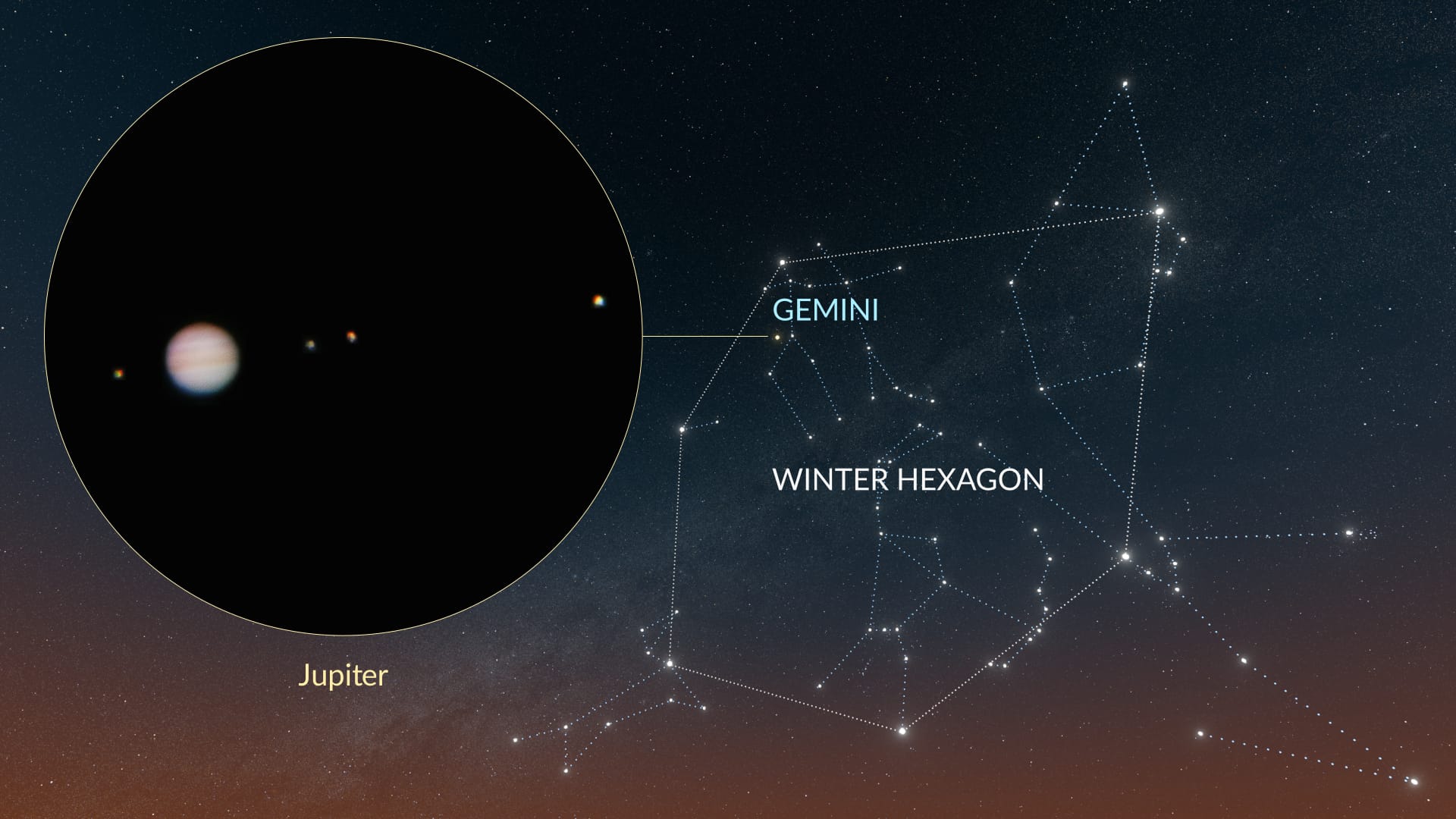
You’ll see Jupiter glowing all night long, from sunset to sunrise, high in the constellation Gemini. Use the Winter Hexagon asterism as your guide — the planet shines right inside this huge ring of stars, near Pollux. Look for the bright, golden “star” that doesn’t twinkle!
You don’t need any equipment to spot it — Jupiter is bright enough for the naked eye. But if you grab binoculars or a small telescope, you’ll notice four little dots nearby — the Galilean moons: Io, Europa, Ganymede, and Callisto. They never sit still, constantly shifting their positions, hiding behind the planet, or gliding in front of it. Don’t be surprised if you see only three moons instead of four — one of them is probably just taking a quick lap behind the giant!
Those four bright dots are only the most famous ones — Jupiter actually has 97 known moons! The rest are much smaller and fainter, visible only through powerful telescopes. For many years, Jupiter proudly held the title of the planet with the most moons — but then another gas giant quietly took that crown. Any guesses which one? Test your smarts in our quiz about the cosmic record holders!
February 28: Large Planetary Alignment
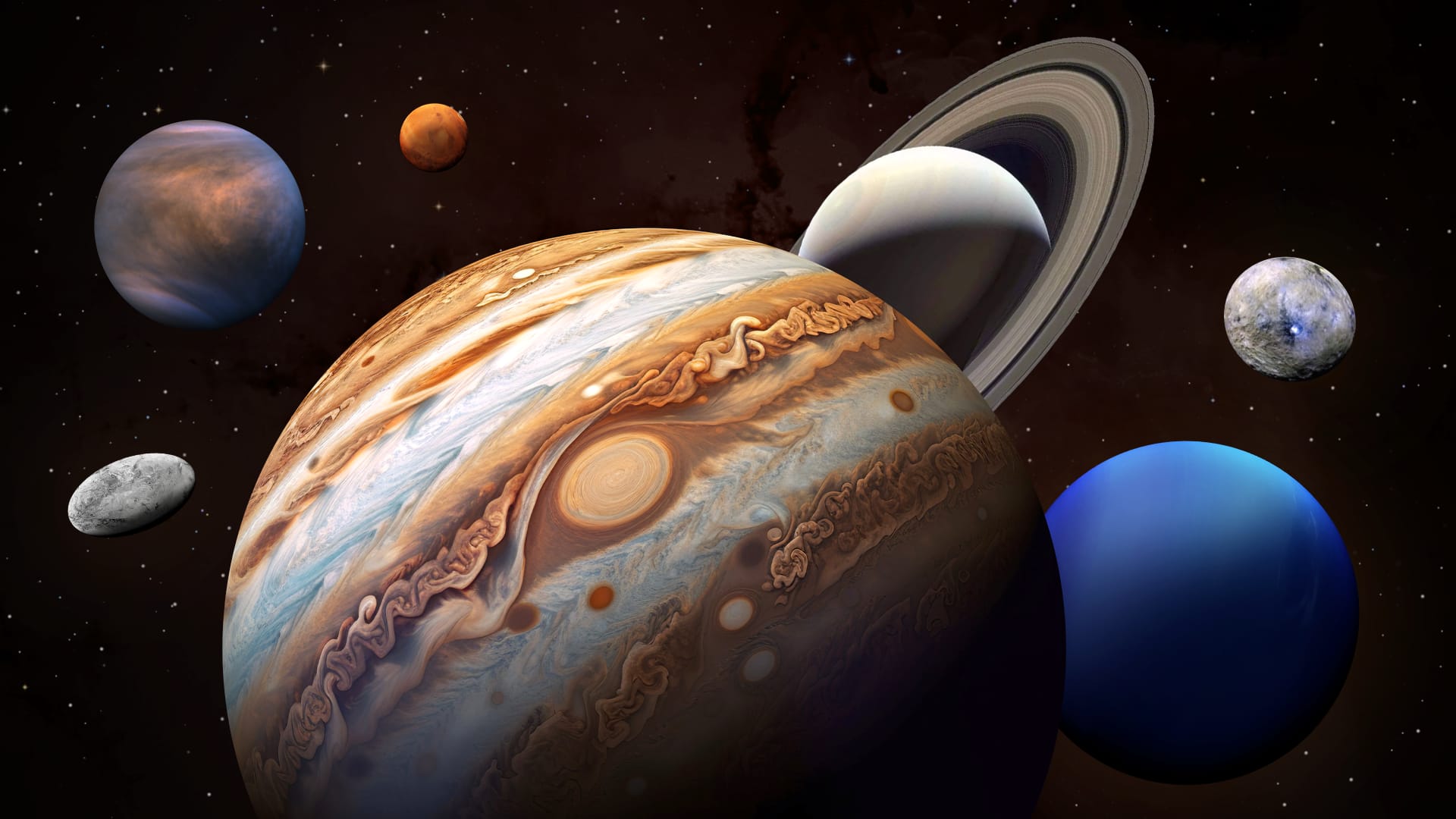
Around February 28, six planets — Jupiter, Uranus, Saturn, Neptune, Venus, and Mercury — will gather for a rare planetary alignment. About an hour after sunset, you’ll see them lined up in a gentle diagonal, rising from the western horizon up toward the almost full Moon.
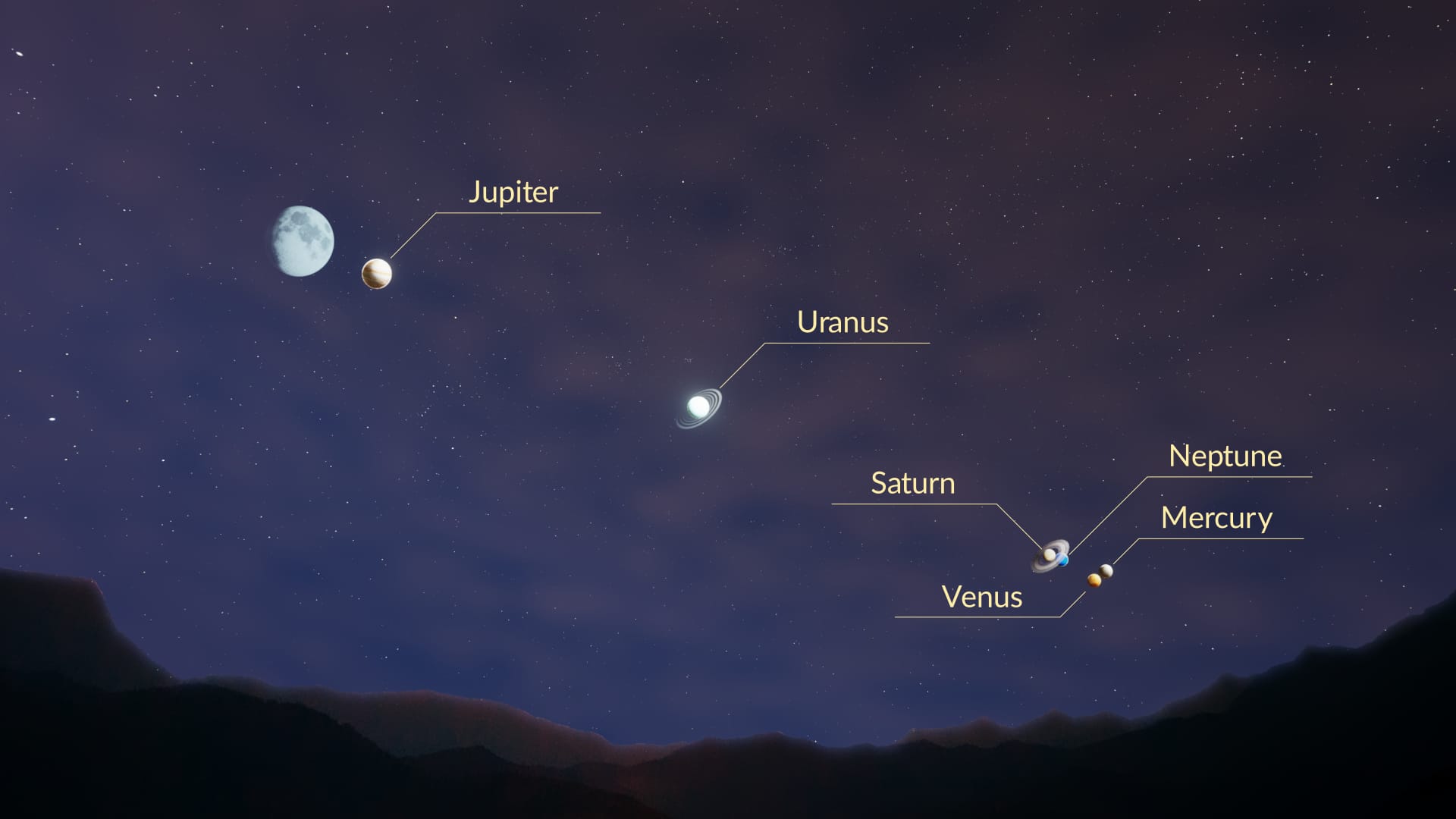
Four of the six — Jupiter, Saturn, Venus, and Mercury — will be bright enough to spot with the naked eye. Venus will sparkle near the horizon, with Mercury just above it. Higher in the sky, you’ll find Saturn with its soft golden glow and Jupiter shining brilliantly next to the 90% illuminated Moon.
If you have binoculars or a small telescope, try to catch Uranus — it sits about halfway between bright Jupiter and the main group of evening planets. Neptune, meanwhile, will be found close to Saturn. Spotting them might take a bit of effort, but their presence completes this rare celestial lineup.
Curious about all the details — magnitudes, constellations, and timings? Find everything you need in our full article about planetary alignments.
March 3: Blood Moon, or Total Lunar Eclipse
Get ready for one of the most dramatic sights of the year — a total lunar eclipse on the night of March 3, 2026. During the eclipse, the Moon will pass completely through Earth’s shadow and turn a deep reddish color — the event colloquially called “Blood Moon.”
See full guide (visibility map + exact times): Blood Moon 2026 — total lunar eclipse timeline (ET/PT, UTC)
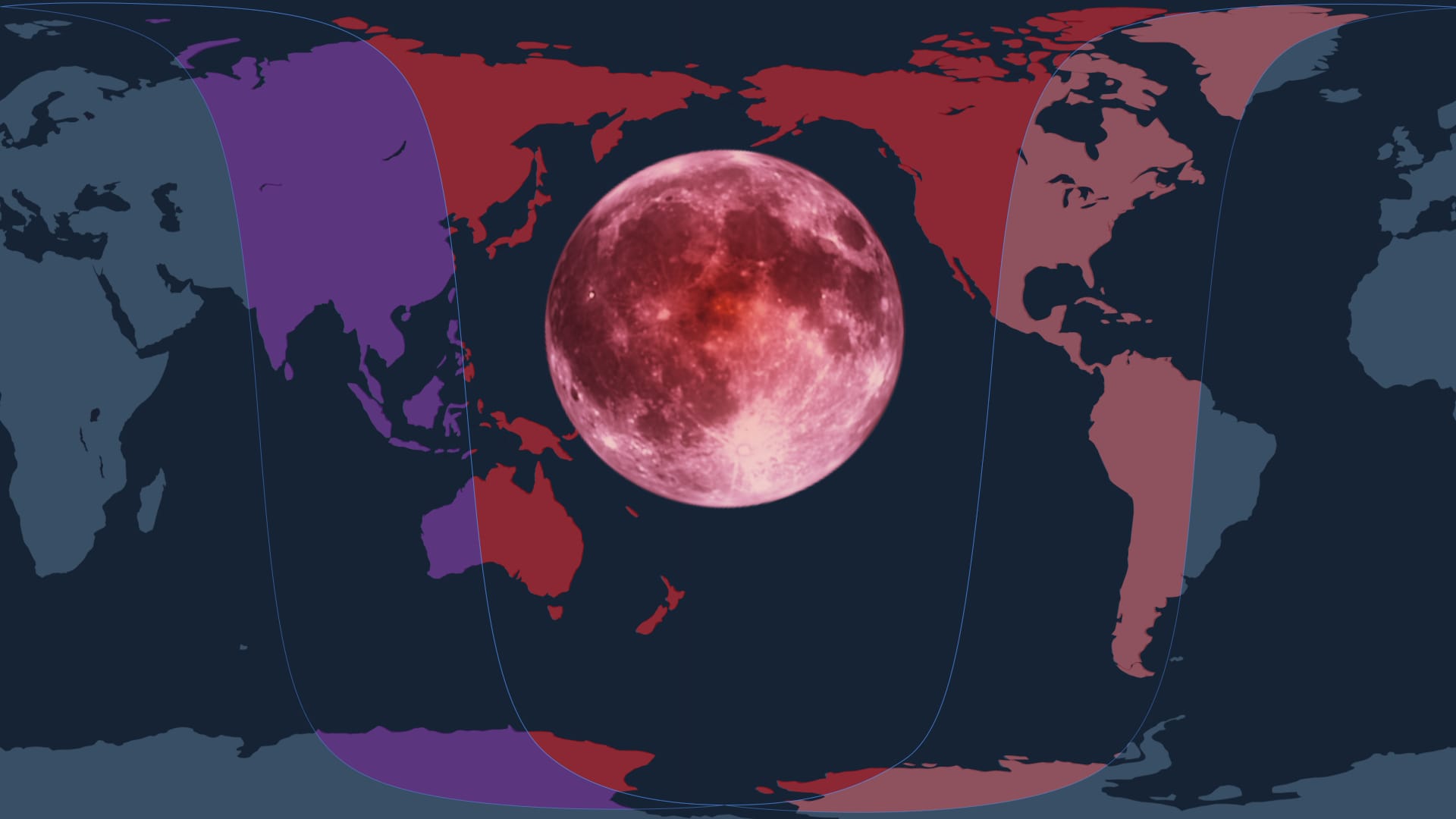
This eclipse will be visible across the Pacific region, with partial visibility from Asia, Australia, and the Americas — basically, anywhere the Moon is above the horizon during the event. The total phase will last for 58 minutes, and the entire eclipse — from the penumbral beginning to the end — will take over 5 hours.
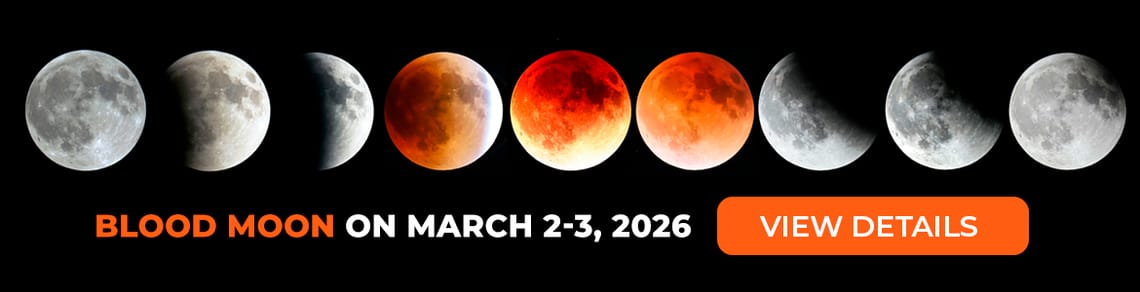
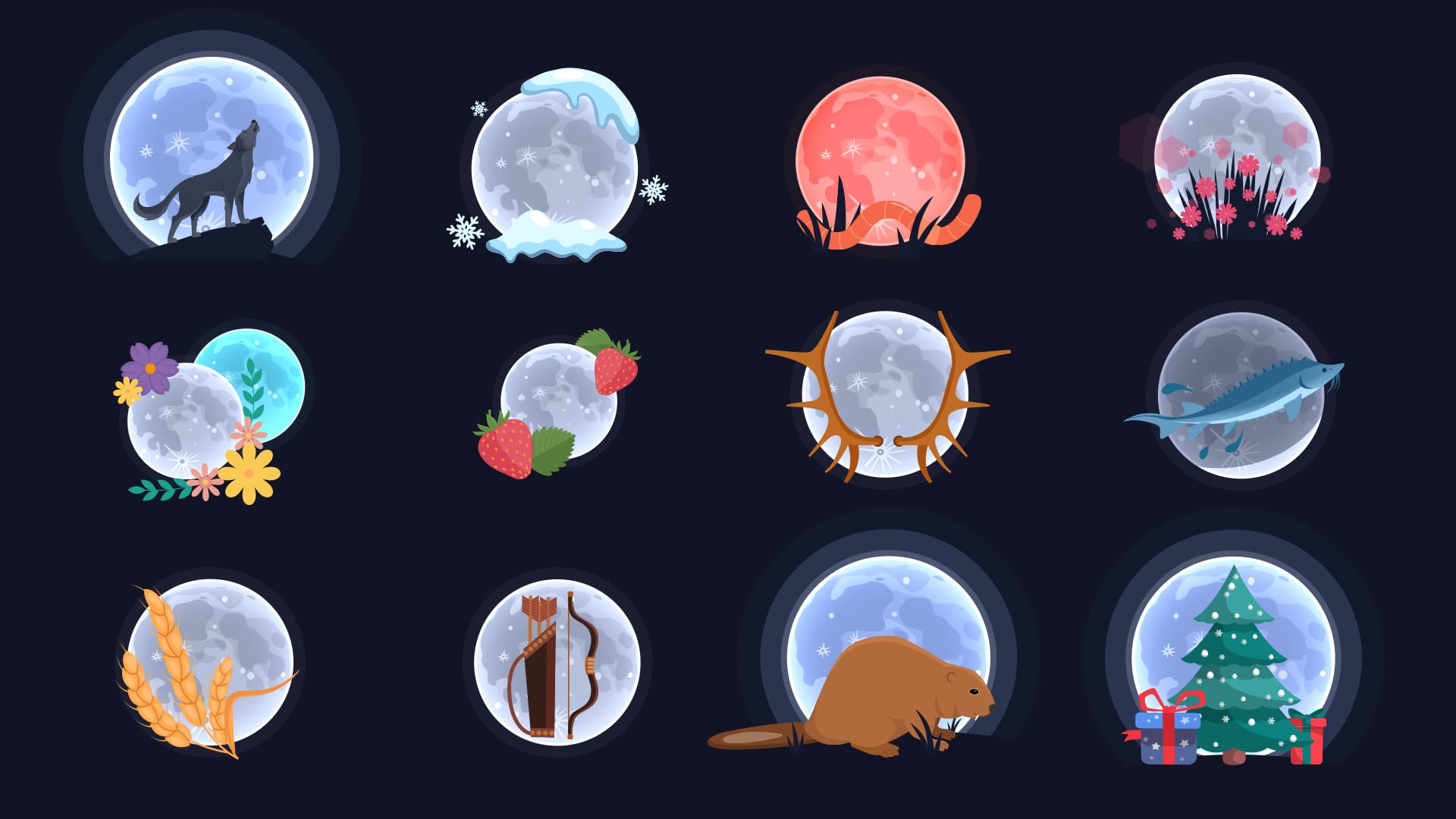
This eclipse coincides with the March Full Moon, traditionally called the Worm Moon. The name comes from Native American traditions — it marks the time when the ground begins to thaw and earthworms reappear, signaling the coming of spring. So, on March 3, we’re getting a Blood Worm Moon (which sounds a bit creepy, doesn't it?).
See exact March Full Moon (Worm Moon) time + best viewing tips: Worm Moon 2026.
Check out our infographic about the Full Moons of 2026 — it shows all the full Moons of the year with their traditional names, exact dates, and gorgeous illustrations. (You might even want to print it out and hang it on your wall — we won’t judge!)
April 20: C/2025 R3 (PANSTARRS), Possibly One Of The Brightest Comets Of 2026
Around April 20, comet C/2025 R3 (PANSTARRS) could reach its peak brightness, possibly around magnitude 3. That’s within naked-eye range under good conditions, and if we’re lucky, it might shine even brighter — some forecasts go as bright as mag -0.5! If those predictions come true, C/2025 R3 (PANSTARRS) could become one of the brightest comets of 2026.
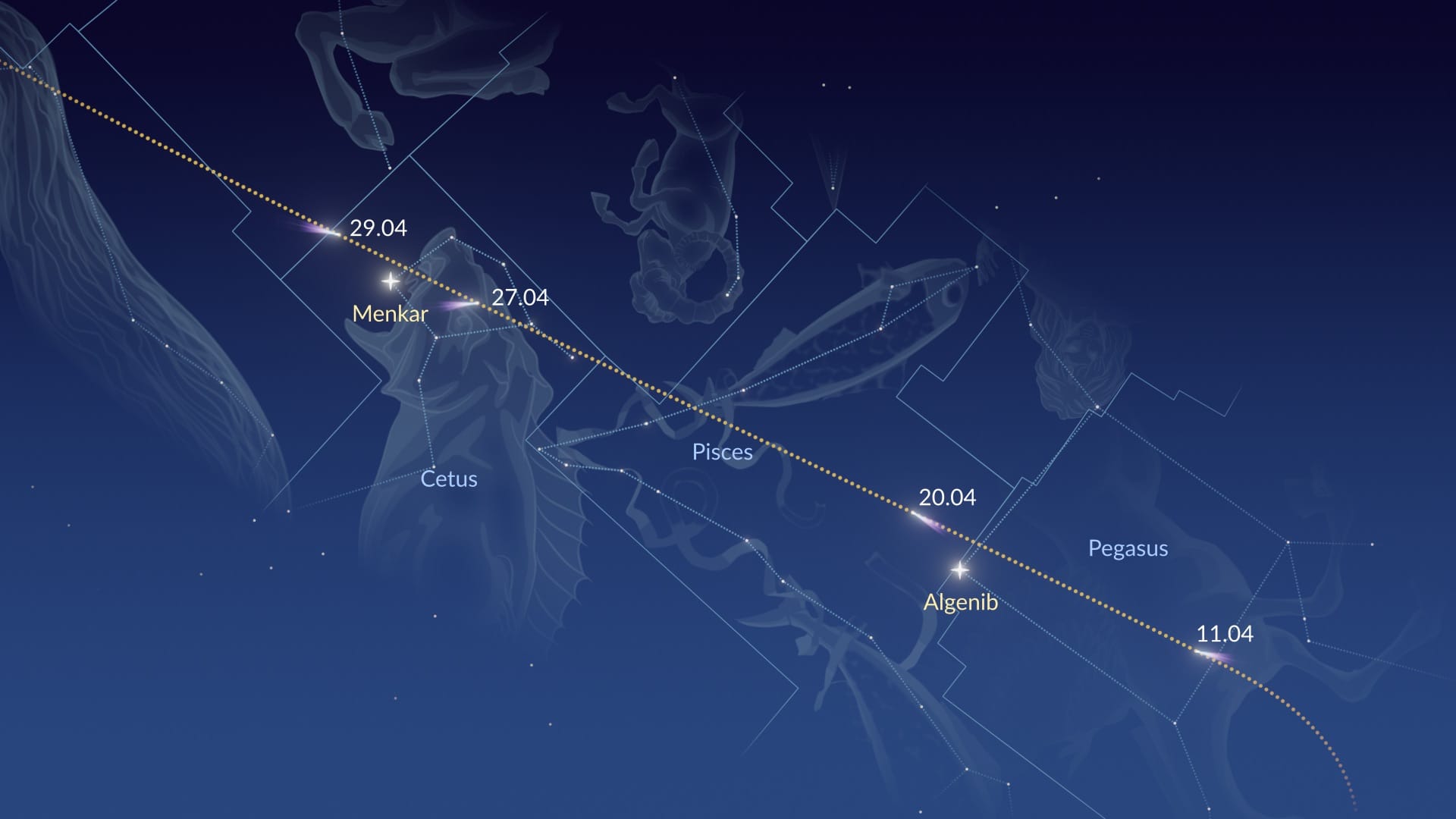
In the Northern Hemisphere, the comet will be best seen in the morning sky during the first half of April, before sunrise. After perihelion on April 19, it will quickly sink into the Sun’s glare and become much harder to observe. In the Southern Hemisphere, viewing conditions are expected to improve in late April and early May, with the comet becoming an evening object.
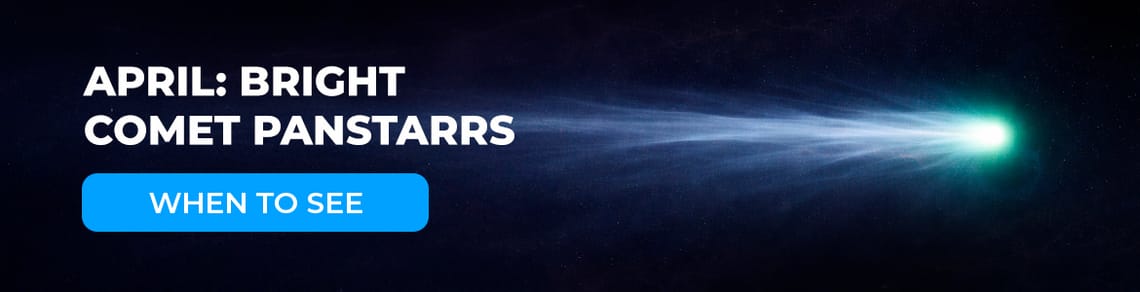
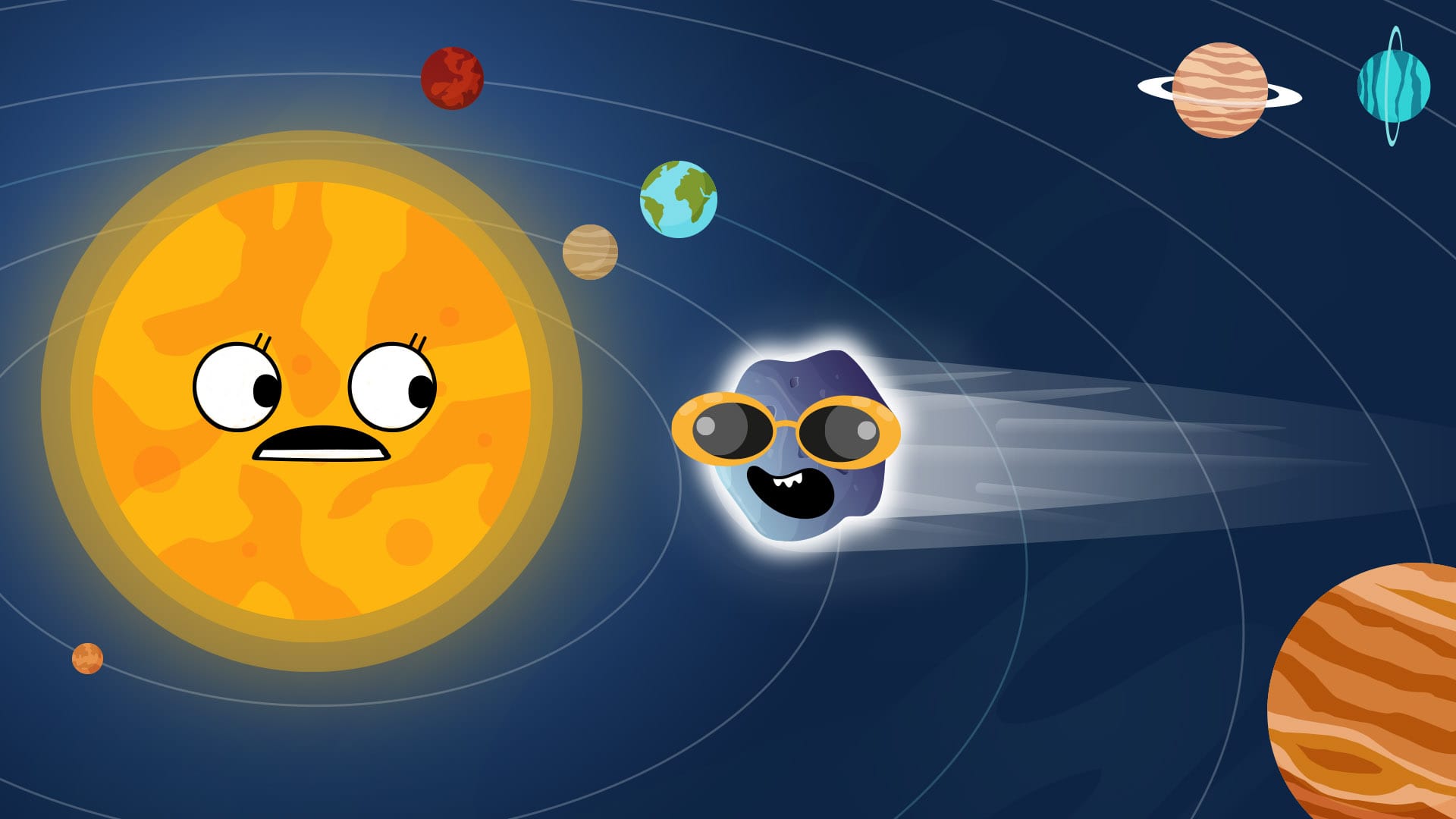
Want to know more details? See our full observing guide to Comet C/2025 R3 (PANSTARRS), including the best viewing dates, brightness expectations, and visibility tips for each hemisphere. And if you’re curious about how comets work — their orbits, tails, and periodic returns — don’t miss our infographic about comets: it’s a quick, colorful guide to everything you ever wanted to know about these icy travelers.
May 31: Blue Micromoon, The Tiniest Moon This Year
Mark your calendars for a rare combo! On May 31, the night sky will feature a Blue Moon — the second Full Moon in a single calendar month — and it also happens to be the year’s smallest Full Moon, or Micromoon. We’ve covered this unusual combination in detail in our dedicated article on the Blue Micromoon of May 2026. Below, you’ll find the key facts at a glance.
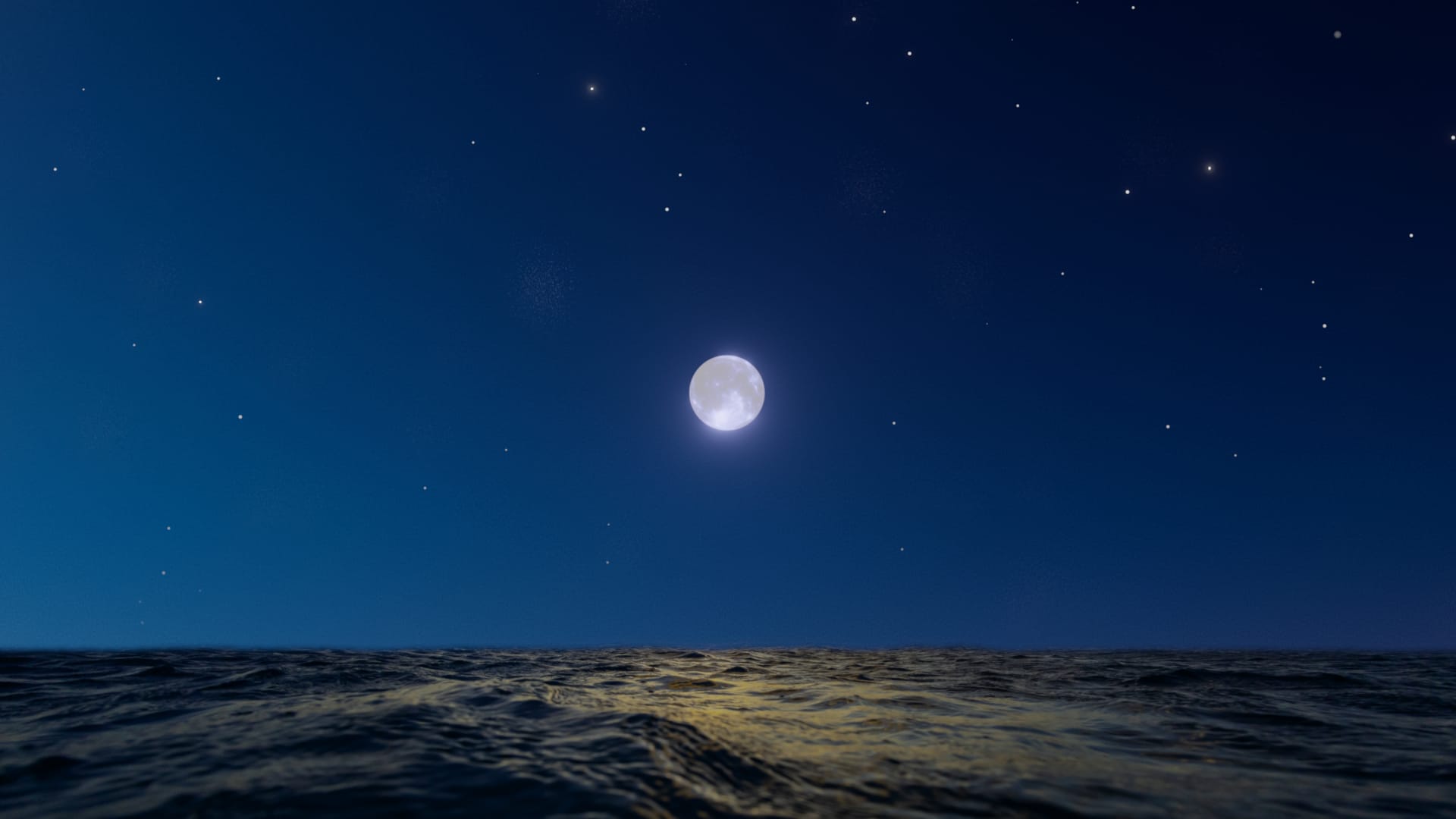
Because the Moon will be near its apogee — the farthest point from Earth in its orbit — it will appear about 5.5% smaller and 10.5% dimmer than a typical Full Moon. The difference is subtle to the naked eye, but fascinating once you know what to look for. If you’re curious how Micromoons compare with Supermoons (and why skywatchers love keeping track of both), take a look at our article about the Supermoons & Micromoons.
Despite the name, the Moon won’t actually turn blue — the “Blue Moon” is nothing more than a name for the “odd” Full Moon. By the way, the Blue Moon isn’t the only “colorful” lunar term out there — we also have the Black Moon, the Blood Moon, and a few others that sound just as dramatic. Curious how many you know? Dive into our Moon Colors quiz!
June 9: Venus Near Jupiter, Two Brightest Planets Together
On June 9, Venus and Jupiter — the two brightest planets in the sky — will meet for a moment in Gemini. They’ll come within 1°30′ of each other, which is just a little more than the width of your finger held at arm’s length. Look for them in the evening sky after sunset. Both planets will be easily visible to the naked eye:
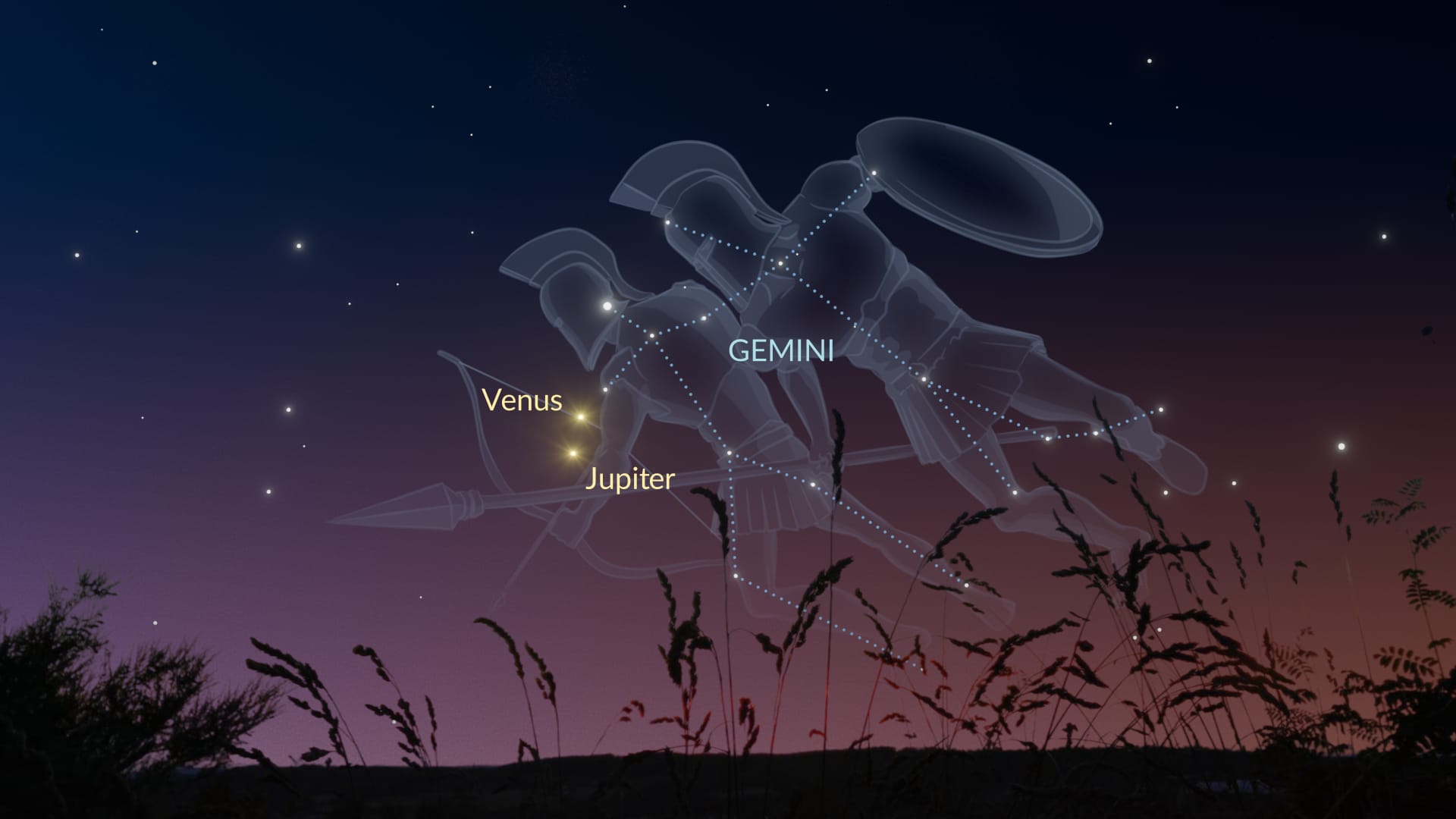
- Venus will shine at a magnitude of –4.0, with an apparent size of 13.9".
- Jupiter will glow at a magnitude of –1.9, spanning 31.9".
Planetary meet-ups like this aren’t as common as they seem; in some years, you can count them on one hand. We cover every one of them (big and small!) in our dedicated guide to planetary conjunctions.
July 11: The Moon Near Mars And Pleiades
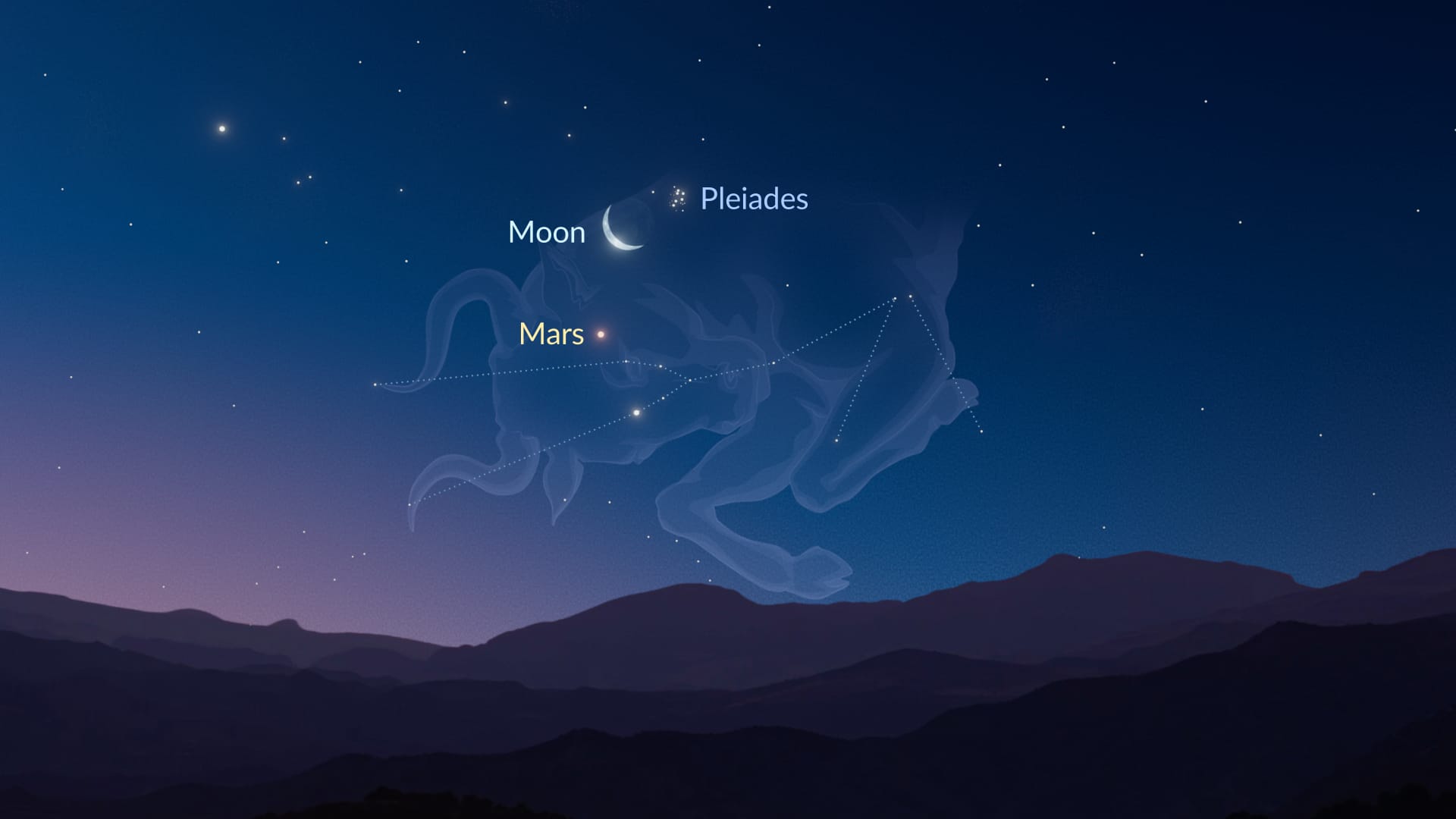
Set your alarm a little early on July 11 — the thin crescent Moon, Mars, and the Pleiades will gather in the pre-dawn sky. The Moon is only 15.6% illuminated, and it’ll be sitting close to the Pleiades, one of the brightest star clusters (mag 1.2).
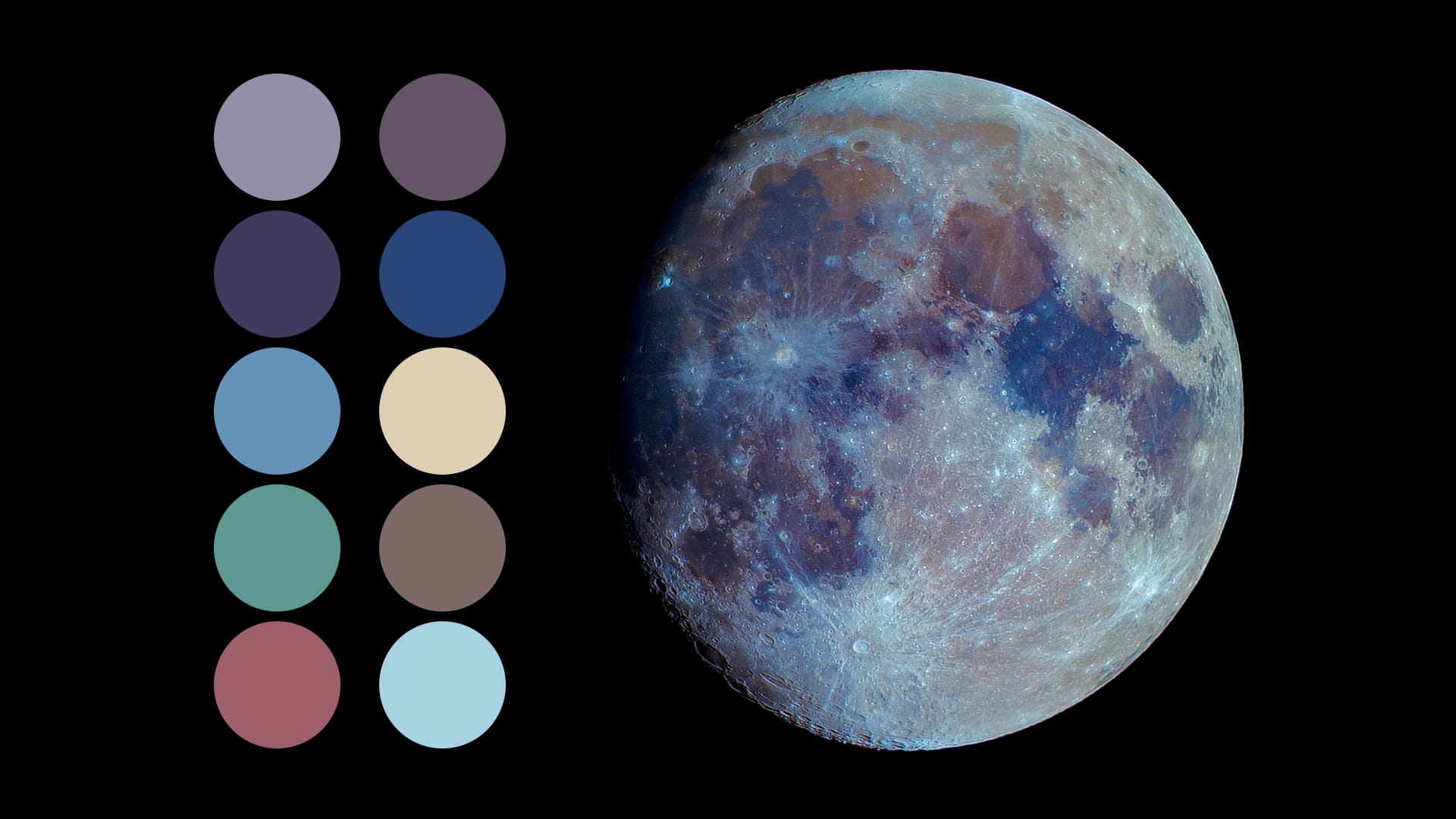
A bit farther away, you’ll find Mars, glowing with its familiar reddish tint (mag 1.3). Together, the pale Moon, blue-white Pleiades, and red Mars form a tiny palette in the sky — pretty and easy to spot even for beginners.
All three objects are visible to the naked eye, but binoculars really bring the Pleiades to life as a sparkling cluster of tiny stars. For the best view, try to get away from light pollution. And if you’re curious about how dark your sky actually is, see our Bortle scale infographic — it’s a handy way to estimate what you can realistically see.
🌟August 12: Triple Treat — Large Planetary Alignment, Total Solar Eclipse, Perseids Peak
August 12 is basically the all-inclusive cosmic buffet of 2026: we’ll have an event for breakfast, lunch, and dinner!
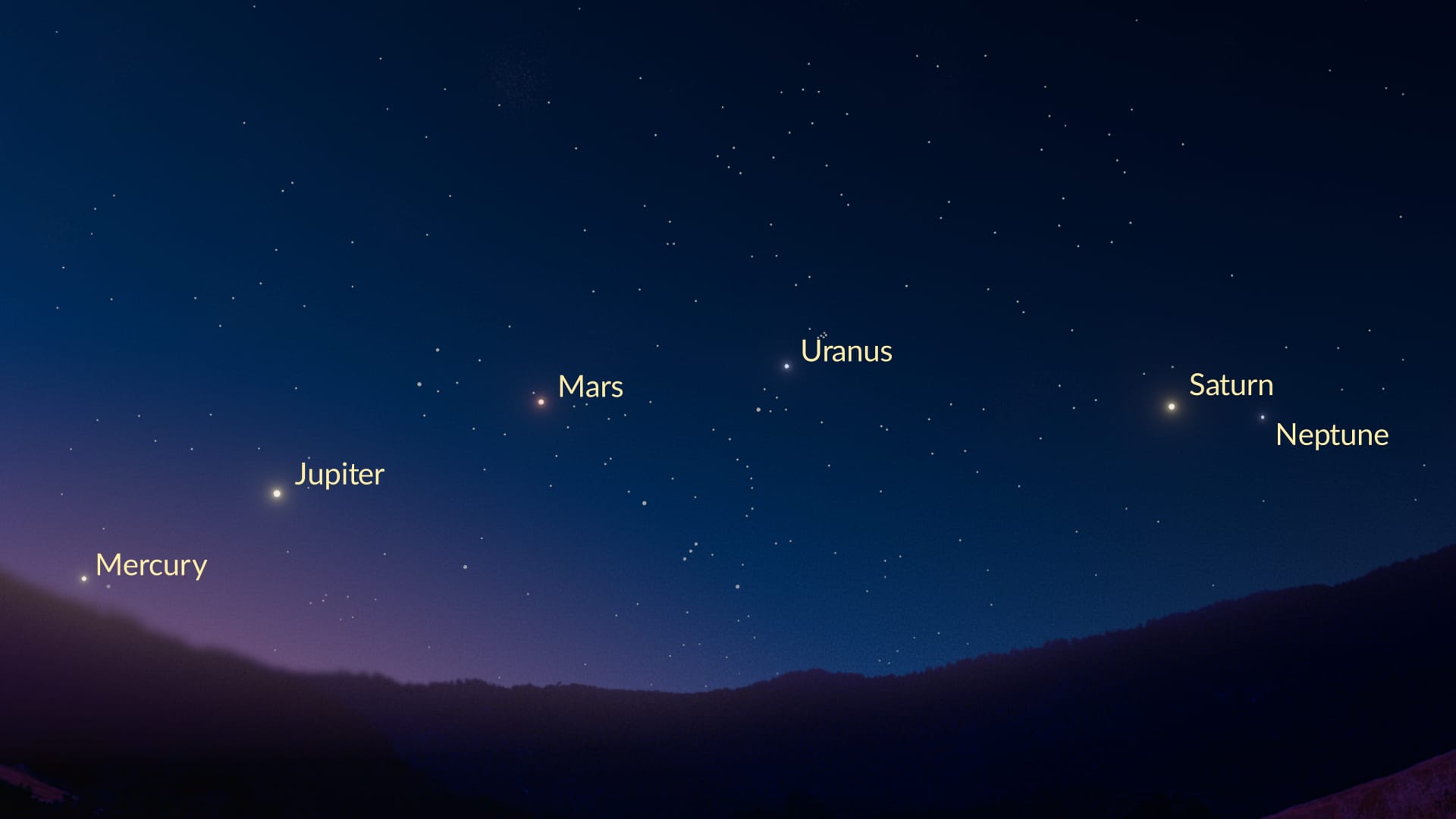
Before sunrise, you’ll see a six-planet alignment featuring Jupiter, Mercury, Mars, Uranus, Saturn, and Neptune. It’s an extended line stretching from the east to the southwest, with the planets rising one by one through the night: Saturn and Neptune rise first, around midnight. Uranus joins a couple of hours later, Mars climbs up about an hour after that, and shortly before dawn, Jupiter and Mercury finally appear to complete the lineup. The bright ones — Jupiter, Mars, Mercury, Saturn — are easy to see with the naked eye. Uranus and Neptune are best found with binoculars or a small telescope.
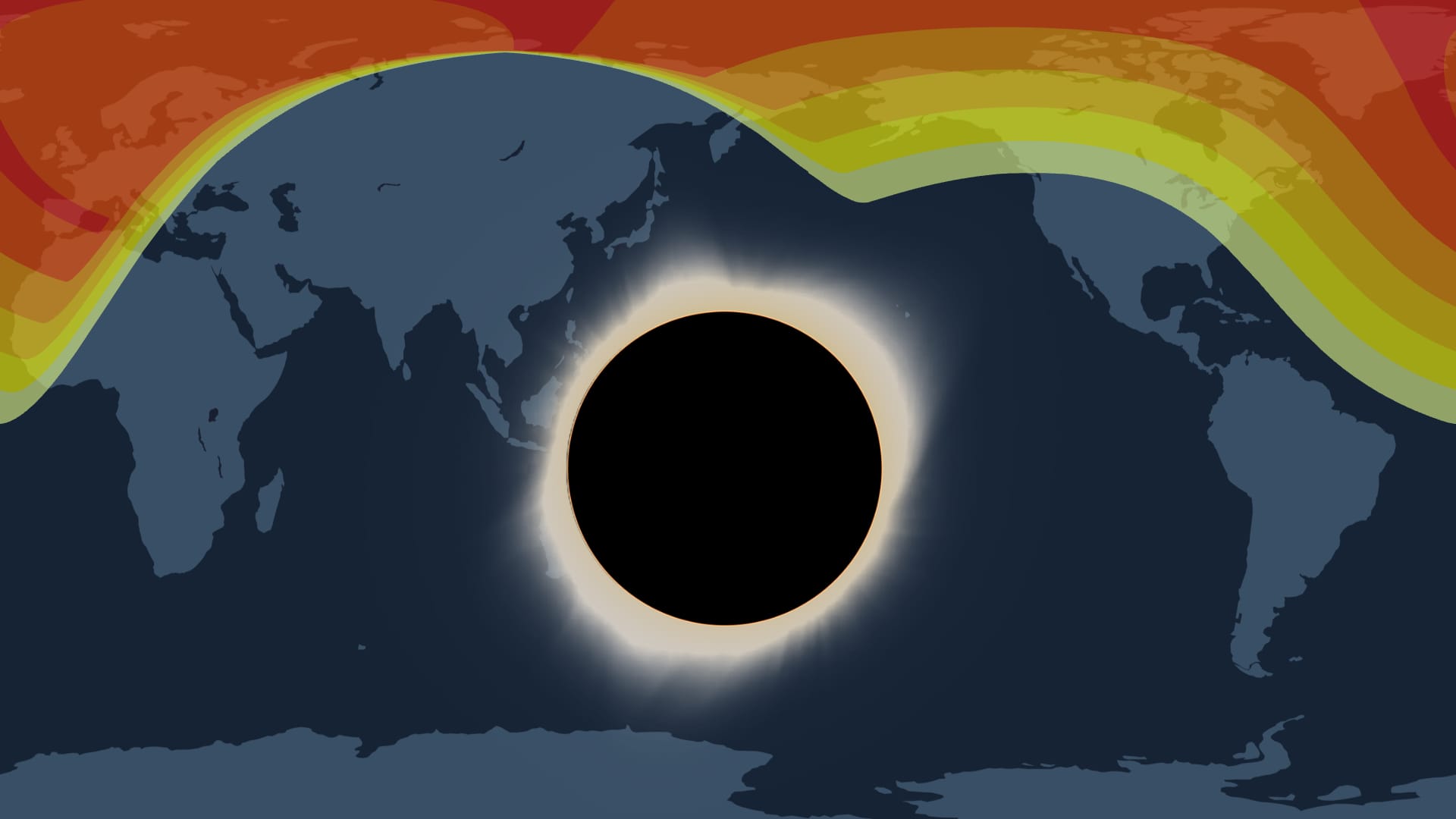
In the afternoon comes the main course — a total solar eclipse. The path of totality crosses Greenland, Iceland, Portugal, and Spain, offering a jaw-dropping view for anyone lucky enough to be in the zone. Across a big portion of Europe, the eclipse won’t be total but will still cover most of the Sun, which is impressive on its own. Totality reaches its maximum at 17:45 GMT, so plan accordingly. And use proper eye protection — no exceptions, you know the drill.
After dark, comes the day’s grand finale: the legendary Perseids, one of the most beloved meteor showers of the year. This time, conditions are perfect — there’s a New Moon, and the sky will be pleasantly dark. The predicted peak is at 14:53 GMT on August 13, so the night of August 12-13 offers one of the best viewing opportunities. Under a dark sky with no Moon, observers often catch more than 90 meteors per hour, many of them bright, colorful, and leaving long-lasting trains.
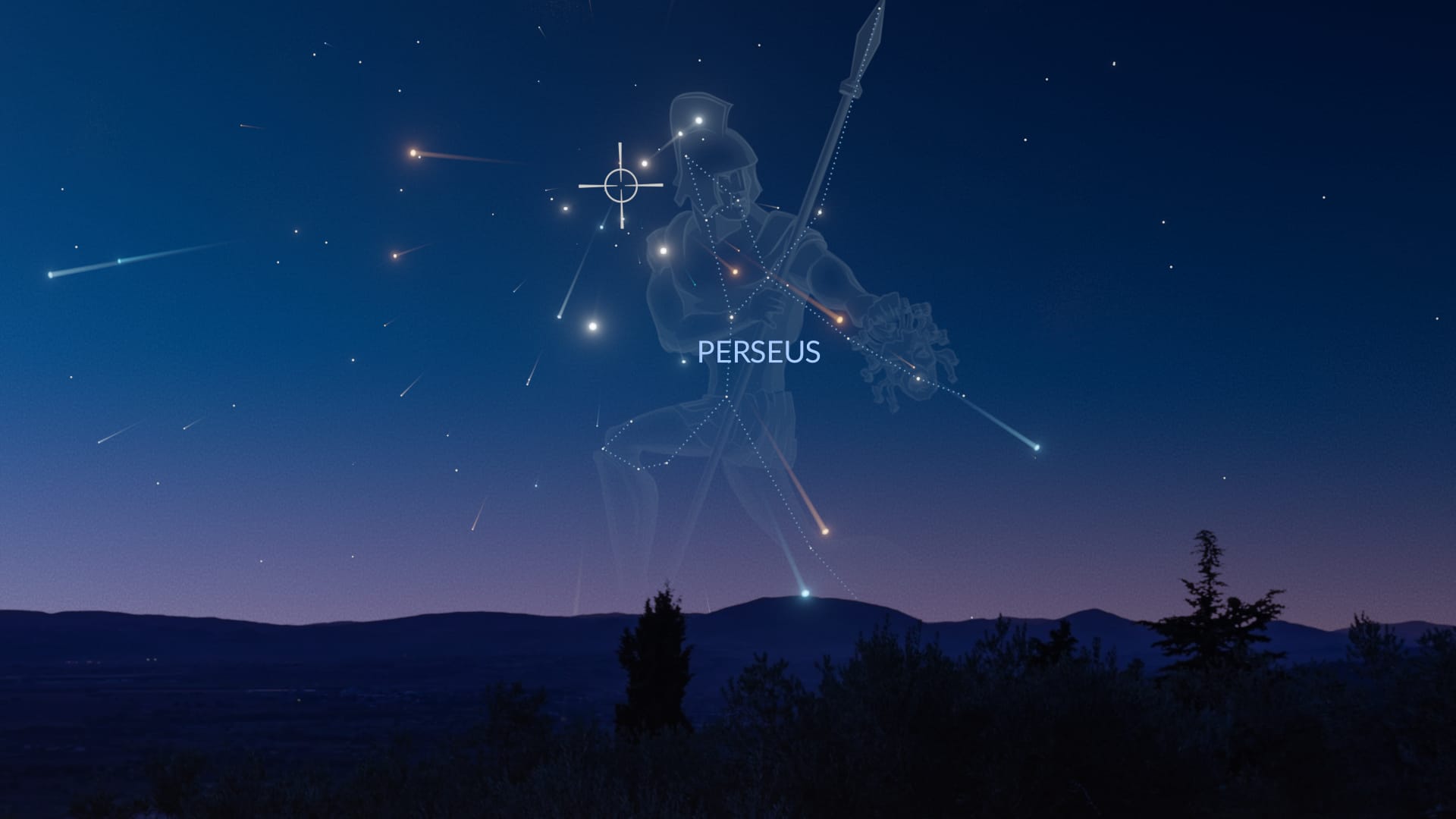
If you manage to see all three events, you've officially earned the right to brag about it for the rest of your life.
Ready to try the full-day challenge? Use our complete guide to the three astronomy events on August 12, 2026 to plan the planetary alignment, eclipse, and Perseids from start to finish.
September 22: Venus at Its Brightest for 2026
This September, Venus is going to be not just the evening star, but the full evening superstar! On September 22, it will reach its greatest brilliance, shining at a magnitude of –4.8. This makes it the brightest Venus will be all year.
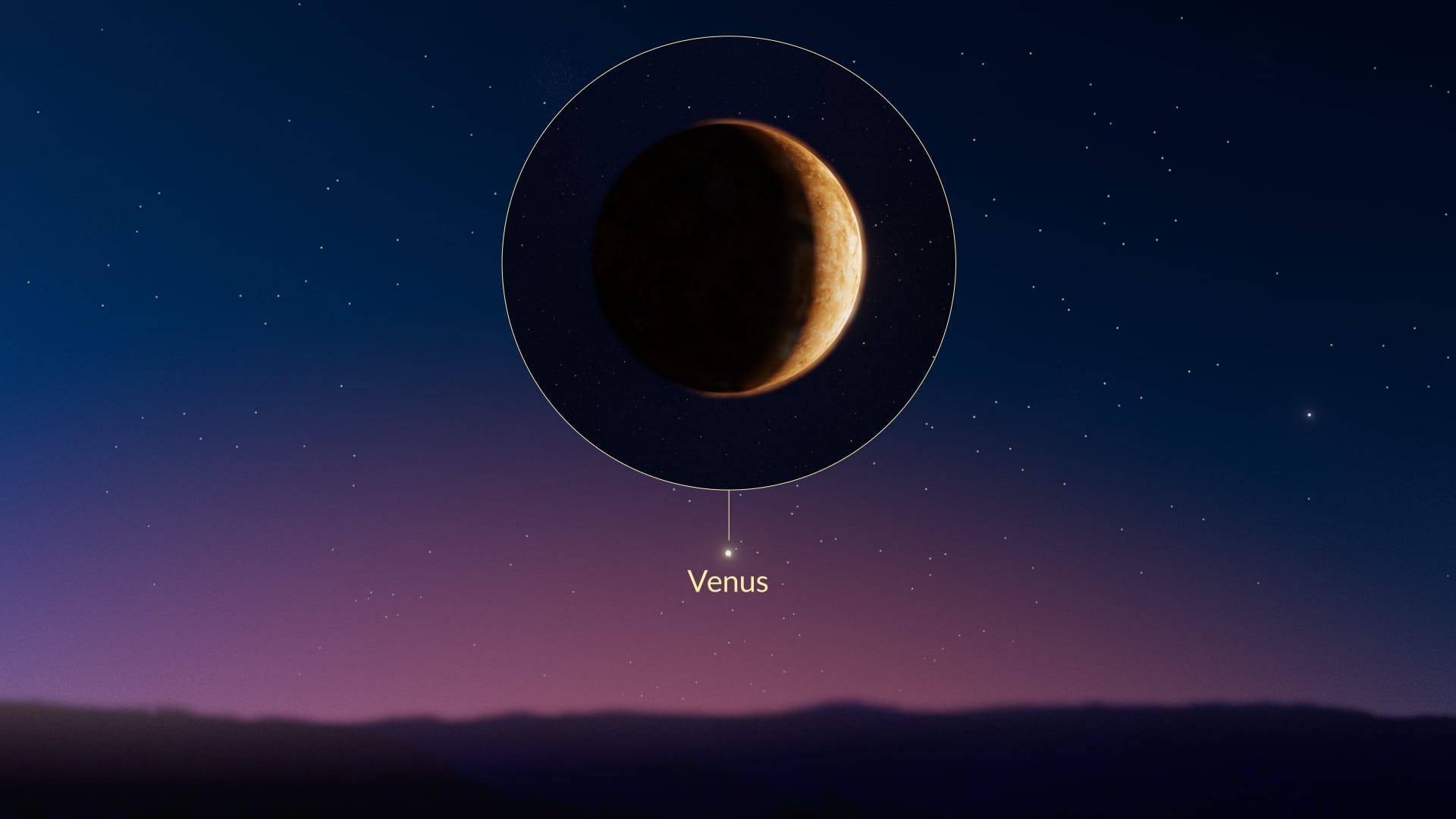
Here's a fun fact: while Venus is at its brightest to us, through a telescope it appears as a slender crescent, only 22% illuminated. How can a crescent be so bright? The secret is in its proximity. Venus will be relatively close to Earth, and its large, sunlit crescent presents the greatest total area of reflected sunlight we can see from our planet. When Venus is in its full phase, it’s actually at its farthest point from us, making it appear smaller and dimmer.
Look for Venus in the evening, glowing just above the southwestern horizon in the constellation Virgo. It’ll sparkle like a tiny spotlight not long after the Sun has set — so bright that many people might mistake it for an airplane… or something more exotic.
October 4: Best Time To See Saturn in 2026
The "Lord of the Rings" is putting on its best show of the year! On October 4, Saturn will reach opposition, meaning it's directly opposite the Sun from our earthly perspective. This celestial standoff makes it brighter and larger than at any other time in 2026 (mag 0.3, 19.7 arcseconds), and visible from sunset to sunrise.
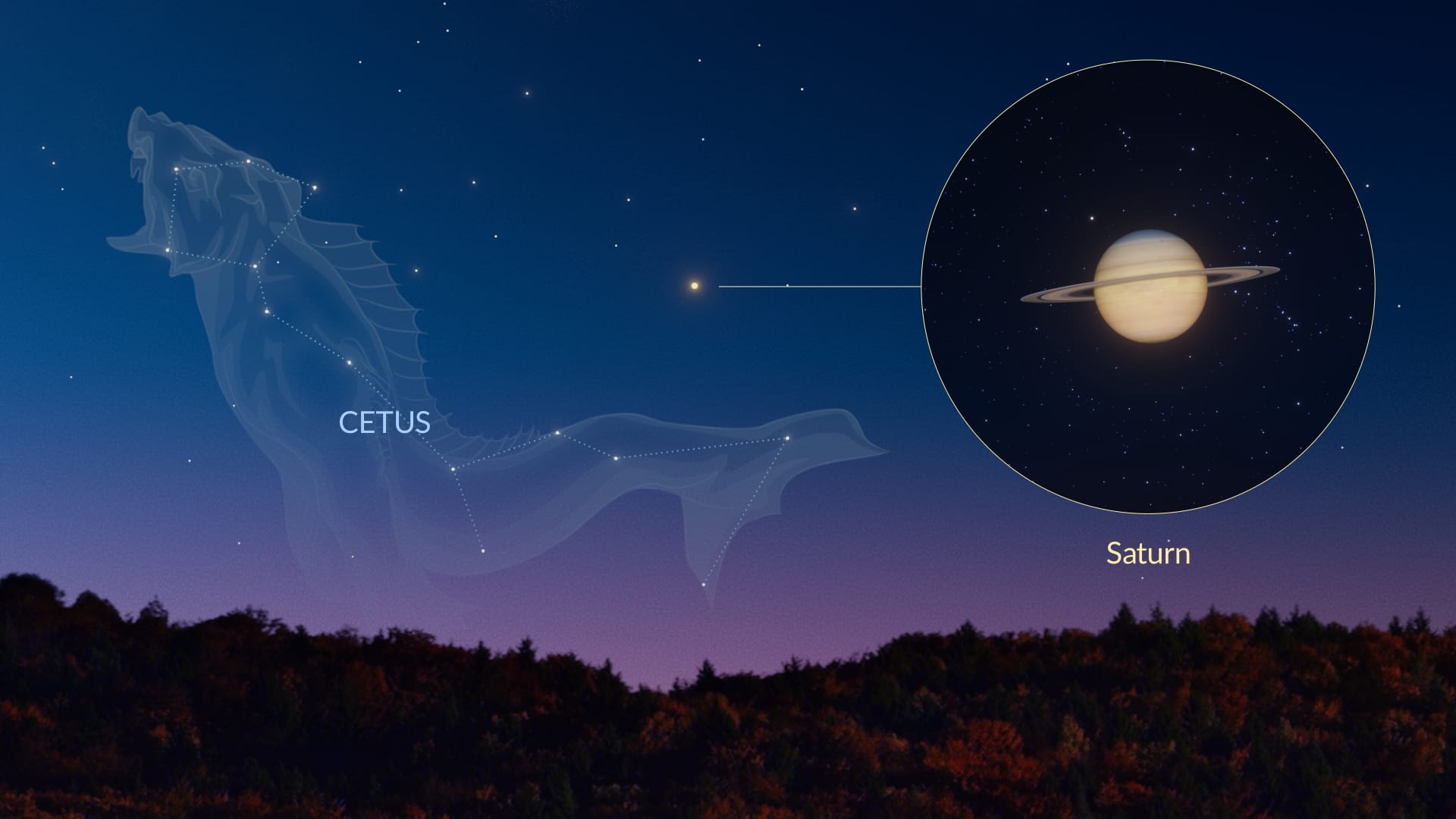
You'll find Saturn shining with a steady, golden glow in the constellation Cetus. It's a perfect naked-eye target, but a small telescope will reveal its magnificent ring system. This is what makes Saturn a "wow!" moment for every first-time observer.
November 16: Mars Near Jupiter
On November 16, two of the most observed planets in the sky, Mars and Jupiter, will perform a close duet. They will be separated by just 1°12′ — that's roughly the width of two full Moons — making them a stunning pair for the naked eye.
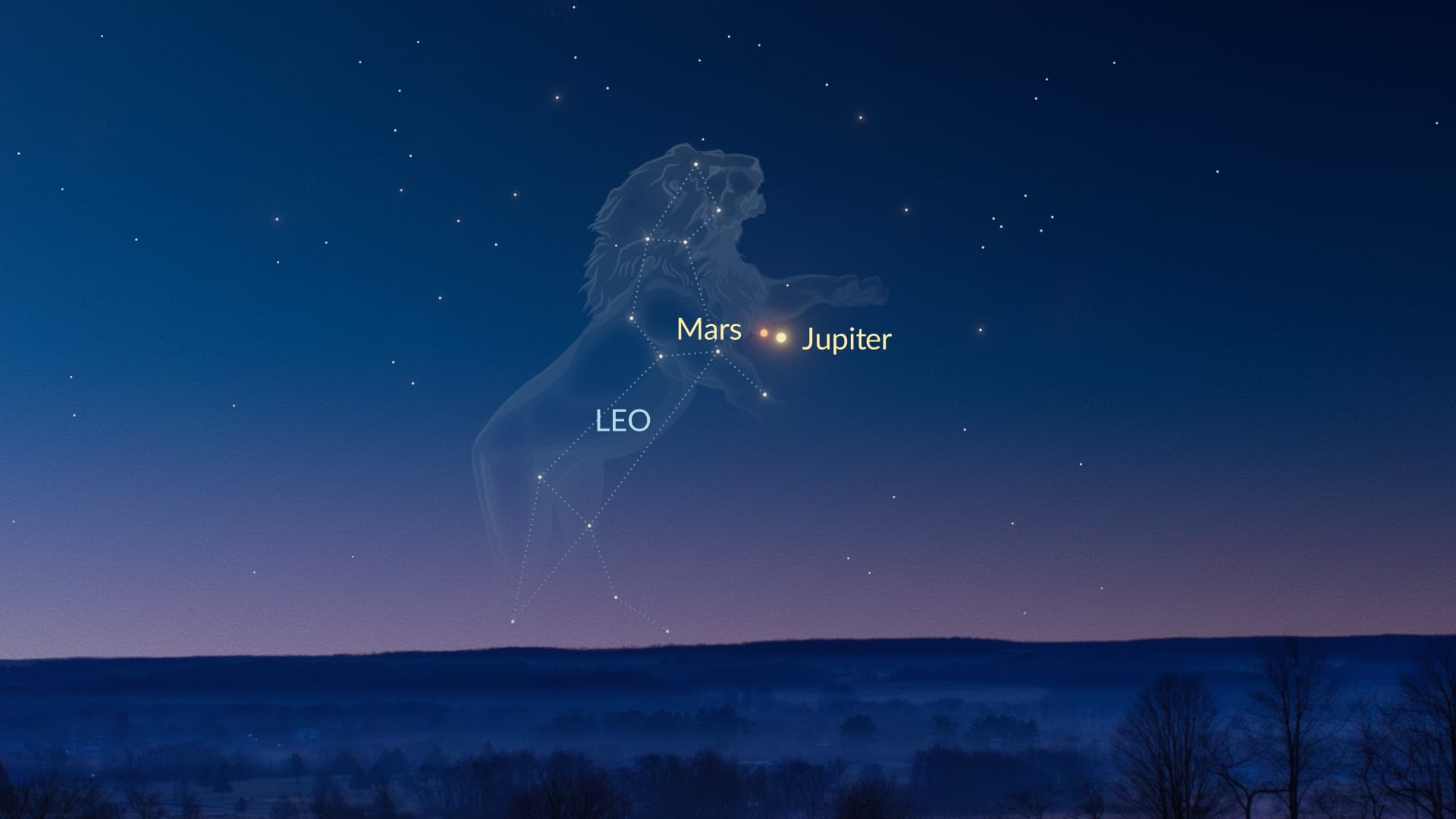
The contrast between them is what makes this close approach special. Jupiter will dominate as a golden beacon at magnitude -2.1, while Mars, glowing with a distinct reddish hue at magnitude 0.7, will sit close by. You can easily find them in the constellation Leo. By the way, the show isn't limited to a single night — you can enjoy this brilliant pair gracing the sky together for several days before and after the event.
December 14: Geminids Peak
Cap off the year with one of the most reliable and spectacular meteor displays — the Geminid meteor shower. Peaking on the night of December 14, this shower is known for its high activity, producing around 120 meteors per hour. It often produces bright, moderately fast meteors that are a delight to watch.
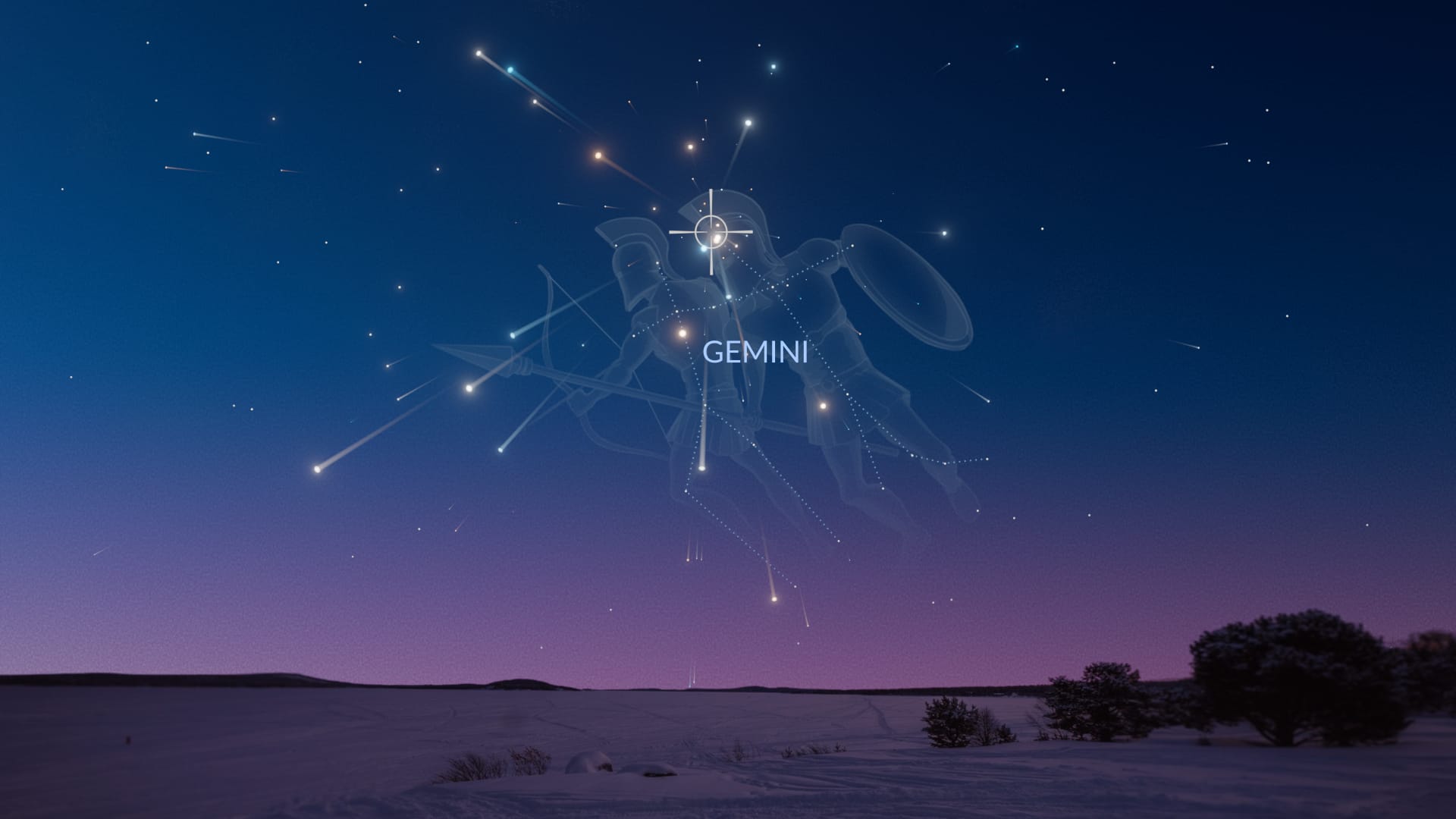
This shower puts on a fantastic show for the vast majority of Earth's population. It is best viewed from the Northern Hemisphere, where the radiant point climbs high in the sky. But observers in the Southern Hemisphere can also enjoy a very good display, albeit with a lower meteor count per hour. The waxing crescent Moon will set early in the evening, leaving a dark sky perfect for meteor watching. For the best view, find a dark spot away from city lights after midnight and let your eyes adjust to the darkness. Also, check out our infographic about meteors to learn how to make the most of your observing session.
How to make the most out of every astronomical event: useful tools
So, you're excited about the events of 2026 — but how do you make sure you're in the right place at the right time? We've got you covered with our astronomy apps that do the heavy lifting for you.
- Star Walk 2 Plus has the unique Planet Walk feature! It calculates and shows you the planets that can be seen tonight, and the exact dates when the maximum number of planets will be visible in the sky above your location.
- Eclipse Guide is your personal assistant for the eclipses of all types. Whether it's the “Blood Moon” in March or the total solar eclipse in August, this app will provide you with exact timings, visibility maps, and all the details you need to prepare for any lunar or solar eclipse.
- Sky Tonight is your ultimate weapon for planning any stargazing session. The app's Calendar neatly shows you all meteor shower peaks, Moon phases, and nightly observing conditions at a glance.
In any of these apps, you can set a reminder for any event that catches your eye. Let your phone handle the remembering, so you can focus on the wonder.
Best astronomical events 2026: to sum up
Well, there you have it — a year’s worth of cosmic wonders, handpicked for your stargazing pleasure. No matter your experience level or equipment, 2026 promises at least one must-see event every single month. And if you’re really ambitious, mark August 12 in bold — that’s your chance to bag three top-tier events in just one day!
- See our 2026 Astronomical Events Infographic as well — same great events, fewer words, more maps, and stunning illustrations!
- Also, browse our list of the Not-Quite-Best Astronomical Events of 2026 – it has celestial events that didn’t make it to this list, but are worth observing as well.
Clear skies and happy stargazing!