All About Space: What It Is, What It Contains & What It Looks Like
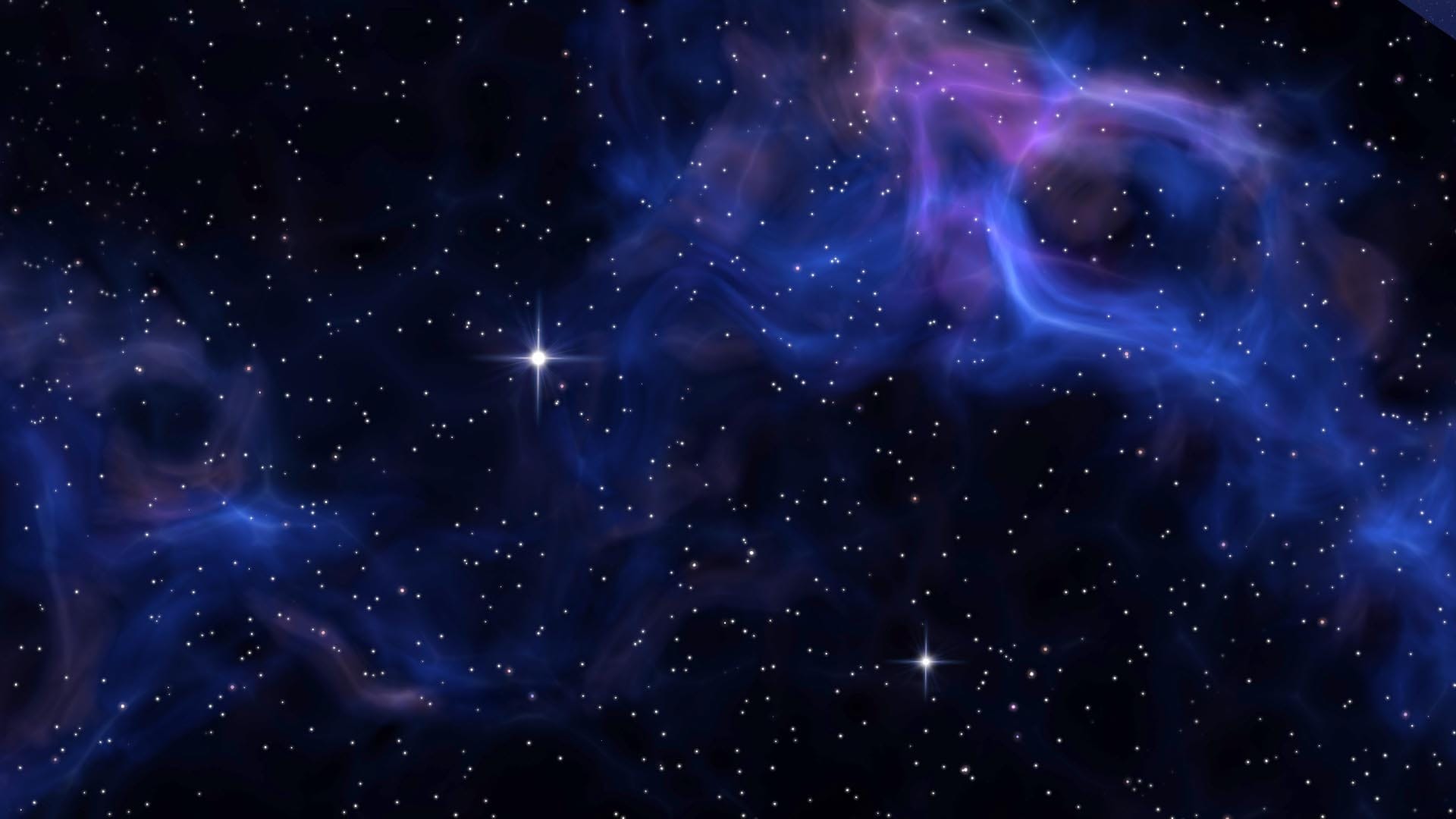
How much do we know about space? Actually, not as much as we'd like to. Every time you open a stargazing app, you're probably amazed at how many different objects you can find there. But what if we told you that all those planets, stars, and other observable objects represent less than 5% of the Universe’s total content?
Contents
- Things to Know About Space: Quick Facts
- What Is Space?
- What Is Outer Space?
- What Did the Early Space Look Like?
- What Is in Space?
- What Are Space Objects?
- How Do We Study Space Now?
- How to Explore Space as a Beginner?
- Space Weather
- What We Know About Space: Brief Summary
In recent years, astronomers have learned much more about the early Universe, exoplanet atmospheres, black holes, and some of the biggest contradictions in cosmology. But space does not become simpler as we study it – each breakthrough reveals new gaps in what we know. Let’s sum up what is known about space at this point.
Things to Know About Space: Quick Facts
- Space begins beyond Earth’s atmosphere, commonly marked by the Kármán line at about 100 km above sea level.
- Space is a near-vacuum, but it is not empty: it contains particles, radiation, dust, gas, magnetic fields, and cosmic rays.
- Space looks mostly black from Earth because there is no atmosphere to scatter light through it.
- Ordinary matter makes up less than 5% of the Universe; the rest is dark matter and dark energy.
- Space contains planets, moons, asteroids, comets, stars, nebulae, galaxies, black holes, quasars, and other objects.
- The observable Universe extends about 46.5 billion light-years in every direction from Earth.
What Is Space?
Space is a near-perfect vacuum, with no air. It is not empty: it contains many forms of radiation, as well as particles of gas, dust, and other matter floating around the void. The density of this material changes greatly from place to place: interplanetary space, interstellar space, and intergalactic space are all extremely thin compared with Earth’s atmosphere, but they are not identical environments.
What Does Space Look Like?
Space itself looks black because it is a near-vacuum and there is no atmosphere to scatter sunlight the way Earth’s atmosphere does. But black doesn’t mean empty. Against this dark background, we can see bright objects such as the Moon, planets, stars, satellites, and sometimes comets. Telescopes and spacecraft reveal even more: star clusters, glowing nebulae, distant galaxies, and other objects too faint for the human eye. Another interesting question is why the combined light of all objects in space doesn't make our night sky bright white – if you want to discover the answer, check out the article on Olbers' Paradox.
What Is Outer Space?
From our Earth-bound perspective, outer space is everything that lies beyond Earth’s atmosphere. However, space does not begin at a sharp physical boundary: the atmosphere gradually becomes thinner with altitude.
The most widely used conventional boundary is the Kármán line, set at about 100 km above mean sea level. Some organizations, including NASA and the U.S. Air Force, use a lower threshold of 80 km. These are practical and historical conventions rather than a single natural border. Above these altitudes, the air becomes too thin for regular aircraft relying on aerodynamic lift to fly.
Outer Space Structure
Outer space can be divided into several regions. These regions are shaped by gravity, radiation, plasma flows, magnetic fields, and matter density.
- Geospace is the region of outer space near the Earth. It lies between the Earth’s upper atmosphere and the outermost reaches of the Earth’s magnetic field.
- Interplanetary space is the outer space within the Solar System. It is defined by the solar wind, which forms a heliosphere – a giant “bubble” around the Sun and its planets. At heliopause (the outer edge of the heliosphere), it passes over into interstellar space.
- Interstellar space is the physical space between the star systems in a galaxy. It is filled with the interstellar medium, which consists mainly of gas, dust, cosmic rays, and magnetic fields.
- Intergalactic space is the physical space between galaxies. It is very close to a total vacuum, but not perfectly empty: it contains extremely thin ionized gas and is shaped mainly by gravity and the large-scale distribution of matter.
What Did the Early Space Look Like?
The early space was filled with a glowing plasma of particles and radiation – there were no stars, planets, or galaxies yet. As the Universe expanded and cooled, matter began to clump together, eventually forming the first stars and galaxies.
One of the biggest recent changes in our view of space comes from the James Webb Space Telescope. JWST has found and studied galaxies that existed only about 280–300 million years after the Big Bang. Some of these early galaxies look brighter, more massive, or more developed than many astronomers expected before Webb. JWST observations have also revealed signs of an actively feeding black hole in the galaxy GN-z11, seen as it was about 430 million years after the Big Bang. These discoveries do not “break cosmology,” but they do challenge earlier expectations about how quickly the first galaxies and black holes formed.
What Is in Space?
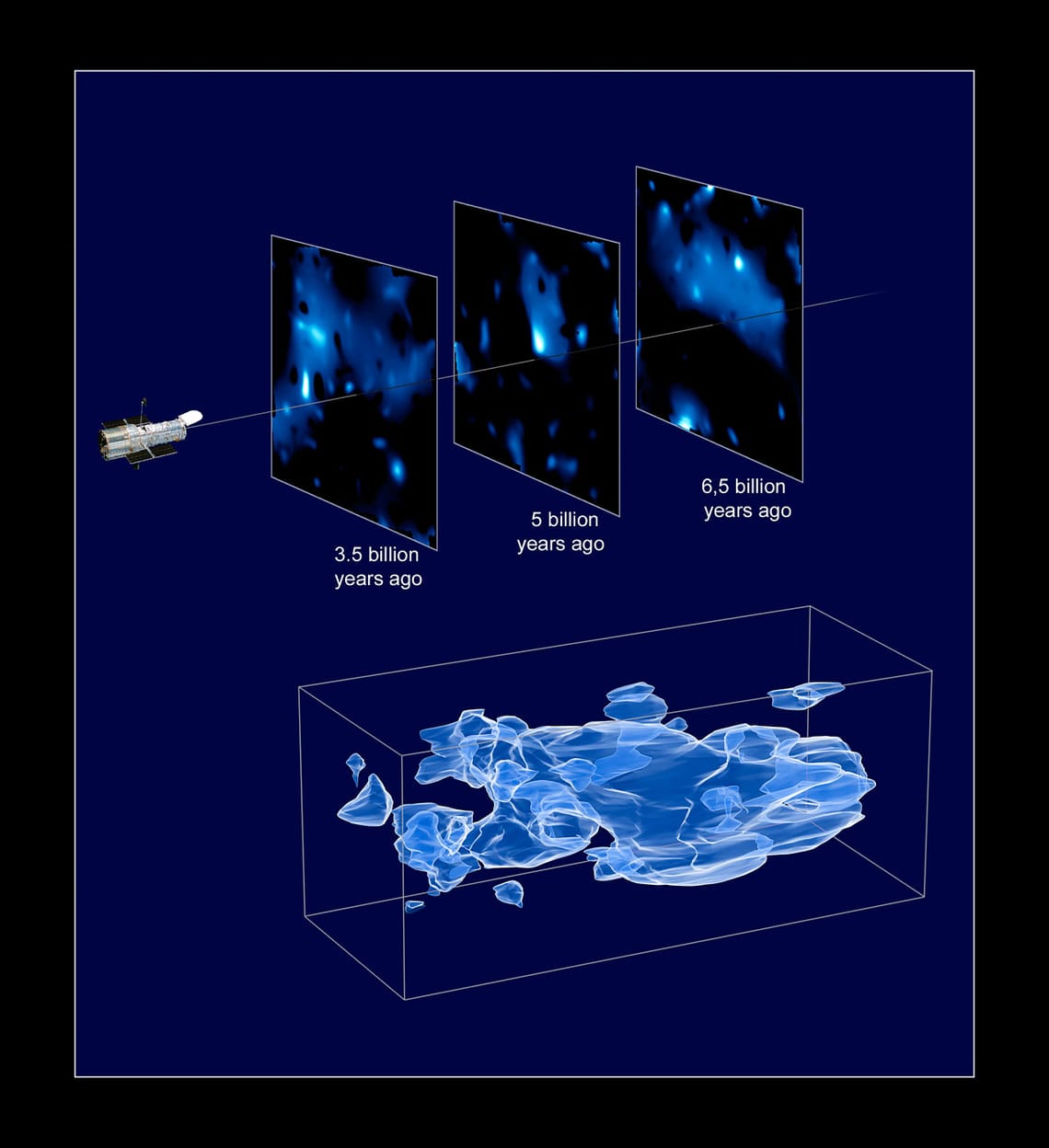
Scientists think the Universe consists of normal matter, dark matter, and dark energy.
Normal Matter
Normal matter, also called ordinary or baryonic, consists of protons, neutrons, and electrons that make up every visible object around. Everything that we can see – stars, planets, trees, animals, and human beings – is made of normal matter.
But not all normal matter is visible. A significant fraction of baryonic matter exists as hot, thin gas spread between galaxies and galaxy clusters, where it is difficult to observe directly. The proportion of normal matter in the Universe is surprisingly small (about 5%).
Dark Matter
Dark matter does not emit, absorb, or reflect electromagnetic radiation, so it cannot be seen directly. Scientists infer its presence from its gravitational pull on normal matter. For example, spiral galaxies rotate so fast that the gravity from the visible matter alone wouldn’t be strong enough to hold them together – without dark matter, they would simply fly apart. In total, dark matter is thought to make up about 27% of the Universe. Possible candidates include:
- WIMPs (Weakly Interacting Massive Particles): Hypothetical particles that would be much heavier than the particles making up ordinary matter. They would interact mainly through gravity and the weak nuclear force, meaning they could pass through matter almost without a trace.
- Axions: Theoretical particles that are extremely light and very weakly interacting. They were first proposed to solve a mathematical problem in particle physics, but later became one of the leading dark matter candidates.
- Sterile neutrinos: Hypothetical heavier versions of neutrinos. Unlike ordinary neutrinos, they would not interact through the known forces except gravity.
Dark Energy
Dark energy can be thought of as a property of space itself. Scientists often describe it as a cosmological constant, or vacuum energy. It is associated with a form of energy that makes the expansion of the Universe speed up over time.
The concept of dark energy has been proposed by scientists to explain why the Universe is not just expanding but is doing so at an increasing rate. For now, scientists have not defined its nature and origin: here, “dark” rather means “unknown” than literally dark, as is the case with dark matter. Dark energy is estimated to account for roughly 68% of the Universe.
Modern surveys, such as DES, DESI, and Euclid, are helping scientists more precisely map the expansion history of the Universe. DESI data have produced intriguing hints that dark energy may evolve over time, though this is not yet proven. Euclid is expected to provide powerful cosmological data in the coming years, though it has yet to solve the dark energy problem.
What Are Space Objects?
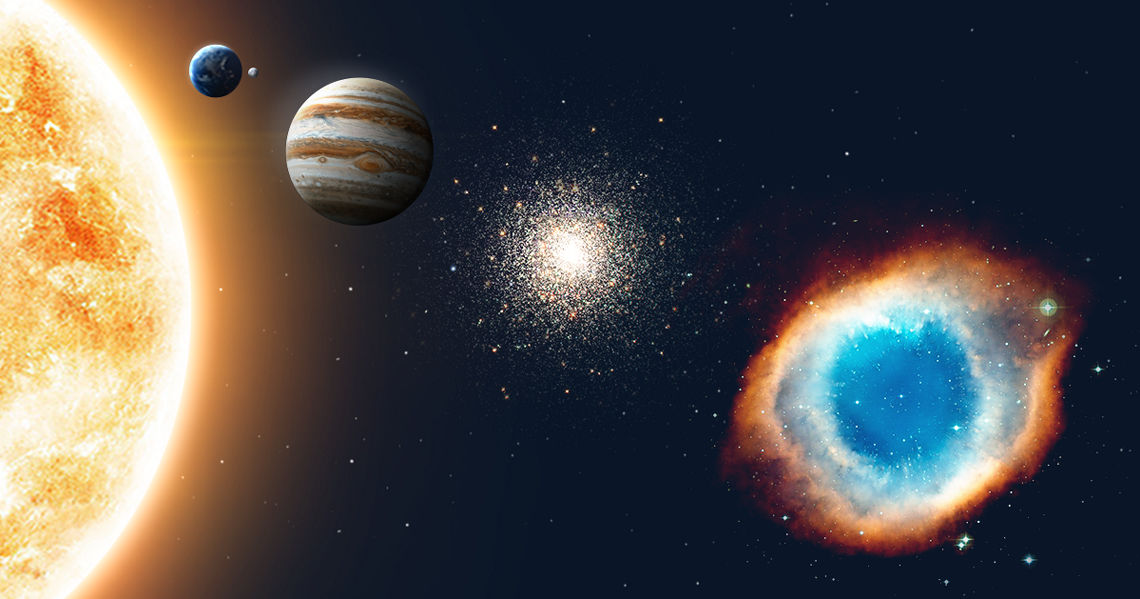
Space isn’t empty – it’s packed with objects of every size, from tiny rocks to immense walls of galaxies. Let’s start with the smaller objects – planets, moons, and comets – before moving outward to stars, galaxies, and the largest cosmic structures.
Planets, Moons, and Small Bodies
Our exploration of the Universe begins close to home – with the Solar System, our immediate cosmic neighborhood. Here we find planets, moons, comets, and an entire belt of asteroids between Mars and Jupiter. Astronomers have also spotted exoplanets orbiting distant stars and even interstellar comets passing through from other star systems.
Planets
A planet is an object that orbits a star, is massive enough for its own gravity to pull it into a nearly spherical shape, and has cleared its orbit of other debris. In the Solar System, there are two main types of planets:
-
The rocky, or terrestrial, planets are Mercury, Venus, Earth, and Mars. These small, dense planets are composed mainly of silicates, rock, and metals. Mercury, despite being a planet, has a thin “tail” of sodium atoms swept away by the solar wind, giving it a comet-like appearance. Venus is also known to have an ion tail.
-
The giant planets are Jupiter, Saturn, Uranus, and Neptune. Jupiter and Saturn are true gas giants, composed primarily of hydrogen and helium, while Uranus and Neptune are classified as ice giants, with large amounts of water, ammonia, and methane in addition to hydrogen and helium.
Have you ever wondered which planet in the Solar System matches your vibe the most? Take our quiz and discover your spirit planet!
We also have dwarf planets – smaller worlds that orbit the Sun but, unlike the “full-fledged” planets, haven’t cleared their orbits of debris. Because of this, they’re usually left out of the main “pantheon” of Solar System planets. The most famous is Pluto, but there are several others, such as Eris, Haumea, Makemake, and Ceres.
Beyond our Solar System, astronomers have discovered thousands of exoplanets – worlds orbiting other stars. As of 2026, the NASA Exoplanet Archive lists more than 6,200 confirmed exoplanets.
Astronomers have detected planets with unusual compositions – including one thought to be rich in carbon, possibly forming a world with vast amounts of diamond-like material. Learn more about this and many other unusual space objects in our article.
Moons
A moon is a natural object that orbits a planet or another non-stellar body (e.g. an asteroid). Earth has only one moon, while some planets have dozens – or even hundreds – and others have none at all.
- As of early 2026, Saturn leads with 285 confirmed moons, but moon counts change as astronomers discover new small satellites around the giant planets. Jupiter also has a large family of moons, and the lead between the two planets has shifted in recent years.
- If we rank all the moons of the Solar System by size, three of the top five – Ganymede, Callisto, and Io – orbit Jupiter. The other two are Titan (Saturn’s largest moon) and our own Moon, which proudly takes fifth place on the list!
Asteroids
Asteroids are the rocky remnants of the Solar System’s formation about 4.6 billion years ago. Most orbit in the asteroid belt between Mars and Jupiter, ranging in size from tiny boulders to dwarf planets like Ceres.
- Some asteroids occasionally come close to Earth. One famous example is Apophis, which will pass within about 32,000 km of our planet on April 13, 2029, closer than many geostationary satellites and about 10 times closer than the Moon. Under favorable conditions, it may become visible to the naked eye from some locations. Explore our article about Apophis to get more details.
Comets
Comets are icy bodies that travel on highly elongated orbits. Many comets come from the distant Oort Cloud, others from the Kuiper Belt, and a few come from outside the Solar System.
After 1I/ʻOumuamua and 2I/Borisov, Comet 3I/ATLAS became the third confirmed interstellar object observed passing through the Solar System. Objects like these are especially valuable because they carry material from other planetary systems. Why do comets have such spectacular tails, and what do they tell us about the Solar System? Find out in our article about comets.
Stars and Nebulae
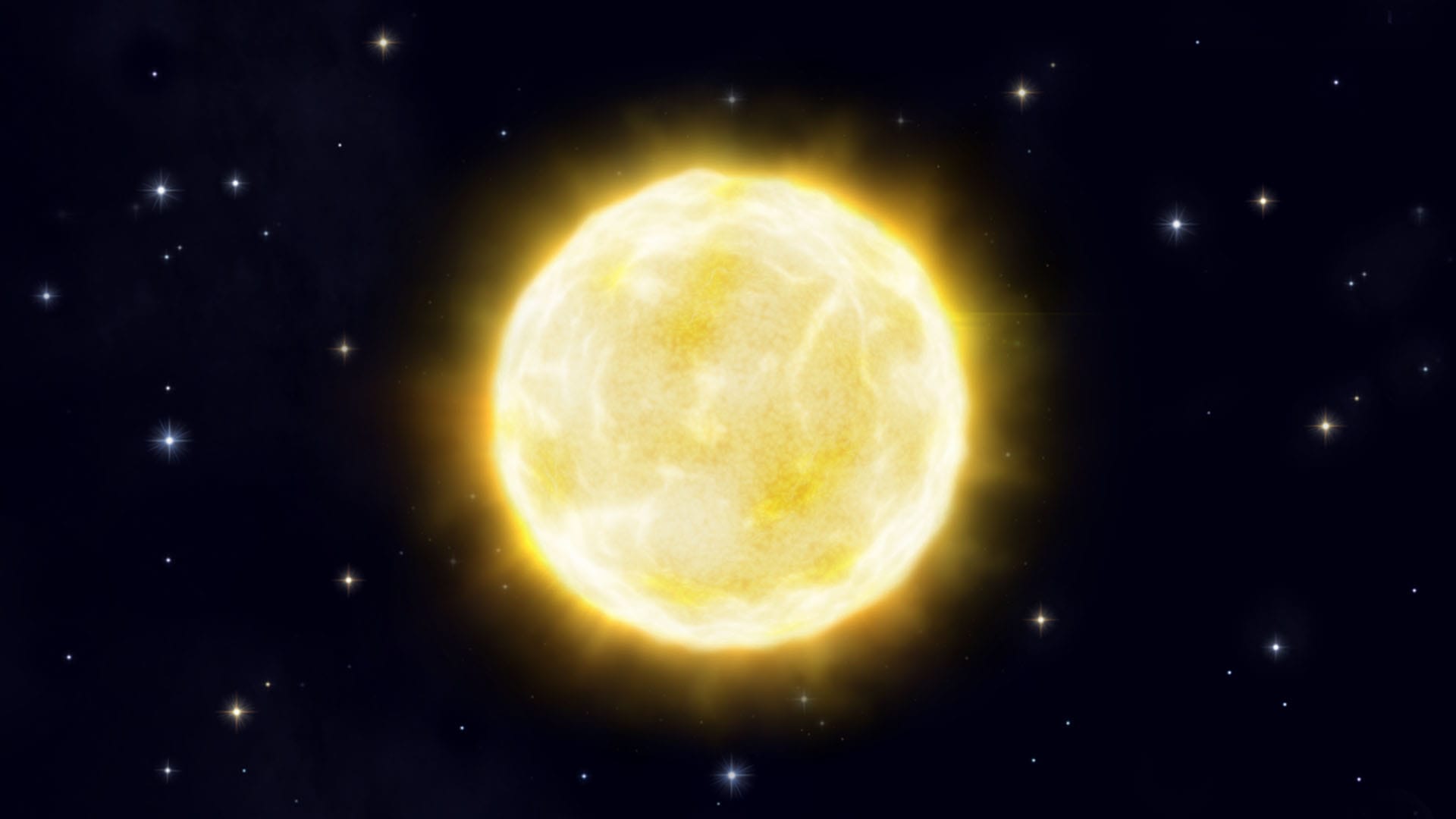
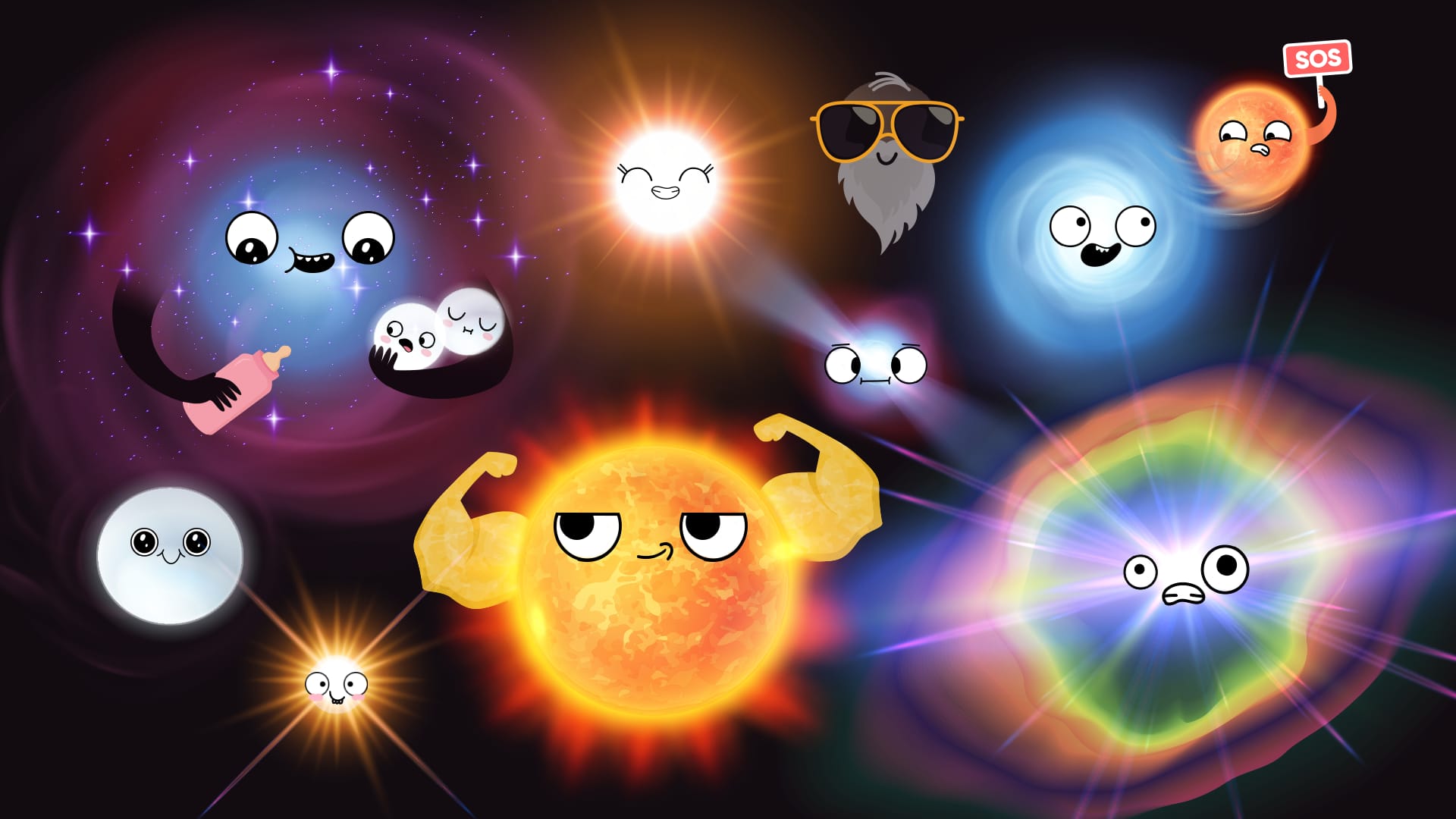
A star is a giant ball of hot, glowing gas – mostly hydrogen and helium – held together by gravity. In its core, atoms fuse in nuclear reactions, releasing enormous amounts of energy that make the star shine. Stars are born inside nebulae, immense clouds of gas and dust where gravity pulls material together until nuclear fusion ignites.
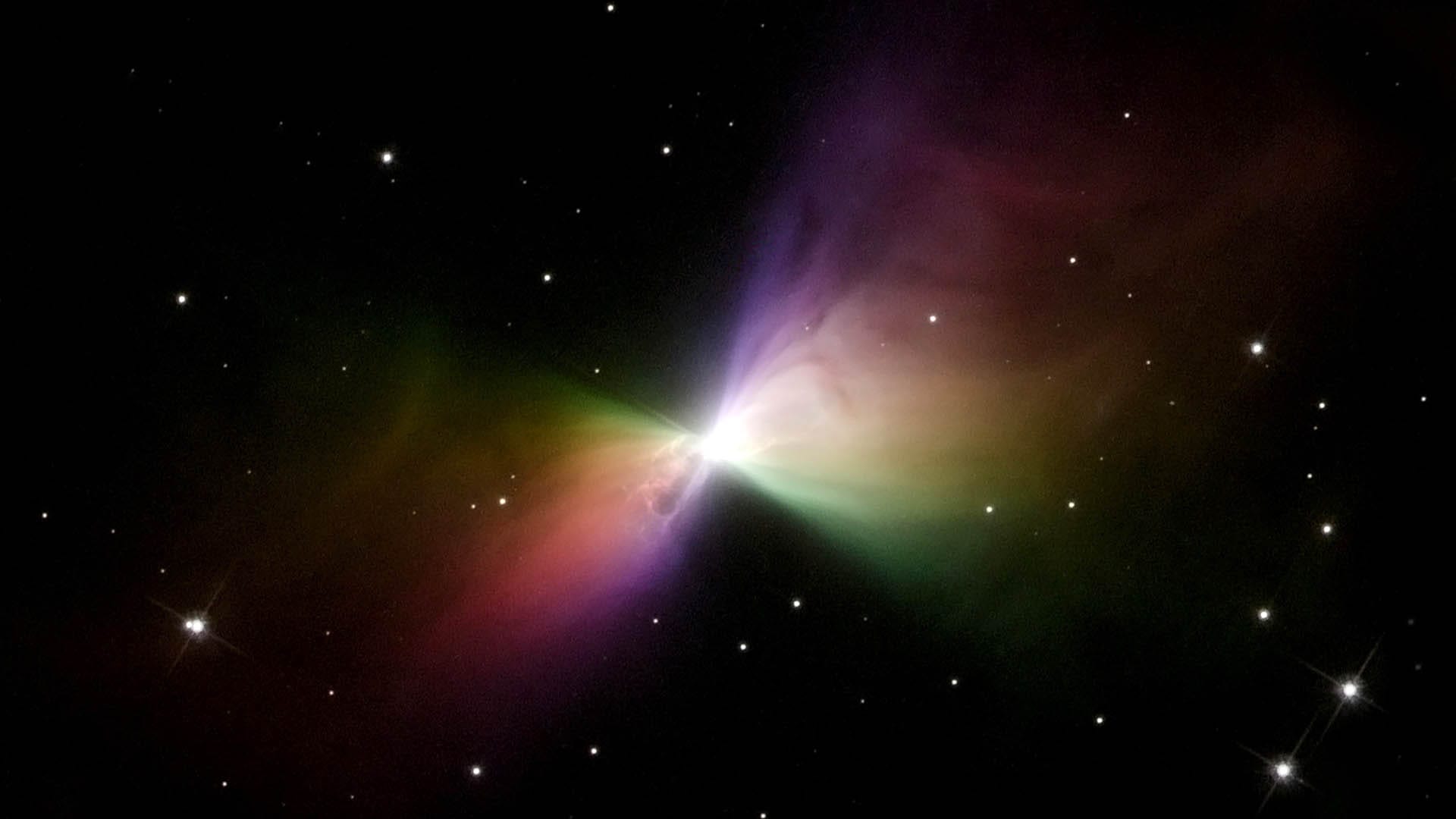
- One of the most unusual nebulae is the Boomerang Nebula, about 5,000 light-years away in Centaurus. Its interior is the coldest place ever found in the Universe, with a temperature of –272 °C, just one degree above absolute zero.
After forming, stars shine for billions of years before ending their lives in different ways. Some become white dwarfs – faint, dense stellar remnants. A famous example is the bright star Sirius, which is actually a binary system: the hot, luminous main star, Sirius A, and a faint white dwarf, Sirius B. More massive stars may collapse into neutron stars, only about 20 kilometers across, or even into black holes, whose gravity is so strong that not even light can escape.
- Among the most ancient stars still shining is HD 140283, a subgiant in Libra nicknamed the Methuselah Star – after the biblical figure said to have lived 969 years. It is estimated to be about 12–13 billion years old, making it possibly nearly as old as the Universe itself.
To better understand how stars evolve – from birth in a nebula to their spectacular endings – check out our infographic on the life cycle of a star.
Black Holes
Black holes are some of the most extreme objects in the Universe. They form when a huge amount of matter is squeezed into an extremely dense object, creating gravity so strong that nothing – not even light – can escape once it crosses the black hole’s boundary, called the event horizon.
Scientists study black holes in two major ways. One is by detecting gravitational waves – tiny ripples in spacetime created when black holes or neutron stars collide. Observatories such as LIGO, Virgo, and KAGRA can pick up these signals from deep space.
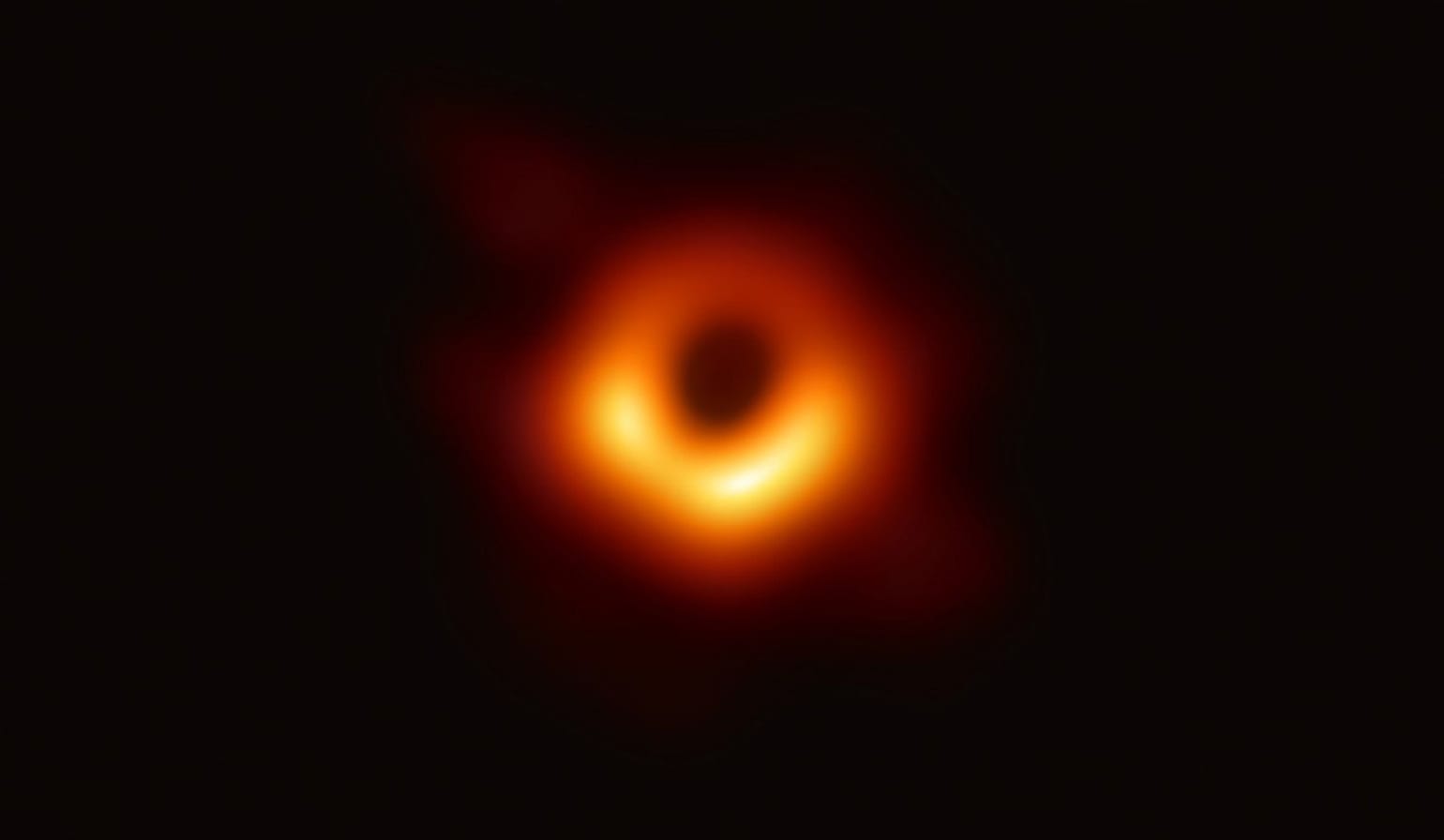
Another way is by taking incredibly detailed images of black holes. The Event Horizon Telescope has captured images of the shadow around the supermassive black hole in the galaxy M87 and Sagittarius A*, the black hole at the center of the Milky Way.
Galaxies and Quasars
Galaxies are immense systems of billions of stars, bound together by gravity along with gas, dust, and dark matter.
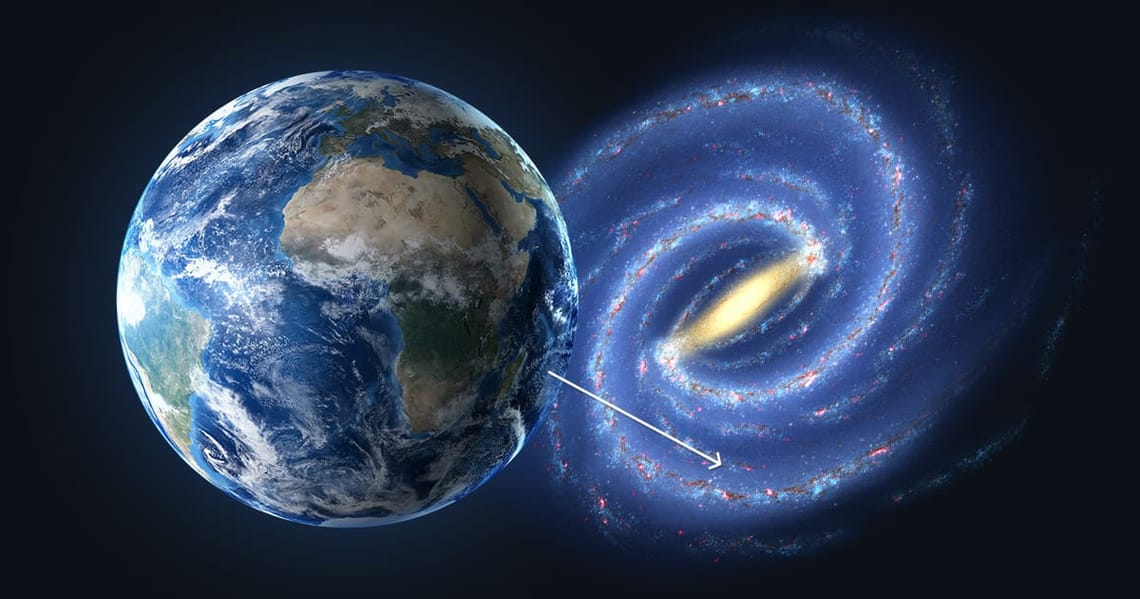
- Our own Solar System is located in the Milky Way galaxy, whose bright band of stars can be seen stretching across the night sky.
- The nearest large neighbor, the Andromeda Galaxy, is so big and bright that it can be spotted with the naked eye under dark skies.
Like stars, galaxies also have their life cycle. Quasars are thought to represent active galactic nuclei at an early stage of galactic evolution, when a central supermassive black hole consumes surrounding matter at a tremendous rate. This process releases extraordinary amounts of energy, making quasars some of the most luminous objects in the Universe.
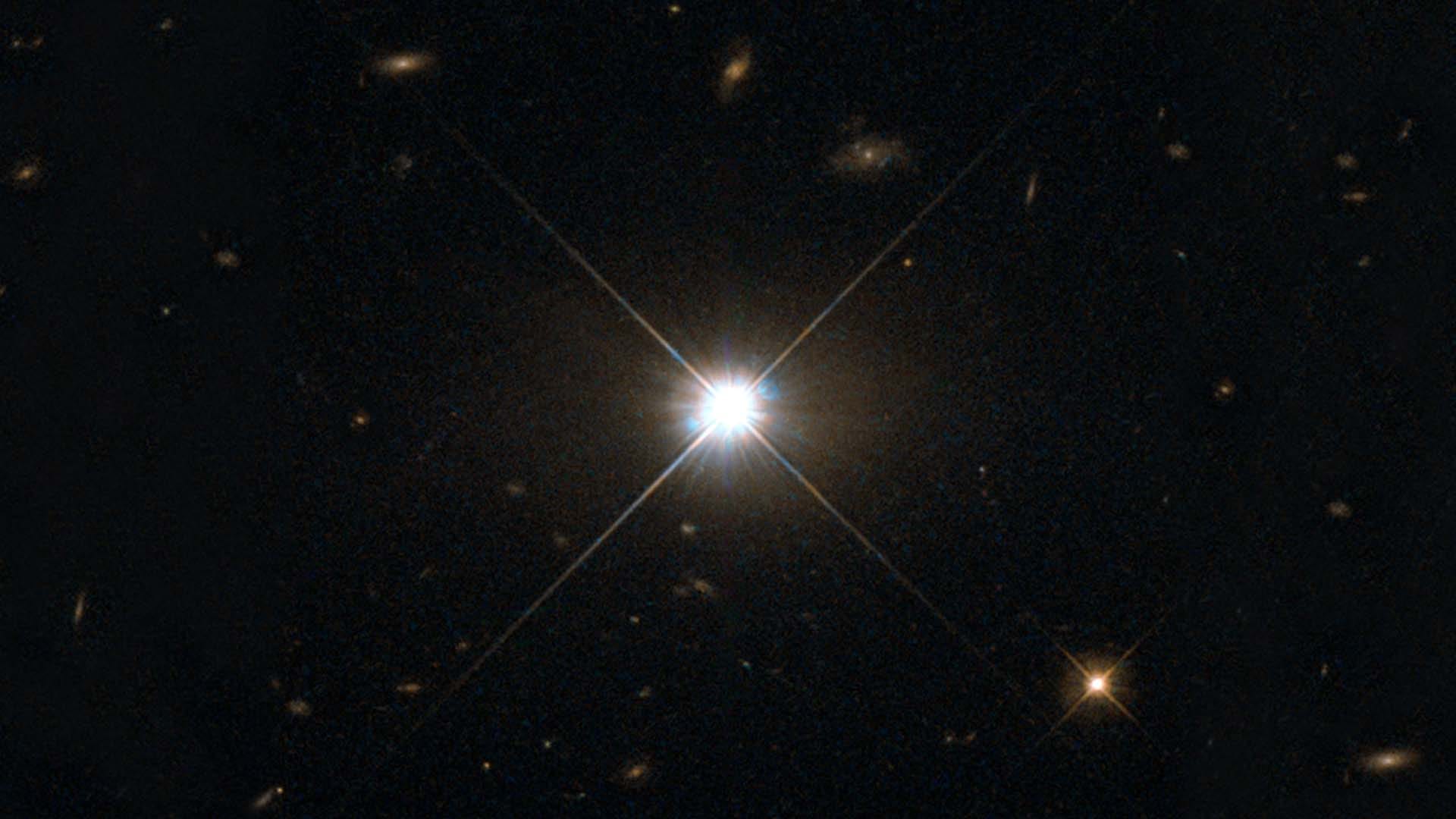
- Quasar 3C 273 in Virgo was the first quasar ever discovered and remains the brightest as seen from Earth (apparent magnitude 12.9). Radio observations reveal brightness temperatures up to 10¹³ K (10 trillion °C) – a measure of radiation intensity, not the actual plasma temperature.
- Quasar APM 08279+5255, located 12 billion light-years away in Lynx, is surrounded by a giant cloud of water vapor containing about 140 trillion times the mass of all Earth’s oceans.
Large-Scale Structures
Galaxies do not float in isolation. They cluster together into groups like the Local Group of Galaxies and the Virgo Cluster, which themselves belong to even larger structures such as the Laniakea Supercluster.
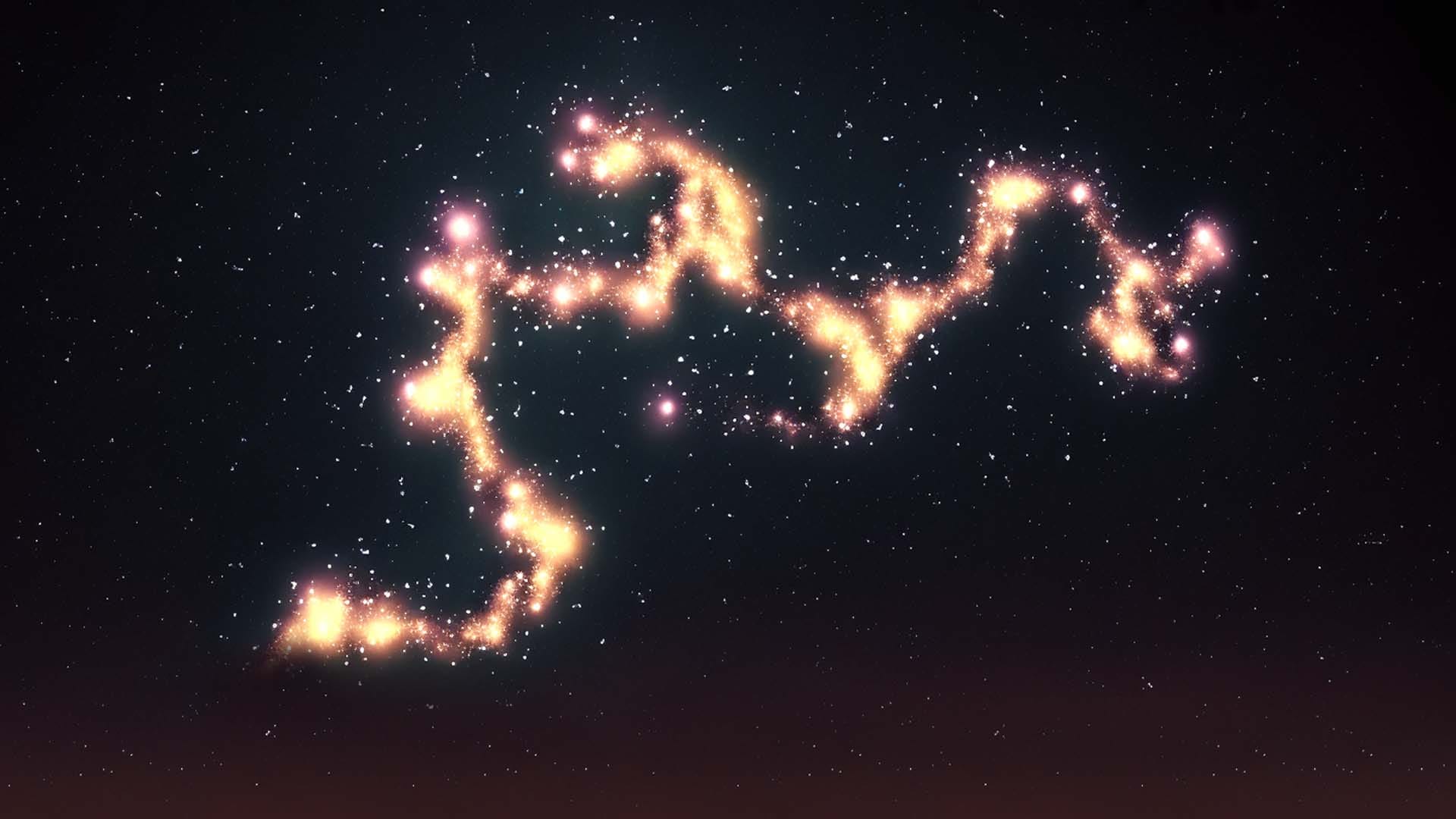
- The Hercules–Corona Borealis Great Wall, or simply the Great Wall, is one of the most discussed candidate large-scale structures in the Universe, though its status is still debated. It could be billions of light-years across (for comparison, the Milky Way is roughly 100,000 light-years in diameter) and may contain a vast number of galaxies. Located roughly 10 billion light-years away, it lies in the direction of the Hercules and Corona Borealis constellations.
Check out our infographic, “Measuring Distances in Space,” to better understand measurements like a light-year, lunar distance, and astronomical unit.
How Do We Study Space Now?
Modern astronomy is no longer based only on visible light. Different instruments reveal different parts of the Universe.
-
The James Webb Space Telescope (JWST) studies the first galaxies, star-forming regions, and the atmospheres of exoplanets.
-
LIGO, Virgo, and KAGRA detect gravitational waves from merging black holes and neutron stars.
-
The Event Horizon Telescope images the regions around supermassive black holes.
-
DES, DESI, and Euclid map galaxies and cosmic structure to investigate dark matter, dark energy, and the expansion history of the Universe.
Together, these tools help scientists compare many kinds of evidence: light, gravity, particles, and the large-scale distribution of galaxies.
How to Explore Space as a Beginner?
You don’t have to be a professional astronomer to explore space. Many distant objects – including stars, planets, and even some star clusters and galaxies – are visible to the naked eye.
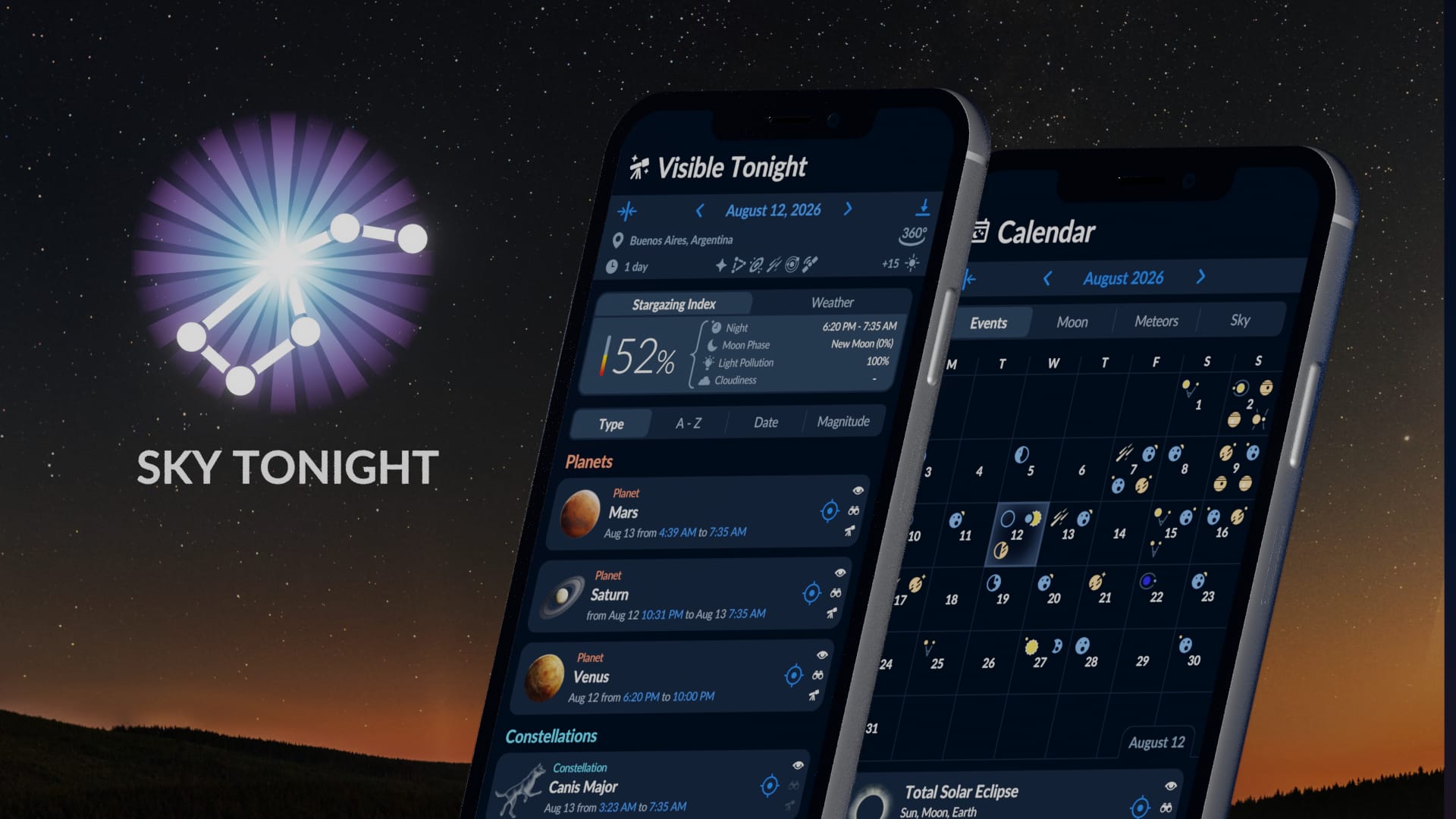
Choose a clear, warm night and find a spot with an open horizon, as far from city lights as possible. Then look up and start exploring. For guidance, use the free Sky Tonight app: it shows what’s visible in your sky tonight, highlights upcoming celestial events, and helps you find stars, planets, constellations, and other objects with an on-screen arrow. Try Sky Tonight now!
Space Weather
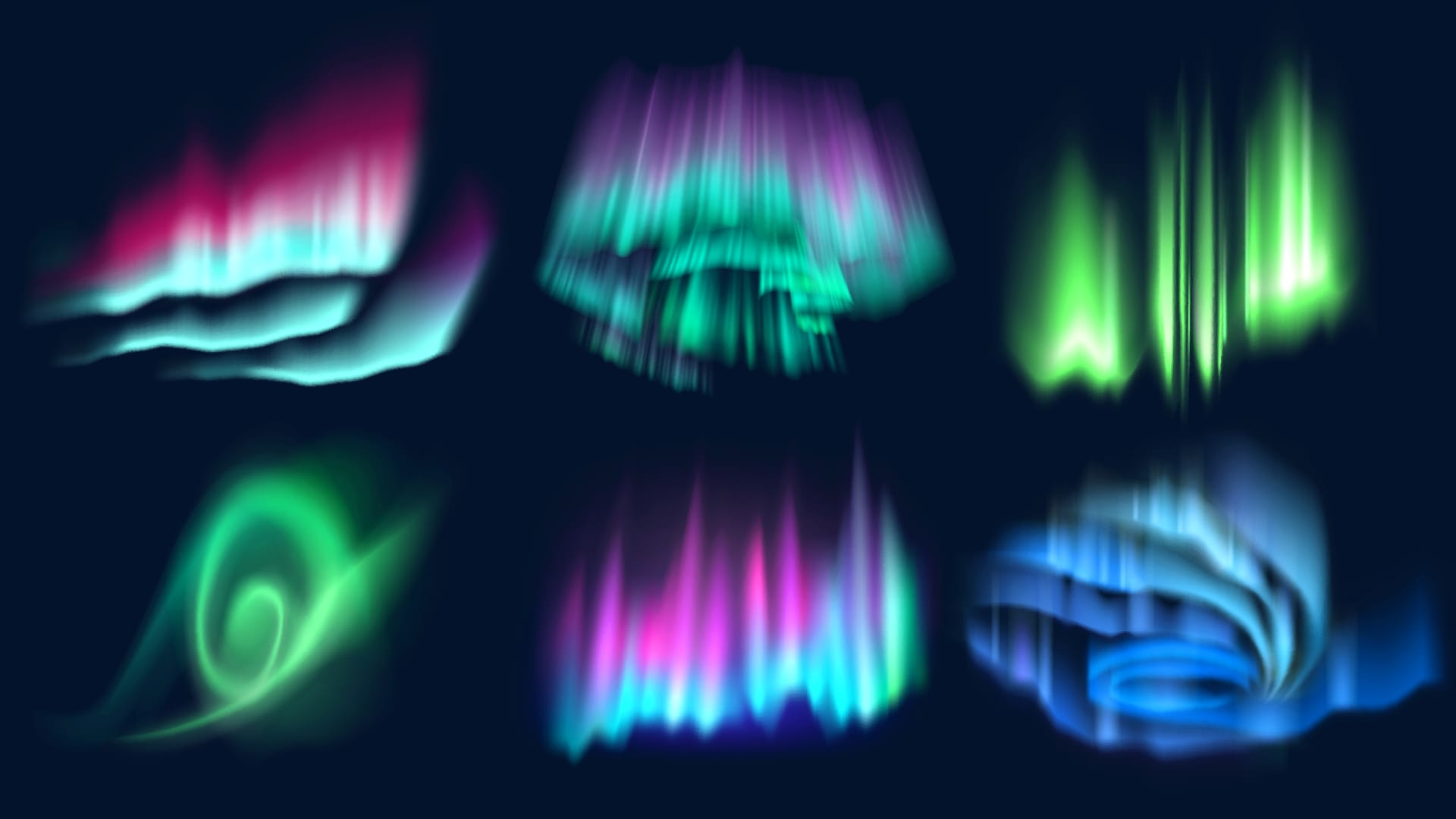
Space is not only a subject of observation. It also directly affects Earth through space weather – environmental changes in near-Earth space caused by solar activity. Solar flares and coronal mass ejections can disrupt the planet's magnetic field, resulting in geomagnetic storms and bright auroras.
Want to see auroras with your own eyes? Get ready with our infographic on the Northern and Southern Lights.
What Is Space: FAQ
What does space look like?
Space is mostly dark because there is very little matter to scatter light the way Earth’s atmosphere does. But it isn’t empty or completely black: it contains stars, planets, moons, nebulae, galaxies, dust, gas, and invisible forms of matter and energy. From Earth, space looks like a dark sky filled with stars; through telescopes, it reveals colorful nebulae, glowing galaxies, star clusters, and other deep-sky objects.
How far can we look into space?
From Earth, we can observe planets, stars, and galaxies that are within 46.5 billion light-years in any direction. This region of space is called the observable Universe.
How old is space?
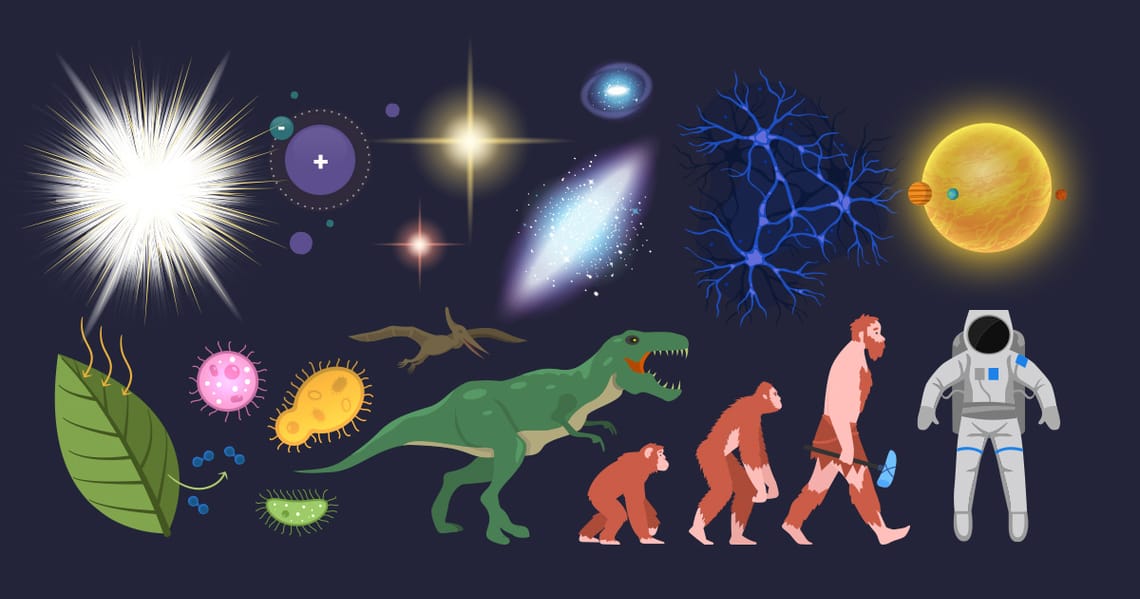
The best current estimate of the Universe’s age is about 13.8 billion years. To help you visualize the history of the Universe, we compressed it into 1 Earth year and got a cosmic calendar. Check it out in our infographic.
Where does space begin?
Space does not begin at a sharply defined altitude above Earth’s surface. A widely accepted boundary is the Kármán line, set at 100 km by the FAI (Fédération Aéronautique Internationale). Some organizations, such as NASA and the U.S. Air Force, instead use a slightly lower limit of 80 km. These heights are chosen because above them the atmosphere is too thin to generate enough lift for aircraft wings to function, meaning that aerodynamic flight is no longer possible – only orbital or rocket propulsion works.
What is the difference between space and the Universe?
Space is the nearly perfect vacuum between cosmic objects. It contains radiation, gas, dust, and other sparse matter, but no air. The Universe is much broader: it encompasses space, time, matter, energy, and the physical laws that govern them. In simple terms, space is the “where” part of the Universe – and the Universe is "everything."
How big is space?
When we talk about the size of space, we usually mean the observable Universe – the part we can visibly see and measure. It is estimated to be about 46.5 billion light-years in any direction from the Earth. If we imagine it as a sphere surrounding our planet, its diameter will be around 93 billion light-years. Find our location in the observable Universe using our infographic.
What is the temperature of space?
The baseline temperature of outer space is set by the cosmic microwave background (CMB) radiation, the afterglow of the Big Bang. It corresponds to about 2.7 K (−270 °C). However, objects in space can be much hotter or colder depending on whether they are near stars, in shadow, or heated by radiation.
What color is space?
From Earth, space appears black. But if the Universe contains billions of stars, why isn’t the night sky bright white? This oddity is known as Olber’s paradox; see its possible solutions in our dedicated article.
Why can’t sound travel through space?
Sound is a mechanical wave that requires a medium, such as air or water, to propagate. Ordinary sound cannot travel through the vacuum of space as pressure waves because there is no dense medium like air. That’s why space is generally considered silent.
Is space completely silent?
Though space is a vacuum, it’s not completely empty: it is filled with plasma, or charged particles. These particles can generate (or be affected by) electric and magnetic fields, and, thus, can transfer magnetosonic waves – the plasma-equivalent of sound waves. They are inaudible to humans, but can be recorded by spacecraft and converted into audible tracks – some weird-sounding “space music”.
What We Know About Space: Brief Summary
Space is a near-perfect vacuum with radiation, plasma, gas, dust, and other matter particles floating through it. The estimated age of the Universe is about 13.8 billion years. The observable Universe extends about 46.5 billion light-years in any direction from Earth, or about 93 billion light-years in diameter. Everything in the Universe is usually described in terms of normal matter, dark matter, and dark energy; scientists are still investigating the nature of the latter two. Recent discoveries from the James Webb Space Telescope, gravitational-wave observatories, the Event Horizon Telescope, and other surveys have made our picture of space much sharper – but many of the biggest questions remain open.
Space is unimaginably vast, but part of it is visible above you every clear night. With Sky Tonight, you can identify stars, planets, constellations, satellites, and other objects currently visible from your location.
All About Space: Get Even More Space Facts
If you enjoyed this article and want to learn more about space and the Universe, check out this related content:
- Find out where we are in the Universe – from the Earth and the Solar System to the Milky Way and the observable Universe;
- See the entire 13.8-billion-year history of the Universe compressed into one year with our cosmic calendar infographic;
- Test yourself with our quiz and tell true astronomy facts from fictional ones!