Ursa Major Constellation: The Great Bear
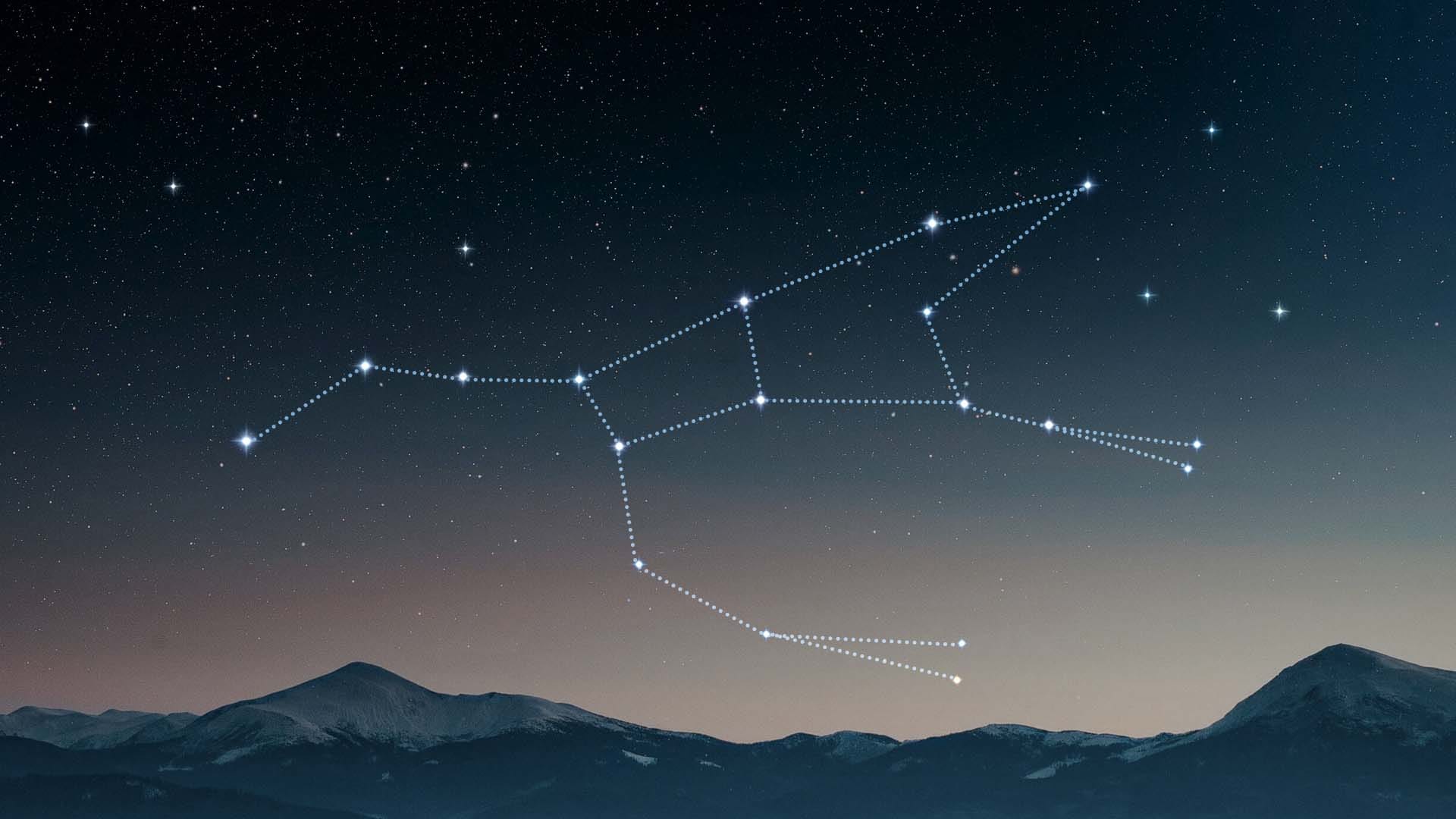
Ursa Major, also known as the Great Bear, is one of the easiest constellations to recognize once you know where to look. Its brightest stars form the Big Dipper — a famous star pattern that helps skywatchers find the North Star and navigate the northern sky. In this article, you’ll learn where to find Ursa Major, when to see it, what stars it contains, and how the Great Bear differs from the Big Dipper.
If you want to locate Ursa Major instantly from your city, open the Star Walk 2 app, search for “Ursa Major” or “Big Dipper”, and point your device at the sky to see where the constellation is.
Contents
- Ursa Major constellation facts
- Ursa Major location
- Ursa Major brightest stars
- Deep-sky objects in Ursa Major
- Ursa Major mythology
Ursa Major: Frequently Asked Questions
- Why is the constellation Ursa Major so important?
- When is the best time to see Ursa Major?
- What is the brightest star in Ursa Major?
- How many galaxies are in Ursa Major?
- Is Polaris located in Ursa Major or Ursa Minor?
- Is Ursa Major the same as Big Dipper?
- Why are Ursa Major and Ursa Minor called circumpolar constellations?
- Can you see Ursa Major from the Southern Hemisphere?
- Constellation Ursa Major: Key Facts
Ursa Major constellation facts
- Name: Ursa Major (the Great Bear)
- Abbreviation: UMa
- Asterism: The Big Dipper
- Size: 1,280 sq. deg. (3rd largest constellation)
- Approximate right ascension: 10.67 h
- Approximate declination: +55.54°
- Visible between: 90°N – 30°S
- Celestial Hemisphere: Northern
- Brightest Star: Alioth (Epsilon Ursae Majoris)
- Main asterism: The Big Dipper, formed by 7 bright stars
- Messier objects: 7
- Bordering constellations: Boötes, Camelopardalis, Canes Venatici, Coma Berenices, Draco, Leo, Leo Minor, Lynx
Ursa Major location
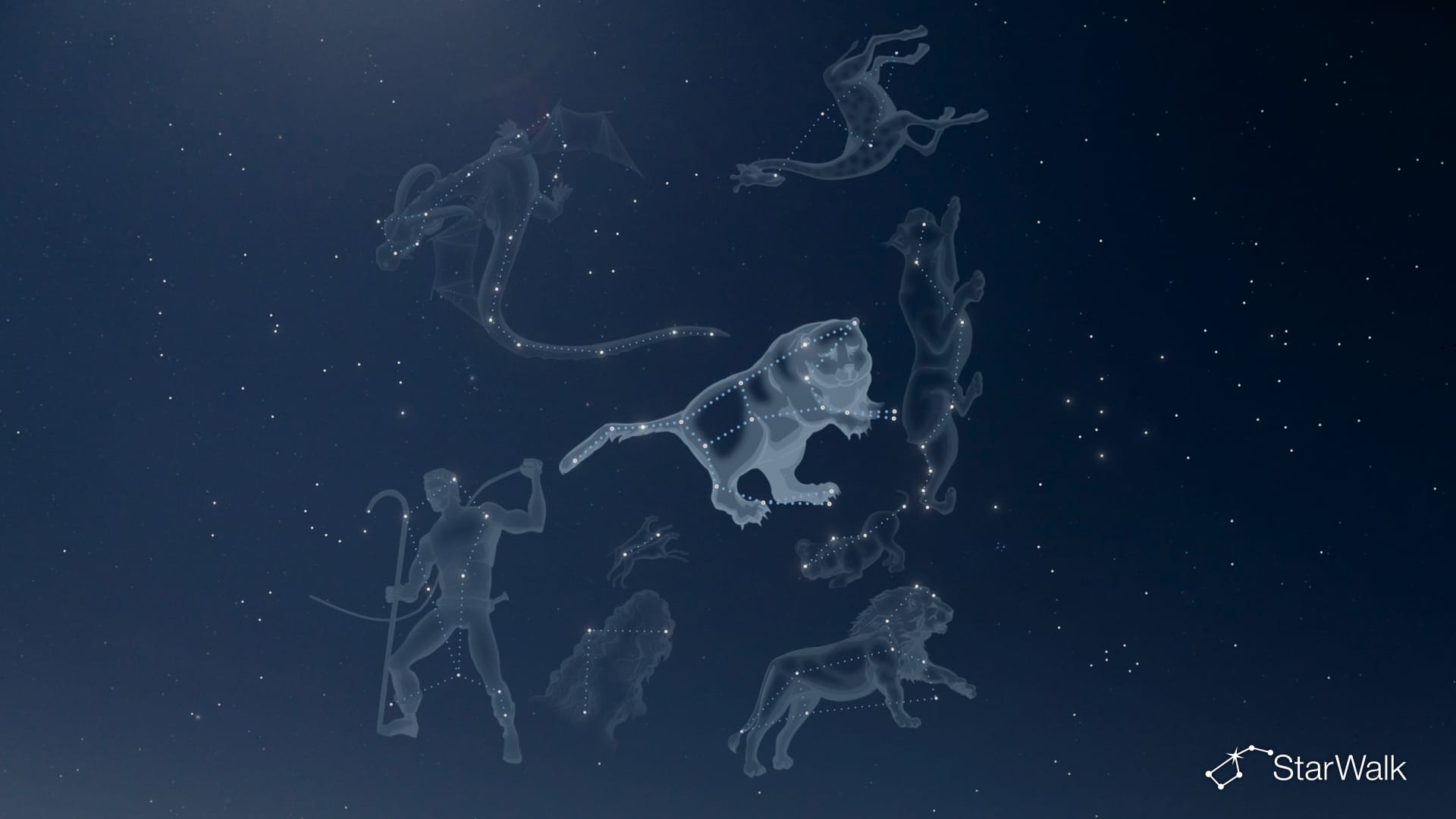
Ursa Major is a northern constellation visible from latitudes between 90°N and 30°S. It covers 1,280 square degrees of the sky, making it the third-largest constellation. From many mid- and high-northern latitudes, Ursa Major is visible all year round and never fully sets below the horizon. Farther south, it may appear lower in the sky or partly dip below the horizon.
Ursa Major borders eight constellations: Draco, Camelopardalis, Lynx, Leo Minor, Leo, Coma Berenices, Canes Venatici, and Boötes. The easiest neighboring constellations to notice are Draco, which curves around Ursa Minor nearby, and Boötes, marked by the bright star Arcturus.
The best time to observe Ursa Major in the Northern Hemisphere is spring, when the Big Dipper climbs high in the sky. In autumn, it appears much lower and can be harder to see, especially from lower northern latitudes.
Where is the Big Dipper in the sky?
The Big Dipper, also known as the Plough or the Wagon, is a bright asterism within Ursa Major — not a separate constellation. To find it, face north and look for seven bright stars forming a bowl with a curved handle.
In the Northern Hemisphere, the Big Dipper is high in the evening sky in spring and low near the horizon in autumn — as the mnemonic says, “spring up and fall down.” In the Southern Hemisphere, the asterism is best seen from April to June from regions roughly north of 25°S, where it stays low above the northern horizon.
How to find the Great Bear constellation?
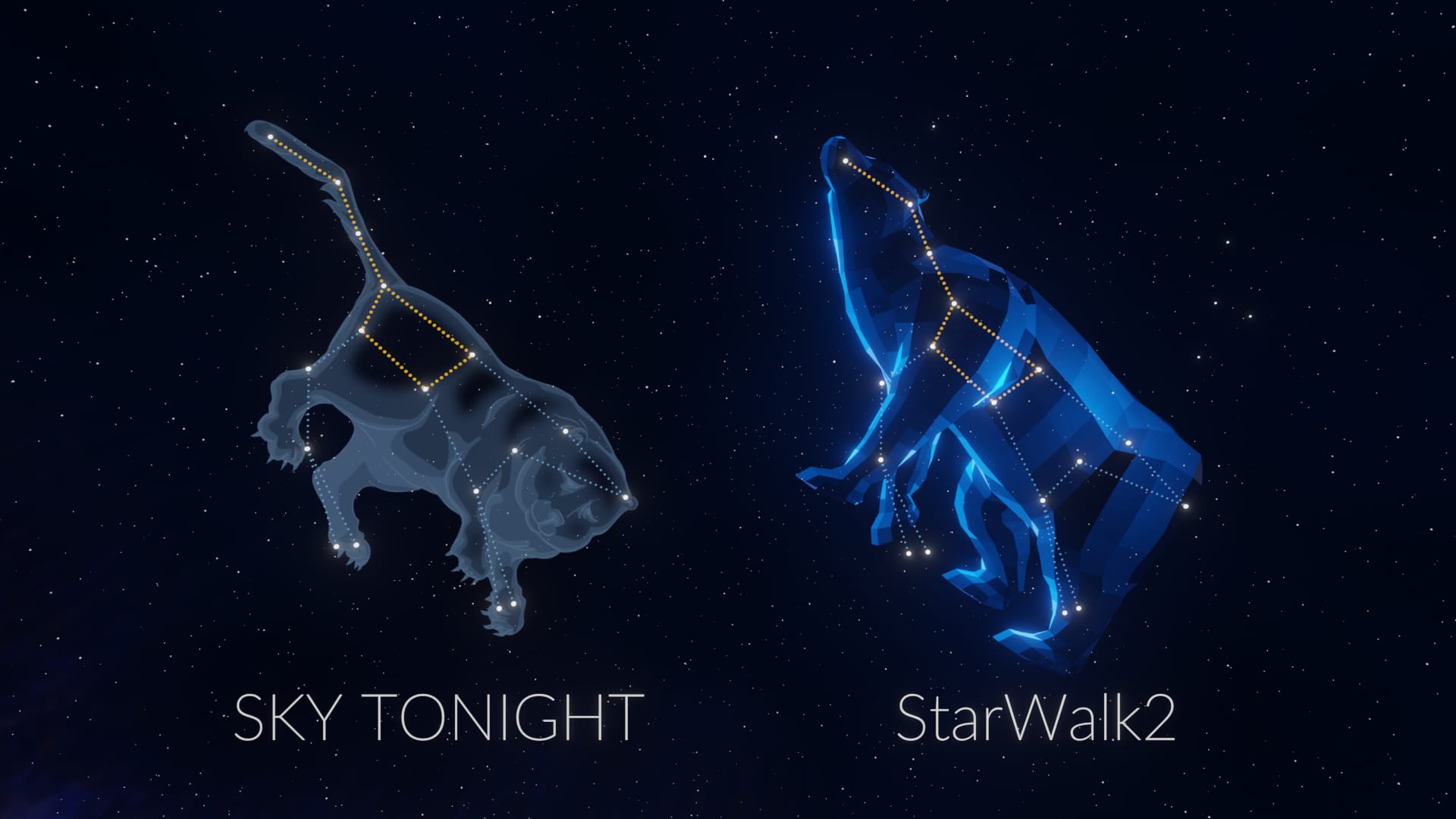
The easiest way to find Ursa Major is to start with the Big Dipper. This bright seven-star pattern is the most recognizable part of the Great Bear, while the rest of the constellation stretches around it. Different sky maps may draw Ursa Major in slightly different ways, so the Big Dipper can appear as different parts of the Bear depending on the illustration.
Under light-polluted skies, you may only see the Big Dipper clearly. To trace the whole constellation, choose a darker location and give your eyes at least 15–20 minutes to adapt to the dark. Check out our guide to the Bortle scale to learn how light pollution affects what you can see in the night sky.
How to find Polaris and other stars using the Big Dipper?
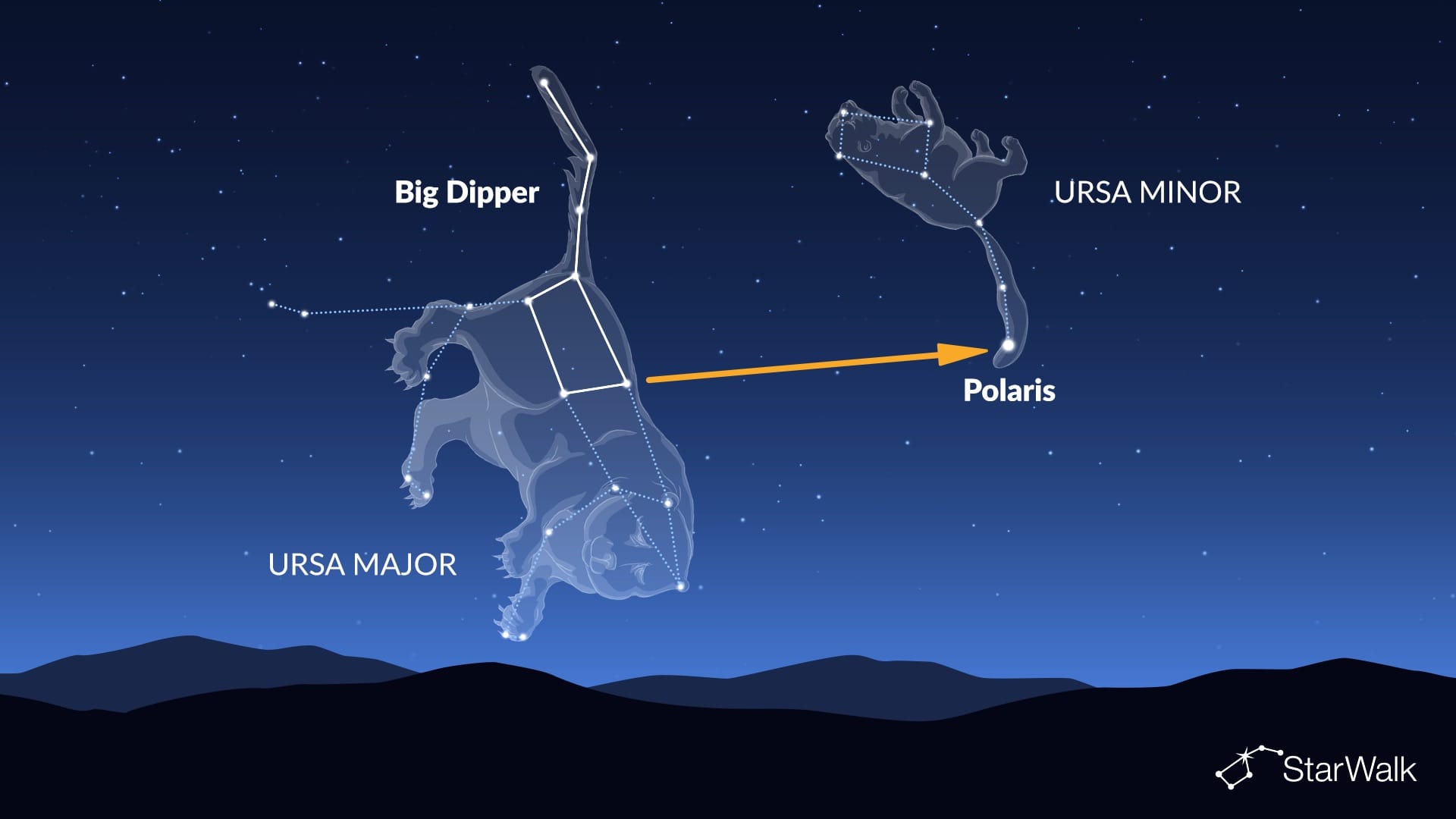
The two stars on the outer edge of the Big Dipper’s bowl – Merak and Dubhe – are called “the Pointers” because they point at Polaris. To find the North Star, draw an imaginary line between these two stars and extend it about five times. When you find Polaris, you are on your way to finding the Little Dipper and, eventually, the Ursa Minor constellation. Polaris is the brightest star in Ursa Minor that marks the end of the Little Dipper’s handle.
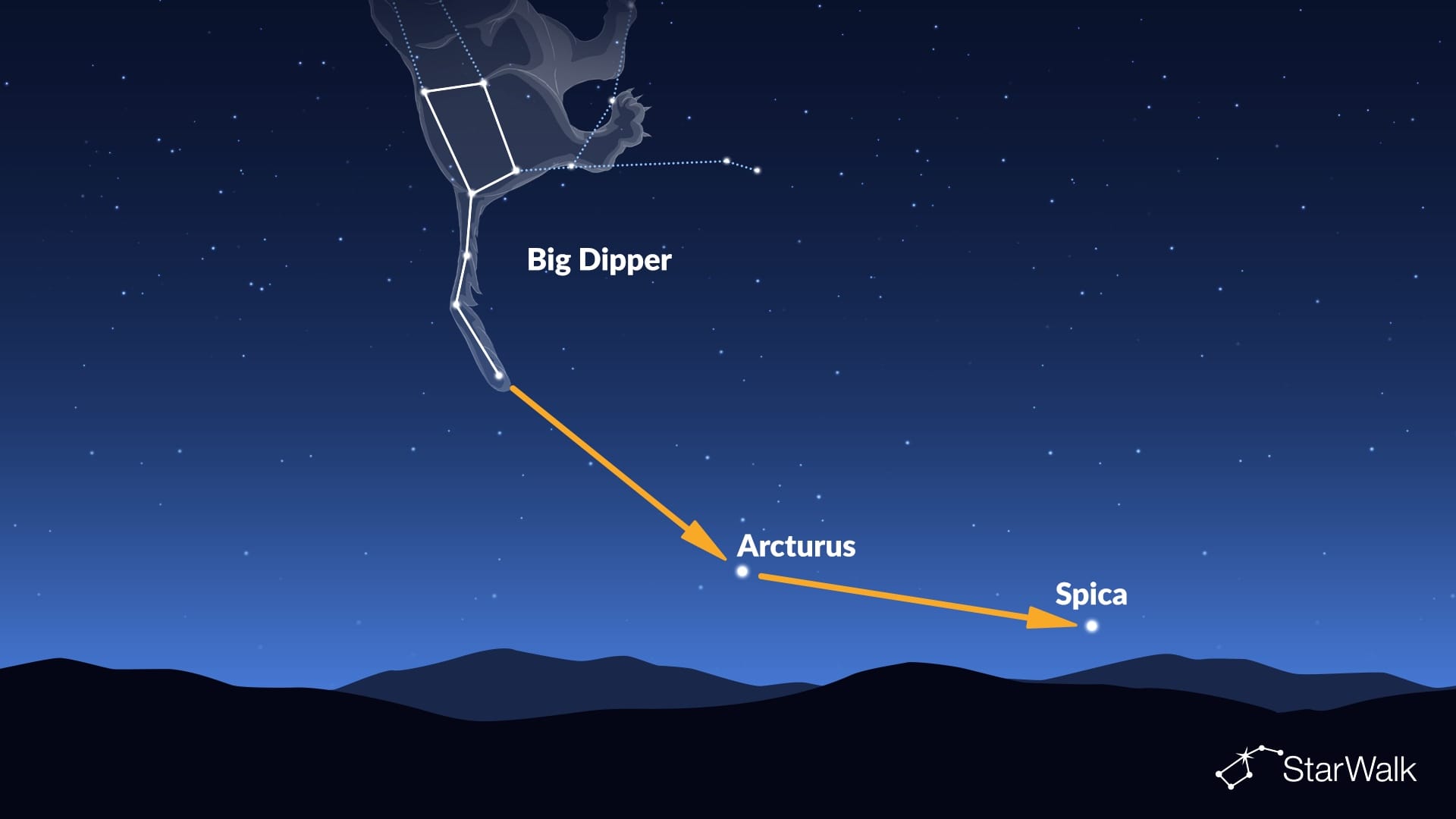
Moreover, you can locate Arcturus with the help of the Big Dipper. To find it, extend the arc of the Big Dipper’s handle to about 30°, preserving its natural curve. Arcturus is the orange star, the brightest one in the Boötes constellation. It’s best seen during the spring and summer months in the Northern Hemisphere and during the winter and autumn in the Southern Hemisphere. If you prolong the curve further, you can also locate Spica, the brightest star in the Virgo constellation.
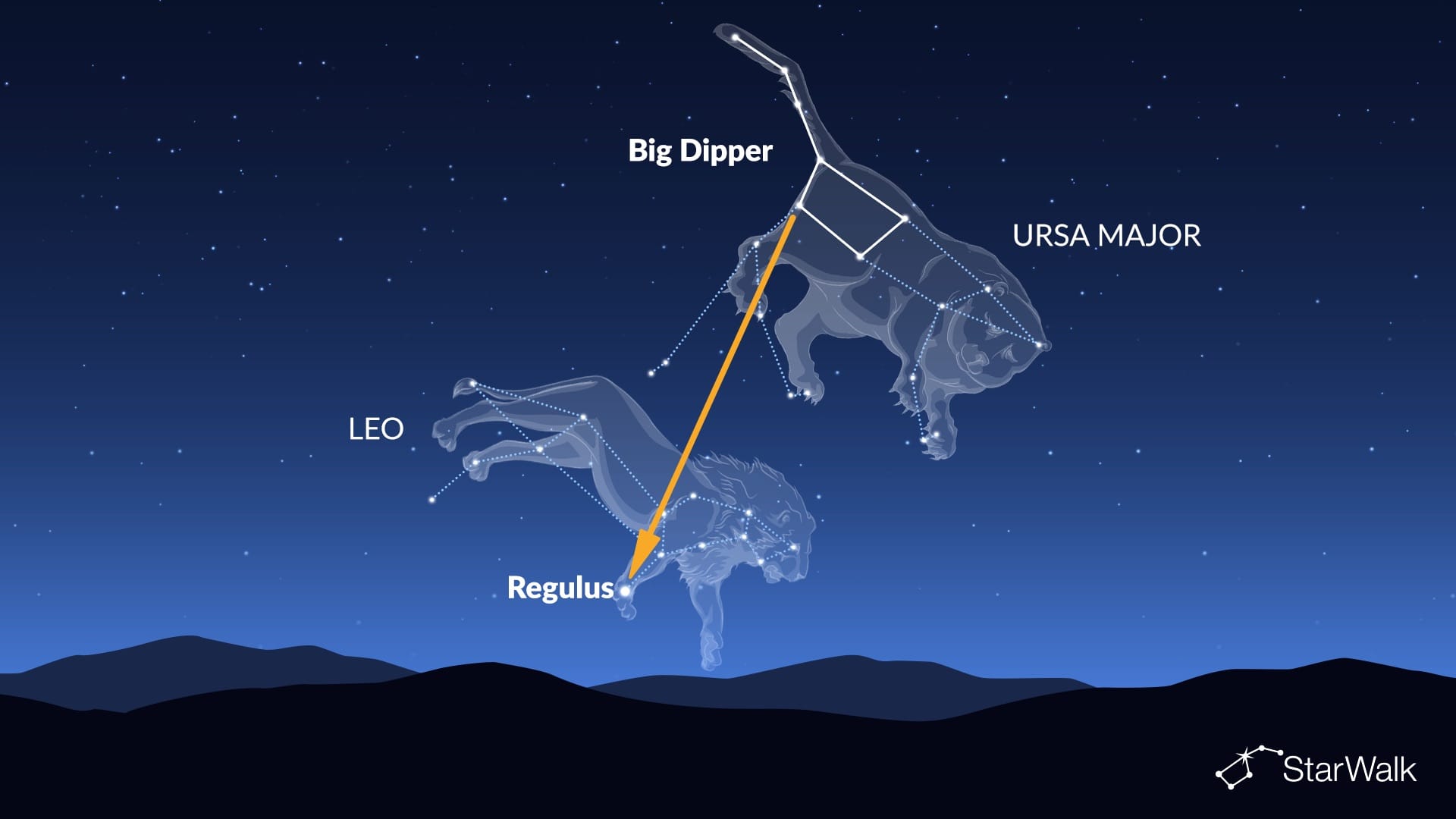
Draw an imaginary line between two Big Dipper’s stars at the handle end of the bowl – Megrez and Phecda (Phad) – and extend it about 45°. You’ll find Regulus, the brightest star in the constellation Leo.
Once you’ve learned these Big Dipper star-hopping tricks, try finding more bright stars with our infographic: 15 stars everyone can find.
How to find the Great Bear constellation with stargazing apps?
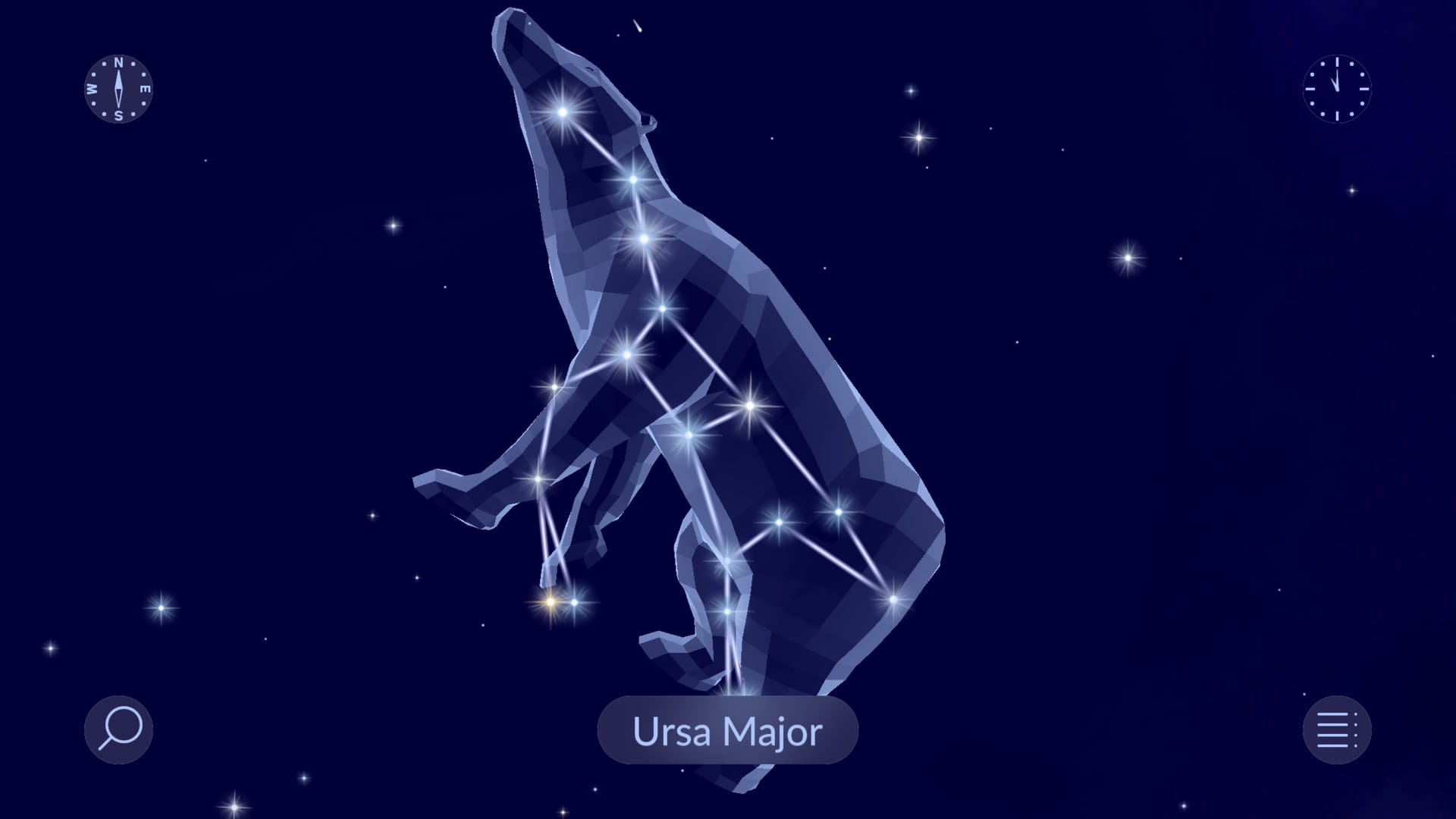
If you aren’t sure you located Ursa Major or the bordering constellations correctly, check it with stargazing apps.
To find the Great Bear with the help of Star Walk 2 app, tap on the magnifier icon and start typing “Ursa” in the search bar. The first result, Ursa Major with the bear icon, is the one you need. Tap on it, and the arrow will guide you to the constellation in the night sky based on your geolocation.
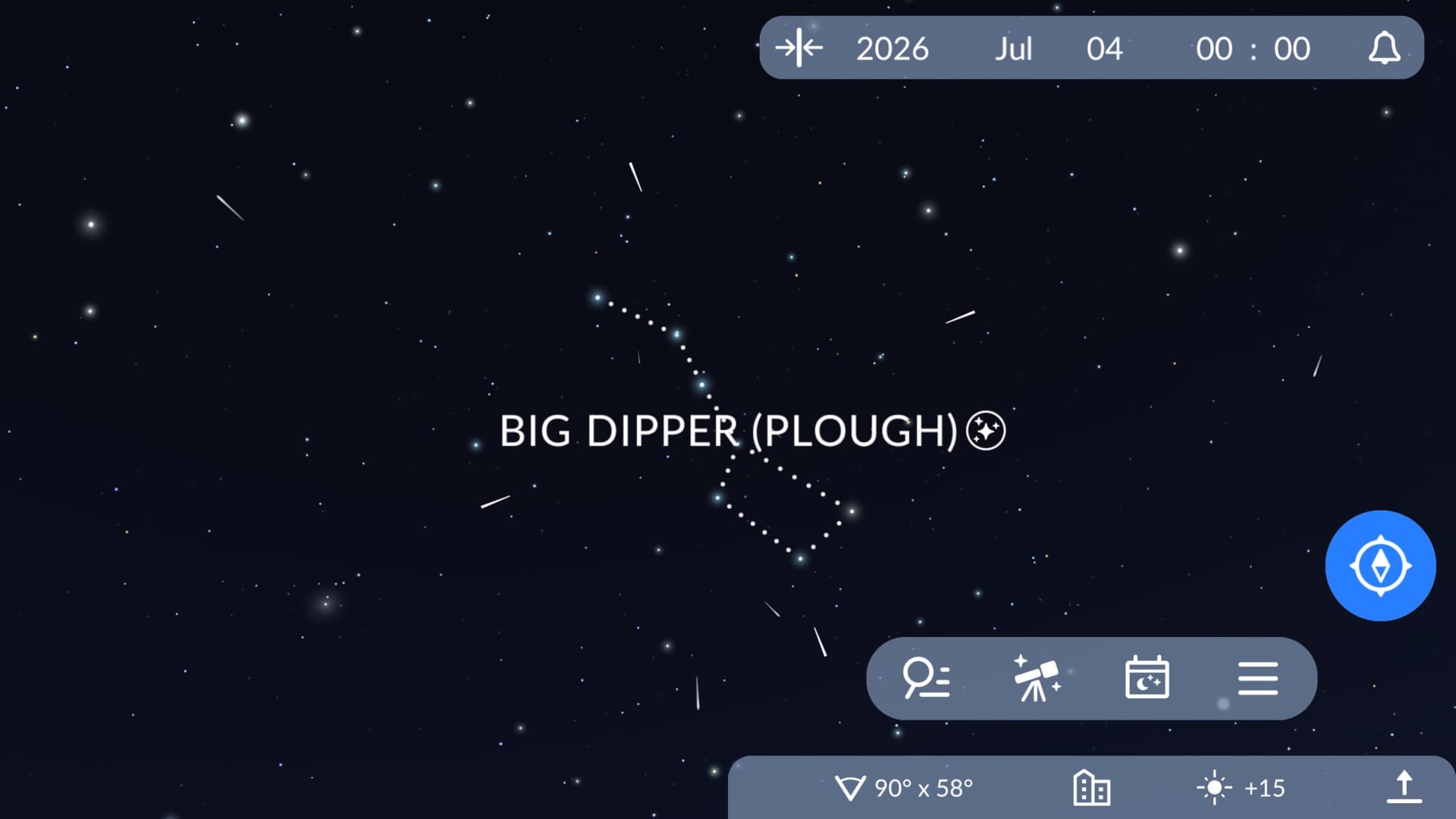
Another helpful stargazing app Sky Tonight works similarly. To find the Great Bear, tap on the magnifier icon and type “Ursa” in the search field. Tap on the first result – Ursa Major – then tap on the target icon to see its current position in the sky. If you tap on the compass icon, the arrow will help you find the constellation based on your geolocation. In Sky Tonight, you can also find the Big Dipper asterism on its own. To do that, type “Big Dipper” in the search field and choose the relevant result.
Ursa Major brightest stars
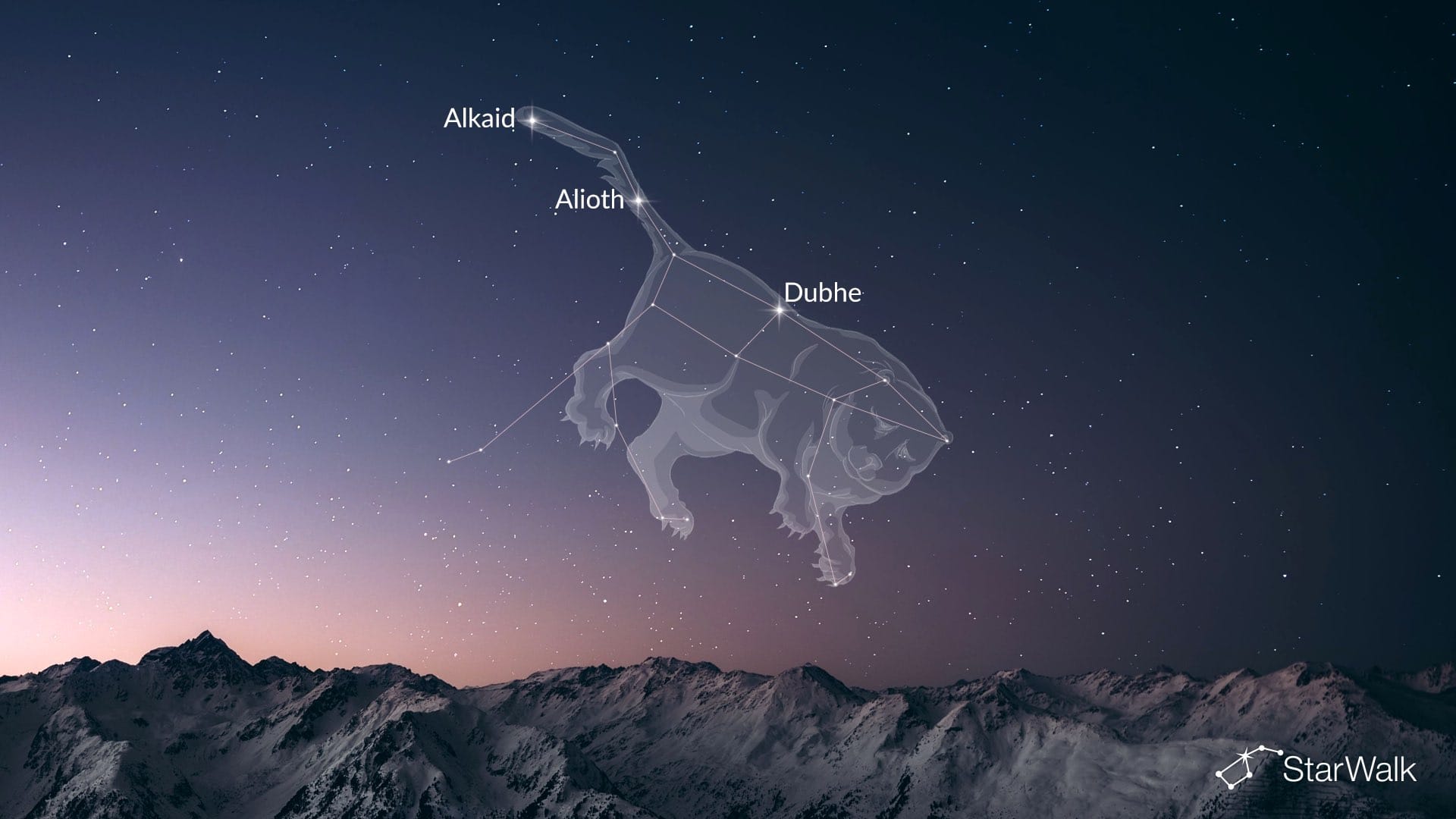
The best-known Ursa Major stars are the seven bright stars that form the Big Dipper: Alkaid (Benetnash), Mizar, Alioth, Megrez, Dubhe, Merak, and Phecda (Phad). Mizar has a famous faint companion, Alcor, nearby in the handle of the Big Dipper. Under good skies, many observers can separate Mizar and Alcor without binoculars, although at first glance they may appear as one star. The system is even more complex when viewed with telescopes. The brightest stars in the Big Dipper — and in the entire constellation — are Alioth, Dubhe, and Alkaid.
Most of the Big Dipper stars move through space together as part of the Ursa Major Moving Group. However, Dubhe and Alkaid are exceptions: they only appear to belong to the same pattern from our point of view.
Alioth
- Other names: Epsilon Ursae Majoris, ε UMa, HIP 62956, HR 4905
- Type: chemically peculiar blue-white subgiant
- Magnitude: 1.8
- Name’s origin: “the sheep’s fat tail” (Arabic)
Alioth is the brightest star in Ursa Major and the 31st-brightest star in the night sky. It is located in the Big Dipper’s handle, closest to the bowl.
Alioth is almost 3 times more massive than the Sun and lies about 82 light-years away from us. It is also one of the 57 primary stars historically used in celestial navigation.
Dubhe
- Other names: Alpha Ursae Majoris, α UMa, HIP 54061, HR 4301
- Type: spectroscopic binary system
- Magnitude: 1.8
- Name’s origin: “the back of the Greater Bear” (Arabic)
Dubhe is the second-brightest star in Ursa Major. It marks the upper right point of the Big Dipper’s bowl and is one of the two Pointer Stars used to find Polaris.
Dubhe is a spectroscopic binary system. Its primary star, Dubhe A, is an orange giant with about 4.25 solar masses. Like Alioth, Dubhe is one of the primary navigational stars.
Alkaid
- Other names: Benetnash, Eta Ursae Majoris, η UMa, HIP 67301, HR 5191
- Type: blue-white main-sequence star
- Magnitude: 1.9
- Name’s origin: “the leader of the daughters of the bier” (Arabic)
Alkaid is the third-brightest star in Ursa Major. It marks the end of the Big Dipper’s handle and is also known by the traditional name Benetnash.
Alkaid is a hot blue-white star with about 6 solar masses. Unlike most of the other Big Dipper stars, it is not part of the Ursa Major Moving Group.
Deep-sky objects in Ursa Major
Catalogs list hundreds of deep-sky objects in Ursa Major, though most of them are very dim. The constellation contains seven objects from the Messier catalog. Six of them are true deep-sky objects, while M40 is an optical double star. The Messier objects in Ursa Major are:
- Messier 40 (M40, Winnecke 4)
- Messier 81 (M81, NGC 3031, Bode’s Galaxy)
- Messier 82 (M82, NGC 3034, Cigar Galaxy)
- Messier 97 (M97, NGC 3587, Owl Nebula)
- Messier 101 (M101, NGC 5457, Pinwheel Galaxy)
- Messier 108 (M108, NGC 3556)
- Messier 109 (M109, NGC 3992)
M81 and M82 are especially popular because they lie close together in the sky. Under dark skies, both can be found with binoculars, while a telescope reveals them much better. Let’s take a closer look at three of Ursa Major’s deep-sky highlights.
M81 (Messier 81) — Bode’s Galaxy
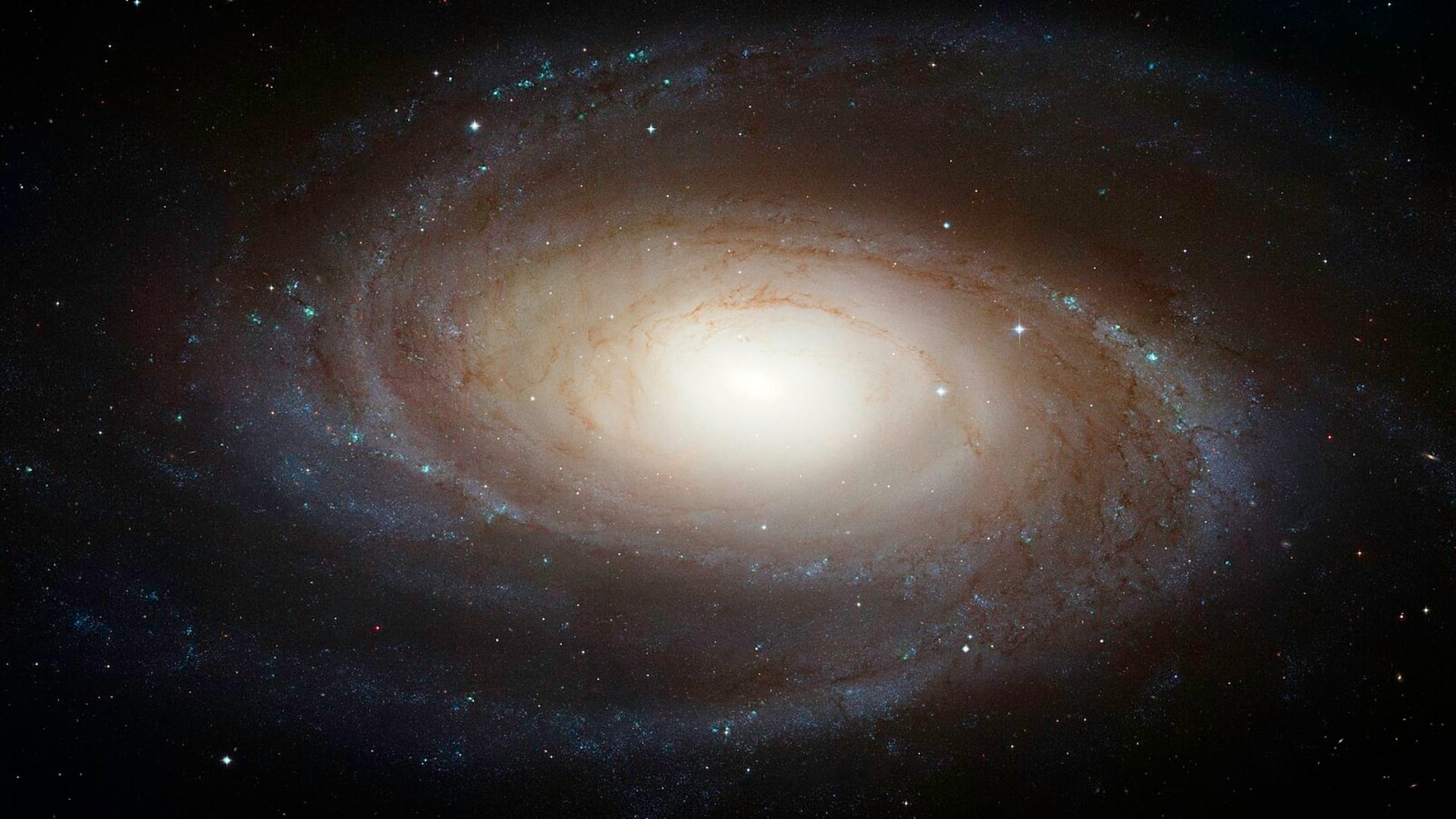
M81 is a spiral galaxy shining at a magnitude of 6.9. Its approximate location is about 12 million light-years from our Solar System. You can spot the galaxy’s faint light even through binoculars, but its core is seen only through a telescope. The best time to observe Bode’s Galaxy is in April.
M97 (Messier 97) — Owl Nebula
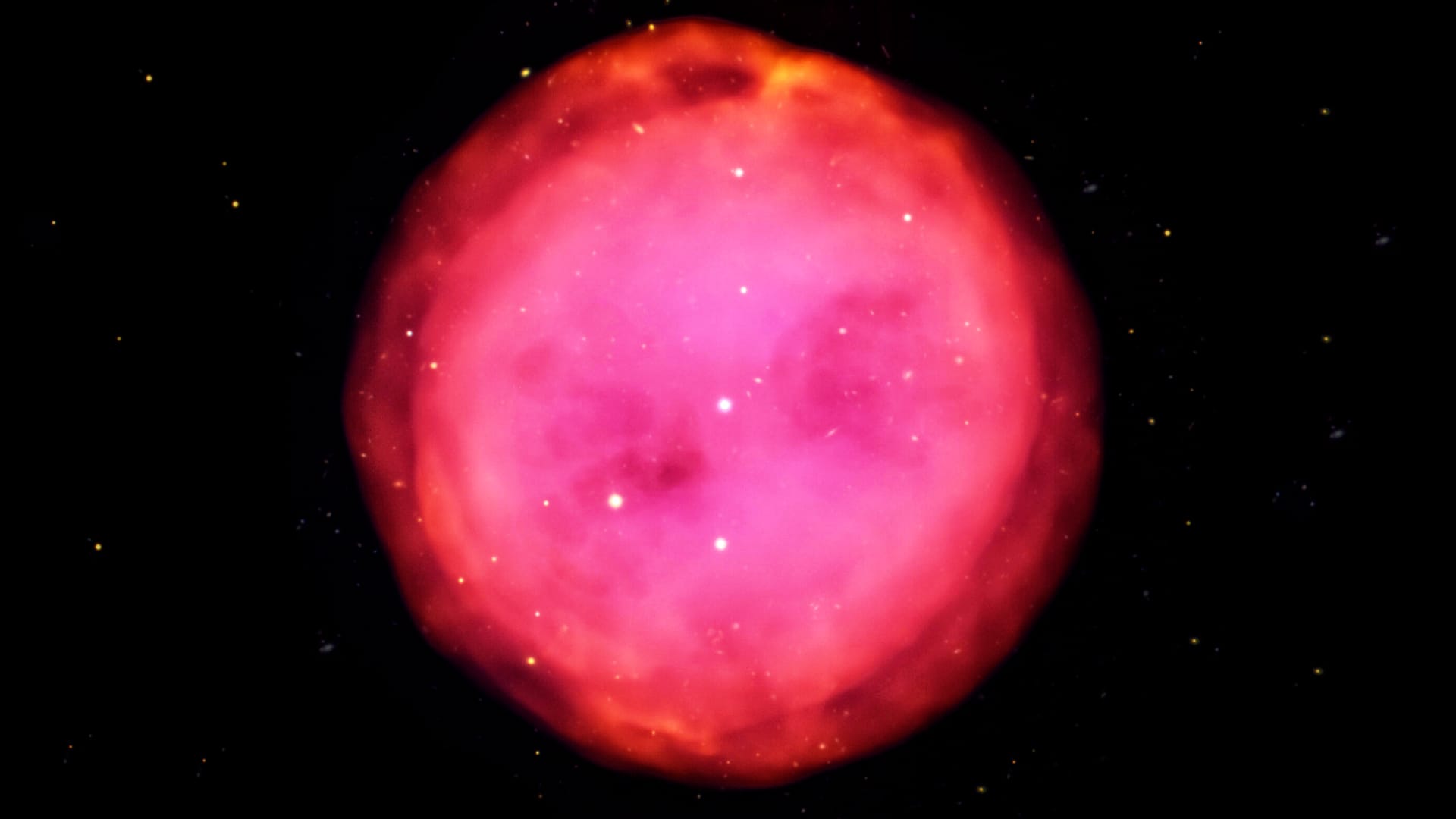
The Owl Nebula is one of the four planetary nebulae in the Messier catalog. It has a magnitude of 9.9. Under very dark skies, experienced observers may glimpse it as a faint dot through large binoculars, but a telescope gives a much better view. You’ll get a better view of the nebula with more powerful optics – its two owl-like eyes can be seen through 10-inch and larger telescopes.
M82 (Messier 82) — Cigar Galaxy
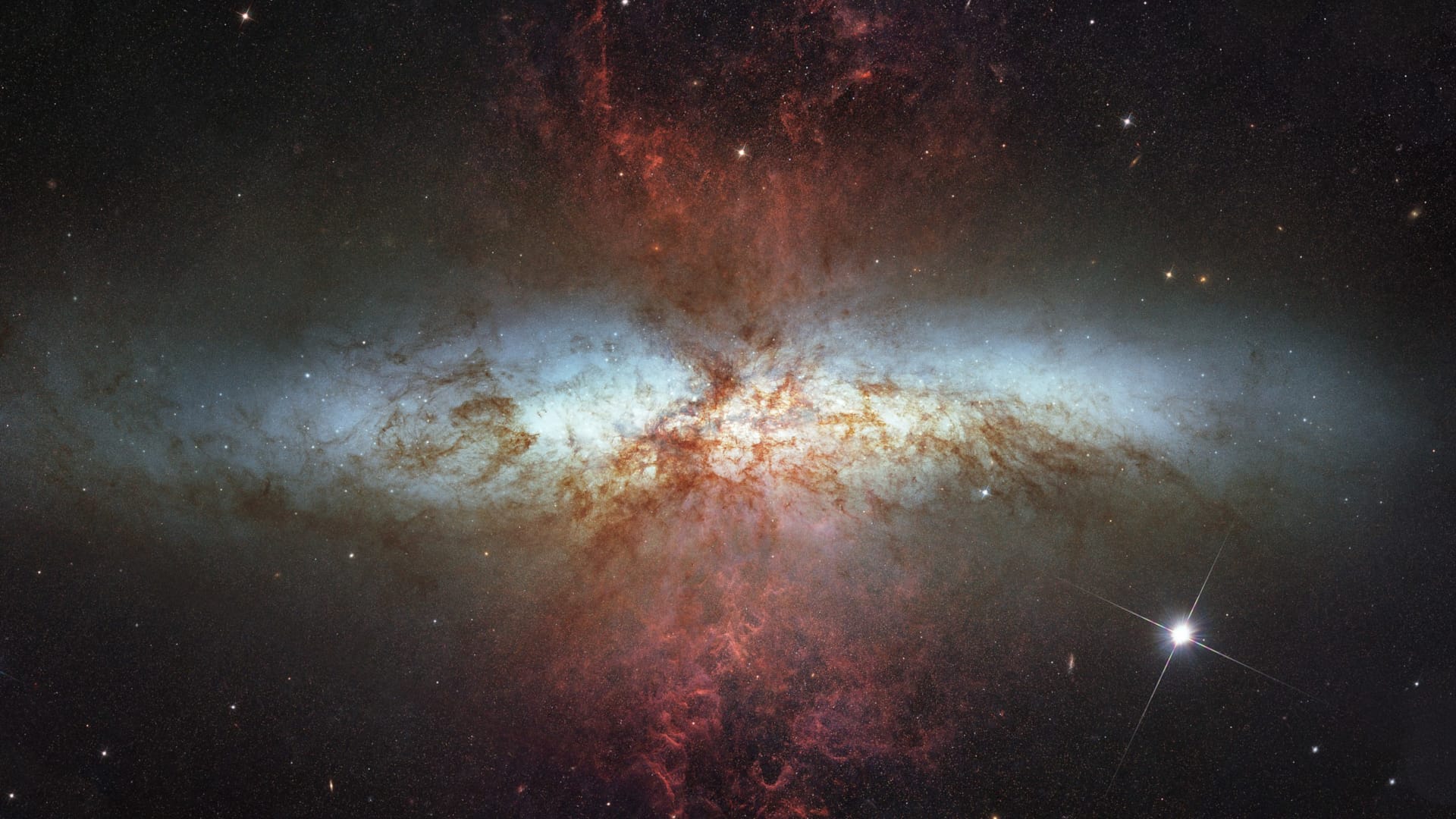
M82 lies about 12 million light-years from Earth. It is known for its extremely high rate of star formation: stars are being born there about 10 times faster than in the Milky Way’s central region. The Cigar Galaxy shines at a magnitude of 8.41. It is best observed in April through an amateur telescope under dark skies, though you can also spot it as a faint patch of light with binoculars.
Ursa Major mythology
The name Ursa Major means “the great bear” in Latin. One of the earliest written references to the constellation appears in Homer’s Odyssey, where it is described as “the Bear, which men also call the Wain”.
Ursa Major Greek mythology
As the Greek myth explains, there was a nymph Callisto who took a vow of virginity to Artemis. Zeus, however, loved her, and they had a son Arcas. One version says Artemis tried to kill Callisto because she broke her vow, but Zeus transformed his lover into a bear in the sky. In another version, it was Hera who tried to kill Callisto out of jealousy. The third version explains further that the son Arcas grew up while his mother wandered as a bear for fifteen years in the mountains. Once Arcas met Callisto on the hunt and nearly killed his mother, but Zeus interrupted and turned Callisto into Ursa Major and Arcas into the Boötes constellation.
Ursa Major Native American myths
Many Indigenous North American traditions connect the stars of Ursa Major or the Big Dipper with stories about a bear, hunters, or people placed in the sky. In some versions, the bowl of the Big Dipper represents a bear, while the stars in the handle represent hunters following it. Other stories connect the seven bright stars with siblings, travelers, or sacred figures. These traditions vary widely between different peoples, so it’s better to think of them as a family of related sky stories rather than one single myth.
The Great Bear in other cultures
The Great Bear constellation has similar stories in different cultures, including traditions from North America and South Asia. Some researchers suggest that this may point to a very ancient origin of the Bear myth, possibly dating back to Paleolithic times. Ursa Major has had many other ancient names, too:
- Mesopotamian: Mul Mar Gid Da (“the constellation of the long chariot”);
- Egyptian: Khepesh (“the thigh”);
- Chinese: Bei Dou (“the northern bushel”);
- Hindu: Saptarshi (“the seven sages”);
- Persian: Haptoiringa (“having seven signs”).
Ursa Major: Frequently Asked Questions
Why is the constellation Ursa Major so important?
Ursa Major is one of the most recognizable constellations. It appears in the culture of various nations, from ancient Greek literature to Indigenous North American sky stories. It is also a great reference point to search for other stars and constellations. Find out how much you know about constellations in our fun quiz.
When is the best time to see Ursa Major?
For observers in the Northern Hemisphere, Ursa Major is best seen in the evening sky in spring. Around this season, the Big Dipper appears high in the sky and is easy to recognize. In autumn, it is much lower and may be harder to see, especially from lower northern latitudes.
What is the brightest star in Ursa Major?
The brightest star in Ursa Major is Alioth, also known as Epsilon Ursae Majoris. It shines at a magnitude of 1.8 and is located in the handle of the Big Dipper, close to the bowl.
How many galaxies are in Ursa Major?
Ursa Major contains hundreds of cataloged galaxies, but only a few are easy to observe. The best targets for amateur telescopes are the Cigar Galaxy (M82, NGC 3034) and Bode’s Galaxy (M81, NGC 3031). For more beginner-friendly targets, see our guide to bright star clusters you can spot with the naked eye.
Is Polaris located in Ursa Major or Ursa Minor?
The North Star (also known as Polaris) is located in the constellation Ursa Minor. The stars Merak and Dubhe of the Ursa Major constellation help to find Polaris in the night sky – you need to draw an imaginary line between them and then extend it five times. To quickly locate any star or constellation, check our stargazing video tutorial.
Is Ursa Major the same as Big Dipper?
The Big Dipper is Ursa Major’s asterism – the prominent pattern of stars that is smaller than the constellation itself. The Big Dipper consists of seven main stars, including several of the brightest stars in the whole constellation. The rest of Ursa Major is hard to see with the naked eye when the sky is light-polluted. Learn how to find Ursa Major and other constellations in our infographic.
Why are Ursa Major and Ursa Minor called circumpolar constellations?
For many observers at mid- and high-northern latitudes, Ursa Major and Ursa Minor are circumpolar constellations: they rotate around Polaris and never set below the horizon. Depending on the season and time of night, they can appear on different sides of the North Star. In the Southern Hemisphere, the Southern Cross is one of the best-known circumpolar constellations.
Can you see Ursa Major from the Southern Hemisphere?
Ursa Major is mostly a Northern Hemisphere constellation, but it can be seen from some northern parts of the Southern Hemisphere. The farther south you are, the lower it appears above the northern horizon. South of about 30°S, Ursa Major is not visible.
Constellation Ursa Major: Key Facts
Ursa Major is one of the most useful constellations for learning the northern sky. Its brightest stars form the Big Dipper, an easy-to-recognize pattern that helps you find Polaris, the Little Dipper, Arcturus, Spica, Regulus, and several neighboring constellations. The Great Bear is also rich in deep-sky objects, including Bode’s Galaxy, the Cigar Galaxy, the Owl Nebula, and the Pinwheel Galaxy.
For many observers in the Northern Hemisphere, Ursa Major is visible all year round, but it is easiest to see on spring evenings, when the Big Dipper climbs high in the sky. Use the Star Walk 2 app to locate Ursa Major, identify its brightest stars, and explore nearby constellations from your location.