Southern Hemisphere Constellations by Season: Best Southern Sky Constellations
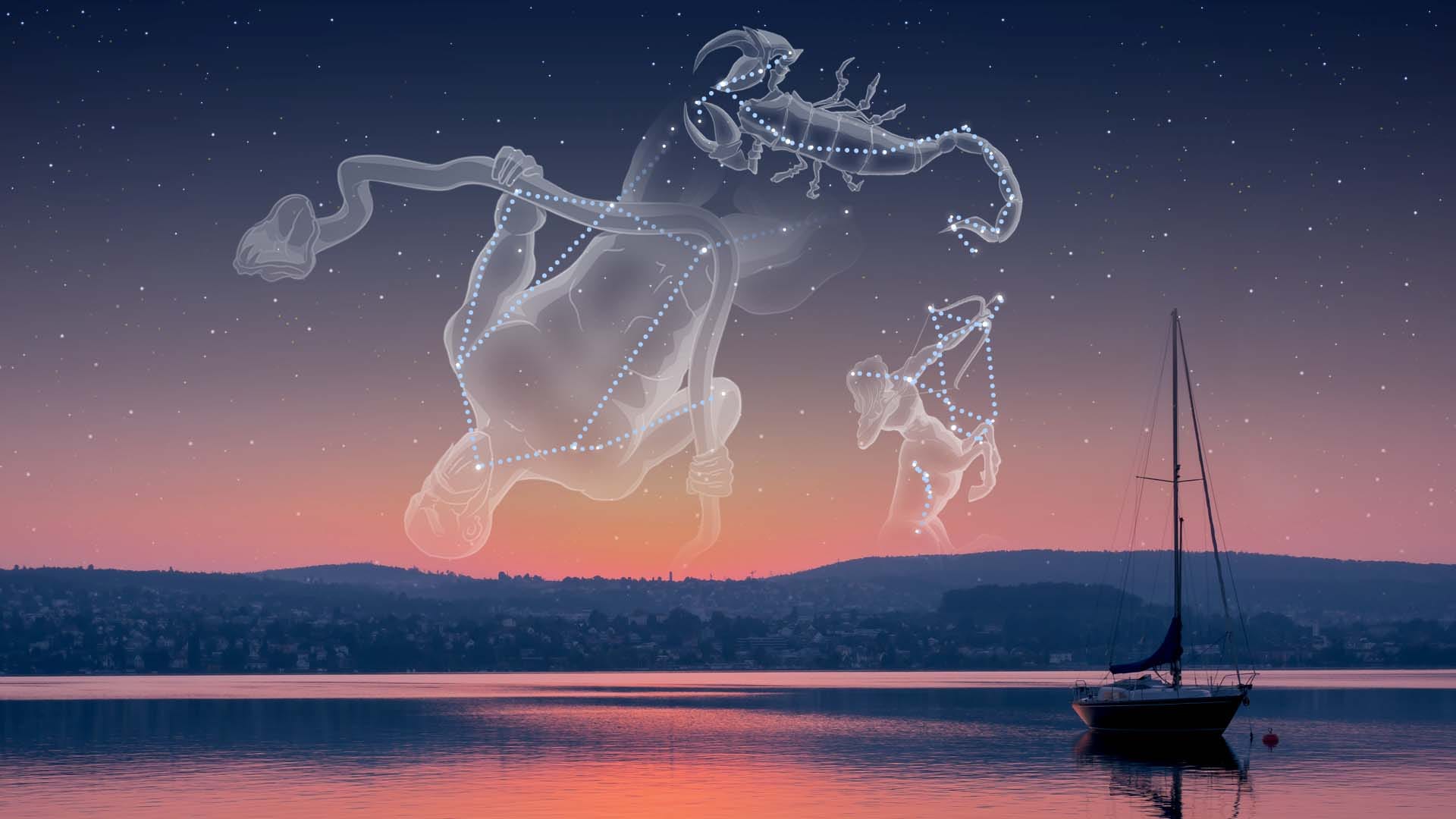
Seasonal Southern Hemisphere constellations are groups of stars best visible from the southern latitudes during specific seasons. Use this guide to find out which constellations you can see in the Southern Hemisphere in summer, autumn, winter, and spring. To easily identify them, use the Sky Tonight app — it will instantly guide you to the right part of the sky.
Contents
- Best Southern Hemisphere constellations by season: quick list
- Winter constellations in the Southern Hemisphere
- Spring constellations in the Southern Hemisphere
- Summer constellations in the Southern Hemisphere
- Autumn constellations in the Southern Hemisphere
- Why do we have seasonal constellations?
- How to find seasonal constellations in the sky?
- FAQ about Southern Hemisphere constellations
- What are the most famous Southern Hemisphere constellations?
- What constellations are only visible in the Southern Hemisphere?
- When are Southern Hemisphere constellations best visible?
- How do I find Southern Hemisphere constellations tonight?
- Are any Southern Hemisphere constellations visible all year round?
- What are the famous Southern Hemisphere constellations?
- Seasonal constellations in the Southern Hemisphere: to sum up
Best Southern Hemisphere constellations by season: quick list
- Winter: Scorpius, Sagittarius, Ophiuchus
- Spring: Tucana, Aquarius, Cetus
- Summer: Hydra, Eridanus, Puppis
- Autumn: Crux, Centaurus, Carina
Winter constellations in the Southern Hemisphere
The Southern winter lasts from late June to late September and is one of the best times to see some of the brightest Southern Hemisphere constellations. In winter, Scorpius, Sagittarius, and Ophiuchus are among the most recognizable constellations visible in the southern sky. Scorpius and Sagittarius belong to zodiac constellations, while Ophiuchus is often called the 13th zodiac constellation — read our dedicated article to find out why.
Scorpius
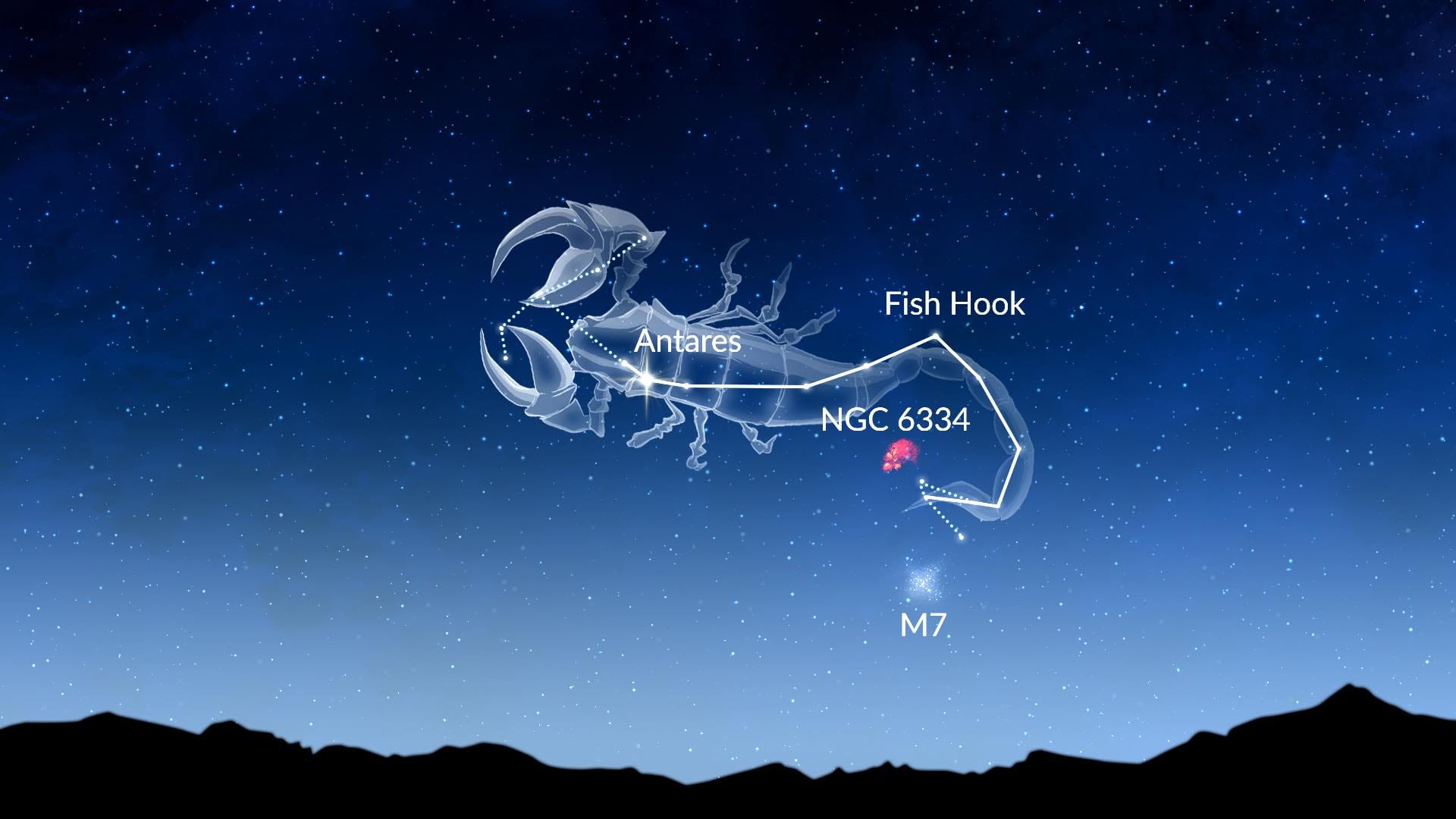
Scorpius, the zodiac constellation located furthest south, is easily identifiable due to its hook-shaped group of stars known as the Fish Hook. Its brightest star is Antares. The star’s name comes from a Greek phrase meaning “the rival of Mars,” highlighting the star’s ruby-red color and luminosity comparable to that of the planet. The constellation contains four Messier objects, including the Ptolemy Cluster (M7), visible even to the naked eye. The other three – M4, M80, and the Butterfly Cluster (M6) – are better observed through binoculars. A telescope will resolve the Cat’s Paw Nebula (NGC 6334) and Butterfly Nebula (NGC 6302).
Sagittarius
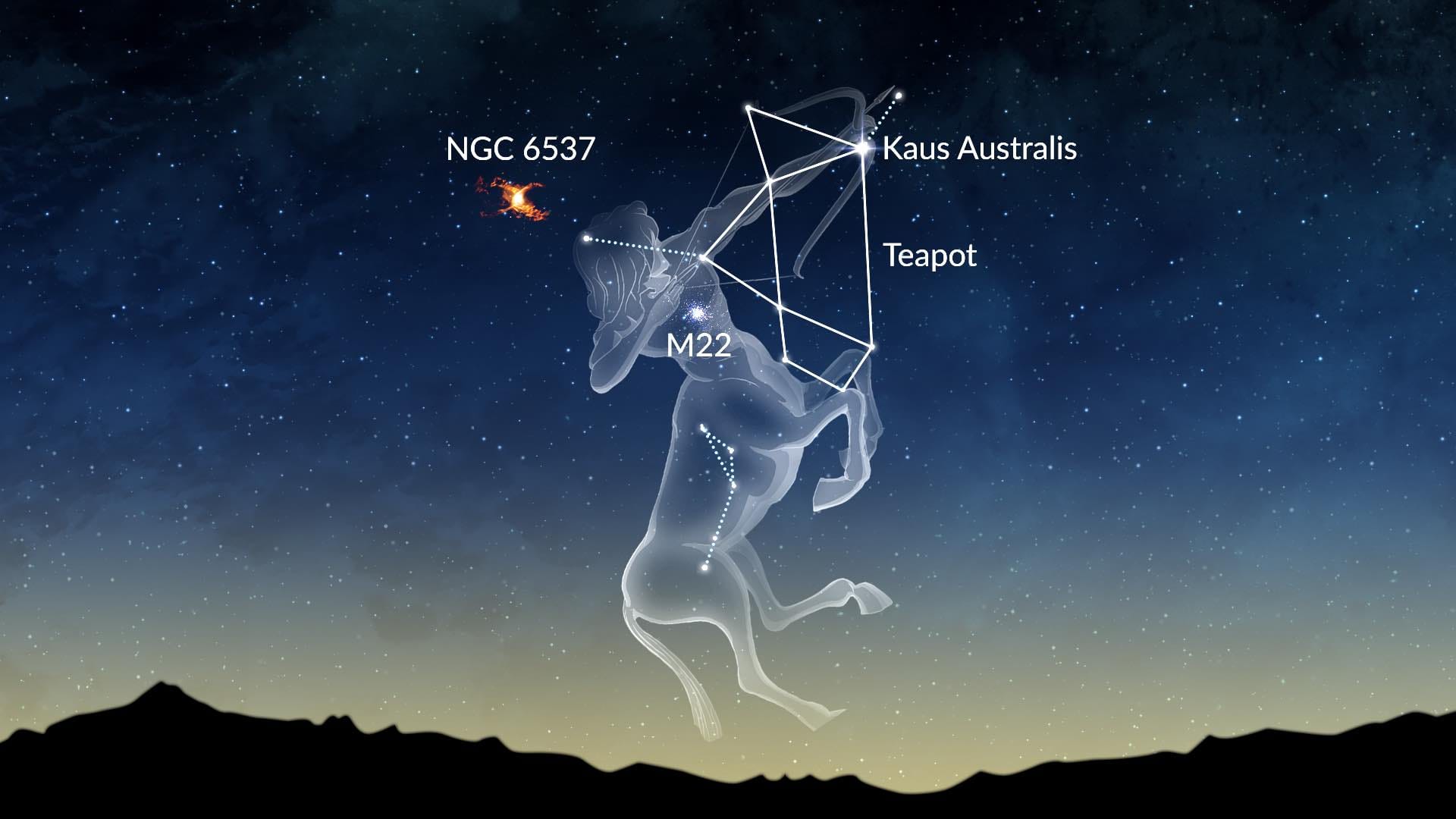
Sagittarius can be identified by the Teapot asterism formed by the eight brightest stars of the constellation. The pattern is easy to spot even with the naked eye; it just takes a little practice. Milky Way’s center lies within the constellation Sagittarius, so under the darkest skies, you can see the Sagittarius Arm of the galaxy, resembling “steam” rising from the Teapot’s spout.
The constellation is also rich in deep-sky objects. Sharp-eyed observers might see some of them, such as the Sagittarius Cluster (M22) and Sagittarius Star Cloud (M24), with the unaided eye. The Lagoon Nebula (M8), Omega Nebula (M17), and Trifid Nebula (M20) are visible through binoculars. The Red Spider Nebula (NGC 6537) and Barnard’s Galaxy (NGC 6822) make good telescope targets.
Ophiuchus
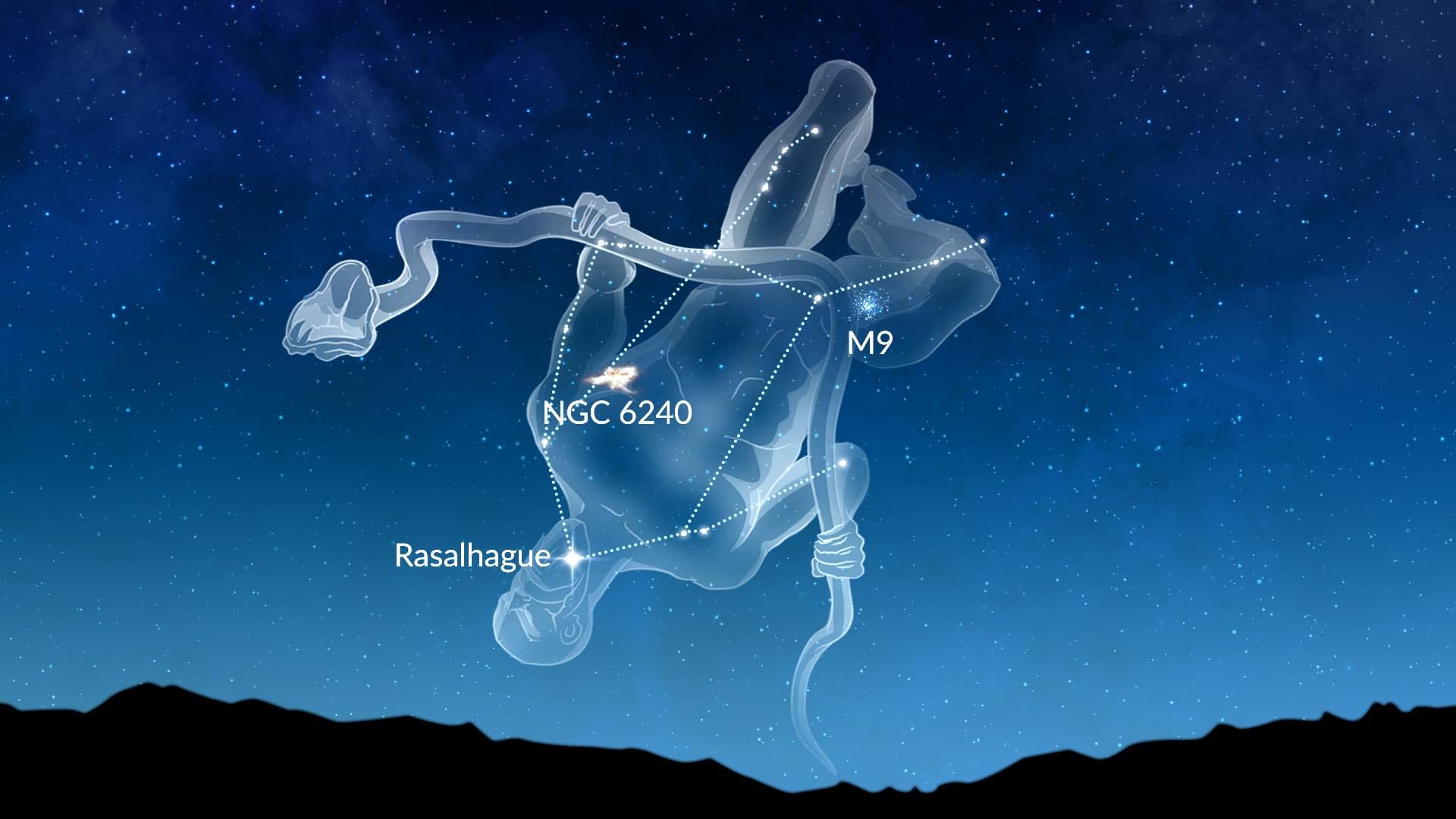
Ophiuchus is one of the largest, yet one of the least well-known, constellations. There aren't many bright stars in this constellation, but there are unique ones, including Rasalhague (the brightest one, which marks the head of the Serpent-bearer) and Barnard’s Star – the fourth closest individual star to the Earth (despite the proximity, it is only visible through a telescope). Ophiuchus is also home to seven Messier objects (M9, M10, M12, M14, M19, M62, and M107), Minkowski’s Butterfly Nebula, and an active galaxy NGC 6240.
Spring constellations in the Southern Hemisphere
The Southern spring lasts from late September to late December. In spring, some of the best Southern Hemisphere constellations to observe are Tucana, Aquarius, and Cetus.
Tucana
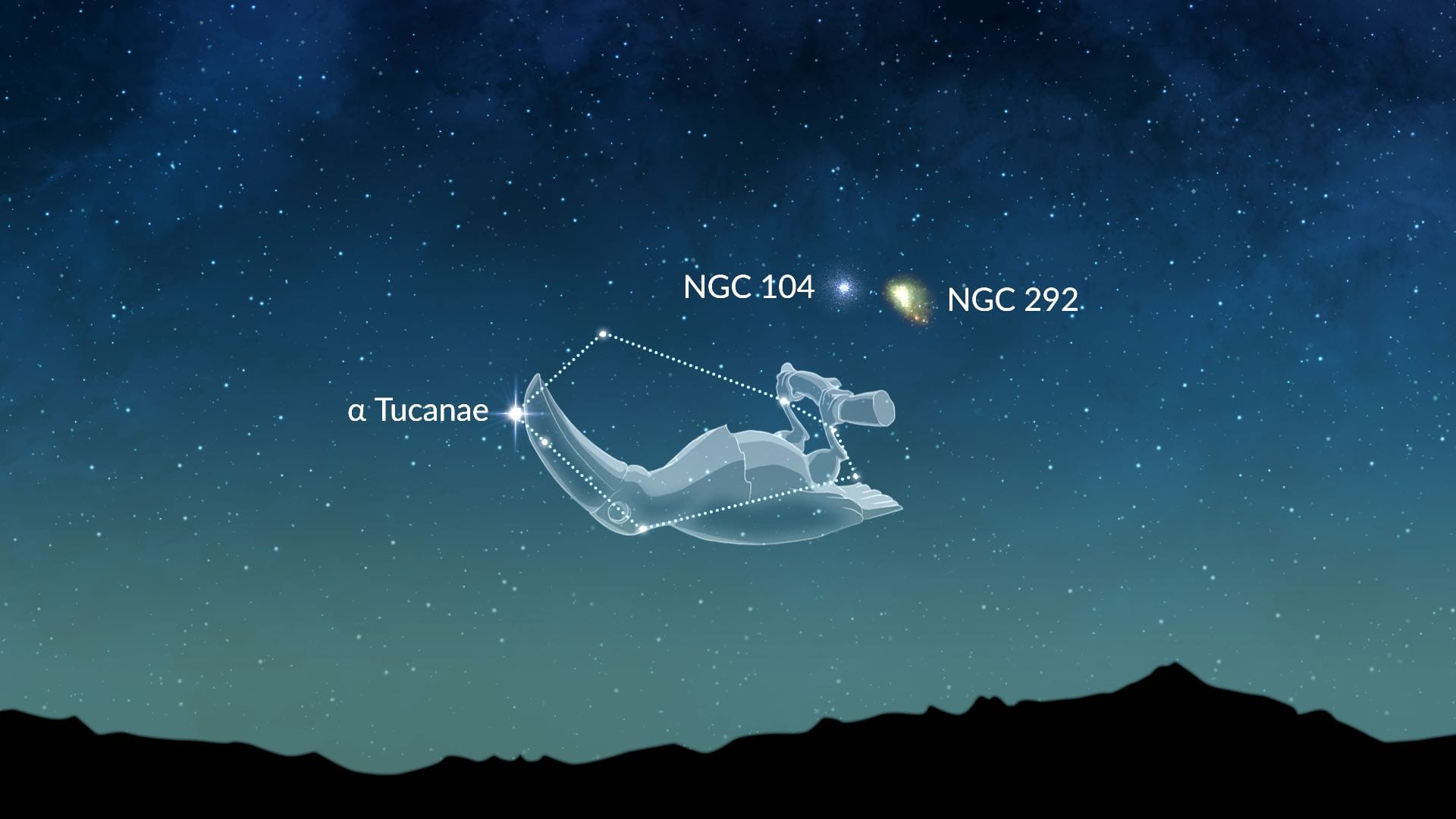
At mid- to high-southern latitudes, Tucana is circumpolar and visible year-round; around November, it reaches its culmination. It is a small constellation with only one star brighter than the 3rd magnitude – α Tucanae. However, it is known for containing some notable deep-sky objects. For example, observers can see the Small Magellanic Cloud, or NGC 292, with the naked eye. Its counterpart, the Large Magellanic Cloud, lies nearby, between the constellations Dorado and Mensa. 47 Tucanae (NGC 104), the second-brightest globular cluster in the sky, is also visible without optical aid. NGC 265, NGC 290, NGC 346, and NGC 362 are promising targets in binoculars or telescopes.
Aquarius
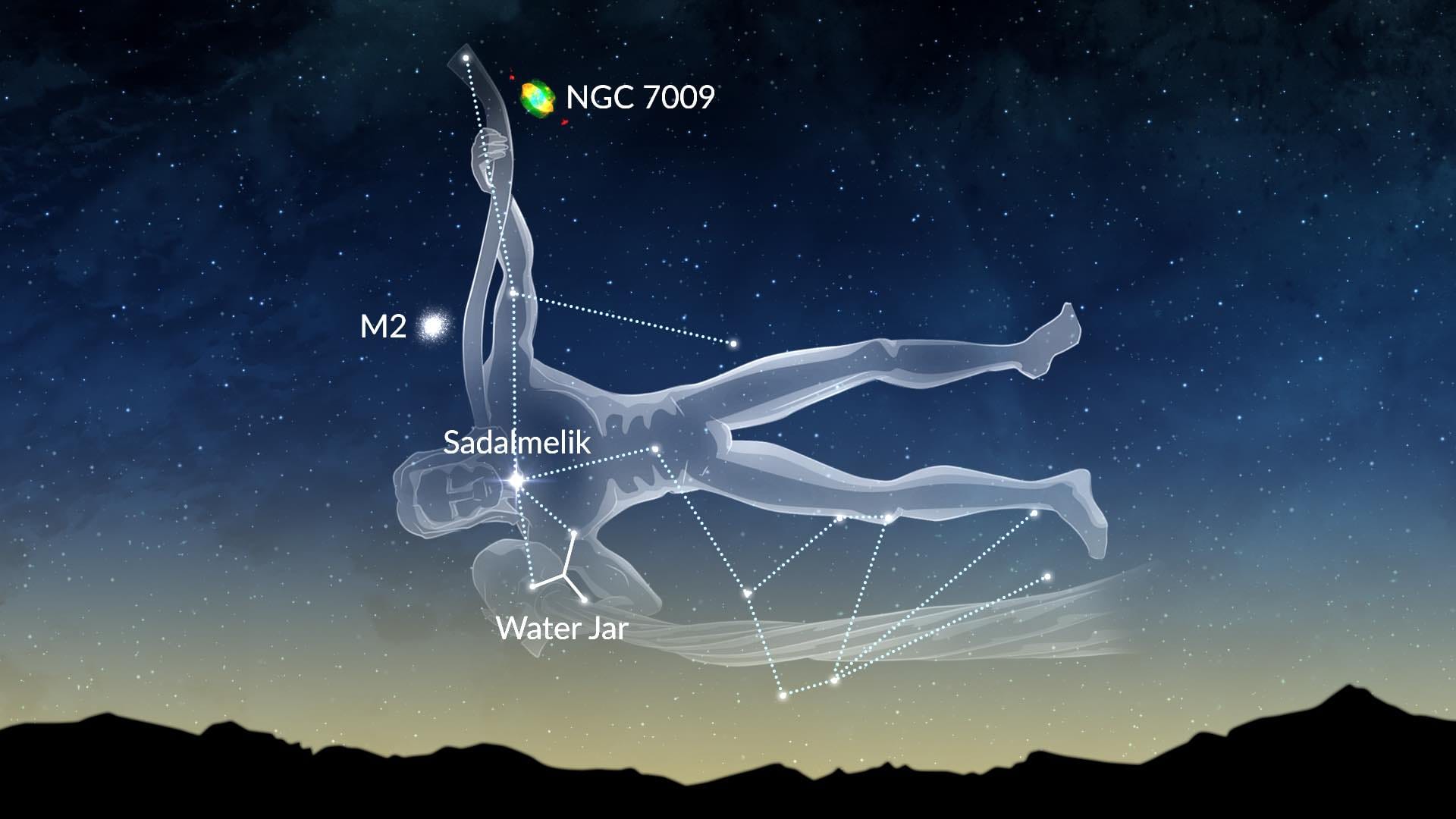
Aquarius doesn’t contain many bright stars. The most prominent are Sadalmelik and Sadalsuud. Under dark skies, you can spot a “Y”-shaped asterism known as the Water Jar. Deep-sky observers with optical devices can find the Messier objects M2 and M72 (globular clusters) and M73 (an asterism), along with the Helix Nebula (NGC 7293) and the Saturn Nebula (NGC 7009).
Cetus
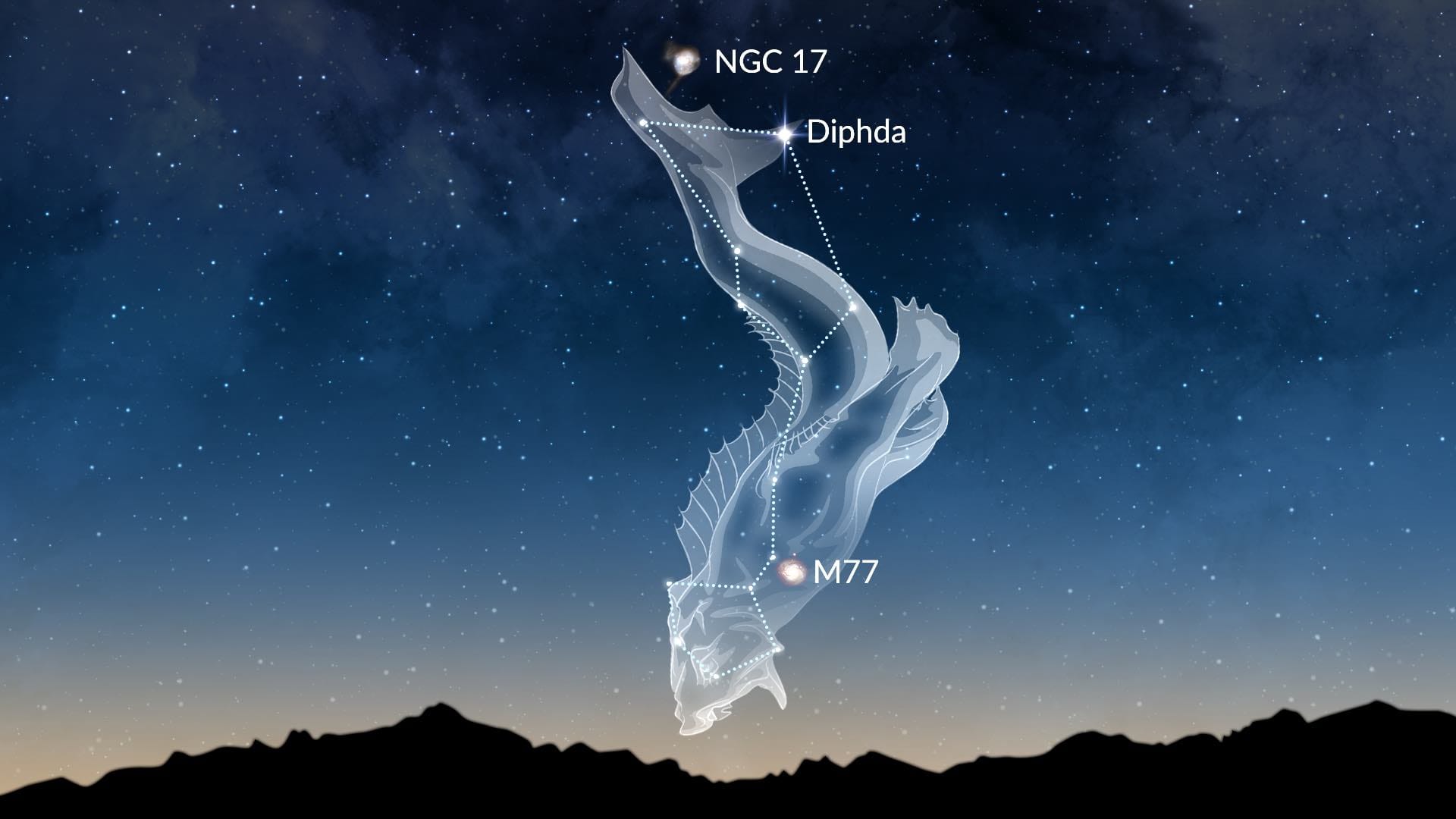
Cetus is one of the largest constellations visible from the Southern Hemisphere (and in general, ranking fourth by area on the IAU list). Its most prominent stars are Diphda and Menkar. The constellation contains more than 25 galaxies that can be seen through a telescope (e.g., NGC 17, NGC 1073, NGC 1087). The M77 spiral galaxy – the only Messier object within Cetus – can also be observed through binoculars.
Summer constellations in the Southern Hemisphere
Summer in the Southern Hemisphere lasts from late December to late March and is a great time to observe some of the largest constellations visible in the southern sky — Hydra, Eridanus, and Puppis.
Hydra
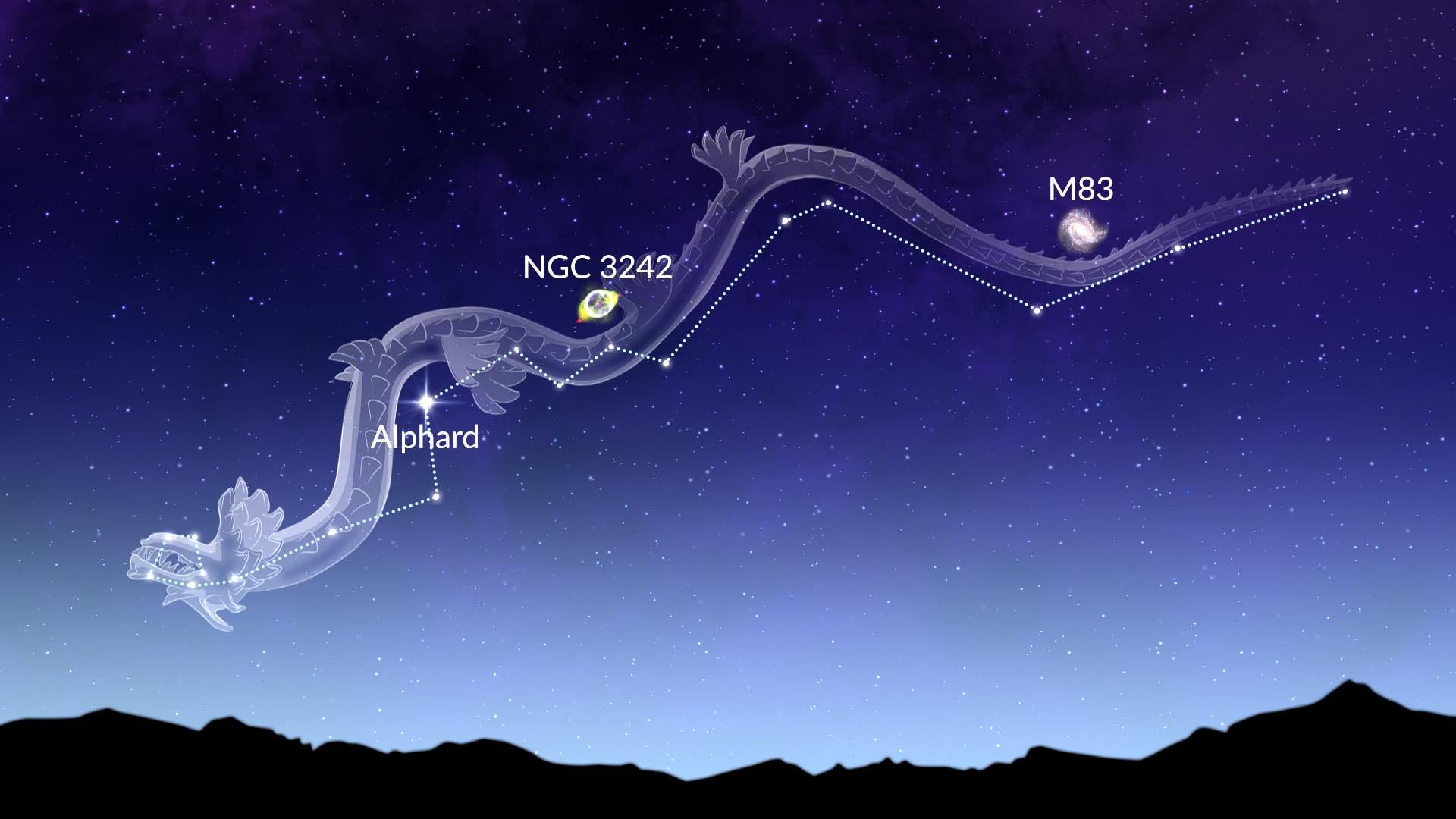
Hydra is the largest of all constellations. Despite its size, there are only a few bright stars in Hydra. The most prominent one, Alphard, marks the heart of the celestial snake. Sharp-eyed stargazers can try to spot the Hydra’s head – the circle of stars located roughly halfway between Regulus in Leo and Procyon in Canis Minor. Optical devices will resolve the Ghost of Jupiter nebula (NGC 3242), as well as three Messier objects – the M48 and M68 star clusters and the Southern Pinwheel Galaxy (M83).
Eridanus
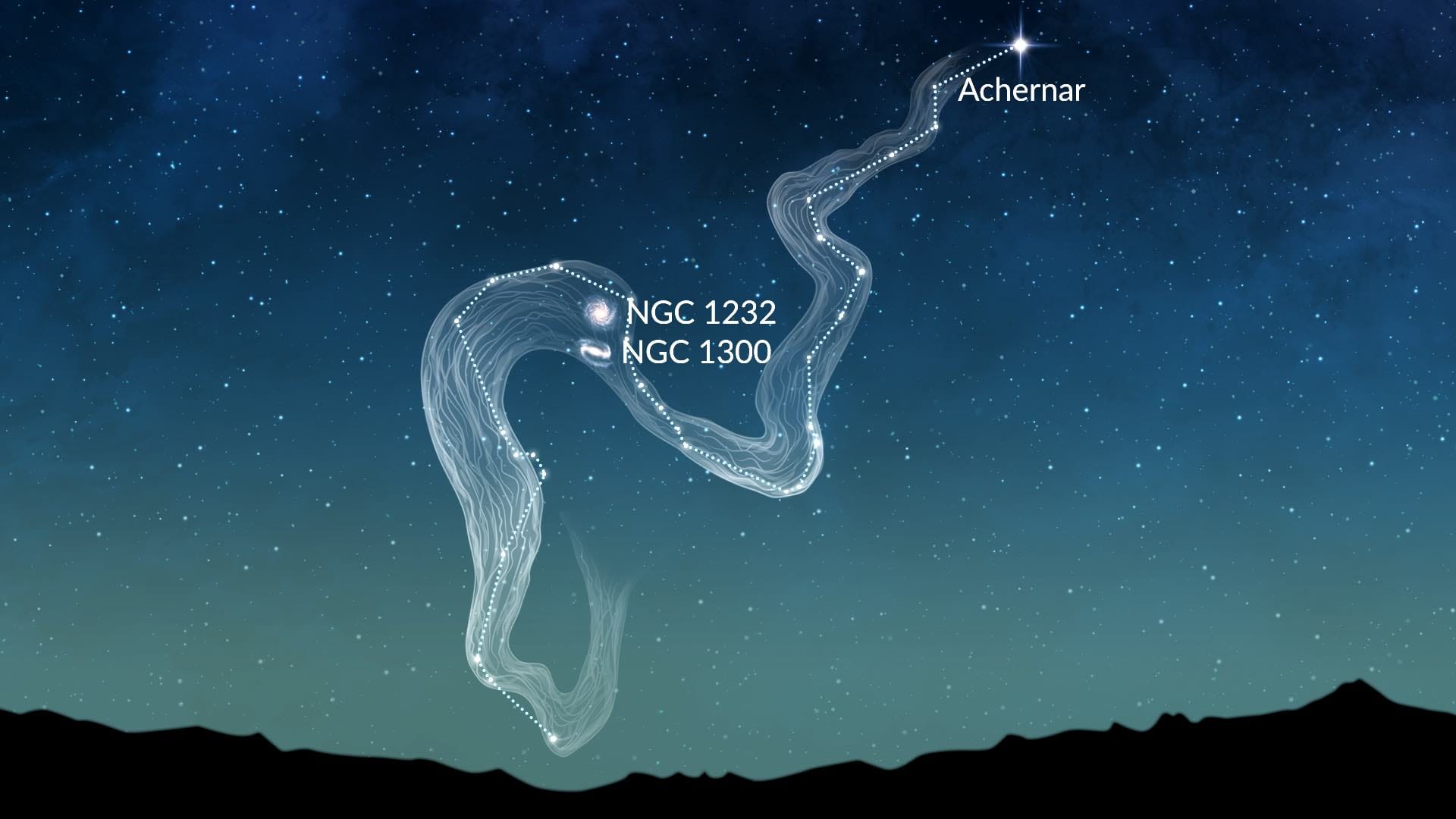
Eridanus is associated with several rivers, both real and mythical, in various cultures. It is one of the longest and faintest constellations. Its brightest star, Achernar, can be easily found with the help of the Southern Cross. The rest of the constellation is only visible in the darkest locations, far away from cities and light pollution. Eridanus is home to a large number of galaxies (e.g., the Eridanus Group of galaxies, NGC 1232, NGC 1300, and NGC 1309); bringing a telescope to view them is recommended.
One more notable deep-sky object in Eridanus is the Witch Head Nebula (IC 2118), which was given its name because it looks like a witch’s profile. Many nebulae appear to resemble different characters or objects. Can you guess the name of a nebula by its photograph? Check it out by completing our quiz!
Puppis
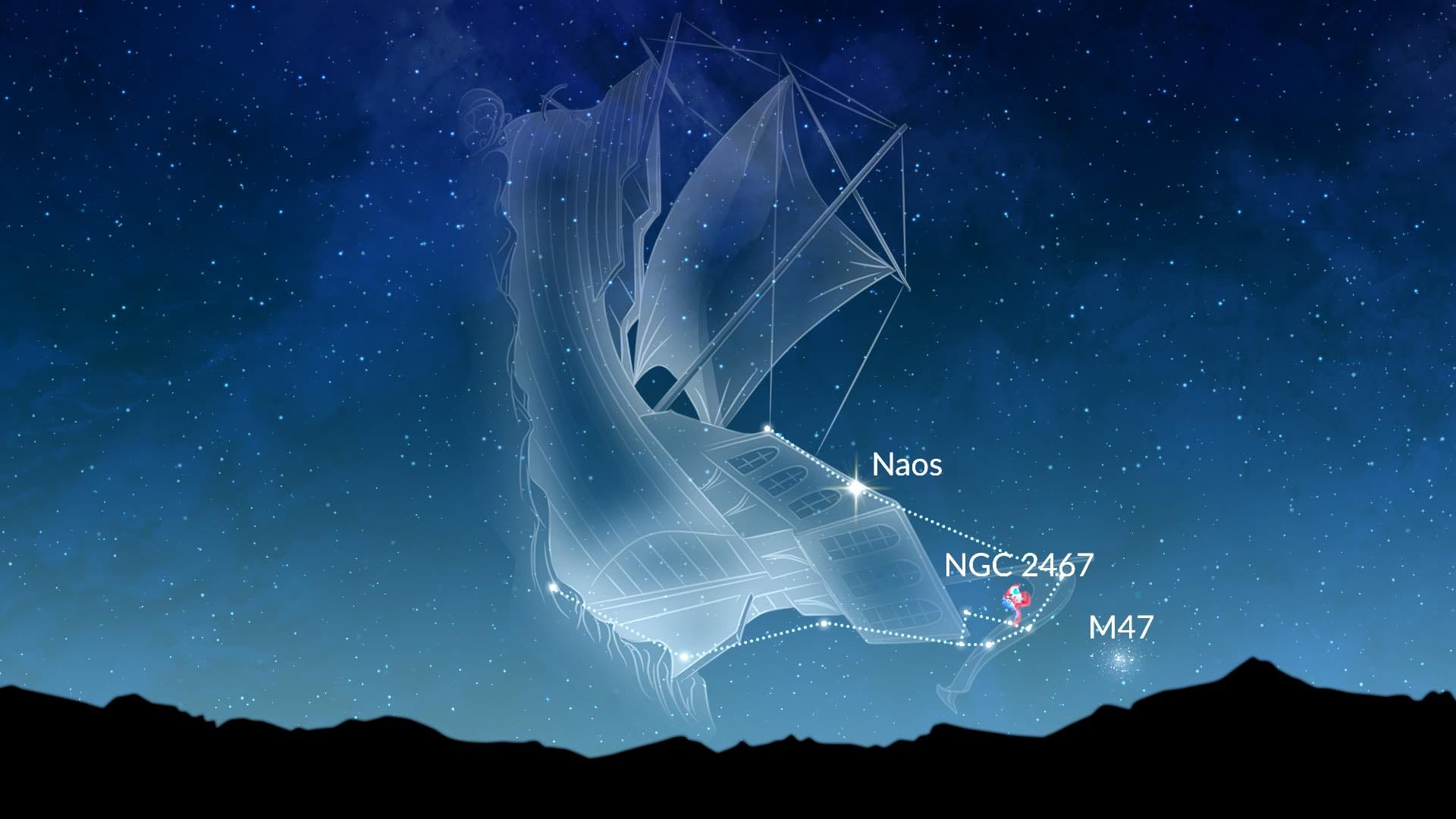
The constellation Puppis represents the stern of the mythical ship Argo Navis, which was one of the largest constellations in the sky until it was divided into three smaller constellations – Puppis, Carina, and Vela. Its brightest star is named Naos, which means “ship” in Greek. Puppis contains several interesting objects, including the star cluster M47, which is visible even to the unaided eye. With the help of optical devices, you can find the other two Messier objects (M46 and M93), the Calabash Nebula (also known as the Rotten Egg Nebula), and the emission nebula NGC 2467, which is also known as the Skull and Crossbones Nebula.
Autumn constellations in the Southern Hemisphere
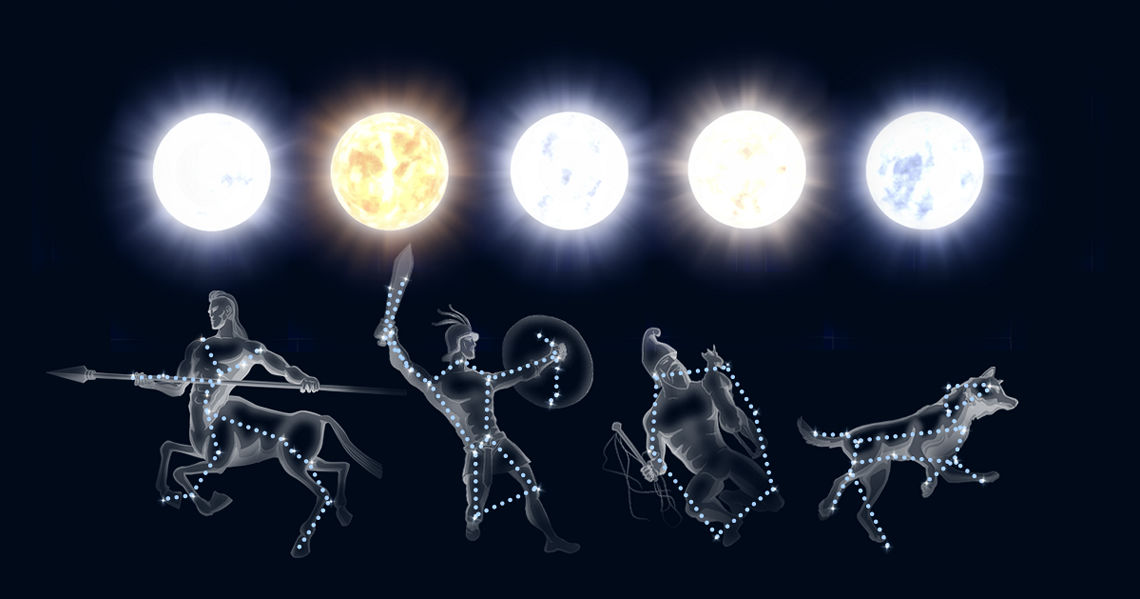
Autumn in the Southern Hemisphere lasts from late March to late June. During this season, Crux, Centaurus, and Carina reach favorable evening altitudes. They’re among the best-known southern constellations and are circumpolar at many mid to high-southern latitudes, meaning they never set there.
Crux
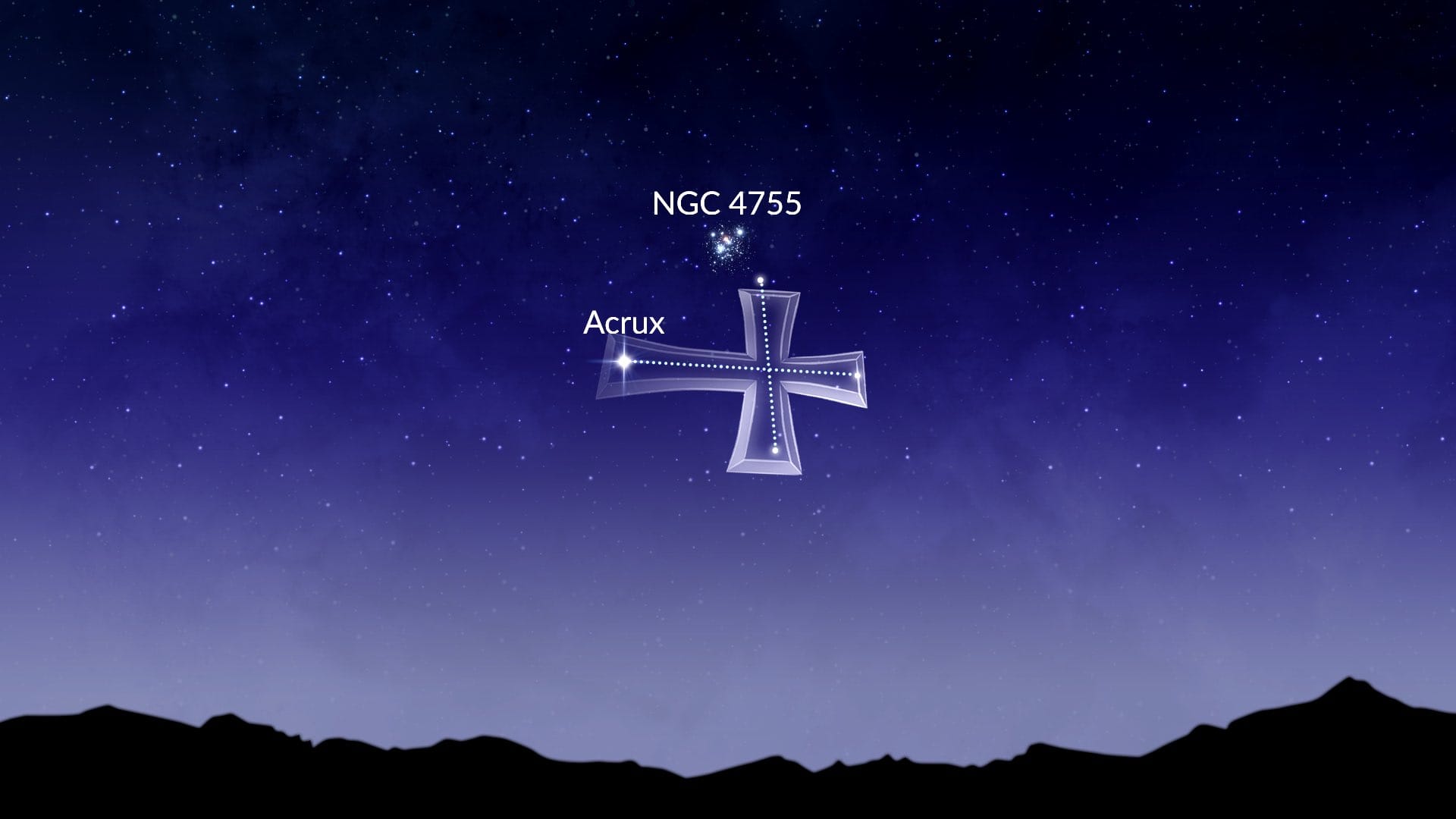
Crux, also known as the Southern Cross, is one of the most recognizable constellations of the southern sky. It is also the smallest constellation, but its four bright stars form a distinctive shape that has been used for navigation: Acrux and Gacrux, the two stars that mark the top and the bottom of the cross, form a line that points to the south celestial pole. It also contains the Jewel Box (NGC 4755), one of the best naked-eye star clusters.
Centaurus
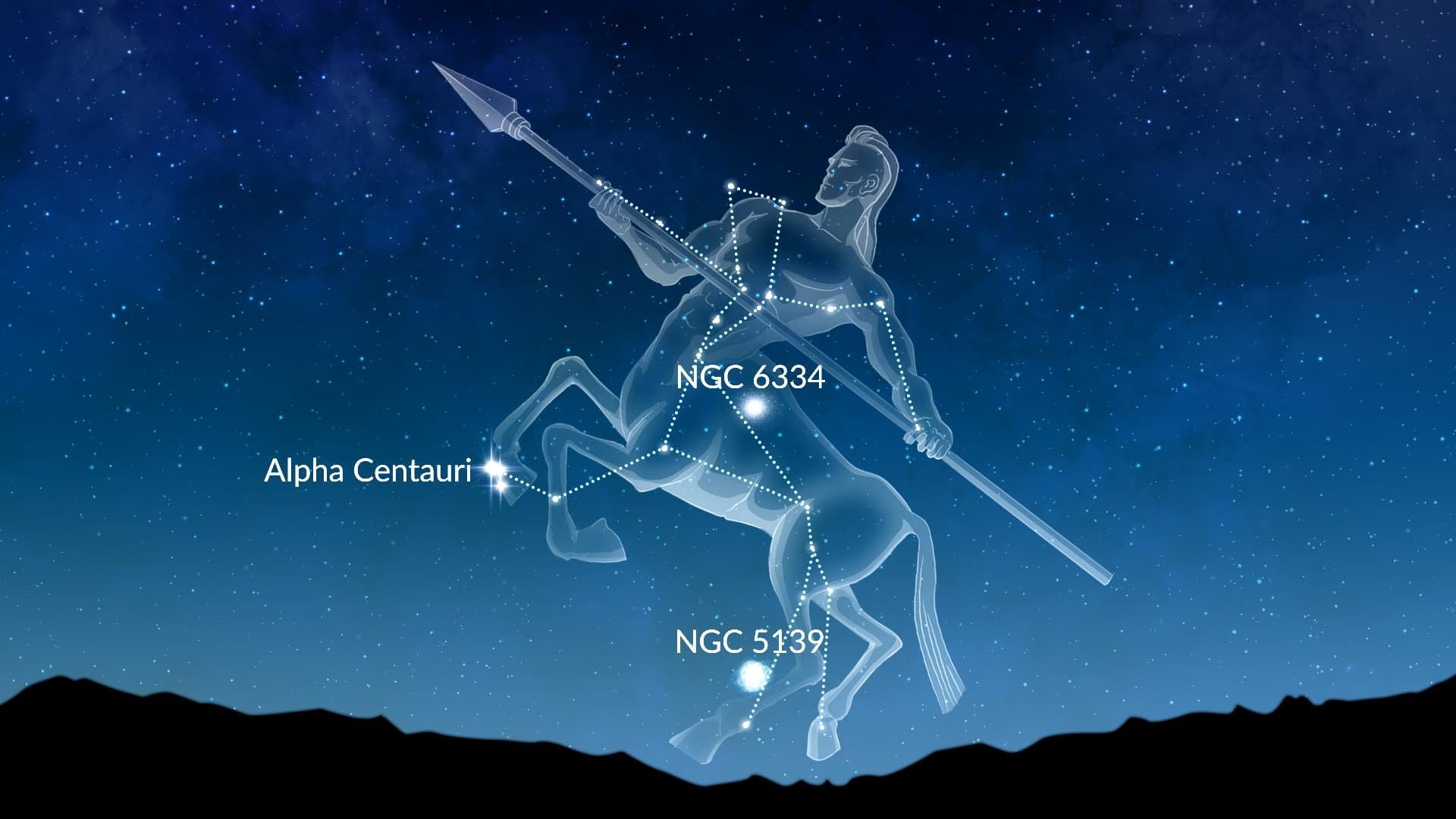
Centaurus is a large constellation that contains Alpha Centauri. This star (technically, a trio of stars) is the most prominent in the constellation and the 3rd-brightest in the whole night sky – you will easily spot it with the naked eye, as well as the Omega Centauri cluster (NGC 5139), the most well-known deep-sky object in Centaurus. Use a telescope to see the Blue Planetary Nebula (NGC 3918), and Centaurus A, NGC 4603, NGC 4622, and NGC 4945 galaxies.
Carina
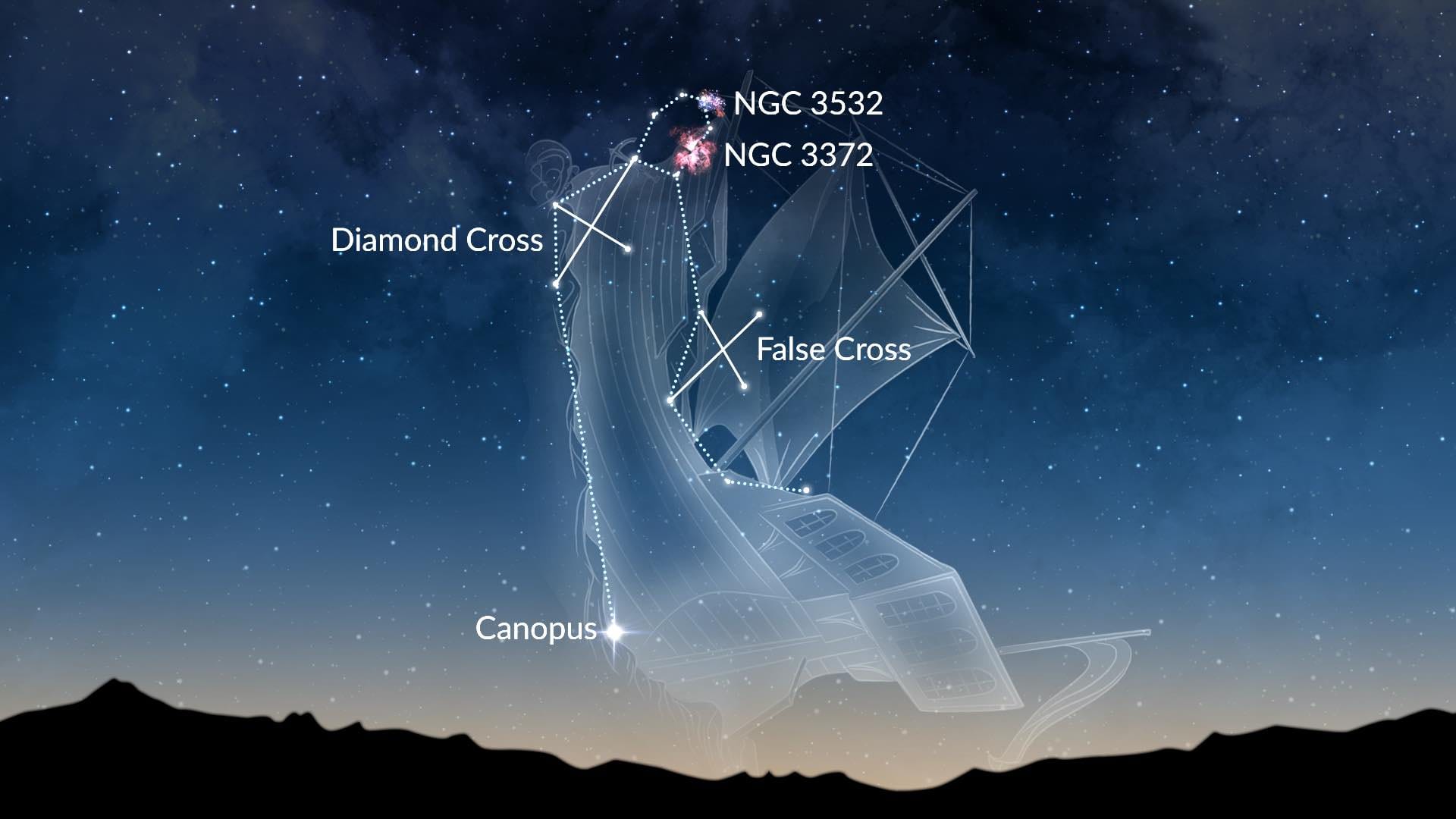
Carina, the part of the now-defunct constellation Argo Navis, contains Canopus, the 2nd-brightest star in the night sky. Its other two stars, Avior and Aspidiske, along with Alsephina and Markeb from the constellation Vela, form a star pattern known as the False Cross. Another cross-shaped asterism, the Diamond Cross, also lies in Carina and is formed by Miaplacidus, θ Carinae, υ Carinae, and ω Carinae. Both are often confused with the Southern Cross. Sky Tonight can show you the names and locations of the constellations and help you avoid this mistake.
Notable deep-sky objects within the constellation Carina include the Carina Nebula (NGC 3372), the Wishing Well Cluster (NGC 3532), NGC 3603, and NGC 2808. It’s best to observe them with binoculars or a telescope.
Why do we have seasonal constellations?
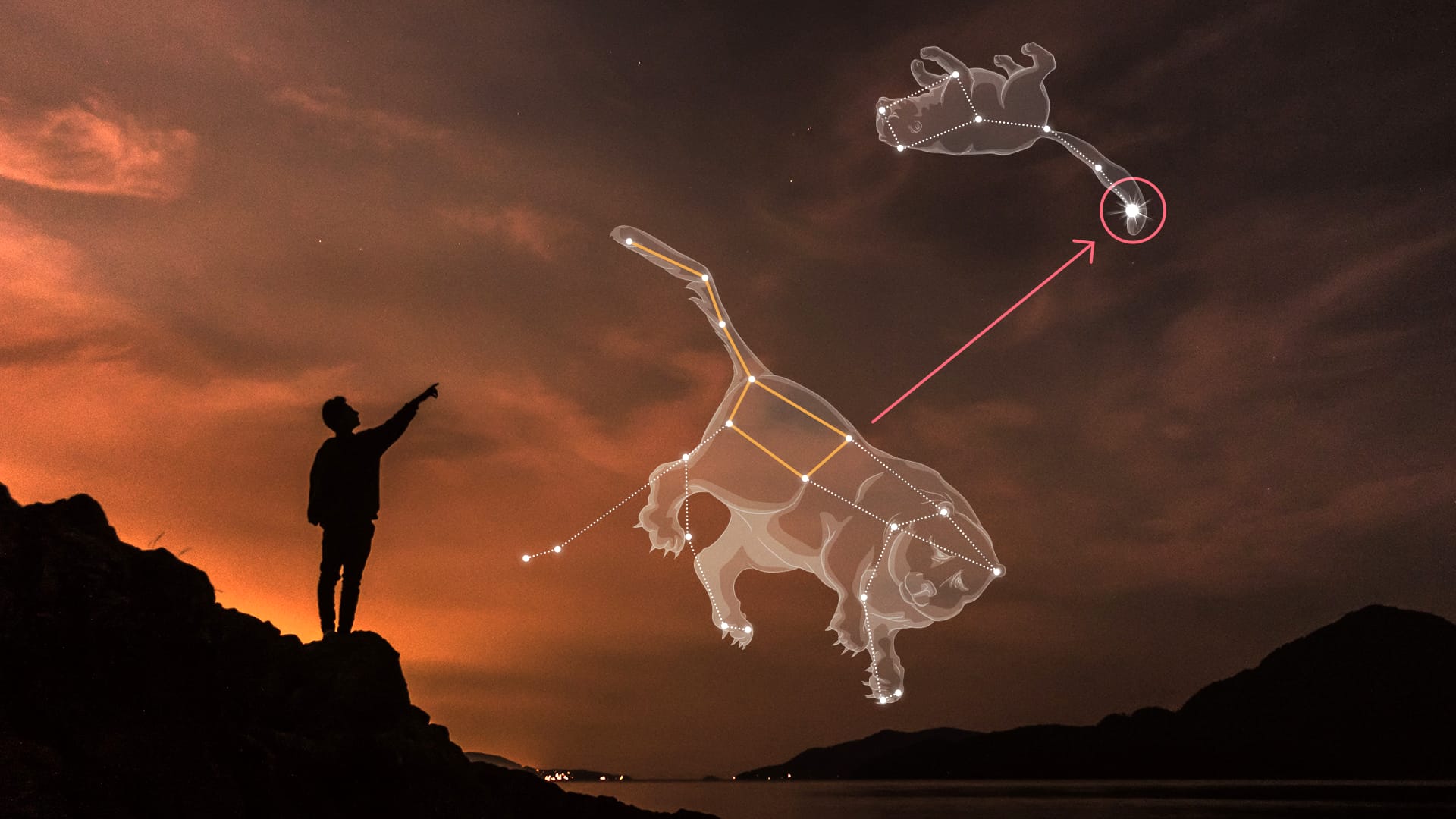
As Earth orbits the Sun, the night side faces different parts of the celestial sphere; therefore, the stars we see at night change over the course of the year. At certain seasons, some constellations appear in the daytime sky and, therefore, cannot be observed. The constellations of the ecliptic are the best illustration: for example, we can’t see Scorpius in late November as the Sun is within its borders, but we can easily spot it on July nights as the Sun is in the opposite part of the sky.
Of course, stars are always present in the sky — they’re just hidden by daylight. If not for sunlight and Earth’s atmosphere, we would be able to see stars both day and night. However, sunlight scatters in all directions as it passes through the atmosphere. Instead of seeing only the Sun’s direct, dazzling light, we also see this scattered light spread across the sky, creating a bright blue glow. That is why the sky looks blue during the day and why most stars become invisible until nightfall.
Some of them, however, are still observable: check our article about daytime astronomy and learn what you can see in the sky when the Sun is up there.
How to find seasonal constellations in the sky?
A practical solution is to use stargazing apps, which can help you identify constellations quickly and easily. Open Sky Tonight and tap on the magnifying glass icon at the bottom of the screen. Then, type the constellation’s name into the search box and tap the blue target icon next to the corresponding result. You’ll see the position of the constellation on an interactive sky map. Tap the big blue button in the bottom right corner, or simply point your device at the sky and follow the white arrow to locate the constellation. Additionally, Sky Tonight offers other useful features to enhance your stargazing experience. Watch the video tutorial and make the most of the app.
Some constellations are easily recognizable by their distinctive characteristics. For example, Crux has a specific cross pattern, and Carina features the 2nd-brightest star in the night sky. Find them both in our list of the easiest-to-find constellations, along with some observing tips. Also, learn to identify the constellations by their shape and stars by their position by taking our quizzes. With these skills, you'll be stargazing like a seasoned astronomer!
FAQ about Southern Hemisphere constellations
What are the most famous Southern Hemisphere constellations?
Crux, Centaurus, Carina, Scorpius, and Sagittarius are among the most famous constellations in the Southern Hemisphere.
What constellations are only visible in the Southern Hemisphere?
Some constellations lie so far south in the sky that they are difficult or impossible to see from northern latitudes. Famous examples include Crux and much of Carina.
When are Southern Hemisphere constellations best visible?
Different Southern Hemisphere constellations are best visible at different times of the year. For example, Crux, Centaurus, and Carina are especially prominent in autumn, while Scorpius and Sagittarius are best seen in winter.
How do I find Southern Hemisphere constellations tonight?
Use a Southern Hemisphere constellations map, planisphere, or an interactive sky map app to check what is above your horizon tonight.
Are any Southern Hemisphere constellations visible all year round?
Some southern constellations are circumpolar at mid- and high-southern latitudes, which means they never set below the horizon. Depending on your location, constellations such as Crux, Centaurus, Carina, and Tucana may be visible for much of the year.
What are the famous Southern Hemisphere constellations?
The best-known Southern Hemisphere constellations include Crux, Centaurus, Carina, Scorpius, Sagittarius, Tucana, Hydra, Eridanus, and Puppis. They’re especially popular among stargazers in Australia, New Zealand, South Africa, and the southern parts of South America. Which ones are visible depends on the season, your latitude, and the time of night.
Seasonal constellations in the Southern Hemisphere: to sum up
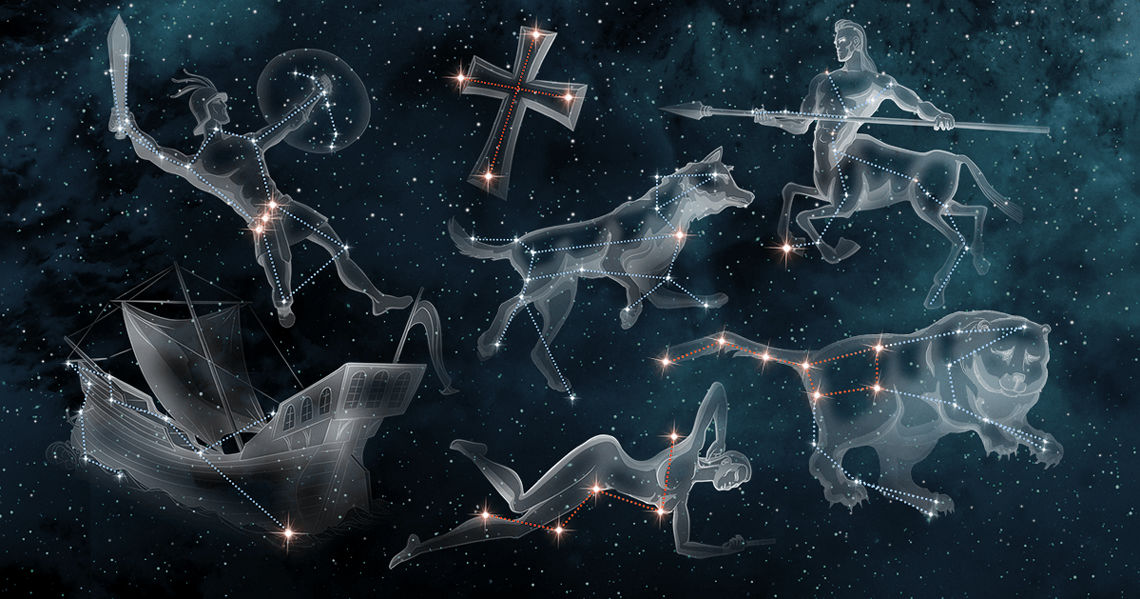
The Southern Hemisphere’s best-visible constellations change with the seasons. Scorpius, Sagittarius, and Ophiuchus are best seen in winter; Tucana, Aquarius, and Cetus in spring; Hydra, Eridanus, and Puppis in summer; and Crux, Centaurus, and Carina in autumn. Each season offers rewarding targets for both beginner and experienced stargazers. Download Sky Tonight and easily find the stars and constellations.
All constellations by month
Each constellation has a particular month when it rises the highest in the sky in the evening. Based on this, we divided all 88 officially recognized constellations into 12 monthly guides — one for each month. If you want a more detailed Southern Hemisphere constellations map by month, start with these articles:
- Best constellations of January
- Best constellations of February
- Best constellations of March
- Best constellations of April
- Best constellations of May
- Best constellations of June
- Best constellations of July
- Best constellations of August
- Best constellations of September
- Best constellations of October
- Best constellations of November
- Best constellations of December
Learn more: seasonal constellations in the Northern Hemisphere
If you’re curious to compare what the sky looks like from different parts of the world, don’t miss our guide to the seasonal constellations in the Northern Hemisphere. There you’ll find Orion, Ursa Major, Cassiopeia, and many other iconic star patterns. Whether you live in the north or just want to know what stargazers see under those skies, the article will help you explore and appreciate the differences between the two hemispheres.