April 2026 Constellations: 8 Star Patterns to Find in the Night Sky
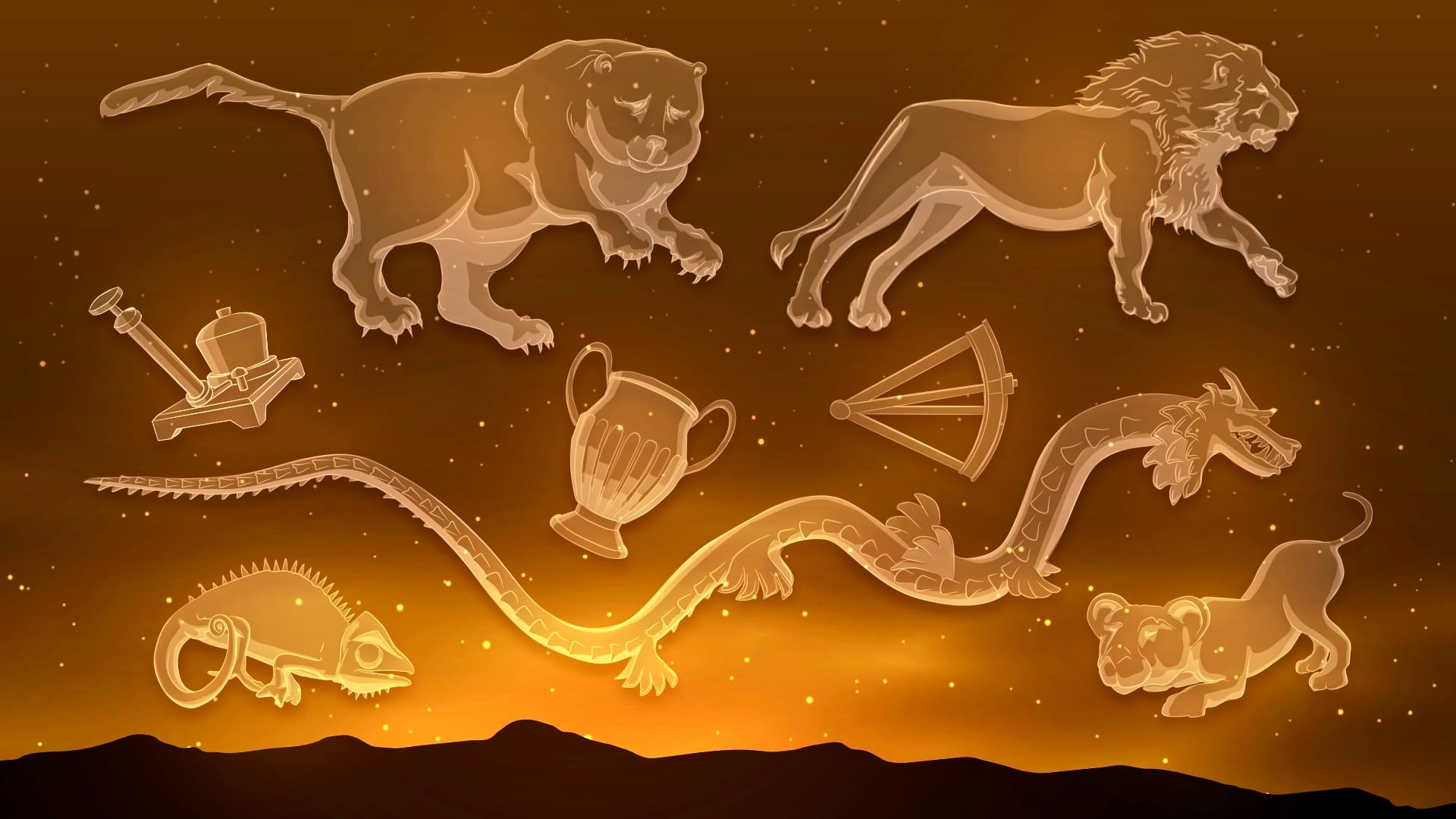
From famous Ursa Major to giant Hydra, the April night sky offers a star pattern for everyone! In this guide, we’ve picked 8 constellations that are best seen this month. Choose to stick with the brightest, most recognizable ones — or challenge yourself with the harder-to-spot constellations. To make your stargazing easier, use the free Star Walk 2 app and find any constellation in the sky. Let’s get started!
Contents
- April night sky map
FAQ
- What are the best constellations to see in April?
- What constellations can I see in April in the Northern Hemisphere?
- What constellations can I see in April in the Southern Hemisphere?
- Is the Big Dipper visible in April?
- Is Leo visible in April?
- What zodiac constellations are visible in April?
- What is the brightest star in the April night sky?
- What is the largest constellation visible in April?
- Can I see April constellations without a telescope?
- Are April constellations different depending on where I live?
- Constellations visible in April: bottom line
Constellations best seen in April
To see the constellations listed below, look at the sky at about 9 p.m. local time. If you live in the Northern Hemisphere, gaze above the southern horizon. In the Southern Hemisphere, the viewing direction depends on the constellation: Hydra, Crater, and Antlia are best looked for toward the northern part of the sky, while Chamaeleon is found in the south. The free astronomy app Star Walk 2 will help you easily locate any constellation or star in your sky. Here are the constellations best visible on April evenings:
- Northern Hemisphere: Leo, Ursa Major, Leo Minor, Sextans
- Southern Hemisphere: Hydra, Crater, Antlia, Chamaeleon
Note that the constellations below are arranged by how easy they are to spot in the sky — from easier to more challenging:
- ☆☆☆ means the constellation is very bright and easy to see.
- ☆☆ means that the constellation is moderately bright and can be seen with some effort.
- ☆ means you might need the app to help you find it.
Leo
- Brightness: ☆☆
- Visible between: 90°N to 65°S
- Brightest star: Regulus (mag 1.3)
- Notable deep-sky object: Leo Triplet (M65, M66, NGC 3628/Hamburger Galaxy)
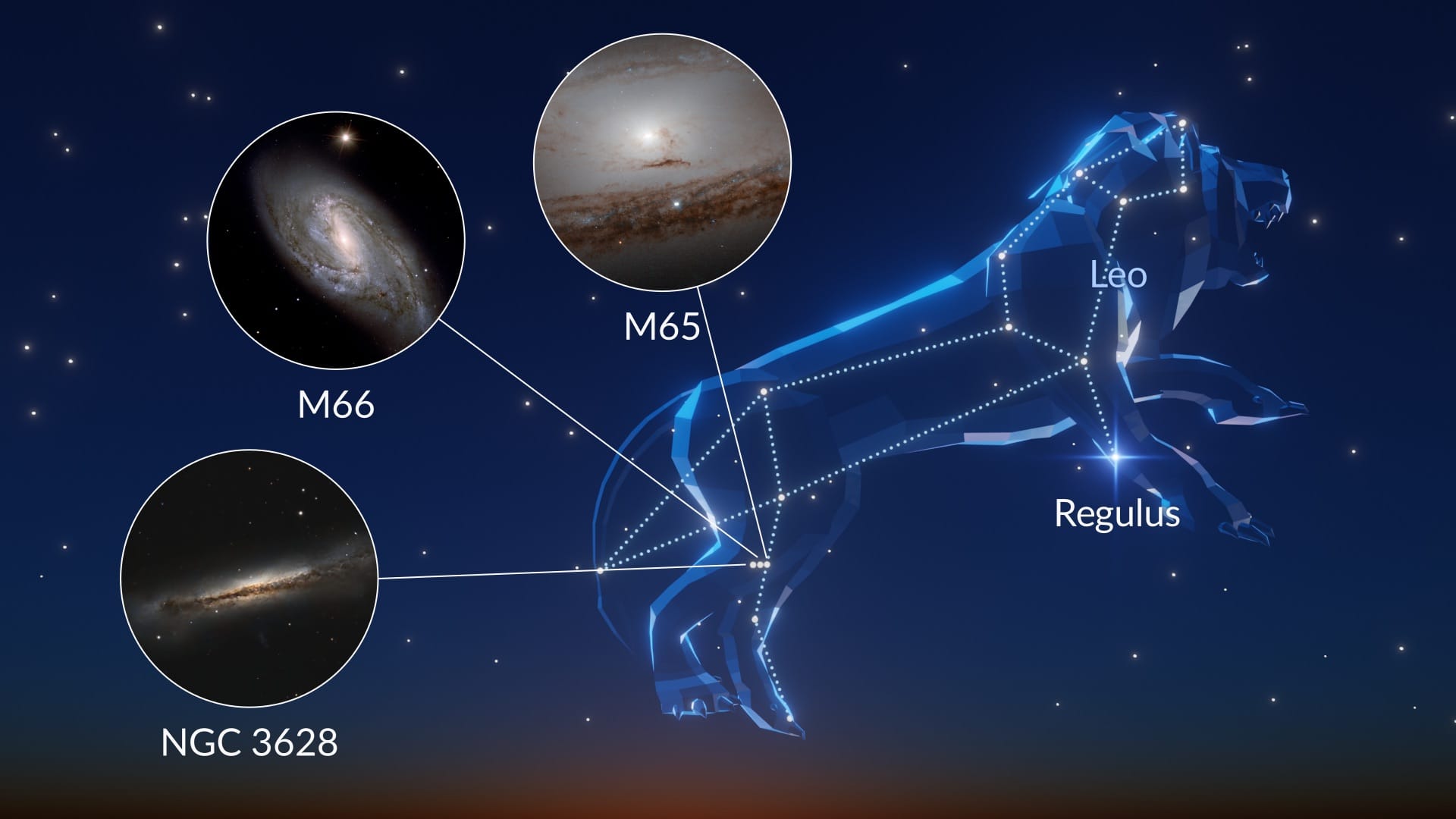
How to find Leo in the sky
The constellation Leo lies in the northern sky and is one of the most recognizable zodiac constellations.
Leo is fairly easy to identify thanks to a star pattern called the Sickle, which looks like a backward question mark. This asterism outlines the celestial Lion’s head and mane. Blue-white Regulus, Leo’s brightest star, marks the base of the Sickle.
Leo is visible from almost all inhabited regions of Earth. In the Northern Hemisphere, Leo appears almost overhead in the sky during its best viewing season. In the Southern Hemisphere, look toward the northern part of the sky to find it. A stargazing app like Star Walk 2 can make locating Leo even easier.
Myth of the Leo constellation
Leo is usually associated with the Nemean Lion from Greek mythology. This fearsome beast was defeated by Heracles as the first of his twelve labors.
Leo was one of the constellations cataloged by the Greek astronomer Ptolemy in the 2nd century, along with the other zodiac constellations. Its Latin name simply means “Lion.”
Ursa Major
- Brightness: ☆☆
- Visible between: 90°N to 30°S
- Brightest star: Alioth (mag 1.8)
- Notable deep-sky objects: Bode’s Galaxy (mag 6.9), Pinwheel Galaxy (mag 7.9), Cigar Galaxy (mag 8.4)
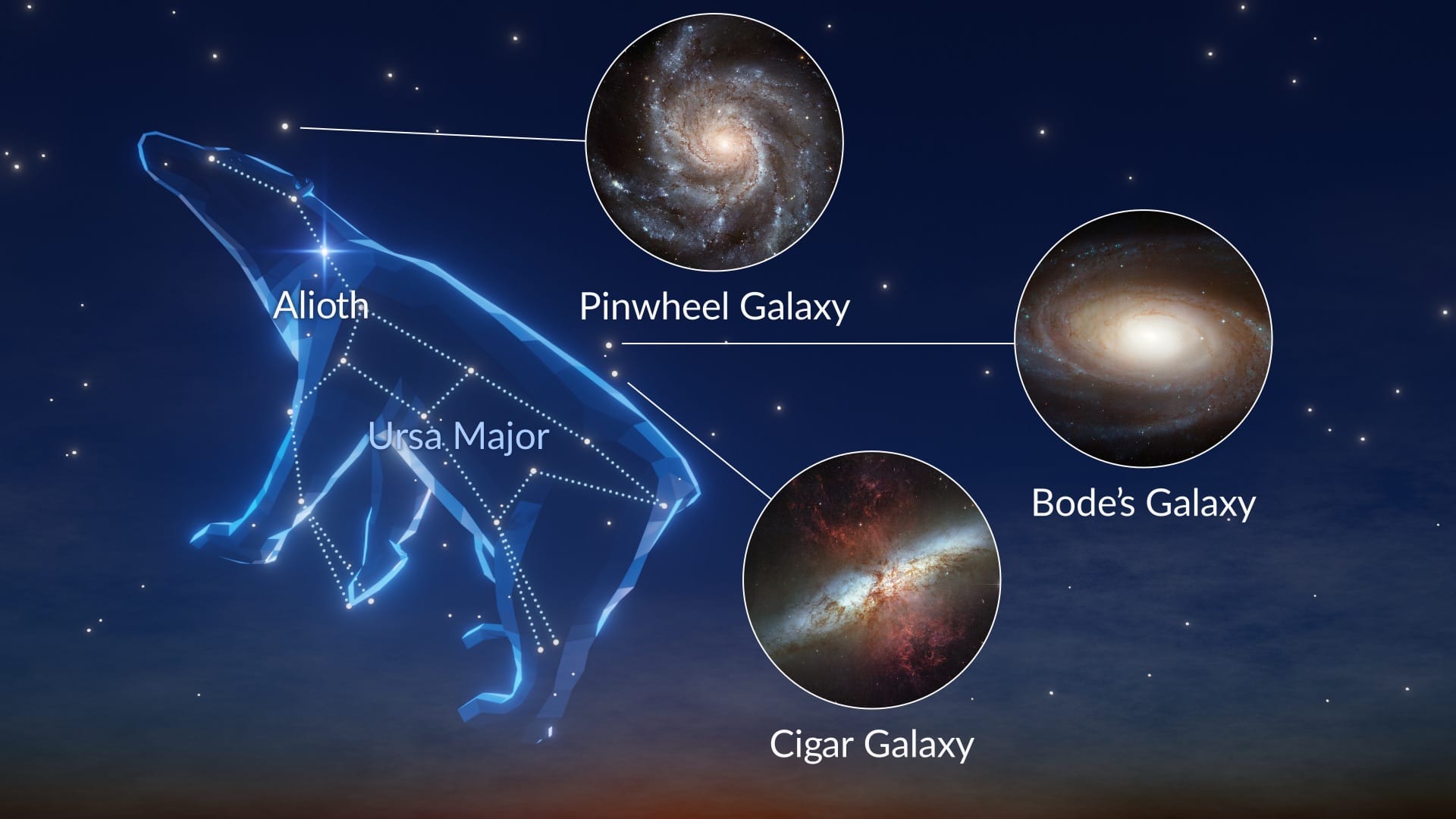
How to find Ursa Major in the sky
The constellation Ursa Major lies in the northern sky and is one of the easiest constellations to recognize.
Its most famous feature is the Big Dipper, an asterism formed by seven bright stars. This prominent pattern makes Ursa Major easy to spot, especially in the Northern Hemisphere, where it is visible all year round and never sinks below the horizon for observers above ~40°N.
To find Ursa Major, look for the familiar dipper-shaped pattern high in the sky. The two outer stars of the Big Dipper’s bowl can also help point the way to Polaris, making this asterism especially useful for navigation. In the Southern Hemisphere, Ursa Major can still be seen from locations north of about 30°S, where it appears low above the northern horizon.
Myth of the Ursa Major constellation
In Greek mythology, Ursa Major is associated with Callisto, a nymph who was transformed into a bear by Hera, the jealous wife of Zeus.
Ursa Major was one of the constellations cataloged by the Greek astronomer Ptolemy in the 2nd century. Its Latin name means “Greater Bear”, distinguishing it from nearby Ursa Minor, the “Lesser Bear.”
Hydra
- Brightness: ☆☆
- Visible between: 60°N to 90°S
- Brightest star: Alphard (mag 2.0)
- Notable deep-sky objects: M48 (mag 5.8), Southern Pinwheel Galaxy (mag 7.6)
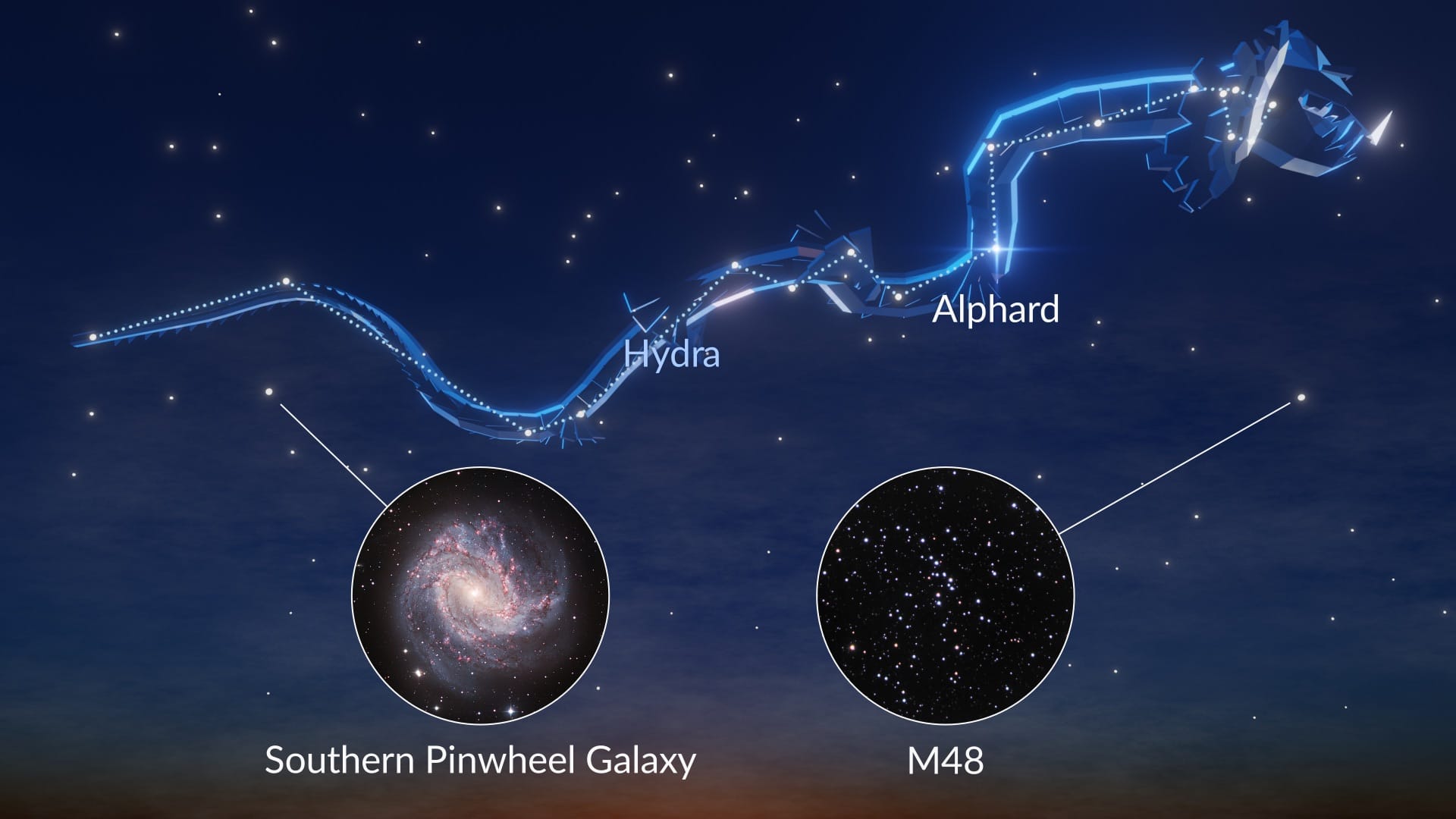
How to find Hydra in the sky
The constellation Hydra stretches across a large area of the sky near the celestial equator. Although it is the largest constellation of all 88, it can be a bit tricky to identify because it contains few bright stars.
The best starting point is Alphard, Hydra’s brightest star. Its name means “the solitary one,” which suits it well: Alphard stands out as the only notably bright star in this long, winding constellation and is often easy to spot even from light-polluted locations.
Because Hydra extends so far across the sky, the whole constellation takes a long time to rise, and its full shape may be difficult to see all at once. Observers in both hemispheres can see at least part of Hydra, depending on their latitude. The Star Walk 2 astronomy app can help trace the constellation’s long, snake-like pattern more easily.
Myth of the Hydra constellation
In Greek mythology, Hydra is often linked to the Lernaean Hydra, a many-headed serpent defeated by Heracles during the second of his twelve labors. According to the myth, every time Heracles cut off one of the creature’s heads, two more would grow back in its place.
The constellation was cataloged by the Greek astronomer Ptolemy in the 2nd century. In sky depictions, Hydra is usually shown as a long water snake winding across the heavens.
Crater
- Brightness: ☆
- Visible between: 65°N to 90°S
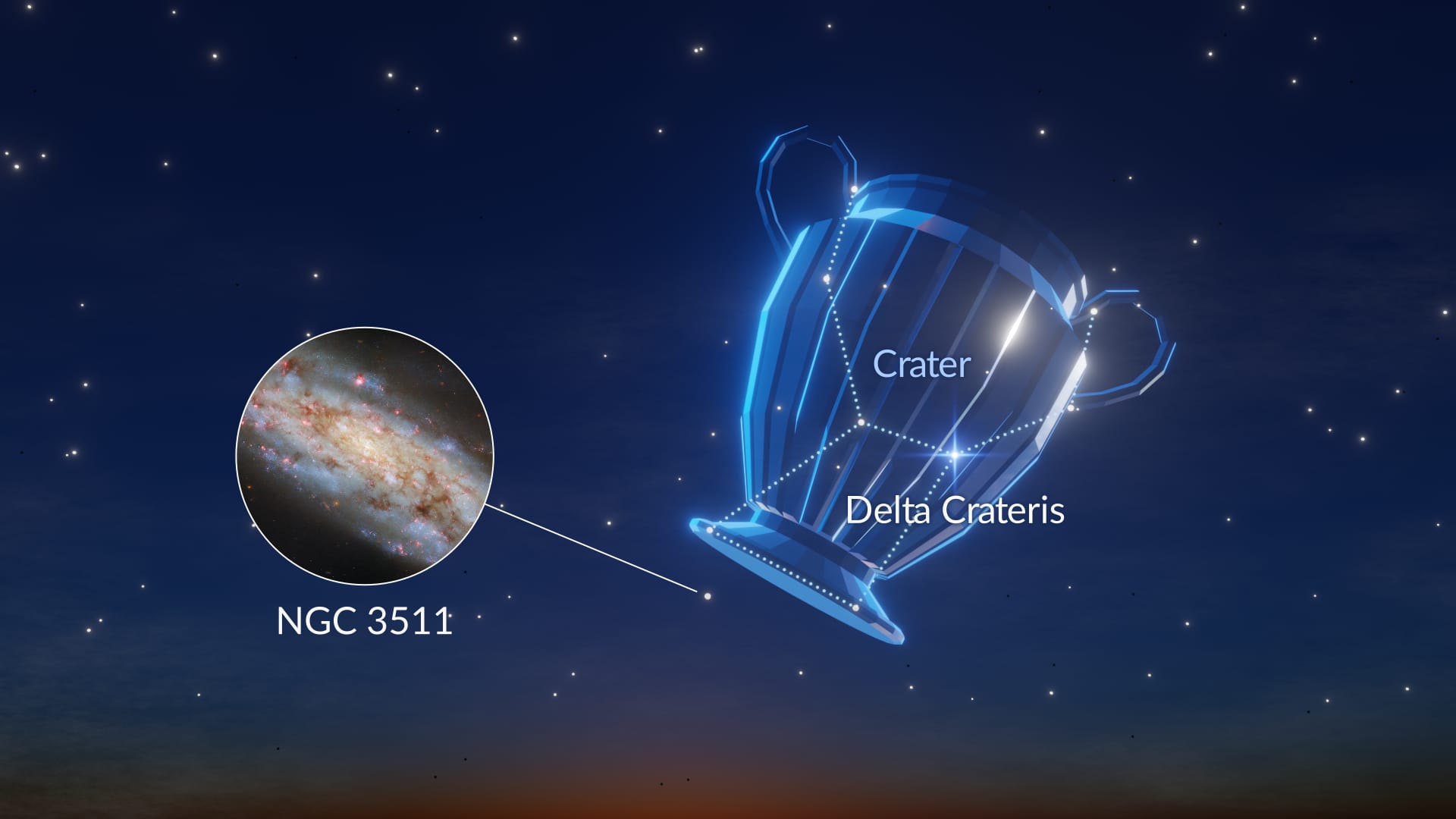
- Brightest star: Delta Crateris (mag 3.6)
- Notable deep-sky object: NGC 3511 (mag 10.8)
How to find Crater in the sky
The constellation Crater is a small and faint constellation located in the southern sky, sitting on the back of the much larger constellation Hydra.
Crater does not contain any particularly bright stars, so it can be difficult to see from cities or other areas with light-polluted skies. Most of its stars are dimmer than 4th magnitude, which means a dark, clear observing site is the best place to look for it.
To find Crater, first locate Hydra, the great Water Snake stretching across the sky. Crater appears perched on Hydra’s back. Because the constellation is fairly faint, a stargazing app like Star Walk 2 can be especially helpful for identifying its outline.
Myth of the Crater constellation
In Greek mythology, Crater is associated with the cup of Apollo. According to the myth, Apollo sent his sacred crow (represented by the nearby constellation Corvus) to fetch water in a cup. But the crow delayed its task, waiting for figs to ripen, and then returned with a water snake, Hydra, which it falsely blamed for the delay.
Apollo saw through the deception and, in anger, placed the crow, the cup, and the water snake together in the sky. This is why Crater appears next to both Corvus and Hydra. The constellation was also one of the 48 constellations cataloged by Ptolemy in the 2nd century.
Leo Minor
- Brightness: ☆
- Visible between: 90°N to 45°S
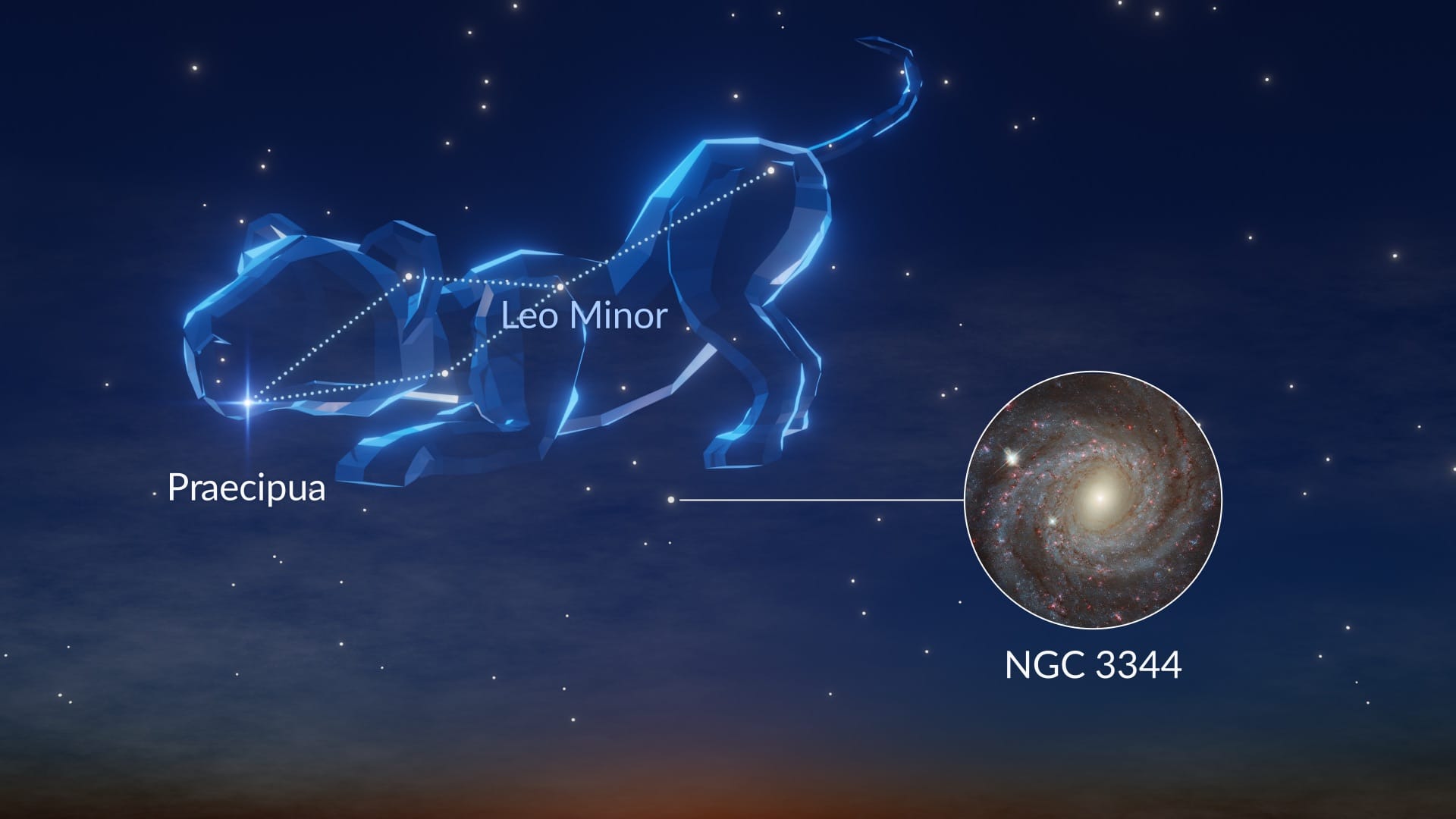
- Brightest star: Praecipua (mag 3.8)
- Notable deep-sky object: NGC 3344 (mag 10.5)
How to find Leo Minor in the sky
The constellation Leo Minor lies in the northern sky, between the more prominent constellations Ursa Major and Leo.
Although its location is fairly easy to identify, Leo Minor itself can be difficult to see because it has no particularly bright stars. Its faint stars form a loose triangular pattern, but this shape is much less obvious under light-polluted skies. For the best chance of spotting it, look from a dark observing site away from city lights.
A good way to find Leo Minor is to first locate the familiar outlines of Ursa Major and Leo. The constellation sits in the space between them.
Myth of the Leo Minor constellation
Unlike many ancient constellations, Leo Minor is not associated with a classical Greek myth. It was introduced in the late 17th century by the astronomer Johannes Hevelius, who created several new constellations to fill gaps between older star patterns.
Its Latin name means “the Smaller Lion”, reflecting its role as a fainter counterpart to the larger and much more noticeable constellation Leo.
Chamaeleon
- Brightness: ☆
- Visible between: 0°N to 90°S
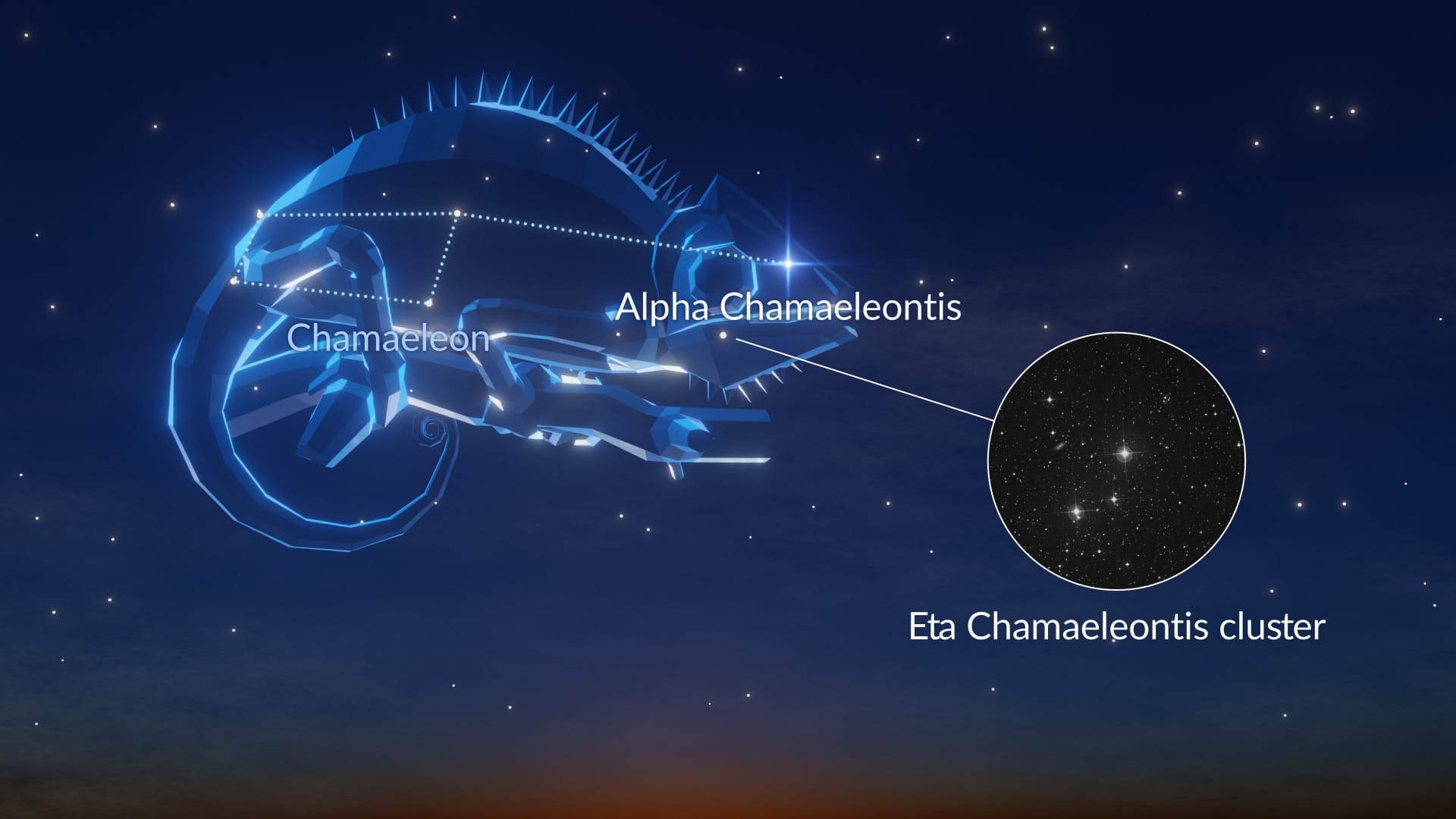
- Brightest star: Alpha Chamaeleontis (mag 4.1)
- Notable deep-sky object: Eta Chamaeleontis cluster (mag 5.5)
How to find Chamaeleon in the sky
The constellation Chamaeleon lies in the southern sky and is best seen from the Southern Hemisphere, though it can also be observed from near the equator. It is a small and faint constellation, so dark skies are essential for spotting it clearly.
Chamaeleon has no bright stars, with all of them fainter than 4th magnitude. Its four brightest stars form a compact diamond-shaped pattern, which can help identify it. The constellation lies close to the south celestial pole, about 15 degrees south of Acrux, the brightest star in the Southern Cross.
To find Chamaeleon, first locate Crux and then look farther south. Because the constellation is rather dim and compact, a stargazing app like Star Walk 2 can be especially useful for tracing its outline.
Myth of the Chamaeleon constellation
Chamaeleon is not linked to any ancient myth. It is one of several southern constellations introduced in the late 16th century by the Dutch navigators Pieter Dirkszoon Keyser and Frederick de Houtman, who mapped stars invisible from Europe.
Its name refers to the chameleon, the color-changing reptile. Like many southern constellations introduced during the Age of Exploration, Chamaeleon was named after an exotic animal rather than a figure from classical mythology.
Antlia
- Brightness: ☆
- Visible between: 45°N to 90°S
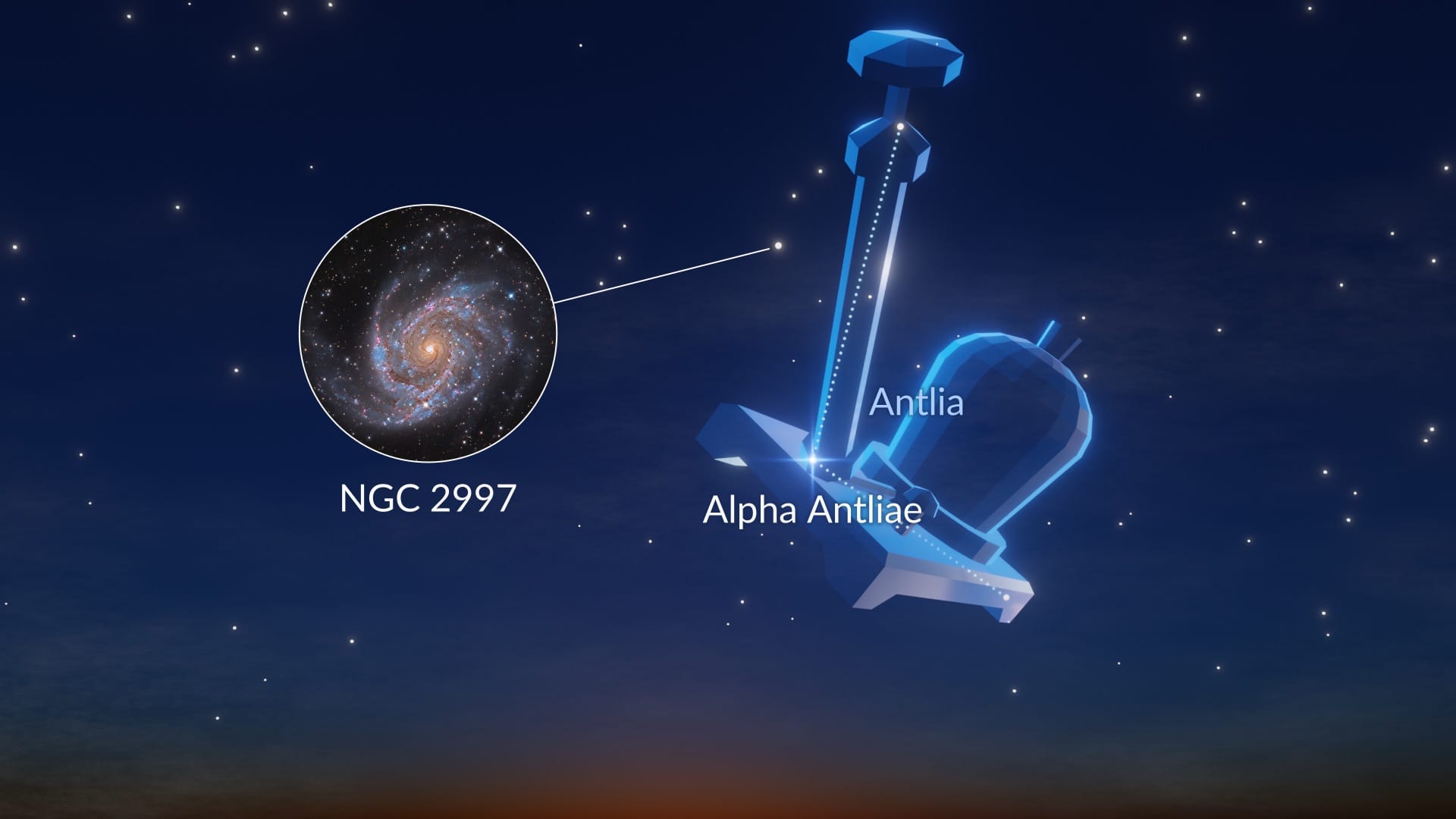
- Brightest star: Alpha Antliae (mag 4.2)
- Notable deep-sky object: NGC 2997 (mag 10.6)
How to find Antlia in the sky
The constellation Antlia lies in the southern sky and is a faint, inconspicuous constellation that can be difficult to spot without dark observing conditions.
Its brightest star, Alpha Antliae, shines at only magnitude 4.2, so Antlia has no standout stars to guide the eye. This makes the constellation hard to see from cities or anywhere with light pollution. For the best chance of finding it, look from a dark site with a clear view of the sky, and use the Star Walk 2 app as your guide.
Observers in the Southern Hemisphere have the best view, while in the Northern Hemisphere, it is visible only from latitudes south of about 45-50°N.
Myth of the Antlia constellation
Antlia is not associated with any ancient myth. It was introduced in the 18th century by the French astronomer Nicolas Louis de Lacaille, who created several new constellations to fill previously uncharted areas of the southern sky.
Unlike classical constellations named after heroes, animals, or legendary creatures, Antlia was named after a scientific instrument — the air pump, invented in the 17th century. Its name reflects the spirit of the Age of Enlightenment, when astronomy and other sciences were rapidly developing.
Sextans
- Brightness: ☆
- Visible between: 80°N to 80°S
- Brightest star: Alpha Sextantis (mag 4.5)
- Notable deep-sky object: NGC 3115 (mag 9.9)
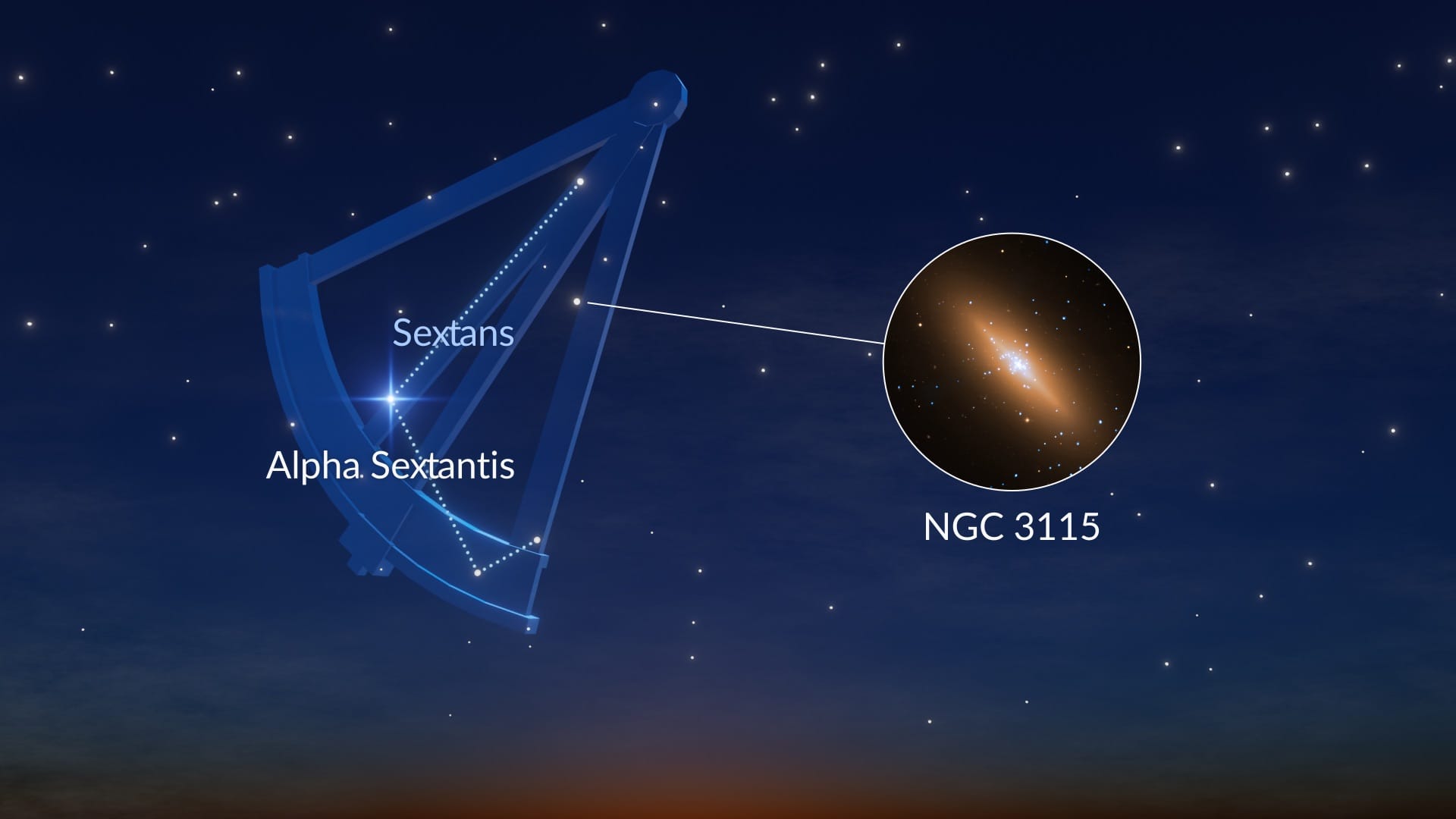
How to find Sextans in the sky
The constellation Sextans lies near the celestial equator, between the brighter constellations Leo and Hydra. Although it covers a fairly large area of the sky, it is a very faint constellation and can be difficult to make out.
Its brightest star, Alpha Sextantis, shines at only magnitude 4.5, so Sextans does not have any striking stars or an obvious shape. Instead, it often appears as a dim, almost empty-looking patch of sky near Leo. To see it properly, you’ll need a dark observing site away from city lights. A good way to find Sextans is to first locate Leo and Hydra, then search the space between them.
Myth of the Sextans constellation
Sextans is not associated with any ancient myth. It was introduced in the 17th century by the astronomer Johannes Hevelius, who created it while filling a relatively dark area of the sky between older constellations.
The constellation represents the sextant, an astronomical instrument once used to measure the positions of stars. Like several later constellations, Sextans reflects the growing importance of scientific observation rather than mythological tradition.
April night sky map
Take a look at the sky map for April evenings to better understand how the constellations will be positioned. The center of the map shows the sky directly overhead, and the circle along the edge is the horizon.
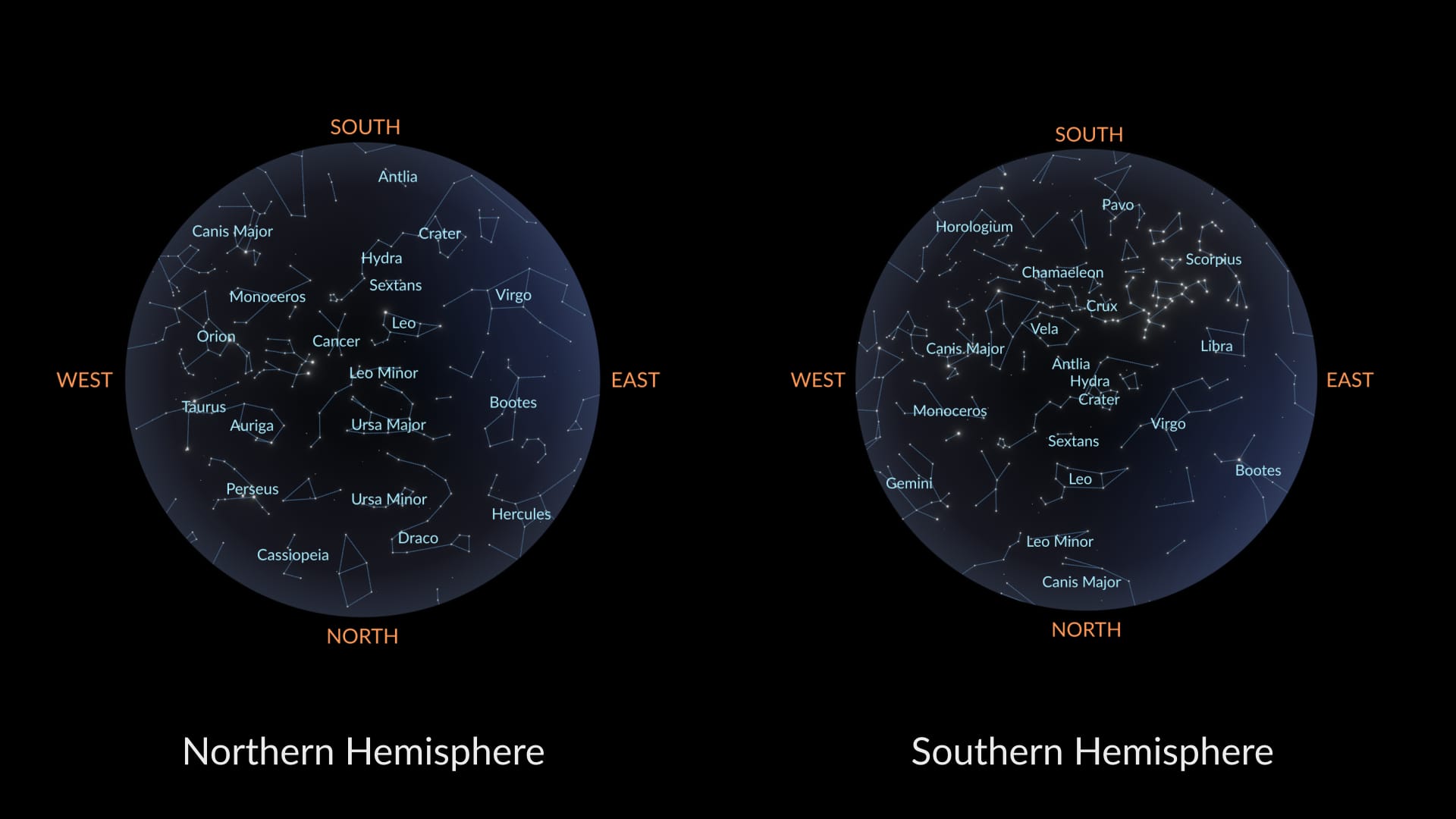
While some constellations rise and hide below the horizon, other constellations never set. They’re called circumpolar — for the Northern Hemisphere, you can see them in the north. The circumpolar constellations of the Southern Hemisphere are located in the south.
FAQ
What are the best constellations to see in April?
The best constellations to see in April include Leo and Ursa Major, which are bright and easy to recognize, as well as Hydra, the largest constellation in the sky. If you want more of a challenge, look for fainter constellations like Leo Minor, Crater, Antlia, and Sextans.
What constellations can I see in April in the Northern Hemisphere?
In the Northern Hemisphere, the top April constellations include Leo, Ursa Major, Leo Minor, and Sextans. Ursa Major is especially easy to spot because it contains the famous Big Dipper, while Leo is easy to recognize by the Sickle asterism. You can see all of these constellations in the southern part of the sky.
What constellations can I see in April in the Southern Hemisphere?
In the Southern Hemisphere, some of the best constellations visible on April evenings are Hydra, Crater, Antlia (northern part of the sky) and Chamaeleon (southern part of the sky).
Is the Big Dipper visible in April?
Yes, the Big Dipper is visible in April and is one of the easiest star patterns to find in the sky. It is part of the constellation Ursa Major and is especially prominent in the Northern Hemisphere, where it appears high in the sky on spring evenings.
Is Leo visible in April?
Yes, Leo is clearly visible in April and is one of the best constellations to observe this month. It is easy to identify by the Sickle asterism, which looks like a backward question mark. Its brightest star, Regulus, makes it even easier to spot.
What zodiac constellations are visible in April?
One of the main zodiac constellations visible in April is Leo. Depending on the date, time, and your location, you may also spot parts of nearby zodiac constellations, but Leo is the standout zodiac constellation on April evenings.
What is the brightest star in the April night sky?
Among the stars featured in the best April constellations, Regulus in Leo is one of the brightest, shining at magnitude 1.3. Other bright stars visible in April constellations include Alioth (mag 1.8) in Ursa Major and Alphard (mag 2.0) in Hydra.
What is the largest constellation visible in April?
The largest constellation visible in April is Hydra. In fact, Hydra is the largest of all 88 constellations. It stretches across a huge area of the sky, although it can be harder to trace because it has relatively few bright stars.
Can I see April constellations without a telescope?
Yes, you can see most April constellations without a telescope. Constellations are large star patterns, so they are best viewed with the naked eye. A telescope is more useful for observing individual stars or deep-sky objects within the constellations.
Are April constellations different depending on where I live?
Yes, the constellations visible in April depend on your latitude. Observers in the Northern Hemisphere get the best views of constellations like Leo and Ursa Major, while observers in the Southern Hemisphere can better see Hydra, Antlia, and Chamaeleon.
Constellations visible in April: bottom line
April is one of the best months to spot well-known constellations like Ursa Major and Leo, along with fainter but interesting ones such as Hydra and Leo Minor. With the Star Walk 2 app, you can easily find any constellation in your sky at any time. Happy stargazing!
What else to see in the sky in April 2026?