Constellations Visible in March (Northern & Southern Hemisphere)
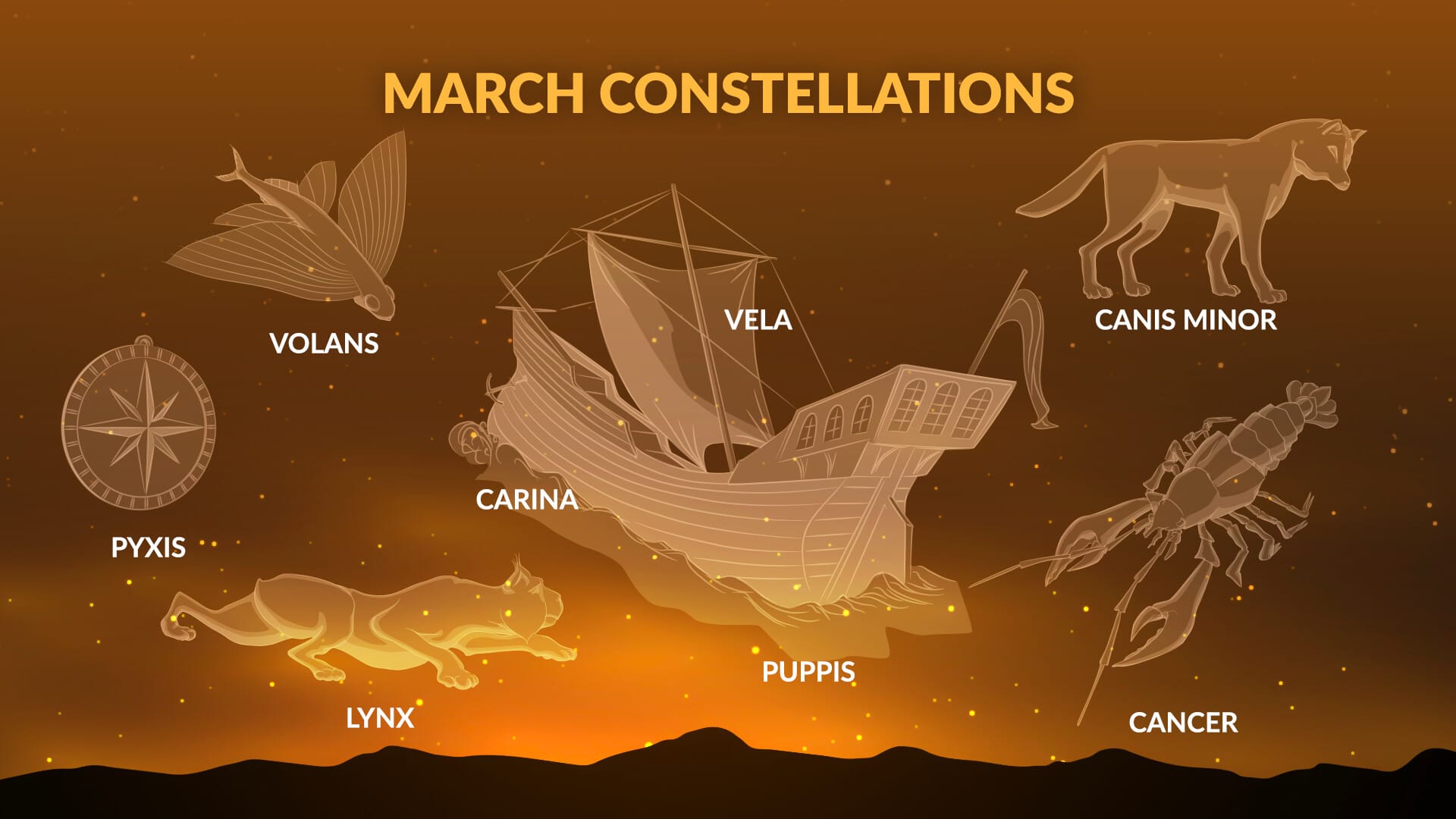
The constellations visible in March can be a little tricky to spot at first — but with a bit of practice, you’ll find them all. In this guide to the March night sky, you’ll learn which March constellations to look for in the Northern and Southern Hemisphere, the best time to see them, and their brightest stars. For extra help, try Star Walk 2 — with this free app, you can simply point your phone at the sky and identify any star pattern or celestial object.
Contents
- March night sky map
- How to find constellations in the night sky?
- Constellations visible in March: Bottom line
Constellations best seen in March
March evenings offer a great chance to see constellations that are often overlooked at other times of the year.
Among all the constellations, these 8 are easiest to spot around 9 p.m. local time in March:
- Carina, Canis Minor, Vela, Puppis, Lynx, Cancer, Pyxis, and Volans.
Note that some of the constellations listed may not be visible from your location. Later in the article, we'll give the latitudes from which they are visible.
If you live in the Northern Hemisphere, look above the southern horizon to find these constellations. In the Southern Hemisphere, face north to spot them.
Some constellations are circumpolar, meaning they remain visible above the horizon all year round. In the Northern Hemisphere, circumpolar constellations like Ursa Major and Cassiopeia are always found in the northern sky. In the Southern Hemisphere, constellations such as Centaurus and Crux are permanently visible in the southern sky.
Sometimes, simple directions like "look north" are not clear enough. The free Star Walk 2 app makes it easy. It shows you an interactive sky map for your location and tells you exactly where each constellation is.
(Plus, the app has very cool graphics.)
Now, let’s look at each constellation in more detail. We have rated them with stars:
- ☆☆☆ means the constellation is very bright and easy to see.
- ☆☆ means that the constellation is moderately bright and can be seen with some effort.
- ☆ means you might need the app to help you find it.
Get ready for a fun journey under the night sky!
Carina
- Brightness: ☆☆☆
- Visible between: 20°N and 90°S
- Brightest star: Canopus (mag -0.7)
- Notable deep-sky object: Eta Carinae Nebula (mag 1.0)
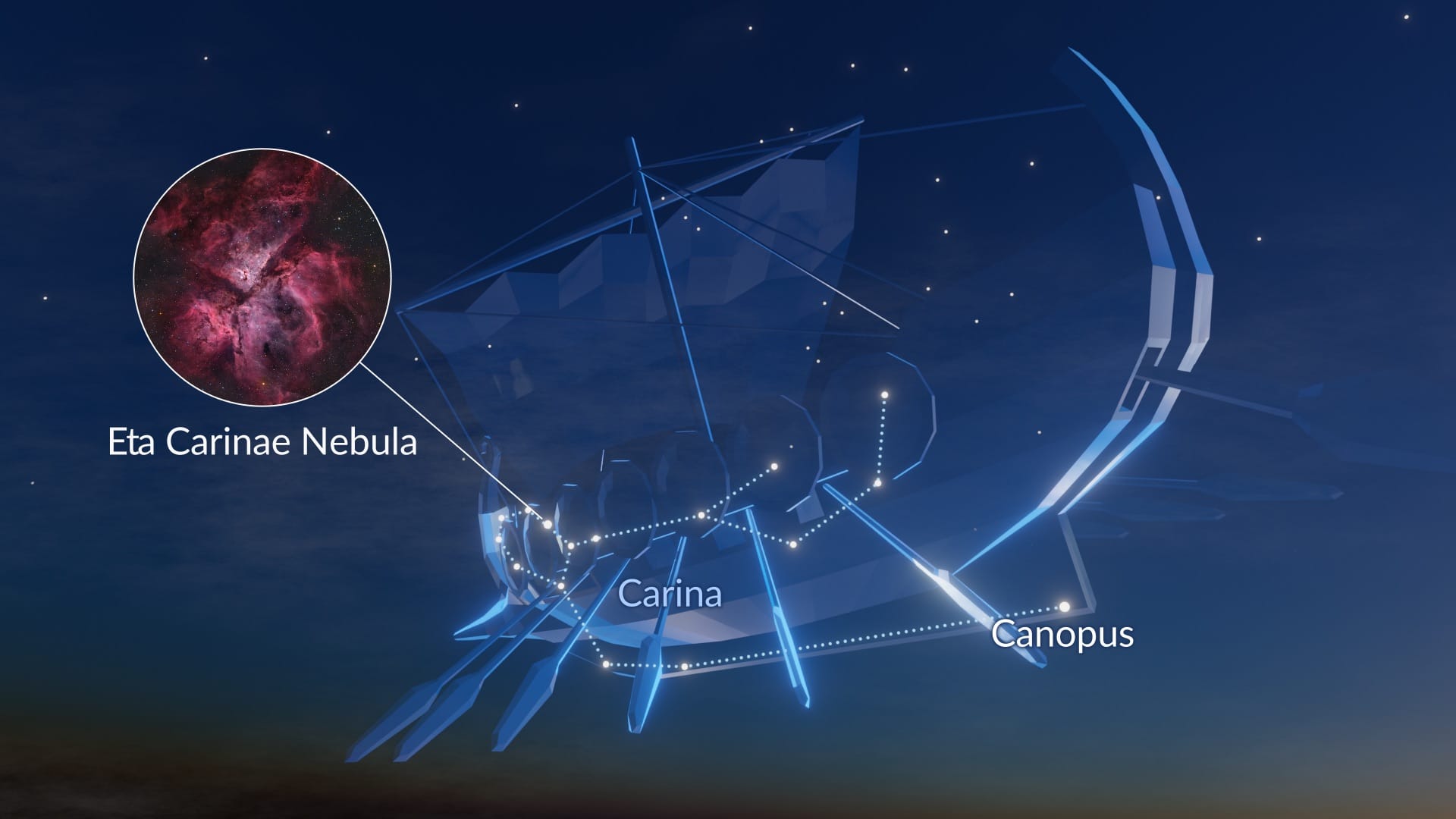
How to find Carina in the sky
The constellation Carina (“the Keel”) lies deep in the southern sky and is best seen from the Southern Hemisphere.
To locate Carina, first find Canopus, the second-brightest star in the night sky after Sirius and the brightest star in Carina. In the Southern Hemisphere, Canopus shines high in the sky and serves as a clear marker for the constellation. If you’re having trouble locating Canopus, a stargazing app like Star Walk 2 can help you find it easily.
In the Northern Hemisphere, Carina is visible only from latitudes south of about 20°N. Look low above the southern horizon to find it — a clear, unobstructed view of the horizon is essential.
Myth of the Carina constellation
Carina represents the keel of Argo Navis, the legendary ship of Jason and the Argonauts in Greek mythology. The great vessel carried Jason and his companions on their quest for the Golden Fleece.
Originally, Argo Navis was one enormous constellation. In the 18th century, astronomer Nicolas Louis de Lacaille divided it into three parts: Carina (the Keel), Puppis (the Stern), and Vela (the Sails).
Canis Minor
- Brightness: ☆☆
- Visible between: 90°N and 77°S
- Brightest star: Procyon (mag 0.3)
- Notable deep-sky object: Spiral galaxy NGC 2485 (mag 12.4)
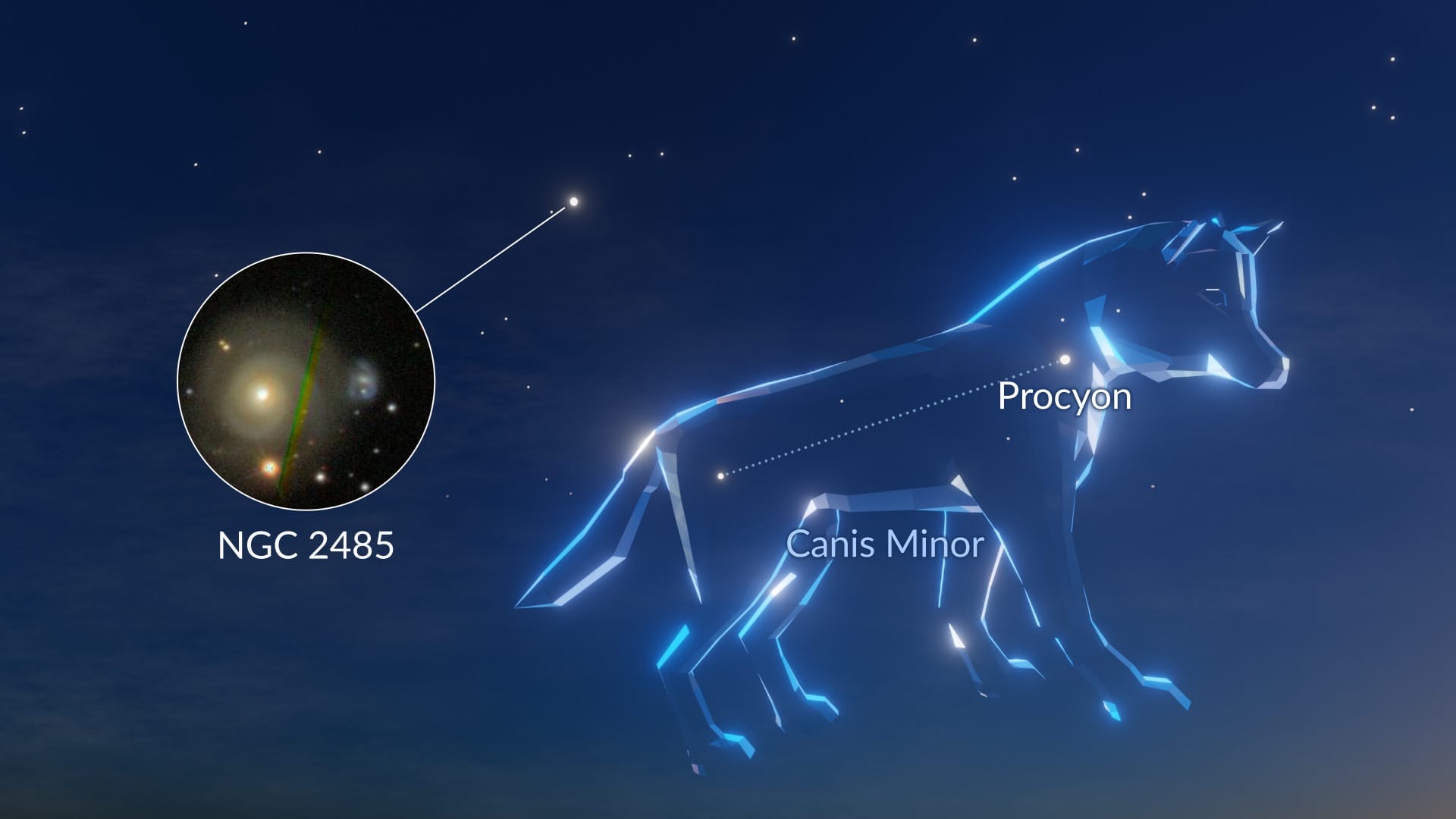
How to find Canis Minor in the sky
Canis Minor (“the Lesser Dog”) is a small constellation of the northern celestial hemisphere. It is rather easy to spot thanks to Procyon, the 8th-brightest star in the night sky.
To find Canis Minor in the Northern Hemisphere, first locate the famous Orion’s Belt, then find the bright stars Betelgeuse and Sirius. Procyon in Canis Minor forms a large triangle with these two stars — this pattern is known as the Winter Triangle. Canis Minor itself contains only two bright stars — Procyon and Gomeisa (mag 2.9).
In the Southern Hemisphere, Canis Minor appears lower in the northern sky but can be found the same way — by identifying the Winter Triangle.
Myth of the Canis Minor constellation
In Greek mythology, Canis Minor is usually associated with one of Orion’s hunting dogs, following the great hunter across the sky alongside Canis Major.
Some legends identify Canis Minor with Maera, a faithful dog belonging to an Athenian man called Icarius. After Icarius was killed, Maera and Icarius' daughter Erigone were overcome with grief, and all were later placed among the stars.
Vela
- Brightness: ☆☆
- Visible between: 30°N and 90°S
- Brightest star: Gamma Velorum (mag 1.7)
- Notable deep-sky object: Vela Supernova Remnant (mag 12)
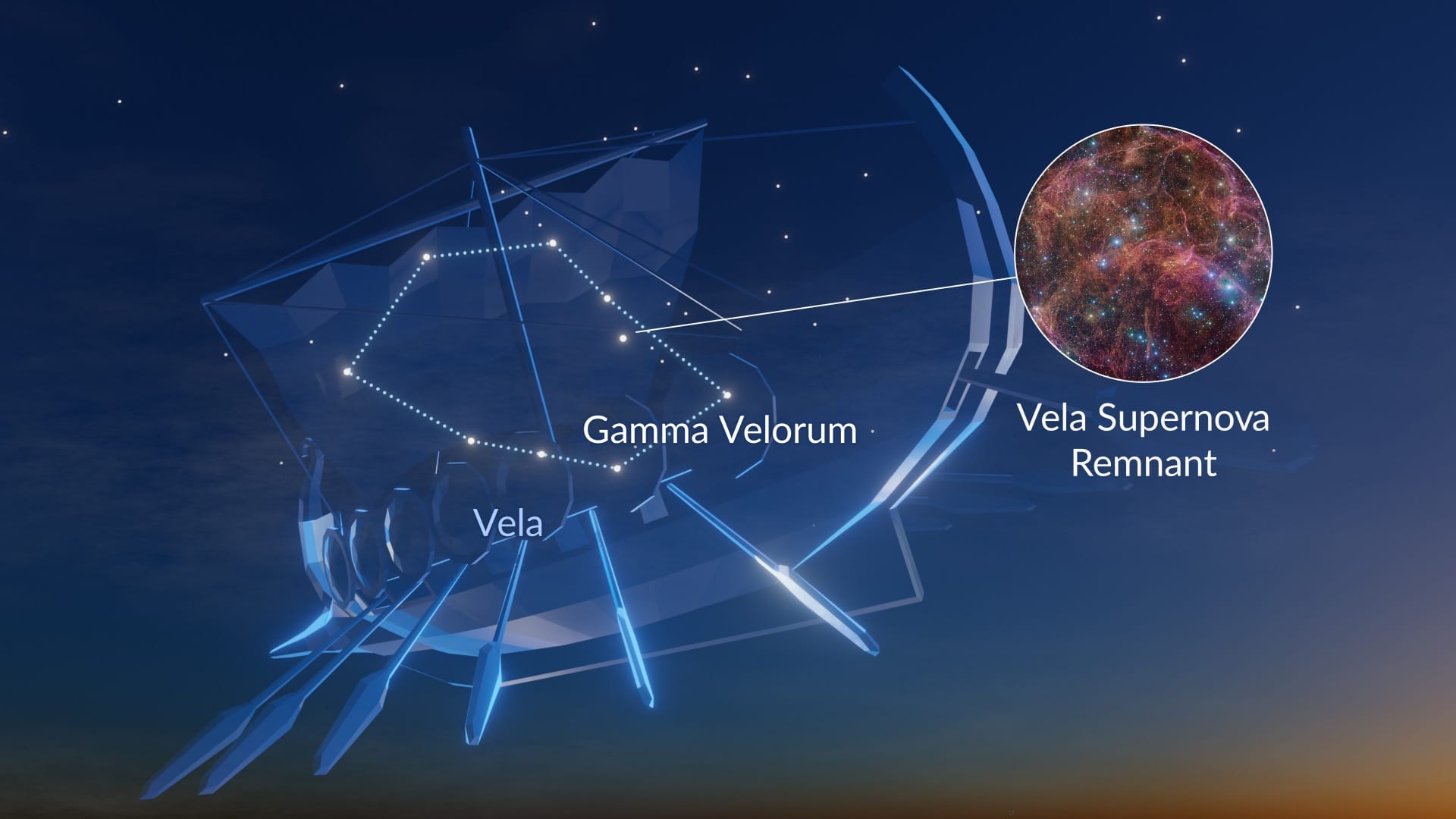
How to find Vela in the sky
The constellation Vela (“the Sails”) is best observed from the Southern Hemisphere. To find Vela, first locate bright Canopus in the constellation Carina. After that, look just northwest of Canopus, and you’ll see Vela. Another helpful marker is Gamma Velorum, the constellation’s brightest star.
In the Northern Hemisphere, Vela is visible only from latitudes south of about 30°N. Look low above the southern horizon to spot it.
Myth of the Vela constellation
Vela represents the sails of Argo Navis, the legendary ship of Jason and the Argonauts in Greek mythology. The vessel carried Jason and his crew on their quest for the Golden Fleece.
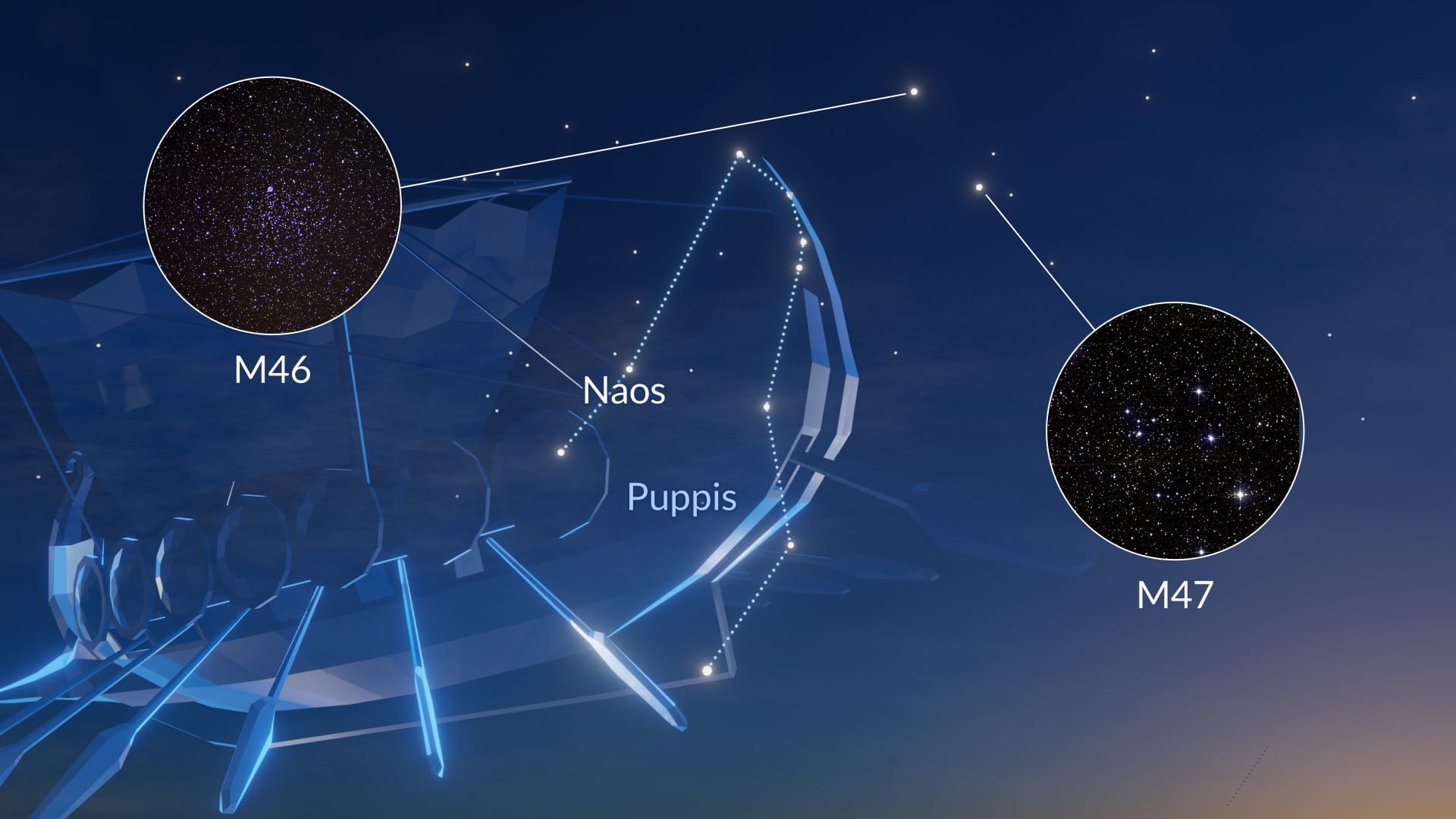
Puppis
- Brightness: ☆☆
- Visible between: 40°N and 90°S
- Brightest star: Naos (mag 2.2)
- Notable deep-sky objects: Open clusters M46 (mag 6.1) and M47 (mag 4.4)
How to find Puppis in the sky
The constellation Puppis (“the Stern”) lies in the southern celestial hemisphere. It is the largest of the three constellations forming the former constellation Argo Navis.
To locate Puppis, first find bright Sirius in Canis Major. From Sirius, move eastward along the Milky Way to a fainter area — this is where Puppis is located. You can also use Canopus in Carina as a reference — Puppis lies north of it.
In the Northern Hemisphere, Puppis is visible from latitudes south of about 40°N and appears low in the southern sky.
Myth of the Puppis constellation
Puppis represents the stern of Argo Navis, the legendary ship of Jason and the Argonauts in Greek mythology. The vessel carried Jason and his crew on their quest for the Golden Fleece.
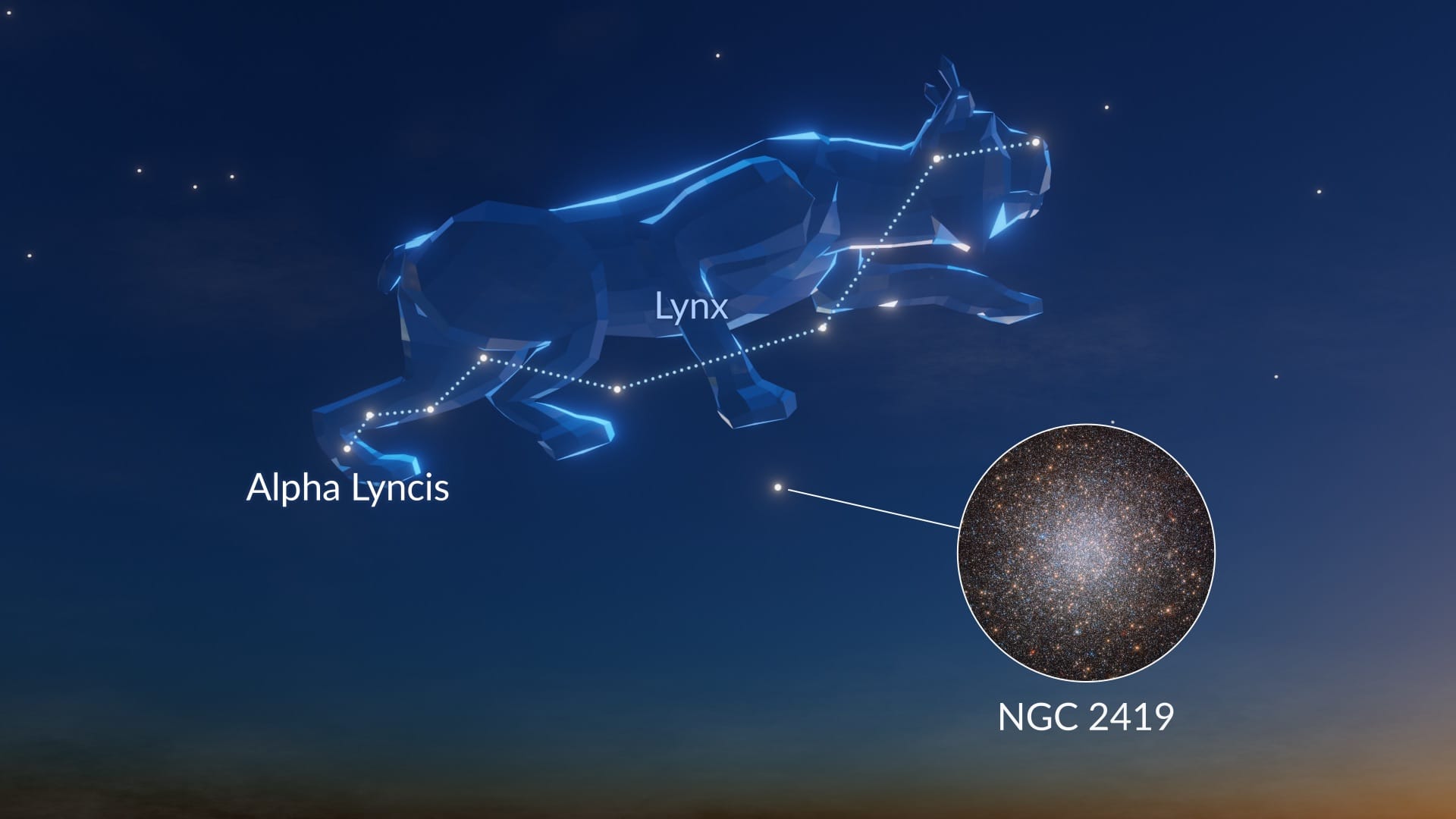
Lynx
- Brightness: ☆
- Visible between: 90°N and 55°S
- Brightest star: Alpha Lyncis (mag 3.1)
- Notable deep-sky object: Globular cluster NGC 2419 (mag 9.1)
How to find Lynx in the sky
The constellation Lynx lies in the northern celestial hemisphere between Ursa Major and Auriga. Lynx is quite faint and requires dark skies to see clearly.
To locate Lynx in the Northern Hemisphere, first find the familiar shape of the Big Dipper in Ursa Major. Then look south of it toward bright Capella in Auriga. Lynx stretches between these two constellations as a faint, zigzagging chain of stars. Its brightest star, Alpha Lyncis, helps mark the pattern, though it is still relatively dim. If you struggle to find Lynx, the Star Walk 2 app can help you quickly determine its location.
In the Southern Hemisphere, Lynx appears low in the northern sky and is more difficult to observe.
Myth of the Lynx constellation
Unlike many constellations, Lynx is not associated with an ancient myth. It was introduced in the 17th century by the Polish astronomer Johannes Hevelius. Hevelius named the constellation so because its stars are so faint that you would need lynx-like eyesight to see them clearly.
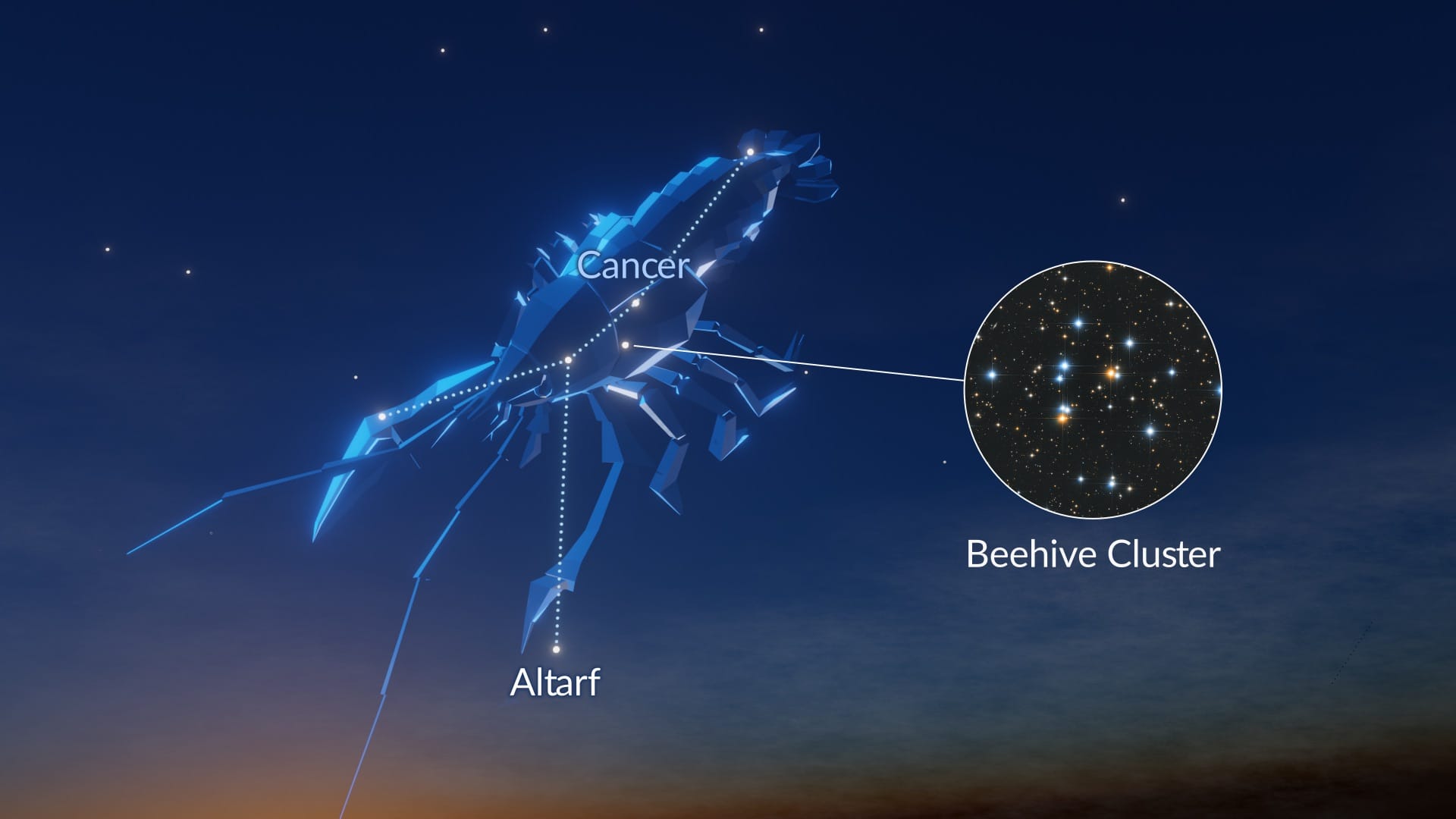
Cancer
- Brightness: ☆
- Visible between: 90°N and 60°S
- Brightest star: Altarf (mag 3.5)
- Notable deep-sky object: Beehive Cluster (M44, mag 3.7)
How to find Cancer in the sky
Cancer is one of the zodiac constellations located in the northern celestial hemisphere. It lies between Gemini and Leo along the ecliptic. Although it is fairly faint, it can be found with a little patience.
To locate Cancer in the Northern Hemisphere, first find bright Pollux and Castor in Gemini and Regulus in Leo. Cancer sits between them above the southern horizon — look for a faint Y-shaped pattern of stars around the Beehive Cluster.
In the Southern Hemisphere, Cancer can be found the same way but sits lower above the northern horizon.
Myth of the Cancer constellation
In Greek mythology, Cancer represents the giant crab sent by the goddess Hera to distract Heracles during his battle with the many-headed Lernaean Hydra. The crab bravely attacked the hero but was swiftly crushed underfoot. To honor its loyalty, Hera placed the crab among the stars.
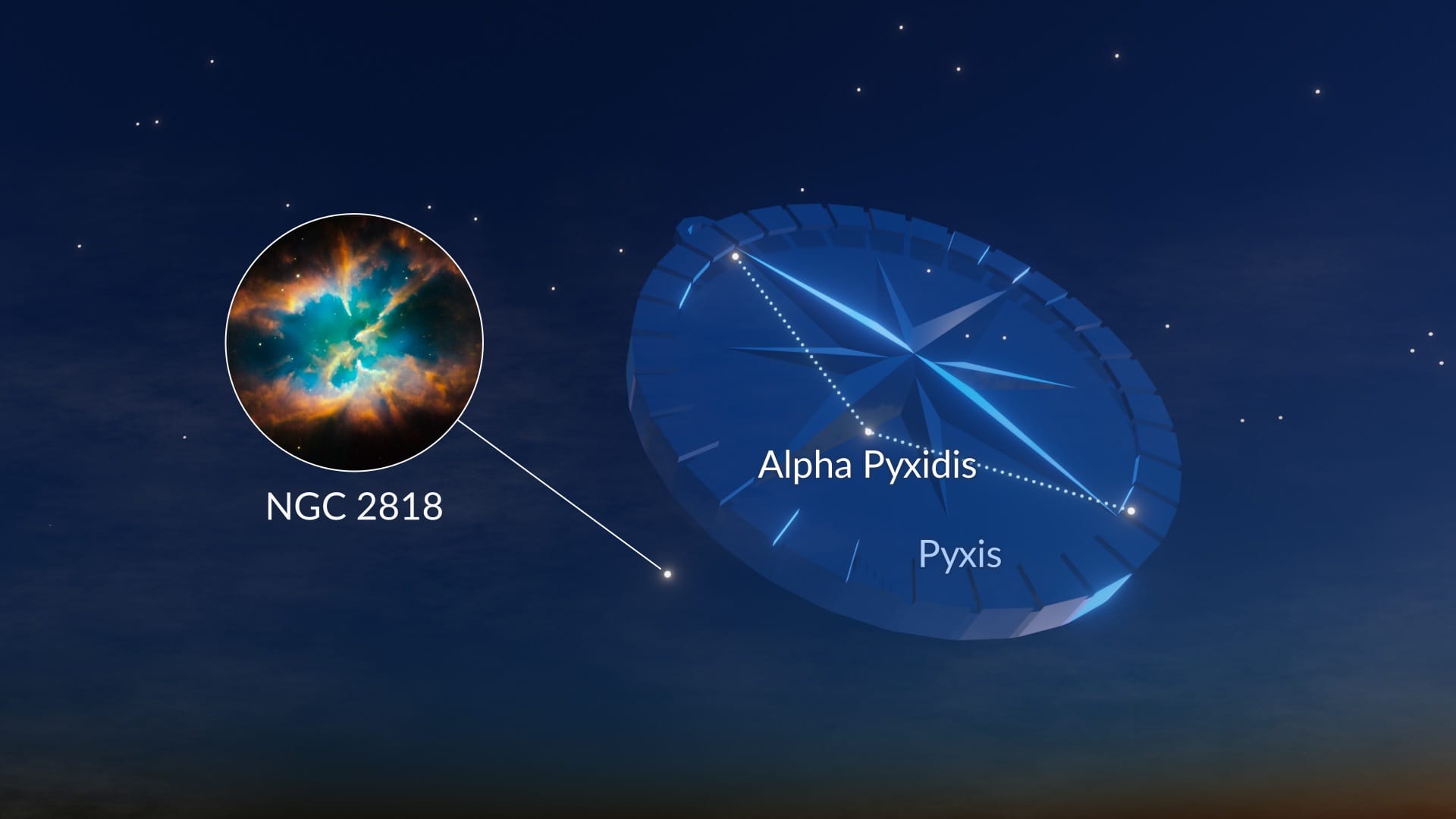
Pyxis
- Brightness: ☆
- Visible between: 50°N and 90°S
- Brightest star: Alpha Pyxidis (mag 3.7)
- Notable deep-sky object: NGC 2818 (mag 8.2)
How to find Pyxis in the sky
Pyxis is a faint southern constellation located near Vela, Puppis, and Hydra, in a region once associated with the former constellation Argo Navis.
To find Pyxis, first locate bright Sirius in Canis Major and Canopus in Carina. Pyxis lies west of the line connecting these two bright stars, slightly north of Vela. Because its stars are dim, dark skies are essential for spotting its subtle pattern. The constellation’s brightest star, Alpha Pyxidis, can help mark its position.
In the Northern Hemisphere, Pyxis appears low in the southern sky and is best observed from latitudes south of about 50°N.
Myth of the Pyxis constellation
Unlike many ancient constellations, Pyxis does not have a classical Greek myth attached to it. It was introduced in the 18th century by the French astronomer Nicolas Louis de Lacaille.
Its name means “the mariner’s compass” in Latin, reflecting the era of great sea voyages and navigation. Positioned near the former constellation Argo Navis, Pyxis complements the celestial ship, symbolizing the tools that guided sailors across the oceans.
Volans
- Brightness: ☆
- Visible between: 10°N and 90°S
- Brightest star: Beta Volantis (mag 3.8)
- Notable deep-sky object: NGC 2442 (mag 10.4)
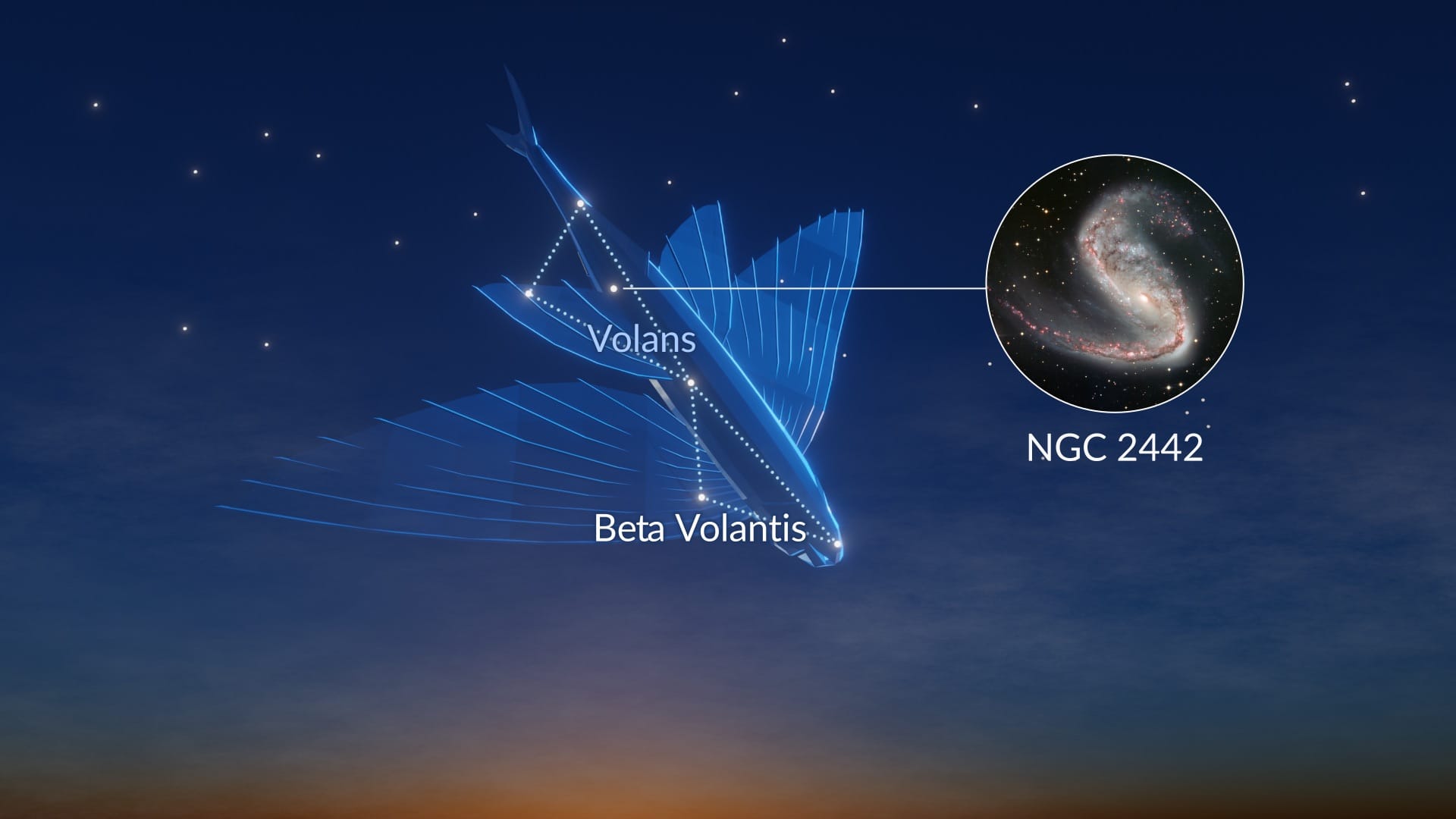
How to find Volans in the sky
Volans is a small and faint southern constellation located near Carina.
To find Volans, first locate bright Canopus in Carina — Volans lies south of it. Because its stars are relatively faint, it’s best to observe it under dark skies. The constellation’s brightest star, Beta Volantis, can help outline its subtle pattern.
In the Northern Hemisphere, Volans is visible mainly from locations near the equator and appears very low above the horizon.
Myth of the Volans constellation
Volans does not originate from ancient mythology. It was introduced in the late 16th century by Dutch navigators who mapped the southern skies during their sea voyages.
Its original name was Piscis Volans, which means “the flying fish” in Latin. The constellation was inspired by real flying fish that glide above the ocean to escape predators.
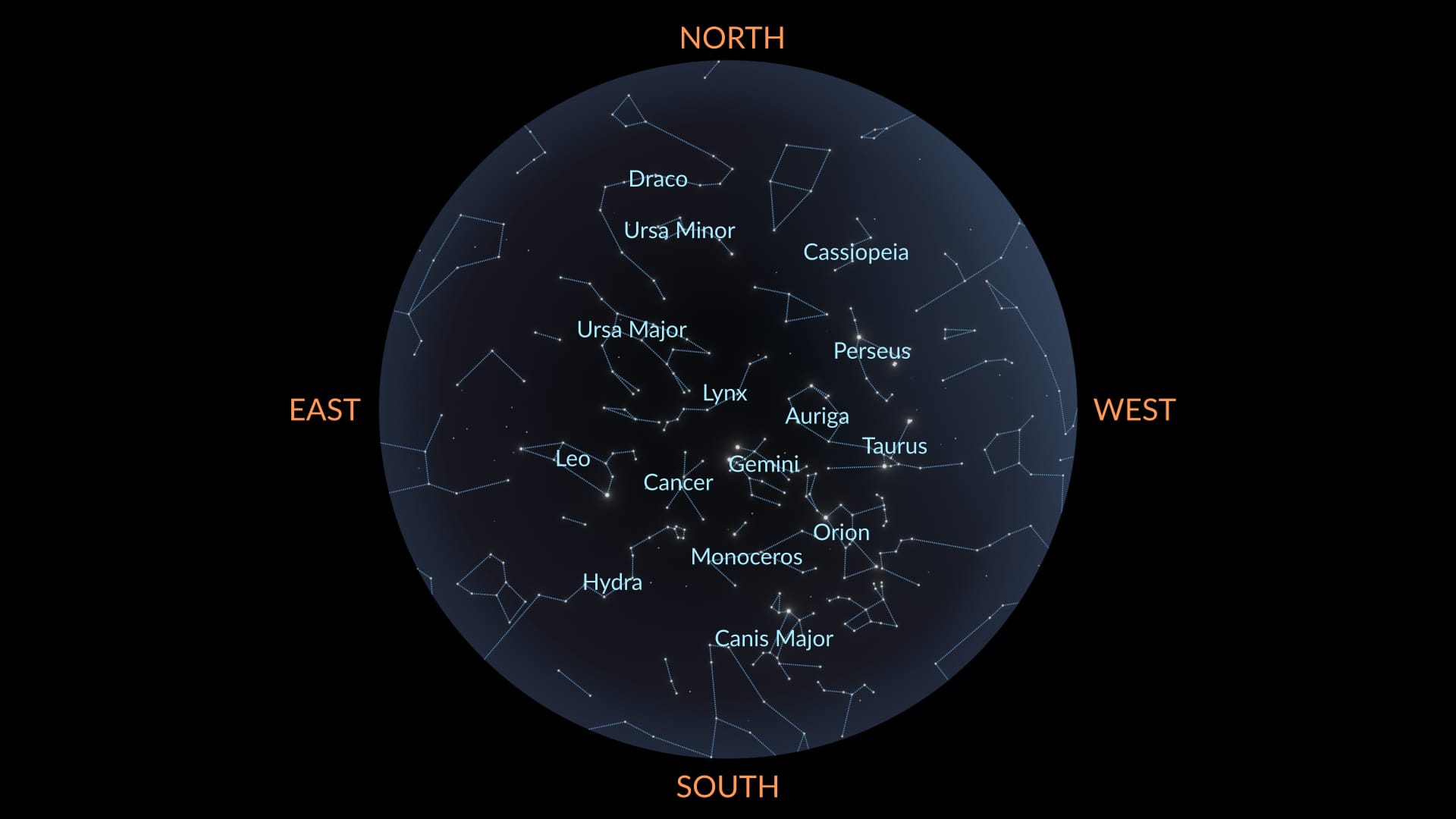
March night sky map
Below is a map of the night sky as seen from mid-northern latitudes in mid-March 2026 at around 9 p.m. local time. The center of the map shows the sky directly overhead, and the circle along the edge is the horizon. The sky looks similar at 10:00 p.m. at the beginning of March and at 8:00 p.m. at the end.
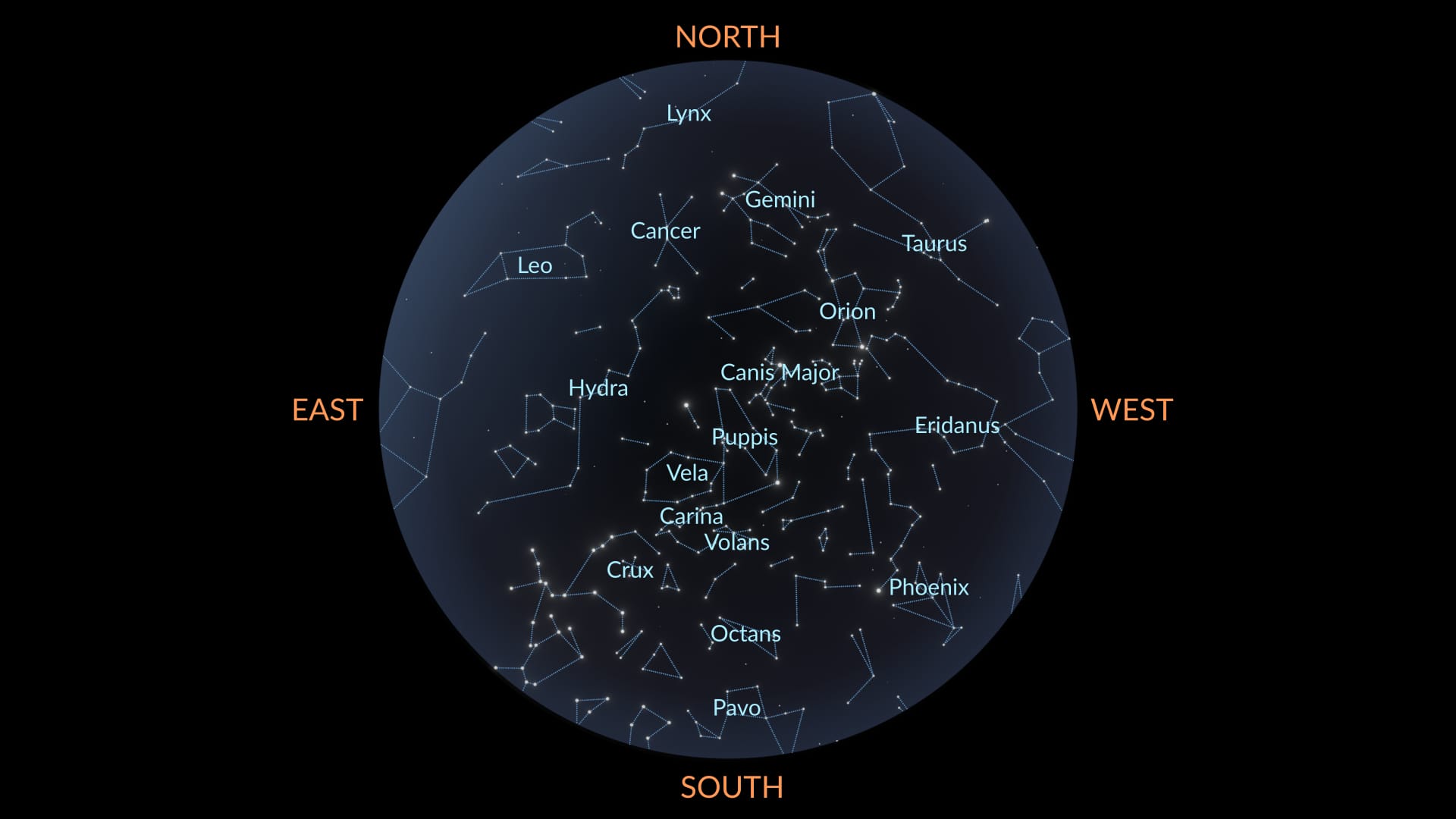
If you live in the Southern Hemisphere, here is a map for mid-southern latitudes in mid-March 2026, also at about 9 p.m. local time. The same details apply.
Want to learn more about events in the night sky for March 2026? Check out our full guide on celestial events for March.
How to find constellations in the night sky?
You don’t need to be an expert to find even the faintest constellations — just get an astronomy app! One of the best ones is the free Star Walk 2 app. Just launch the app and point your device at the sky — the app will show you an interactive sky map for your location. Star Walk 2 also features 3D models of constellations that allow you to explore how the constellations truly look in space.
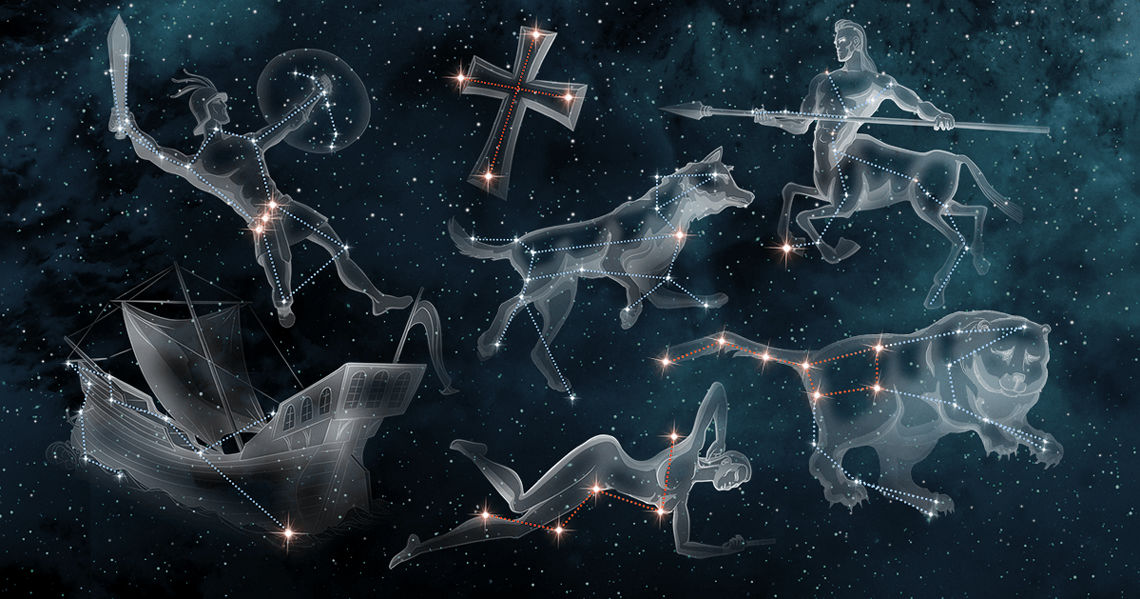
If the skies are clear and light pollution is not an issue, you can find some of the most prominent constellations without someone’s help. Check out our infographic “Famous Constellations Everyone Can Find” and try to locate the 7 most prominent constellations by yourself!
Constellations visible in March: Bottom line
March brings a mix of bright, easy-to-spot constellations and faint but rewarding targets.
In the Northern Hemisphere, winter favorites like Canis Minor, and Cancer are well placed in the evening, while faint constellations such as Lynx reach a higher position in the sky, making them easier to spot.
In the Southern Hemisphere, magnificent constellations like Carina, Vela, Puppis, Pyxis, and Volans dominate the sky, many of them tracing the outline of the legendary Argo Navis.
To make it easier to find these constellations, use the free Star Walk 2 app. We wish you clear skies and happy stargazing!
What else to see in the sky in March 2026?
- Blood Moon on March 3, 2026;
- All astronomical events in March 2026;
- Best deep-sky objects in March 2026;
- Meteor shower calendar: March – June 2026;
- Underrated sky events in 2026.