Astronomical Events in September 2026: What to See in the Night Sky?
The Moon takes part in many of the best sky events in September 2026, hiding Jupiter and Venus, lining up with bright stars, and ending the month as the Harvest Moon. Exceptionally bright Venus, meteors, comets, and deep-sky objects fill in the rest. Our free Sky Tonight app will help you find objects in the sky above you and make sure you don’t miss the month’s biggest highlights.
Contents
- 5 best astronomical events in September 2026
- Detailed calendar of astronomical events in September 2026
- Astronomical events in September 2026: Moon
- Astronomical events in September 2026: planets
- Astronomical events in September 2026: constellations and stars
- Astronomical events in September 2026: meteor showers
- Astronomical events in September 2026: comets
- Deep-sky objects in September 2026
- New astronomical season begins: September Equinox 2026
- Astronomical events in September 2026: FAQ
- Notable astronomy-themed dates in September 2026
- Astronomical events in September 2026: bottom line
5 best astronomical events in September 2026
-
September 8 — lunar occultation of Jupiter: The Moon will hide Jupiter from view across parts of Canada, Greenland, the United States, eastern Russia, and the North Pacific. And this one is worth catching: it’s the first lunar occultation of Jupiter since May 2023.
-
September 14 — lunar occultation of Venus: Just six days after Jupiter, the Moon will hide another bright planet — Venus. The occultation will be visible across parts of Europe, Africa, the Middle East, South and Southeast Asia, and western Russia. That makes it the second bright-planet occultation of the month.
-
September 20 — Moon in a line with Altair and Deneb: The Moon will line up almost perfectly with Altair and Deneb, the brightest stars of Aquila and Cygnus — two of the best constellations to see in September. The whole pattern is easy to see with the naked eye — and far too wide to fit into binoculars anyway.
-
Late September — Venus at its brightest in the evening sky for all of 2026: The brightest planet in the sky will reach its peak brightness for the year (mag -4.8). Venus is always hard to miss, but around this time it will be especially striking — and most impressive sky sights of 2026.
-
September 26 — Harvest Moon: This is an easy crowd-pleaser — bright, obvious, and requiring approximately zero astronomy skills to find. It’s also a great excuse to photograph the Moon rising behind buildings, mountains, or anything else that makes it look enormous.
Detailed calendar of astronomical events in September 2026
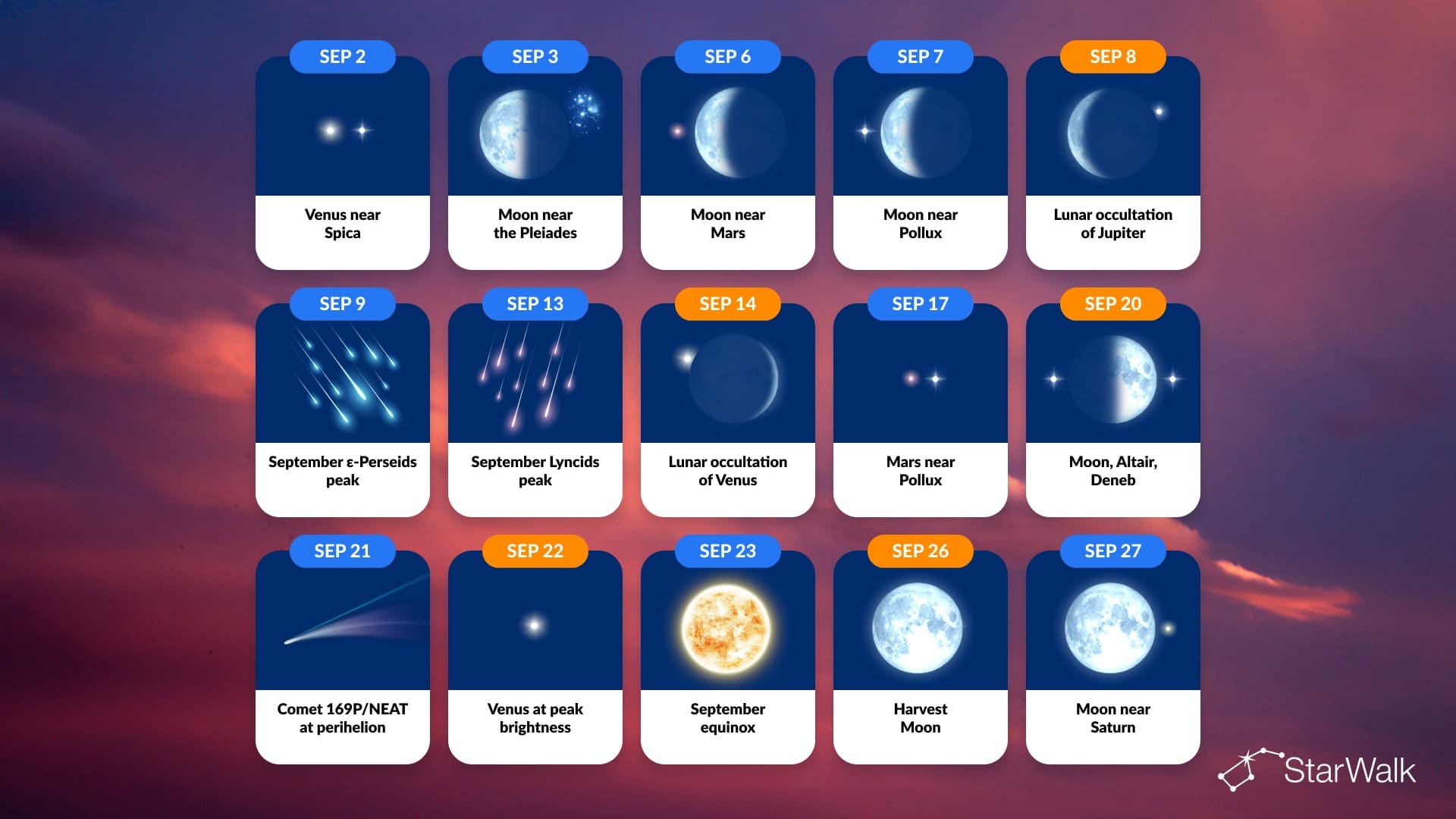
Here are the main astronomical events of September 2026. Dates are given in GMT, so some events may fall on a different date in your time zone. For the exact time and visibility from your location, check the Sky Tonight app.
The Visibility column shows how easy each event is to observe:
- 🟢 Good — easy to spot with the naked eye under normal conditions
- 🟡 Moderate — visible, but may require some experience or optical aid
- 🔴 Poor — difficult to observe because of poor viewing conditions
- ⚫ Not visible — the event can’t be observed visually
Click the linked events to open separate guides with more details.
| Date | Event | Visibility |
|---|---|---|
| September 1 | Aurigids meteor shower peak (6 meteors per hour) | 🔴 Poor |
| September 2 | Venus near Spica | 🟢 Good |
| September 3 | Moon near the Pleiades | 🟡 Moderate |
| September 3 | Moon near Uranus | 🟡 Moderate |
| September 4 | Last Quarter Moon | 🟢 Good |
| September 6 | Moon near Mars | 🟢 Good |
| September 7 | Moon near Pollux | 🟢 Good |
| September 8 | Moon near the Beehive | 🟡 Moderate |
| September 8 | Lunar occultation of Jupiter | 🟡 Moderate |
| September 9 | September Epsilon Perseids meteor shower peak (8 meteors per hour) | 🟢 Good |
| September 10 | Uranus retrograde | ⚫ Not visible |
| September 11 | New Moon | ⚫ Not visible |
| September 12 | Moon near Mercury | 🔴 Poor |
| September 13 | Moon near Spica | 🟢 Good |
| September 13 | September Lyncids peak (3–4 meteors per hour) | 🟢 Good |
| September 14 | Lunar occultation of Venus | 🟡 Moderate |
| September 17 | Moon near Antares | 🟢 Good |
| September 17 | Mars near Pollux | 🟢 Good |
| September 18 | First Quarter Moon | 🟢 Good |
| September 20 | Moon aligns with Altair and Deneb | 🟢 Good |
| September 21 | Comet 169P/NEAT at perihelion | 🟡 Moderate |
| September 21 | Moon near Pluto | 🔴 Poor |
| September 22 | Venus at its brightest in 2026 | 🟢 Good |
| September 23 | September equinox | ⚫ Not visible |
| September 26 | Mercury near Spica | 🟡 Moderate |
| September 26 | Neptune at opposition | 🟡 Moderate |
| September 26 | Harvest Moon | 🟢 Good |
| September 26 | Moon near Neptune | 🔴 Poor |
| September 27 | Moon near Saturn | 🟢 Good |
| September 30 | Moon near the Pleiades | 🟡 Moderate |
Astronomical events in September 2026: Moon
There’s plenty happening around the Moon in September 2026: occultations of the two brightest planets, close approaches to stars and planets, and, of course, a Full Moon near the end of the month.
September 8: Lunar occultation of Jupiter
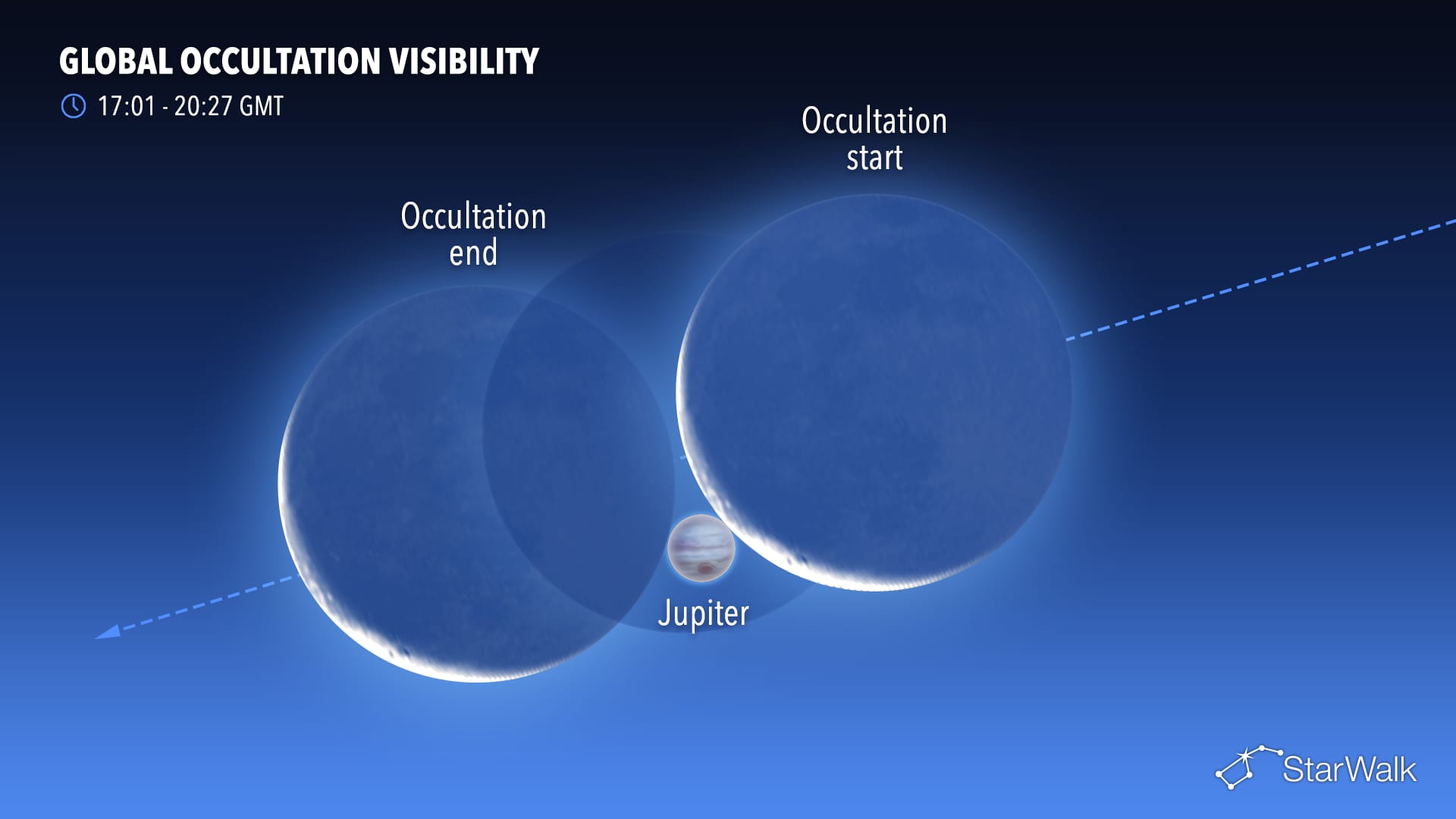
On September 8, the Moon will do something much more dramatic than just pass by Jupiter — it will cover the planet completely for observers in parts of the world. This will be the first lunar occultation of Jupiter since May 2023.
The event will be visible from Canada, Greenland, the United States, eastern Russia, and the North Pacific. In many places, it happens in daylight, so binoculars or a telescope will make Jupiter easier to follow as it disappears behind the Moon and pops back into view.
⚠️Never point binoculars or a telescope anywhere near the Sun — bright sunlight can severely damage your eyes!
Before the occultation, the thin crescent Moon and Jupiter will appear less than 1° apart, making a striking pair even if you’re outside the occultation zone.
Learn more: Bright Dots Near the Moon
September 14: Lunar occultation of Venus
Just six days after hiding Jupiter, the Moon will pull off the same trick with Venus. This time, one of the brightest objects in the sky will disappear behind the lunar disk.
The occultation will be visible from parts of Europe, Africa, the Middle East, South and Southeast Asia, and western Russia. In many locations it happens during daylight, but Venus is bright enough to be spotted in a daytime sky under good conditions — especially with binoculars or a telescope.
⚠️Never point binoculars or a telescope anywhere near the Sun — bright sunlight can severely damage your eyes!
After sunset, the crescent Moon and dazzling Venus will also make an eye-catching pair low in the western sky.
Learn more: Bright Dots Near the Moon
September 26: Harvest Moon
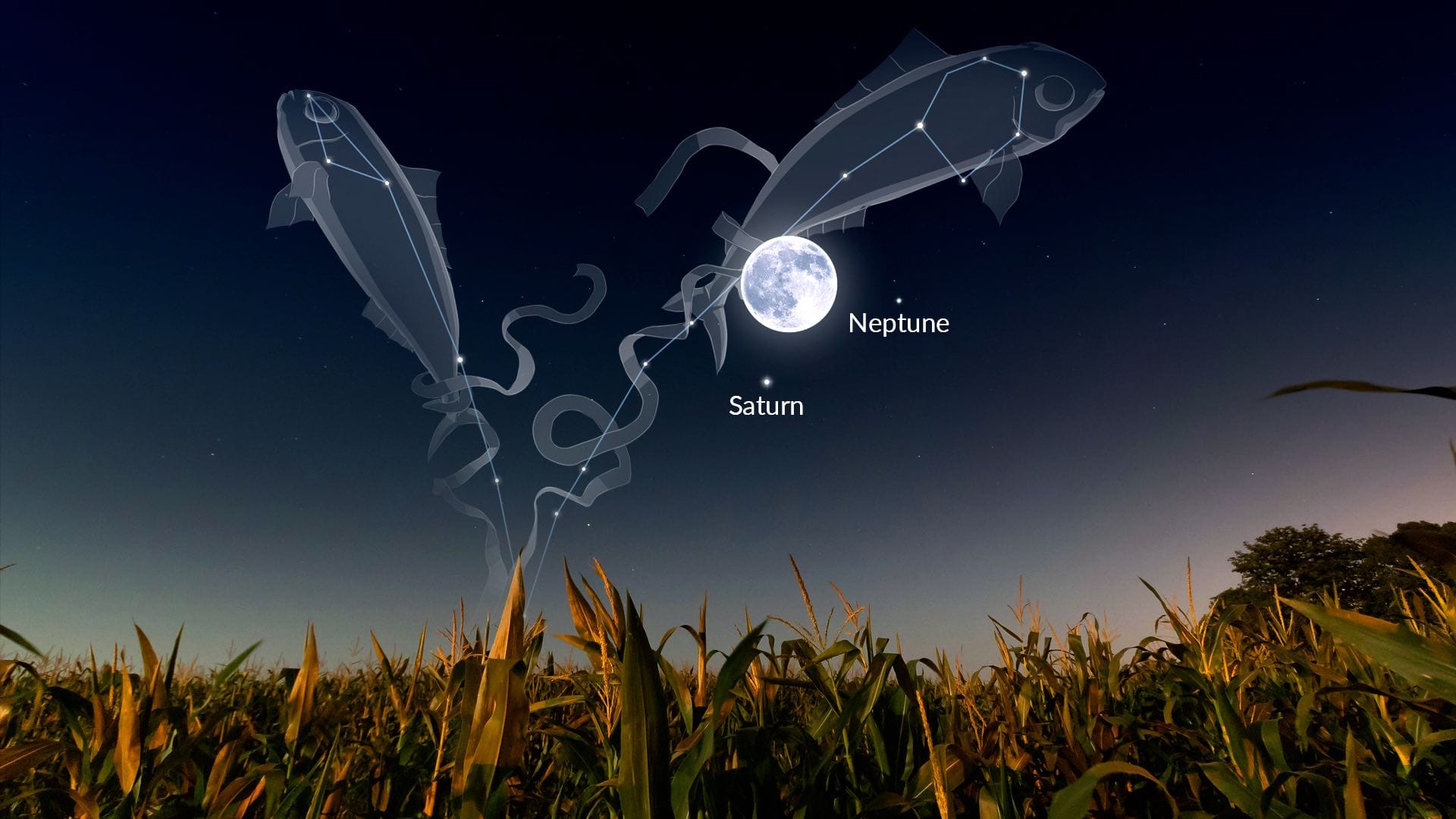
The Full Moon will occur on September 26 at 16:49 GMT, while the Moon is in the constellation Pisces. This one is called the Harvest Moon because it is the Full Moon closest to the September equinox. In 2026, the equinox falls just a few days earlier, on September 23. Around this time of year in the Northern Hemisphere, the Moon rises not long after sunset for several evenings in a row. Traditionally, that extra evening moonlight gave farmers more time to bring in the harvest — hence the name.
Learn more: Full Moon in September 2026
Moon phases in September 2026
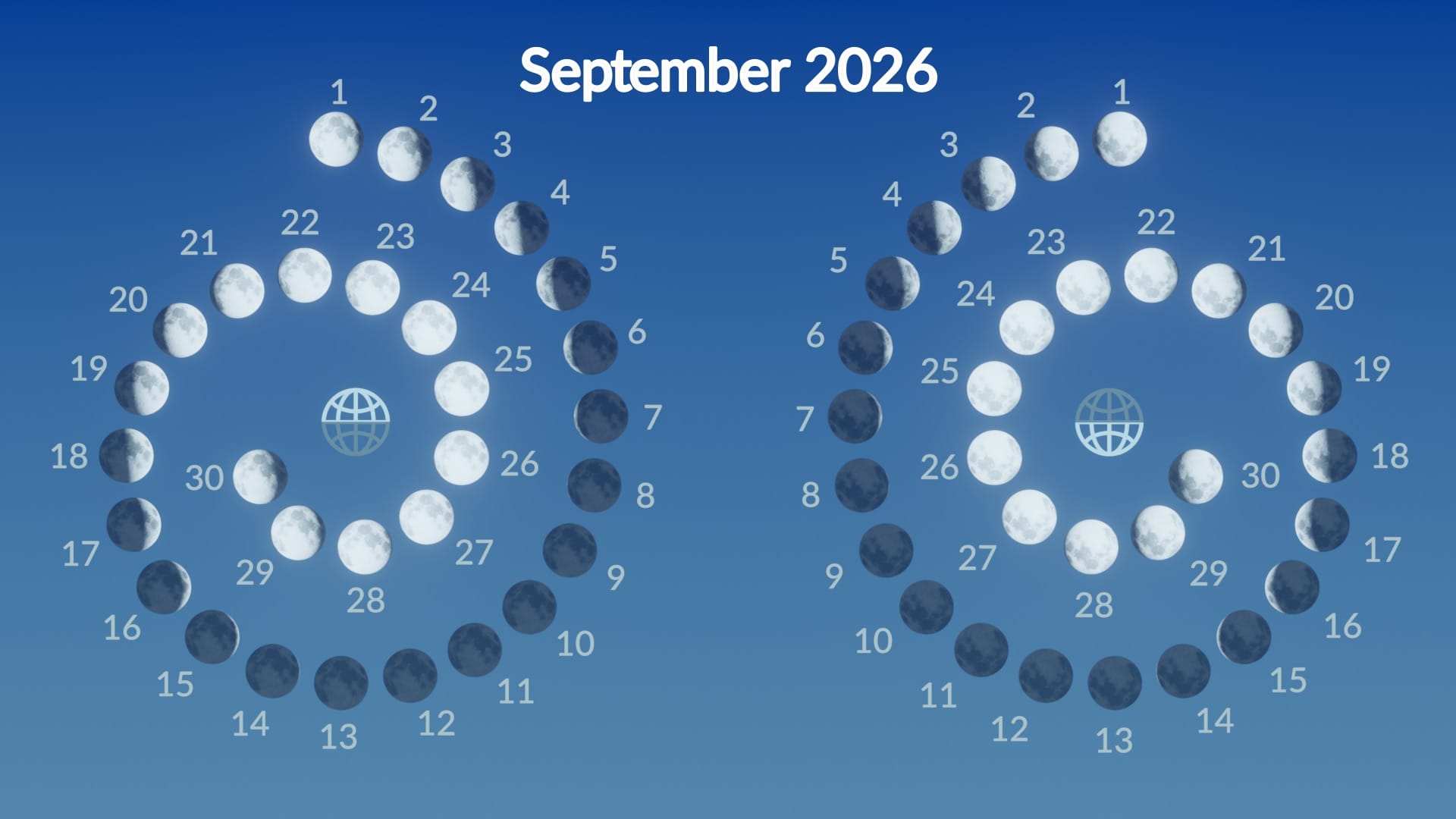
- Last Quarter: September 4, 07:51 GMT
- New Moon: September 11, 03:27 GMT
- First Quarter: September 18, 20:44 GMT
- Full Moon: September 26, 16:49 GMT
| Date | Moon phase | Moon visibility |
|---|---|---|
| Sep 4 | Last Quarter | Best seen in the morning. Through a telescope, you can observe details of the lunar surface along the terminator — the line between light and shadow. |
| Sep 11 | New Moon | The Moon won’t be visible, making this a great night for stargazing. |
| Sep 18 | First Quarter | Best seen in the evening. |
| Sep 26 | Full Moon | The Moon rises around sunset and remains visible until dawn. |
To check the exact moonrise and moonset times for your location on any date and plan your observations, use our dedicated lunar calendar.
Astronomical events in September 2026: planets
September is a pretty good month for planet watching. Mars and Jupiter are up before sunrise, Saturn and Neptune take over the night sky, and Venus is still shining in the evening. Mercury is the tricky one: it starts the month too close to the Sun but gets easier to spot later on, especially from the Southern Hemisphere.
Learn more: Planets Visible Tonight
Planet visibility in September 2026: Northern Hemisphere
| Planet | Best seen with | When to see | Sep 1–10 | Sep 11–20 | Sep 21–30 |
|---|---|---|---|---|---|
| Mercury | Naked eye | Evening | ⚫ Not visible | 🔴 Poor | 🔴 Poor |
| Venus | Naked eye | Evening | 🔴 Poor | 🔴 Poor | 🔴 Poor |
| Mars | Naked eye | Morning | 🟢 Good | 🟢 Good | 🟢 Good |
| Jupiter | Naked eye | Morning | 🟢 Good | 🟢 Good | 🟢 Good |
| Saturn | Naked eye | Evening/night | 🟢 Good | 🟢 Good | 🟢 Good |
| Uranus | Binoculars or telescope | Late night/morning | 🟡 Moderate | 🟡 Moderate | 🟡 Moderate |
| Neptune | Telescope | Evening/night | 🟡 Moderate | 🟡 Moderate | 🟡 Moderate |
- Mercury (Leo, Virgo; mag from -1.4 to -0.1): Mercury starts the month too close to the Sun to be seen. Later in September, it moves farther away but still stays very low after sunset. On September 12, the thin Moon passes nearby, and on September 26, Mercury appears close to Spica.
- Venus (Virgo; mag -4.8): Venus stays very low above the evening horizon. It also reaches its brightest point of the year in late September. Look for it near Spica on September 2 and close to the crescent Moon on September 14.
- Mars (Gemini, Cancer; mag 1.1): Mars climbs higher in the morning sky as the month goes on. On September 6, it appears near the waning Moon, and on September 17, it passes close to Pollux.
- Jupiter (Cancer, Leo; mag -1.8): Jupiter is easy to spot before sunrise and gets higher in the sky throughout September. On September 8, it appears next to a thin waning crescent Moon.
- Saturn (Pisces, Cetus; mag from 0.5 to 0.3): Saturn is heading toward opposition in early October, so September is already a great time to see it. It rises in the evening and stays visible for most of the night. On September 27, it appears near the almost full Moon.
- Uranus (Taurus; mag 5.7): Uranus stays in Taurus between the Pleiades and Hyades. It is best seen late at night or before dawn with binoculars or a telescope. On September 3, the Moon passes nearby.
- Neptune (Pisces; mag 7.7): Neptune is up for most of the night and reaches opposition on September 26. Although that puts the planet in an ideal position, the bright Moon around the same date will make it harder to spot, so earlier, darker nights may be better for observing.
Planet visibility in September 2026: Southern Hemisphere
| Planet | Best seen with | When to see | Sep 1–10 | Sep 11–20 | Sep 21–30 |
|---|---|---|---|---|---|
| Mercury | Naked eye | Evening | ⚫ Not visible | 🟡 Moderate | 🟢 Good |
| Venus | Naked eye | Evening | 🟢 Good | 🟢 Good | 🟢 Good |
| Mars | Naked eye | Morning | 🟢 Good | 🟢 Good | 🟢 Good |
| Jupiter | Naked eye | Morning | 🔴 Poor | 🟡 Moderate | 🟡 Moderate |
| Saturn | Naked eye | Evening/night | 🟢 Good | 🟢 Good | 🟢 Good |
| Uranus | Binoculars or telescope | Late night/morning | 🟡 Moderate | 🟡 Moderate | 🟡 Moderate |
| Neptune | Telescope | Evening/night | 🟡 Moderate | 🟡 Moderate | 🟡 Moderate |
- Mercury (Leo, Virgo; mag from -1.4 to -0.1): Mercury starts September hidden in the Sun’s glare, but the view improves fast. By late September, it is much easier to catch above the western horizon after sunset. On September 12, the thin Moon passes nearby, and on September 26, Mercury appears close to Spica.
- Venus (Virgo; mag -4.8): Venus is one of the easiest planets to spot in the evening sky and gets even brighter later in the month. Look for it near Spica on September 2 and beside the crescent Moon on September 14.
- Mars (Gemini, Cancer; mag 1.1): Mars is visible before sunrise and climbs higher as September goes on. On September 6, it appears near the waning Moon; on September 17, it passes close to Pollux.
- Jupiter (Cancer, Leo; mag -1.8): Jupiter starts the month fairly low before sunrise but becomes easier to see later on. On September 8, it appears next to the waning crescent Moon.
- Saturn (Pisces, Cetus; mag from 0.5 to 0.3): Saturn is in great shape for observing all month as it approaches opposition in early October. It rises in the evening and stays visible for most of the night. On September 27, it appears near the almost full Moon.
- Uranus (Taurus; mag 5.7): Uranus is best seen late at night or before dawn with binoculars or a telescope. It stays in Taurus between the Pleiades and Hyades. On September 3, the Moon passes nearby.
- Neptune (Pisces; mag 7.6): Neptune is visible through most of the night and reaches opposition on September 26. That’s when it is best placed in the sky, but the bright Moon will make it harder to spot, so darker nights earlier in the month may actually offer a better view through a telescope.
Late September 2026: Venus at its brightest of the year
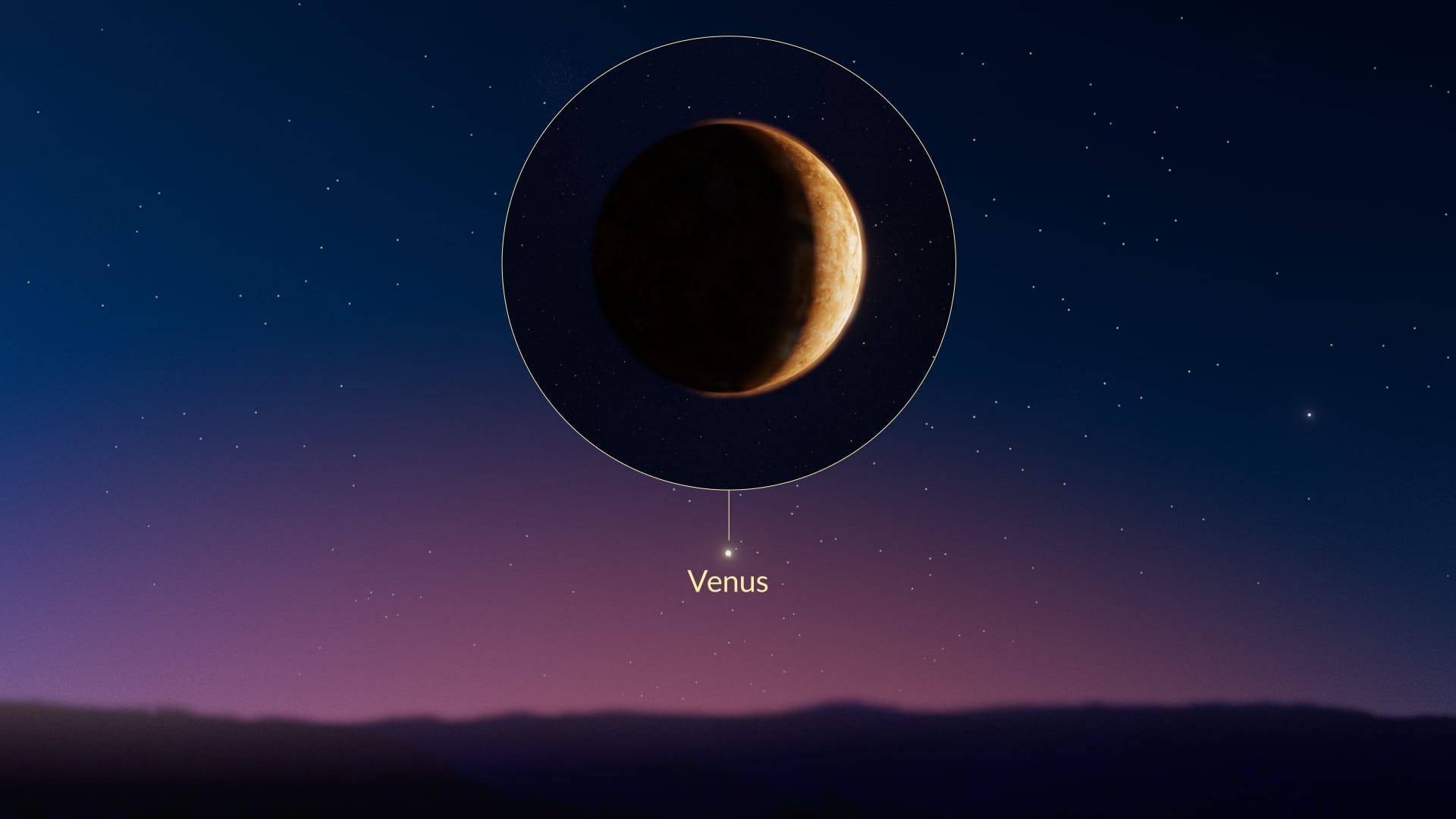
Venus becomes exceptionally bright in late September. It reaches magnitude -4.8, making it the brightest it will appear all year. Look for Venus after sunset in Virgo. From the Southern Hemisphere, the view is especially good; from farther north, it stays much closer to the horizon.
Fun fact: through a telescope, Venus will look like a thin crescent, only about 22% illuminated. Oddly enough, Venus does not appear brightest when most of its disk is lit. As its illuminated fraction grows, the planet moves farther from Earth and appears smaller, so it actually becomes dimmer. In late September, Venus is relatively close to us, and its large apparent size more than makes up for the narrow crescent.
Astronomical events in September 2026: constellations and stars
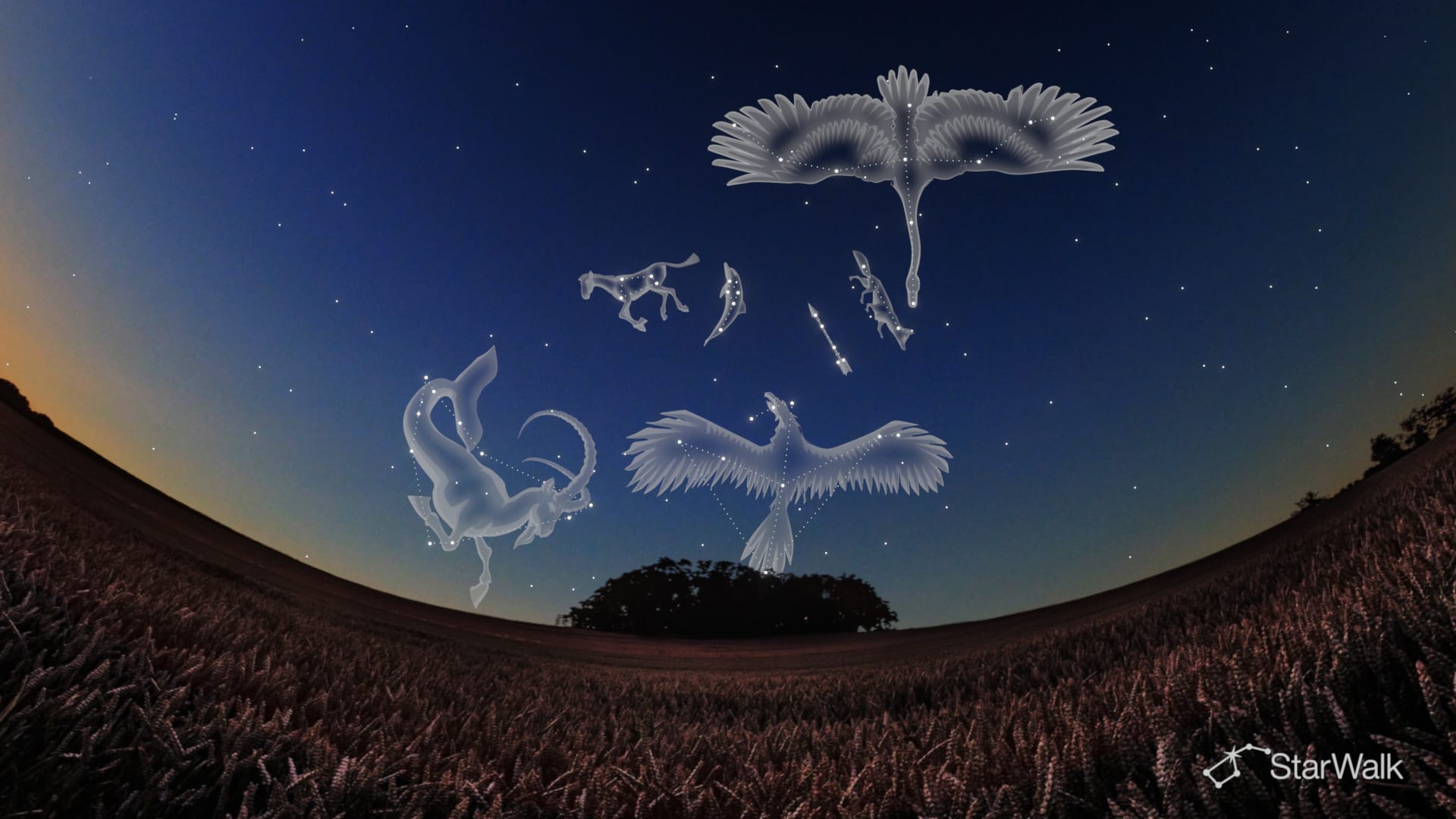
September is a good time to explore several easy-to-find constellations. In the Northern Hemisphere, look for Aquila, Cygnus, Capricornus, Delphinus, Sagitta, Equuleus, and Vulpecula. Aquila and Cygnus stand out thanks to bright Altair and Deneb in the Summer Triangle. The smaller constellations are easier to see under dark skies.
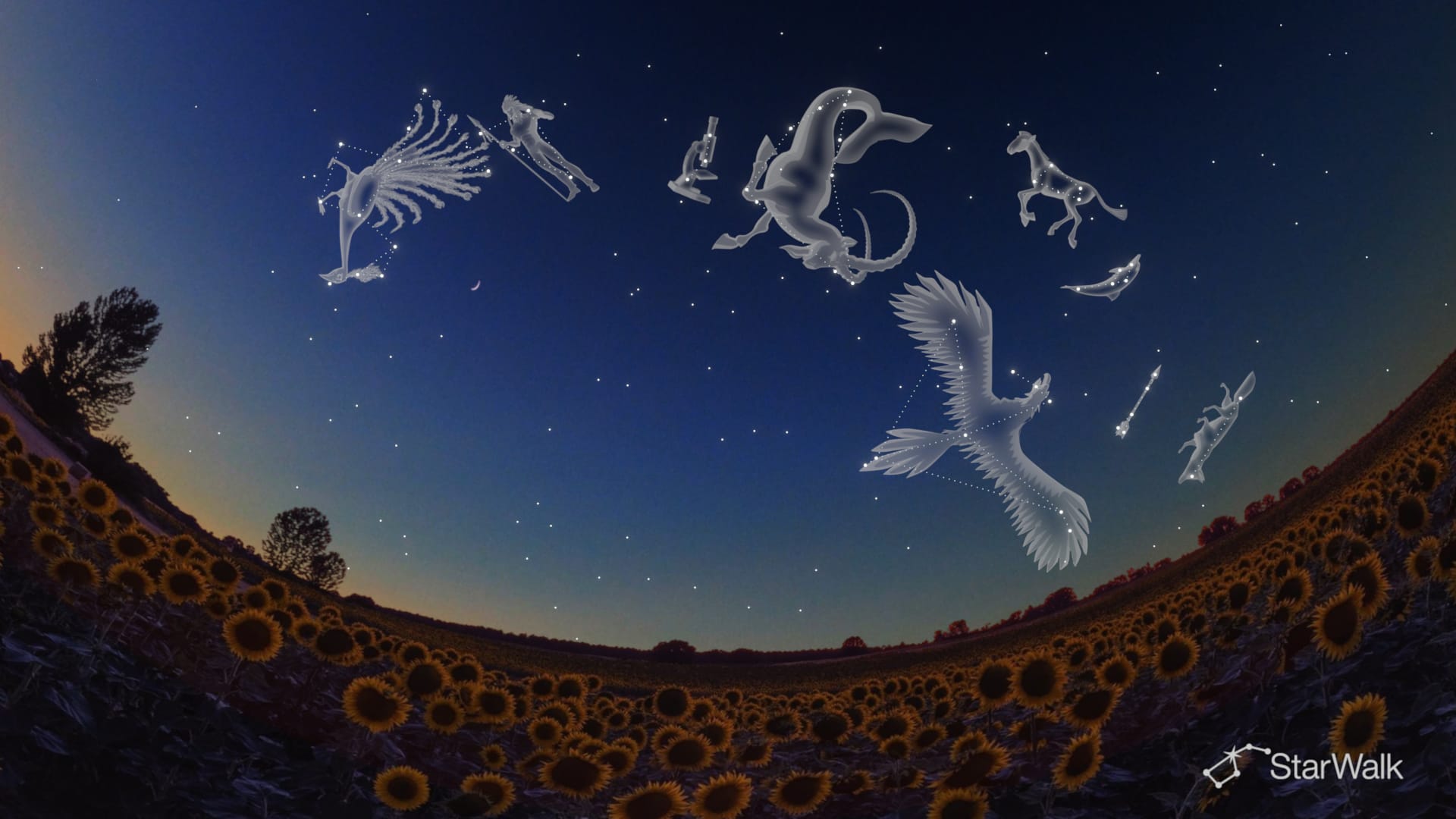
In the Southern Hemisphere, Aquila, Capricornus, Pavo, Indus, Delphinus, Sagitta, Equuleus, Vulpecula, and Microscopium are well placed. Pavo is easier to recognize because of the bright star Peacock, while Indus and Microscopium are much fainter.
The best time to look is around 9 p.m. local time, when many of these constellations are near their highest point in the sky. For the faintest ones, try the nights around the New Moon on September 11 — with less moonlight, they will be much easier to spot.
Learn more: Best September Constellations
September 20: the Moon aligns with Altair and Deneb
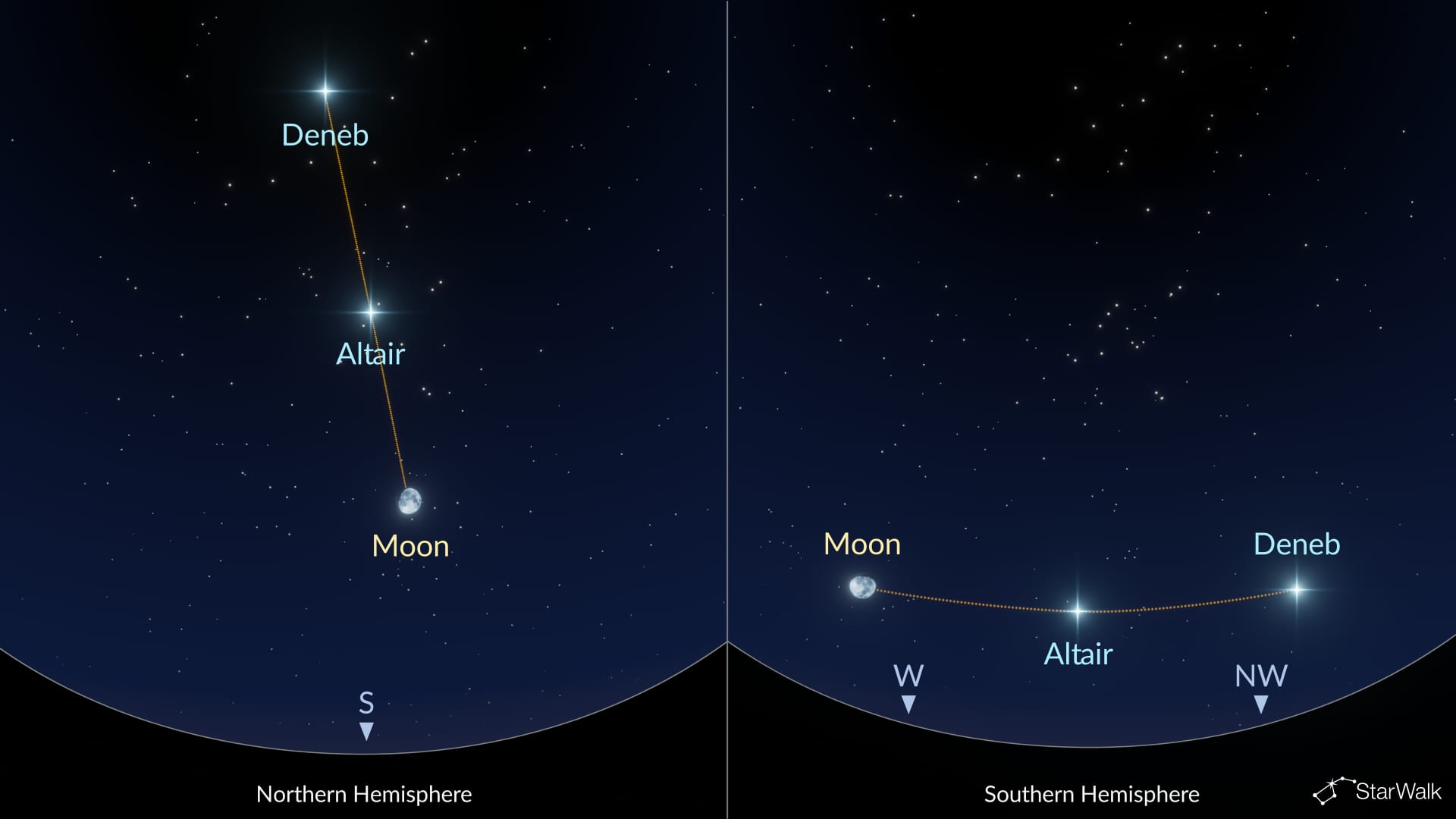
On September 20, look for the Moon, Altair, and Deneb forming an almost straight line across the sky. Altair will sit nearly halfway between the other two.
The three objects will stretch across a large part of the sky, spanning about 74° from end to end. This is roughly three outstretched hand spans held at arm’s length. Binoculars won’t help much here: the alignment is far too wide to fit into their field of view. Altair and Deneb are two of the brightest stars in the September evening sky, and the Moon will be about two-thirds illuminated.
The view will be quite different depending on where you are. From much of the Northern Hemisphere, the alignment can pass high across the sky, with Altair and Deneb well above the horizon. From the Southern Hemisphere, it appears much lower in the north, and Deneb may sit close to the horizon, especially from more southerly locations.
Astronomical events in September 2026: meteor showers
| Date | Meteor shower | Meteors/hour | Moon phase | Best visible from |
|---|---|---|---|---|
| September 1 | Aurigids | 6 | 🌖Waning gibbous | Northern Hemisphere |
| September 9 | September ε-Perseids | 8 | 🌘Waning crescent | Northern Hemisphere |
| September 13 | September Lyncids | 3–4 | 🌒Waxing crescent | Northern Hemisphere |
September is a quiet month for meteors, but there are still three showers worth watching.
-
August 31–September 1 — Aurigids: The Aurigids peak at the very start of the month and can produce about 6 meteors per hour. In 2026, the bright Moon will wash out many of the fainter meteors. The shower is best seen from the Northern Hemisphere.
-
September 9–10 — September Epsilon Perseids: The strongest shower of the month can produce around 8 meteors per hour. In 2026, it peaks just before the New Moon, so the sky will be nice and dark. The shower is best seen from the Northern Hemisphere.
-
September 13 — September Lyncids: This small shower produces about 3–4 meteors per hour. The thin crescent Moon won’t get in the way, making 2026 a good year to catch a few Lyncids. They are best seen from the Northern Hemisphere.
Learn more: Meteor Showers in September 2026
Astronomical events in September 2026: comets
On September 21, Comet 169P/NEAT will reach perihelion, its closest point to the Sun. Around that time, it is expected to glow at around magnitude 15, so you’ll need a medium-to-large telescope to see it.
In September, look for NEAT in the morning sky. It can be observed from both hemispheres, though conditions are generally better in the north. The comet is also the parent body of the Alpha Capricornid meteor shower — so if the name sounds familiar, that may be why.
Learn more: Upcoming Comets
Deep-sky objects in September 2026
September is a great month for deep-sky observing, especially around the New Moon on September 11, when the sky will be at its darkest.
-
With the naked eye: try the Andromeda Galaxy (M31), which looks like a faint fuzzy patch under dark skies. The Pyramid Cluster (M39) in Cygnus and the bright southern globular cluster NGC 6752 can also be spotted without optical aid from very dark locations.
-
With binoculars: look for the Triangulum Galaxy (M33), Angelfish Cluster (M71), Sculptor Galaxy (NGC 253), and NGC 55. They’ll appear as faint glows or compact patches rather than detailed objects, but they’re good targets under a dark sky.
-
With a telescope: September offers plenty of more challenging targets, including the Saturn Nebula (NGC 7009), Blue Snowball Nebula (NGC 7662), and, for experienced observers with a large telescope, Stephan’s Quintet.
Learn more: Best September Astrophotography Targets
New astronomical season begins: September Equinox 2026
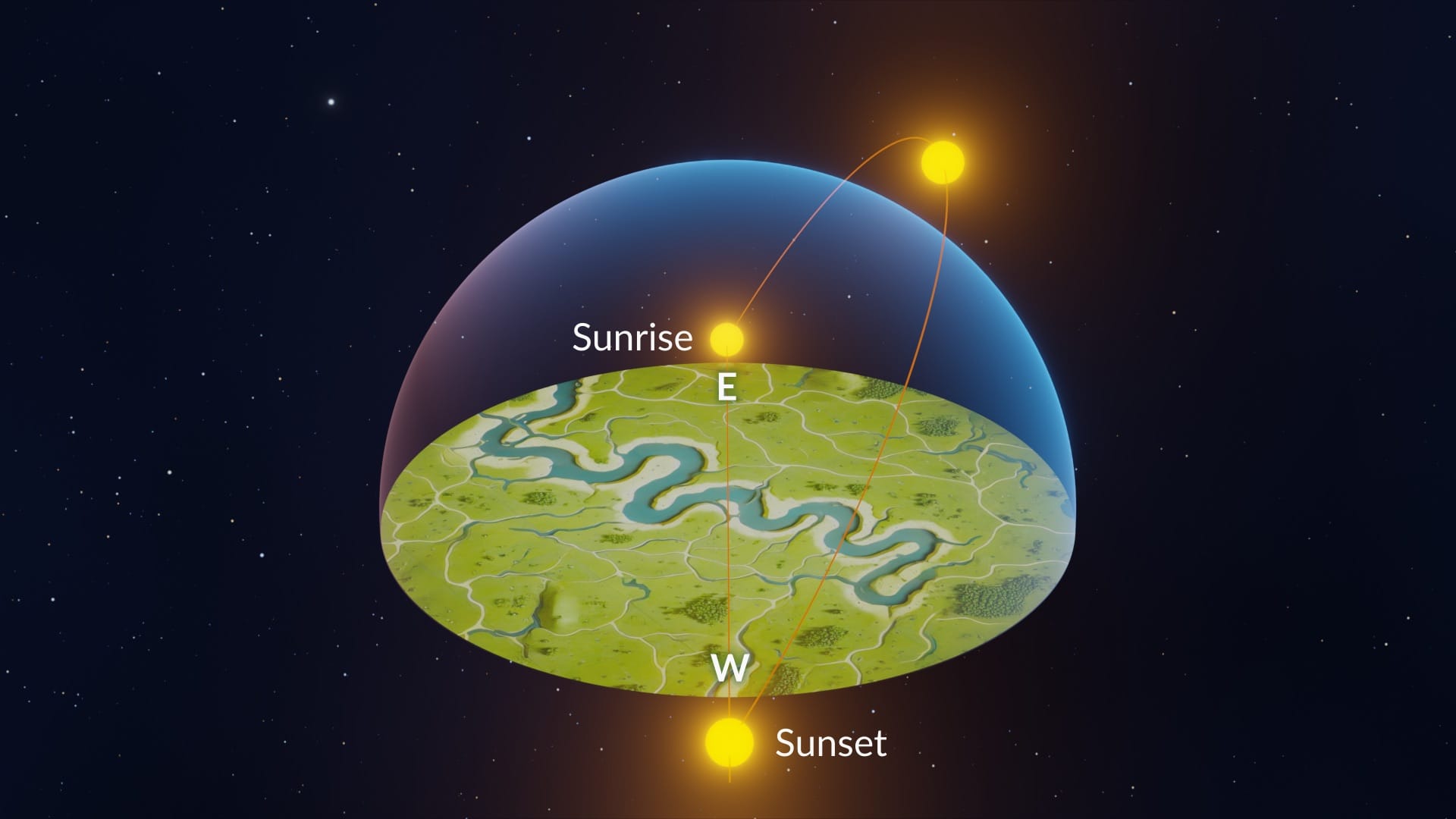
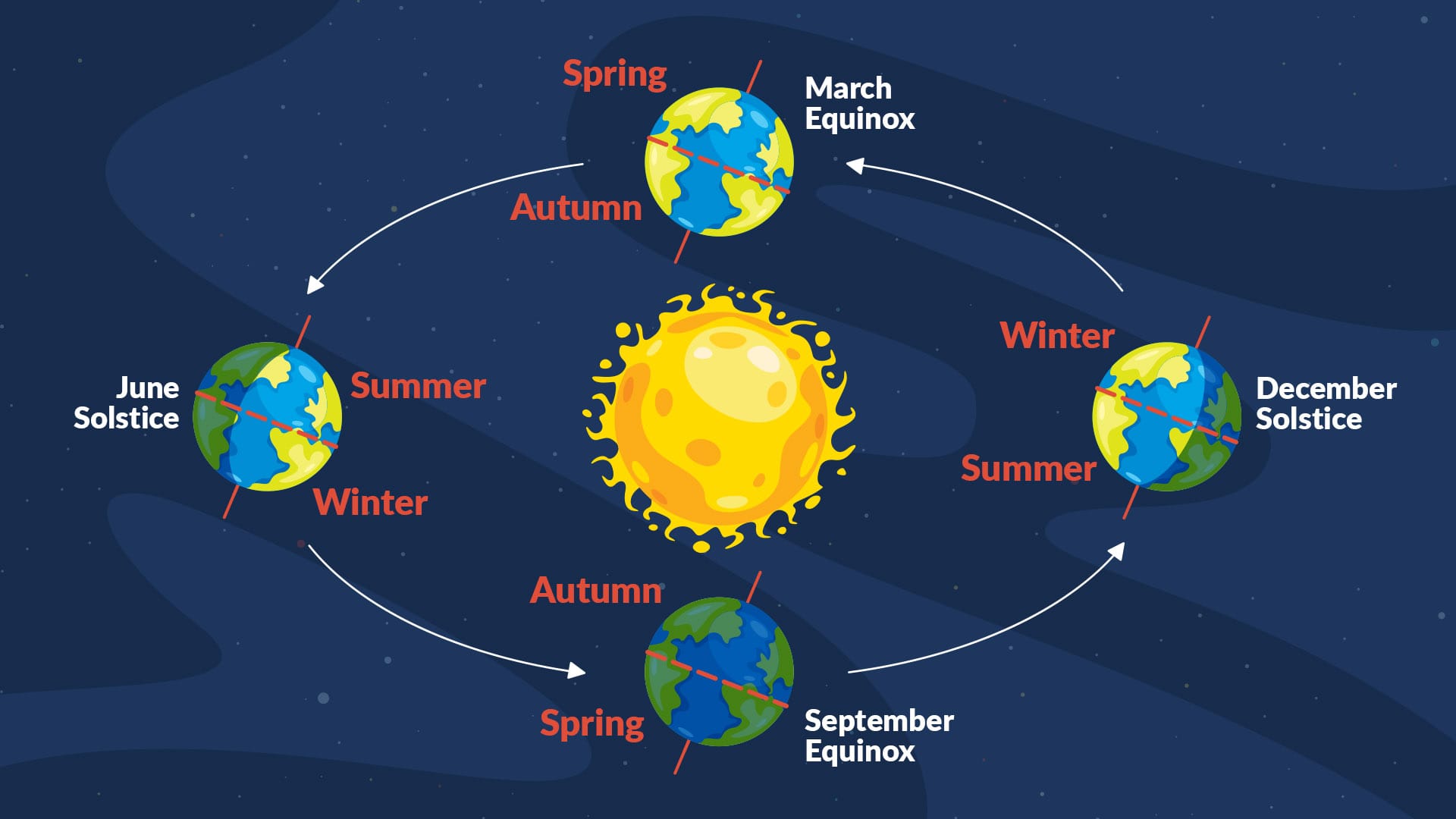
On September 23 at 00:06 GMT, the September equinox will mark a seasonal turning point: the Northern Hemisphere welcomes autumn, while the Southern Hemisphere welcomes spring. Around the equinox, both hemispheres receive nearly equal amounts of sunlight.
At the equinox, the Sun crosses the celestial equator, and day and night become nearly equal in length around the world. The event itself isn’t something you can watch happening in the sky, but you can notice one of its effects: around the equinox, the Sun rises almost exactly due east and sets almost exactly due west. From this point on, days will keep growing shorter in the north and longer in the south until the December solstice.
Learn more: What Is an Equinox?; Equinox Explained in Pictures: Infographic
By the way, do you know the difference between solstices and equinoxes? Take our quiz and test your knowledge!
Astronomical events in September 2026: FAQ
What is the best astronomical event in September 2026?
One of the month’s biggest highlights is Venus reaching peak brightness in the evening sky in late September. At about magnitude -4.8, it will be at its brightest during this evening apparition, making it especially easy to spot after sunset.
Earlier in the month, the Moon will also occult Jupiter on September 8 and Venus on September 14, briefly hiding both planets from view in parts of the world. Other highlights include the Moon lining up with Altair and Deneb on September 20 and the Harvest Full Moon on September 26.
When is the Full Moon in September 2026?
The Full Harvest Moon occurs on September 26 at 16:49 GMT. It gets its name because it is the Full Moon closest to the September equinox. Learn more in our September Full Moon guide.
What planets are visible in September 2026?
Mars and Jupiter are visible in the morning, while Venus and Saturn are evening or nighttime targets. Uranus can be seen late at night or before dawn with binoculars or a telescope, while Neptune is best viewed through a telescope. Mercury is harder to catch but becomes easier later in the month in the Southern Hemisphere.
Are there any meteor showers in September 2026?
Yes. September brings the Aurigids, September Epsilon Perseids, and September Lyncids. The strongest of them, the September Epsilon Perseids, can produce around 8 meteors per hour under ideal conditions, so expect a modest show rather than anything close to the Perseids. Learn more in our September meteor shower guide.
When is the darkest sky in September 2026?
The darkest nights fall around the New Moon on September 11. With little or no moonlight, this is the best part of the month for spotting faint galaxies, nebulae, star clusters, and meteors.
Notable astronomy-themed dates in September 2026
-
September 19 — International Observe the Moon Night: This annual NASA festival brings people around the world together to observe and celebrate the Moon. The date is chosen near the First Quarter, when the Moon is high in the evening and shadows along the terminator make craters and mountains especially easy to see.
-
September 19 — Autumn Astronomy Day: The first Astronomy Day of 2026 was held on April 25, and now it’s time for round two. Astronomy Day is celebrated twice a year — once in spring and once in fall — usually on a Saturday near the First Quarter Moon. Get ready with our guide to Astronomy Day.
-
September 20 — 75 years since Yorick returned to Earth: In 1951, Yorick the monkey returned safely from an Aerobee research flight, becoming one of the early pioneers of animal spaceflight. His flight was one of many milestones that shaped early space exploration. Try to name the other famous space firsts in our quiz.
-
September 23 — 180 years since the discovery of Neptune: Did you know Neptune was discovered with math before it was found with a telescope? Astronomers predicted where the unseen planet should be, and on September 23, 1846, Neptune was finally spotted near that position. What a nice day to learn more about Neptune!
Astronomical events in September 2026: bottom line
September 2026 gives the Moon plenty of chances to steal the show, from occulting Jupiter and Venus to forming unusual alignments and ending the month as the Harvest Moon. Add Venus at peak brightness, meteor showers, a comet at perihelion, and some excellent deep-sky targets, and the month is packed from start to finish. Use the free Sky Tonight app to easily navigate the night sky and catch all the action!