September Full Moon 2027 (Harvest Moon): Date, Time & Meaning
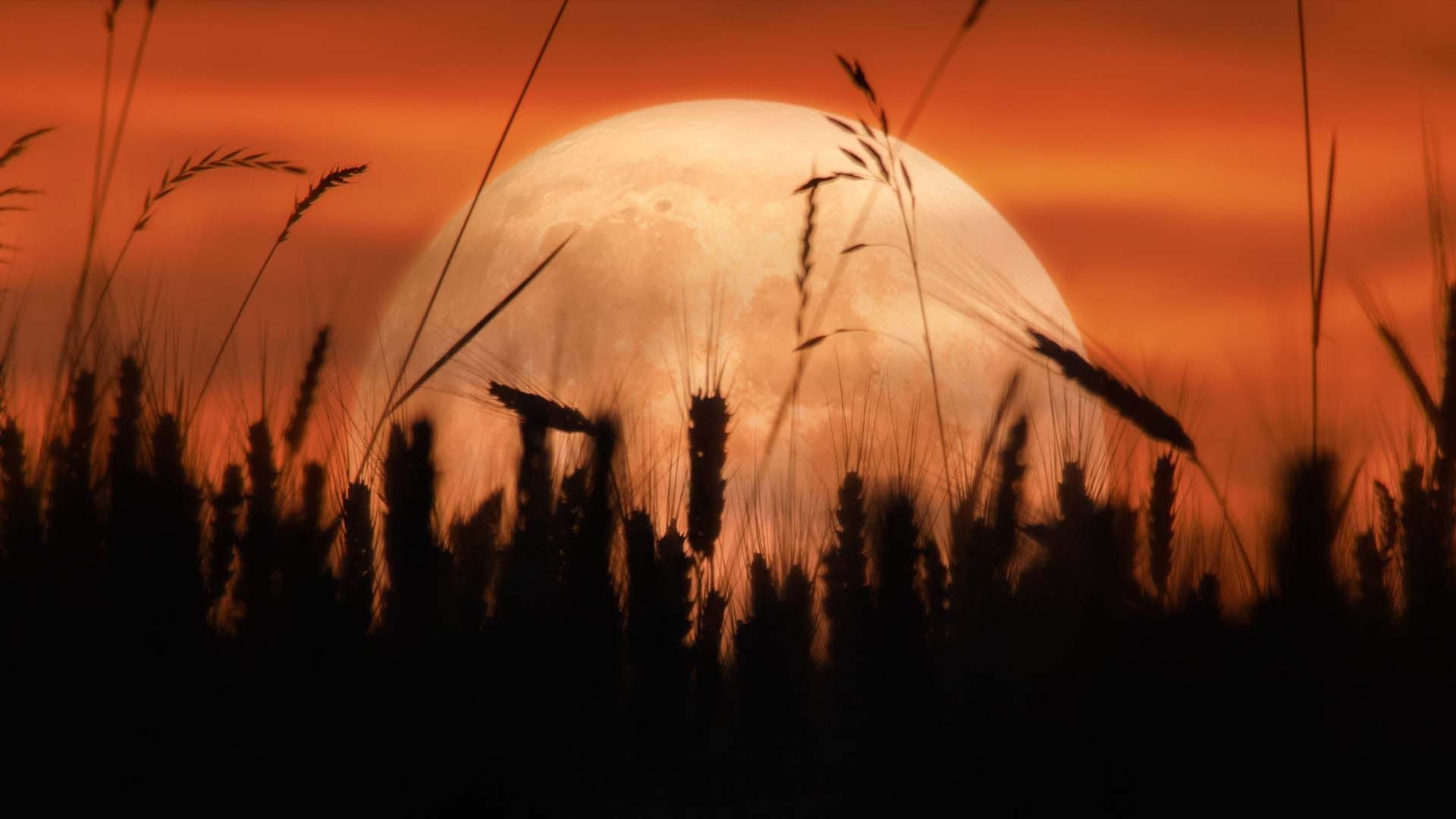
The Full Moon in September 2027 — known as the Harvest Moon in the Northern Hemisphere — occurs on Wednesday, September 15, 2027, at 23:04 UTC (7:04 PM EDT). The Moon will be located in the constellation Pisces.
To find out when the Harvest Moon rises in your city, open the free astronomy app Sky Tonight and check the Moon's position and rise time for September 15, 2027. Read on to learn when to see the September Full Moon, why it’s called the Harvest Moon, and what makes it special.
Contents
- September Full Moon 2027 at a Glance
- Moon Phases in September 2027: Dates and Times
- What Constellation Is the September Full Moon In?
- September Full Moon Meaning: Why Is It Called the Harvest Moon?
- Mid-Autumn Festival 2027
- International Observe the Moon Night 2027
September Full Moon 2027: Frequently Asked Questions
- What time is the Harvest Moon in 2027?
- Does the Harvest Moon always occur in September?
- Is the September 2027 Harvest Moon a supermoon?
- Will there be a lunar eclipse during the September Full Moon 2027?
- Is the Harvest Moon always orange?
- When is the next Full Moon?
- When is the next Harvest Moon after 2027?
- September Full Moon 2027: Key Takeaways
September Full Moon 2027 at a Glance
- Date: September 15, 2027
- Exact Full Moon time: 23:04 UTC (7:04 PM EDT)
- Looks full: September 14–16
- Name and meaning: Harvest Moon — the Full Moon closest to the September equinox
- Where in the sky: constellation Pisces
- Path across the sky: the Moon will rise near the eastern horizon around sunset and set near the western horizon around sunrise
- Special feature: the Moon will rise at a similar time for several evenings in a row in the Northern Hemisphere
- Cultural event: the Mid-Autumn Festival falls on September 15
Moon Phases in September 2027: Dates and Times
You can see how the Moon will look in the sky on any chosen date in the Sky Tonight app. Tap the Calendar icon, open the Moon tab, and choose a date to see the Moon’s phase, apparent size, and orientation for your location.
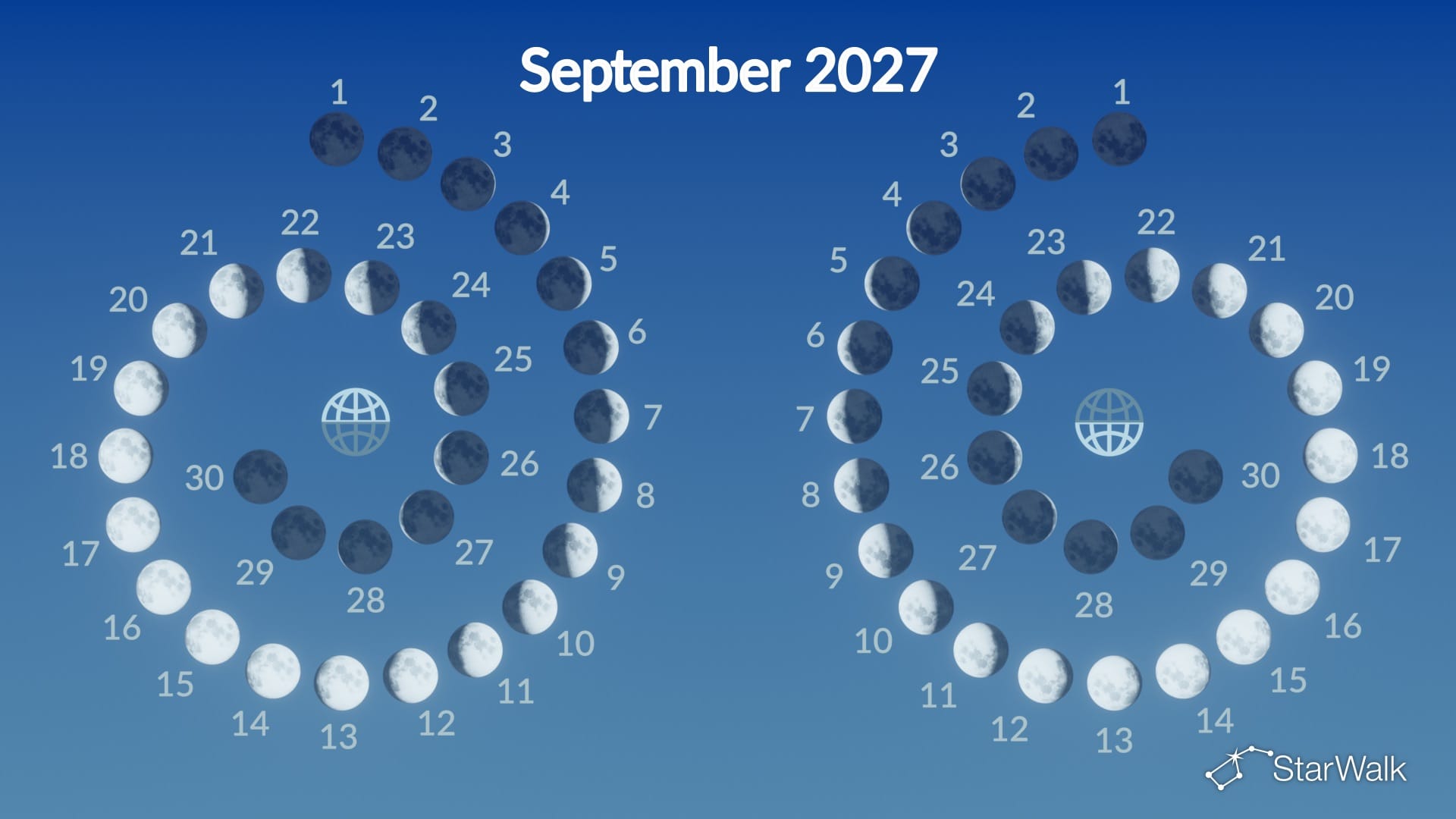
Here are the exact dates and times for the key lunar phases in September 2027:
- First Quarter: September 7, 18:31 UTC (2:31 PM EDT)
- Full Moon: September 15, 23:04 UTC (7:04 PM EDT)
- Last Quarter: September 23, 10:20 UTC (6:20 AM EDT)
- New Moon: September 30, 02:36 UTC (September 29, 10:36 PM EDT)
September begins just after the New Moon of August 31, so the first days of the month feature a growing crescent Moon.
Explore every lunar phase, along with daily moonrise and moonset times, in our interactive Moon Calendar.
When is the New Moon in September 2027?
The New Moon occurs on September 30, 2027, at 02:36 UTC (September 29, 10:36 PM EDT). Around the New Moon, the lunar disk is invisible to the naked eye because the Moon is positioned between Earth and the Sun.
Take advantage of these conditions to look for faint deep-sky objects — galaxies, nebulae, and star clusters. The nights around September 29–30 will be especially favorable because moonlight will not interfere with observations.
To find the most promising targets from your location, open the Visible Tonight section (telescope icon) in the Sky Tonight app.
When is the Full Moon in September 2027?
The September Full Moon occurs on September 15, 2027, at 23:04 UTC (7:04 PM EDT). Depending on your time zone, the exact Full Moon moment may fall on September 16. For instance, in London, it occurs at 00:04 on September 16; in Beijing, at 07:04; in Tokyo, at 08:04; and in Sydney, at 09:04.
Best time to see the September Full Moon 2027
Look for the Harvest Moon in the eastern sky around sunset on September 15–16. Check your local moonrise time: the Moon may already be above the horizon when the Sun sets. As twilight deepens, the bright lunar disk will stand out more clearly.
A Full Moon low above the horizon often looks especially impressive. Its light can appear yellow or orange after passing through a thicker layer of Earth's atmosphere, while the Moon illusion may make the lunar disk seem much larger than it really is.
If clouds spoil the view on September 15, try the evening before or after. The Moon will look almost equally full on September 14 and 16. In much of the Northern Hemisphere, it will rise at nearly the same time for several consecutive evenings — the characteristic viewing advantage of a Harvest Moon.
This table shows the exact Full Moon time, the moonrise on September 15, and the following morning’s moonset in different cities:
| City | Time zone | Exact Full Moon | Moonrise (Sep 15) | Moonset (Sep 16) |
|---|---|---|---|---|
| Los Angeles, USA | PDT (UTC−7) | Sep 15, 16:04 | 18:44 | 07:18 |
| New York, USA | EDT (UTC−4) | Sep 15, 19:04 | 18:44 | 07:16 |
| London, UK | BST (UTC+1) | Sep 16, 00:04 | 18:46 | 07:11 |
| Paris, France | CEST (UTC+2) | Sep 16, 01:04 | 19:36 | 08:00 |
| Beijing, China | CST (UTC+8) | Sep 16, 07:04 | 17:51 | 06:02 |
| Tokyo, Japan | JST (UTC+9) | Sep 16, 08:04 | 17:16 | 05:25 |
| Sydney, Australia | AEST (UTC+10) | Sep 16, 09:04 | 17:10 | 05:39 |
All times are local and given in 24-hour format. Moonrise and moonset times are calculated for city-center coordinates at sea level, using standard atmospheric conditions. Actual times may vary slightly depending on the observer’s exact location, elevation, weather conditions, and local horizon.
What Constellation Is the September Full Moon In?
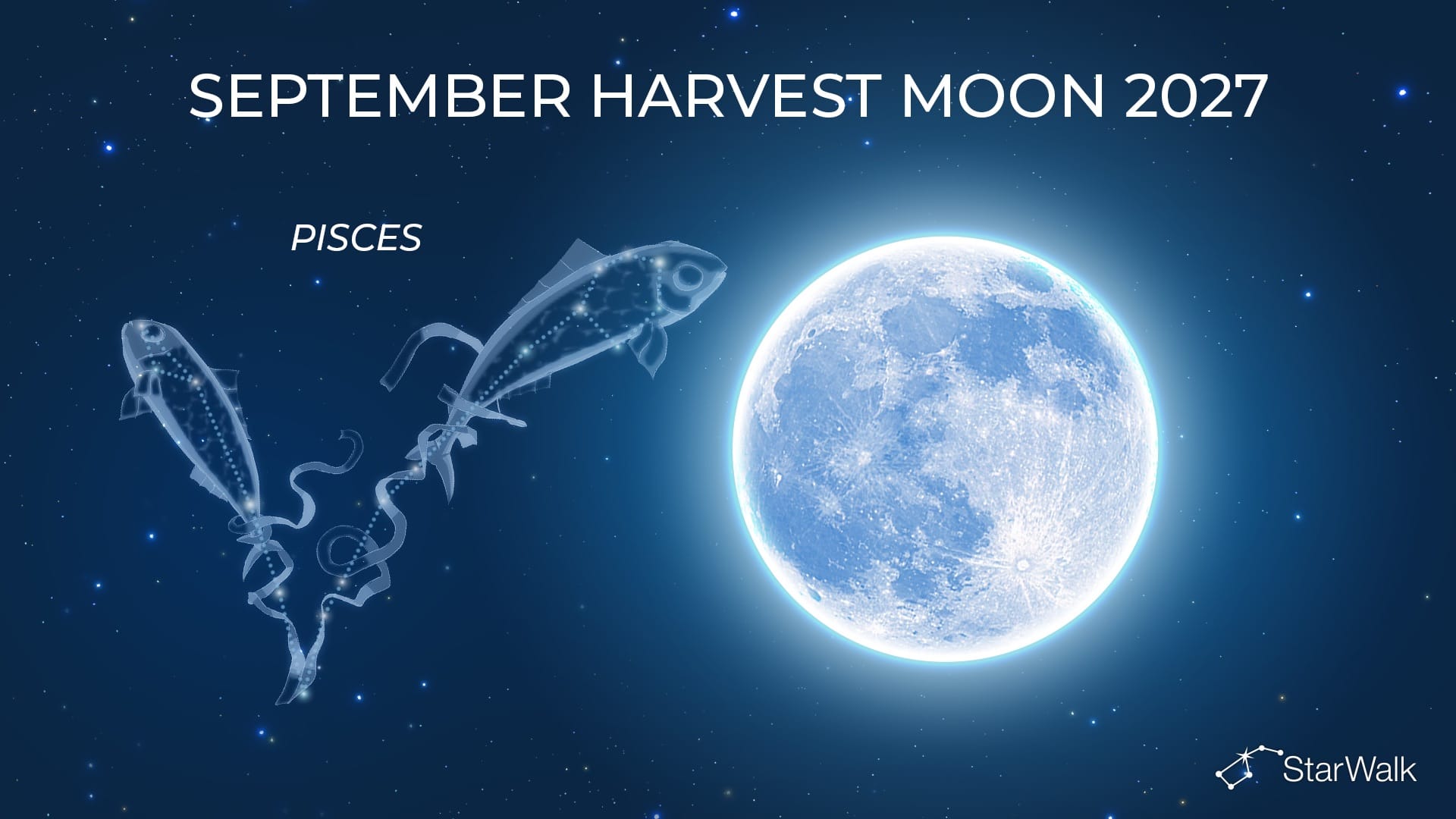
On September 15, the Moon will shine among the stars of Pisces. It will appear near the Circlet, a recognizable asterism that forms the head of one of the two fish. The Circlet consists of relatively faint stars, so the glare from the Full Moon may hide some of them.
In 2027, astrologers also describe this event as a Full Moon in Pisces. This time, the astrological sign and the astronomical constellation share the same name. However, the two systems do not always agree: Western astrology uses zodiac signs tied to the seasons, while astronomy tracks the Moon’s actual position among the constellations. Earth’s axial precession has also shifted the constellations relative to the traditional astrological signs over time.
Our infographic 12 Zodiac Signs vs. 13 Constellations of Ecliptic explains why the two systems can give different results.
September Full Moon Meaning: Why Is It Called the Harvest Moon?
The Harvest Moon is not simply a name for September’s Full Moon. It is the title given to whichever Full Moon falls closest to the September equinox in the Northern Hemisphere.
In 2027, the September equinox occurs on September 23 at 06:02 UTC (2:02 AM EDT). The Full Moon takes place on September 15, about a week before the equinox, making it closer to the equinox than either the August or October Full Moon.
The name comes from an unusual pattern of moonrises around the September equinox. For several evenings in a row, the Moon rises around sunset, providing extra moonlight in the early evening. Before artificial lighting, this gave farmers more time to bring in crops — hence the name Harvest Moon.
Why does the Harvest Moon rise at almost the same time?
Normally, the Moon rises about 50 minutes later from one day to the next, on average. Around the Harvest Moon, however, this delay can become much shorter in the Northern Hemisphere.
To understand why, look at the ecliptic — the Sun's apparent path across the sky. The Moon also travels close to this path, since its orbit is tilted by only about 5° relative to the ecliptic. On September evenings in the Northern Hemisphere, the ecliptic makes a shallow angle with the eastern horizon. As the Moon moves eastward from one night to the next, its position shifts mainly along the horizon rather than farther below it. As a result, the Moon rises only a little later each evening.
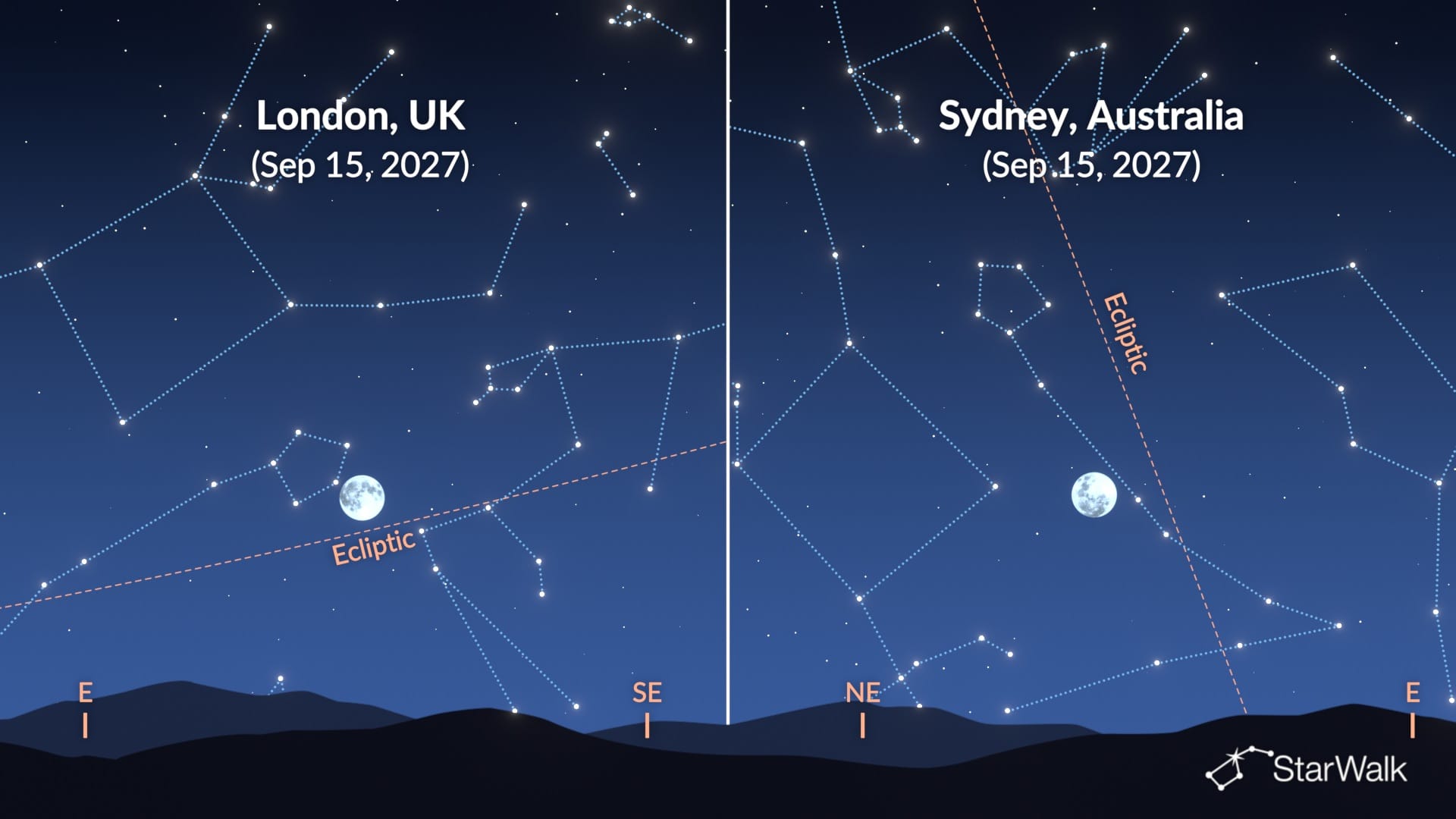
In September 2027, the effect will be especially noticeable at higher northern latitudes. For example, in London, the Moon will rise at 18:34 on September 14, 18:46 on September 15, and 18:58 on September 16 — just 12 minutes later each evening. In New York, the delay will be around 20 minutes per night.
In the Southern Hemisphere, the angle of the ecliptic in the evening is much steeper at this time of year, so the Moon rises substantially later from one evening to the next. Southern Hemisphere observers experience their own Harvest Moon effect around the March equinox, when autumn begins there.
This table shows how moonrise times change from September 14 to 16, 2027:
| City | Time zone | Sep 14 moonrise | Sep 15 moonrise | Sep 16 moonrise | Delay Sep 14–15 | Delay Sep 15–16 |
|---|---|---|---|---|---|---|
| Los Angeles, USA | PDT (UTC−7) | 18:19 | 18:44 | 19:10 | 25 min | 26 min |
| New York, USA | EDT (UTC−4) | 18:23 | 18:44 | 19:06 | 21 min | 22 min |
| London, UK | BST (UTC+1) | 18:34 | 18:46 | 18:58 | 12 min | 12 min |
| Paris, France | CEST (UTC+2) | 19:21 | 19:36 | 19:50 | 15 min | 14 min |
| Beijing, China | CST (UTC+8) | 17:30 | 17:51 | 18:13 | 21 min | 22 min |
| Tokyo, Japan | JST (UTC+9) | 16:51 | 17:16 | 17:40 | 25 min | 24 min |
| Sydney, Australia | AEST (UTC+10) | 16:13 | 17:10 | 18:06 | 57 min | 56 min |
All times are local and calculated for city-center coordinates at sea level under standard atmospheric conditions. The delay is the difference between consecutive moonrise times. Results may vary slightly with the observer’s exact location and local horizon.
Other names for the September Full Moon

The September Full Moon has many traditional names across cultures. Most of them reflect harvests, ripening plants, and other seasonal changes in the Northern Hemisphere.
- Corn Harvest Moon — a Dakota name for gathering ripe corn
- Barley Moon — an Old English name marking the harvesting and threshing of barley
- Autumn Moon — a Cree name reflecting the change of season
- Falling Leaves Moon — an Ojibwe name inspired by the first falling autumn leaves
- Nut Moon — a Cherokee name associated with gathering hickory nuts, walnuts, and chestnuts
- Snow Goose Moon — a Cree name referring to the autumn migration of snow geese
- Wine Moon — a European name linked with the grape harvest and wine-making season
- Singing Moon — a Celtic name associated with harvest celebrations and songs
September marks the beginning of spring in the Southern Hemisphere, where names such as Worm Moon, Crow Moon, Sugar Moon, Chaste Moon, and Sap Moon are used.
Harvest Moon spiritual meaning
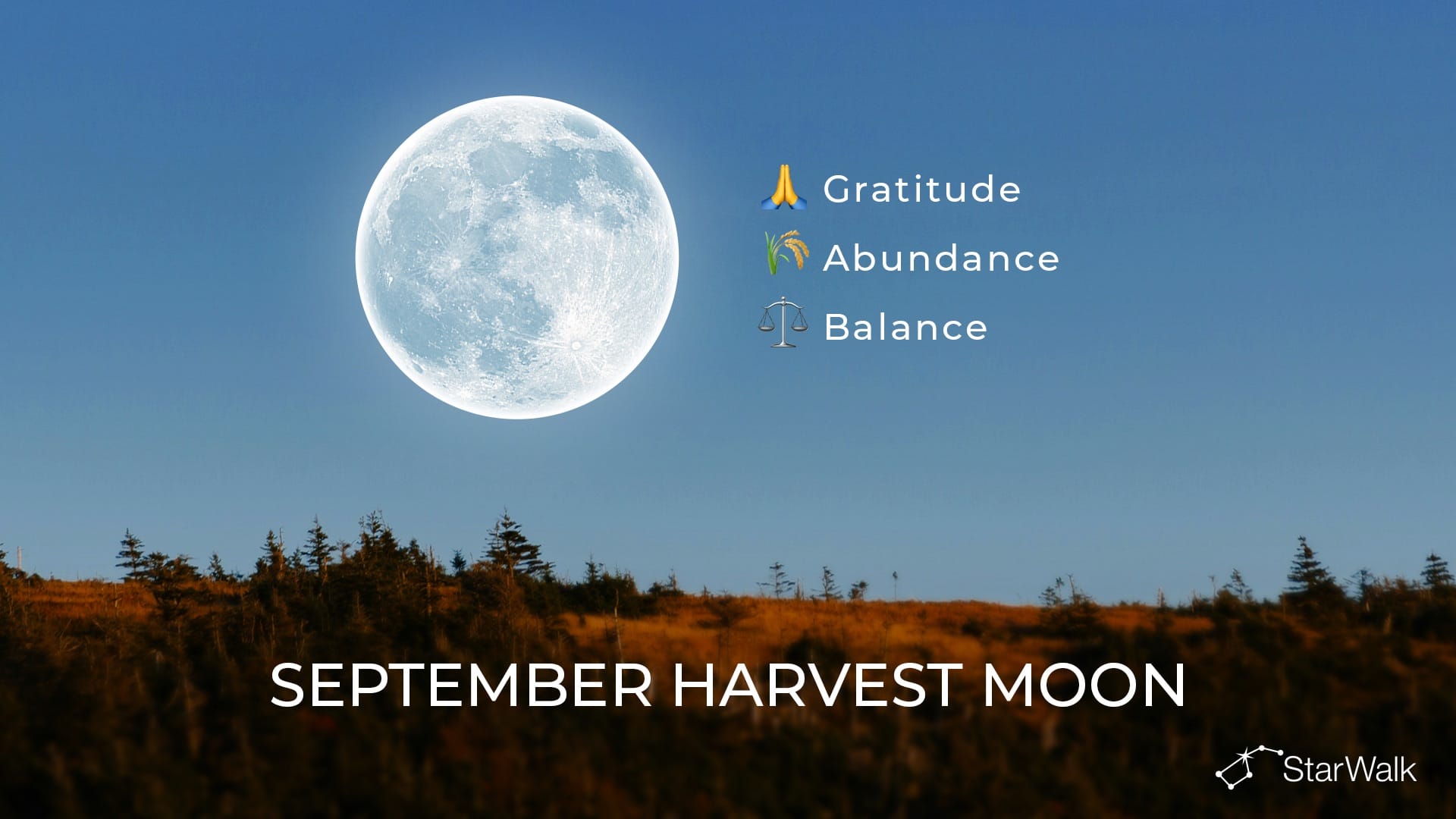
Modern spiritual traditions connect the Harvest Moon with gratitude, abundance, balance, and the completion of long-term work. Its association with gathering crops has made it a symbol of recognizing results, appreciating progress, and deciding what to carry into the next season. These ideas are cultural and symbolic rather than astronomical.
Mid-Autumn Festival 2027
The Mid-Autumn Festival falls on September 15, 2027. Also known as the Moon Festival or Mooncake Festival, it is one of the most important traditional celebrations in Chinese culture.
The exact astronomical Full Moon occurs on September 15 at 23:04 UTC, which corresponds to September 16 at 07:04 in Beijing. This means the Moon will reach its full phase the morning after the festival in China.
However, the difference will not be noticeable by eye — on the festival evening, the lunar disk will already appear round and almost completely illuminated.
People traditionally celebrate by gathering with their families, eating mooncakes, lighting lanterns, and admiring the Moon. Other Asian cultures, including those of Japan, Korea, and Vietnam, have their own autumn Moon and harvest traditions.
International Observe the Moon Night 2027
The International Observe the Moon Night takes place on Friday, September 10, 2027, three days after the First Quarter phase.
The Moon will be waxing gibbous, offering excellent opportunities to examine its surface. Sunlight strikes the terrain at an angle along the terminator (the line between lunar day and night), producing shadows that reveal the shapes of craters, mountain ranges, and valleys. Binoculars will show many of these features, while a telescope will reveal finer detail.
NASA’s annual event includes public observing sessions, talks, and educational activities around the world. You can also participate independently by observing the Moon from home.
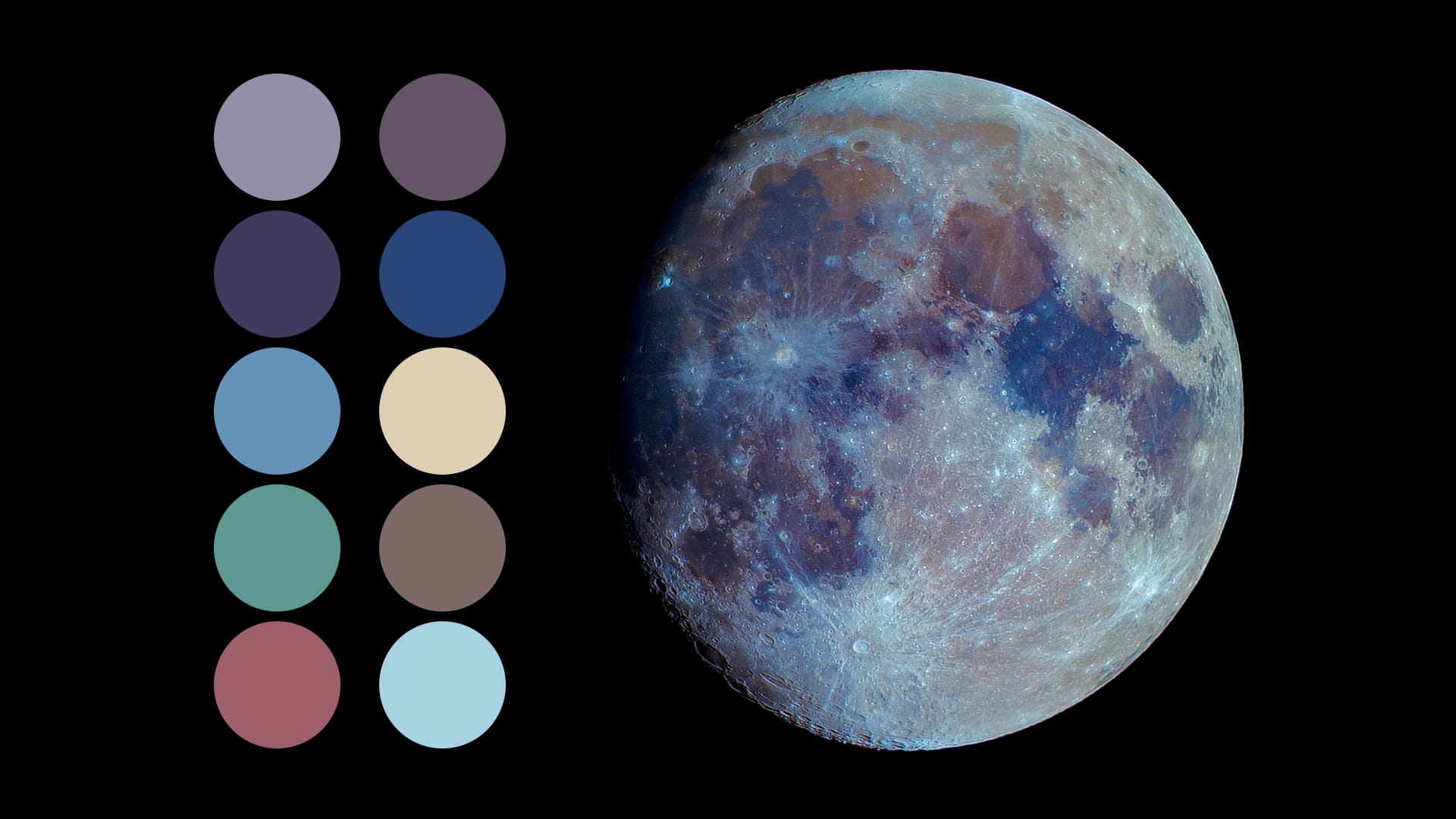
Before you begin, test yourself with our Moon colors quiz or explore our infographic with fascinating Moon facts.
September Full Moon 2027: Frequently Asked Questions
What time is the Harvest Moon in 2027?
The Moon reaches full phase on September 15 at 23:04 UTC (7:04 PM EDT). The local date changes to September 16 in time zones east of UTC.
Does the Harvest Moon always occur in September?
Usually, but not always. If an October Full Moon falls closer to the September equinox, it receives the Harvest Moon title instead. The next October Harvest Moon will occur in 2028, when the Full Moon on October 3 will be closer to the equinox than the September Full Moon.
Is the September 2027 Harvest Moon a supermoon?
The September 2027 Harvest Moon is neither a supermoon nor a micromoon. At the exact Full Moon, it will be about 399,000 km (248,000 miles) from Earth, making its apparent diameter slightly smaller than average.
The next supermoon will occur on January 12, 2028. Our supermoons and micromoons infographic shows how their apparent sizes compare.
Will there be a lunar eclipse during the September Full Moon 2027?
No. The September 15, 2027, Full Moon will not coincide with a lunar eclipse. Although the Sun, Earth, and Moon are approximately aligned during every Full Moon, the Moon usually passes above or below Earth’s shadow. A lunar eclipse occurs only when the alignment is close enough for the Moon to enter the shadow.
Is the Harvest Moon always orange?
No. The Harvest Moon is not naturally more orange than other Full Moons. It can appear yellow, orange, or reddish when it is close to the horizon because its light travels through a thicker layer of Earth’s atmosphere. As the Moon rises higher, it usually appears whiter.
When is the next Full Moon?
The Hunter’s Moon follows on October 15, 2027, at 13:47 UTC (9:47 AM EDT).
When is the next Harvest Moon after 2027?
The next Harvest Moon in the Northern Hemisphere will reach full phase on October 3, 2028, at 16:25 UTC (12:25 PM EDT). In 2028, the October Full Moon will be closer to the September equinox than the September Full Moon, making it the Harvest Moon of that year.
September Full Moon 2027: Key Takeaways
The Harvest Moon reaches full phase on September 15 at 23:04 UTC (7:04 PM EDT), but the most attractive observing opportunity comes around local moonrise. Watch the eastern horizon around sunset on September 15, or try the neighboring evenings if the weather is unfavorable.
This Full Moon earns the Harvest Moon name because it is the closest Full Moon to the September equinox. In much of the Northern Hemisphere, it will rise relatively close to sunset for several evenings in a row.
To get the exact moonrise time and Moon phase for your location, launch Sky Tonight, tap the Calendar icon, and open the Moon tab.
We wish you clear skies and successful observations!