Meet December Full Moon 2026: The Last Supermoon of 2026
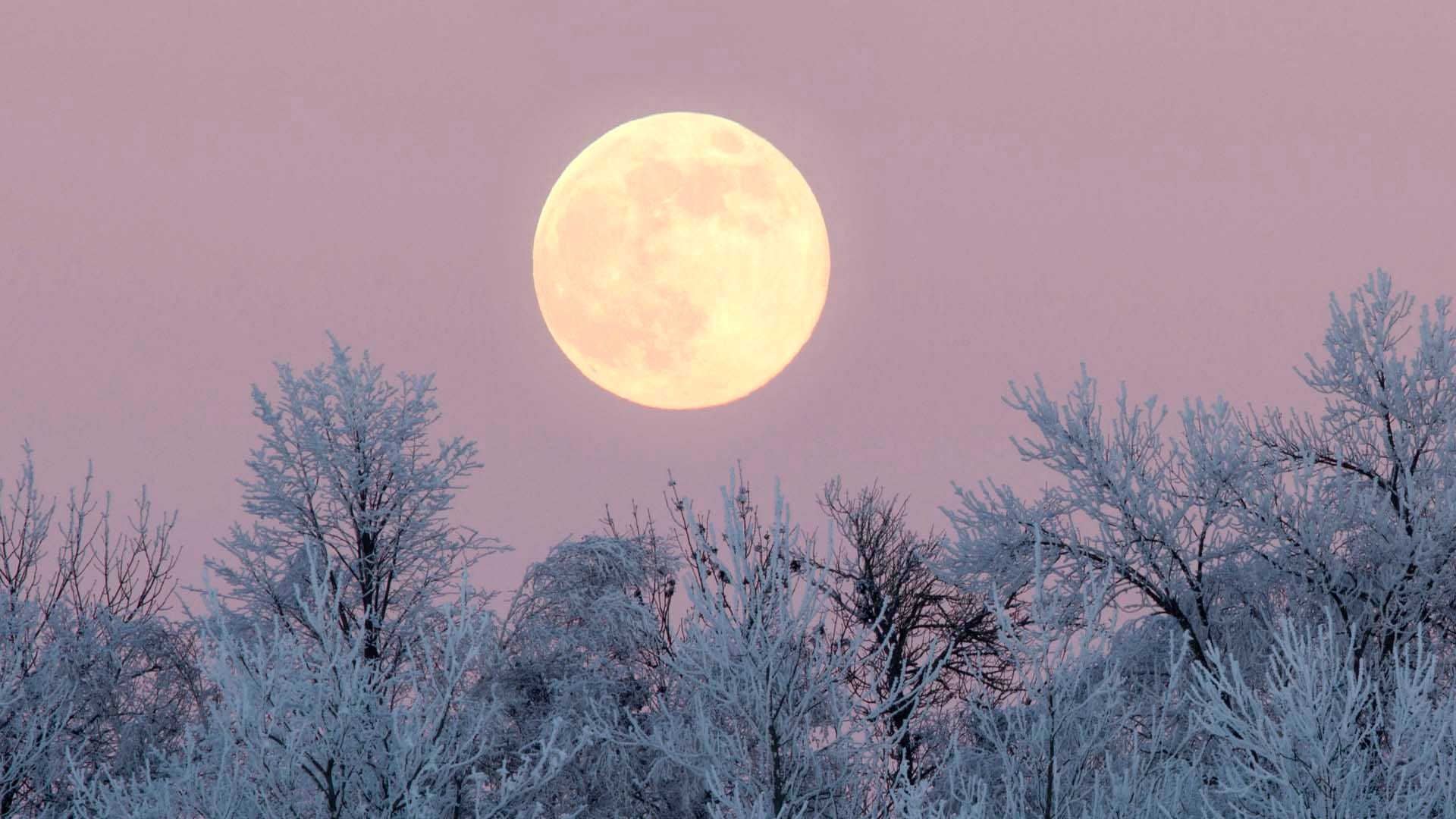
The last Full Moon of 2026 is coming! The December Full Moon, known as the Cold Moon, will take place on December 24. This will be the last and biggest Supermoon of 2026, appearing right on Christmas Eve in the Western Christian tradition. Such a beautiful gift for the holidays! Use the Sky Tonight app to find out when it will be visible from your location, and read on to learn what the Christmas Eve Supermoon means.
Contents
- Quick facts – December 2026 Supermoon
- Lunar calendar for December 2026
- What zodiac sign is the December Full Moon in?
- December Supermoon – The last and biggest Supermoon of 2026
- What is the December Full Moon 2026 name?
- December Full Moon 2026: F.A.Q.
- Full Moon in December 2026: key facts
Quick facts – December 2026 Supermoon
- Exact moment of the Full Moon: Dec 24, 2026, 01:28 GMT
- Common name: Cold Moon, Christmas Eve Supermoon
- Visibility: Appears full from Dec 23 to 25; check local moonrise times
Lunar calendar for December 2026
Moon phases for December 2026
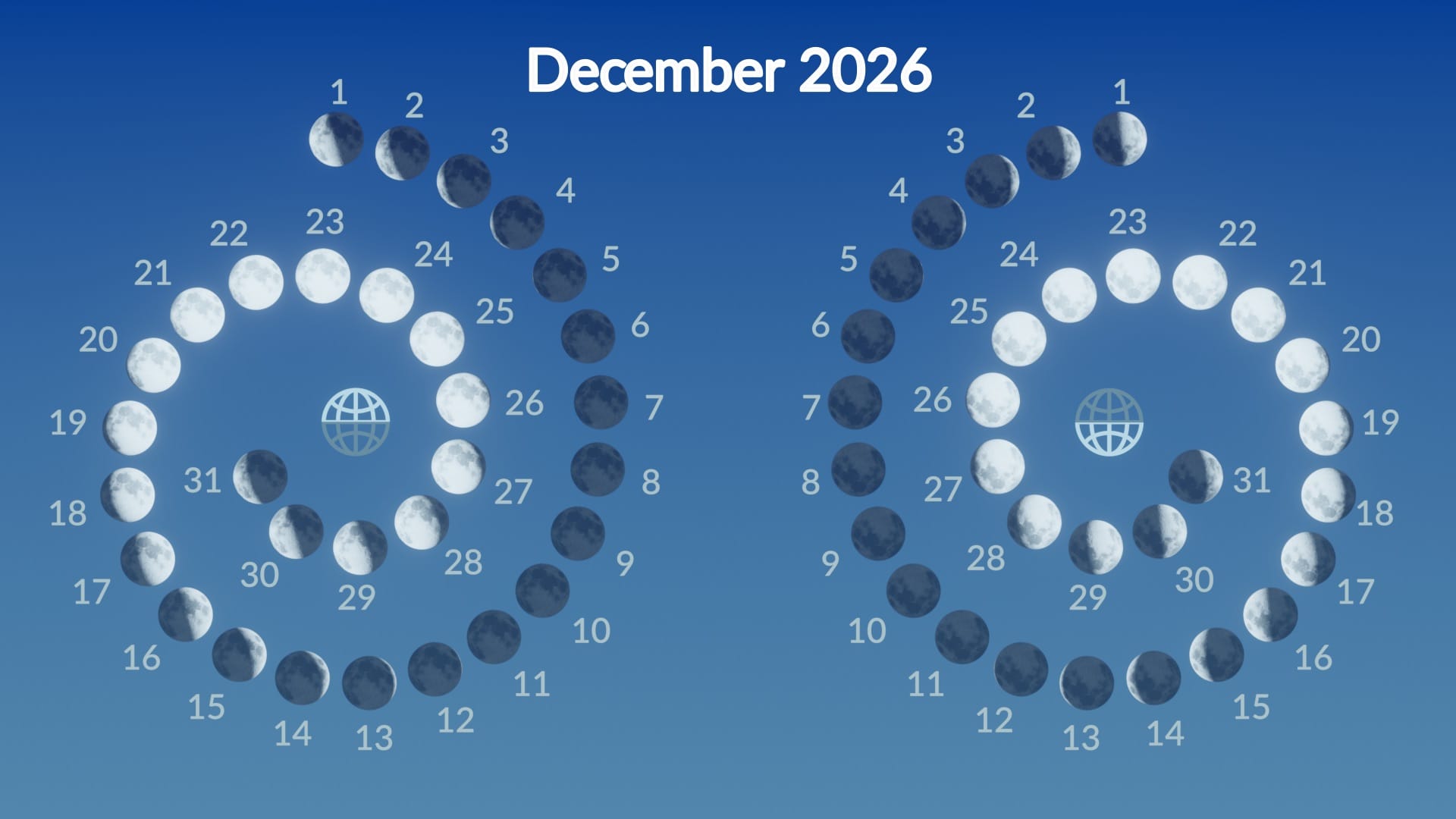
- New Moon: December 9, 00:52 GMT
- First Quarter: December 17, 05:43 GMT
- Full Moon: December 24, 01:28 GMT
- Last Quarter: December 30, 18:59 GMT
Visit the Moon Phases section on our website. There, you can check out the monthly lunar calendar and find out the Moon phase for any specific day, as well as the moonrise and moonset times. Need a portable lunar calendar? Track the Moon’s phases anytime, anywhere with Sky Tonight or Star Walk 2.
When is the Full Moon in December 2026?
Our natural satellite will reach the Full Moon phase on December 24, at 01:28 GMT. Astronomically speaking, the Full Moon is the exact moment when the Moon reaches opposition to the Sun in the sky. But to observers, the lunar disk will appear full and bright for one day before and after it.
This Full Moon will be the first one after the December solstice, which makes it the first Full Moon of the new astronomical season. It will also be the closest Full Moon to the solstice: at this time of the year, the Northern Hemisphere experiences long winter nights, giving observers from that part of the world even more time to enjoy the Full Moon. Meanwhile, in the Southern Hemisphere, the summer nights are short, so there is less time for observation, but the warm weather makes for a pleasant stargazing experience.
When is the New Moon in December 2026?
The New Moon occurs on December 9 at 00:52 GMT. It brings ideal stargazing conditions, with no bright moonlight to interfere. On this night, keep an eye out for meteors of the December Monocerotids and Sigma Hydrids, which produce about 3 and 7 meteors per hour, respectively. Although these meteor showers are minor, the moonless sky makes every meteor count. Read our article on the December meteor showers to find out what other “shooting stars” you may spot this month.
Not enough meteors for you? Use the “Visible Tonight” feature in the Sky Tonight app to discover the best celestial objects to see tonight in your exact location.
What time does the Full Moon rise?
The Full Moon rises close to sunset and stays visible for most of the night. Here is a step-by-step guide to finding the exact moonrise and moonset times for your location with our free stargazing apps.
- Tap the menu icon in the lower right corner of the main screen and tap “Sky Live” to open the corresponding window.
- In the upper right corner, tap the date stamp and change the date to December 24, 2026.
- On the screen, you’ll see the exact timings when the Moon and other sky objects rise and set for your location.
- Tap the calendar icon at the bottom of the main screen.
- Tap the tab “Moon” at the top of the screen.
- Tap on December 24.
- You’ll see the moonrise and moonset times along with other useful information.
What zodiac sign is the December Full Moon in?
The December Full Moon generally can lie in one of three constellations: Taurus (where it stays most often), Gemini, and, occasionally, Orion. In 2026, at the exact moment of the Full Moon, it will be located in Gemini, very close to the border with the constellation Taurus.
According to astrology, the December 2026 Full Moon is in the sign of Cancer, often associated with family ties and close relationships, a fitting theme for a Christmas Eve Moon. Still, this meaning isn’t really written in the stars – zodiac constellations and zodiac signs do not fully correspond to each other and serve different purposes. Read our article on the zodiac to understand the difference once and for all.
Bright star near the Full Moon in December
The Full Moon will pass close to Pollux, the brightest star in Gemini. They’ll be closest on December 25 at 11:41 GMT, separated by 4°24′, with the Moon still appearing fully illuminated. Pollux (mag 1.2) is normally easy to spot with the naked eye, but the Moon’s glare may make it harder to see, so grab a pair of binoculars to enjoy this pairing more clearly.
December Supermoon – The last and biggest Supermoon of 2026
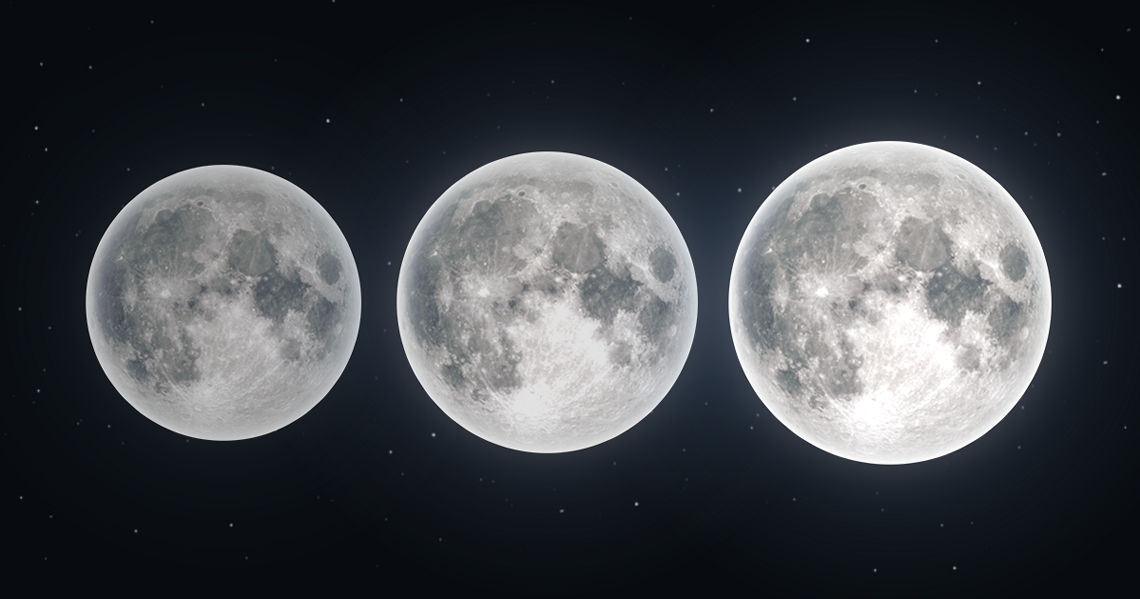
The December Full Moon isn’t just the last Full Moon of 2026 – it’s also the largest by apparent size Supermoon of the year. It will appear 8% larger and 16% brighter than an average Full Moon. After this, the next Supermoon will occur on January 22, 2027.
A Supermoon happens when a Full Moon occurs near perigee, the Moon’s closest point to Earth in its orbit. The December Supermoon will be just 356,740 km from Earth – for comparison, the smallest Full Moon of 2026 (May 31 Micromoon) was 406,135 km from Earth. The diameter of the December Full Moon will be 33.50 arc-minutes (relatively big compared to the diameter of 29.42 arc-minutes of the May 31 Micromoon).
While the Supermoon does get slightly bigger and brighter, the difference is subtle — most people won’t notice it with the naked eye. However, there’s a way to spot the change: take a photo of the December Supermoon, then capture the upcoming Full Moons of 2027 from the same angle and compare!
Want to learn more about Supermoons and Micromoons? Check out our infographic for details.
What is the December Full Moon 2026 name?
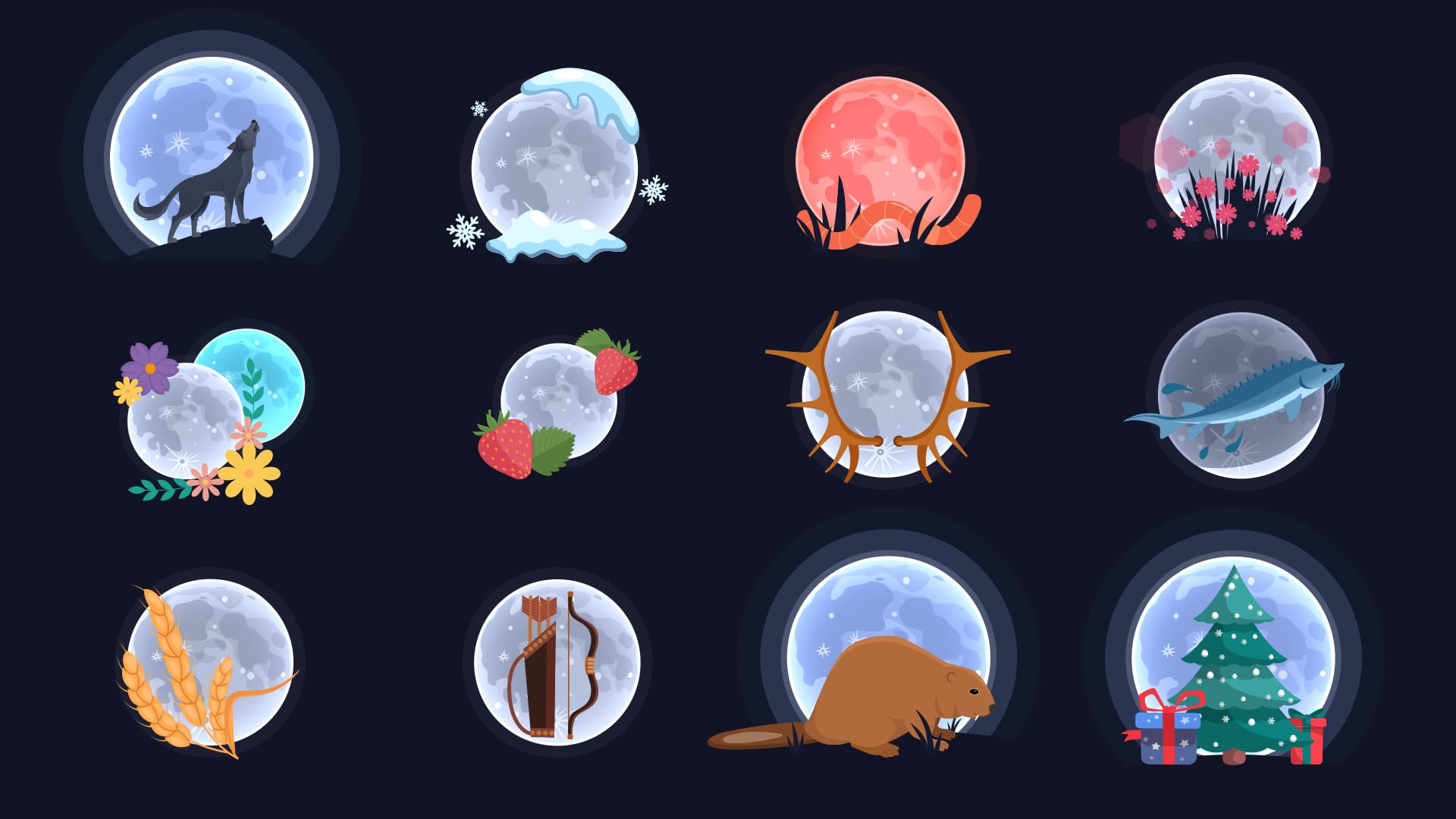
The most common traditional name for the Full Moon in December is Cold Moon. To learn more folklore names for every Full Moon in a year, take a look at our Full Moon calendar.
Cold Moon meaning
The name Cold Moon originates from Mohawk Native American culture and implies that the temperatures drop significantly at that time. American Indian tribes associated the name of the Full Moon with the entire month until the next Full Moon, so the Mohawk name also means “time of the cold.”
Cold Moon spiritual meaning
The Cold Moon is often seen as a symbol of stillness and reflection. It is also associated with perseverance and quiet strength — the ability to endure the darkest, coldest nights and emerge renewed. Remember: these interpretations aren’t scientific facts — they’re simply a symbolic way to appreciate the Moon’s beauty and connect more personally with the night sky.
Christmas Eve Supermoon meaning
In 2026, the December Full Moon is extra special: it falls exactly on Christmas Eve in the Western Christian tradition. This is a rare coincidence – the last Full Moon on December 24 occurred in 1996, and the next one won’t happen until 2045. It’s a perfect excuse to step outside with loved ones and admire one of the most beautiful ornaments in the sky: the glowing Full Moon. Even better, the December 24 Full Moon is also the biggest Supermoon of the year, making it a truly unforgettable Christmas gift from the cosmos.
The Full Moon falling exactly on Christmas is also a rare treat. The next time the December 25 Full Moon will occur in 2034.
December Full Moon Alternative Names
In the Northern Hemisphere, the December Full Moon is the closest to the winter solstice, which marks the longest night of the year. That’s why another popular name for it is Long Night Moon. The winter solstice was celebrated as the Yule festival in the Anglo-Saxon tradition, so one more Full Moon’s name is the Moon Before Yule.
In the Southern Hemisphere, December is a warm month, and the traditional Full Moon’s names were connected to the summer season, like Strawberry Moon.
Here are some more examples of the December Full Moon names in different cultures:
- Chinese: Bitter Moon
- English Medieval: Oak Moon
- Cherokee: Snow Moon
- Colonial American: Christmas Moon
- Southern Hemisphere: Strawberry Moon, Honey Moon, Rose Moon
December Full Moon 2026: F.A.Q.
When is the next Full Moon?
The next Full Moon after December 24 will already be in the year 2027. It will occur on January 22, at 12:17 GMT. The traditional January Full Moon name is Wolf Moon.
When is the next Cold Moon?
In 2026, the Cold Moon will occur on December 24, at 01:28 GMT. After that, the next Cold Moon will occur on December 13, 2027, at 16:09 GMT.
When is the next Supermoon?
The Full Moon on December 24, 2026, is the last Supermoon of the year. After that, the next Supermoon will take place on January 22, 2027.
When is the next Christmas Full Moon?
The Full Moon closest to Christmas will take place on December 24, 2026. This Full Moon is also the biggest of 2026, dubbed as the Christmas Eve Supermoon. The next Full Moon to coincide precisely with Christmas will occur on December 25, 2034.
Full Moon in December 2026: key facts
The last Full Moon of 2026 will be on December 24. It’s traditionally called the Cold Moon because of the harsh weather in December in the Northern Hemisphere. This Full Moon is also the largest and brightest Full Moon of 2026, and its timing on Christmas Eve gives it the festive nickname Christmas Eve Supermoon.
A Full Moon on December 24 is extremely rare – the next one won’t occur until 2045! Check when and where the Moon rises in your exact location with the Sky Tonight app and enjoy this extra-special Full Moon!