Yorick the Monkey: The Forgotten Pioneer of Spaceflight
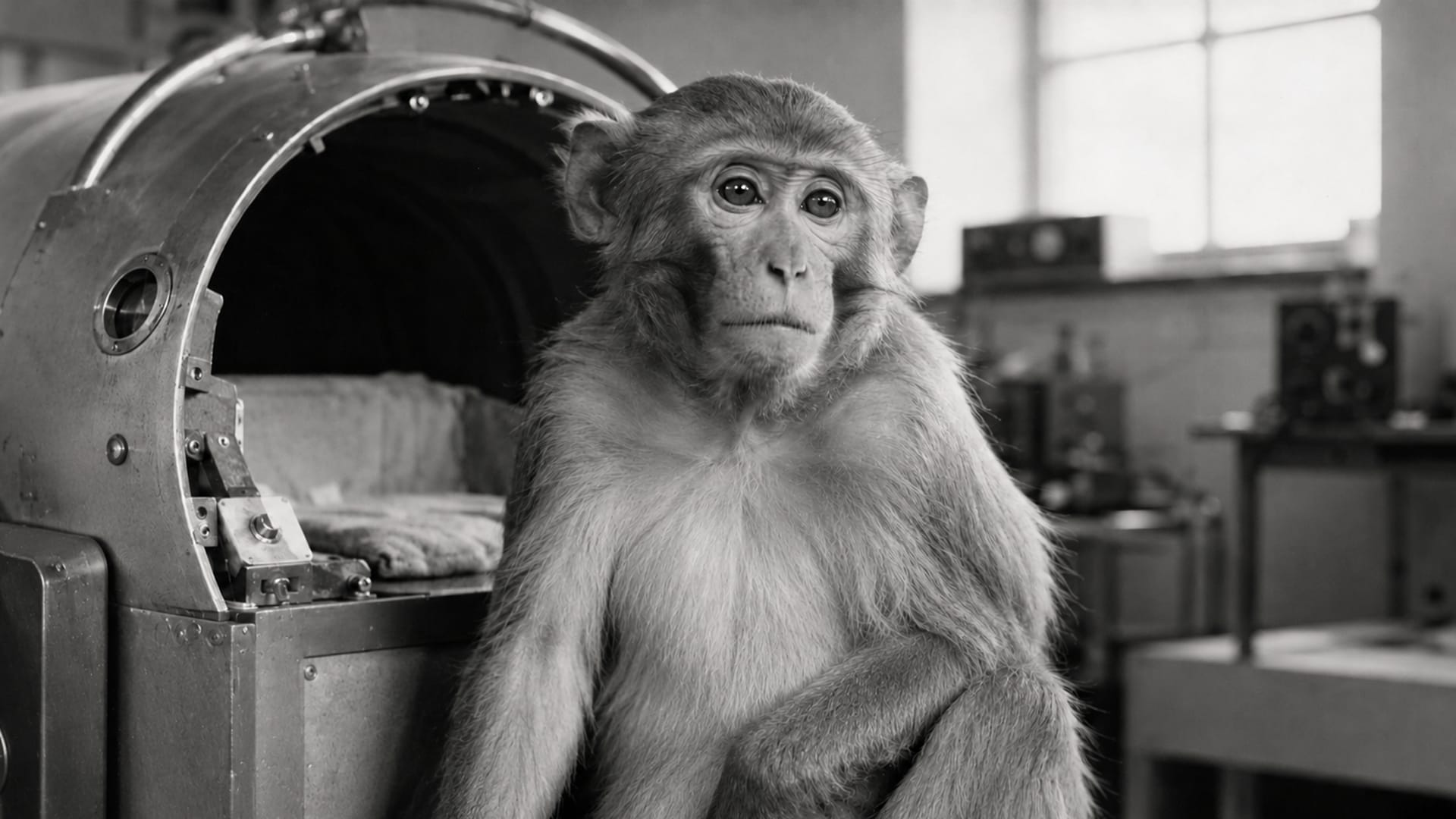
On September 20, 1951, a rhesus monkey named Yorick returned to Earth after a high-altitude rocket flight. He was the first monkey ever to survive both the flight and the landing — quite an achievement, considering how his predecessors had fared. And yet, Yorick is rarely mentioned alongside the more famous animal pioneers of spaceflight. Even verified photographs of him are surprisingly difficult to find. On the 75th anniversary of Yorick’s historic flight, let’s give this forgotten pioneer the recognition he deserves.
Contents
- Who was Yorick the monkey?
- Why did people send a monkey to space?
- Questions you might have about Yorick and other space monkeys
- Yorick the monkey: final thoughts
Who was Yorick the monkey?
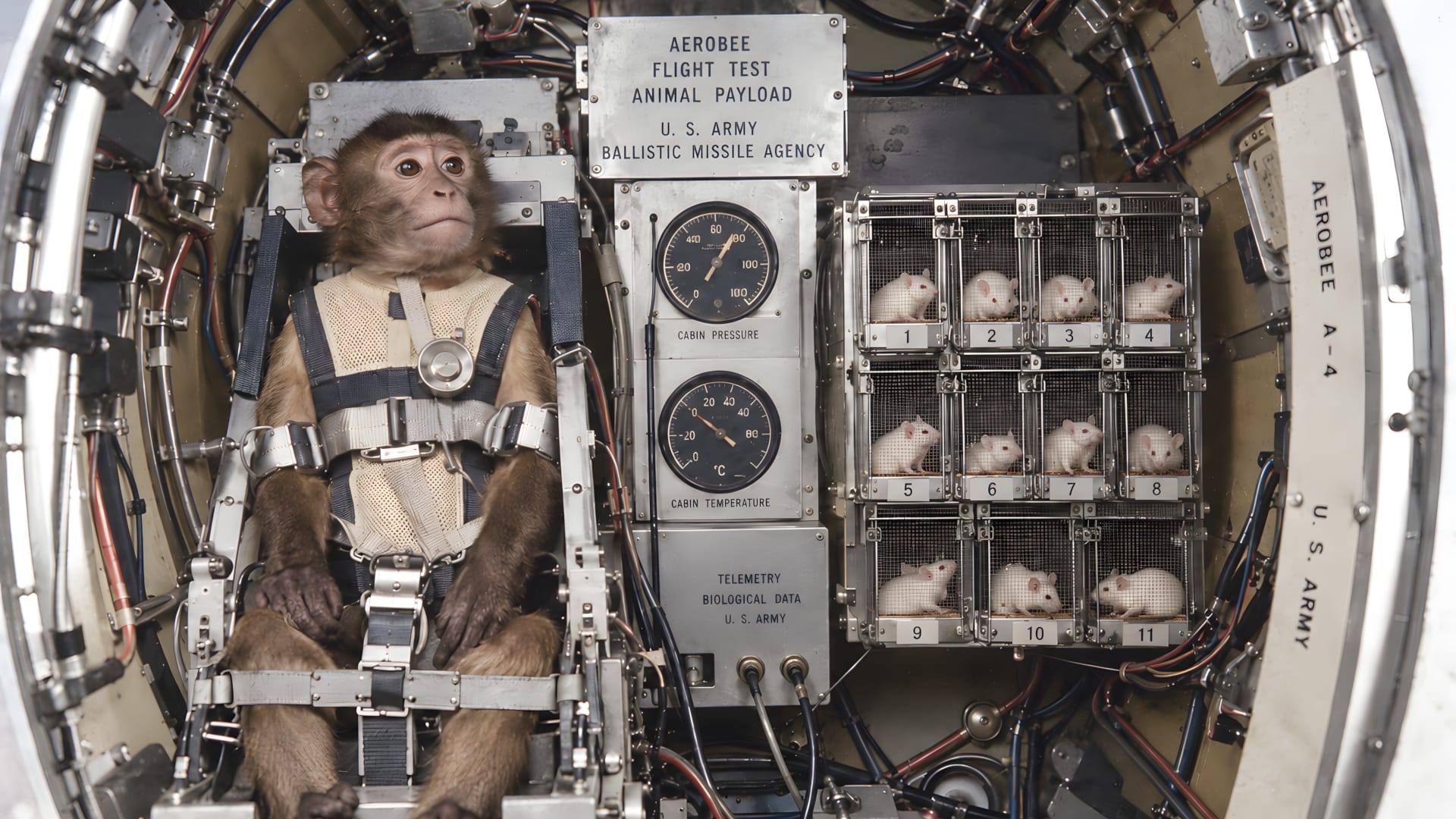
Yorick, also known as Albert VI, was a rhesus macaque. On September 20, 1951, he and 11 mice were launched aboard a U.S. Air Force Aerobee rocket from Holloman Air Force Base in New Mexico. During the roughly six-minute flight, Yorick survived both the ascent and the landing. NASA's historical account describes him as the first monkey to live through a spaceflight.
Still, things didn’t go quite as smoothly as they might seem — but we’ll get to that later.
Was Yorick the first monkey in space?
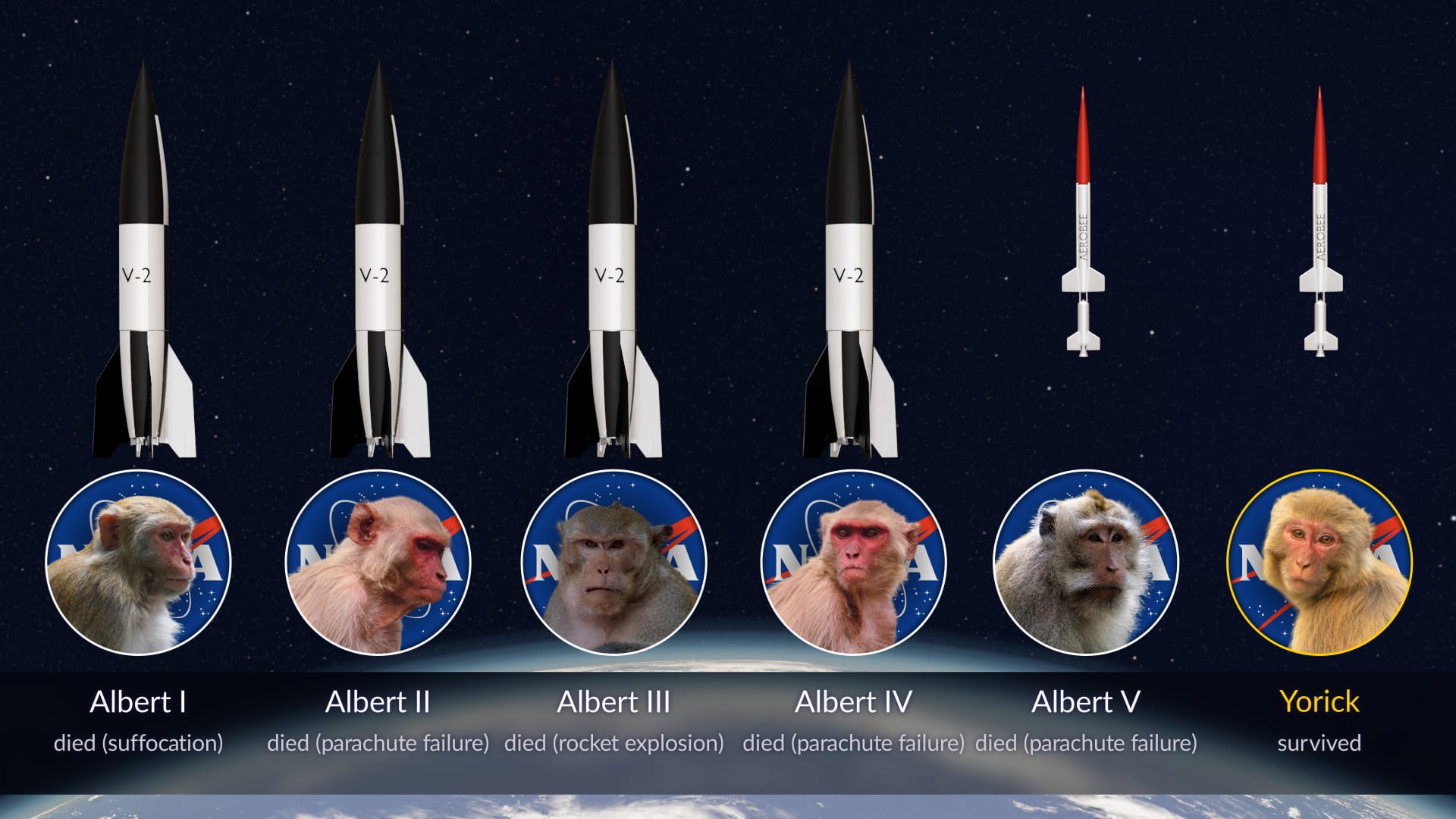
No. Yorick was the sixth monkey launched on a rocket. Four of his predecessors flew as part of the Blossom Project aboard V-2 rockets — the world’s first practical ballistic missiles and important early suborbital research vehicles. A V-2 also carried the camera that took the first photograph of Earth from space.
Unfortunately, the rockets were not particularly successful at bringing living passengers back safely. Yorick’s predecessors, Albert I, II, III, and IV either died during the flight, in an explosion, or after parachute failure. The final participant of the Blossom Project was a mouse, which also died during landing.
The next primate, Albert V, flew aboard an Aerobee rocket but also died after his parachute failed. Before Yorick’s flight, engineers spent several months improving the recovery system (spoiler: this time, it worked).
How high did Yorick fly?
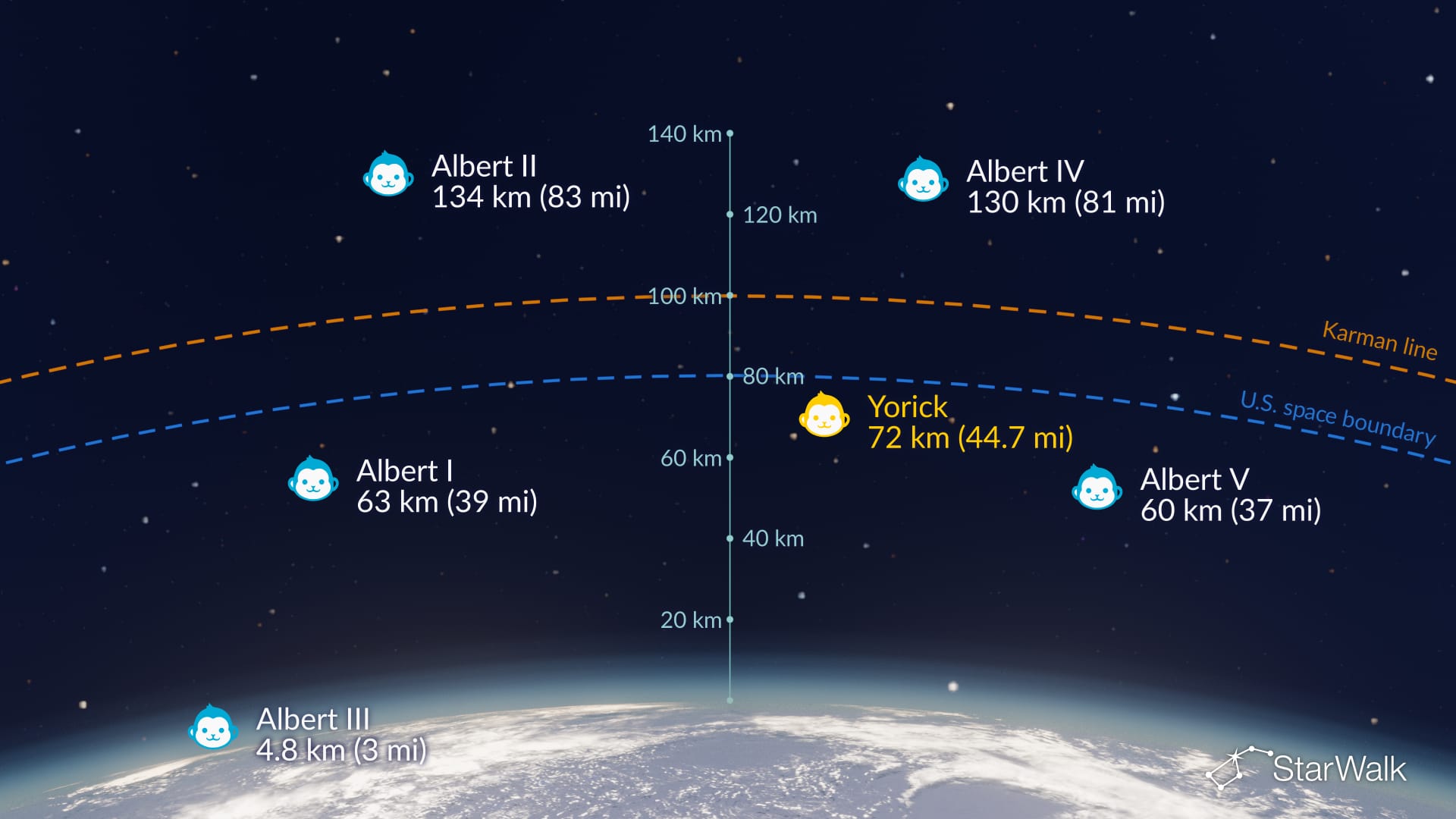
Yorick’s flight reached about 72 km (44.7 mi), falling short of both commonly used boundaries marking where space begins: 80 km (50 miles) in the U.S. and the internationally recognized Karman line at 100 km (62 miles).
For comparison, here’s how high his predecessors flew:
- Albert I — 63 km (39 mi): the first primate launched into the upper atmosphere, but not into space.
- Albert II — 134 km (83 mi): the first monkey, primate, and mammal to reach space.
- Albert III — about 4.8 km (3 mi): his rocket exploded before it could climb any higher.
- Albert IV — 130.6 km (81.2 mi): the second monkey to reach space.
- Albert V — 60 km (36 mi): he also remained below both commonly used boundaries of space.
So was Yorick really in space? By either of these commonly used thresholds, no. His flight was a high-altitude suborbital mission. From a medical point of view, though, the difference between 72 km and 100 km mattered much less. Space historian Jordan Bimm put it this way:
“From a medical perspective, if you are above a point in which the problem with keeping you alive is going to be the same in the upper atmosphere as it is in space, it’s essentially space.”
Did Yorick survive?
Surprisingly, this question has two different answers.
Yes, Yorick survived the flight itself. Unlike the monkeys who had flown before him, he was not killed during launch, ascent, descent, or impact. The parachute worked exactly as planned.
But Yorick’s story still did not have a happy ending. The recovery crew failed to reach the capsule quickly enough. It sat sealed in the New Mexico desert, and Yorick reportedly died from heat stress around two hours after landing.
Why did people send a monkey to space?
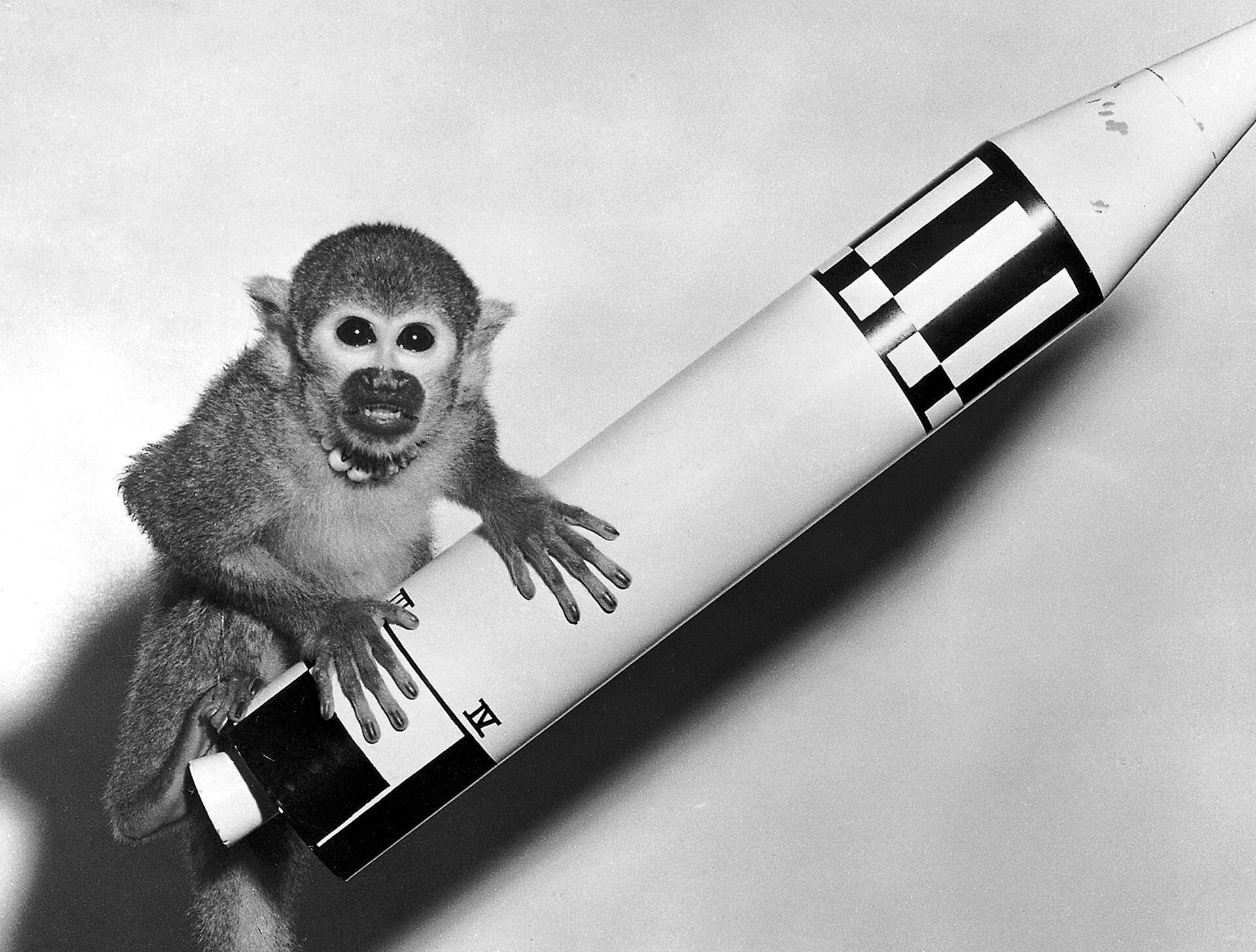
What happened to Yorick and the monkeys before him may seem cruel by today’s standards. At the time, however, animal flights were seen as a necessary step toward understanding whether humans could survive rocket travel at all.
At the time, no one knew how rocket flight would affect a living organism, let alone a human. Scientists worried that people might not survive the intense acceleration of launch, sudden weightlessness, low atmospheric pressure, or the stresses of descent. Before risking human lives, researchers sent animals on test flights. Soviet researchers favored small dogs, which were considered hardy and less restless in flight, while U.S. researchers often used primates as closer physiological analogs to humans.
Yorick was therefore a part of an experiment designed to answer a question that was still genuinely open at the time: Could a primate survive a rocket flight and landing?
What did Yorick’s mission achieve?
Yorick’s flight proved that a primate could survive the main stages of a rocket mission: launch, high-altitude flight, descent, and landing. That was an important step toward human spaceflight. Experiments like this helped scientists understand how living organisms reacted to acceleration, weightlessness, and the extreme conditions of rocket travel. Less than ten years later, human spaceflight would begin.
Questions you might have about Yorick and other space monkeys
Who was the first monkey in space?
A rhesus macaque named Albert II was the first monkey, primate, and mammal to reach space. On June 14, 1949, his V-2 rocket climbed to about 134 km (83 mi), well above the Kármán line. The monkey who flew before him, Albert I, is not considered the first monkey in space because his flight reached only about 63 km (39 mi), below the commonly used boundaries of space.
How old was Yorick when he flew?
Yorick’s exact age does not appear to be reliably documented. Historical accounts identify him as a rhesus macaque, also known as Albert VI, but give very few biographical details about him. In fact, surprisingly little is known about Yorick beyond the flight itself.
Was Yorick the first monkey to survive a spaceflight?
NASA’s historical account describes Yorick as the first monkey to live through a spaceflight. Strictly speaking, however, he hasn’t been to space: his rocket reached only about 72 km (44.7 mi), below both the 100-km Kármán line and the 80-km boundary historically used in the U.S. This may sound like splitting hairs, but it is more precise to call Yorick the first monkey to survive a high-altitude rocket flight.
Which monkeys were the first to survive a spaceflight?
Able, a rhesus macaque, and Miss Baker, a squirrel monkey, were the first monkeys to travel beyond the accepted boundary of space and be successfully recovered alive. On May 28, 1959, they flew aboard a Jupiter rocket to roughly 300 miles (483 km). Both survived the flight and recovery; Able died four days later during surgery, while Miss Baker lived until 1984.
Which monkeys flew after Yorick?
Quite a few. Patricia and Mike survived an Aerobee flight in 1952. Gordo reached space in 1958 but died after the recovery system failed. In 1959, Able and Miss Baker became the first monkeys to travel into space and return alive. They were followed by Sam in 1959 and Miss Sam in 1960, who helped test the spacecraft and systems later used in NASA’s first human spaceflight program, Project Mercury. Then came the chimpanzees Ham in 1961, the first great ape in space, and Enos later that same year, the first chimpanzee to orbit Earth.
Which space monkeys were male and which were female?
Among the monkeys and apes mentioned here, Albert I–VI (including Yorick), Mike, Gordo, Sam, Ham, and Enos were male. Patricia, Able, Miss Baker, and Miss Sam were female. That makes 11 males and 4 females in total.
Yorick the monkey: final thoughts
So, was Yorick really a “space monkey”? By today's conventional altitude thresholds, not quite. Was Yorick the first monkey to return from space alive? Again, not literally: his flight never reached the space boundary. But he achieved something no primate before him had managed.
Yorick never became a celebrity like Ham, Able, and Baker. Still, his six-minute journey helped prove that a primate could survive a rocket flight. In a way, the great crewed spaceflights stood on his small shoulders.
Alas, poor Yorick — space history owes him more than most people realize.
Félicette: one more space animal with a tragic story
In 1963, France launched a small black-and-white cat named Félicette on a suborbital mission. Unlike Yorick, she crossed the 100-km boundary of space and returned safely to Earth. Félicette survived her historic flight, but her story did not have a happy ending either. Read the full story of Félicette, the first and only cat to travel to space.
Belka and Strelka: the space dogs who came home
If Yorick’s story has left you looking for a more uplifting chapter of animal spaceflight history, meet Belka and Strelka. In August 1960, the two Soviet dogs spent a day orbiting Earth. Their successful return was an important milestone on the road to human orbital flight — and, unlike so many earlier animal pioneers, Belka and Strelka went on to live long after their mission. Read more in our article about Belka and Strelka, the world’s most famous space dogs.