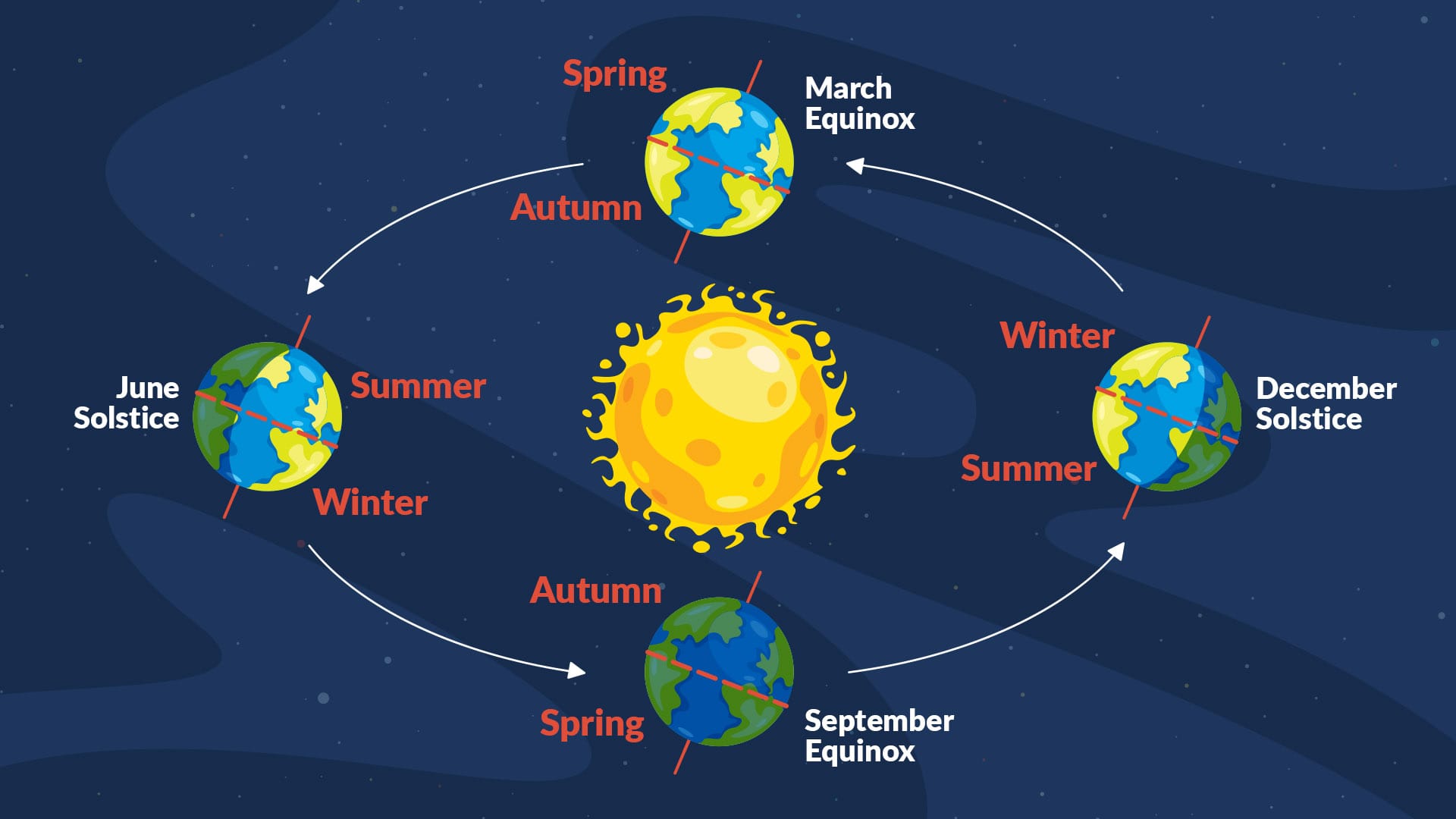
First Day of Autumn 2027 in the Southern Hemisphere: Autumn Equinox Date & Time

The next autumn equinox arrives on March 20, 2027, at 20:25 GMT, marking the astronomical first day of fall in the Southern Hemisphere. In the Northern Hemisphere, the next autumn equinox falls on September 23, 2027, at 06:02 GMT. In this article, we’ll explain how the autumn equinox works, when it occurs next in both hemispheres, and which common ideas about it aren’t actually true. If you’d rather skip straight to the exact time of the autumn equinox in your city, the free Sky Tonight app can show it in seconds.
Contents
- Upcoming Autumn Equinox 2027 (Southern Hemisphere): Quick Facts
- What Is the Autumn Equinox?
- When Is the Fall Equinox 2027?
- When Is the First Day of Autumn 2027: Two Ways to Count It
- What Can You Observe Around the Autumn Equinox?
- Autumn Equinox FAQ
- Fall Equinox 2027: Key Facts
- What Is an Equinox? Learn More
Upcoming Autumn Equinox 2027 (Southern Hemisphere): Quick Facts
- Date: March 20–21, 2027, depending on your time zone
- Exact time: 20:25 GMT/UTC
- What it marks: The astronomical first day of autumn in the Southern Hemisphere – and the first day of spring (the spring equinox) in the Northern Hemisphere
- What happens in the sky: The Sun crosses the celestial equator moving northward
What Is the Autumn Equinox?
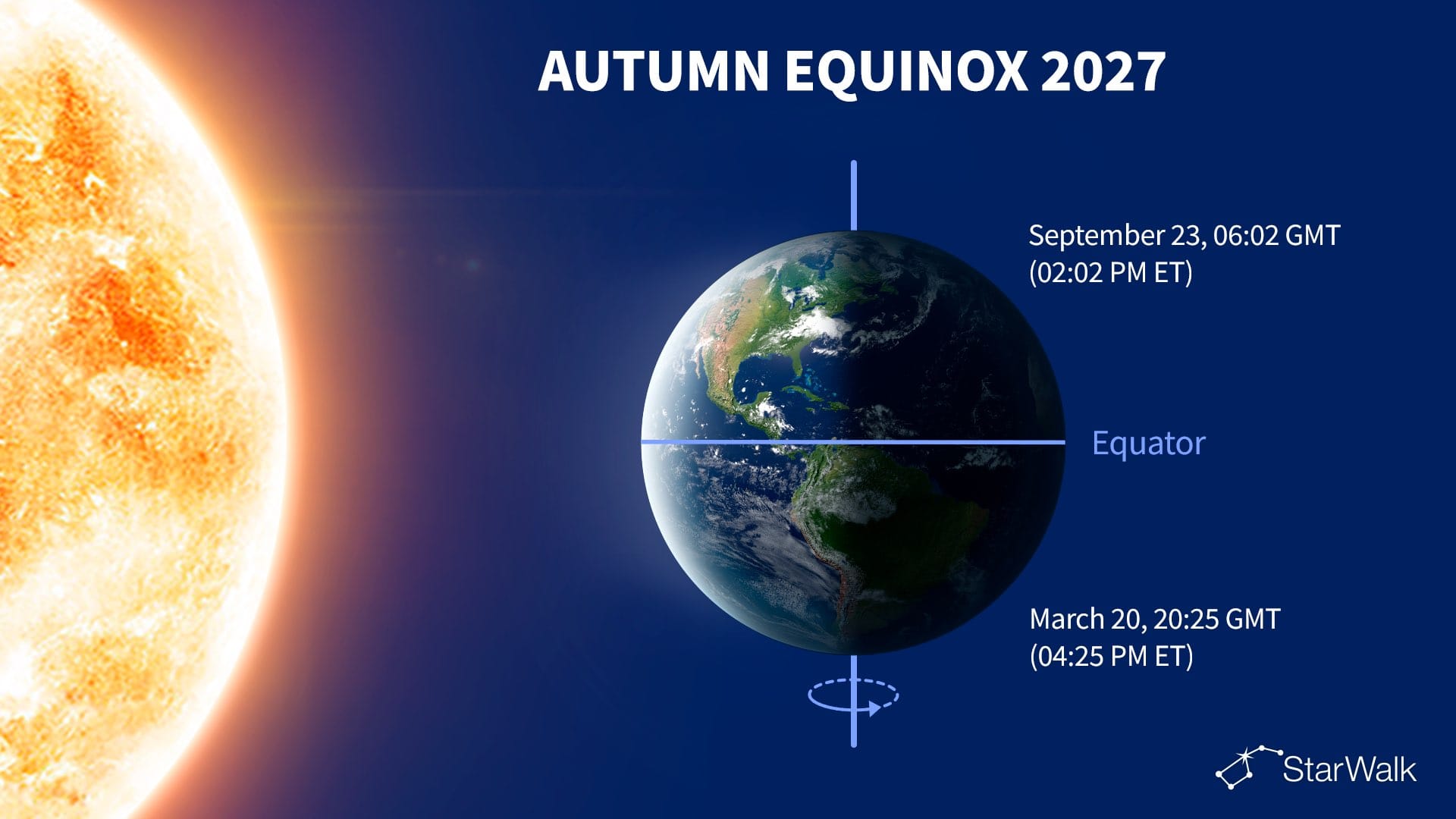
The autumnal equinox (as well as the spring equinox) is the moment when neither of the Earth’s hemispheres is inclined towards or away from the Sun. As a result, the Sun lies on the celestial equator, giving both hemispheres almost the same amount of sunlight.
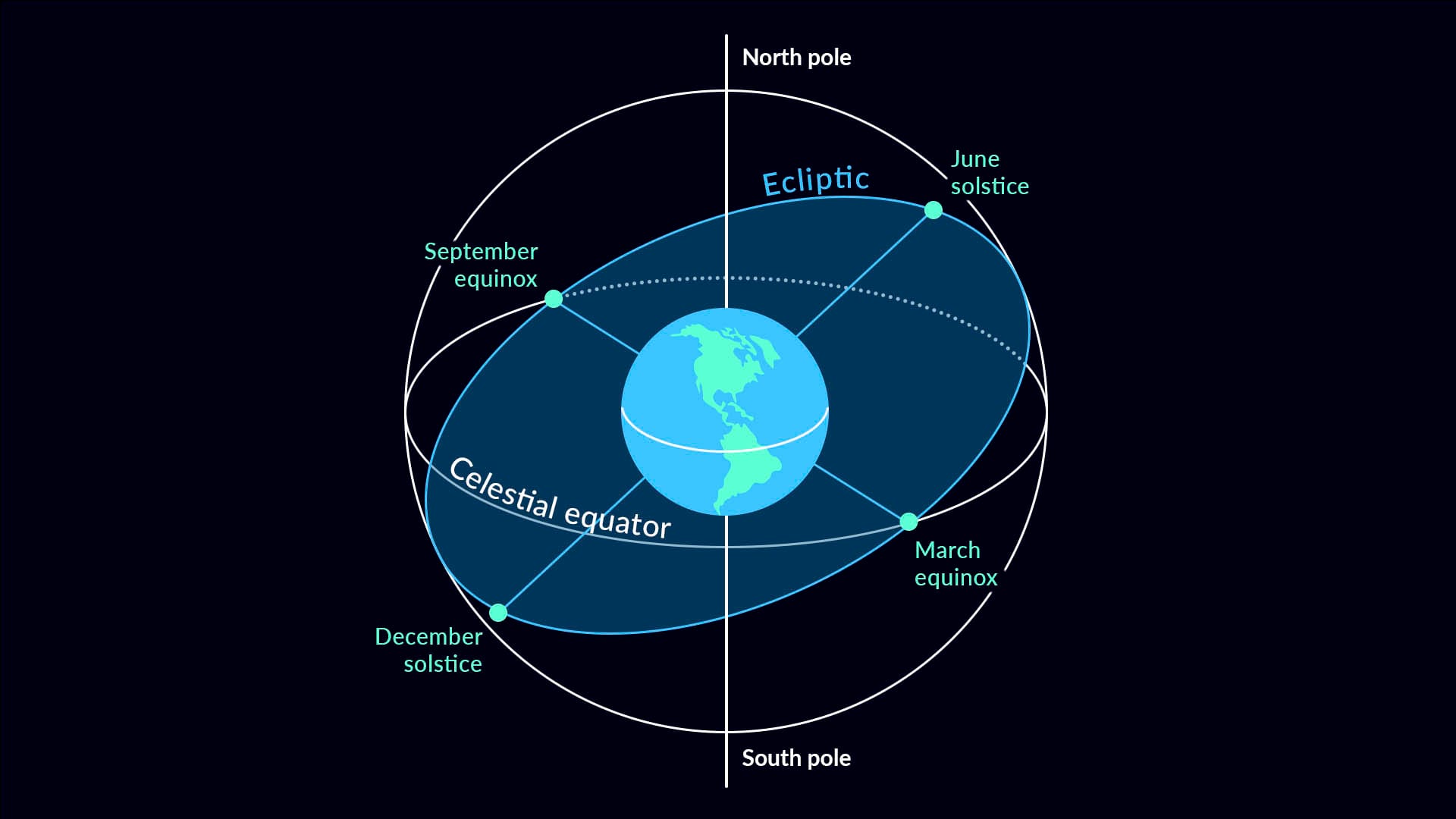
Each year, there are two equinoxes: one in the spring and one in the fall. Once the autumnal equinox happens, the relevant hemisphere (the northern one in September and the southern one in March) is tilting away from the Sun. This leads to fewer daylight hours there, with the Sun rising later and setting earlier. The hemisphere becomes increasingly tilted away from the Sun until the winter solstice, when the hemisphere is tilted most strongly away from the Sun.
If you want to dive deeper into the mechanics of equinoxes, head to our full guide “What Is an Equinox?”

When Is the Fall Equinox 2027?
In the Southern Hemisphere, the next autumn equinox will arrive on March 20, 2027, at 20:25 GMT. In the Northern Hemisphere, the next autumn equinox will take place on September 23, 2027, at 06:02 GMT. Note that the local calendar date may shift by a day depending on your time zone.
What Time Is the Autumn Equinox 2027?
In the Southern Hemisphere, the next autumn equinox occurs on March 20, 2027, at 20:25 GMT. In some locations east of GMT, such as Australia, it will already be March 21 local time.
In the Northern Hemisphere, the autumn equinox will occur on September 23, 2027, at 06:02 GMT.
Here are the March 2027 autumn equinox times for different time zones in the Southern Hemisphere:
| Time zone | Example cities | Autumn equinox date & time |
|---|---|---|
| Argentina Time (ART, GMT−3) | Buenos Aires, Córdoba, Rosario | March 20, 17:25 |
| Chile Summer Time (CLST, GMT−3) | Santiago, Valparaíso, Concepción | March 20, 17:25 |
| Brasília Time (BRT, GMT−3) | São Paulo, Rio de Janeiro, Brasília | March 20, 17:25 |
| South Africa Standard Time (SAST, GMT+2) | Cape Town, Johannesburg, Pretoria | March 20, 22:25 |
| Australian Western Standard Time (AWST, GMT+8) | Perth | March 21, 04:25 |
| Australian Central Daylight Time (ACDT, GMT+10:30) | Adelaide | March 21, 06:55 |
| Australian Eastern Standard Time (AEST, GMT+10) | Brisbane | March 21, 06:25 |
| Australian Eastern Daylight Time (AEDT, GMT+11) | Sydney, Melbourne, Hobart | March 21, 07:25 |
| New Zealand Daylight Time (NZDT, GMT+13) | Auckland, Wellington, Christchurch | March 21, 09:25 |
Here are the September 2027 autumn equinox times for different time zones in the Northern Hemisphere:
| Time zone | Example cities | Autumn equinox date & time |
|---|---|---|
| Eastern Daylight Time (EDT, UTC−4) | New York, Washington, D.C., Toronto | September 23, 02:02 |
| Central Daylight Time (CDT, UTC−5) | Chicago, Dallas, New Orleans | September 23, 01:02 |
| Mountain Daylight Time (MDT, UTC−6) | Denver, Calgary, Albuquerque | September 23, 00:02 |
| Pacific Daylight Time (PDT, UTC−7) | Los Angeles, San Francisco, Vancouver | September 22, 23:02 |
| British Summer Time (BST, UTC+1) | London, Liverpool, Glasgow | September 23, 07:02 |
| Central European Summer Time (CEST, UTC+2) | Paris, Berlin, Rome | September 23, 08:02 |
| Eastern European Summer Time (EEST, UTC+3) | Athens, Bucharest, Helsinki | September 23, 09:02 |
| India Standard Time (IST, UTC+5:30) | New Delhi, Mumbai, Bengaluru | September 23, 11:32 |
| China Standard Time (CST, UTC+8) | Beijing, Shanghai, Shenzhen | September 23, 14:02 |
| Japan Standard Time (JST, UTC+9) | Tokyo, Osaka, Sapporo | September 23, 15:02 |
The equinox happens at the same moment worldwide – only the clock time changes depending on your time zone. If you want to know exactly when the event will happen in your area, try the Sky Tonight app. Just open the app's search window and type "equinox". You'll see the dates and times of the equinoxes, all set to your local time.
Autumn Equinox Dates 2027–2031
The date of the autumnal equinox in the Northern Hemisphere can vary from September 21 to 24. In the 21st century, September 22 is the most common first day of fall, happening 76 times.
The date of the autumnal equinox in the Southern Hemisphere can fall between March 19 and 21. Throughout the 21st century, March 20 will be the most common equinox day, happening 78 times. On March 21, it occurs only twice, and the remaining 20 times, it takes place on March 19.
Here are the autumn equinox dates for five years:
Northern Hemisphere
- 2027: September 23, 06:02 GMT
- 2028: September 22, 11:45 GMT
- 2029: September 22, 17:38 GMT
- 2030: September 22, 23:27 GMT
- 2031: September 23, 05:15 GMT
Southern Hemisphere
- 2027: March 20, 20:25 GMT
- 2028: March 20, 02:17 GMT
- 2029: March 20, 08:02 GMT
- 2030: March 20, 13:52 GMT
- 2031: March 20, 19:41 GMT
When Is the First Day of Autumn 2027: Two Ways to Count It
The astronomical method treats equinoxes and solstices as the official seasonal gateways. According to this approach, in the Northern Hemisphere, the first day of fall is September 23, 2027, while in the Southern Hemisphere, the next astronomical first day of autumn will be March 20, 2027. Note that in some time zones the local date may shift by a day.
If you follow the meteorological definition instead, fall begins on a fixed calendar date: September 1 in the Northern Hemisphere and March 1 in the Southern Hemisphere. This approach relies on yearly temperature patterns. It aligns with the Gregorian calendar and employs consistent dates to evenly divide a year into four quarters.
What Can You Observe Around the Autumn Equinox?
Full Moon and Autumn Equinox
Even though you can't directly observe the equinox, you can observe some effects it brings. For example, you might notice that the Full Moon rises earlier around the time of the autumnal equinox compared to other times. This happens because near the autumn equinox, the path of the Sun and Moon in the sky (the ecliptic) lies at a shallow angle to the evening horizon. As the Moon moves along this path, it rises only slightly later each night, so several evenings in a row the Moon appears at nearly the same time.
In the Northern Hemisphere, the closest Full Moon to the autumn equinox occurs on September 15, 2027. In the Southern Hemisphere, the closest Full Moon to the autumn equinox occurs on March 22, 2027. You can find more details about the September Full Moon and the March Full Moon in our dedicated articles.
Polar Lights and Autumn Equinox
Another visible outcome of an equinox is the increasing activity of auroras – both the aurora borealis (Northern Lights) and the aurora australis (Southern Lights). Around equinoxes, your chances of seeing auroras increase in both hemispheres.

To simplify it, around the equinoxes, the interaction between the solar wind’s magnetic field and Earth’s magnetic field becomes more favorable, making auroras more likely. Read our dedicated article on auroras to dive deeper into this topic.
Zodiacal Light and Autumn Equinox
The time around the equinoxes in both hemispheres is the best for viewing the zodiacal light – a rare and beautiful celestial phenomenon that looks like a hazy pyramid of light rising from the horizon. It occurs just after dusk near the vernal equinox and just before dawn near the autumnal equinox.
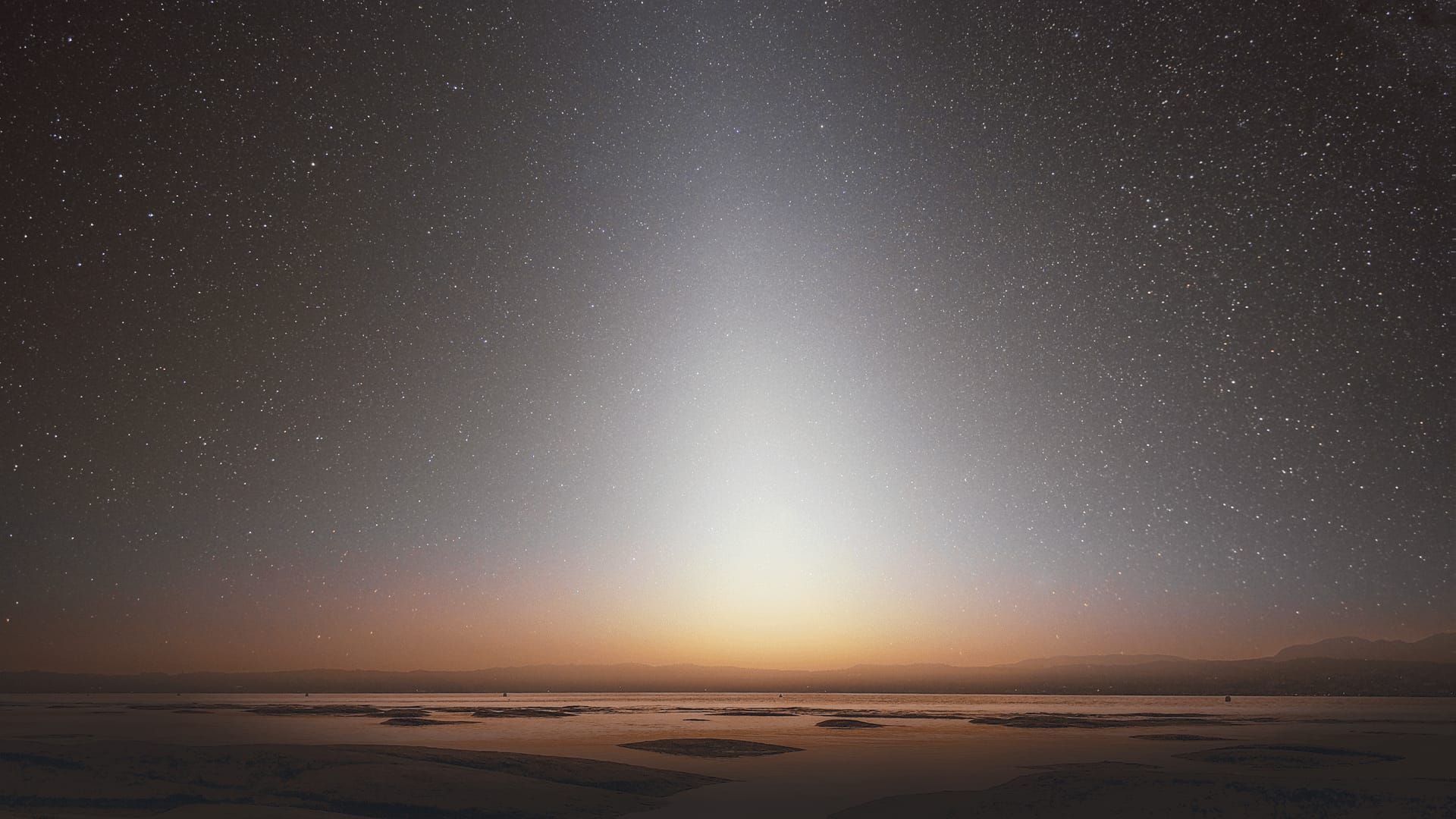
We see the zodiacal light because the sunlight reflects from dust grains orbiting the Sun in the inner Solar System. Learn more about where these dust grains come from and how to see the zodiacal light from our dedicated article.
Autumn Equinox FAQ
When Does Autumn Start in 2027?
In the Southern Hemisphere, astronomical autumn begins with the March equinox, on March 20 or 21, 2027, depending on your location, while meteorological autumn begins on March 1.
In the Northern Hemisphere, astronomical autumn begins with the September equinox, on September 22 or 23, 2027, depending on your time zone. Meteorological autumn begins on September 1.
Astronomers use the equinoxes and solstices as the transition points between seasons, while meteorologists use fixed three-month periods. For more details, see our dedicated article on astronomical seasons.
When Is the First Day of Fall 2027 in the USA?
In the United States, the astronomical first day of fall in 2027 depends on the time zone. The equinox occurs at 06:02 GMT on September 23, which corresponds to 2:02 AM EDT, 1:02 AM CDT, and 12:02 AM MDT on September 23, but 11:02 PM PDT on September 22.
So, for much of the USA, astronomical fall begins on September 23, while in the Pacific Time Zone and some locations farther west, it begins on September 22. Meteorological fall begins everywhere on September 1.
When Does Daylight Saving Time End in 2027?
Daylight Saving Time does not end on the autumn equinox itself. In most of the United States, DST ends on Sunday, November 7, 2027, when clocks are turned back by one hour at 2:00 AM local time. In most of Europe, Summer Time ends on Sunday, October 31, 2027, when clocks are also set back by one hour.
Are Day and Night Truly Equal on the Equinox?
They're quite close to being equal, but not precisely. For example, on September 23, 2027, in New York, USA, daylight will last 12 hours and 8 minutes. There are two main reasons for this discrepancy: atmospheric refraction makes the Sun appear slightly higher near the horizon, causing sunrise to occur earlier and sunset later, and sunrise and sunset are defined by the first and last visible edge of the Sun’s disk rather than its center. For a visual explanation of why day and night aren't exactly equal during equinoxes, you can check out our infographic about equinoxes.
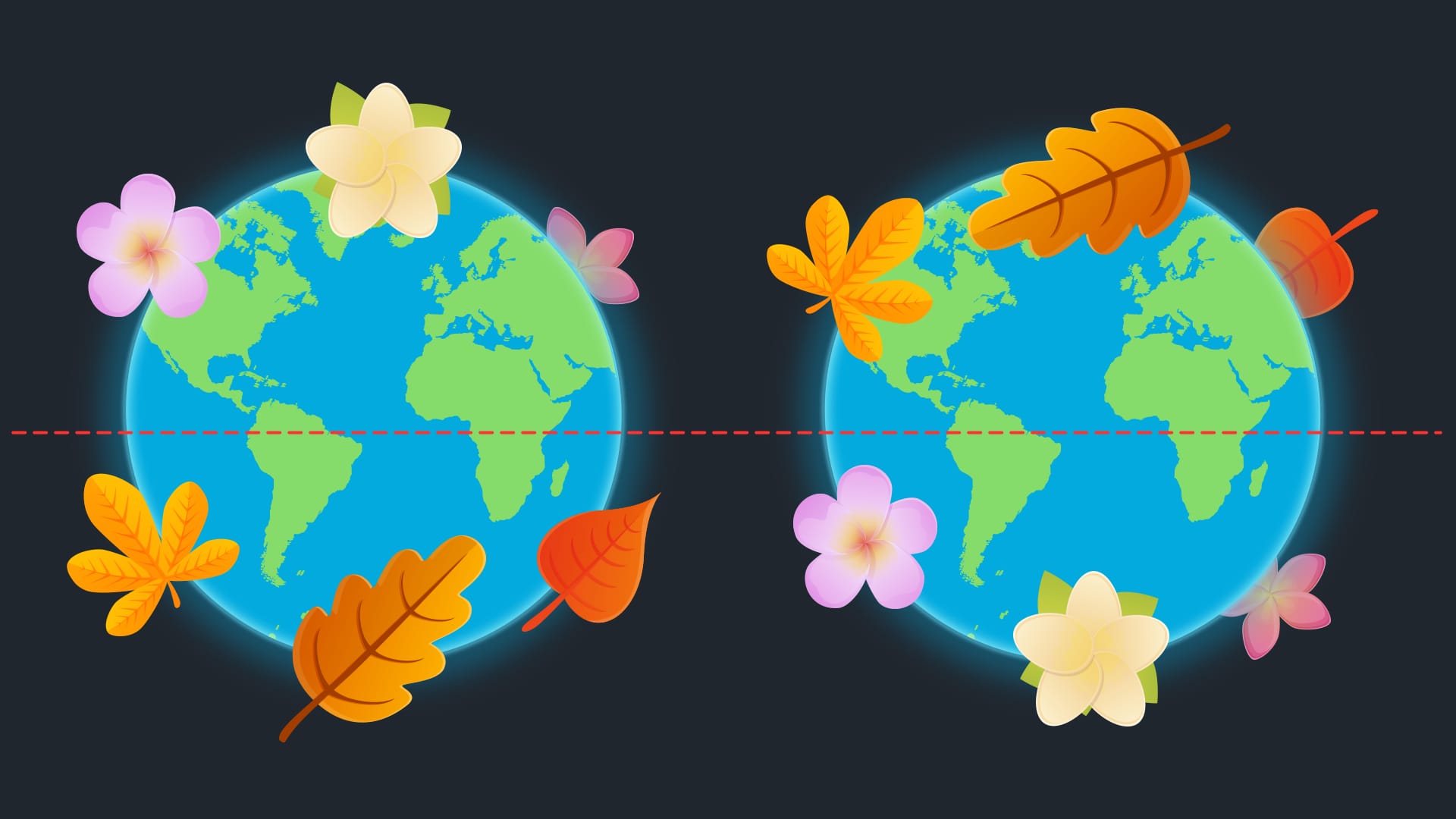
By the way, there are indeed days when day and night are exactly the same length. They're called equiluxes and usually occur a few days after the autumnal equinox. However, the exact dates of equiluxes can vary by location. Learn more about the difference between equinox and equilux from our article.
Do Other Planets Have Equinoxes and Solstices?
All planets in our Solar System have axial tilts, leading to their own equinoxes and solstices. Venus and Jupiter have small tilts of 2.6° and 3.1°, respectively. This means that the seasonal changes on these planets are minimal.
Mars, Saturn, and Neptune share tilts similar to Earth's: 25.2°, 26.8°, and 28.3°. At Saturn’s equinoxes, sunlight strikes the rings edge-on, making them extremely dark. Around these periods, the rings can also appear nearly edge-on from Earth.
Uranus stands out with its extreme tilt of about 98°. Around its equinoxes, day and night alternate as the planet rotates once every about 17 hours. Near the solstices, however, one pole points broadly toward the Sun while the other points away, producing years of continuous daylight or darkness in the polar regions.
Only Mercury’s tilt is extremely small, making its equinoxes and solstices barely noticeable.
What's the Difference Between an Equinox and a Solstice?
There are three key differences between an equinox and a solstice:
-
Day and night balance vs. longest day or night. Equinoxes mark nearly equal lengths of day and night, while solstices bring the longest day or night of the year, depending on the season.
-
Timing of events. Equinoxes occur in March and September, while solstices take place in June and December.
-
Tilt angle. Equinoxes happen when the Earth's hemispheres aren't tilted toward or away from the Sun. Solstices occur when one hemisphere is tilted maximally toward the Sun (summer solstice) or away from it (winter solstice).
Now that you've gone through this article, you should be a pro at understanding equinoxes. Take our quiz to test yourself! If you paid attention while reading, you'll find it easy to tell the difference between solstices and equinoxes.
Fall Equinox 2027: Key Facts
The next autumn equinox occurs on March 20, 2027, at 20:25 GMT, beginning astronomical autumn in the Southern Hemisphere. In the Northern Hemisphere, the autumn equinox occurs on September 23, 2027, at 06:02 GMT.
The autumn equinox marks the transition from summer to fall. After it, daylight decreases and nights grow longer in the relevant hemisphere. Around the equinox, day and night are nearly equal in length, auroral activity can become more favorable, and observers may also have a good opportunity to see the zodiacal light.
What Is an Equinox? Learn More
Now that you’re familiar with the autumn equinox, why not explore its spring counterpart – and see how both fit together with the solstices? If you want a clearer picture of why seasons change, these links are a great next step:
- Vernal Equinox
- What Are Equinoxes?
- What Are Solstices?
- Quiz: Can You Tell an Equinox From a Solstice? (It’s trickier than it looks, unless you’ve read up first!)