What Planet Is Retrograde Right Now (October 2026)? Retrograde Motion Explained
Why do planets sometimes seem to move “backward”? Is such a motion even real? Should you fear Mercury retrograde? Here, we’ll explain the celestial mechanics behind the retrograde motion and show you how to see it with Sky Tonight.
Contents
- Is Mercury retrograde right now?
- What is in retrograde right now?
- What is retrograde motion in astronomy?
- What causes the apparent retrograde motion of the planets?
- The meaning of retrograde motion: astrology, myths, and reality
- Planets retrograde in 2026 – current and upcoming retrograde periods
- How to see the retrograde motion: retrograde loops
- How do planets in retrograde affect us?
- Retrograde motion: Frequently asked questions
- Retrograde motion of planets: to sum up
Is Mercury retrograde right now?
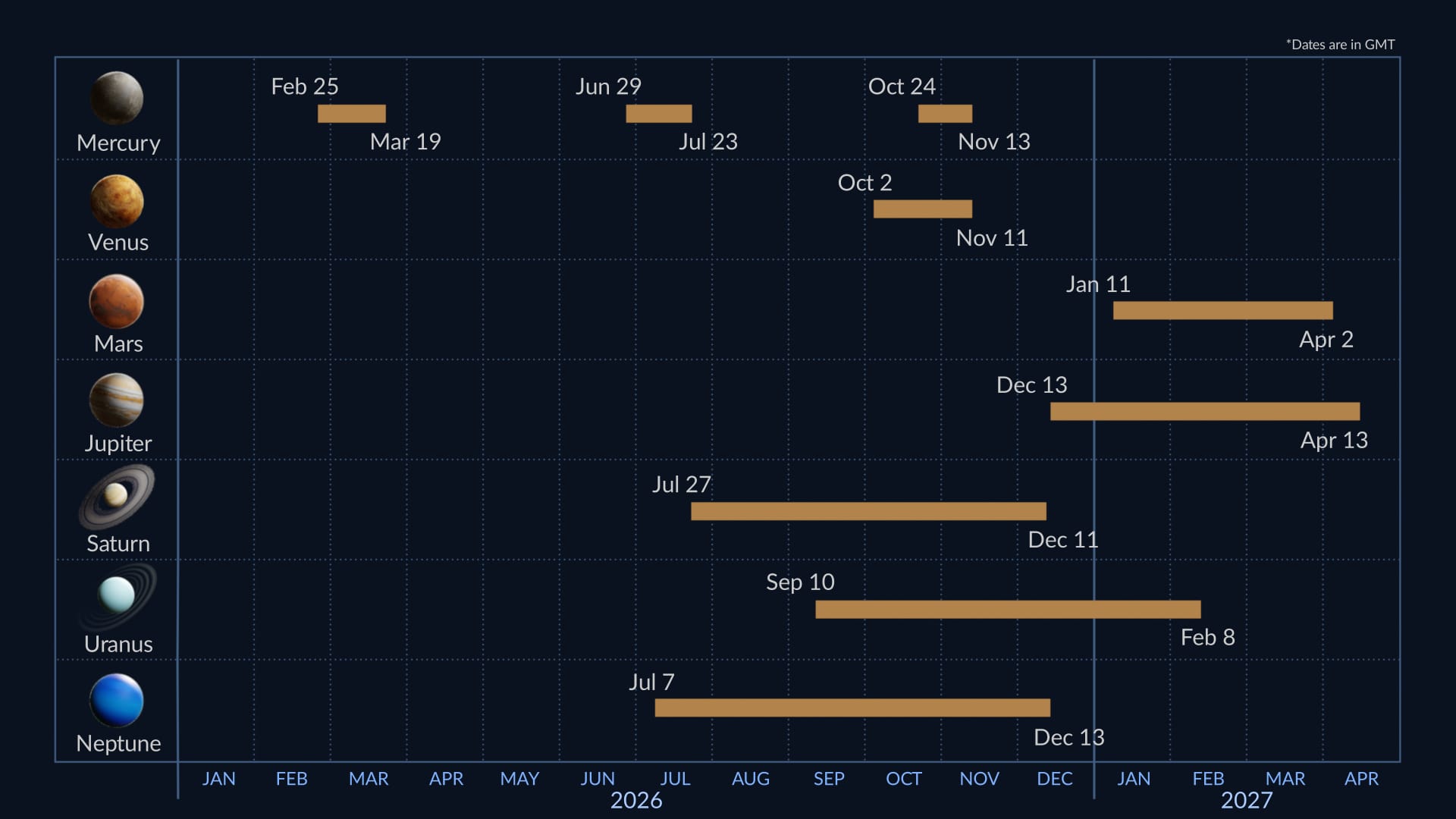
No, Mercury is not retrograde right now. Its previous retrograde period ended on July 23, 2026, and the next one is coming soon: Mercury will appear to move backward again from October 24 to November 13, 2026.
What is in retrograde right now?
Right now, Neptune, Saturn, Uranus, and Venus are retrograde. Venus is the latest planet to join the list, turning retrograde on October 3. Neptune has been retrograde since July 7, Saturn since July 27, and Uranus since September 10.
What is retrograde motion in astronomy?
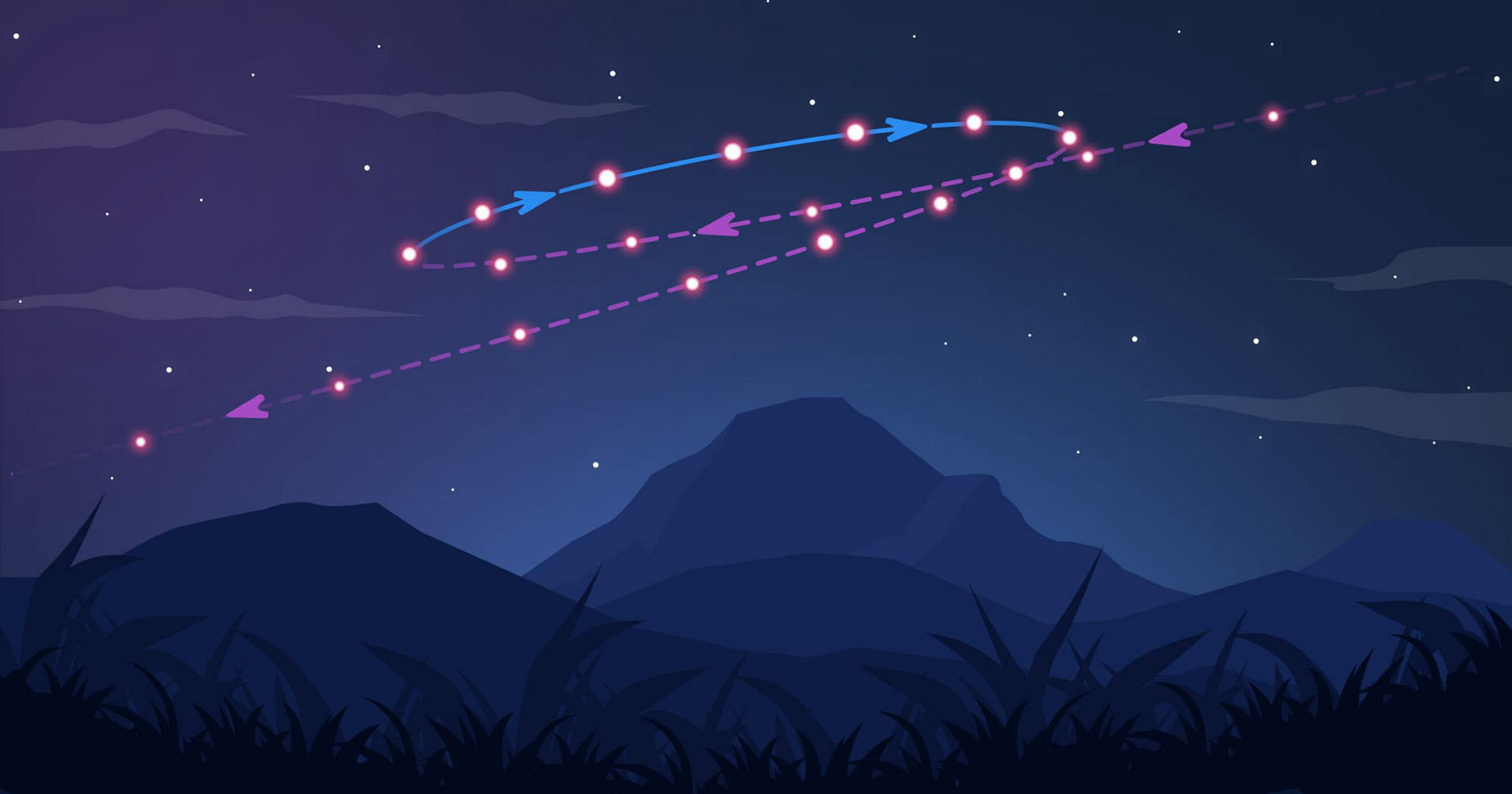
Retrograde motion is when a planet appears to reverse its usual direction in the sky relative to the background stars and begins to move “backward” for a while (from the Latin retrogradus, meaning “going backward”).
Day to day and week to week, as the Earth revolves around the Sun, the planets usually drift from west to east against the background of stars. Astronomers call it direct or prograde motion. This motion shouldn’t be confused with the daily motion of the planets and the Sun in the sky, which goes from east to west and is caused by the Earth’s rotation on its axis.
At specific periods of time, a planet can start moving “backward” – from east to west. This westward movement is called apparent retrograde motion.
What causes the apparent retrograde motion of the planets?
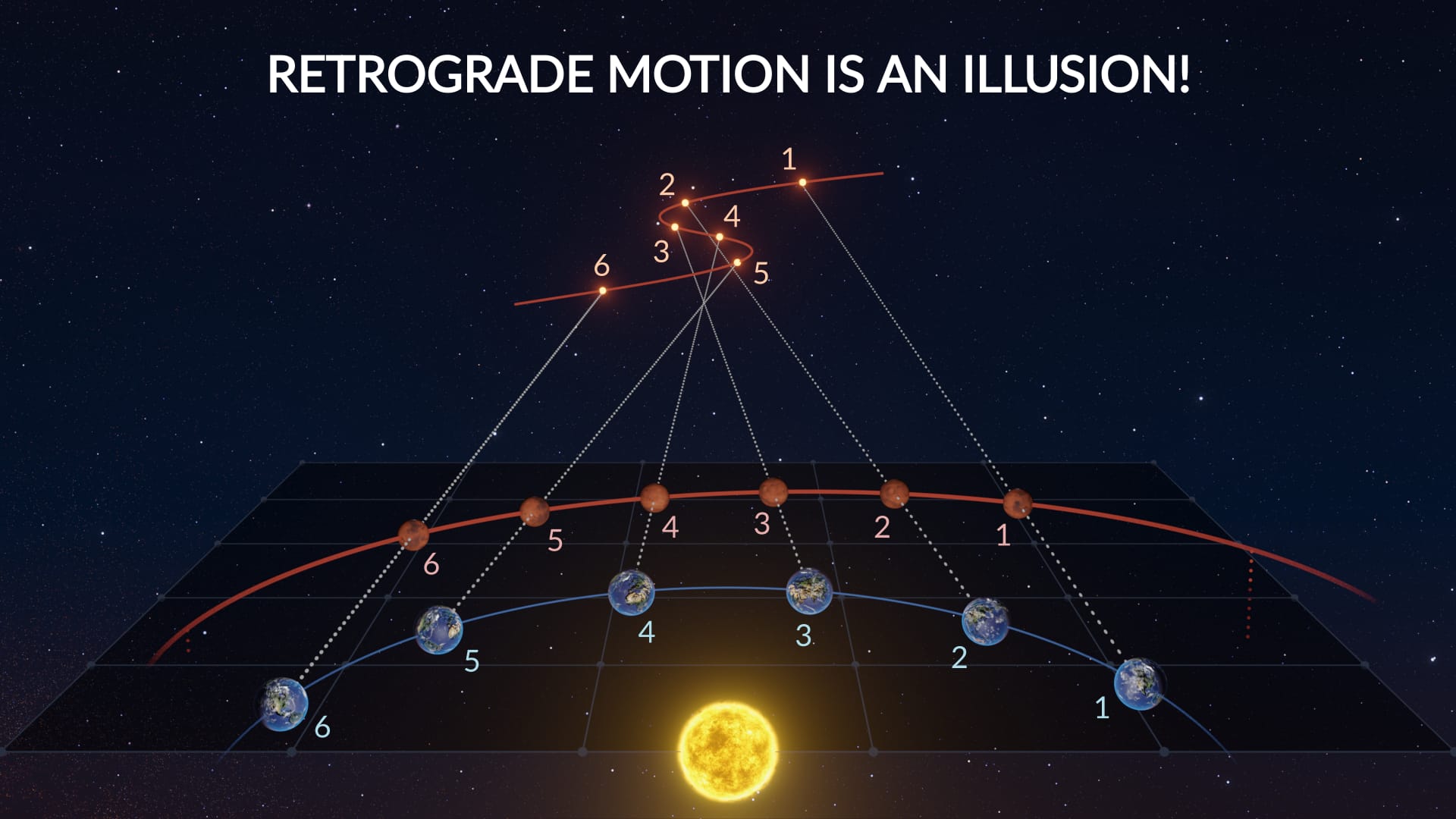
The apparent retrograde motion is caused by the relative motion of Earth and other planets as they travel around the Sun at different speeds and distances.
Let’s use Mars as an example. Mars is a superior planet, meaning its orbit is farther from the Sun than Earth's. Because of this, Mars moves more slowly in its orbit than Earth. When we pass Mars, it seems to be moving “backward” because we're moving faster than it is. The same thing happens when you pass by a slower-moving car on the highway – for a moment, it appears to move in the opposite direction.
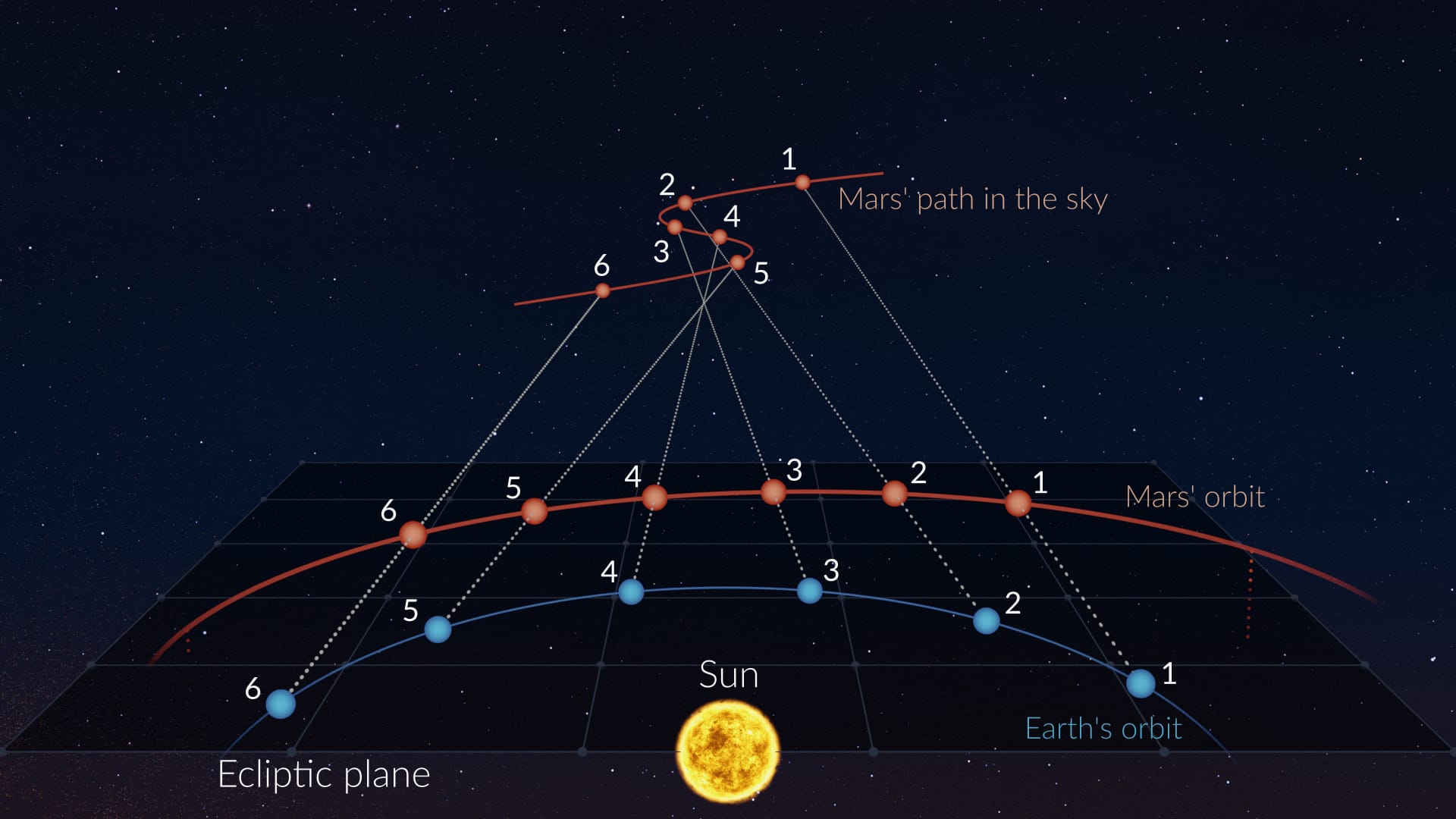
This mechanism works for all the superior planets.
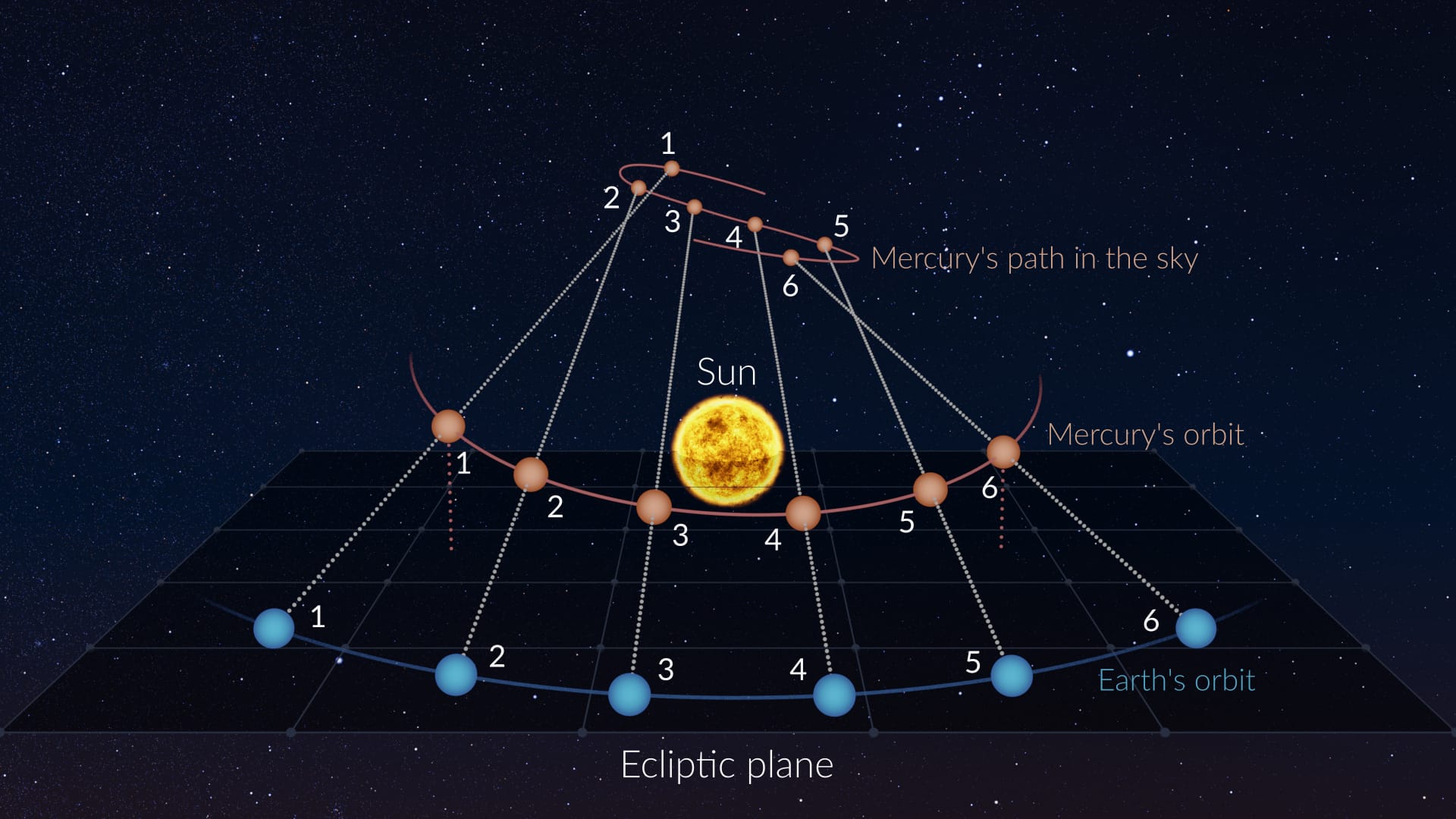
The inferior planets, Mercury and Venus, orbit closer to the Sun than Earth and therefore move faster along their paths. They also periodically appear to move “backward”. However, during retrograde motion, inferior planets are positioned near the Sun in the sky. Mercury is often completely lost in the Sun’s glare by the moment it goes retrograde, while Venus can be observed around sunrise or sunset for longer.
Ancient astronomers were rather puzzled by the phenomenon of retrograde motion, especially those who believed that the Earth was at the center of the Universe. Only in the 16th century did Nicolaus Copernicus introduce his heliocentric model and explain retrograde motion as an apparent effect. Initially, his idea faced resistance, but it was later accepted and became the foundation of modern astronomy.
The meaning of retrograde motion: astrology, myths, and reality
From an astronomical perspective, retrograde motion does not foreshadow anything – it is simply a perspective effect. However, throughout history, people have attributed special meaning to such movements. In ancient times, “wandering” celestial bodies were associated with gods and supernatural forces. For example, the Babylonians believed that planetary movements could influence the fates of kings and states. This is how astrological and mythological interpretations of celestial phenomena arose. However, Mesopotamian astrology was practiced alongside other forms of divination. Examining an animal's liver, for example, could be used to confirm astrological observations. Isn't it strange that we focused on retrograde planets but skipped the animal part?..
In astrology, each planet has its own “area of responsibility,” so retrograde periods are usually interpreted as important moments for the corresponding themes. Retrograde Mercury is particularly well known in popular culture: it is blamed for misunderstandings, communication breakdowns, schedule confusion, and problems with documents or agreements. For other planets, popular astrological tradition usually assigns the following meanings:
- Venus retrograde – “reassessment” of love, relationships, attachments, pleasures, and money.
- Mars retrograde – action, energy, conflict, ambition.
- Jupiter retrograde – internal reassessment of beliefs, growth, luck, learning, worldview.
- Saturn retrograde – return to responsibility, limitations, debts, discipline, “life lessons.”
- Uranus retrograde – internal changes, rebellion, liberation, surprises.
- Neptune retrograde – illusions, intuition, dreams, self-deception.
There are also meanings associated with Pluto retrograde – hidden transformation, control, crises, power, and internal shifts.
This is a generalization based on the modern popular astrological scheme; different schools formulate nuances differently. However, it is important to emphasize that there is no scientific basis for such interpretations. We have no known physical mechanism linking the positions of the planets to personality or everyday events, and numerous tests have shown that astrology lacks predictive power. So there is no need to fear retrogrades: for astronomers, this is not a “cosmic warning,” but simply the beautiful geometry of the Solar System.
Planets retrograde in 2026 – current and upcoming retrograde periods
Mercury retrograde in 2026
Mercury goes retrograde three to four times a year because its position relative to Earth and the Sun repeats roughly every 116 days — this is known as Mercury’s synodic cycle.
The next Mercury retrograde period begins on October 24, 2026, and lasts until November 13, 2026.
Other retrograde planets
Several other planets go retrograde this year. Unlike Mercury, each of them turns retrograde only once in 2026.
- Neptune: July 7 – December 13, 2026
- Saturn: July 27 – December 11, 2026
- Uranus: September 10, 2026 – February 8, 2027
- Venus: October 3 – November 14, 2026
- Jupiter: December 13, 2026 – April 13, 2027
Mars is the only planet that won't go retrograde in 2026. Its retrograde period begins on January 10, 2027, and ends on April 1, 2027.
How to see the retrograde motion: retrograde loops
To observe retrograde motion, record a planet’s position relative to the background stars every few days. Over several weeks, these marks will gradually reveal the retrograde loop the planet traces.
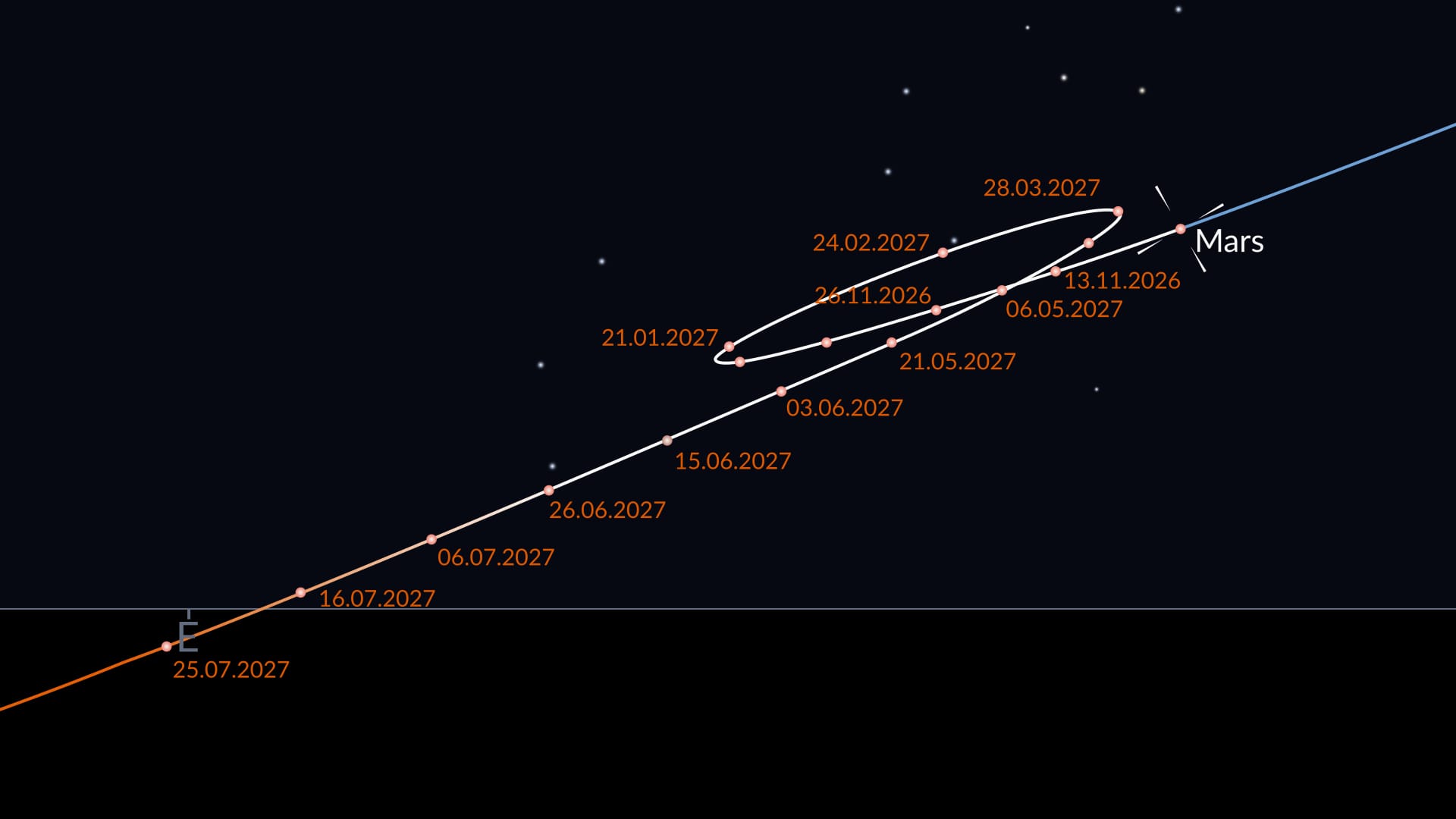
You can do this manually (but it'll take at least several weeks), or do it in 3 steps with the stargazing app Sky Tonight. It has a special feature that lets you instantly plot a curve showing the annual motion of any planet. Here’s how to see the retrograde motion of a planet via Sky Tonight:
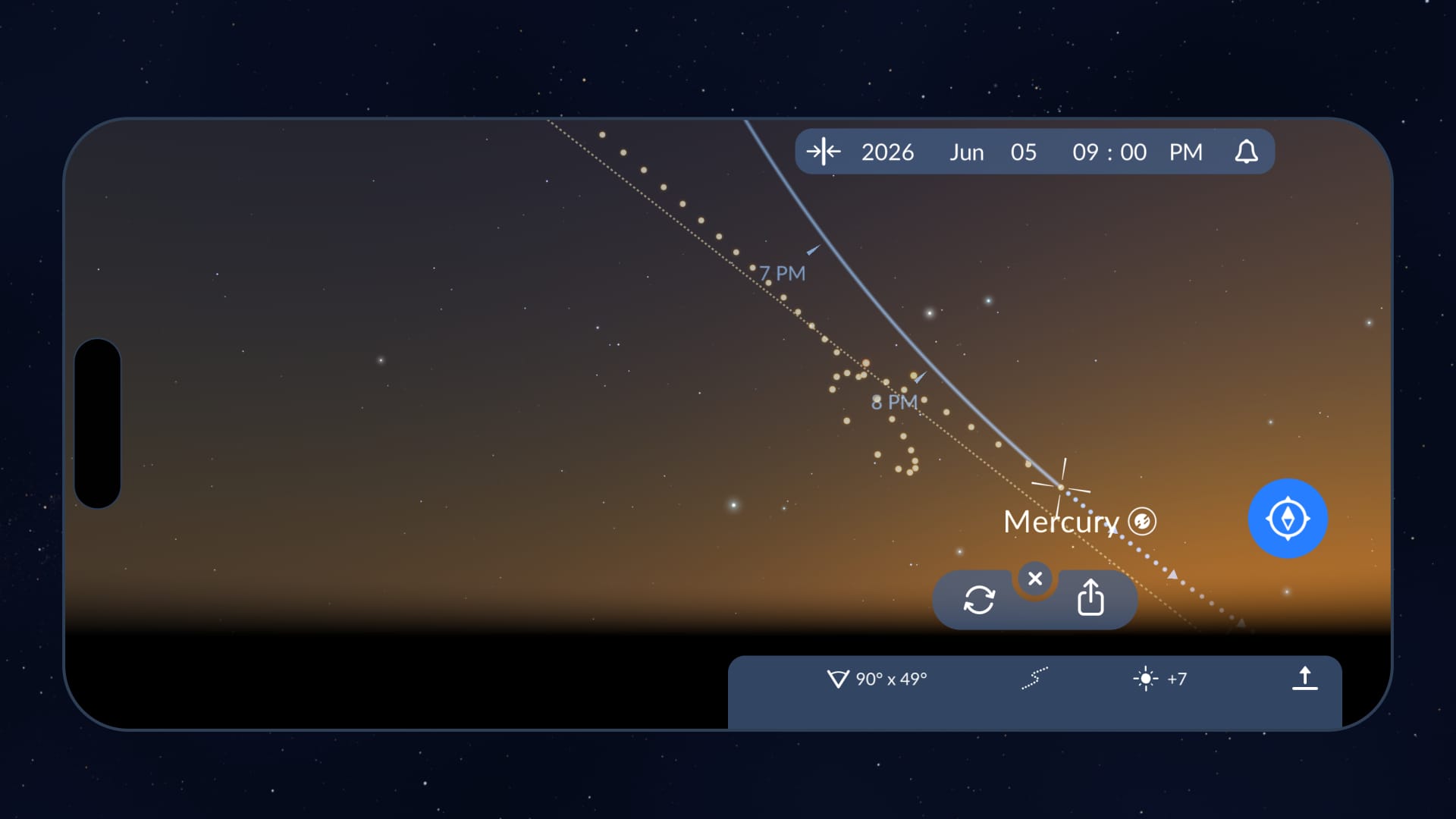
- Tap the magnifier icon at the bottom of the screen and type the name of a planet (e.g., Mercury) into the search field.
- Tap the blue target icon opposite the name of the planet and see its current position on the sky map.
- Tap the small white camera icon at the bottom part of the screen to enable the curve-building feature. You’ll see the path the planet passes in the sky over several months and will be able to clearly see how the planet “changes direction” at certain moments.
How do planets in retrograde affect us?
Astrologers may warn you against signing contracts during Mercury retrograde or buying metal tools during Mars retrograde. It’s your choice to believe them or not.
However, you now know that retrograde motion is just an illusion that can’t possibly affect your everyday life – at least from the scientific point of view.
A celestial body that can really affect our lives is an asteroid heading to our home planet. Learn when the next asteroid will hit Earth and what we can do about it.
Retrograde motion: Frequently asked questions
Is Mercury retrograde a real thing?
Mercury’s retrograde motion is a real astronomical phenomenon, but it’s not Mercury literally reversing direction in space. In astronomy, “Mercury retrograde” means that the planet appears to move backward against the background stars because it “overtakes” the Earth in its orbit.
Does Mercury retrograde affect us?
Mercury retrograde doesn’t affect us in any physical or scientific way. Mercury doesn’t suddenly “send” extra energy to Earth or cause problems – it’s the same planet on the same orbit, and the retrograde motion is just a matter of perspective. The only real impact is for skywatchers: it’s a fun chance to track Mercury’s path in the sky.
When is the next Mercury retrograde?
Mercury is not retrograde right now. The next Mercury retrograde period will take place from October 24 to November 13, 2026.
What planets are retrograde right now?
Right now, Neptune, Saturn, Uranus, and Venus are retrograde. Venus entered the retrograde list on October 3 and will remain retrograde until November 14; Saturn is retrograde until December 11, Neptune until December 13, and Uranus until February 8, 2027.
Retrograde motion of planets: to sum up
Retrograde motion is an apparent reversal of planetary motion. From Earth, it appears that the planets in the sky move “backward” at certain times. Right now, Venus, Neptune, Saturn, and Uranus are in retrograde periods.
We hope this article helped you understand what retrograde motion really is. If you enjoyed it, please share it with your friends! And get Sky Tonight to easily track any planet (including Mercury) in the sky.
Still have questions? Watch our video showing retrograde motion of Mercury and see what happens to the planet in space versus how it looks in our sky.
For more interesting facts about retrograde motion, have a look at our dedicated infographic!