International Observe the Moon Night 2026: Look Up on September 19
On September 19, people around the world will look up and celebrate our planet’s closest neighbor during International Observe the Moon Night 2026. You don’t need a telescope, expert knowledge, or perfectly dark skies to join — the Moon is easy to see with the naked eye, even from a brightly lit city. Here’s when to observe it, what to look for, and how to take part in this worldwide event.
Want to know where the Moon is right now? Open the free Sky Tonight app, tap the magnifier icon, search for the Moon, and check its position in your sky.
Contents
- When is International Observe the Moon Night 2026?
- What is International Observe the Moon Night?
- What can you see on the Moon on September 19?
- What is the bright star next to the Moon on September 19?
- How to photograph the Moon
- International Observe the Moon Night: FAQ
- International Observe the Moon Night 2026: Key takeaways
When is International Observe the Moon Night 2026?
International Observe the Moon Night will take place on Saturday, September 19, 2026. The date is chosen each year to fall near the First Quarter Moon, when surface features are especially easy to see.
There is no single official observing time. You can begin in the afternoon or wait until after sunset on September 19. The Moon will be visible during the evening on September 19 and, depending on your location, may remain above the horizon into the early hours of September 20.
What will the Moon look like on September 19?
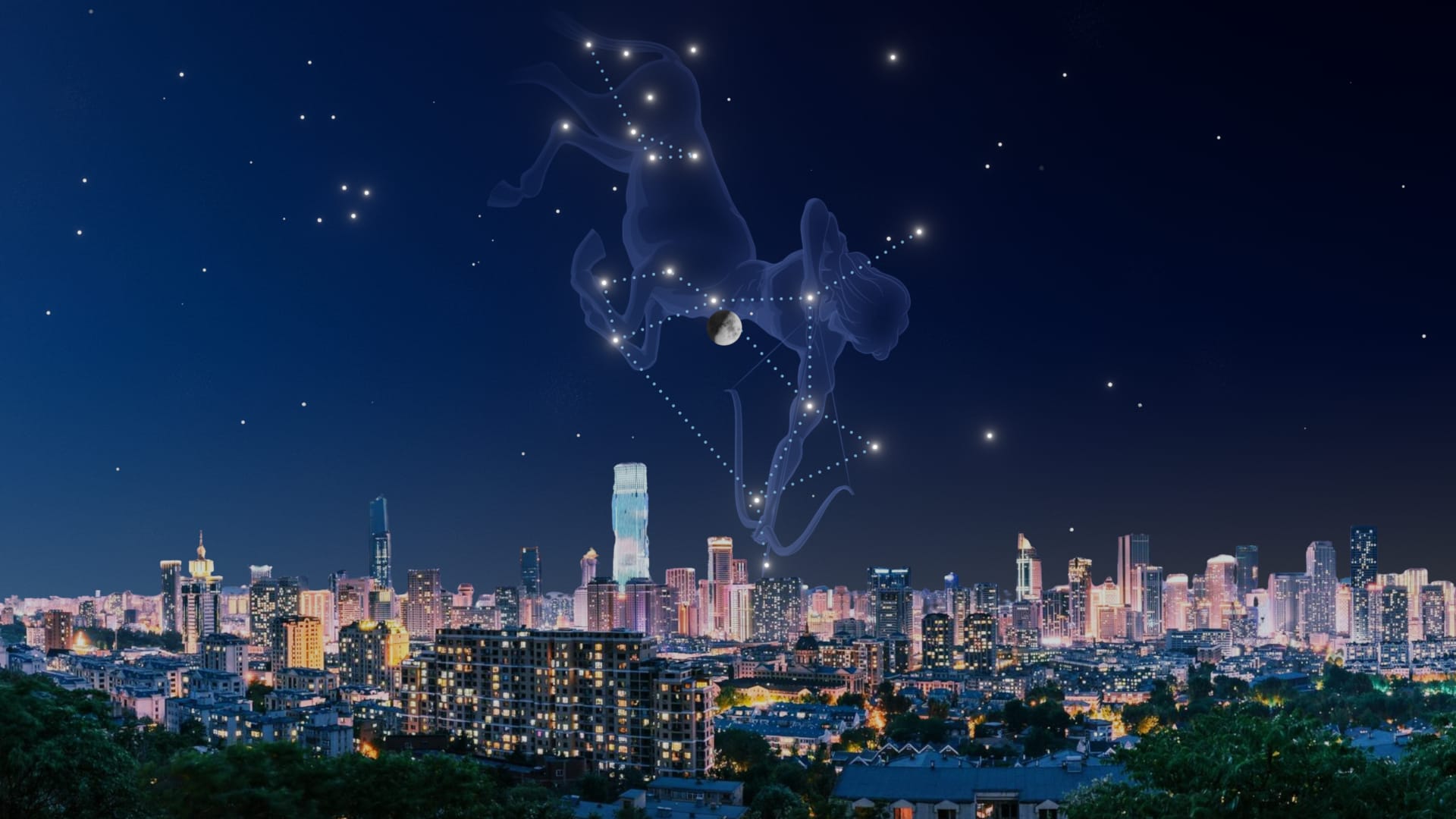
During International Observe the Moon Night 2026, the Moon will be just past its First Quarter phase and about 60% illuminated.
- Lunar phase: Waxing gibbous
- Constellation: Sagittarius
- Best time to observe: From sunset through the late evening
- Equipment: None required; binoculars or a telescope will reveal more detail
The Moon will appear higher in the sky for observers in the Southern Hemisphere. At mid- and high northern latitudes, it will follow a relatively low path across the southern sky, so choose an observing spot with an unobstructed view in that direction.
The Moon’s rise and set times depend on the observer’s location. To check them for September 19, open the free Sky Tonight app, tap the calendar icon, open the Moon tab, and select the date. You’ll also see the Moon’s phase, illumination, and other details for your location.
Why is the First Quarter phase ideal for observing?
Although the Full Moon may look more impressive at first glance, it isn’t necessarily the best phase for exploring the lunar surface. When the Moon is full, sunlight falls almost directly onto the side facing Earth, so mountains and craters cast only short shadows. This can make the surface appear relatively flat.
Around either quarter phase, sunlight strikes the Moon from the side. Along the terminator — the boundary separating lunar day and night — mountains, crater rims, and other elevated features cast long shadows. These shadows make the Moon’s rugged landscape appear much more dramatic.
The First Quarter Moon is also conveniently placed for observation: it typically rises near noon and sets near midnight, making it easy to see during the afternoon and evening.
You can follow the changing lunar phases and check the Moon’s appearance on any date with our interactive Moon Phase Calendar.
What is International Observe the Moon Night?
International Observe the Moon Night is an annual worldwide celebration of lunar observation, science, exploration, art, and culture. It is held each year in September or October, when the Moon is near its First Quarter phase. Everyone is invited to participate by observing the Moon, attending or hosting an event, learning about lunar science, or sharing Moon-inspired photographs, stories, and artwork.
The event is sponsored by NASA’s Lunar Reconnaissance Orbiter mission and the Solar System Exploration Division at NASA’s Goddard Space Flight Center, with support from numerous organizations around the world.
How to take part in International Observe the Moon Night
There are several ways to join the celebration:
- Observe and photograph the Moon from your backyard, balcony, window, park, or another convenient location.
- Invite friends or family to observe with you.
- Visit a planetarium, observatory, museum, school, or astronomy club.
- Use NASA’s event map to find a registered gathering near you.
- Host your own public, private, in-person, or online event. You can register your participation on the official website.
- Share your observations and photographs on social media using #ObserveTheMoon.
- Learn about lunar science, exploration, history, art, and cultural traditions.
You don’t have to participate on the exact official date. If September 19 is inconvenient, NASA encourages observing as close to the event as possible.
What can you see on the Moon on September 19?
Start by looking at the Moon with the naked eye, then switch to binoculars or a telescope if you have them. Each level of magnification reveals something different.
With the naked eye
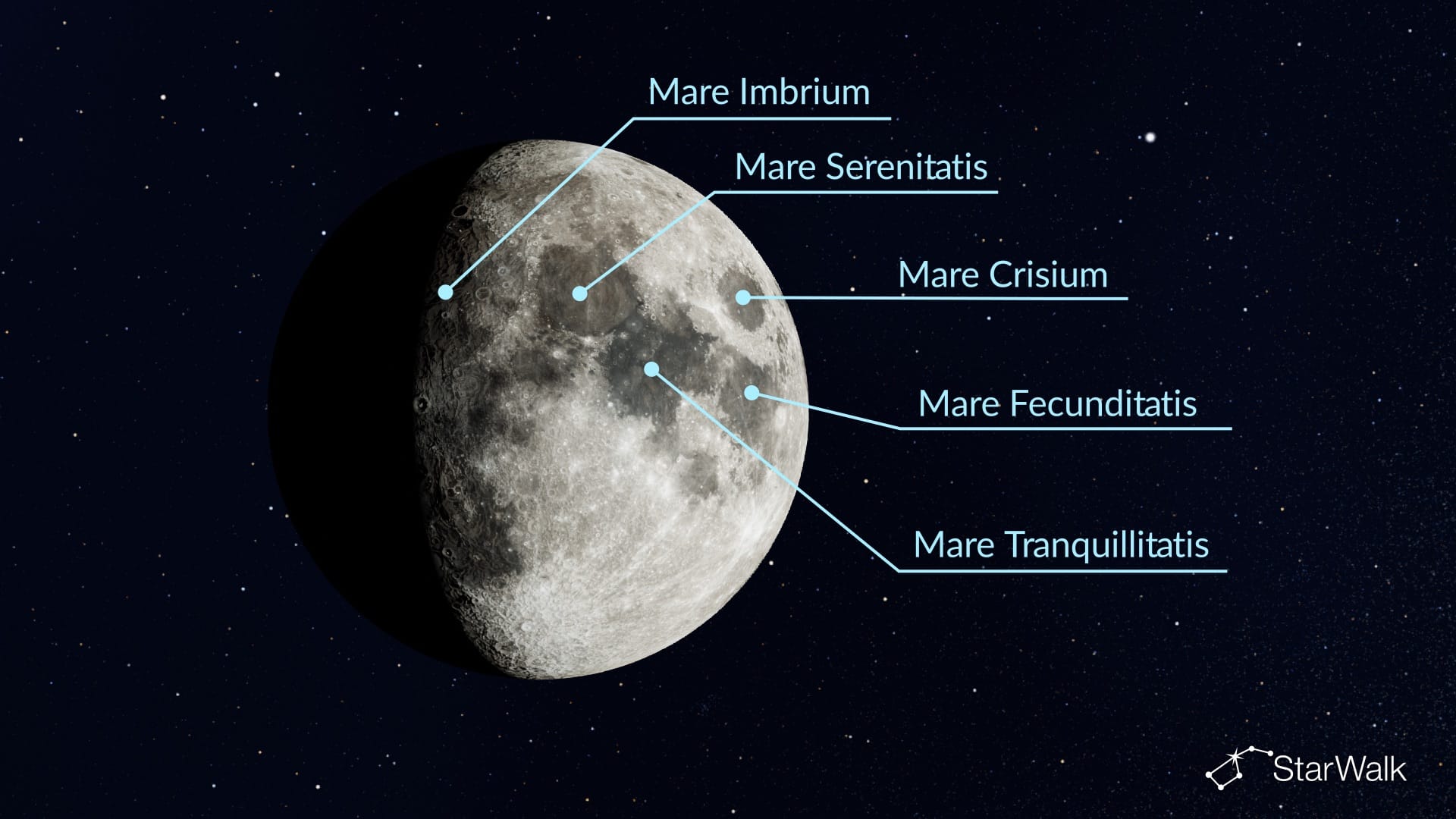
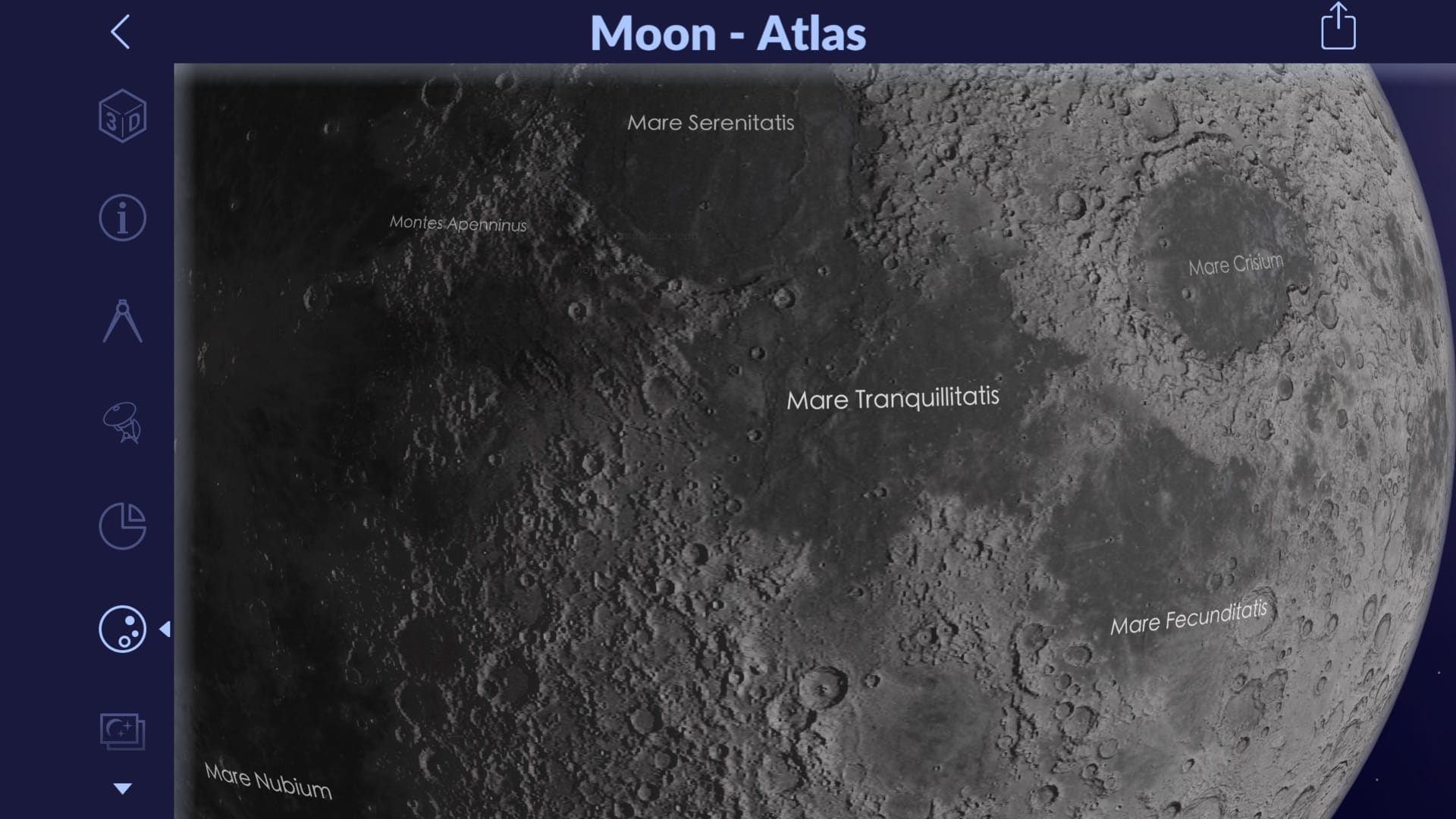
To the naked eye, the Moon will appear as a bright, partly illuminated disk patterned with dark gray patches and lighter terrain. The darker patches are called lunar maria, meaning “seas” in Latin. Early astronomers thought these areas might contain water, but they are actually enormous plains of solidified volcanic lava.
On September 19, you should be able to distinguish several large maria, including:
- Sea of Tranquility (Mare Tranquillitatis)
- Sea of Serenity (Mare Serenitatis)
- Sea of Fertility (Mare Fecunditatis)
- Sea of Crises (Mare Crisium)
- Sea of Rains (Mare Imbrium) — partly illuminated near the terminator
The brighter regions are the lunar highlands — ancient, heavily cratered parts of the Moon’s crust.
The Moon can also appear yellow, orange, or even red, especially when it is low above the horizon. It may also seem unusually large, although its actual size hasn’t changed — this effect is known as the Moon illusion.
With binoculars
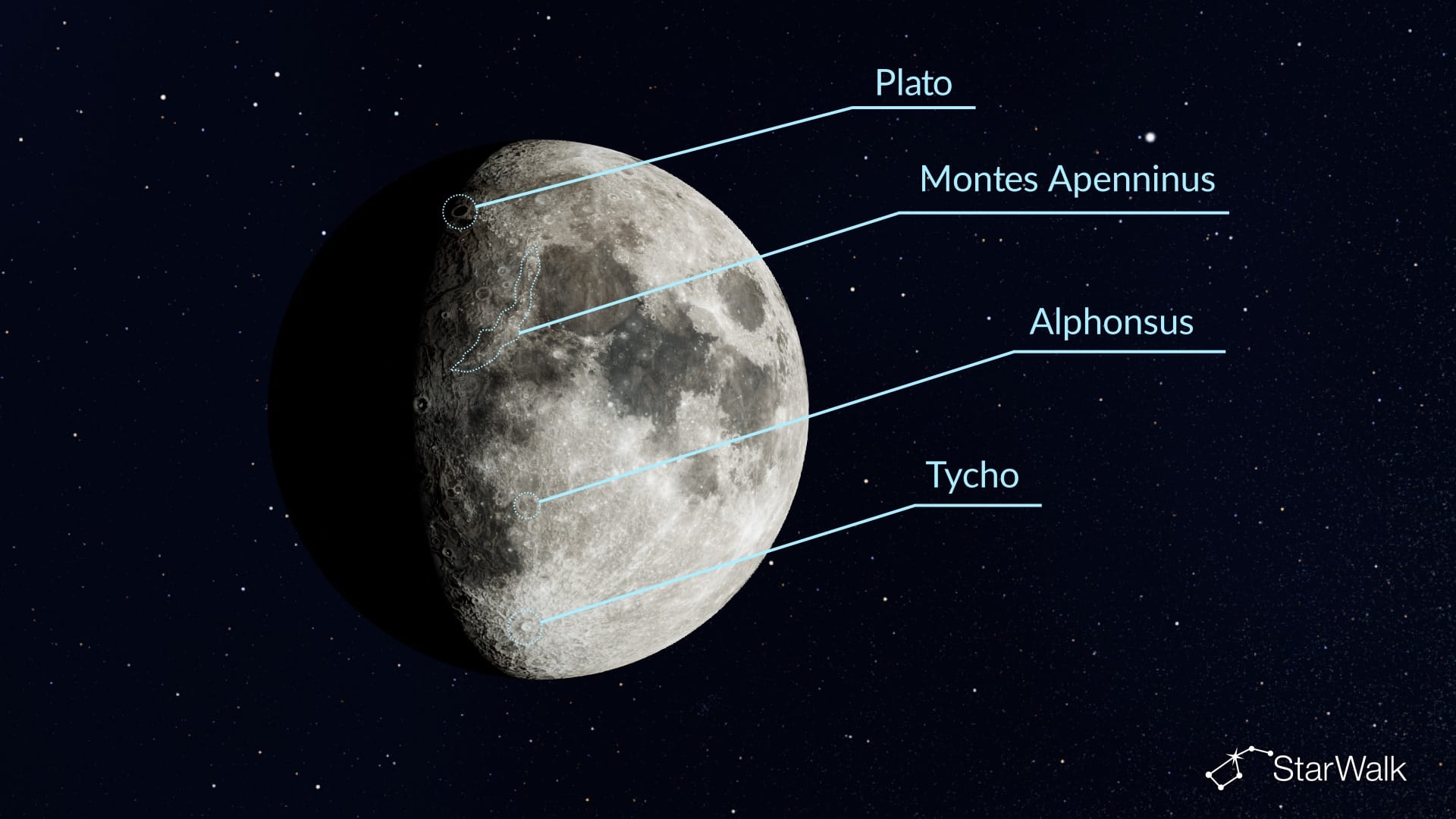
Binoculars will turn the smooth-looking lunar disk into a landscape filled with craters, mountain ranges, and lava plains. Pay particular attention to the terminator — the low angle of sunlight there creates long shadows that make the Moon’s rugged terrain easier to see.
With 10× binoculars, prominent targets may include:
- Tycho — a large crater in the Moon’s southern highlands; its famous rays will be less prominent than around the Full Moon
- Plato — a large, dark-floored crater near the northern edge of Mare Imbrium
- Alphonsus — a large crater near the center of the lunar disk
- Montes Apenninus — an impressive mountain range forming part of the rim of the Imbrium Basin
If you’re new to binocular observing, check our guide to the best celestial objects to see with binoculars.
With a telescope
Even a small telescope can reveal crater walls, mountain chains, valleys, and smaller impact craters. Begin with low magnification so you can see a larger part of the Moon, then increase the power if atmospheric conditions are steady.
Don’t assume that the highest available magnification will provide the best view. Excessive magnification often makes the image darker and less sharp. A clear, stable image at moderate power usually reveals more detail.
You can also locate the general regions where Apollo astronauts landed. However, the flags, lunar modules, and other equipment left on the surface are far too small to be seen through any Earth-based amateur telescope.
NASA has prepared separate 2026 Moon maps for the Northern and Southern Hemispheres, showing lunar landforms, maria, and human landing sites visible during the event.
You can also explore the Moon up close with the Star Walk 2 app. The Moon Atlas, available as an in-app purchase, features a detailed 3D model that helps you identify craters, maria, mountains, and other lunar features.
What is the bright star next to the Moon on September 19?
During the night of September 19–20, the Moon will pass very close to Nunki (mag 2.1), one of the brightest stars in Sagittarius. The star is visible to the naked eye, although the Moon’s glare may make it easier to see through binoculars. The Moon and Nunki will be only about 0.36° apart — less than the Moon’s apparent diameter!
From a narrow region in the South Pacific, the Moon will pass directly in front of Nunki, briefly hiding the star from view. This lunar occultation will be visible from western New Zealand on the evening of September 20. From other locations, the Moon will pass close to Nunki without occulting it.
Want to identify other bright objects beside the Moon? Check our regularly updated guide to the planets and stars near the Moon.
How to photograph the Moon
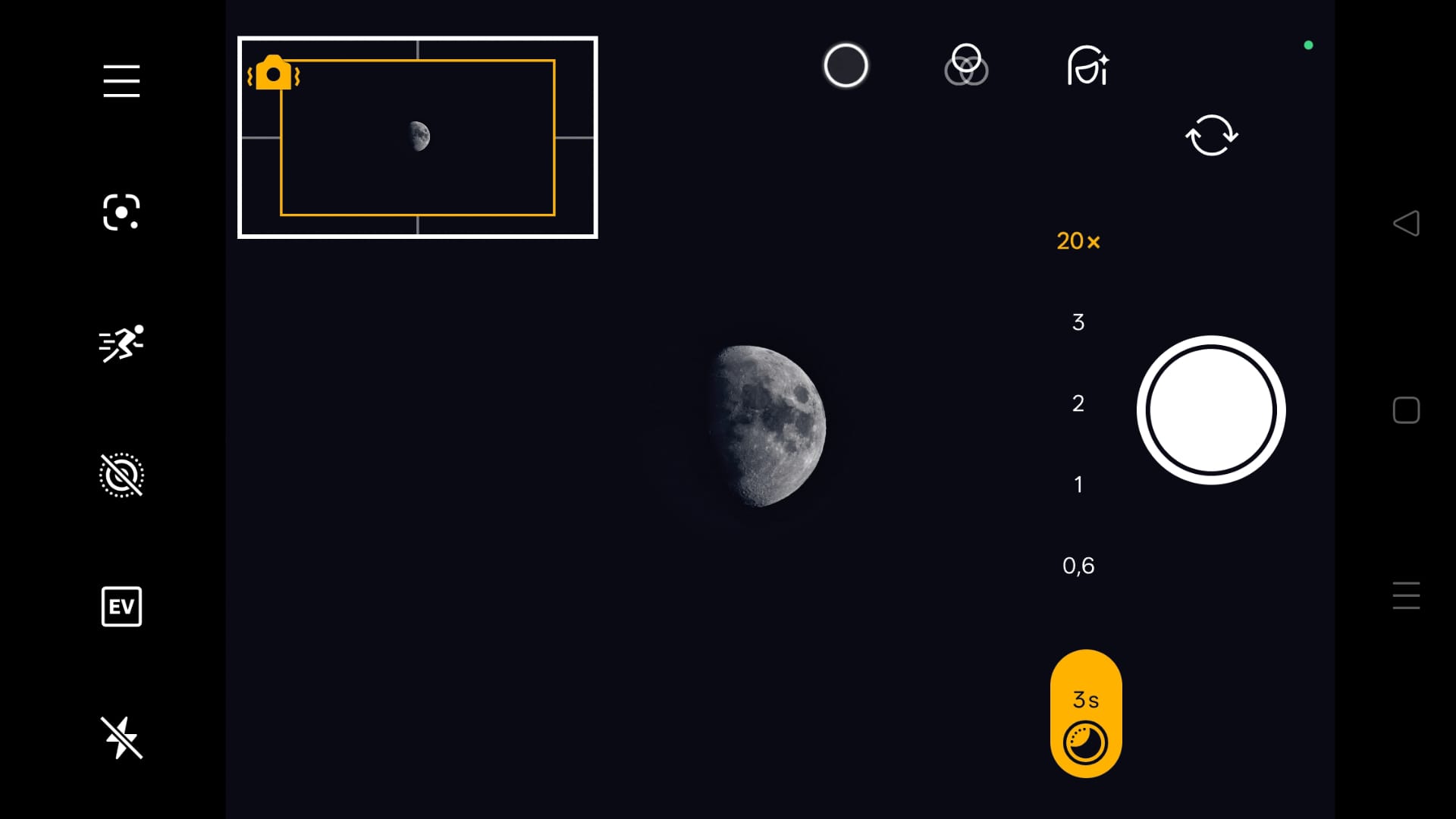
The Moon is bright enough to photograph even from a light-polluted city, and you can capture it with an ordinary smartphone. On some phones, including certain iPhone models, you may get a clearer result by recording a short video and selecting the sharpest frame afterward instead of taking a single photo. For better results:
- Tap the Moon on your phone’s screen to set the focus.
- Lower the exposure until surface details become visible.
- Use a tripod to keep your phone steady.
- Avoid excessive digital zoom, which reduces image quality.
You can also photograph the Moon through binoculars or a telescope by carefully aligning your phone’s camera with the eyepiece. A smartphone adapter will make this much easier.
For advice on cameras, lenses, exposure, and other equipment, read our complete astrophotography guide for beginners.
What if the weather is cloudy?
Cloudy skies don’t have to stop you from taking part in the event. If the Moon is hidden, you can still celebrate indoors:
- Explore our infographic featuring 10 mind-blowing facts about the Moon.
- Test your knowledge with the Colors of the Moon quiz.
- Discover the evidence behind the Apollo missions in our article debunking common Moon landing myths.
You can also postpone your observation until the nearest clear evening — the Moon will remain an excellent target for several nights around September 19.
International Observe the Moon Night: FAQ
Do I need a telescope?
No. The Moon’s phase, dark maria, and bright highlands are all visible to the naked eye. Binoculars are the simplest way to improve the view: they reveal many craters while keeping the entire Moon in sight.
Can I observe the Moon from a city?
Yes. The Moon is bright enough to see even under heavy light pollution, so there is no need to travel to a dark-sky site. A location with a clear view of the sky is more important.
Is it safe to look at the Moon through binoculars or a telescope?
Yes. The Moon is safe to observe without special eye protection, although it may appear uncomfortably bright through a telescope. A lunar filter can reduce the glare but is not required.
If you observe the Moon during the day, never point binoculars or a telescope toward the Sun or sweep them across the sky near it. If you are unsure where the Sun is, wait until after sunset. A lunar filter does not provide protection for viewing the Sun.
Why does the Moon look different in the Southern Hemisphere?
Observers in both hemispheres see the same lunar features, but the Moon appears rotated. During a waxing phase, the illuminated part generally appears on the right from the Northern Hemisphere and on the left from the Southern Hemisphere.
When are the next International Observe the Moon Nights?
After the 2026 celebration, the next official dates are:
- September 10, 2027
- September 23, 2028
International Observe the Moon Night 2026: Key takeaways
International Observe the Moon Night takes place on Saturday, September 19, 2026. Look for the approximately 60%-illuminated Moon in Sagittarius from sunset through the evening. You can participate with nothing more than your eyes, although binoculars or a telescope will reveal impressive craters, mountains, and shadows along the terminator.
Whether you observe alone, attend an astronomy event, take a photograph, or simply spend a few minutes looking up, you’ll be joining people around the world in celebrating Earth’s nearest celestial neighbor. Use Sky Tonight to find the Moon from your location and plan your International Observe the Moon Night.