Atmospheric Refraction: 5 Surprising Ways It Changes What We See
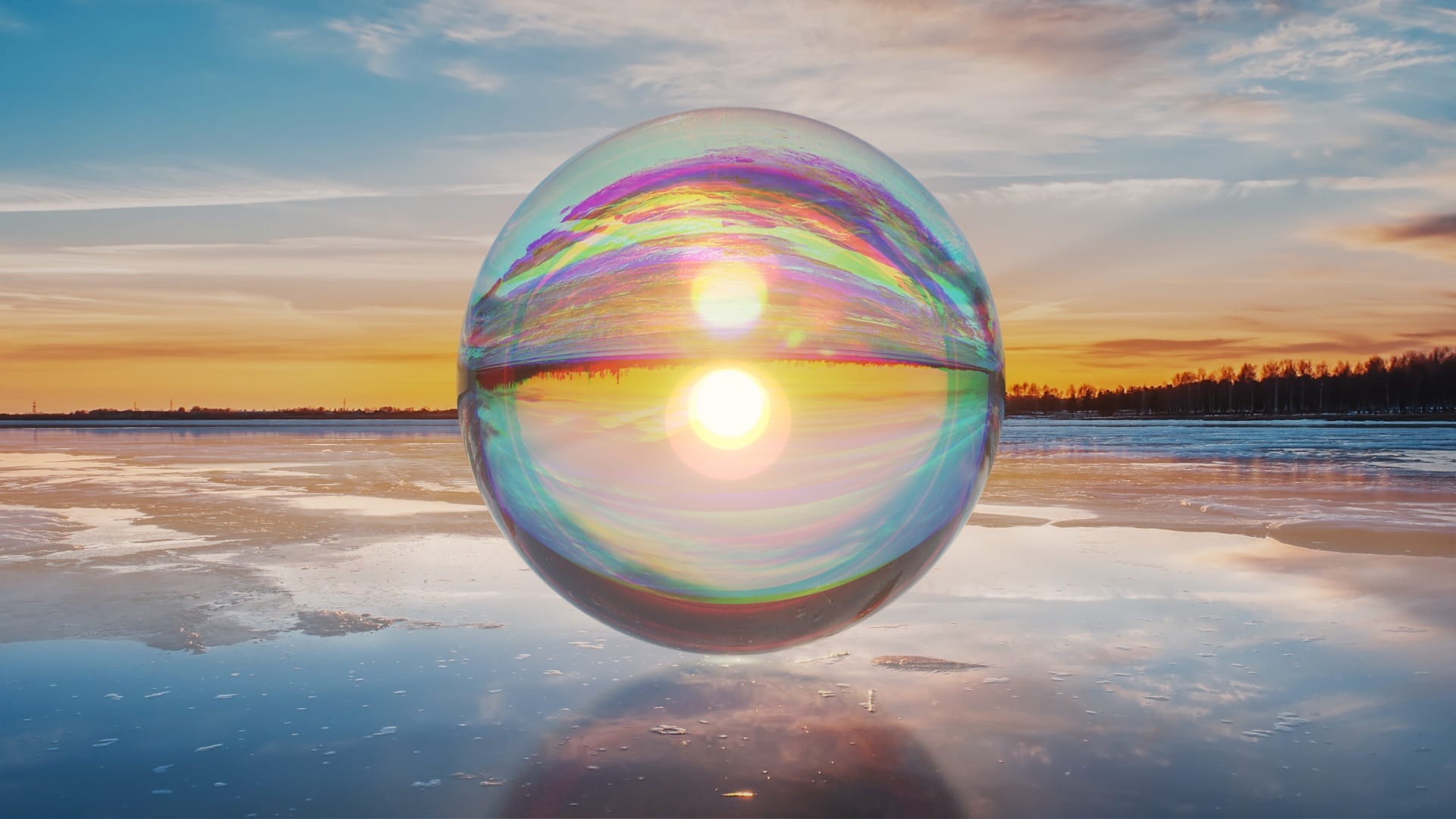
Atmospheric refraction is the bending of light by Earth's atmosphere, which can change how celestial objects appear near the horizon. For example, it can make the Moon look squashed or allow us to see the Sun even when it's geometrically below the horizon.
Want to see it for yourself? Use the calendar in Sky Tonight to find out when and where the Sun or Moon will rise or set in your location, and watch for these effects near the horizon. Let's explore what causes atmospheric refraction and discover five surprising ways it changes what we see in the sky — from flattened sunsets to the elusive green flash.
Contents
- 1. Flattened Sun
- 2. Earlier Sunrise and Later Sunset
- 3. Flattened Moon
- 4. Displaced Stars
- 5. Green Flash
- How Does Atmospheric Refraction Work?
Atmospheric Refraction: Frequently Asked Questions
- Does atmospheric refraction cause stars to twinkle?
- Does atmospheric refraction make the Sun look bigger?
- Can atmospheric refraction make an object visible below the horizon?
- Is atmospheric refraction stronger in winter?
- Why doesn't the Sun always rise or set at the predicted time?
- Does atmospheric refraction change the color of the Sun or Moon?
- Why doesn't the Moon disappear during a total lunar eclipse?
- Does atmospheric refraction occur in space?
- Does atmospheric refraction support the flat-Earth theory?
- Atmospheric Refraction: Key Takeaways
1. Flattened Sun
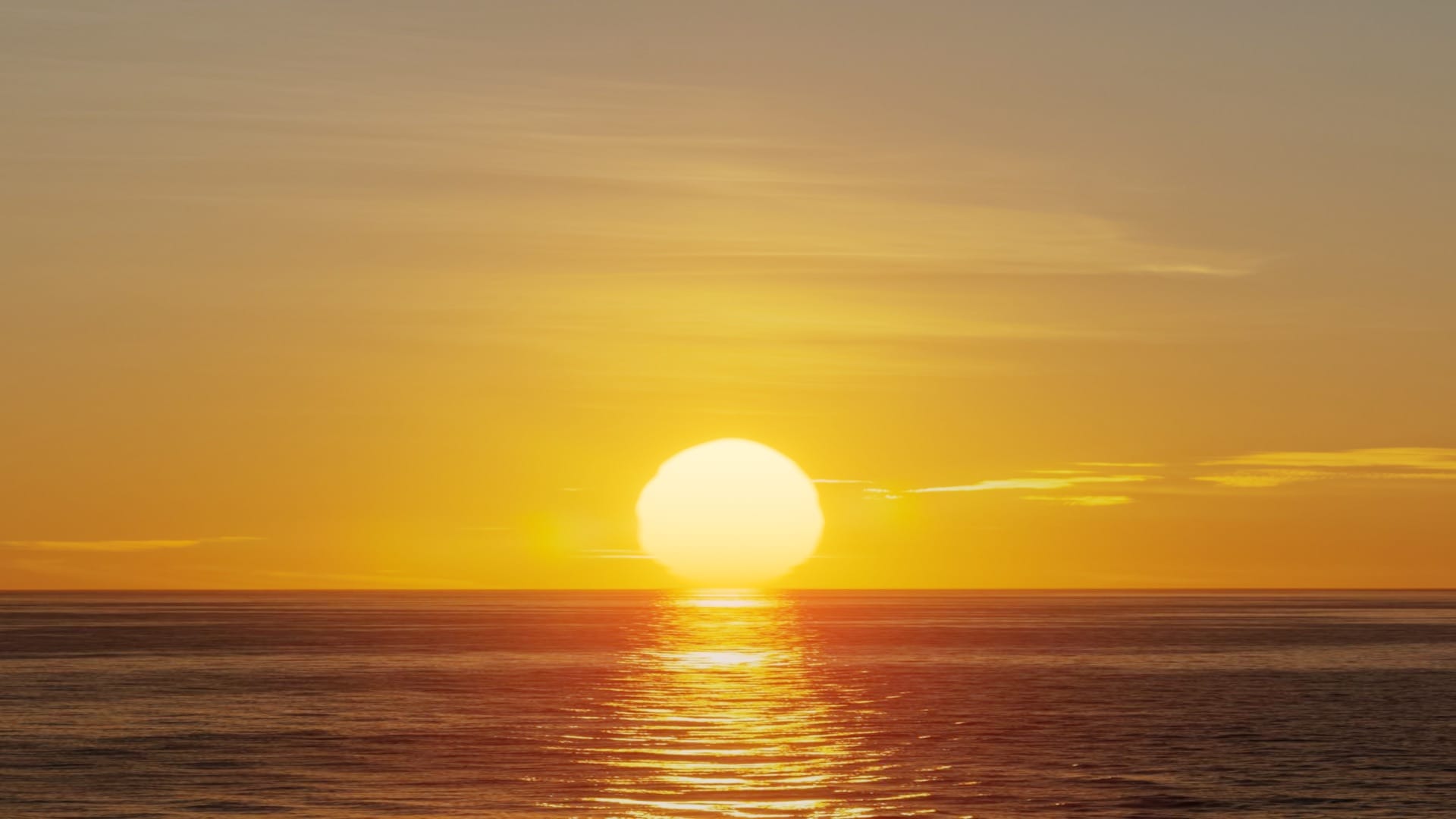
One of the easiest ways to recognize atmospheric refraction is to look at photographs of the setting Sun. Instead of a perfect circle, the Sun may resemble a flattened oval. This happens because the bottom of the Sun is refracted more strongly than the top.
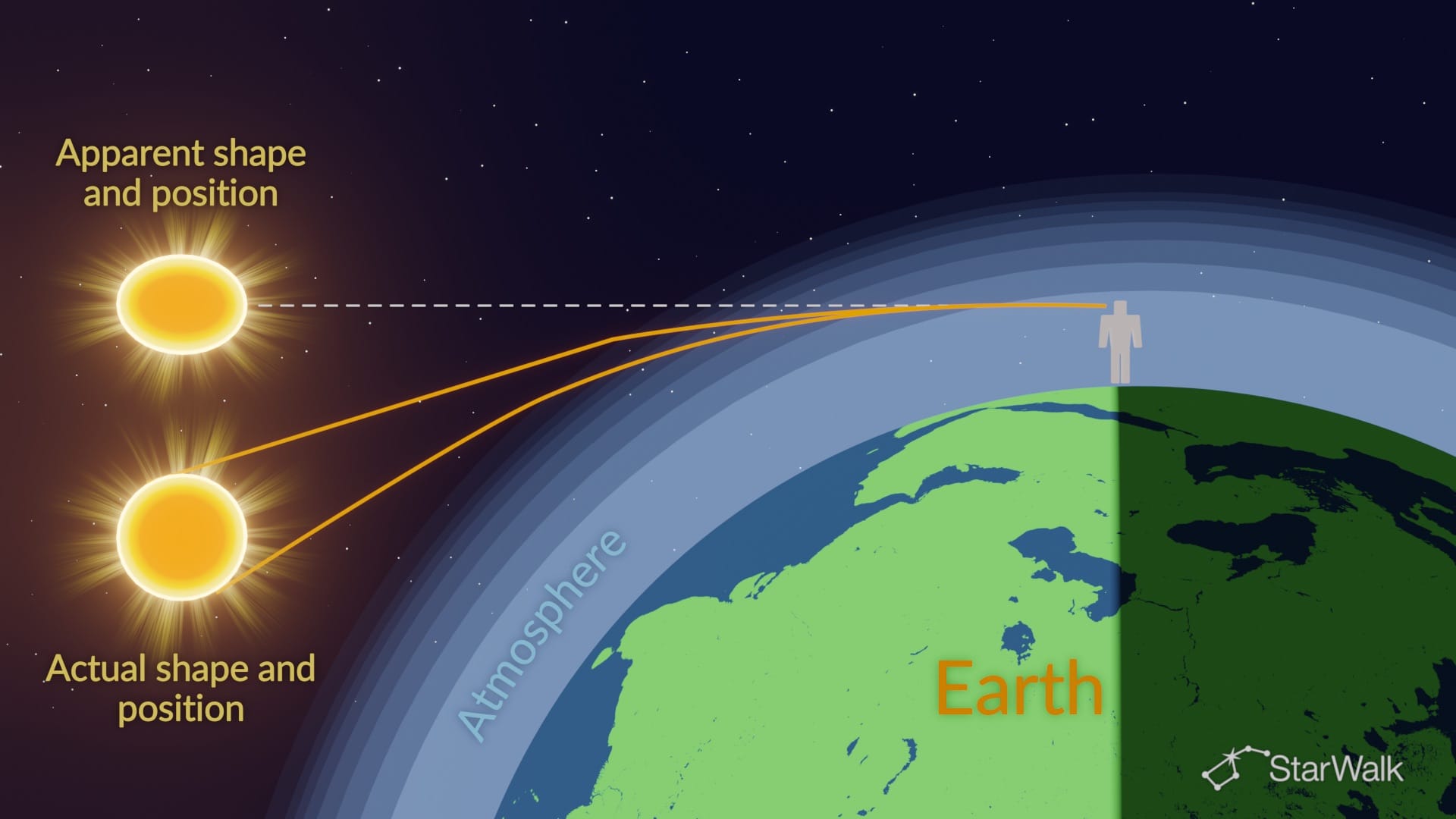
When the Sun approaches the horizon, light from its lower edge passes through denser layers of the atmosphere along a path that produces greater refraction. Its lower edge is therefore shifted upward more than its upper edge. As a result, the Sun's apparent vertical diameter becomes smaller, while its horizontal diameter remains almost unchanged.
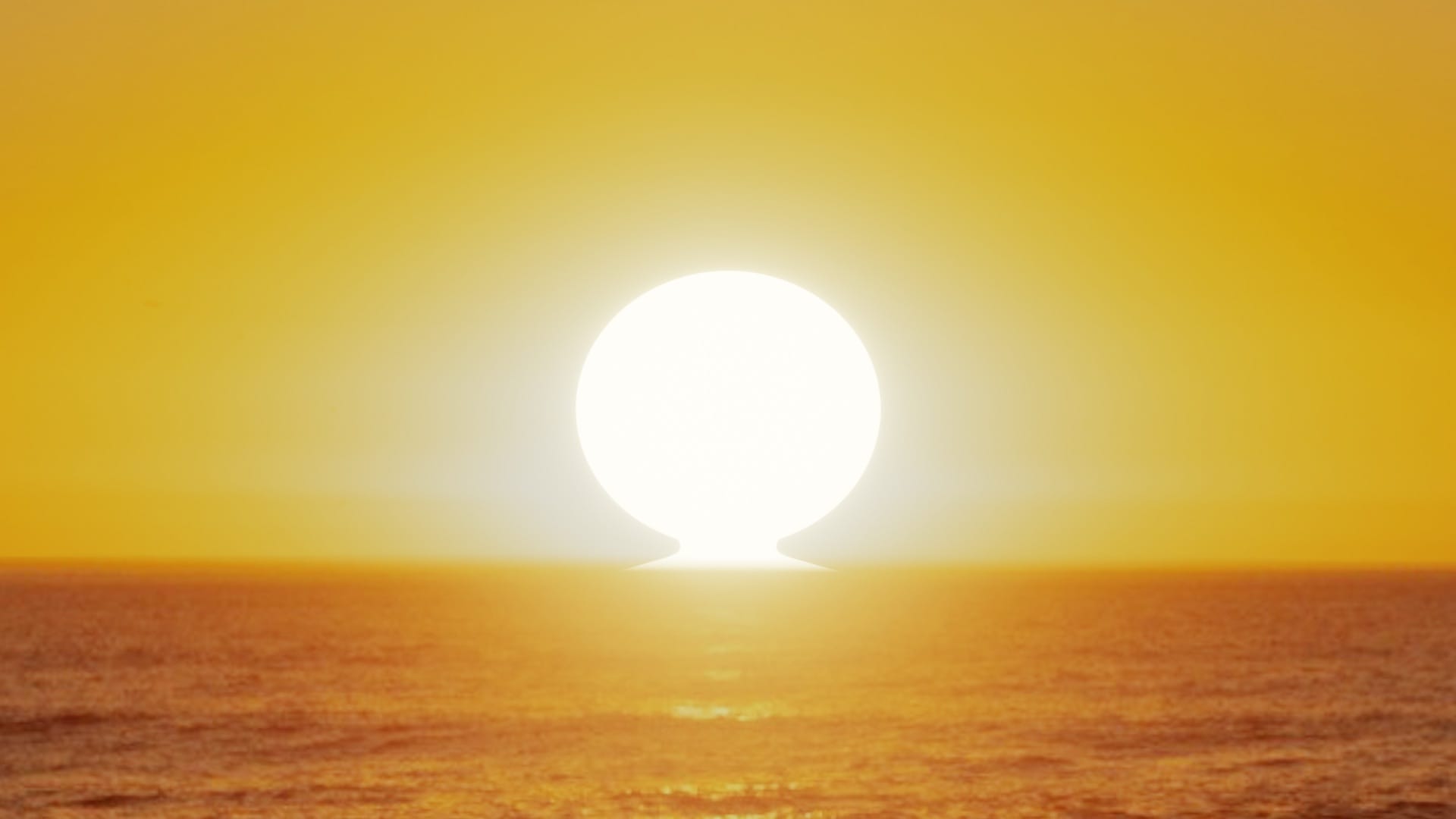
The effect can become especially striking when layers of air near the horizon have sharply different temperatures. These temperature differences can bend sunlight unevenly, making the solar disk appear stretched, split into segments, or even doubled.
One particularly interesting example is the Omega Sun, when the setting Sun resembles the Greek letter Ω. This happens when atmospheric refraction creates an inverted image of the Sun below the real one, and the two appear to merge near the horizon.
Check it yourself: Compare a photograph of the Sun near the horizon with one taken when the Sun is higher in the sky. The difference in shape may be surprisingly noticeable. Always use appropriate solar filters and safe observing methods when photographing or observing the Sun.
Curious about more unusual sights in the sky? Test your knowledge with our atmospheric phenomena quiz!
2. Earlier Sunrise and Later Sunset
Here's a surprising fact: when you see the first edge of the Sun appear at sunrise, the entire Sun may still be geometrically below the horizon. Atmospheric refraction bends sunlight, making the Sun appear higher than its actual position. The same effect occurs at sunset, allowing the Sun to remain visible even after it has geometrically dropped below the horizon.
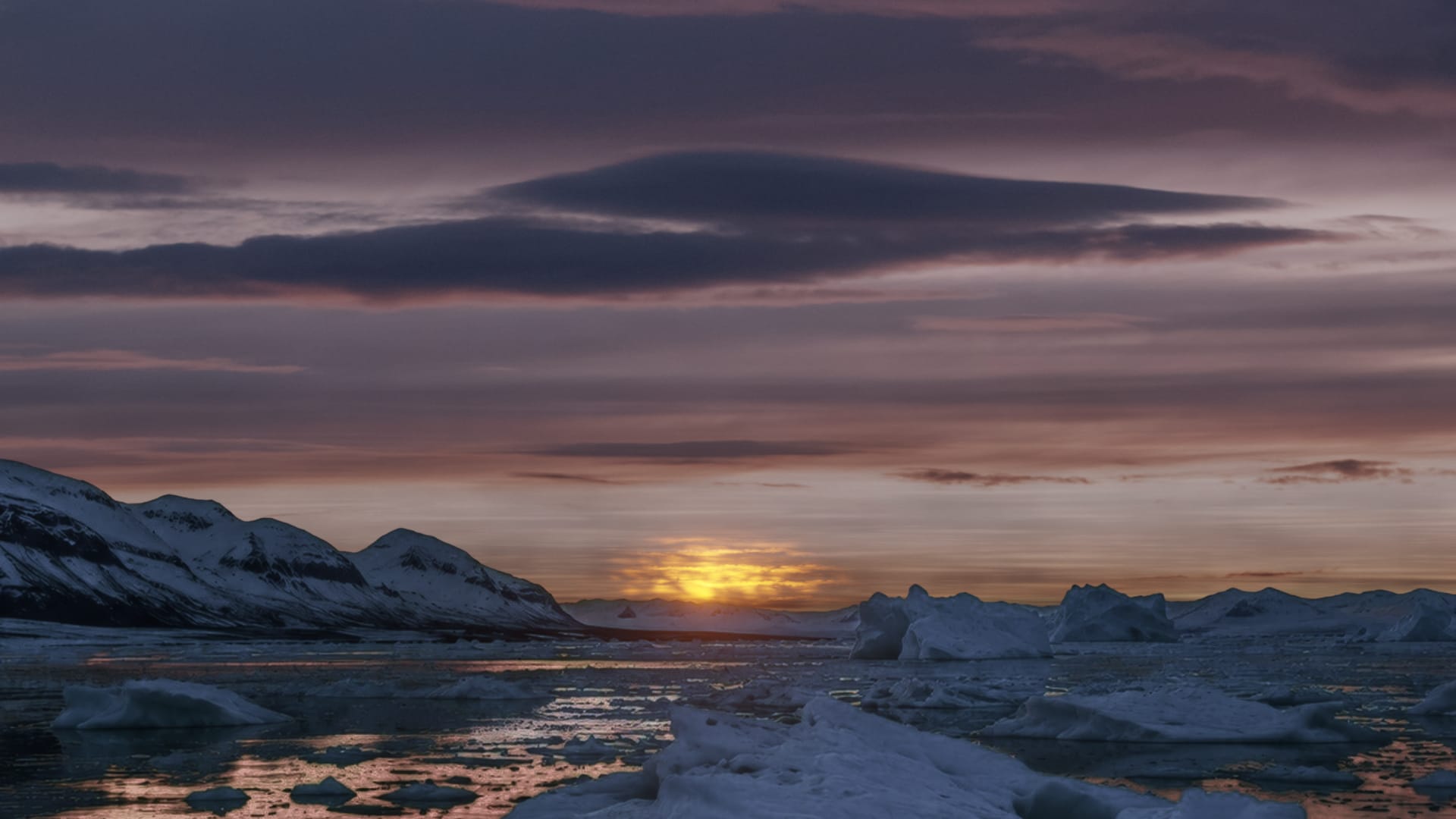
In rare cases, this effect can be really dramatic. One example is the Novaya Zemlya effect, reported by Arctic explorers in 1597. A strong temperature inversion — with warmer air above colder air near the surface — can bend sunlight along Earth's curvature, making the Sun visible even before the polar night would normally end. The Sun may also appear unusually stretched or split into horizontal bands.
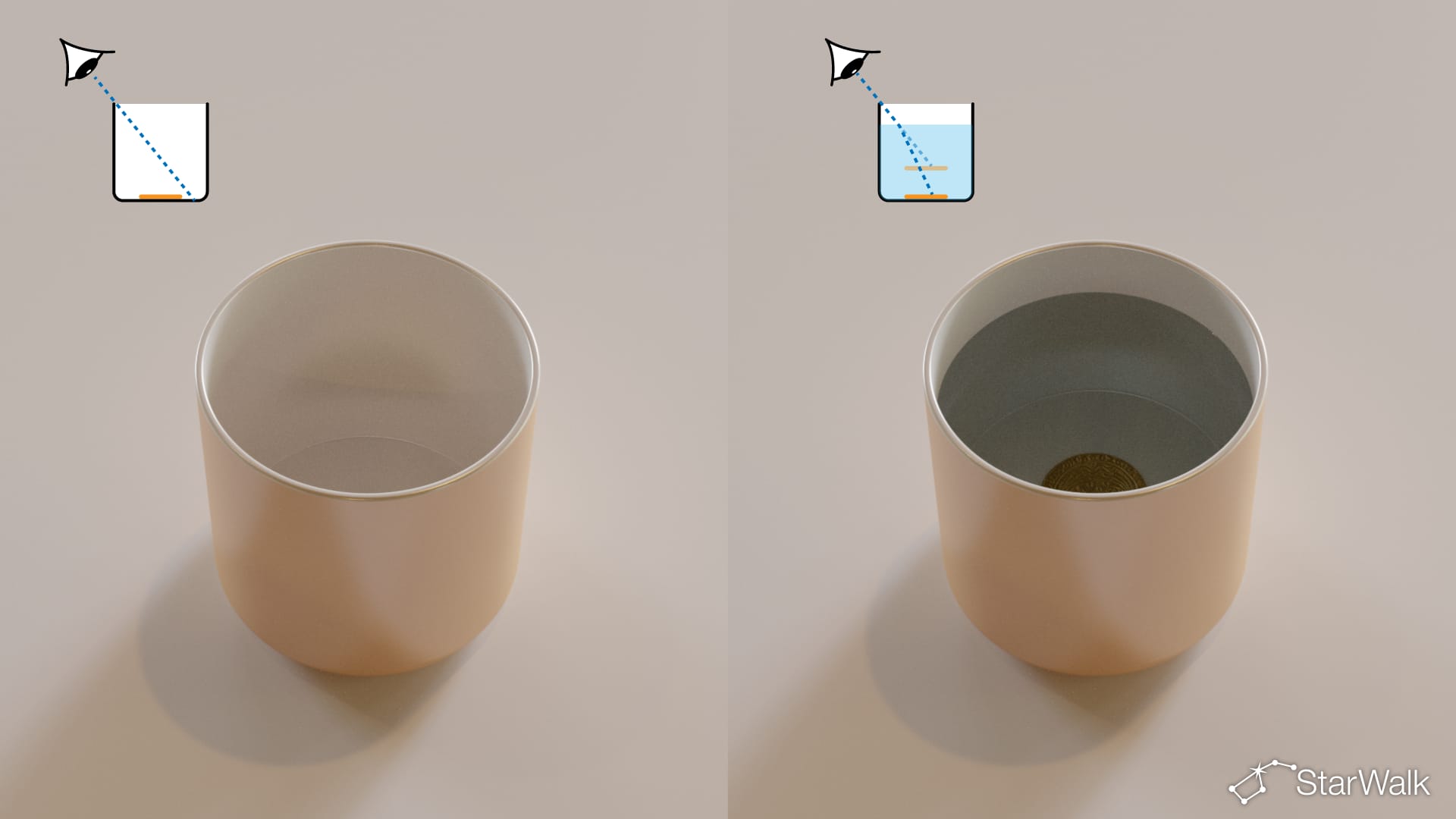
Check it yourself: Place a coin at the bottom of an empty, opaque cup. Lower your eyes until the cup's rim completely hides the coin. Without moving your head, slowly pour water into the cup. The coin will gradually come into view! This happens because light from the coin bends as it passes from water into air, allowing it to reach your eyes even though the cup's rim still blocks a direct view. Similarly, Earth's atmosphere bends sunlight, making the Sun visible even when it's already below the horizon.
How much longer does atmospheric refraction make the day?
Atmospheric refraction makes the Sun appear to rise a few minutes earlier and set a few minutes later than it would if Earth had no atmosphere. The exact difference depends on latitude, season, and atmospheric conditions.
There's another important detail: sunrise and sunset are defined by when the upper edge of the Sun appears or disappears at the horizon, not its center.
Astronomical calculations commonly account for two effects:
- Atmospheric refraction: About 34′ near the horizon.
- The Sun's apparent radius: About 16′.
Together, these explain why sunrise and sunset are normally calculated when the Sun's geometric center is approximately 50′ (0.83°) below the horizon.
This also explains an interesting feature of the equinoxes. Although an equinox is commonly described as a day with 12 hours of daylight and 12 hours of darkness, daytime is actually a little longer than 12 hours at most locations. That's because atmospheric refraction makes the Sun visible for longer, while the use of its upper edge to define sunrise and sunset adds even more daylight.
3. Flattened Moon
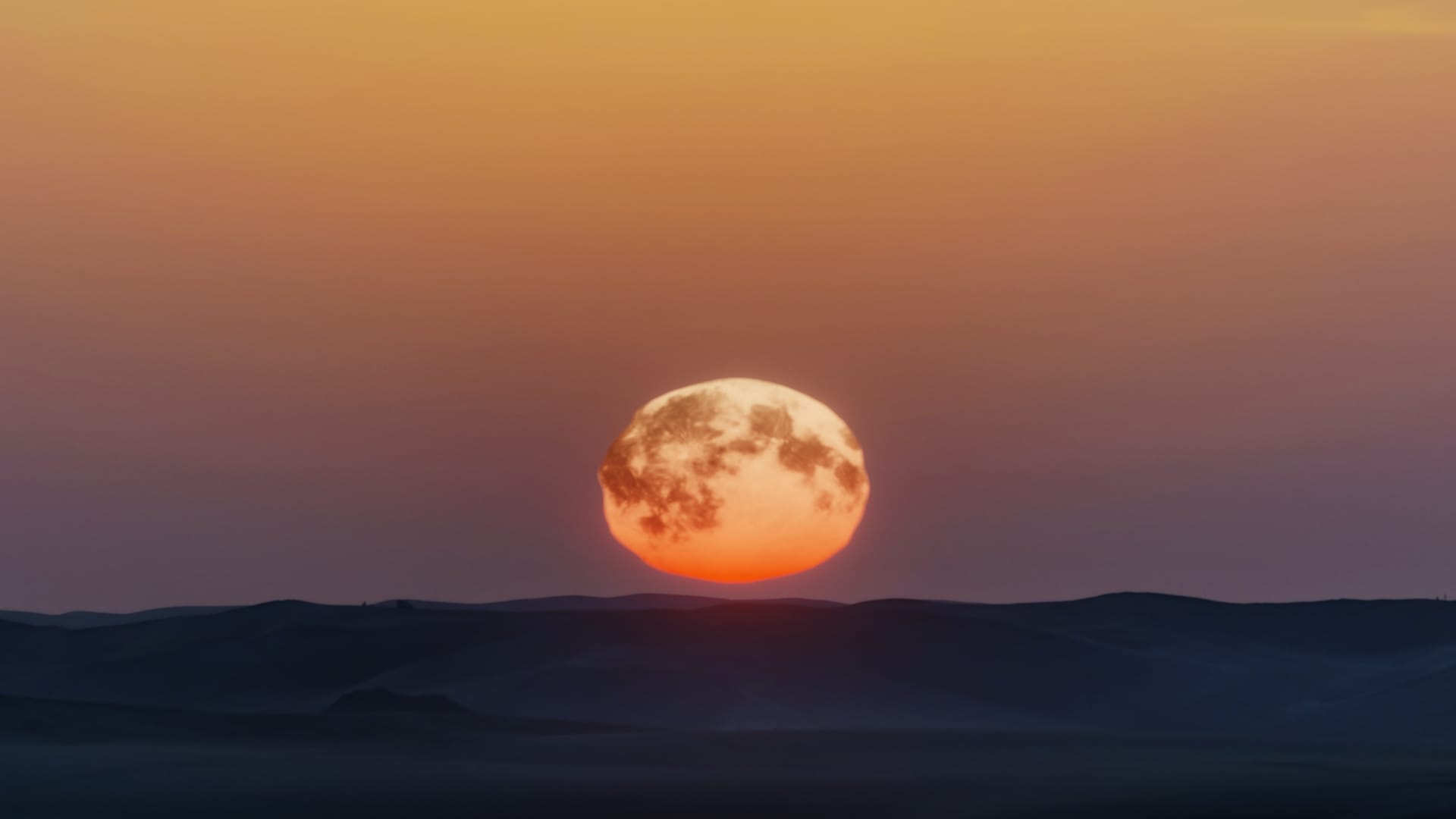
The Moon is another excellent object for observing atmospheric refraction. When the Full Moon rises or sets, it sometimes looks noticeably flattened, especially along its lower edge.
The explanation is the same as for the Sun: the lower part of the Moon is shifted upward more strongly than the upper part. Atmospheric conditions can also make the Moon's edge appear wavy, irregular, or unusually distorted.
Check it yourself: Find a location with a clear, unobstructed horizon and watch the Full Moon as it rises or sets. Look for a slightly flattened shape or irregular edges. As the Moon climbs higher, its disk should appear rounder and less distorted.
Does atmospheric refraction make the Moon look bigger?
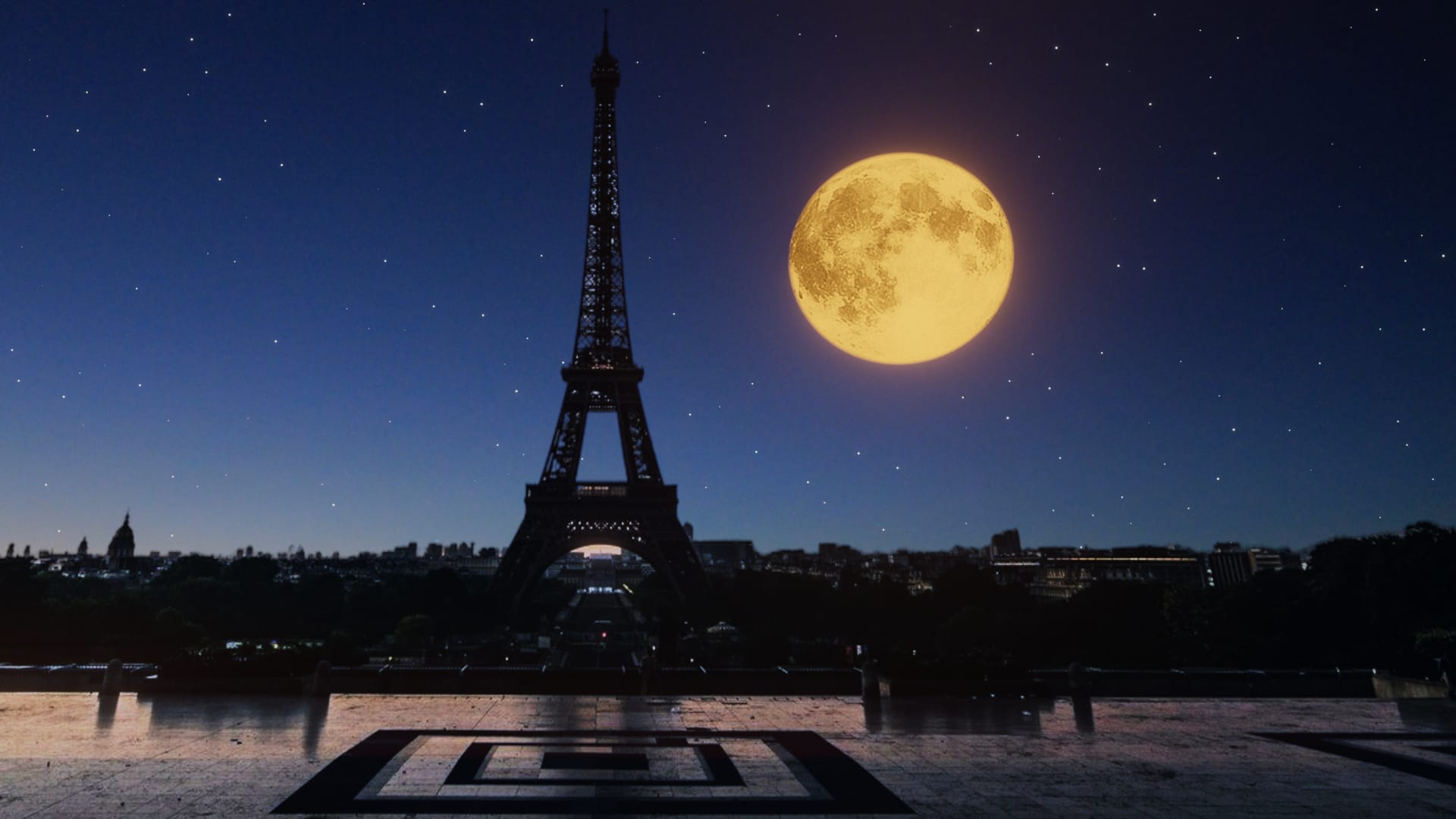
No! This is one of the most common misconceptions about atmospheric refraction.
The Moon often looks enormous when it's close to the horizon, especially when seen above buildings, trees, or mountains. However, this phenomenon — called the Moon illusion — is primarily related to how our brains interpret visual information.
Ordinary atmospheric refraction doesn't enlarge the Moon. It only slightly compresses its vertical diameter near the horizon. So the next time the Moon looks gigantic above the horizon, remember: its apparent size is largely an illusion, but its flattened shape is a real atmospheric effect.
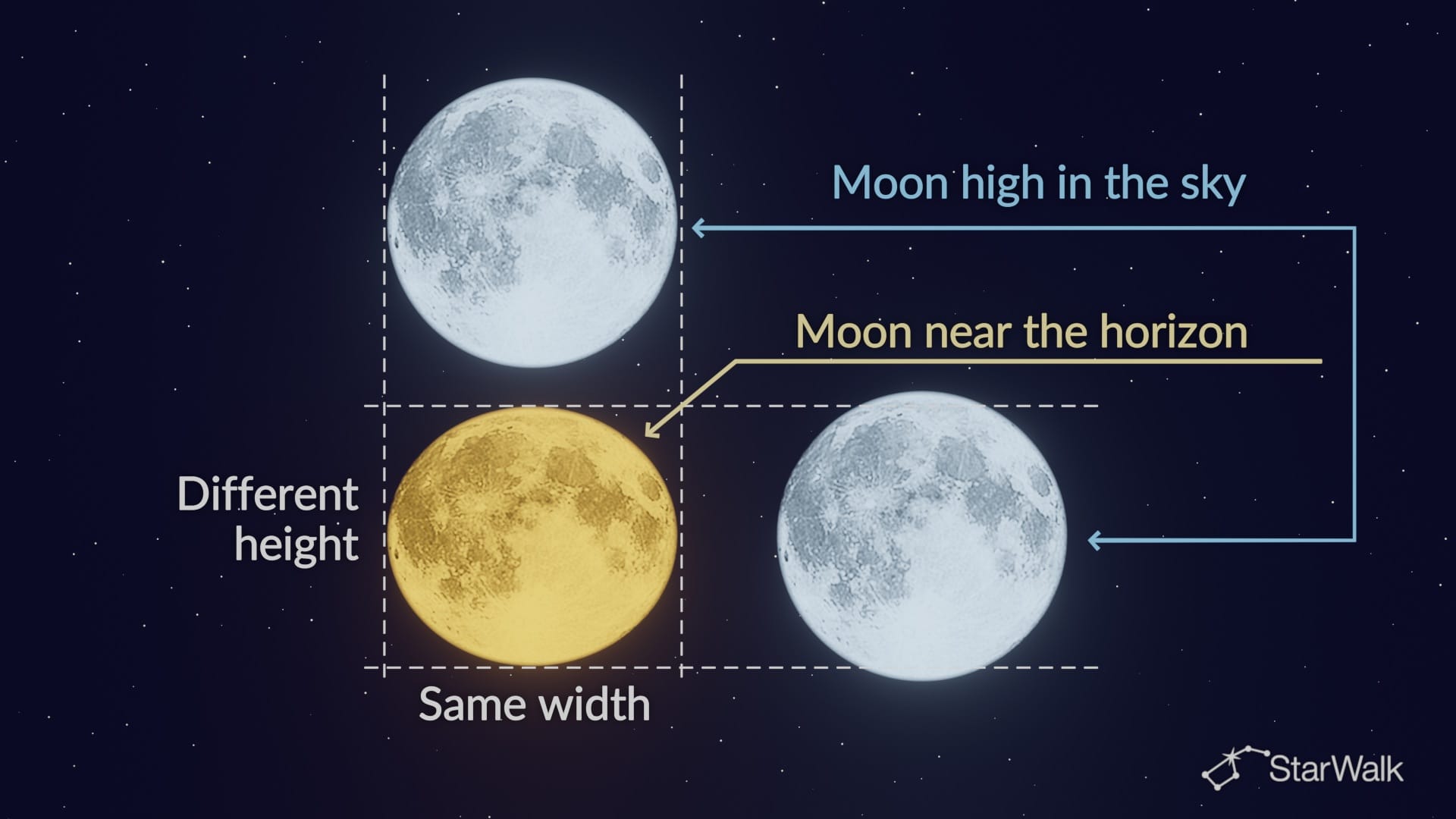
Check it yourself: Photograph the Full Moon shortly after moonrise, then take another picture when it's higher in the sky on the same night. Keep the same camera and focal length, and compare the Moon's horizontal and vertical diameters without resizing either image. Under ordinary conditions, its width remains almost unchanged, while its height is smaller near the horizon. The flattening shows refraction; the nearly unchanged width shows that the familiar impression of a giant horizon Moon is an illusion.
4. Displaced Stars
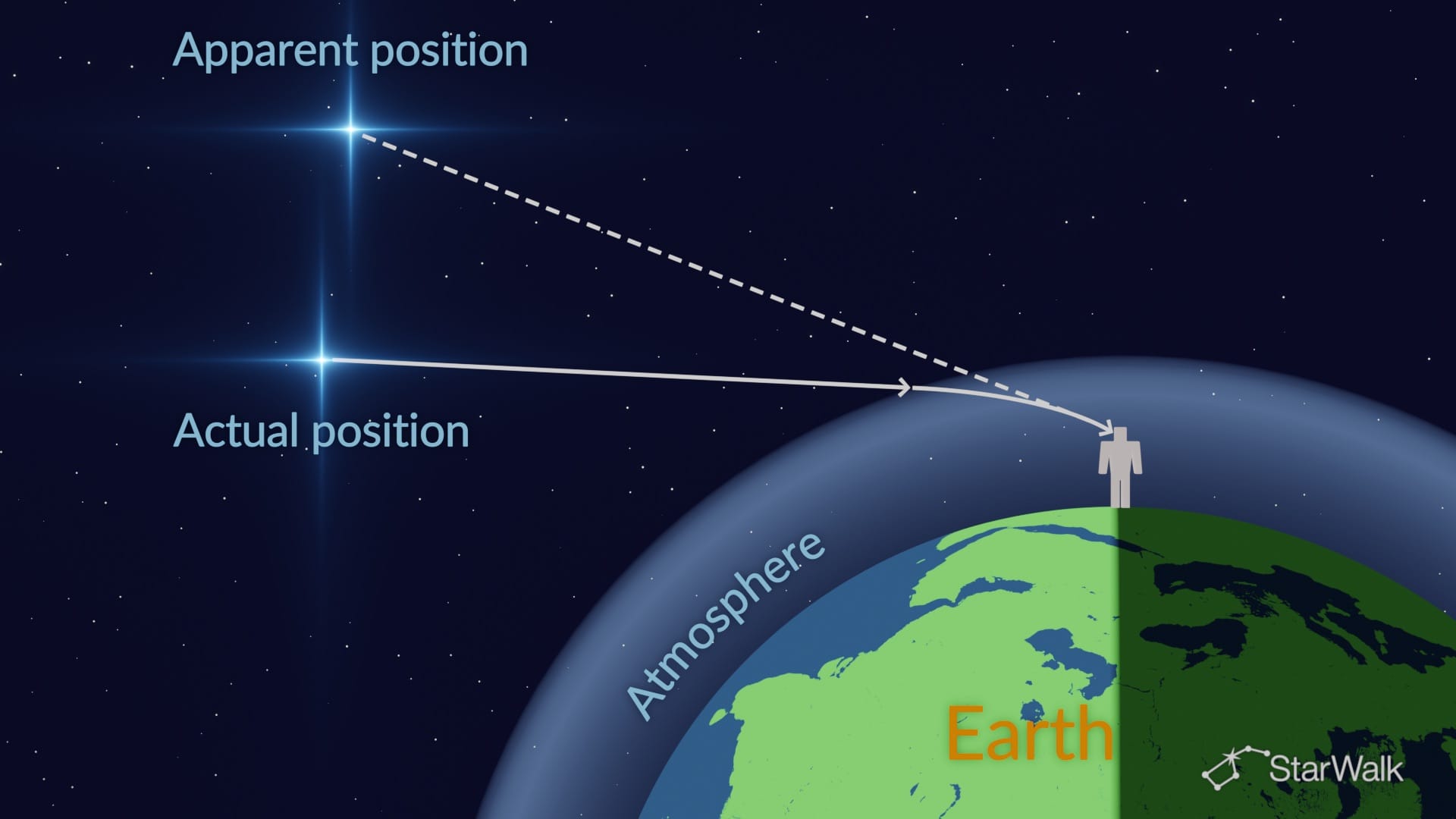
Because of atmospheric refraction, stars appear slightly higher than their geometric positions. The effect is strongest near the horizon, where a star may even remain visible when it's already geometrically below the horizon.
The shift is typically too small to change the familiar shapes of constellations dramatically, but it matters for precise astronomical measurements.
Atmospheric refraction can also slightly change the apparent separation between celestial objects during conjunctions, especially when they're at different altitudes. It can affect precise observations of occultations, too.
5. Green Flash
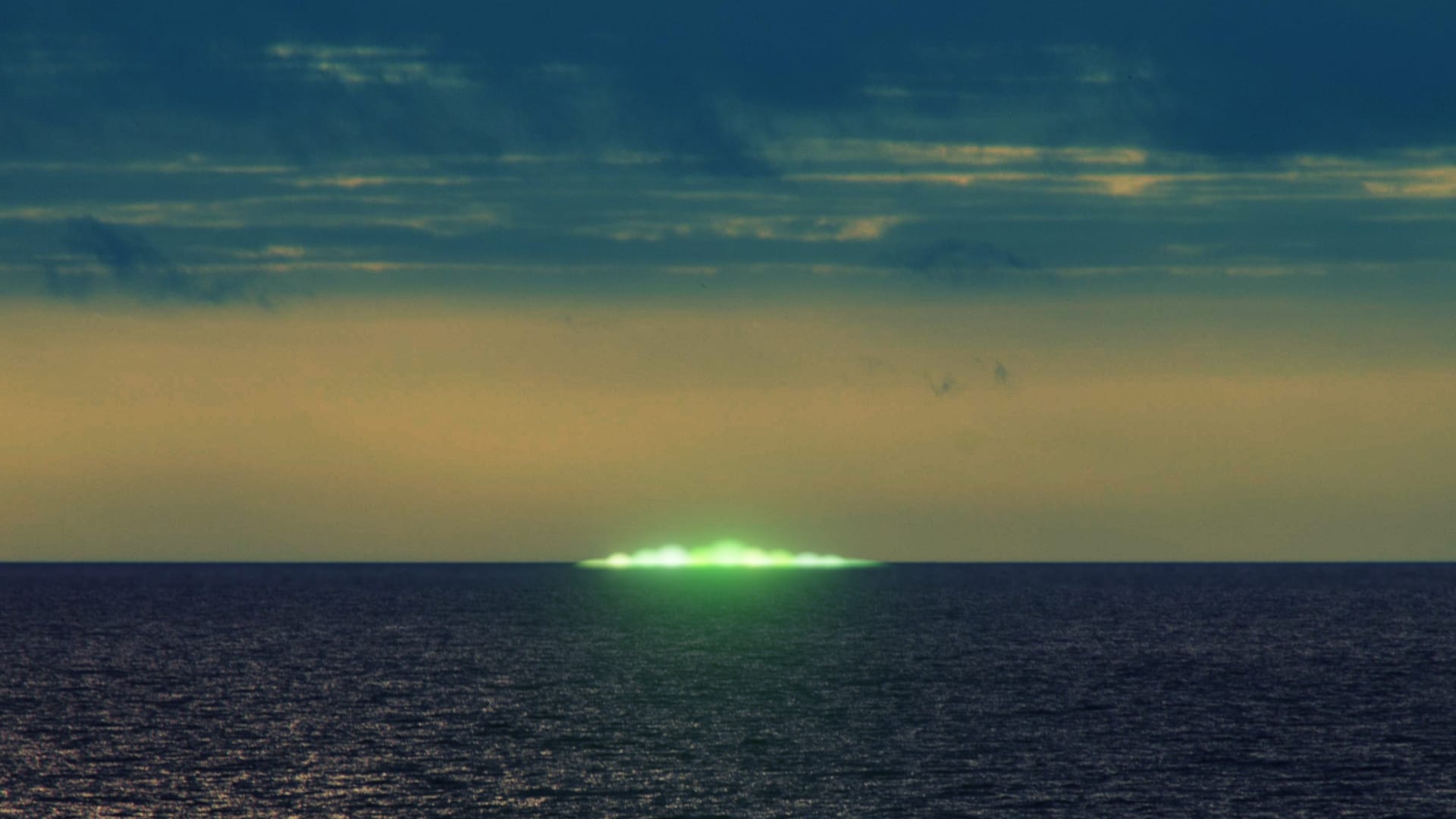
One of the most fascinating effects associated with atmospheric refraction is the green flash — a brief appearance of green light at the Sun's upper edge, sometimes visible at sunrise or sunset.
The green flash doesn't usually look like the dramatic burst of light you might have seen in Pirates of the Caribbean. More often, it appears as a small green patch or a detached strip at the Sun's upper edge. The common types last about one or two seconds, although some rare types can last up to about 15 seconds.
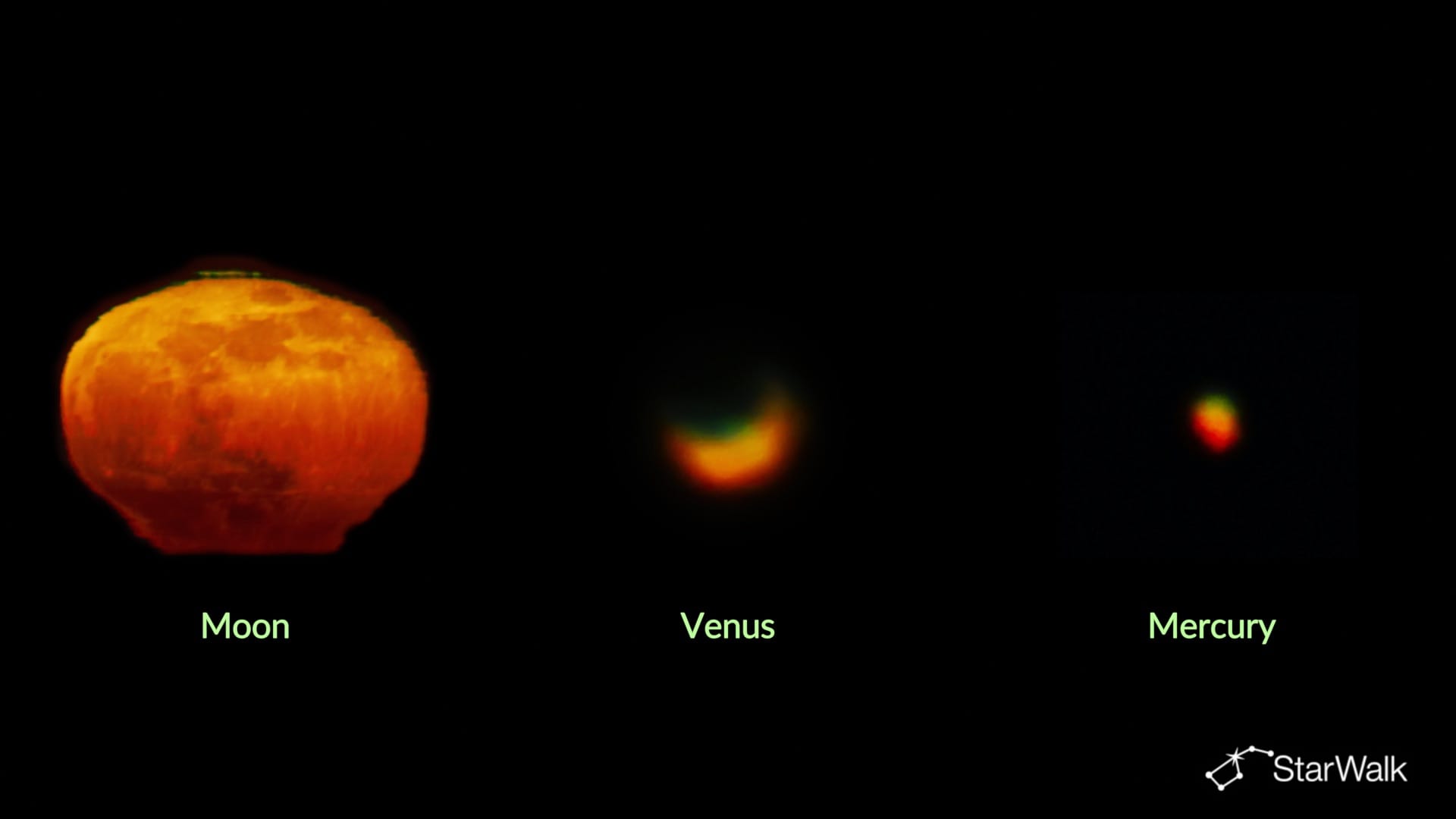
Although green flashes are most commonly associated with the Sun, they can also occur near the edges of the Moon and bright planets such as Venus and Mercury. These flashes are much harder to observe, but they have been captured in photographs.
Why does the green flash happen?
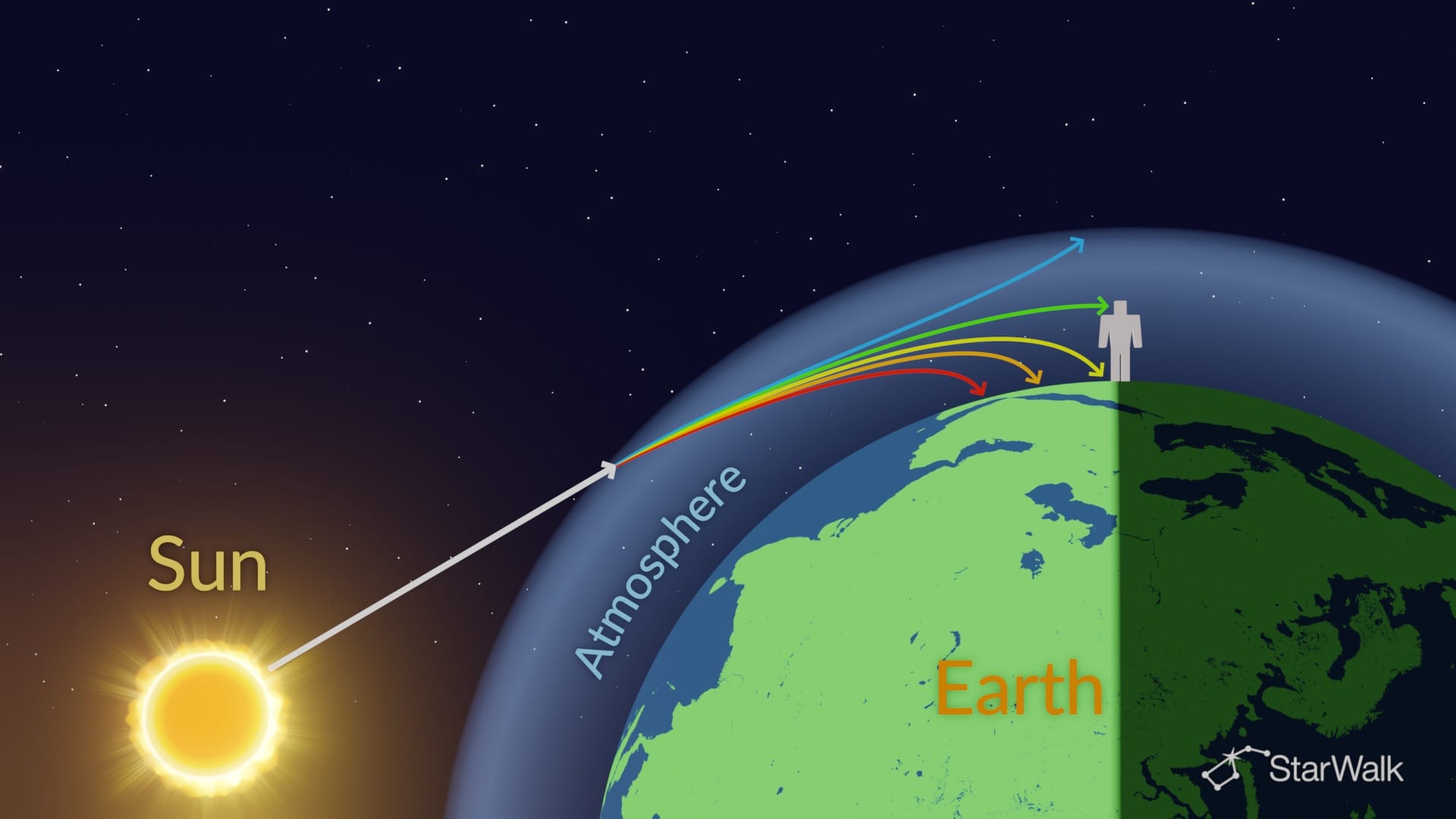
Sunlight contains different colors, and Earth's atmosphere bends each color by a slightly different amount. Shorter wavelengths, such as blue and green light, are refracted more strongly than longer red wavelengths. This separation of colors due to differences in refraction is called atmospheric dispersion.
At sunset, red and yellow light disappear below the horizon first because they are refracted less strongly. Green light is bent more, so it can remain visible for a moment longer. Blue and violet light are bent even more strongly, but most of this light is scattered away by the atmosphere. As a result, green is usually the last color we can clearly see before the Sun disappears. For a more detailed explanation, see this scientific guide to green flashes.
How can you see the green flash?
Green flashes are most likely to be observed when:
- The horizon is clear and unobstructed, such as over the ocean.
- The atmosphere is relatively transparent, with little haze or cloud near the horizon.
- The setting Sun appears unusually distorted near the horizon, which can indicate favorable temperature differences between air layers.
- The Sun is just disappearing below the horizon.
Green flashes can also occur at sunrise, although they're generally harder to catch because you need to know precisely where the Sun will appear.
Safety warning: Never stare at the bright Sun or observe it through unfiltered binoculars, telescopes, or camera lenses. Use certified solar-viewing protection and proper solar filters for direct solar observations.
Curious about other unusual sky phenomena? Explore more astronomical effects you can observe during the day.
How Does Atmospheric Refraction Work?
Earth's atmosphere consists of layers of air with different densities, generally becoming denser closer to the ground. As light passes through these layers, its direction changes slightly. Our eyes interpret the incoming light as traveling in a straight line, so celestial objects appear higher than their actual positions.
The effect is strongest near the horizon, where light travels through more of the atmosphere. Under typical conditions, refraction can shift an object at the horizon upward by about 34 arcminutes (0.57°) — slightly more than the apparent diameter of the Full Moon.
Here's how the effect changes with an object's apparent altitude (how high it looks above the horizon):
| Apparent altitude | Approximate refraction |
|---|---|
| 0° (horizon) | 34′ |
| 5° | 10′ |
| 10° | 5′ |
| 20° | 3′ |
| 45° | 1′ |
| 90° (overhead) | 0′ |
Values are approximate. Actual refraction depends on atmospheric temperature, pressure, and other conditions.
An arcminute (′) is 1/60 of a degree. To better understand these measurements, check out our infographic on measuring distances in the sky.

Atmospheric Refraction: Frequently Asked Questions
Does atmospheric refraction cause stars to twinkle?
Yes, but indirectly. Stars twinkle because turbulent air constantly changes how their light is refracted, making them appear to flicker. This differs from ordinary atmospheric refraction, which shifts their apparent positions. Learn more about why stars twinkle in our dedicated article.
Does atmospheric refraction make the Sun look bigger?
No. Ordinary atmospheric refraction generally makes the Sun look slightly flattened rather than larger. Its lower edge is shifted upward more strongly than its upper edge.
Can atmospheric refraction make an object visible below the horizon?
Yes. Refraction can bend light from an object that's geometrically below the horizon into an observer's line of sight. This is why the Sun can remain visible briefly after its geometric position has passed below the horizon.
Is atmospheric refraction stronger in winter?
Not necessarily, although colder and denser air can increase refraction under otherwise similar conditions. The effect depends on atmospheric pressure, temperature, and how air density changes with altitude. Sudden temperature changes and temperature inversions can also produce unusually strong refraction.
Why doesn't the Sun always rise or set at the predicted time?
Sunrise and sunset calculations assume average atmospheric conditions and a level horizon. In reality, changing air temperatures can affect refraction, so the observed time may differ from the prediction by a minute or more, even with a clear sea horizon. Hills, mountains, and the elevation of your observing location can cause even larger differences. When planning observations with stargazing apps, be ready a few minutes before the predicted time.
Does atmospheric refraction change the color of the Sun or Moon?
Atmospheric refraction can separate colors slightly, as in the green flash. However, the familiar orange or red appearance of the Sun and Moon near the horizon is mainly caused by atmospheric scattering, not refraction. When sunlight or moonlight travels through a longer stretch of the atmosphere, shorter wavelengths are scattered away more strongly, allowing warmer colors to dominate.
Why doesn't the Moon disappear during a total lunar eclipse?
During a total lunar eclipse, Earth blocks direct sunlight from reaching the Moon. However, Earth's atmosphere bends some sunlight into its shadow, allowing it to reach the lunar surface. At the same time, atmospheric scattering removes much of the blue light, giving the Moon its reddish appearance. Learn more about this phenomenon in our guide to lunar eclipses.
Does atmospheric refraction occur in space?
Astronomical refraction requires an atmosphere or another medium through which light can bend. In the vacuum of space, there's no atmospheric refraction. However, light can still change direction in space because of gravity — an entirely different phenomenon known as gravitational lensing.
Does atmospheric refraction support the flat-Earth theory?
No. Some flat-Earth supporters argue that atmospheric refraction explains why distant objects disappear below the horizon or why the Sun appears to set. However, these explanations don't match how light actually bends through Earth's atmosphere. Refraction can make objects appear higher than their true positions, but it doesn't eliminate the effects of Earth's curvature. Explore more evidence in our article on 7 ways to prove the Earth is round.
Atmospheric Refraction: Key Takeaways
Atmospheric refraction is a small but important effect that changes how we see the sky. It makes celestial objects appear higher than their true geometric positions, flattens the Sun and Moon near the horizon, and allows us to enjoy a little extra daylight. Under special conditions, it can even produce spectacular optical phenomena such as green flashes.
For stargazers, the most useful rule is simple: the lower an object is above the horizon, the more strongly Earth's atmosphere affects its appearance. Use Sky Tonight to track celestial objects as they move across the sky. Observe them near the horizon to see refraction in action, or higher in the sky to minimize its effects.
