Cool Space Objects to See in February 2026: Galaxies, Nebulae, Star Clusters

In February, the night sky is packed with iconic space sights – from the sparkling Pleiades to dramatic galaxies like the Cigar Galaxy. In this guide, you’ll get the key facts plus beautiful images of each space object. Ready to spot them yourself? Grab the free Sky Tonight app to locate any dazzling galaxy in seconds. Let’s explore February’s best astrophotography targets!
Contents
- What are these cool space objects we’re about to explore?
- Nebulae visible in February 2026: the prettiest cloud-shaped space objects
- Galaxies visible in February 2026: beautiful “star cities” in the night sky
- Star clusters visible in February 2026: sparkly star gatherings
- Can I actually see these cool space objects in the sky tonight?
- Beautiful space objects in February 2026: the best of the month
What are these cool space objects we’re about to explore?
They’re all deep-sky objects, which is how astronomers call the beautiful sights far beyond our Solar System. They come in three main types:
- Galaxies – huge “star cities” drifting through space
- Nebulae – glowing (or dark) clouds of gas and dust
- Star clusters – groups of stars born together
The names of deep-sky objects reflect the astronomical catalogs in which they are listed. The two most popular among skywatchers are the Messier catalog (110 objects) and the NGC catalog (7,850 objects). The same object may appear in several catalogs and thus collect multiple names over time. Some deep-sky objects have so many names that they sound like space nobility: “The Pleiades – also known as Messier 45, Melotte 22, and Collinder 42.”
Want to understand those names and numbers better? Take a quick look at our astronomical catalogs guide. With that sorted, let’s move on to the real goal – exploring gorgeous galaxies, nebulae, and star clusters in the February sky.
Nebulae visible in February 2026: the prettiest cloud-shaped space objects
A nebula is a vast cloud of gas and dust in space, often serving as the birthplace of stars. Nebulae can appear in the sky as faint, hazy patches of light, often requiring a telescope or binoculars to see in detail.
To estimate how easy a nebula (or another space object) might be to see, check its apparent magnitude and surface brightness: they describe how bright the object looks in our sky. Smaller numbers mean brighter objects, which are typically easier to spot.
Below are some of the best nebulae to hunt down in February. We’ve arranged them in the order we personally enjoy most – but your favorites may be totally different, so feel free to explore them all and build your own ranking!
Horsehead Nebula
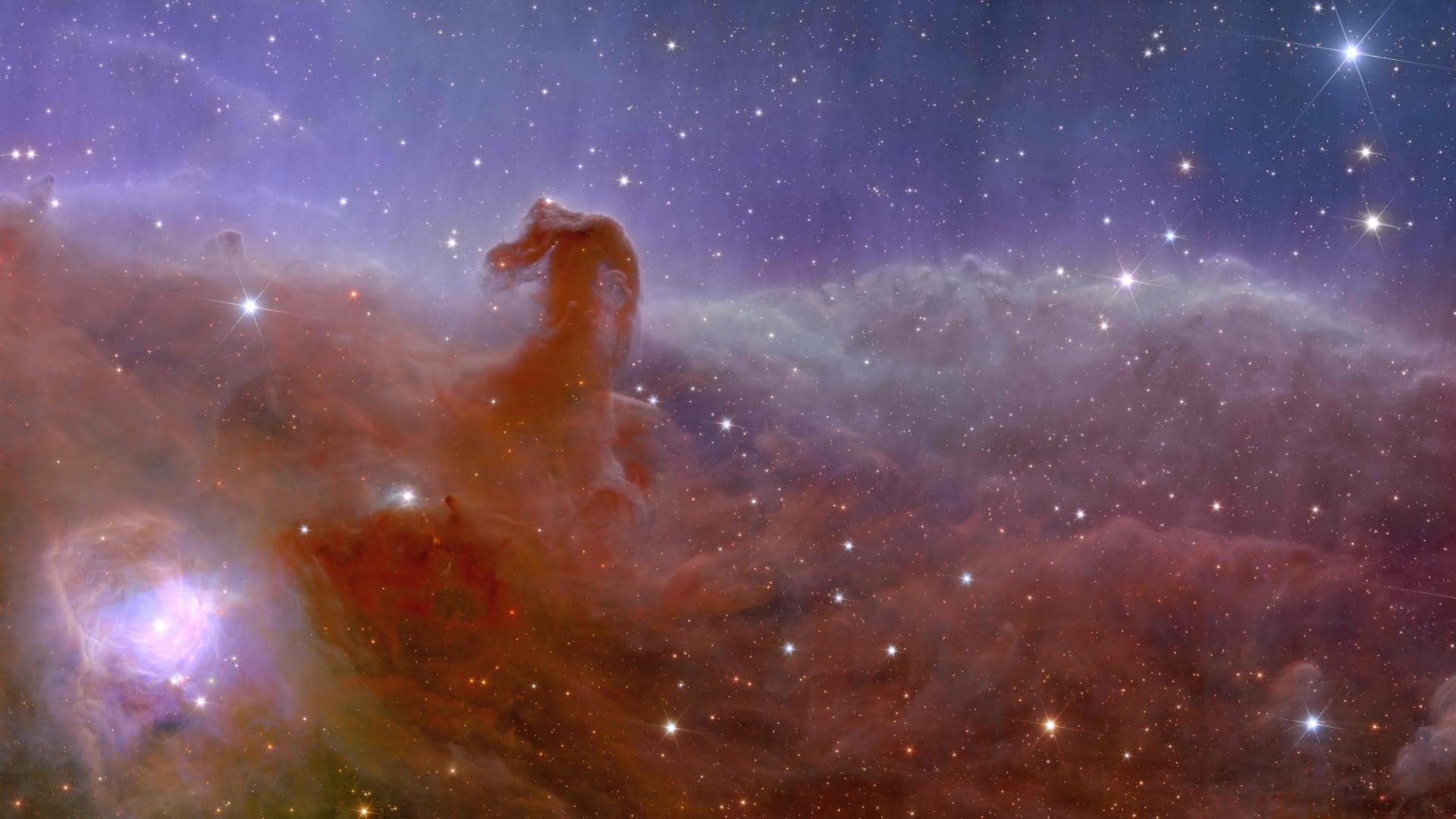
- Alternative name: Barnard 33
- Apparent size: 8′ × 6′ (3.7 × 5 times smaller than the Full Moon)
- Apparent magnitude: 6.8
- Constellation: Orion
- Best observed from: Northern Hemisphere
- How to observe: As Horsehead Nebula is a dark nebula, it’s very challenging to see. You’ll need at least a small telescope and maybe a special filter for its observation. The nebula’s location is favorable, though — it can be found just to the south of Alnitak, which is one of the three stars of Orion's Belt.
- Description: Horsehead Nebula is a small dark nebula discovered by Scottish astronomer Williamina Fleming in 1888. It is a part of a large star-forming region called the Orion molecular cloud complex.
Tarantula Nebula
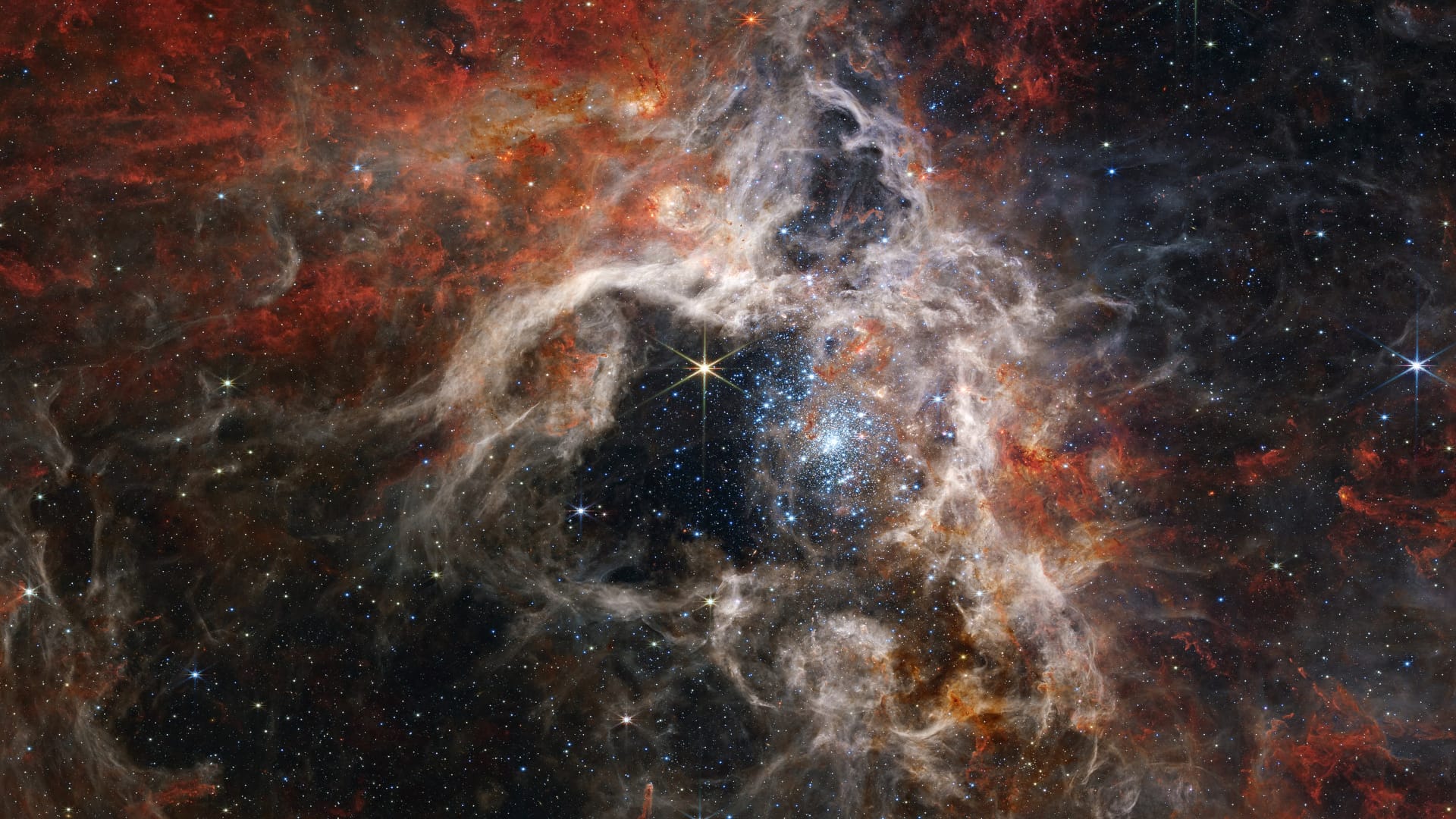
- Alternative names: NGC 2070, Caldwell 103, Doradus Nebula, 30 Doradus, True Lovers’ Knot
- Apparent size: 30′ x 20′ (1 x 1.5 times smaller than the Full Moon)
- Apparent magnitude: 7.3
- Constellation: Dorado
- Best observed from: Southern Hemisphere
- How to observe: The Tarantula Nebula is considered rather bright: if it were as close as the Orion Nebula, it would outshine Venus. However, it’s too far to be seen with the naked eye. You’ll need binoculars or a small telescope to see it.
- Description: The Tarantula Nebula is an emission nebula that was discovered by the French astronomer Nicolas-Louis de Lacaille in 1751. It is one of the largest known nebulae, and also the most active starburst region in the Local Group of galaxies. Tarantula Nebula is associated with the Large Magellanic Cloud, forming its southeast corner.
Flame Nebula
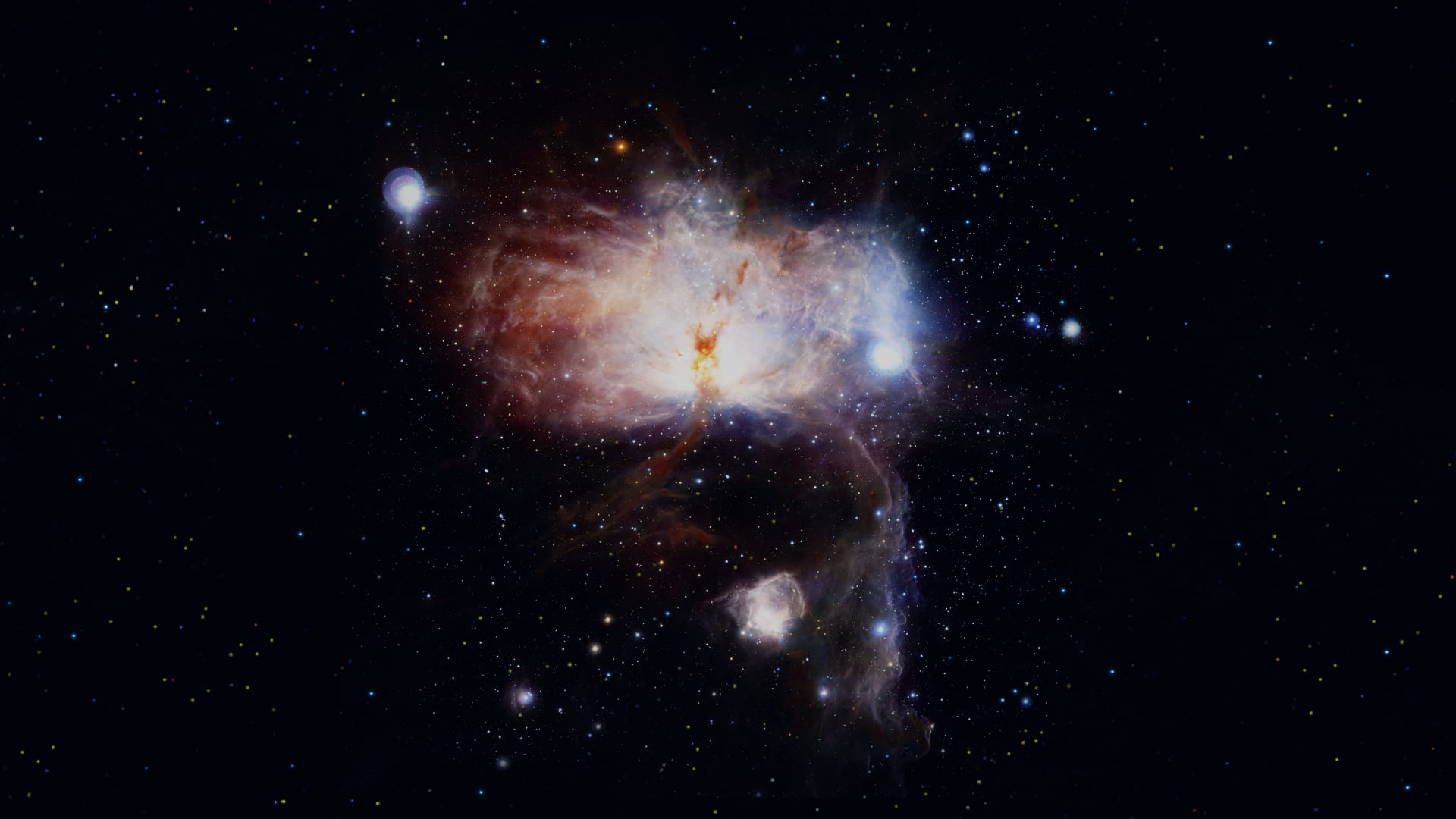
- Alternative names: NGC 2024, Sh2-277
- Apparent size: 30' (equals the size of the Full Moon)
- Apparent magnitude: 10
- Constellation: Orion
- Best observed from: Northern Hemisphere
- How to observe: You’ll need at least a small telescope to see the Flame Nebula. Like the Horsehead Nebula, it is located close to Alnitak — one of the three stars of Orion’s Belt.
- Description: Flame Nebula is an emission nebula discovered by British astronomer William Herschel in 1786. It is a part of a large star-forming region called the Orion molecular cloud complex.
Owl Nebula
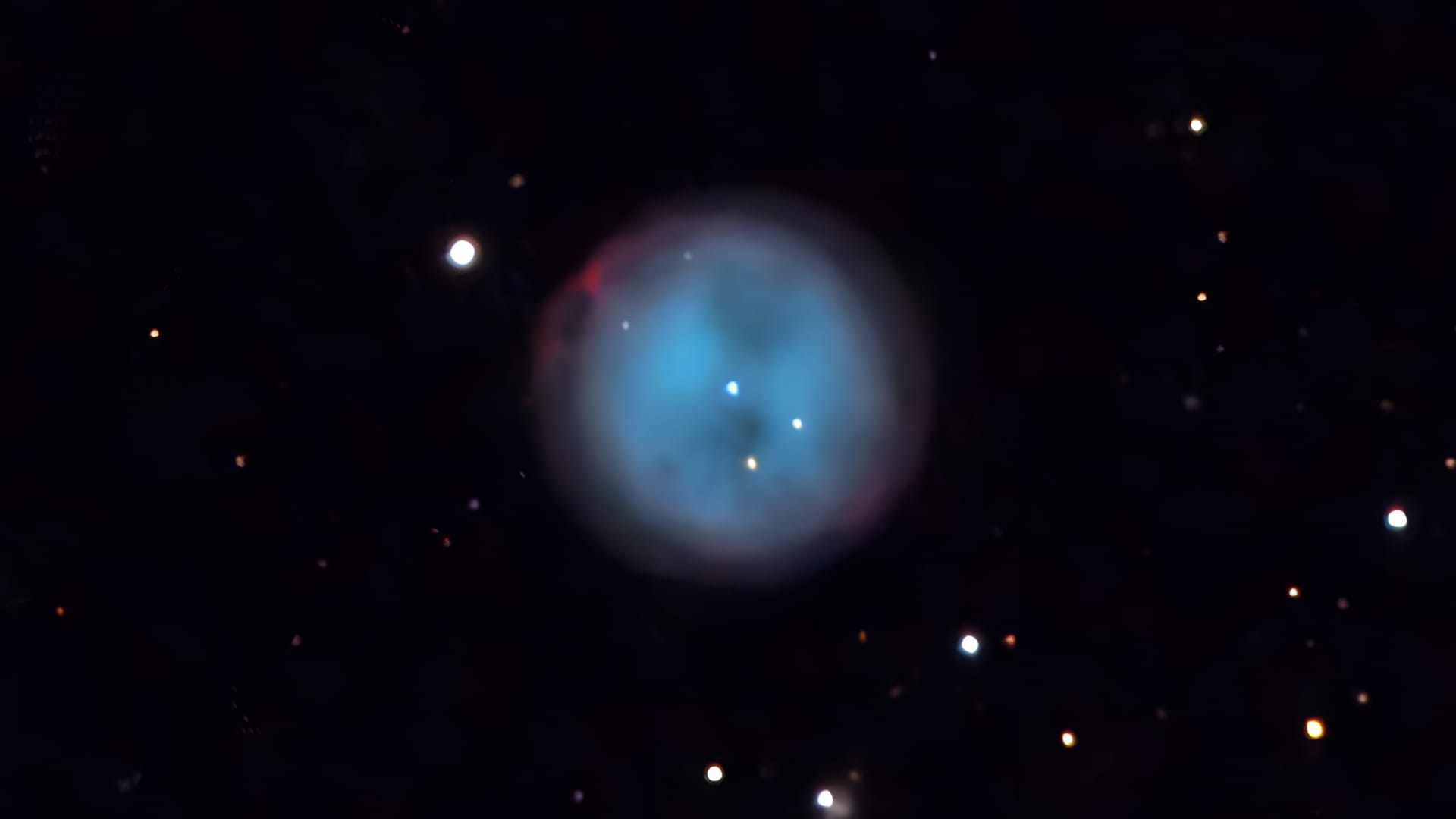
- Alternative names: M97, NGC 3587
- Apparent size: 3′ (10 times smaller than the Full Moon)
- Apparent magnitude: 9.9
- Constellation: Ursa Major
- Best observed from: Northern Hemisphere
- How to observe: You can try to spot the Owl Nebula with 20×80 binoculars or a small telescope, but if you want to see the “owl eyes”, use a large telescope.
- Description: Owl Nebula is a planetary nebula discovered by French astronomer Pierre Méchain in 1781. Anglo-Irish astronomer William Parsons, who also observed the nebula, thought it looked like the head of an owl — hence the nebula’s nickname.
Monkey Head Nebula
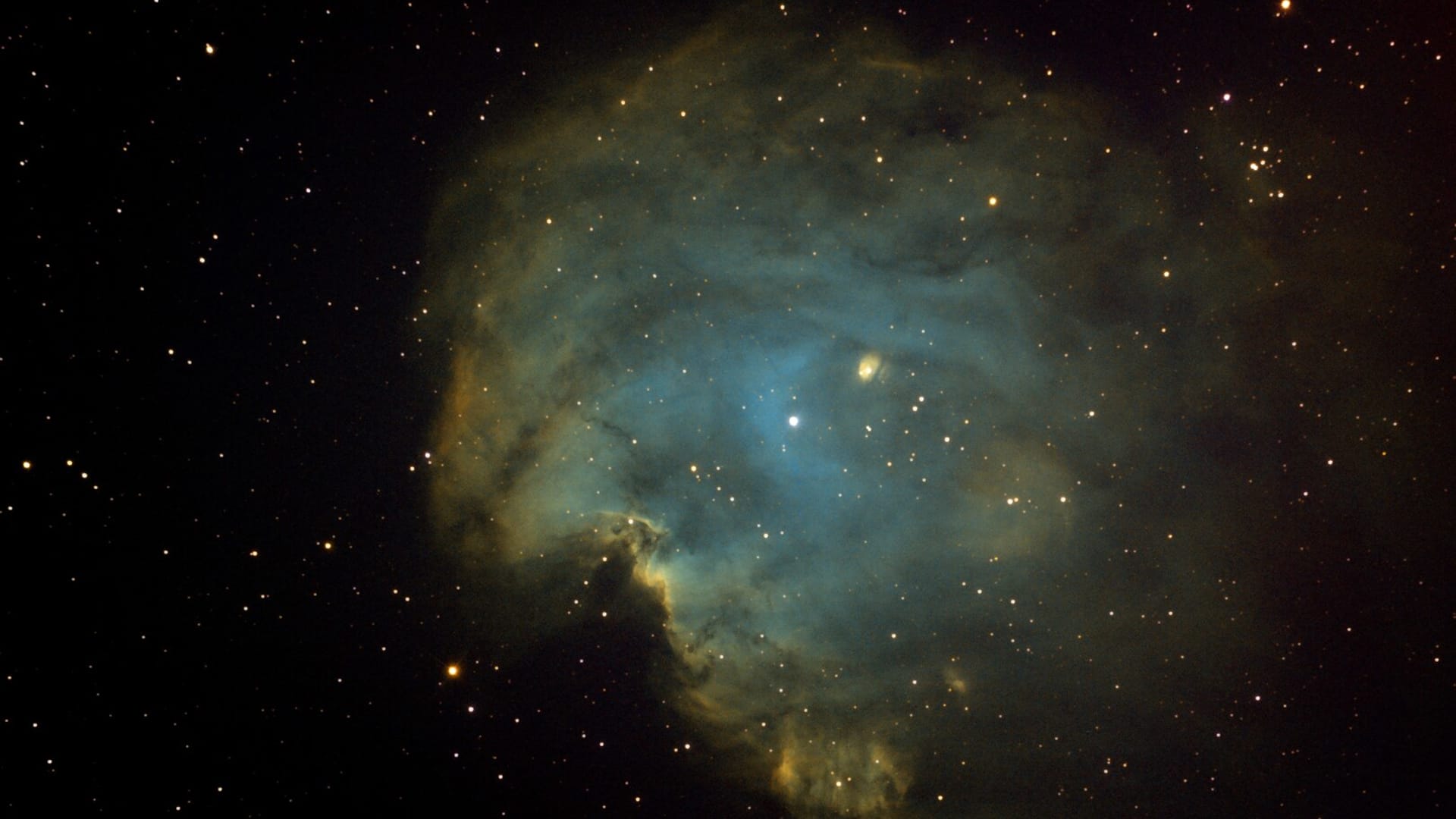
- Alternative names: NGC 2174, Sh2-252
- Apparent size: 40′ (1.3 times larger than the Full Moon)
- Apparent magnitude: 6.8
- Constellation: Orion
- Best observed from: Northern Hemisphere
- How to observe: The Monkey Head Nebula can't be seen with the naked eye. You’ll need at least 7x50 binoculars or, better yet, a small telescope to observe it.
- Description: The Monkey Head Nebula is an emission nebula discovered by Italian astronomer Giovanni Battista Hodierna around 1654 and then independently discovered by German astronomer Karl Christian Bruhns in 1857. The nebula is associated with the open star cluster NGC 2175.
Galaxies visible in February 2026: beautiful “star cities” in the night sky
A galaxy is a massive system of stars, stellar remnants, interstellar gas, dust, and dark matter bound together by gravity. Some galaxies are neat and graceful spirals, others are rounder ellipticals, and some are irregular – like cosmic shapes still in progress.
Fun fact: you’re reading this from inside a galaxy – the Milky Way. On a really dark night, that pale glowing “river” across the sky is our view through the Milky Way’s star-filled disk.
Because other galaxies are incredibly far away, they usually appear as small, faint, blurry patches in amateur optics. But give them enough aperture (or a camera), and those tiny smudges can reveal bright cores, soft halos, and hints of their overall structure.
Cigar Galaxy
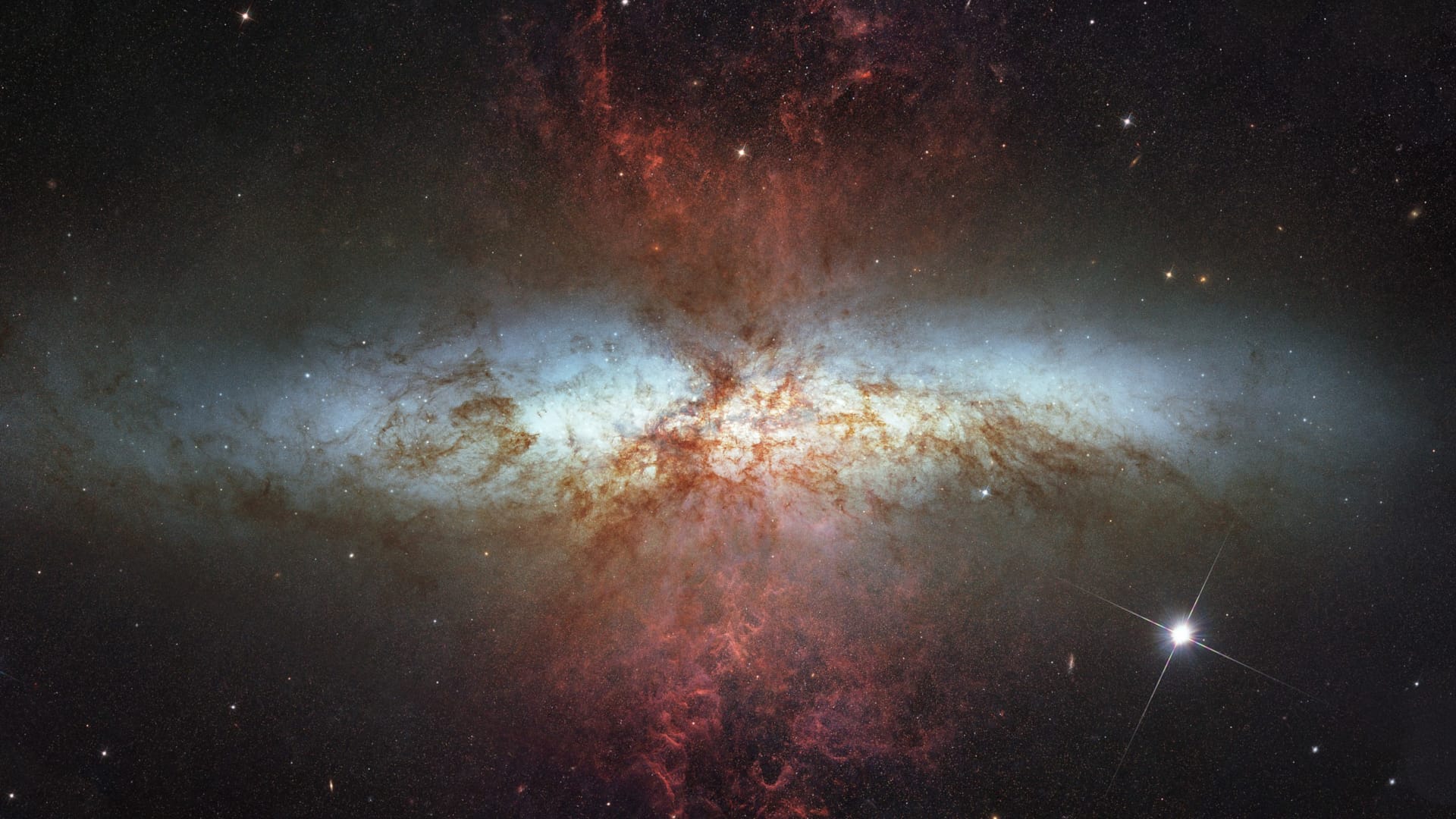
- Alternative names: M82, NGC 3034
- Apparent size: 11.2′ × 4.3′ (2.7 × 6.9 times smaller than the Full Moon)
- Apparent magnitude: 8.41
- Constellation: Ursa Major
- Best observed from: Northern Hemisphere
- How to observe: Like Bode’s Galaxy (M81), the Cigar Galaxy is considered an ideal deep-sky object for observing with binoculars and small telescopes.
- Description: M82 is a starburst galaxy (a galaxy undergoing intense star formation) discovered by Johann Elert Bode in 1774. It is undergoing an exceptionally high rate of star formation because of the gravitational influence of its neighbor — Bode’s Galaxy (M81). M82 is the second-largest member of the M81 group of galaxies.
M106
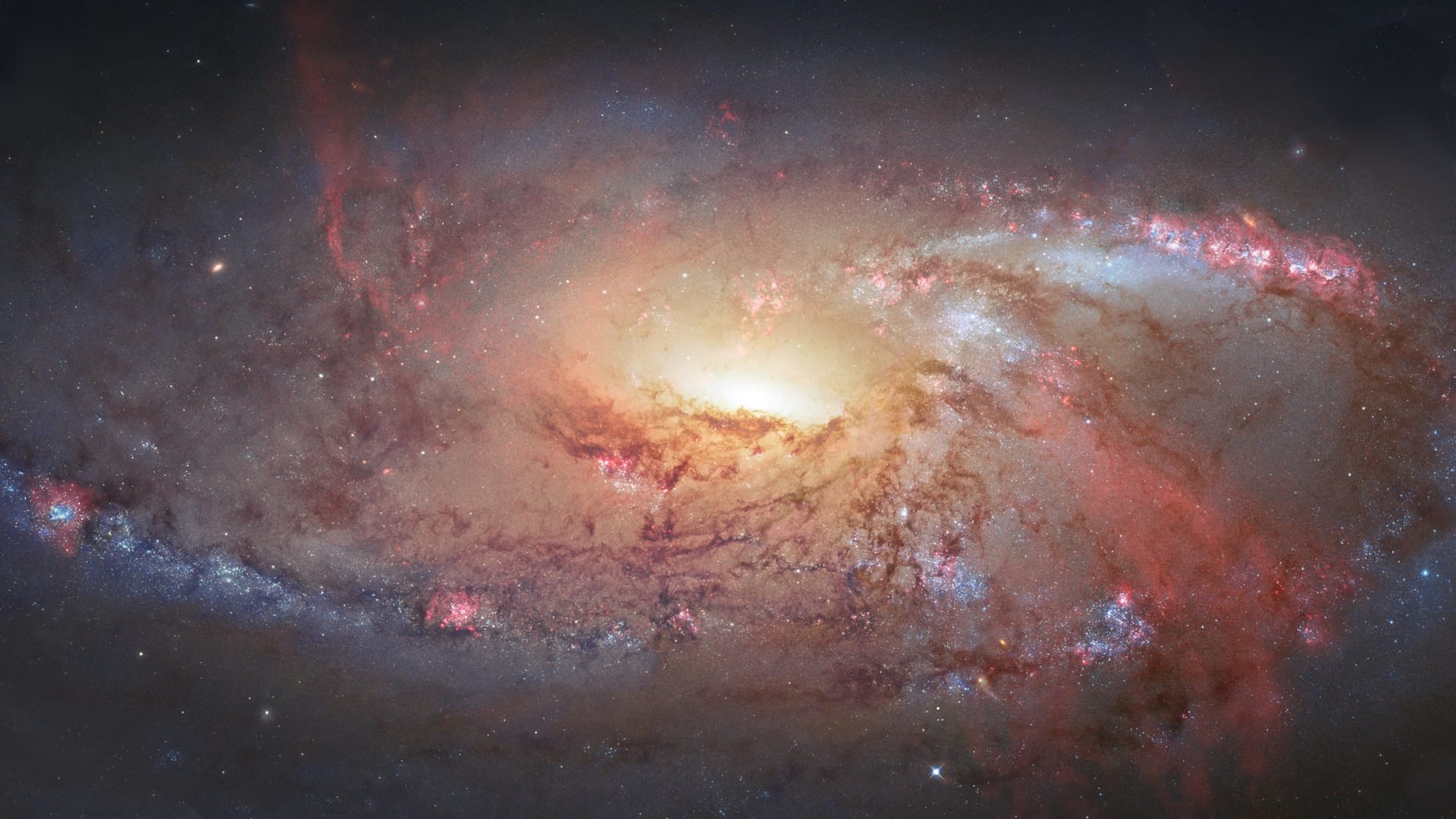
- Alternative name: NGC 4258
- Apparent size: 18′ × 7′ (1.6 × 4.2 times smaller than the Full Moon)
- Apparent magnitude: 8.4
- Constellation: Canes Venatici
- Best observed from: Northern Hemisphere
- How to observe: M106 can be spotted with most binoculars on a dark sky and is easily seen through any telescope.
- Description: Messier 106 is an intermediate spiral galaxy discovered by French astronomer Pierre Méchain in 1781. It is one of the largest and brightest galaxies close to us, comparable in scale to the Andromeda Galaxy.
Bode’s Galaxy
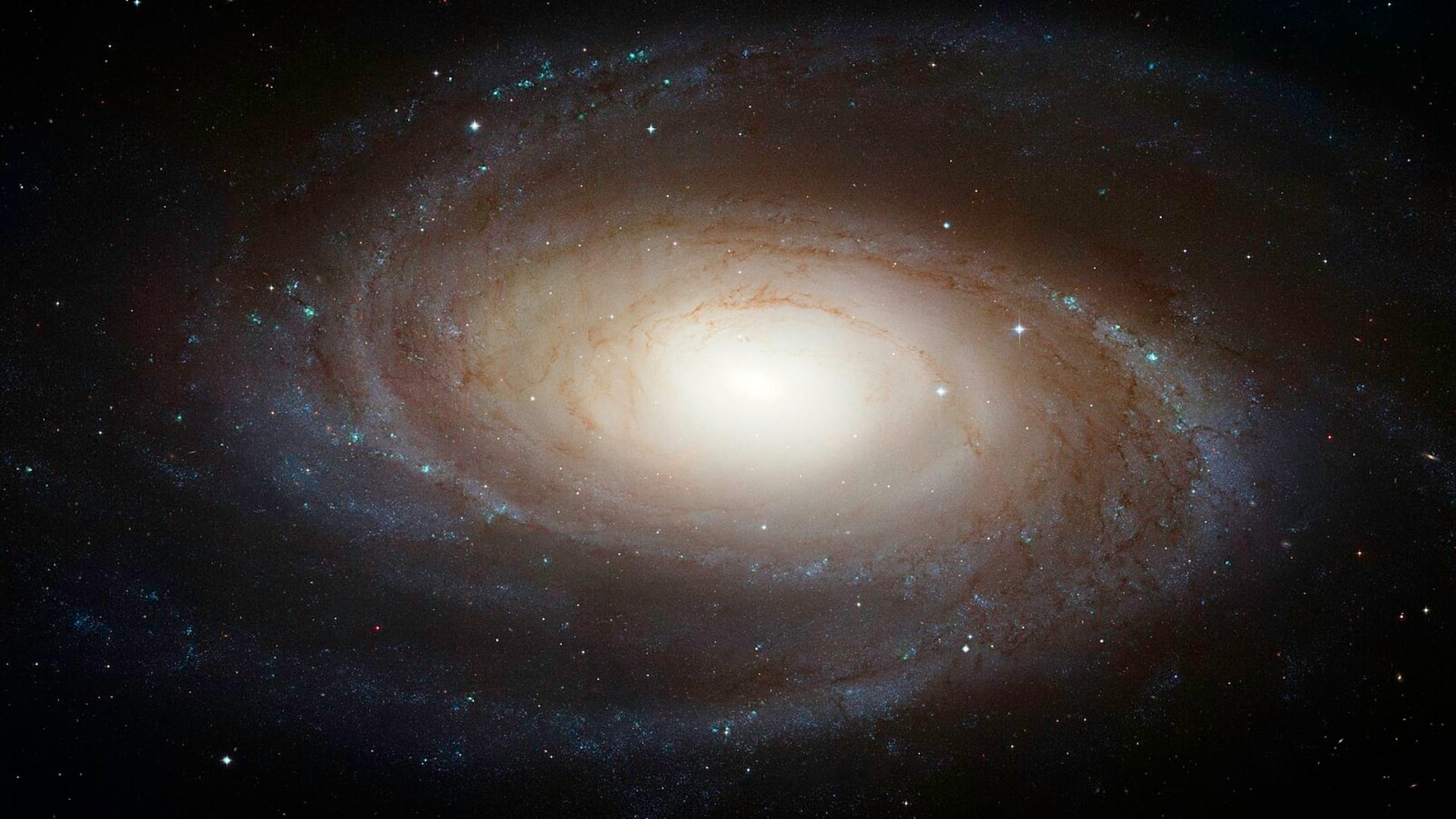
- Alternative names: M81, NGC 3031
- Apparent size: 26.9′ × 14.1′ (1.1 × 2.1 times smaller than the Full Moon)
- Apparent magnitude: 6.9
- Constellation: Ursa Major
- Best observed from: Northern Hemisphere
- How to observe: View M81 with a pair of binoculars or any telescope (the one with an aperture of 8″ or more will show more detail under dark skies). This galaxy is bright enough to be seen under the light-polluted sky. Spot Bode’s Galaxy about 10° northwest of Dubhe, in the corner of the Big Dipper’s bowl.
- Description: M81 is a large and bright spiral galaxy that is also known as the “grand design” spiral galaxy. This means that the galaxy’s shape is clearly defined, and it has a well-organized spiral structure. First discovered by Johann Elert Bode in 1774, M81 is sometimes referred to as “Bode’s Galaxy”. It’s one of the brightest galaxies in our night sky!
Large Magellanic Cloud
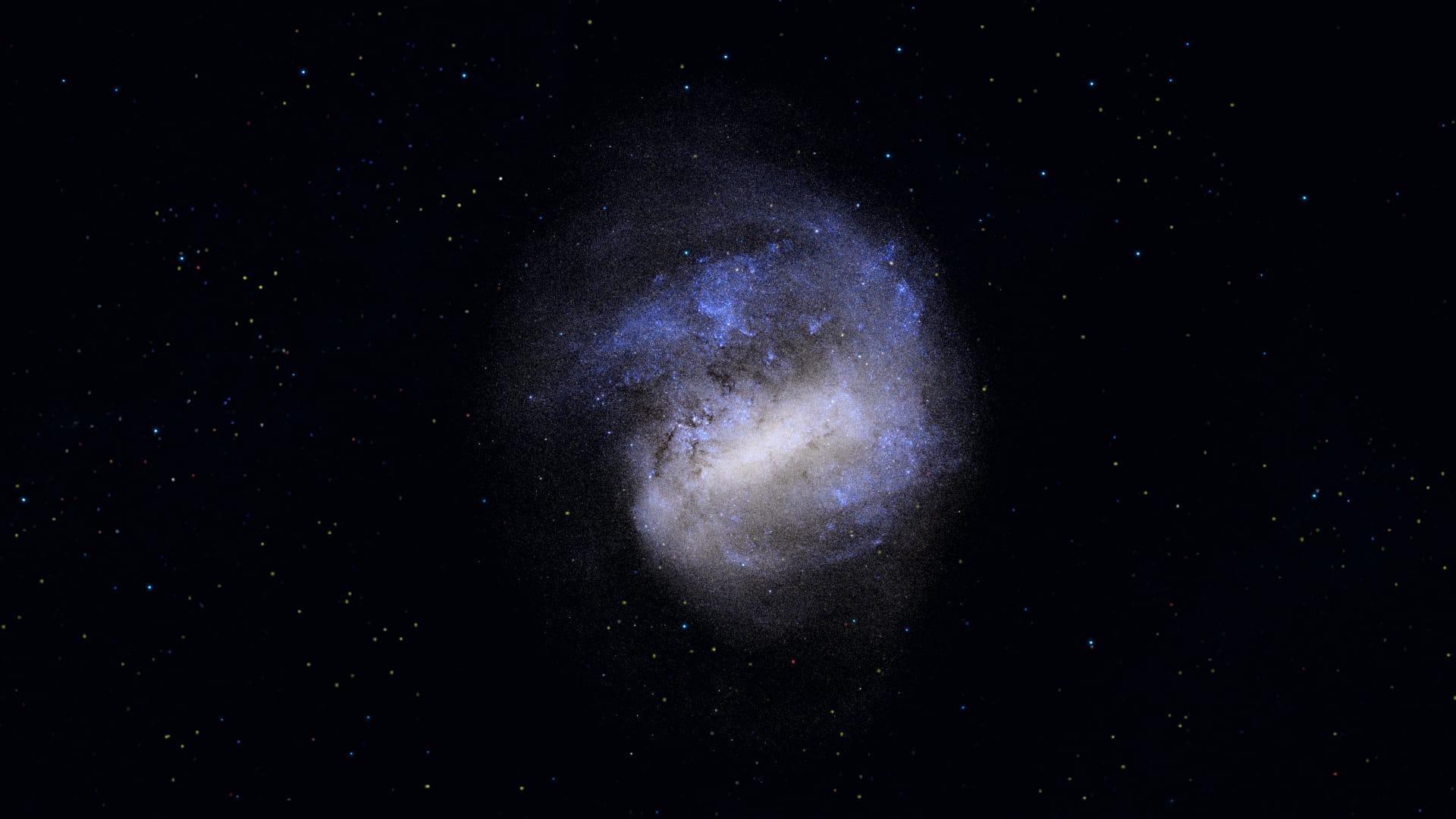
- Alternative names: LMC, ESO 56-G 115, PGC 17223, Nubecula Major
- Apparent size: 10°45′ x 9°10′ (~255 times larger than the Full Moon)
- Apparent magnitude: 0.9
- Constellation: Dorado/Mensa
- Best observed from: Southern Hemisphere
- How to observe: Under dark skies, the LMC is visible without any equipment as a faint, diffuse cloud. Binoculars (7x50 or 10x50) will resolve the mottled structure of the galaxy and brighter regions. A small telescope (4-6 inches) will reveal specific features, such as star clusters and nebulae. Larger telescopes (>8 inches) provide excellent views of its fine details.
- Description: The Large Magellanic Cloud (LMC) is a dwarf irregular galaxy and a satellite of our home galaxy, the Milky Way. It was first documented by Persian astronomer Al-Sufi in 964 CE and later described by European explorers during Ferdinand Magellan's 1519–1522 circumnavigation of the globe, which popularized its name.
Now that you’ve met some beautiful February galaxies, why not zoom back home? Find out how much you know about the Milky Way in this fun quiz.
Star clusters visible in February 2026: sparkly star gatherings
A star cluster is a group of stars that are gravitationally bound and formed from the same molecular cloud. Star clusters are categorized into two types: open clusters and globular clusters. Open clusters are bright, tightly grouped stars, while globular clusters appear as dense, spherical star groups that look like faint, fuzzy balls of light in the night sky.
Pleiades
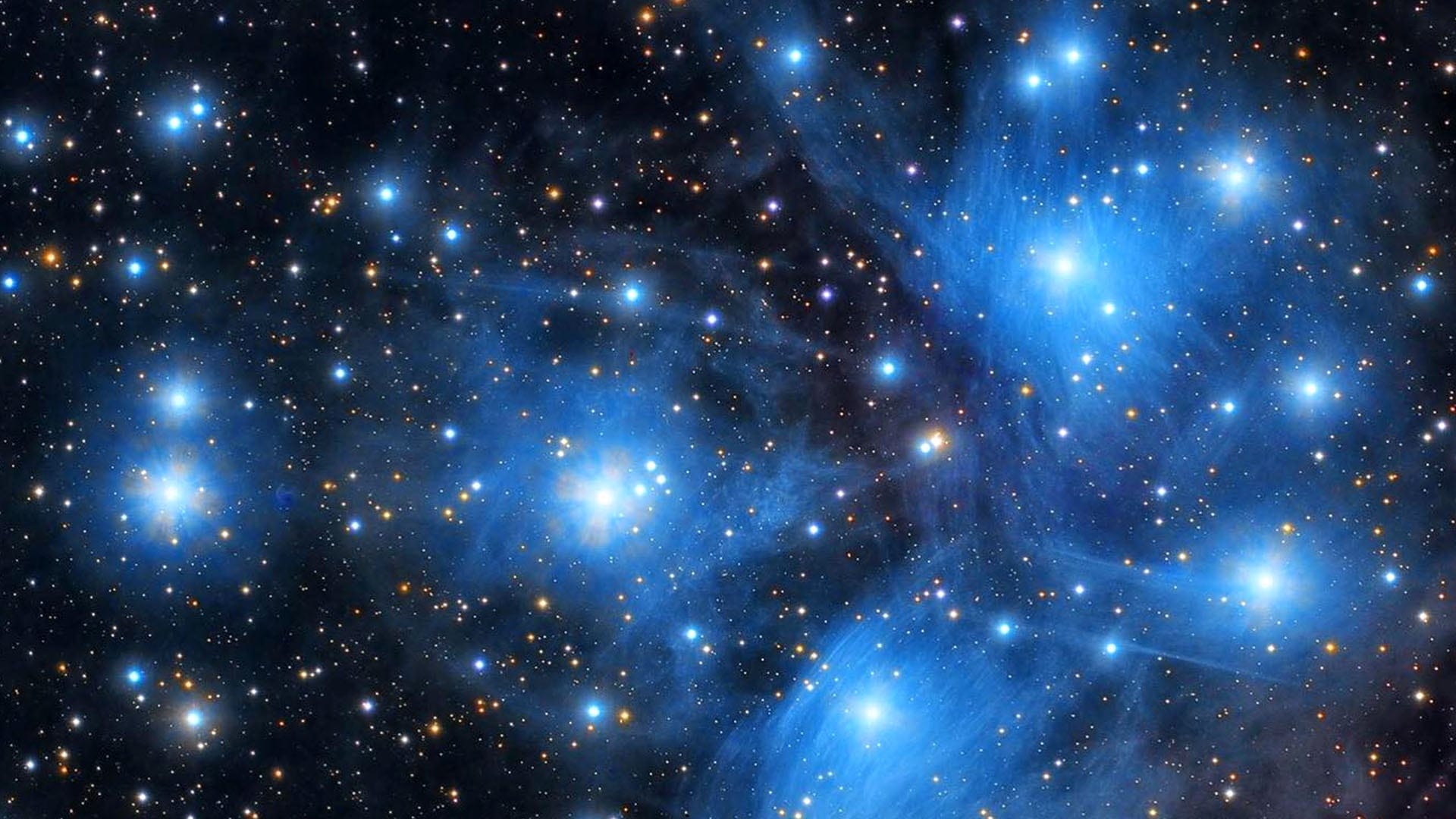
- Alternative names: M45, Seven Sisters
- Apparent size: 1°50' (3.7 times larger than the Full Moon)
- Apparent magnitude: 1.2
- Constellation: Taurus
- Where to observe: Northern Hemisphere
- How to observe: As one of the brightest star clusters, the Pleiades can be seen with the naked eye: you’ll see a group of six stars resembling a small copy of the Big Dipper. Binoculars or a small telescope will reveal more stars in the cluster.
- Description: The Pleiades are an open star cluster and one of the most famous and easily recognizable deep-sky objects in the night sky. Located just 444 light years away, it is also one of the nearest star clusters to the Earth.
Hand Cluster
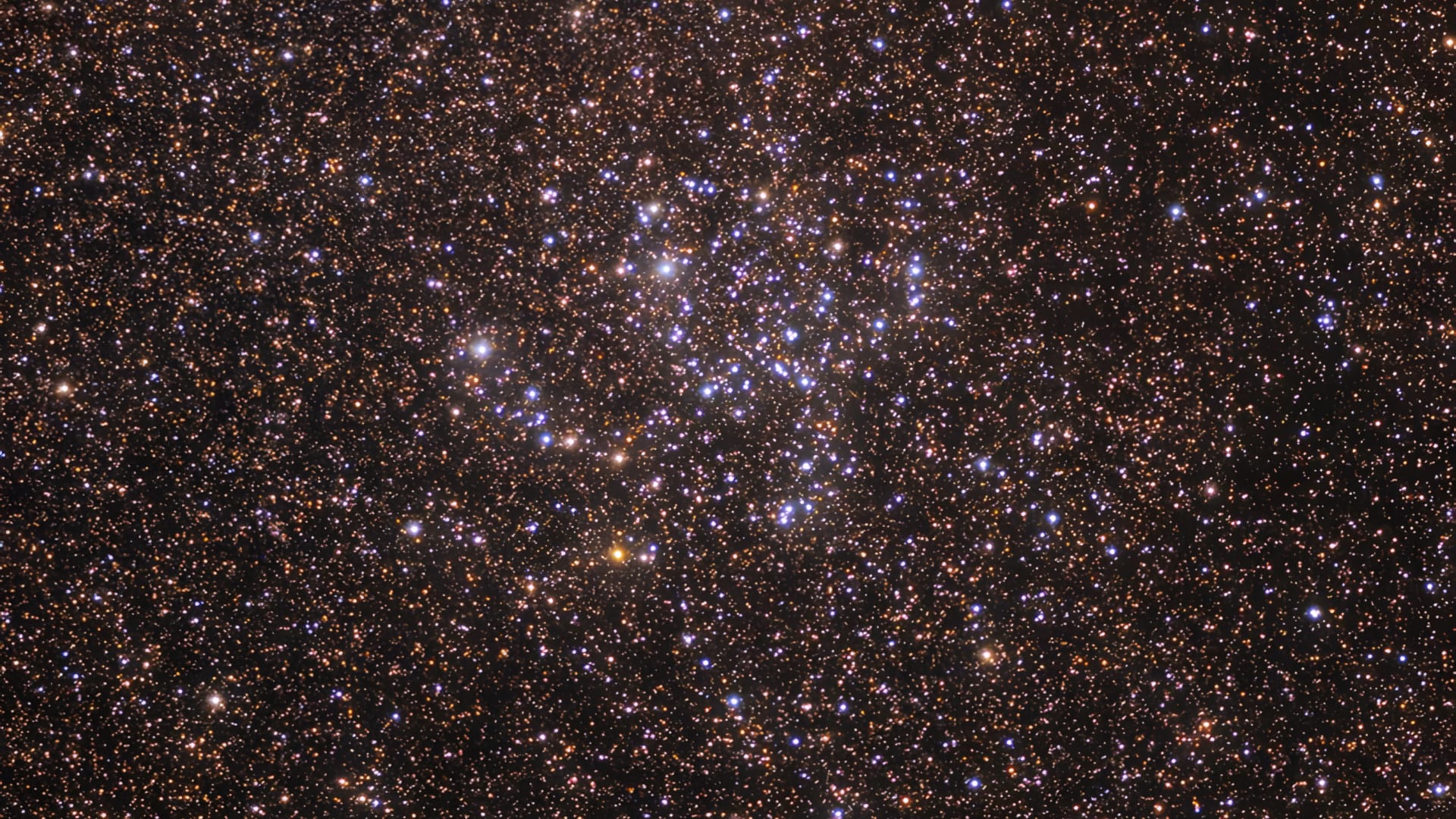
- Alternative name: NGC 3114, Cr 215
- Apparent size: 35′ (1.2 times larger than the Full Moon)
- Apparent magnitude: 4.2
- Constellation: Carina
- Best observed from: Southern Hemisphere
- How to observe: You can try to see the Hand Cluster with the unaided eye. However, you’ll need very sharp eyesight and a dark, clear sky to see it, so it’s easier to observe the cluster via binoculars or a telescope.
- Description: NGC 3114 is an open star cluster in the constellation Carina. It is quite a difficult object to study because of the high number of field stars from the Milky Way’s disk.
IC 2395
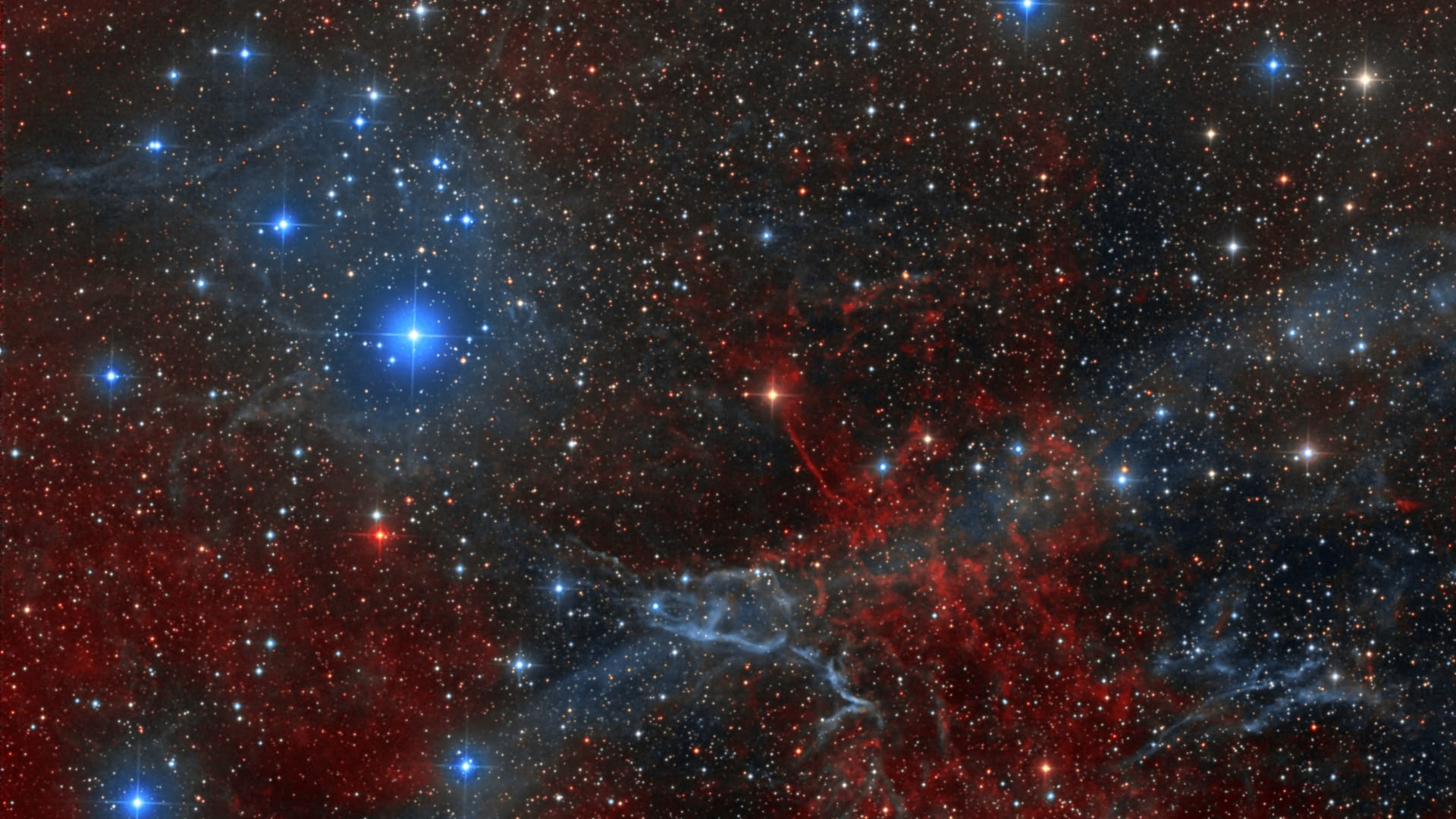
- Alternative name: Cr 192
- Apparent size: 8′ (3.7 times smaller than the Full Moon)
- Apparent magnitude: 4.6
- Constellation: Vela
- Best observed from: Southern Hemisphere
- How to observe: IC 2395 is tricky to see with the naked eye, but you can easily observe it through a pair of binoculars.
- Description: IC 2395 is a small open cluster that contains about 45 stars. It is located near the bright star Gamma Velorum (mag 1.8).
NGC 2808
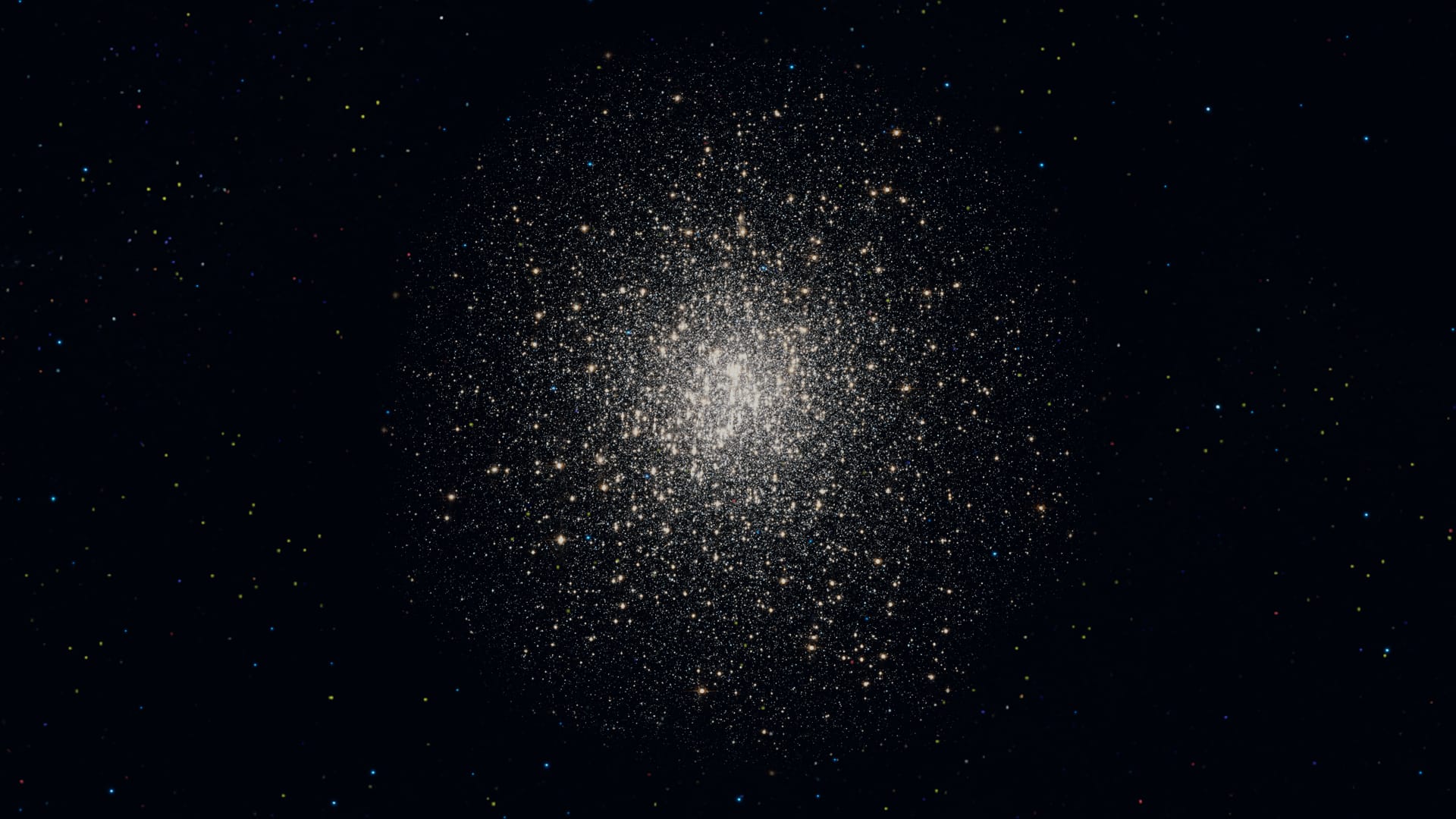

- Alternative name: Melotte 95
- Apparent size: 13.8′ (2.2 times smaller than the Full Moon)
- Apparent magnitude: 6.2
- Constellation: Carina
- Best observed from: Southern Hemisphere
- How to observe: You can’t see NGC 2808 with the naked eye; it’s only visible through binoculars or a small telescope.
- Description: NGC 2808 is one of the Milky Way’s most massive globular star clusters — it contains millions of stars. It’s estimated to be 12.5 billion years old.
Can I actually see these cool space objects in the sky tonight?
Yes, at least some of them! A great first target is the Pleiades: with a dark sky, you can spot this star cluster with the naked eye. For the best chances, try observing around the New Moon. And if you want a quick reality check on your viewing conditions, open our Bortle scale infographic and match it to what you see outside – you’ll quickly figure out your sky class and what objects should be visible under it.
Have binoculars or a small backyard telescope? Even better – you’ll be able to catch many more star clusters, galaxies, and nebulae. To avoid the frustrating “where is that faint smudge?” search, use the Sky Tonight app. It includes 90,000+ deep-sky objects, and they’re all free to access. Just type the object’s name in the search bar, follow the on-screen guide to find it in your sky, then point your binoculars or telescope and enjoy the view!
Beautiful space objects in February 2026: the best of the month
February can feel like a gallery of beautiful space objects – you just need to know where to look. Start with an easy classic: the Pleiades (M45), a bright star cluster you can spot with the naked eye under good conditions. Then go a little deeper with the Cigar Galaxy (M82), a classic deep-sky object that looks cool in binoculars and small telescopes. Ready for the level-up? Hunt down the Horsehead Nebula – legendary, dramatic, and notoriously challenging. And that’s just the beginning!
For the best views, aim for the darkest nights you can (around the New Moon), and use the free Sky Tonight app to skip the guesswork and go straight from target to target.
Caught any of February’s deep-sky treasures? Share your photos with us on social media. And if you want to keep the fun going, pass our “Guess the Nebula!” quiz – it’s a quick challenge that’s surprisingly addictive.
Most beautiful astrophotography targets by month: year-ahead calendar
Deep-sky wonders aren’t limited to February. Discover what the universe has to offer each month with our guides to deep-sky objects:
- January Deep-Sky Objects
- March Deep-Sky Objects
- April Deep-Sky Objects
- May Deep-Sky Objects
- June Deep-Sky Objects
- July Deep-Sky Objects
- August Deep-Sky Objects
- September Deep-Sky Objects
- October Deep-Sky Objects
- November Deep-Sky Objects
- December Deep-Sky Objects
See also: best deep-sky objects for beginners
Don’t know where to start or just seek an easy target? To help you make the most out of the night sky in February, we’ve created handy infographics highlighting the best deep-sky objects visible from the Northern Hemisphere and the Southern Hemisphere! Whether you’re looking for nebulae, galaxies, or star clusters, this visual guide will point you in the right direction.
We wish you clear skies and successful observations!