What Is Earth’s Real Shape? 7 Ways to Prove Earth Is Round
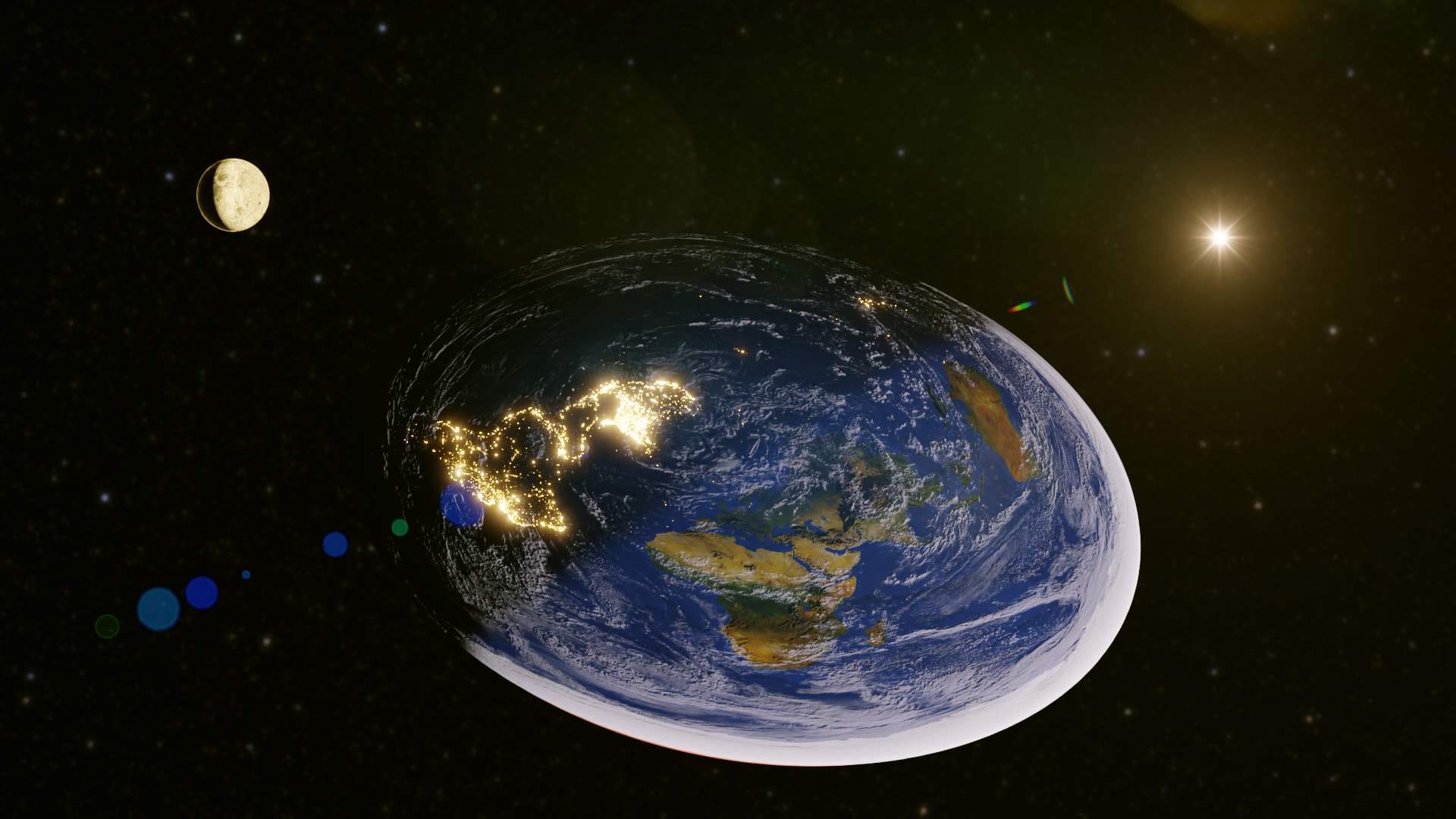
We live in strange times. While some people launch satellites into space almost daily and create apps that let anyone identify celestial objects in real time, others still question whether our planet is round! Although the very existence of the “flat-Earth theory” is quite discouraging, we’d like to use it in a positive way – as an exercise in critical thinking. Can you tell for yourself that the Earth is not flat? Yes, you can, and we’ll tell you how!
Contents
- What Is the Real Shape of Earth?
- Proof 1: Watch a ship on the horizon
- Proof 2: Think about time zones
- Proof 3: Observe constellations
- Proof 4: Observe a lunar eclipse
- Proof 5: Measure objects’ shadows
- Proof 6: Look at airplane routes
- Proof 7: Look at other planets
- Bonus: Look at images of Earth from space
Frequently asked questions
- What is the real shape of Earth?
- Who first proved Earth was round?
- How do flat earthers explain time differences?
- How do lunar eclipses prove that Earth is round?
- Why do ships disappear over the horizon?
- Why do we see different constellations in different hemispheres?
- What do flat earthers think about other planets?
- How to prove the Earth is round: Bottom line
What Is the Real Shape of Earth?
Earth is round, but it isn’t a perfect sphere. Its real shape is called an oblate spheroid, which means our planet is slightly flattened at the poles and a little wider around the equator. This happens because Earth rotates: as it spins, the equator bulges outward. For very precise measurements, scientists also use the geoid, an irregular model based on Earth’s gravity field and mean sea level.
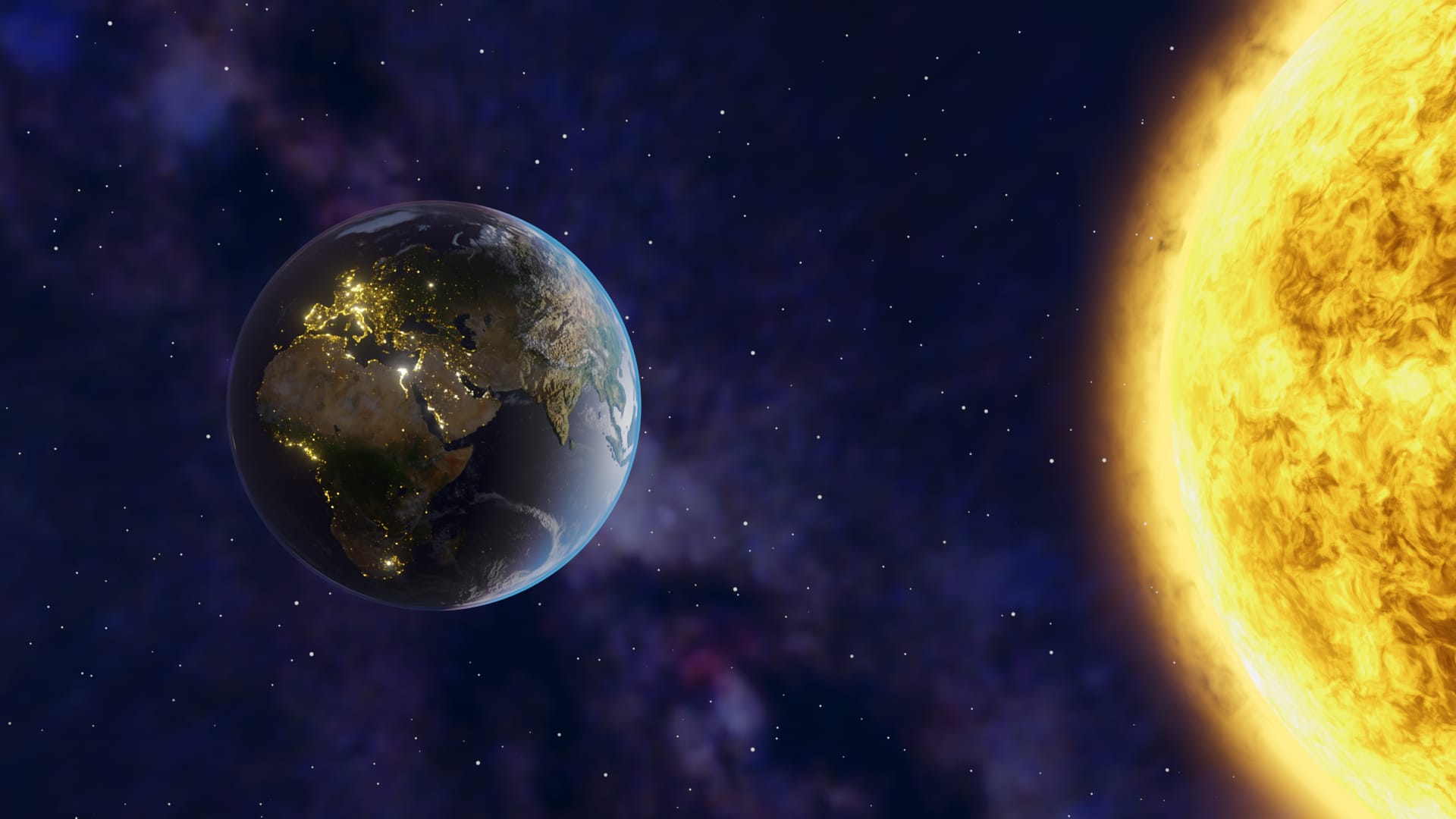
So, is Earth round or flat? The answer is clear: Earth is not flat. From space, it looks like a blue sphere, and many everyday observations confirm its curved shape. Time zones, lunar eclipses, ships disappearing over the horizon, and different constellations in the Northern and Southern Hemispheres all make sense only on a round planet.
Is Earth Round or Flat? Key Observations
If Earth were flat, many everyday observations would look very different. But the things we actually see — from lunar eclipses to time zones — match a round Earth much better.
| Observation 👀 | If Earth Were Flat ❌ | What We Actually See ✅ |
|---|---|---|
| Ships on the horizon | Ships should simply get smaller as they move away. | Ships disappear bottom-first because they move beyond Earth’s curve. |
| Time zones | The Sun should be visible from many more places at once. | Different parts of Earth have day and night at different times because the planet rotates. |
| Constellations | People around the world should see the same stars. | Different hemispheres see different constellations because they face different parts of space. |
| Lunar eclipses | Earth’s shadow on the Moon could have different shapes. | Earth’s shadow during a lunar eclipse is always round, which points to a spherical planet. |
| Shadows | Shadows should behave the same way in different places at the same time. | Shadow lengths and angles differ by location, which matches a curved surface. |
| Airplane routes | Flight paths would look very different on a flat map. | Real long-distance flight routes make much more sense on a globe. |
| Other planets | Earth would be the only flat planet we know. | Other planets are round, and Earth follows the same physical laws. |
Proof 1: Watch a ship on the horizon
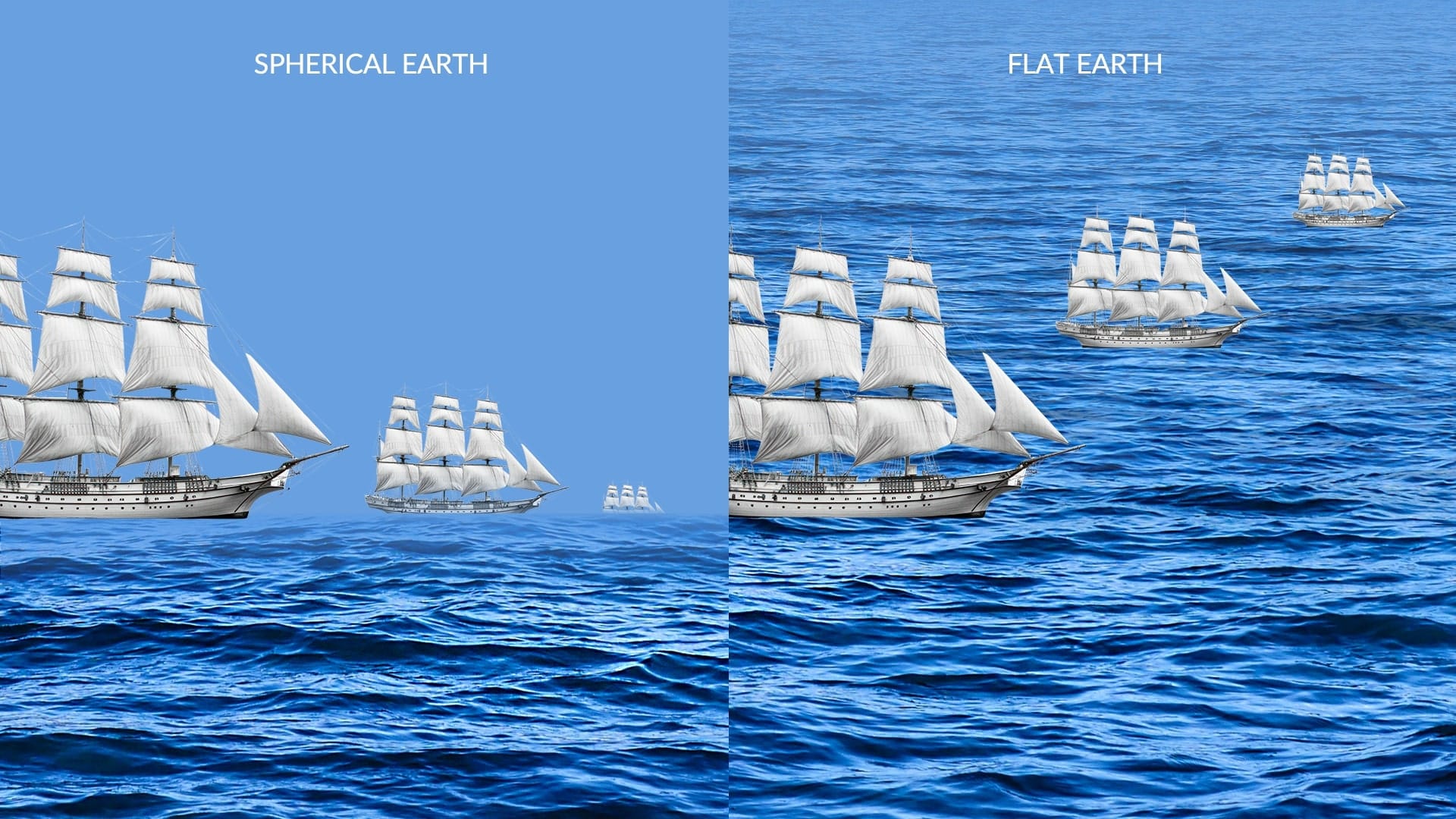
Grab a pair of binoculars, go to the seashore, and watch a ship sail away. If the Earth were flat, the entire ship would always stay in view, it would only get smaller and smaller. In reality, though, ships on the horizon disappear hull-first, and the last thing that sinks below the horizon is the top of the ship’s mast. This happens because of the Earth’s curvature.
Atmospheric refraction can slightly lift distant objects above the horizon, so in some conditions a ship may appear a little higher than geometry alone predicts. But refraction doesn’t remove the effect: as the ship continues moving away, it still disappears from the bottom up.
Proof 2: Think about time zones
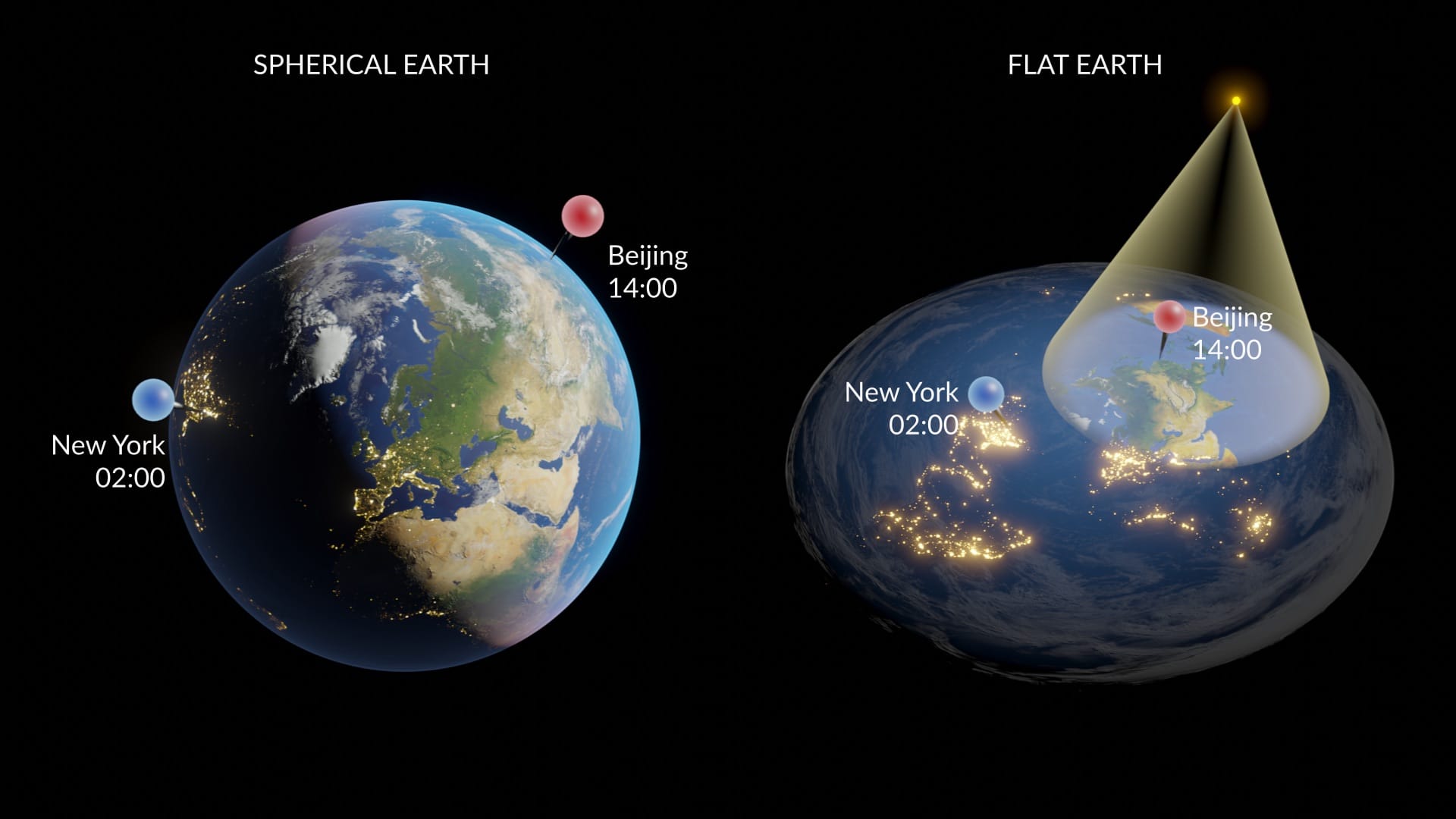
Have you ever wondered why the time in New York can be about 12–13 hours different from the time in Beijing? The exact borders of time zones are set by countries, but the underlying reason they exist is simple: the Earth rotates. As the planet spins, different longitudes face the Sun at different times. That’s why sunrise, noon, and sunset don’t happen simultaneously around the world.
Time zones are basically a practical agreement to keep “clock time” roughly aligned with daylight. Without them, the mismatch would be obvious: in many places, people would routinely go to work in what the clock calls “night” and sleep during what the clock calls “day,” even though the Sun would clearly be up. Societies across the globe wouldn’t keep such a system for long — the whole point of timekeeping is to stay in step with the daily cycle of light and darkness created by Earth’s rotation.
How Do Flat Earthers Explain Time Zones?
Some flat Earth supporters say that time zones happen because the Sun acts like a spotlight, lighting only one part of the world at a time. According to this idea, the Sun moves in circles above a flat Earth, creating day in one area and night in another.
But this explanation doesn’t match what we actually observe. If the Sun were moving above a flat surface, it should still be visible somewhere in the sky even at night, just farther away. Instead, we see the Sun set below the horizon. Time zones make much more sense on a rotating globe: as Earth spins, different parts of the planet face the Sun at different times. That’s why it can be noon in one country, evening in another, and night somewhere else.
Proof 3: Observe constellations
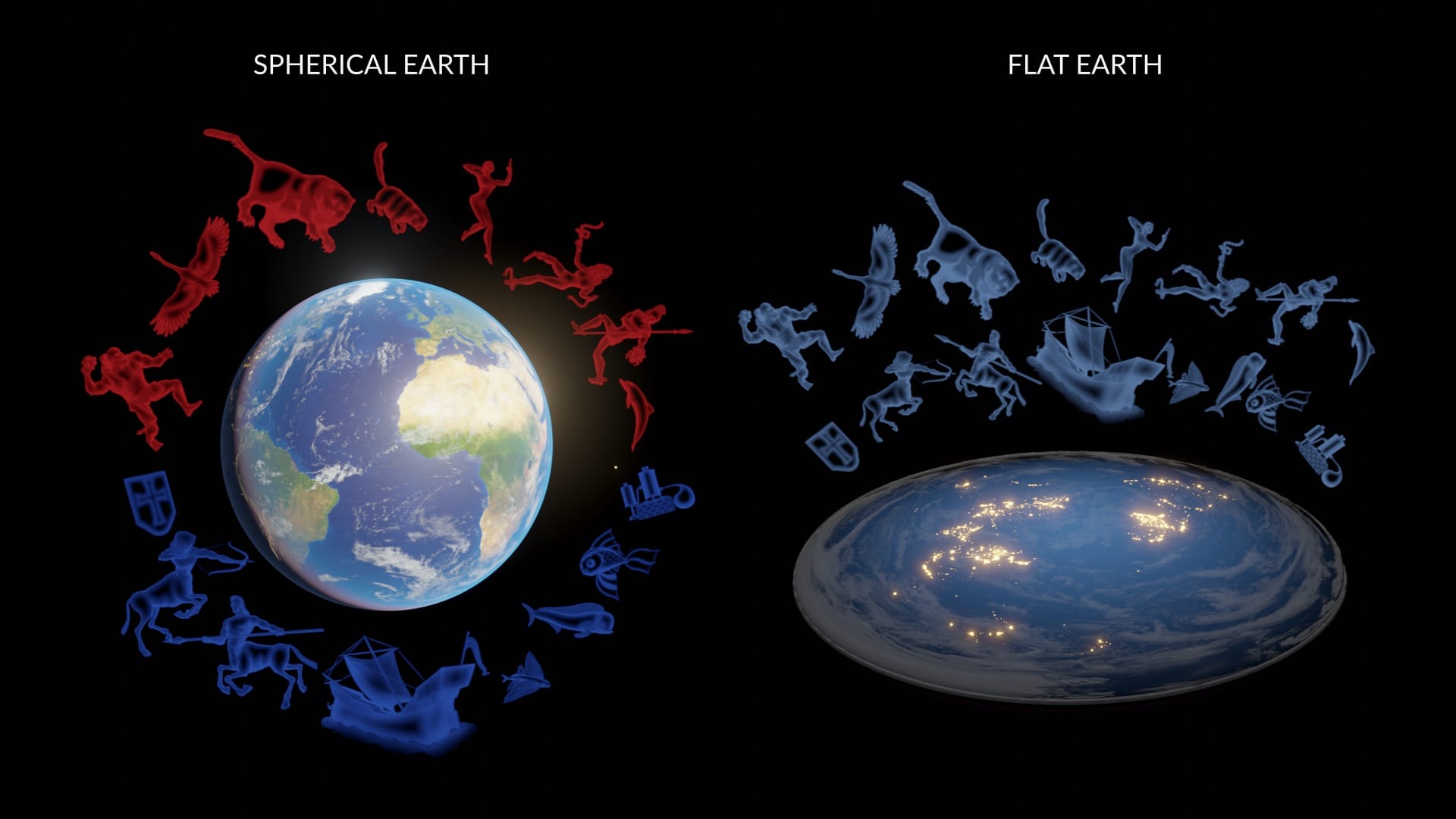
If you have a friend who lives in another hemisphere, try this simple experiment: go outside, look up at the night sky, and identify a few constellations — you can do it using a stargazing app. Then ask your friend what constellations they can see. You’ll discover that certain constellations are only visible from one of the Earth’s hemispheres. For instance, the Big Dipper isn’t visible from most of Australia, and the Southern Cross is out of view from most of the USA.
Why is that? It’s because the curved shape of the Earth hides some constellations from our view. If the Earth were flat, everyone — no matter where they lived — would see the exact same constellations.
Want to test it out right now? Open the Sky Tonight app and try changing your location in the settings. You’ll see just how different the sky looks from another part of the globe.
Proof 4: Observe a lunar eclipse
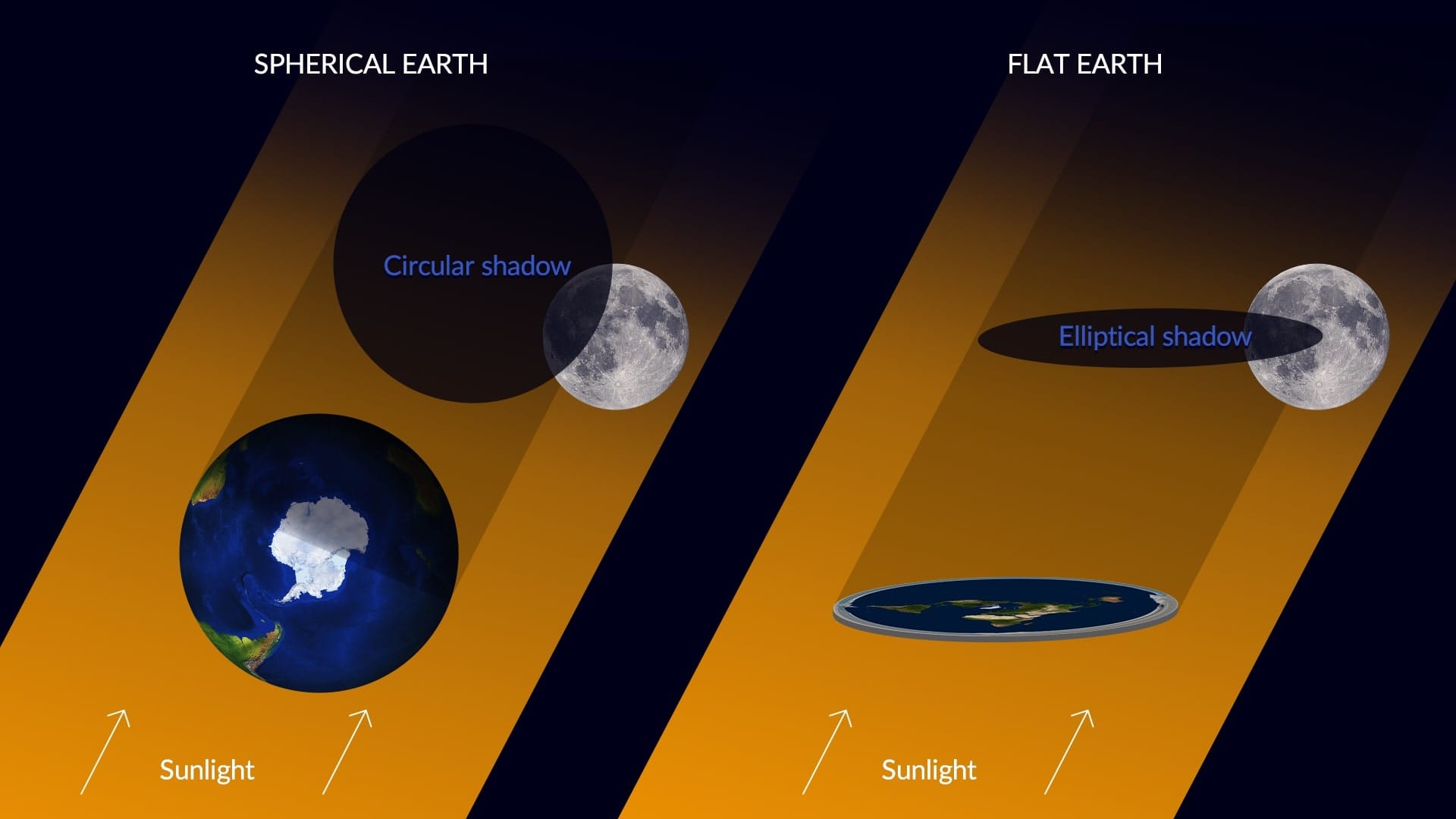
A lunar eclipse occurs when Earth comes between the Sun and the Moon, casting its shadow on the lunar surface. If you watch the eclipse, you’ll notice that the edge of Earth’s shadow is curved. The shadow may look slightly blurred because Earth’s atmosphere softens its edge, but its overall shape is still round.
This matters because Earth’s shadow on the Moon is round during every lunar eclipse. A flat disk would cast different shadows depending on how it was tilted toward the Sun — sometimes round, but often oval or stretched. A sphere, however, casts a round shadow from any angle.
There is another useful clue: from the curve of Earth’s shadow, astronomers can estimate the size of the object casting it. In a flat-Earth model, this creates serious scale problems: the disk needed to produce the observed shadow would be far too small to match the real size of Earth.
To better understand the mechanics of lunar eclipses, watch our video.
Proof 5: Measure objects’ shadows
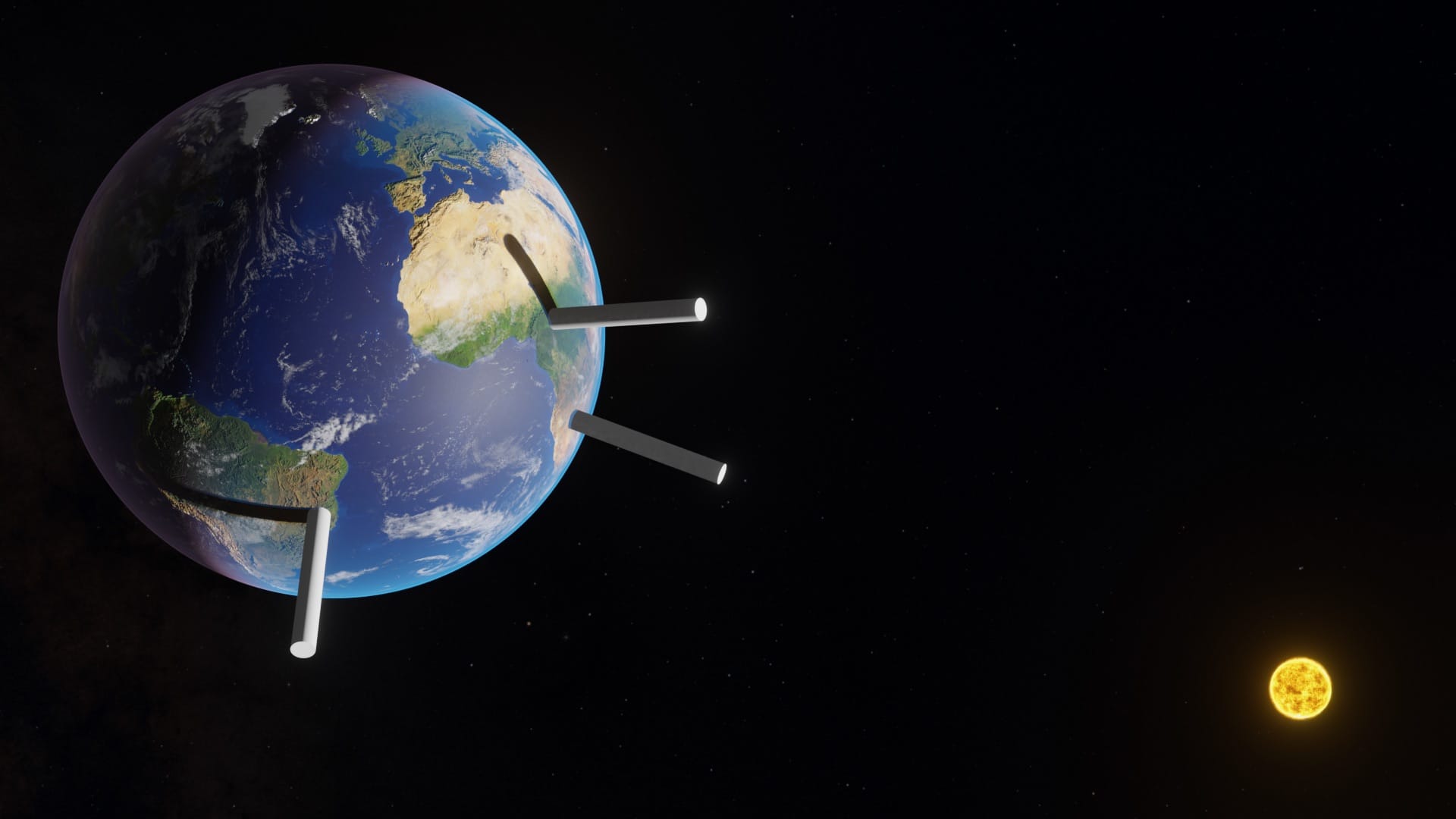
For this experiment, you’ll need a friend who lives hundreds of kilometers away (or at a noticeably different latitude). On a sunny day, both of you should take identical sticks, place them vertically in the ground, and measure their shadows at the exact same time. You’ll find out that the shadows have different lengths!
The reason for this is, again, the Earth’s curvature. As the sticks are far enough apart, the sunlight hits them at different angles. Flat-Earthers’ “spotlight Sun” concept could also have explained this phenomenon, but we’ve already told you why this concept is not valid.
Proof 6: Look at airplane routes
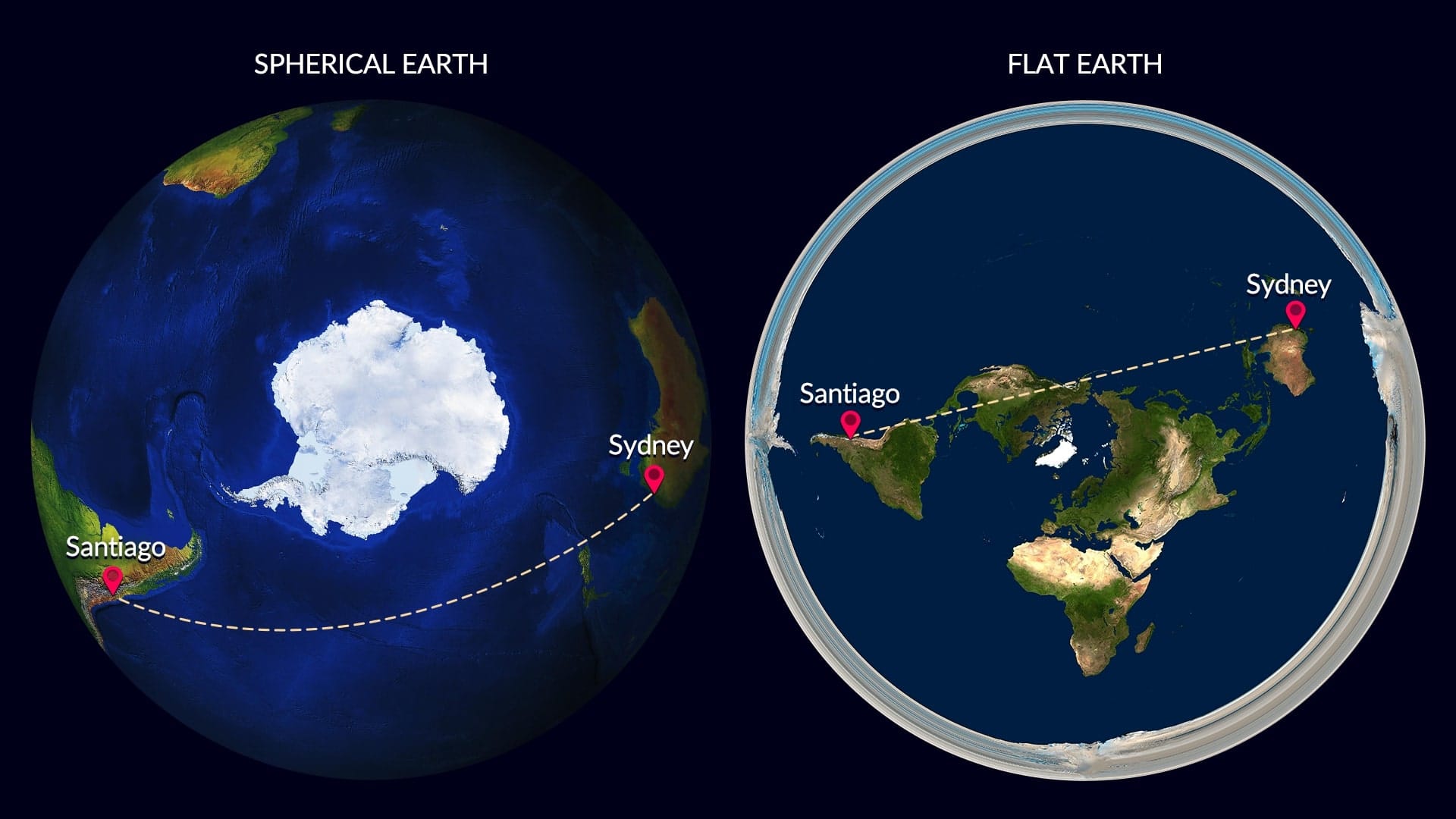
As an example, let’s take a flight from Santiago, Chile, to Sydney, Australia. On a flat Earth, the shortest route would look like this: a plane would have to fly across all of South America, all of North America, and only then over the ocean to Sydney. Which way do real planes travel between these two cities? Just google it, and you’ll find out that commercial airplanes only need to cross the Pacific Ocean to fly from Santiago to Sydney. If you don’t trust Google, take such a flight yourself, look out the airplane window, and try to spot North America beneath you while you fly.
Proof 7: Look at other planets
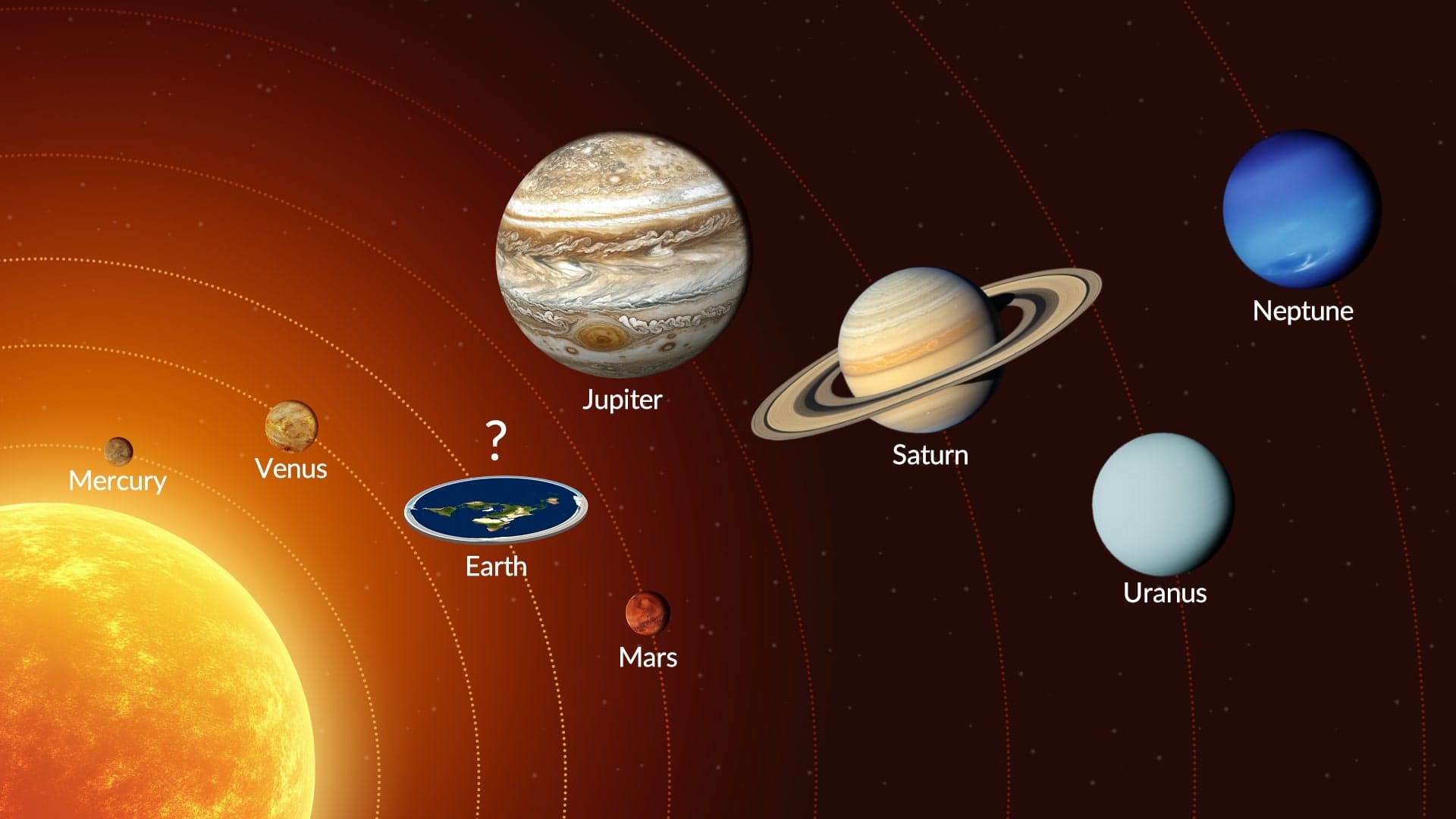
Here’s a fact: there are no flat planets in the Solar System. You can take a telescope and observe Venus, Mars, Jupiter, or Saturn. These planets differ a lot in size, composition, atmosphere, and surface conditions, but all of them are spherical. Why would Earth be physically different from every other planet in the Solar System?
The reason planets are round is gravity. Gravity pulls matter toward the center of mass from all directions. When an object becomes massive enough, this pull smooths it into the most balanced shape: a sphere.
A flat disk would be a very strange shape for a massive object in gravitational equilibrium. Its own gravity would tend to pull material inward and reshape it. That’s why the roundness of planets isn’t just a coincidence — it shows what large objects naturally become under gravity.
Bonus: Look at images of Earth from space
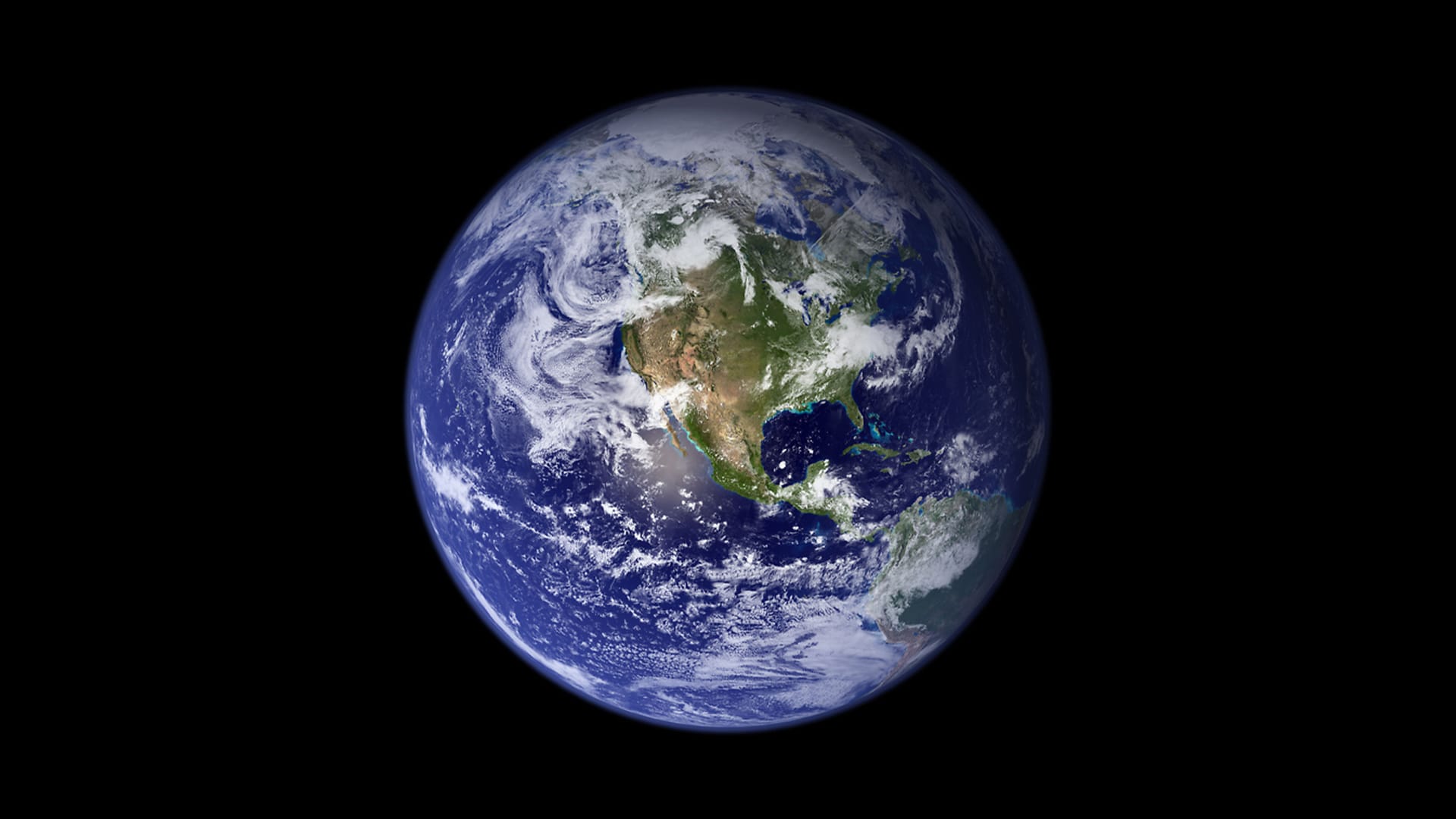
Since the launch of Sputnik 1 in 1957, scientists have sent countless probes and satellites into space, including the International Space Station, where astronauts constantly work. As a result, we received tons of amazing, high-quality pictures of our planet. In these pictures, you can clearly see that the Earth is a sphere.
Well, did we convince you?
Frequently asked questions
What is the real shape of Earth?
Earth’s real shape is an oblate spheroid. This means it is almost a sphere, but not a perfect one: it is slightly flattened at the poles and a little wider around the equator because of its rotation.
Who first proved Earth was round?
The idea that Earth is round goes back to ancient Greece. Philosophers such as Pythagoras and Aristotle argued that Earth must be spherical, using observations like the curved shadow Earth casts on the Moon during a lunar eclipse. Later, Eratosthenes measured Earth’s circumference with impressive accuracy by comparing shadows in two different cities. So there wasn’t just one person who proved Earth was round — it was confirmed through several observations over time.
How do flat earthers explain time differences?
Some flat Earth supporters say the Sun works like a spotlight, lighting only part of the world at a time. But this idea doesn’t match what we actually see: the Sun sets below the horizon, and different places experience sunrise, noon, sunset, and night in a predictable pattern. Time zones make much more sense on a rotating globe.
How do lunar eclipses prove that Earth is round?
During a lunar eclipse, Earth passes between the Sun and the Moon, casting its shadow on the lunar surface. That shadow is always round. A sphere always casts a round shadow, no matter how it is turned, which is strong evidence that Earth is round.
Why do ships disappear over the horizon?
Ships disappear bottom-first because they move beyond Earth’s curve. If Earth were flat, distant ships would simply get smaller and smaller, but their lower parts would not vanish before the upper parts.
Why do we see different constellations in different hemispheres?
People in the Northern and Southern Hemispheres look out into different parts of space because they stand on different sides of a curved planet. That’s why some constellations visible in the Southern Hemisphere can’t be seen from far northern locations, and vice versa.
What do flat earthers think about other planets?
Some flat Earth supporters believe that other planets are round but Earth is different. However, we can observe that the planets in our Solar System are spherical, and Earth follows the same physical laws as the other planets.
How to prove the Earth is round: Bottom line
Now you’re armed with at least seven arguments against the flat Earth theory. Observe the world around you — and do it critically! And if you want to take your curiosity even further, try using the Sky Tonight app. It lets you explore the sky from any location on Earth and see for yourself how the stars, planets, and Sun move across the celestial dome of a round, rotating planet. Also, take our quiz about Earth to learn more interesting facts about our home planet.