November Full Moon 2026 (Beaver Supermoon): Date, Time, and Meaning

The November Full Moon 2026, traditionally known as the Beaver Moon, occurs on Tuesday, November 24, at 14:53 UTC. This year, it’s also a supermoon — the first since January 2026. The Moon will shine in the constellation Taurus, close to the Pleiades star cluster, and will look full on November 23, 24, and 25.
Want to know when the Beaver Supermoon will rise where you live, or which stars and planets will appear nearby? Open the free astronomy app Sky Tonight to check the Moon’s position and local viewing times.
Contents
- November Full Moon 2026 at a Glance
- Moon Phases in November 2026: Dates and Times
- What Constellation Is the November Full Moon In?
- What Stars and Planets Are Near the November Full Moon?
- November 2026 Supermoon: Why Is the Beaver Moon So Big and Bright?
- November Full Moon Meaning: Why Is It Called the Beaver Moon?
- November Full Moon 2026: Frequently Asked Questions
- November Full Moon 2026: Key Takeaways
November Full Moon 2026 at a Glance
- Date: November 24, 2026 (Tuesday)
- Peak time: 14:53 UTC
- Looks full: November 23–25
- Name and meaning: Beaver Moon — associated with beavers preparing for winter and the traditional trapping season
- Type: Supermoon, about 360,768 km (224,171 miles) from Earth at Full Moon
- Constellation: Taurus
- Special sky event: The Moon passes close to the Pleiades and occults some of the cluster’s stars as seen from certain regions
- Nearby objects: The Pleiades, Aldebaran, and faint Uranus
Moon Phases in November 2026: Dates and Times
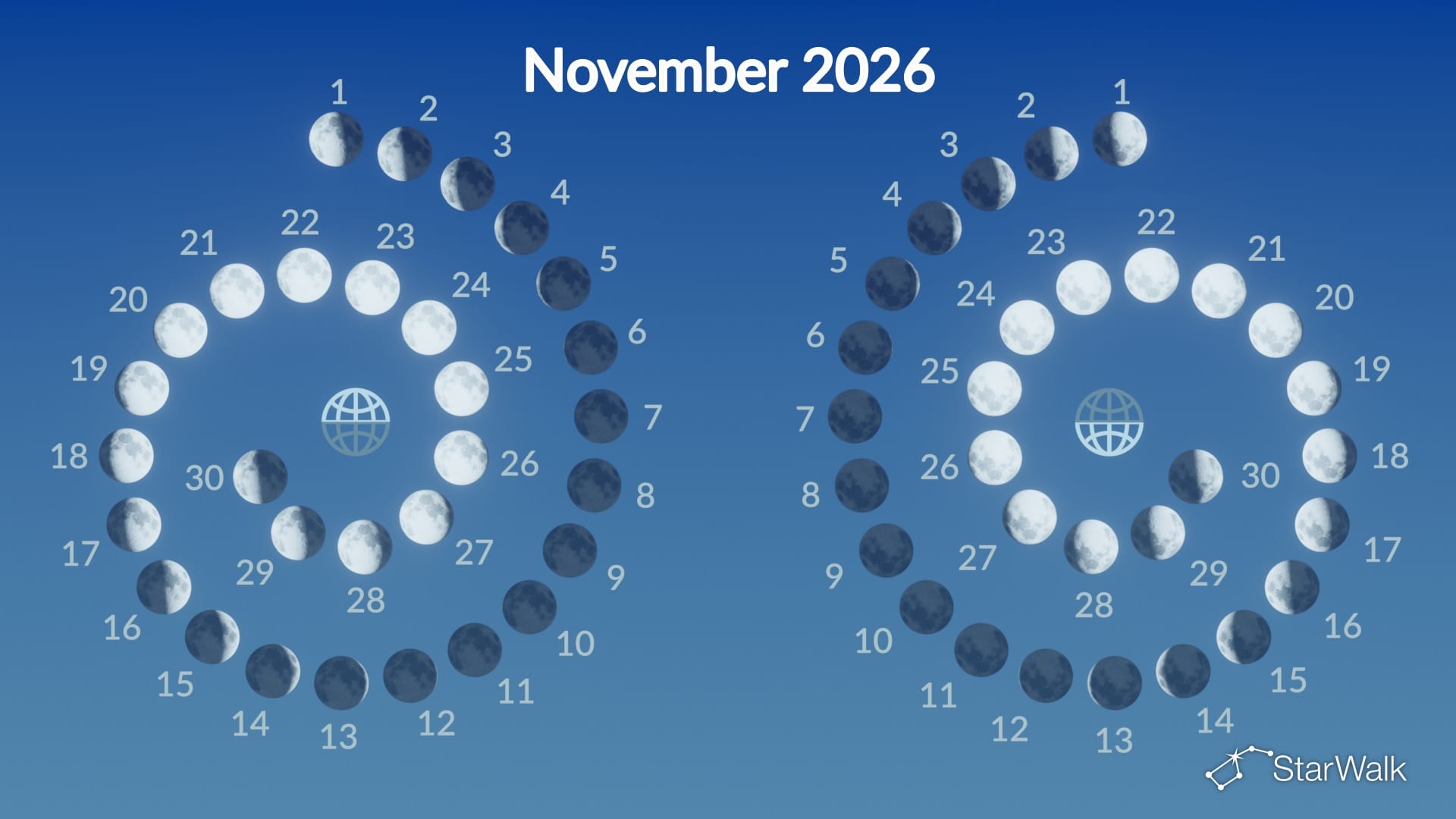
Here are the dates and times of the four main lunar phases in November 2026:
- Last Quarter: November 1, 20:28 UTC
- New Moon: November 9, 07:02 UTC
- First Quarter: November 17, 11:48 UTC
- Full Moon: November 24, 14:53 UTC
You can also track the Moon’s changing appearance and find daily moonrise and moonset times in our interactive Moon Calendar.
When is the New Moon in November 2026?
The November New Moon occurs on November 9, 2026, at 07:02 UTC. At New Moon, the illuminated side of the lunar disk faces away from Earth, so the Moon is not normally visible in the night sky.
The nights around November 9 are excellent for observing faint objects, with little moonlight to wash them out. This is also a promising period for watching the Taurid meteor showers: the Southern Taurids peak around November 4–5, followed by the Northern Taurids around November 11–12. You might catch meteors from either stream near the New Moon.
For a deep-sky observing session, look for the Pleiades, the Andromeda Galaxy, and other November deep-sky objects. The Visible Tonight feature in Sky Tonight can help you choose targets that are well placed from your location.
When is the Full Moon in November 2026?
The Full Beaver Moon reaches its exact full phase on November 24, 2026, at 14:53 UTC. Full Moon is an astronomical instant when the Moon is opposite the Sun as seen from Earth. The time is the same worldwide, but the local date and clock time depend on your time zone.
In London, the Full Moon occurs at 14:53 on November 24; in Beijing, at 22:53; and in Tokyo, at 23:53. In Sydney, it will already be 01:53 on November 25.
You don’t need to observe at that precise moment. The Moon will look almost completely illuminated from November 23 through November 25, so any clear evening during this period is suitable for enjoying the Beaver Supermoon.
Best time to see the Beaver Supermoon in November 2026
For the most impressive view, watch the Moon rise above the eastern horizon on November 24, 2026. In many places, the Full Moon will rise around sunset, although the exact timing varies with latitude and location. If the Moon rises before sunset in your city, look for it again as the sky darkens.
A low Moon can look strikingly yellow or orange because its light passes through more of Earth’s atmosphere. It can also appear unusually large near buildings, trees, or the horizon — an effect called the Moon illusion. This illusion is different from the real, but relatively small, increase in apparent size caused by a supermoon.
The table shows the exact Full Moon time in each city, together with moonrise on November 24 and the following moonset on November 25. In Sydney, the exact full phase occurs after midnight, during the same observing night.
| City | Time zone | Exact Full Moon | Moonrise | Following moonset |
|---|---|---|---|---|
| New York, USA | EST (UTC−5) | Nov 24, 09:53 | Nov 24, 16:15 | Nov 25, 08:21 |
| Los Angeles, USA | PST (UTC−8) | Nov 24, 06:53 | Nov 24, 16:42 | Nov 25, 08:02 |
| Toronto, Canada | EST (UTC−5) | Nov 24, 09:53 | Nov 24, 16:25 | Nov 25, 08:57 |
| London, UK | GMT (UTC+0) | Nov 24, 14:53 | Nov 24, 15:17 | Nov 25, 09:09 |
| Paris, France | CET (UTC+1) | Nov 24, 15:53 | Nov 24, 16:22 | Nov 25, 09:41 |
| New Delhi, India | IST (UTC+5:30) | Nov 24, 20:23 | Nov 24, 16:56 | Nov 25, 07:35 |
| Beijing, China | CST (UTC+8) | Nov 24, 22:53 | Nov 24, 16:10 | Nov 25, 07:57 |
| Taipei, Taiwan | CST (UTC+8) | Nov 24, 22:53 | Nov 24, 16:31 | Nov 25, 06:49 |
| Tokyo, Japan | JST (UTC+9) | Nov 24, 23:53 | Nov 24, 15:48 | Nov 25, 07:04 |
| Sydney, Australia | AEDT (UTC+11) | Nov 25, 01:53 | Nov 24, 19:34 | Nov 25, 05:29 |
No telescope is needed to enjoy the supermoon. Binoculars with 7–10× magnification reveal more surface detail. Around Full Moon, look for dark lunar maria and bright crater rays; crater relief is easier to see near the terminator at other phases.
What Constellation Is the November Full Moon In?
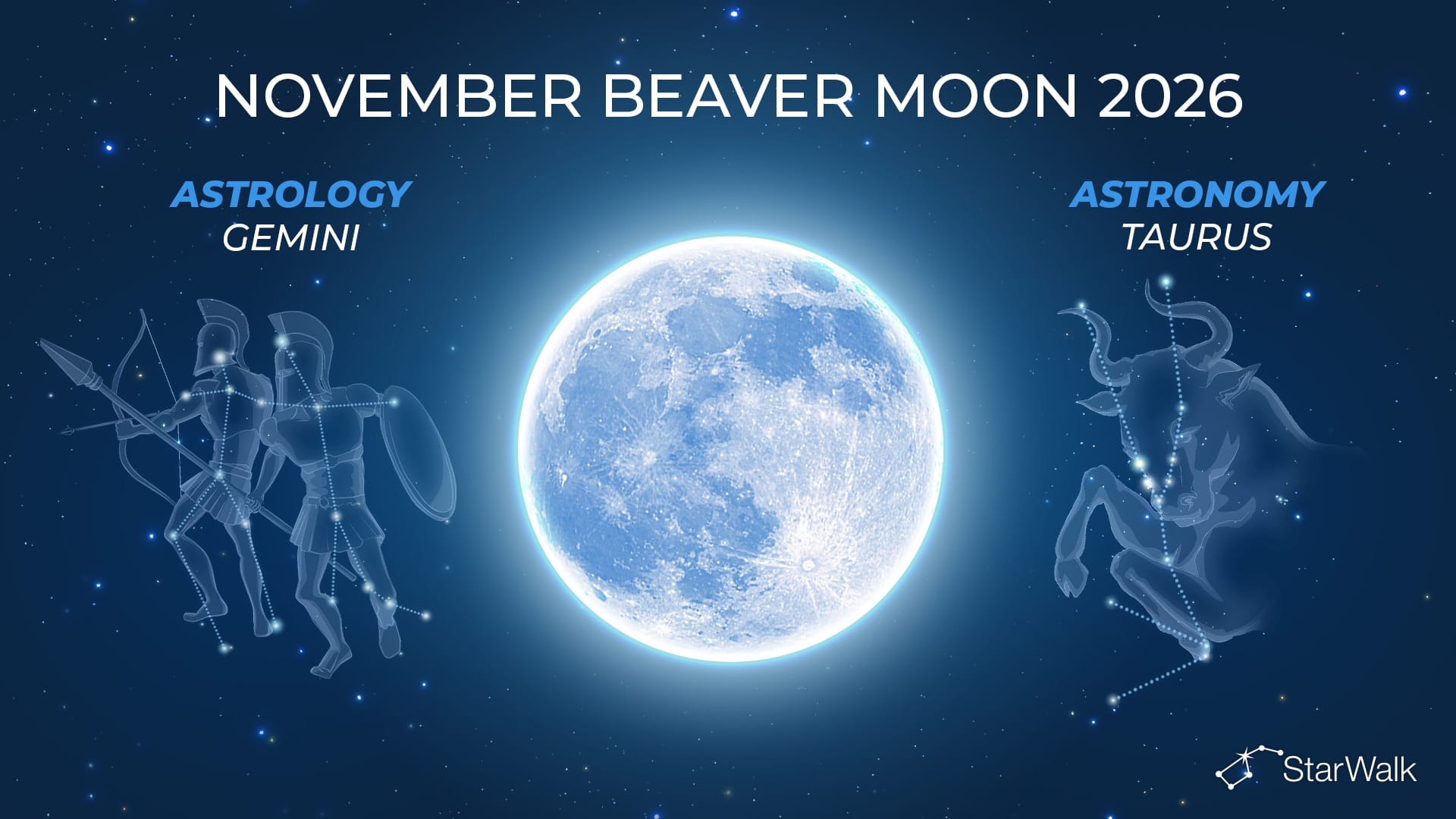
On November 24, the Full Moon will appear in Taurus, the constellation of the Bull. Taurus is one of the most recognizable constellations of the northern autumn and winter sky, home to the bright orange star Aldebaran and the famous Pleiades star cluster.
You may also see references to the November 2026 Full Moon in Gemini. This describes its position in the tropical astrological zodiac, which uses a different system from the astronomical constellation boundaries. In the actual sky, the Moon will be in Taurus. Our infographic 12 Zodiac Signs vs. 13 Constellations of the Ecliptic explains the difference.
What Stars and Planets Are Near the November Full Moon?
The most interesting sight beside the Beaver Supermoon will be the Pleiades (M45), also known as the Seven Sisters. On November 24, the Moon will pass extremely close to the star cluster. The Pleiades are normally visible to the naked eye under a dark sky, but the glare of the nearly full Moon will make many of their stars harder to see. Binoculars or a telescope can help, depending on the apparent separation and your observing conditions.
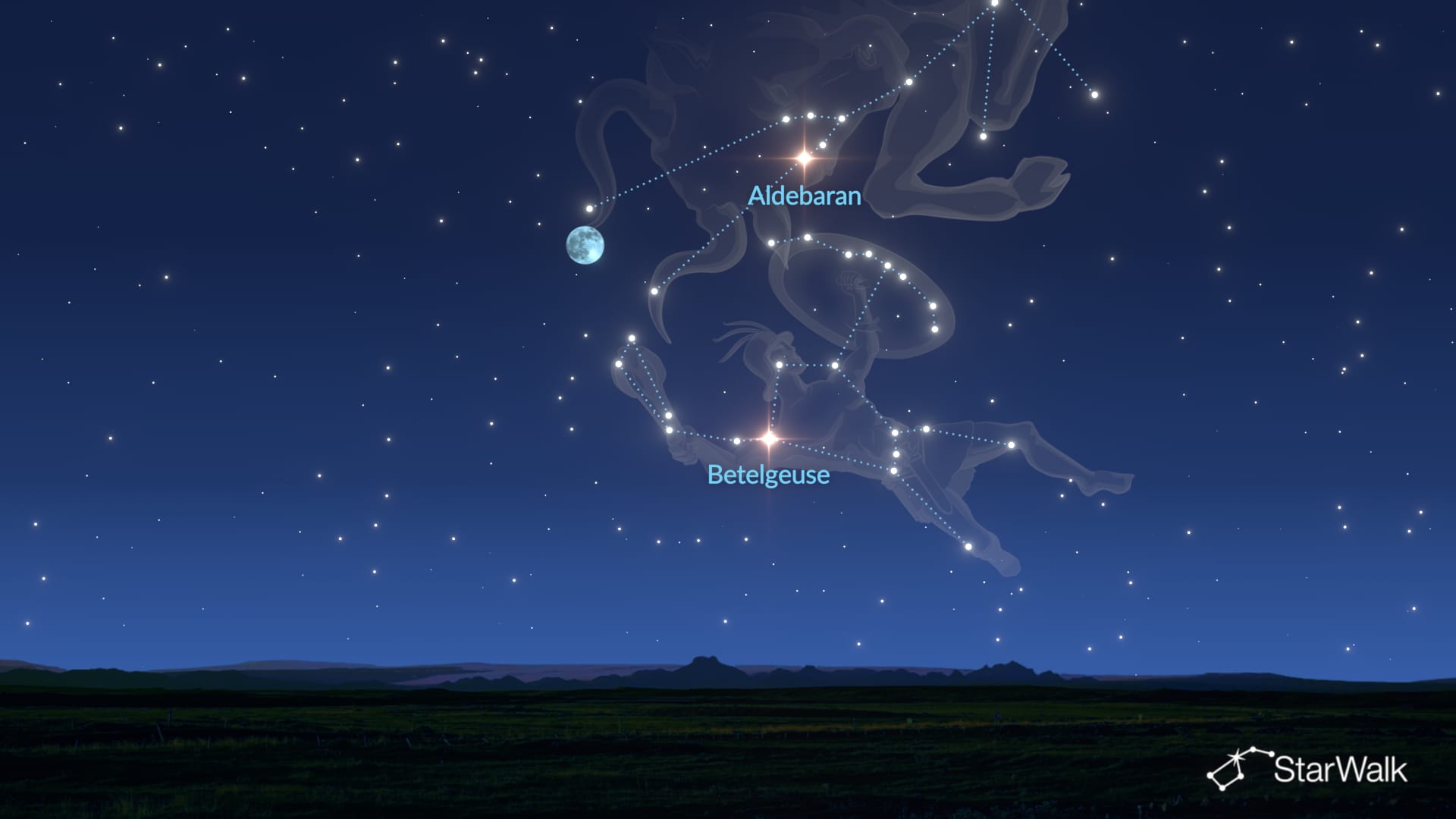
Another landmark is Aldebaran (mag 0.9), the orange-red star marking the Bull’s eye. Its color will contrast with the Moon’s bright white or yellow disk. On November 25–26, the nearly full Moon will form a broad triangle with Aldebaran and Betelgeuse. Look for this naked-eye pattern late in the evening or before dawn. Read more in our November sky guide.
The planet Uranus (mag 5.6) will also be in Taurus, passing about 5° from the Full Moon on November 24. However, Uranus will be difficult to pick out against the bright moonlit sky; a telescope or powerful binoculars are recommended.
November 23–24, 2026: The Moon meets the Pleiades and hides some of their stars
On November 24 at about 12:05 UTC, the Moon will reach conjunction with Alcyone, the brightest star in the Pleiades. At that moment, their angular separation as seen from Earth’s center will be about 0°57′. This is less than twice the apparent diameter of the lunar disk. The encounter is especially interesting because, from some locations, the Moon will pass directly in front of individual stars in the cluster. Astronomers call this a lunar occultation.
The stars covered and the times depend on your location. Observers in parts of Japan, China, eastern Russia, Southeast Asia, northern Australia, the Pacific, and North America may see individual Pleiades stars disappear behind the Moon or reappear at its edge. Some of these events occur very low in the sky or during twilight. In western North America, watch before dawn on November 24; in East Asia, watch on the evening of November 24.
If there is no occultation visible from your city, you can still observe the beautiful close pairing. Because the Moon will be extremely bright, use binoculars or a telescope to locate the fainter stars, and check the local event circumstances beforehand. See our Pleiades observing guide for more details.
November 2026 Supermoon: Why Is the Beaver Moon So Big and Bright?
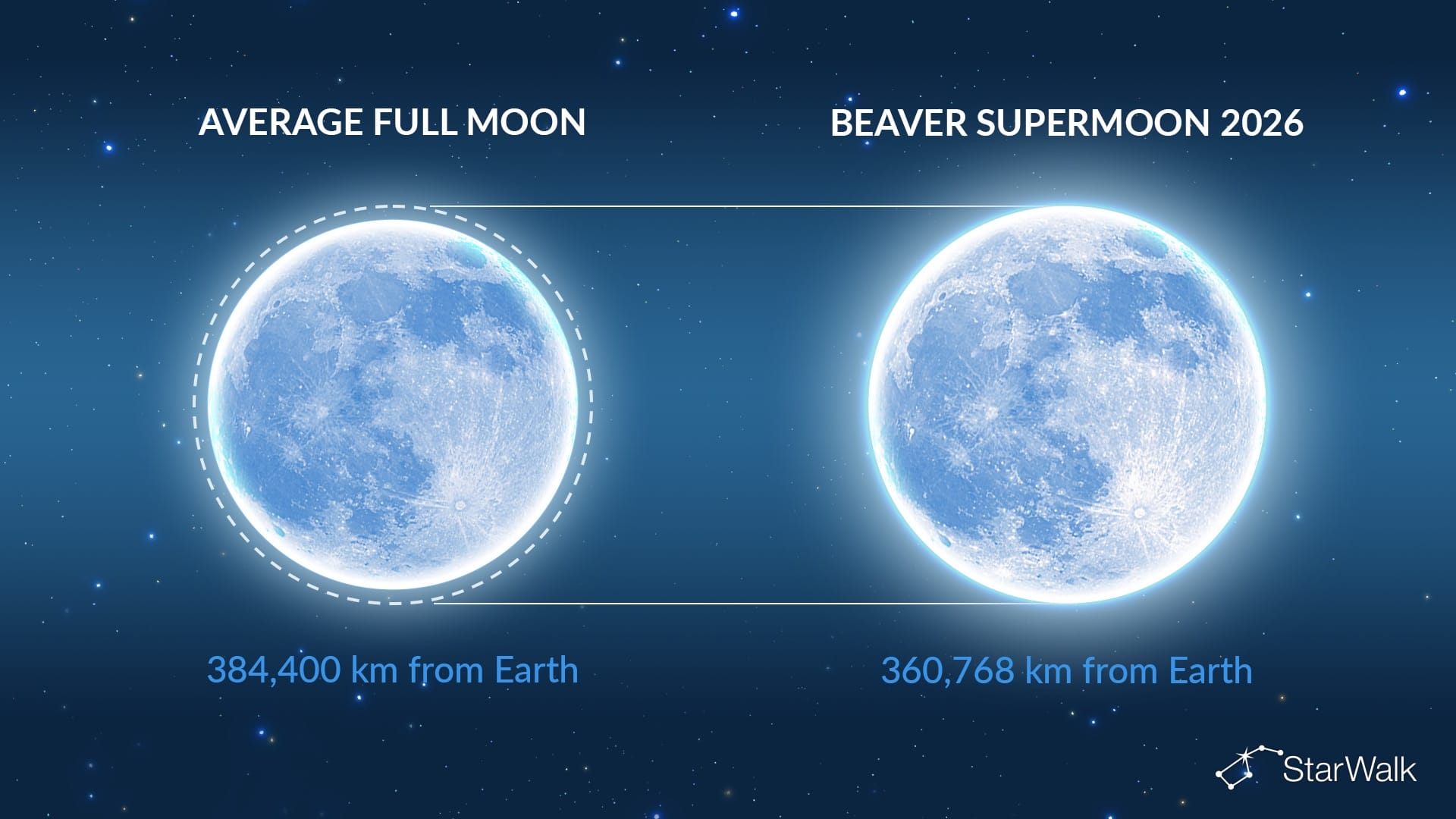
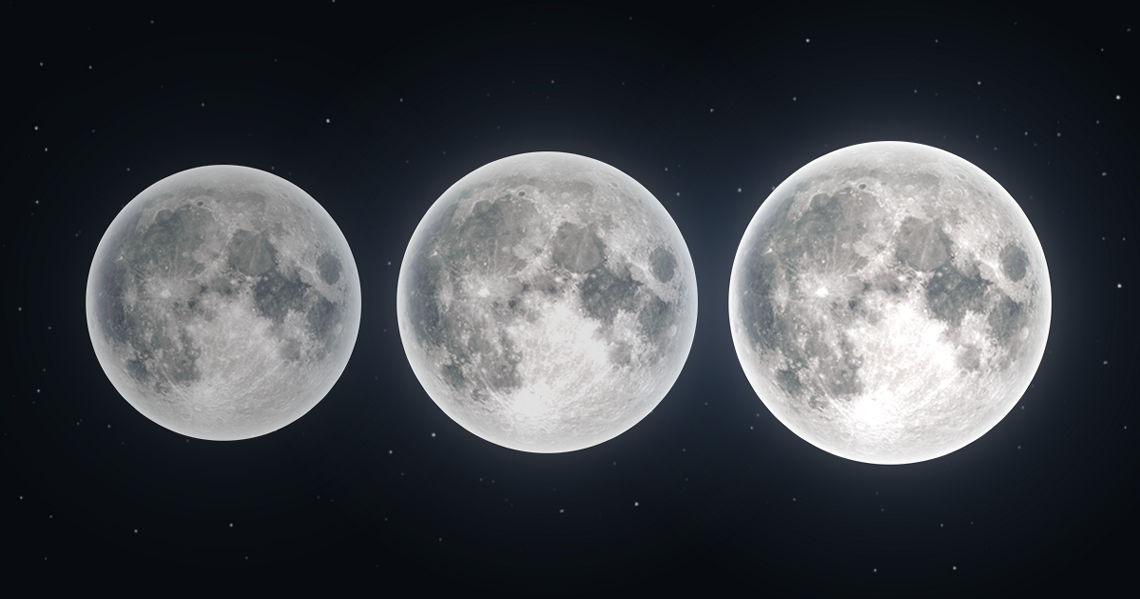
Yes, the November 24 Beaver Moon is a supermoon. A supermoon is a Full Moon that occurs near perigee, the closest point to Earth in the Moon’s elliptical orbit. The Moon’s changing distance makes its apparent size and brightness vary from one Full Moon to another.
At the moment of the November 2026 Full Moon, the Moon will be about 360,768 km (224,171 miles) from Earth. It will appear around 6.5% larger in diameter and 13.5% brighter than a Full Moon at the mean Earth–Moon distance of 384,400 km (238,855 miles). For comparison, the May 31, 2026 micromoon was about 406,135 km away and had a smaller apparent diameter.
The November Full Moon will be the first supermoon since January 2026, but not the largest of the year. That distinction belongs to the December 24, 2026 supermoon.
The difference is subtle: most people can't distinguish a supermoon from an ordinary Full Moon with the naked eye. For the most striking view, watch the Moon rise near the horizon, where the Moon illusion can make it appear larger. For a memorable photograph, include foreground landmarks or use a telephoto lens.
Learn more in our supermoons and micromoons infographic.
November Full Moon Meaning: Why Is It Called the Beaver Moon?
The Beaver Moon is the traditional name most commonly used for the November Full Moon in North America. It reflects the seasonal changes of late autumn in the Northern Hemisphere.
There are two frequently cited explanations for the name. One links it to the time when beavers prepare for winter, reinforcing their lodges and storing food. The other connects it with the historical season for setting beaver traps, before rivers and wetlands froze. Both explanations refer to the close relationship between seasonal wildlife activity and the practical calendar of the communities that used these Moon names.
Moon names are not universal: Indigenous nations and different cultural traditions have their own names, which can reflect local weather, wildlife, and seasonal activities.
Other names for the November Full Moon
The November Full Moon has many traditional names across Native American cultures. They reflect seasonal changes, animal behavior, food gathering, and preparations for winter.
- Frost Moon — an Assiniboine name marking the arrival of frosty weather
- Deer Rutting Moon — a Cheyenne name associated with the deer mating season
- Trading Moon — a Cherokee name connected with late-autumn trade
- Turkey Moon — a Potawatomi name referring to wild turkeys
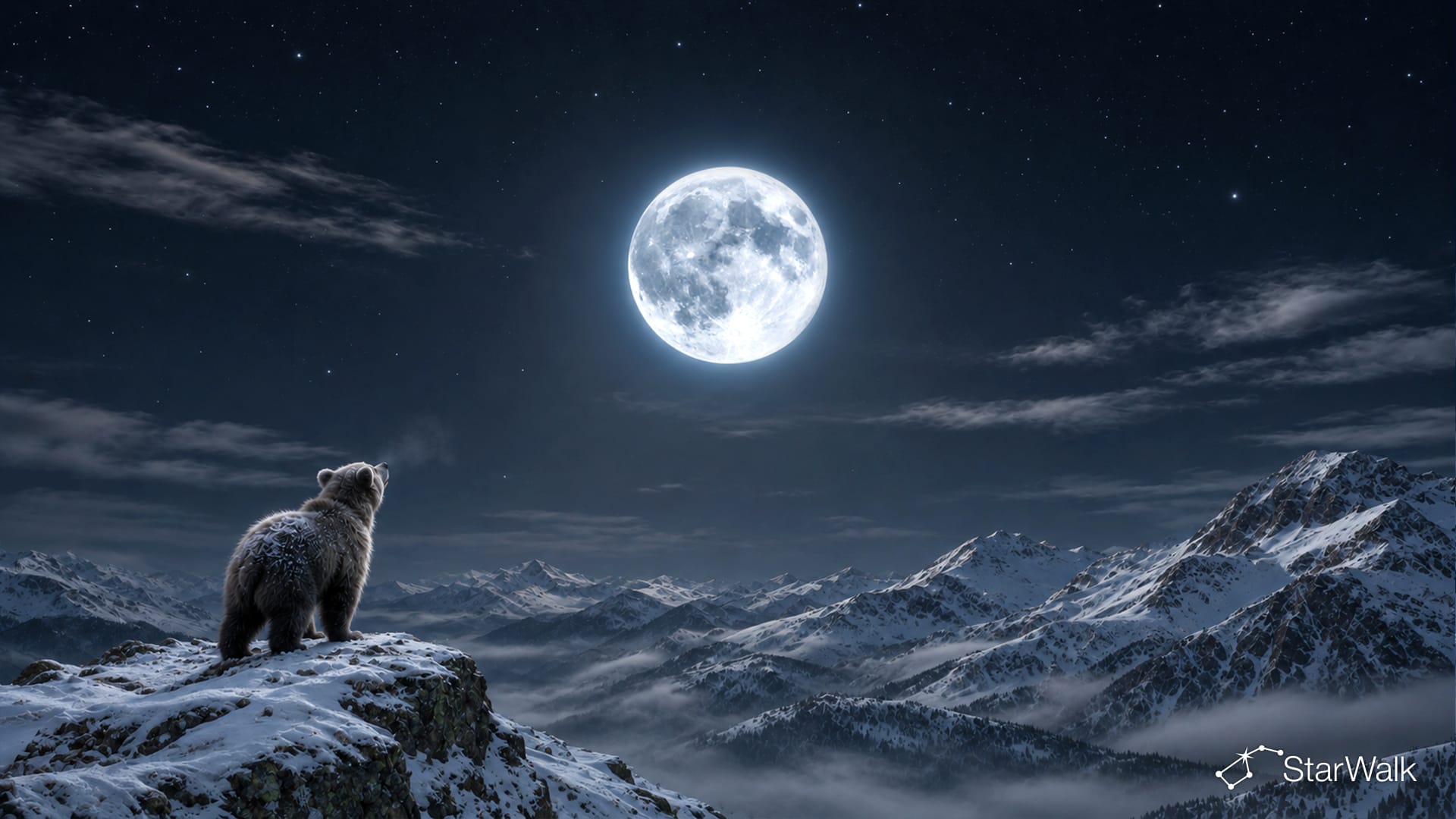
- Little Bear’s Moon — a Winnebago (Ho-Chunk) name
- Moon of the Fledgling Hawk — a Hopi name
- Moon of the Panther — a Choctaw name
- Moon When All Is Gathered In — a Pueblo name marking the completion of the harvest
- Moving Inside for Winter Moon — a Kalapuya name describing preparations for the cold season
- Snowy Mountains in the Morning Moon — a Wishram name
- Moon When the Rivers Begin to Freeze — a Cree name
In the Southern Hemisphere, where November falls in spring, seasonal calendars may use names such as Flower Moon or Hare Moon instead.
Beaver Moon spiritual meaning
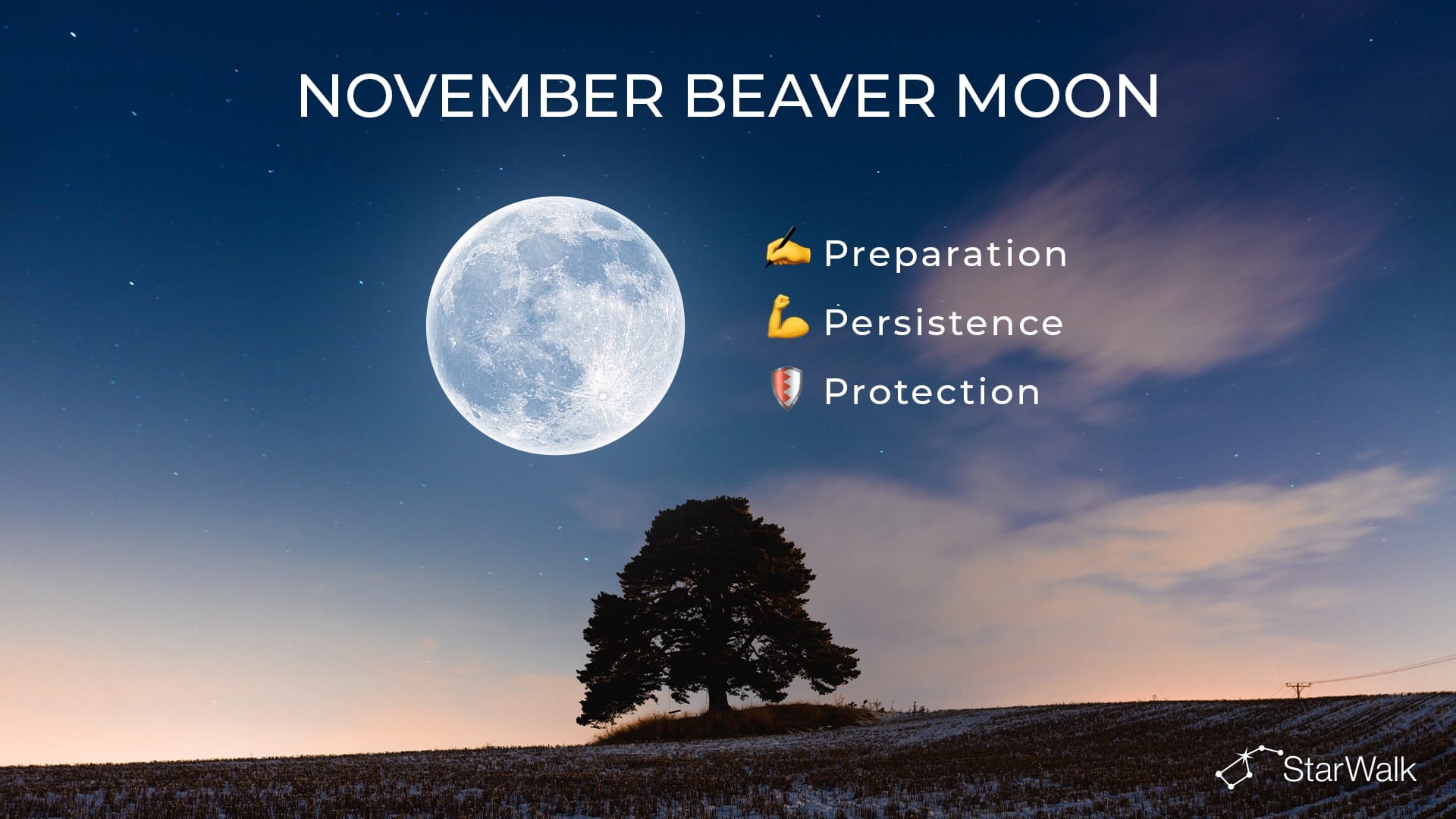
In some modern spiritual interpretations, the Beaver Moon symbolizes preparation, persistence, protection, and making plans for the future. These associations draw on the image of beavers working to secure their homes before winter.
For some people, the November Full Moon is an occasion to reflect on unfinished tasks, appreciate what they have accomplished, or set intentions for the coming season. These are symbolic and personal interpretations, not scientifically established effects of the Moon on emotions or life events.
November Full Moon 2026: Frequently Asked Questions
Will the Beaver Supermoon look bigger than usual?
Yes, but the difference will be subtle. The November 2026 Beaver Supermoon will appear a bit larger and brighter than an average Full Moon because it will be closer to Earth. Most people won’t notice the difference without a side-by-side comparison. However, if you watch the Moon near the horizon, it may look enormous due to the Moon illusion.
When is the next Full Moon and supermoon after November 2026?
The next Full Moon — and the next supermoon — occurs on December 24, 2026, at 01:28 UTC. Known as the Cold Moon, it will be the largest Full Moon of 2026. You can find the dates of other supermoons in our 2026 Full Moon calendar.
When is the next Beaver Moon after 2026?
The next November Beaver Moon occurs on November 14, 2027, at about 03:26 UTC. In North American time zones, the exact moment falls on the evening of November 13.
November Full Moon 2026: Key Takeaways
The Beaver Supermoon occurs on November 24, 2026, at 14:53 UTC, but the best time to enjoy it will usually be around local moonrise, or shortly after sunset. It will look almost full on November 23–25, and its position near the Pleiades will make this month’s Full Moon especially interesting for skywatchers.
This November Full Moon earns the name Beaver Moon from traditional late-autumn associations with beavers and winter preparation. It is also the first supermoon since January, appearing modestly larger and brighter because it is closer to Earth than usual. For your exact Moon phase, moonrise time, and nearby objects, open Sky Tonight and tap the Moon tab in the Calendar.
We wish you clear skies and successful observations!
