Full Moon in February 2027: Super Snow Moon

The Full Moon in February 2027 (the Snow Moon) peaks on Saturday, February 20, 2027 at 23:23 UTC/GMT — 11:23 PM in the UK or 6:23 PM ET / 5:23 PM CT / 4:23 PM MT / 3:23 PM PT in the US. This Full Moon is the last Supermoon of 2027 and it also coincides with a penumbral lunar eclipse (Feb 20–21). In the sky, the Moon will be in the constellation Leo. Want to know what bright dots are shining near the Moon right now? Use the Sky Tonight app. Now, let’s dive into all the details.
Contents
- February 2027 Full Moon at a glance
- February 2027 Moon Dates & Times (UTC/GMT, UK & US time zones)
- Is February’s Full Moon in Virgo or in Leo?
- Penumbral lunar eclipse on Feb 20–21, 2027
- What objects will be visible near the Full Moon in February 2027?
- What is the Snow Moon?
- February Full Moon 2027: Frequently asked questions
- Full Moon in February 2027: Key takeaways
February 2027 Full Moon at a glance
- Date: Feb 20, 2027 (Saturday) (Feb 21 in some time zones east of UTC)
- Type: Supermoon (Moon is about 363,306 km from Earth)
- Peak time: 23:23 UTC/GMT (11:23 PM UK / 6:23 PM ET / 3:23 PM PT)
- Constellation (astronomy): Leo
- Main highlight: Penumbral lunar eclipse during the Full Moon (Feb 20–21)
- Name & meaning: Snow Moon — named for heavy snowfall; often linked with reflection & renewal.
February 2027 Moon Dates & Times (UTC/GMT, UK & US time zones)
Moon phases in February 2027
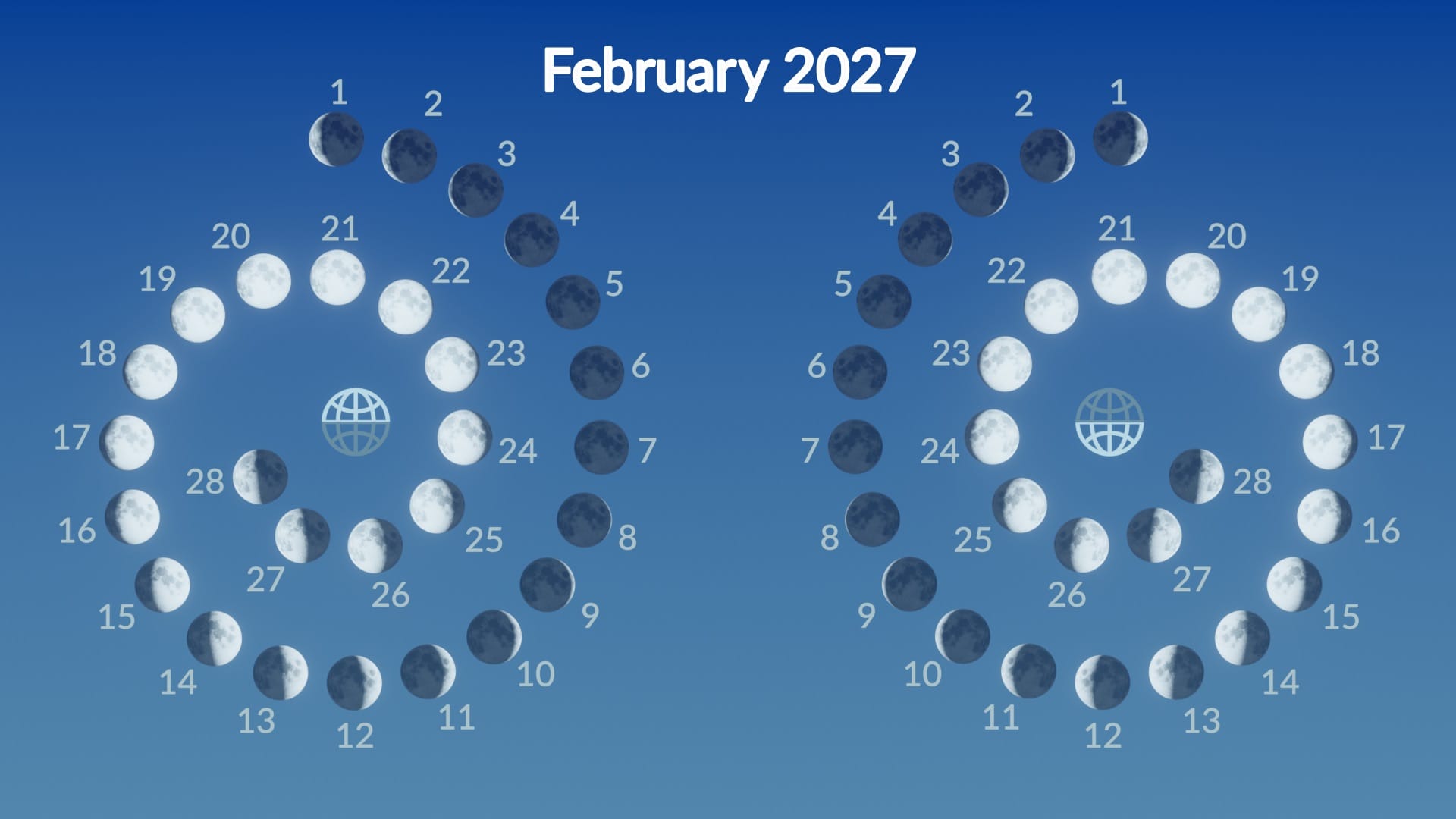
- New Moon: Feb 6, 2027 — 15:56 UTC (annular solar eclipse)
- First Quarter: Feb 14, 2027 — 07:58 UTC
- Full Moon: Feb 20, 2027 — 23:23 UTC (penumbral lunar eclipse)
- Last Quarter: Feb 28, 2027 — 05:16 UTC
For your exact local time (any city), check the Moon Phases Calendar on our website.
When is the Full Moon in February 2027?
This month, the Moon reaches its full phase on Saturday, February 20, 2027 at 23:23 UTC/GMT (11:23 PM UK / 6:23 PM ET / 3:23 PM PT).
The Moon will look full on the nights around Feb 20 as well, so you don’t need the exact minute to enjoy it.
See exactly how the illumination of the lunar disc changes from day to day in the Sky Tonight app, using the Moon tab in the Calendar. Watch our video tutorial to learn how to use the Calendar in Sky Tonight.
Full Moon February 2027: Time in the UK and the USA
- UK (GMT): 11:23 PM on Feb 20
- US ET: 6:23 PM on Feb 20
- US CT: 5:23 PM on Feb 20
- US MT: 4:23 PM on Feb 20
- US PT: 3:23 PM on Feb 20
What time does the Full Moon rise?
On the day of the Full Moon, the Moon is opposite the Sun in the sky, so it typically rises around sunset and sets around sunrise. However, the exact timing varies even between nearby cities.
Here are example moonrise times on Feb 20, 2027 (local time) for a few popular cities:
- London, UK: 5:01 PM
- Belfast, UK: 5:18 PM
- Edinburgh, UK: 5:03 PM
- New York, USA (ET): 5:32 PM
- Chicago, USA (CT): 5:28 PM
- Denver, USA (MT): 5:44 PM
- Los Angeles, USA (PT): 5:46 PM
For the exact moonrise time where you are, check the Sky Tonight app. Open the app, tap the Magnifier icon, type “Moon” in the search field, and tap the corresponding search result. On the Figures tab, you’ll find info on the Moon’s current phase, visual magnitude, and illumination. On the Events tab, you can see the list of upcoming astronomical events related to the Moon, including the rise and set times.
Best time to see the Snow Moon
-
For most places, the best view is at moonrise (around local sunset), especially for photos.
-
The Snow Moon will also look full on the nights around Feb 20 (for example, Feb 19 and Feb 21 are also great for viewing).
-
On Feb 20–21, the Full Moon comes with a penumbral lunar eclipse, which can look like a gentle shading of the Moon (subtle, but visible in clear skies — especially near maximum).
February 2027 Supermoon
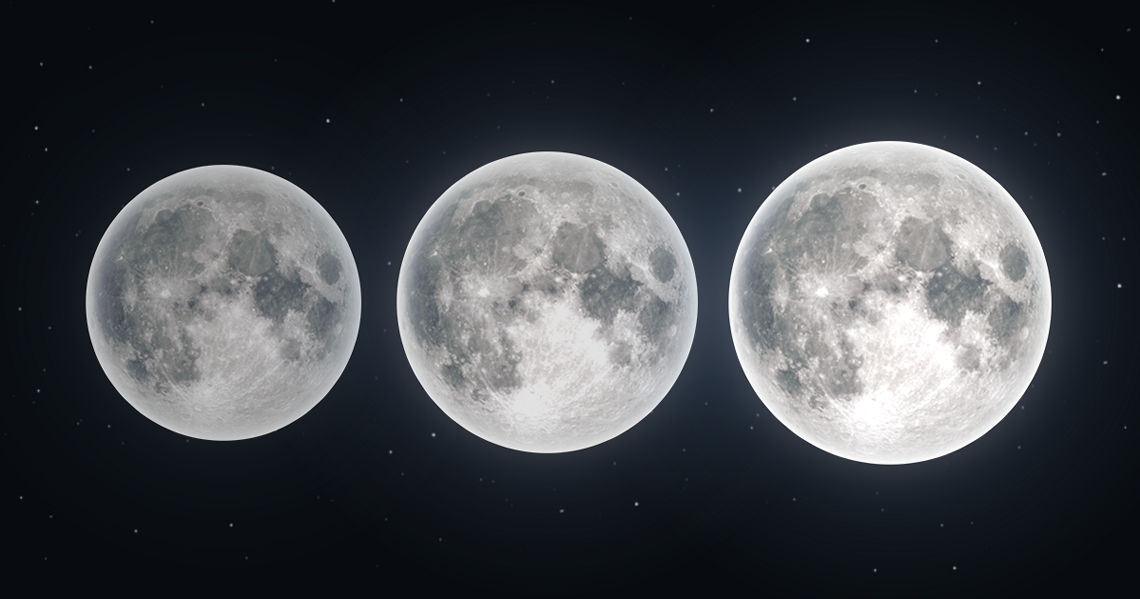
The Full Moon on February 20, 2027, is considered a Supermoon — it occurs very close to perigee, the Moon’s closest point to Earth. The February Full Moon will appear 6% bigger and 12% brighter than an average Full Moon due to its smaller distance from Earth (the difference is subtle, but noticeable in side-by-side photos).
A Supermoon happens when a Full Moon occurs near perigee — the Moon doesn’t really change its size; it just gets closer to Earth. In February 2027, the Full Moon will be about 363,306 km from Earth. For comparison, the smallest Full Moon of 2027 (the July 18 Micromoon) will be about 405,979 km away. The February Supermoon’s apparent diameter is about 32.9 arcminutes versus 29.4 arcminutes for the July Micromoon.
Take a look at our infographic on Supermoons and Micromoons to get a better understanding of the differences in their visual appearance.
February New Moon Brings an Annular Solar Eclipse & the Lunar New Year
The New Moon on February 6, 2027, at 15:56 UTC/GMT is no ordinary one — it coincides with two special events.
First, it brings an annular solar eclipse — a “ring of fire” event that happens when the Moon passes in front of the Sun while appearing slightly too small to cover it completely. The annular phase will be visible along a path across parts of South America and West Africa, while a partial eclipse will be visible across much wider regions. Check our eclipse infographic to see the eclipse map.
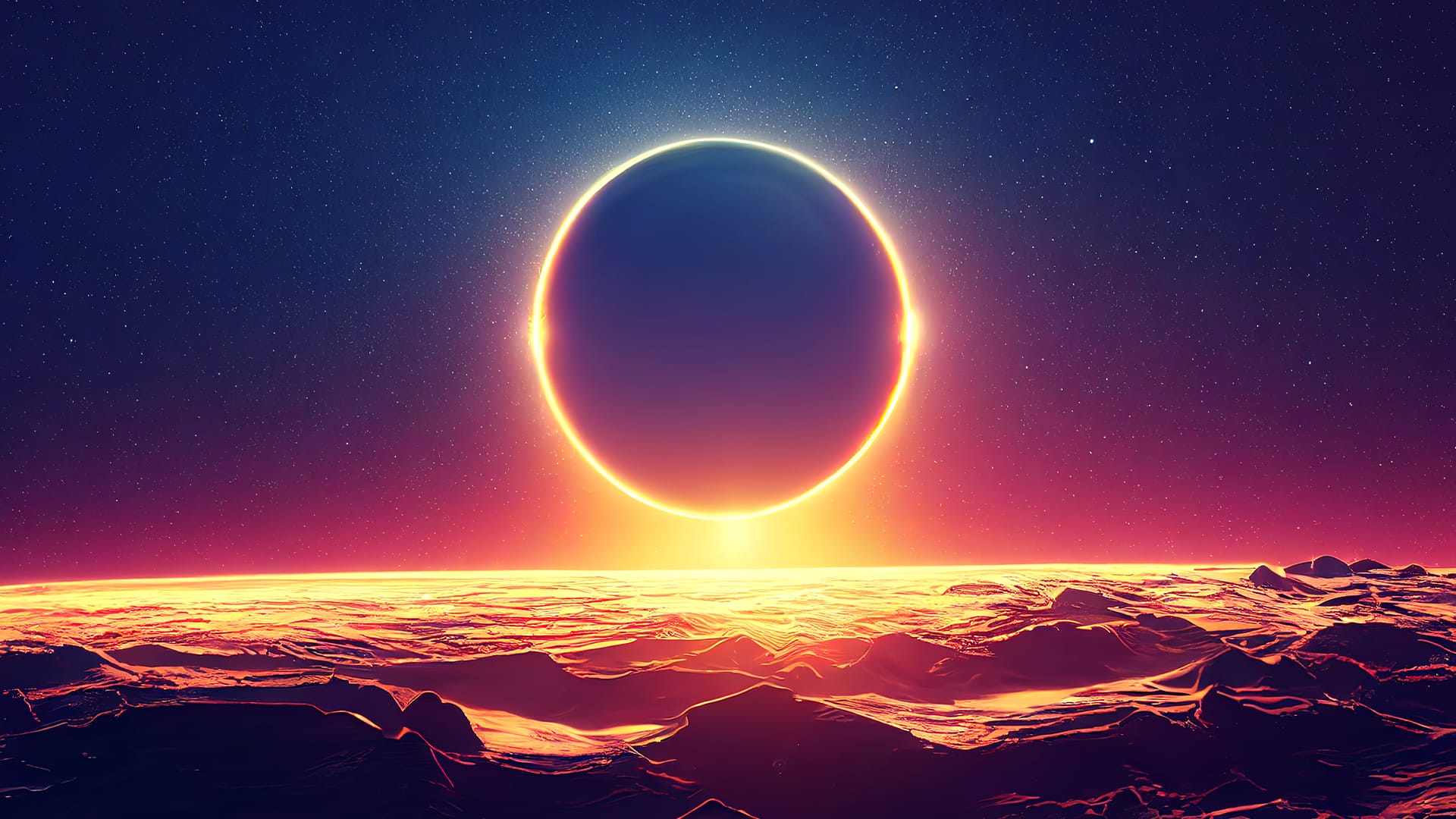
Second, this New Moon also marks the start of the Lunar New Year (Chinese New Year) in 2027, which falls on February 6. Traditionally, the celebrations culminate with the Lantern Festival on February 20, 2027 — fittingly, the date of the February Full Moon (Snow Moon), which also comes with a penumbral lunar eclipse. Learn more about Lunar New Year 2027 in our guide.
Is February’s Full Moon in Virgo or in Leo?
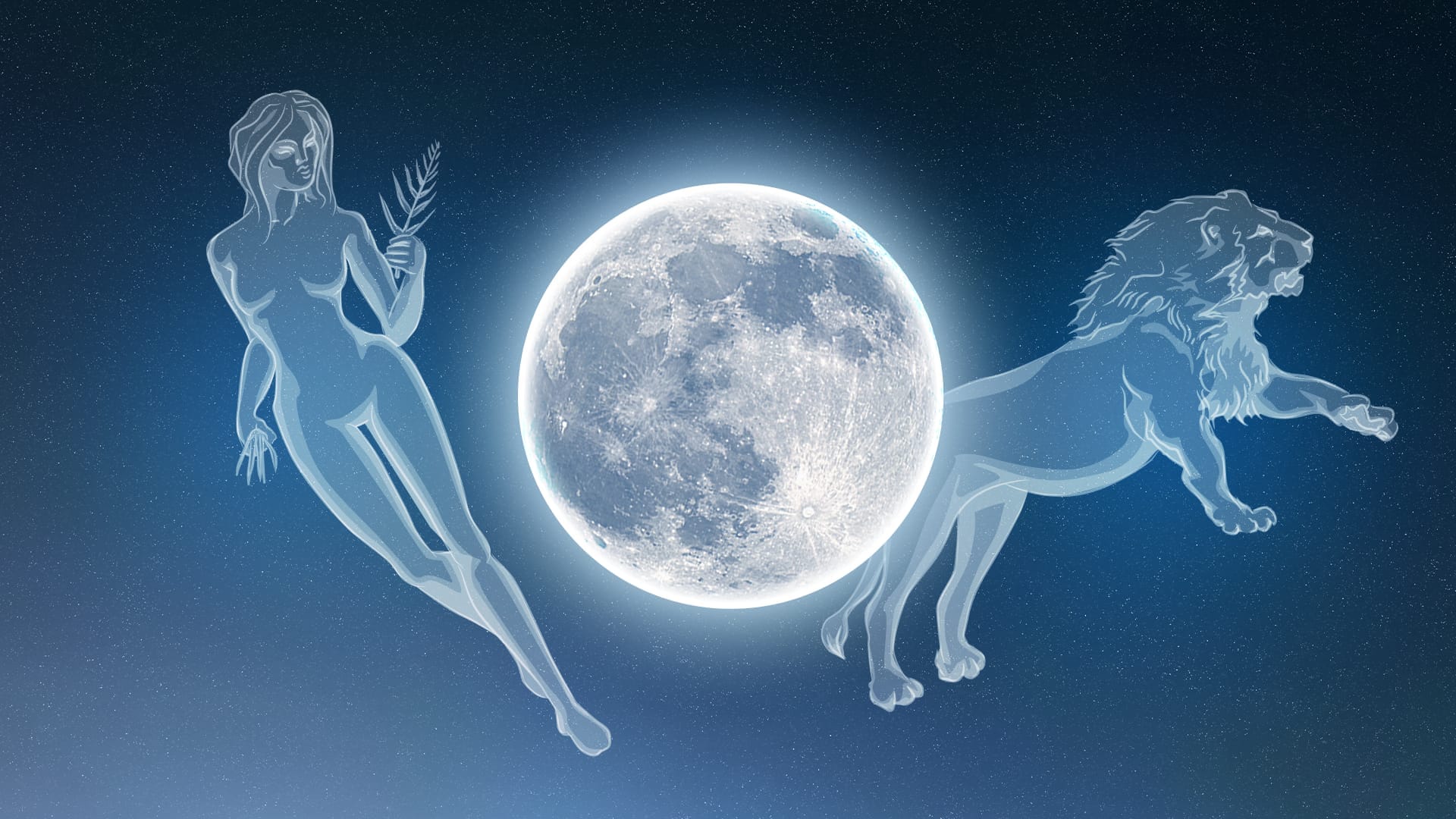
Astronomically speaking, the February Full Moon 2027 is positioned in the constellation Leo. In the sky, the Full Moon will be near Leo’s brightest star, Regulus.
From an astrological perspective, February’s Full Moon in 2027 is considered to be in the sign of Virgo. This is because zodiac signs are not strictly tied to the constellations visible in the sky. You can read more about the difference between zodiac constellations and zodiac signs in our dedicated article.
Penumbral lunar eclipse on Feb 20–21, 2027
The February 2027 Full Moon comes with a penumbral lunar eclipse, visible from Europe, Africa, Asia, Australia, and the Americas.
- Timeline (UTC): the penumbral eclipse begins on February 20 at 21:12, reaches maximum at 23:12, and ends at 01:13 on Feb 21.
Because this is a penumbral eclipse, the effect is often subtle — look for a gentle “smoky” shading on one side of the Moon, best noticed near maximum. Read our guide on lunar eclipses to learn more.
What objects will be visible near the Full Moon in February 2027?
On February 20, the Full Moon will be positioned near the star Regulus in Leo. The planets Mars and Jupiter will also be nearby in the same constellation. Over the course of the night the Moon will be slowly moving away from these three bright dots.
What is the Snow Moon?
The Snow Moon is the traditional name for the February Full Moon in North America and Europe. In 2027, the Snow Moon falls on Feb 20.
Unlike some other Full Moon names (like the Worm Moon or the Pink Moon), this name speaks for itself and doesn’t require much explanation. February is the month of the heaviest snowfalls in North America, so Native American tribes referred to it as the Snow Moon. Some tribes also called it the Hunger Moon because it was difficult to hunt under harsh weather conditions.
February Full Moon alternative names

Different cultures gave the February Full Moon different names. Here are some of them:
- Chinese: Budding Moon
- Celts: Ice Moon
- Cree (Canada & Northern US): Eagle Moon
- Cherokee (Southeastern US): Bony Moon
- Ojibwe (Southern Canada & Northern Plains, USA): Moon When the Bear Cubs Are Born
- Tlingit (Pacific Northwest, USA & Canada): Black Bear Moon
- Omaha (Central Plains, USA): Moon When Geese Come Home
- Haida (Alaska): Goose Moon
- Southern Hemisphere: Grain Moon, Barley Moon, Red Moon, Dog Moon
Meaning of the Snow Moon: Spiritual Meaning
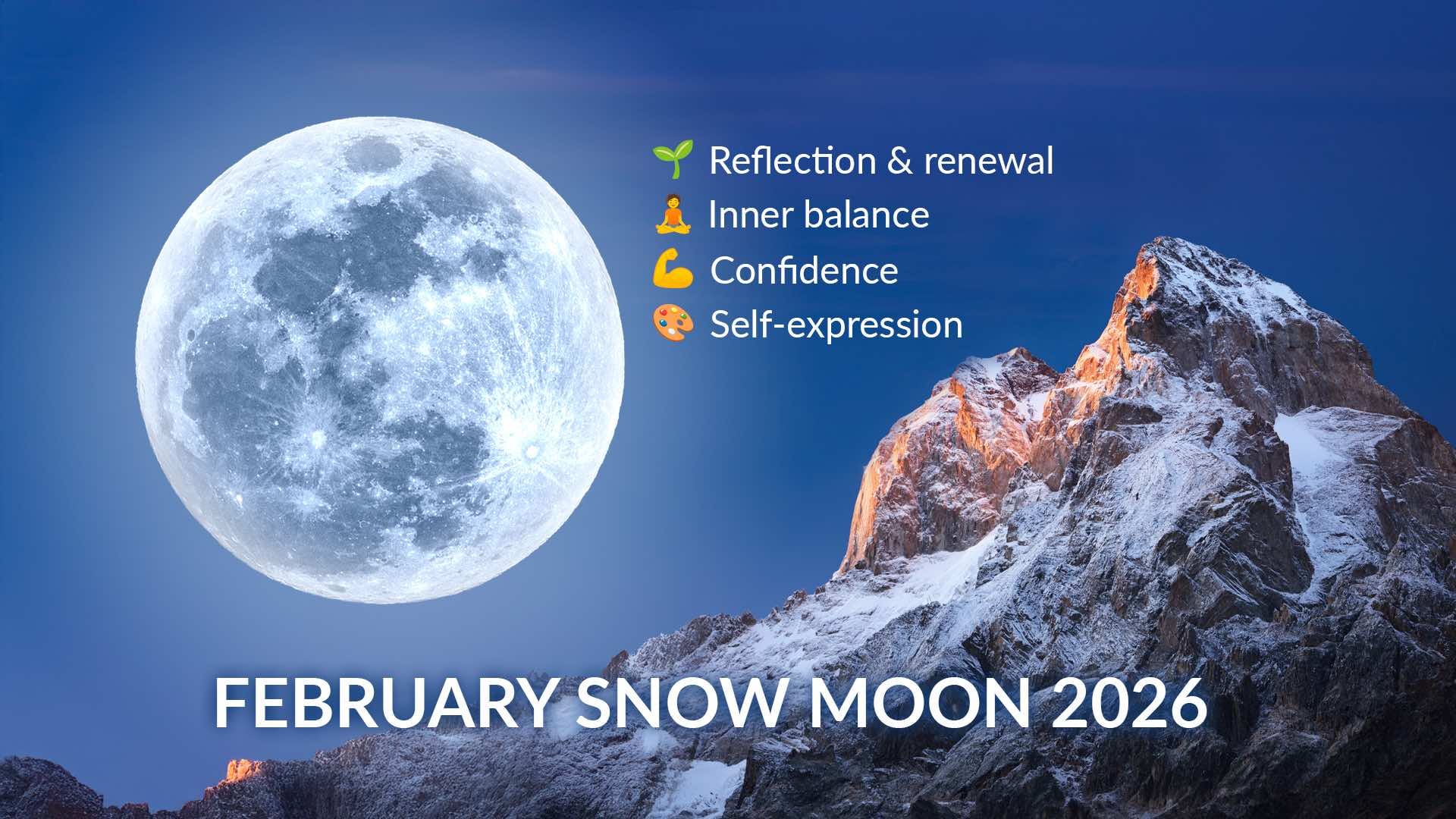
The meaning of the Snow Moon spiritually is often associated with reflection, patience, and emotional clarity. It encourages letting go of what feels heavy or outdated, making space for renewal and gentle beginnings. This Full Moon also favors mindfulness, inner balance, and trust in the natural timing of change.
Magha Purnima and the February Full Moon 2027
In 2027, the Full Moon on February 20 coincides with Magha Purnima, an important observance in Hindu tradition that marks the Full Moon of the Magha month in the Hindu lunar calendar. Magha Purnima is traditionally associated with spiritual purification, charity, and reflection, and is observed by pilgrims and devotees across India and beyond.
February Full Moon 2027: Frequently asked questions
Why is February’s Full Moon called the Snow Moon?
February is often the snowiest month of the year in North America, so many Native American tribes named the Full Moon after the harsh winter conditions.
When is the Moon in Virgo?
Looking for “Full Moon in Virgo 2027”?
-
Astronomy: the Feb 20, 2027 Snow Moon is in Leo.
-
Astrology: it’s considered in Virgo. If you mean a Full Moon in the constellation Virgo, see March 22, 2027.
In astrology, the Moon is considered to be in Virgo during the February 2027 Full Moon. Astronomically, however, the February Full Moon will be located in the constellation Leo. In 2027, the Full Moon will be positioned in the constellation Virgo on March 22.
Is the February Full Moon 2027 a Supermoon?
Yes, the Full Moon on February 20, 2027, is a Supermoon — it will look 6% bigger and 12% brighter than an average Full Moon. It will be the second and last Supermoon of 2027, so don’t miss it!
What time is the Full Moon in February 2027 in the UK and the USA?
The Snow Moon peaks on February 20, 2027 at 23:23 UTC/GMT — 11:23 PM in the UK (GMT) or 6:23 PM ET / 5:23 PM CT / 4:23 PM MT / 3:23 PM PT in the US. The “peak time” is the exact moment the Moon is 100% illuminated — it can happen before moonrise in your city, and that’s normal. You’ll still see the Moon looking full when it rises that evening.
When is the next Full Moon?
The next Full Moon after the Full Snow Moon of 2027 will occur on March 22, 2027, at 10:44 GMT (6:44 AM EST). It is traditionally referred to as the Worm Moon.
If you’d like to learn more about the March Full Moon and the origin of its name, read our article. Find out what bright stars will be visible near the March Full Moon using the Sky Tonight app.
When is the next Snow Moon?
The Snow Moon is a traditional name for the February Full Moon. The next Full Snow Moon after the one in 2027 will occur on February 10, 2028, at 15:04 GMT (0:04 AM EST).
Full Moon in February 2027: Key takeaways
In February 2027, the Full Moon (Snow Moon) peaks on February 20 at 23:23 UTC/GMT (11:23 PM UK / 6:23 PM ET / 3:23 PM PT). It will be positioned in the constellation Leo. This Full Moon is also a Supermoon, so it will look a bit larger and brighter than average.
The February Full Moon in 2027 coincides with a penumbral lunar eclipse (Feb 20–21), visible from Europe, Africa, Asia, Australia, and the Americas.
Traditionally known as the Snow Moon, it gets its name from the heavy snowfall typical of this time of year in the Northern Hemisphere.
Want to check how the Moon looks from your location on any day? Use the Moon tab in the Sky Tonight app’s calendar to explore its phase, position, and more!
Further reading: