Best Constellations Visible in August
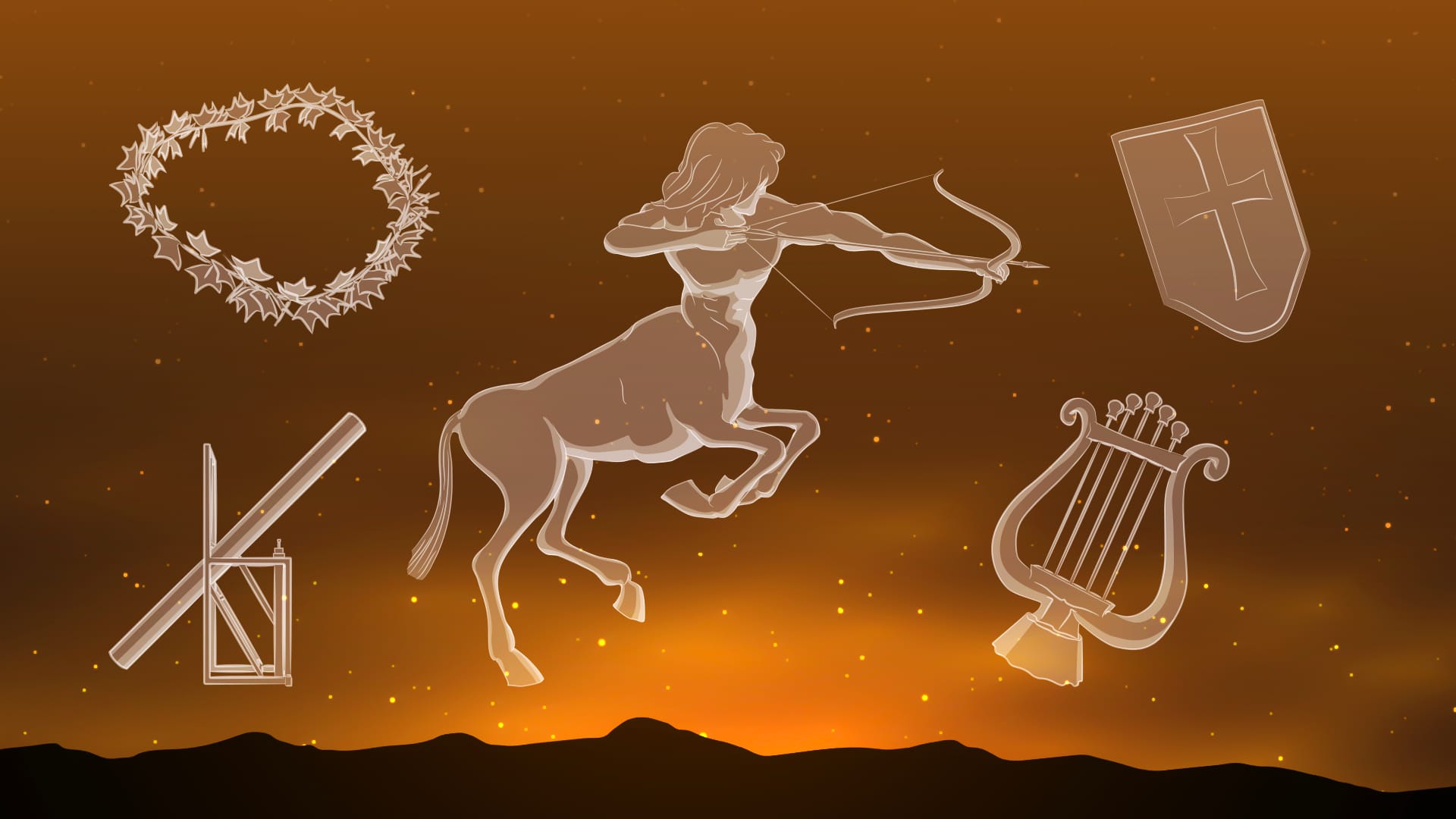
Five of the best constellations to see on August evenings are Sagittarius, Lyra, Telescopium, Scutum, and Corona Australis. Southern observers get the best views of Sagittarius, Telescopium, and Corona Australis, while Lyra is easier to see from the Northern Hemisphere. Scutum can be observed from both hemispheres under dark skies. Use the free Star Walk 2 app to locate any of these constellations easily.
Contents
- Best constellations to see in August
- Tips for observing constellations in August
- More to see in the August 2026 night sky
- FAQ: August constellations
- What constellations can I see in August from the Northern Hemisphere?
- What constellations can I see in August from the Southern Hemisphere?
- What bright stars can I see in August?
- What is the easiest August constellation to find?
- What is the best time to see August constellations?
- Can I see the Milky Way in August?
- Best August constellations and stars: bottom line
Best constellations to see in August
| Constellation | Visibility | Brightest star | How to find it |
|---|---|---|---|
| Sagittarius | 55°N to 90°S | Kaus Australis | Find the Teapot asterism near Scorpius. |
| Lyra | 90°N to 40°S | Vega | Find bright Vega, one of the three stars of the Summer Triangle. |
| Telescopium | 30°N to 90°S | Alpha Telescopii | Look near Sagittarius and the tail of Scorpius. |
| Scutum | 70°N to 90°S | Alpha Scuti | Look along the Milky Way between Altair and the Teapot asterism of Sagittarius. |
| Corona Australis | 40°N to 90°S | Meridiana | Look for a faint curved arc of stars near Sagittarius. |
The latitude ranges are approximate and refer to the practical visibility of each constellation’s main pattern; individual stars may remain visible outside them.
The constellations featured in this guide are considered best seen in August because they reach their highest point in the sky around 9 p.m. local time. They are not the only constellations visible during the month, but August evenings provide especially favorable conditions for observing them.
The constellations are listed from the most prominent to the faintest in the evening sky:
- ☆☆☆ — bright and relatively easy to recognize.
- ☆☆ — moderately bright; visible with some effort.
- ☆ — faint; best seen under dark skies, binoculars may help.
Sagittarius
- Brightness: ☆☆☆
- Visibility range: 55°N to 90°S
- Brightest star: Kaus Australis (mag 1.8)
- Notable deep-sky objects: Lagoon Nebula (mag 6.0), Great Sagittarius Cluster (mag 5.1)
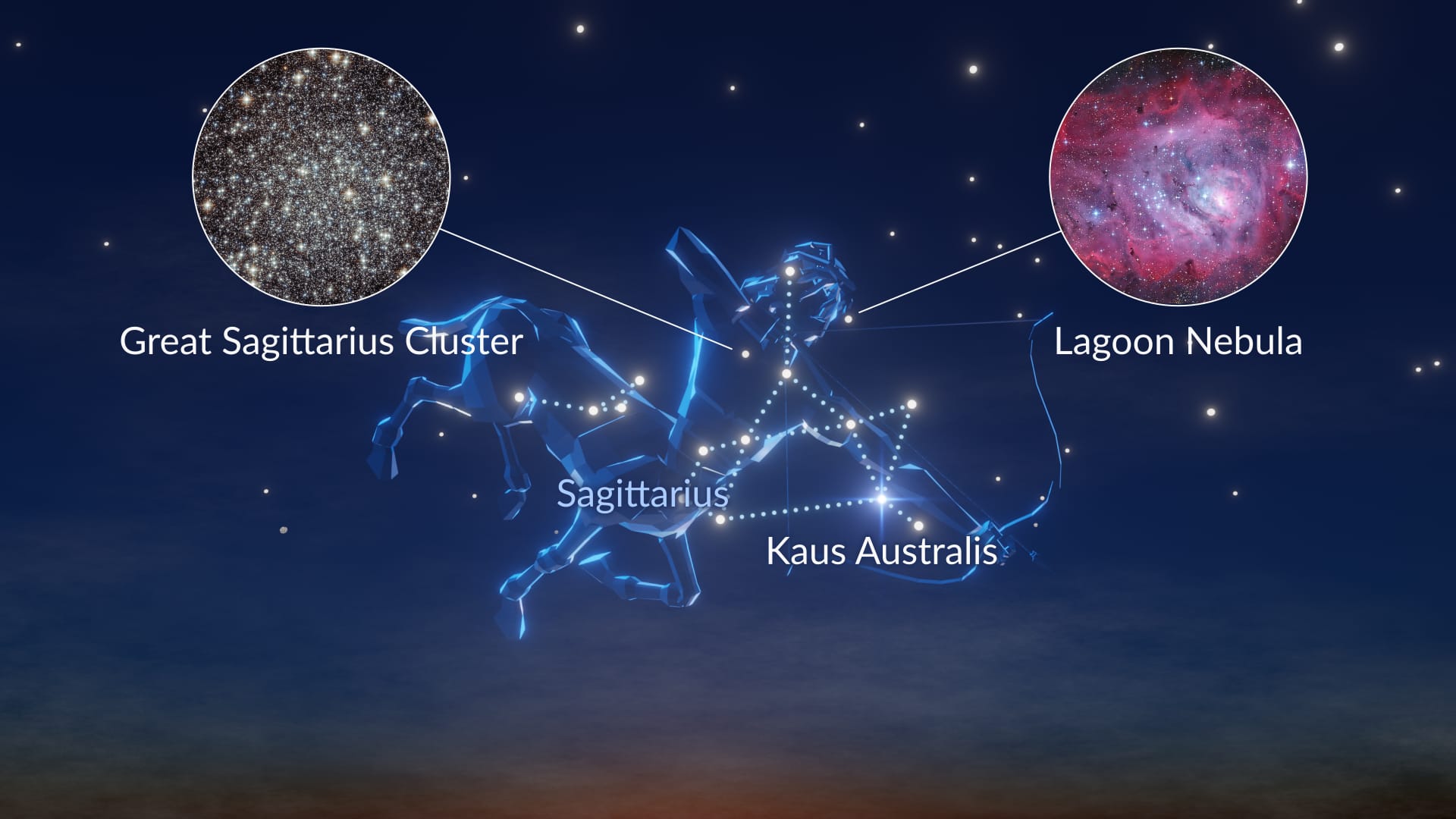
How to find Sagittarius in August
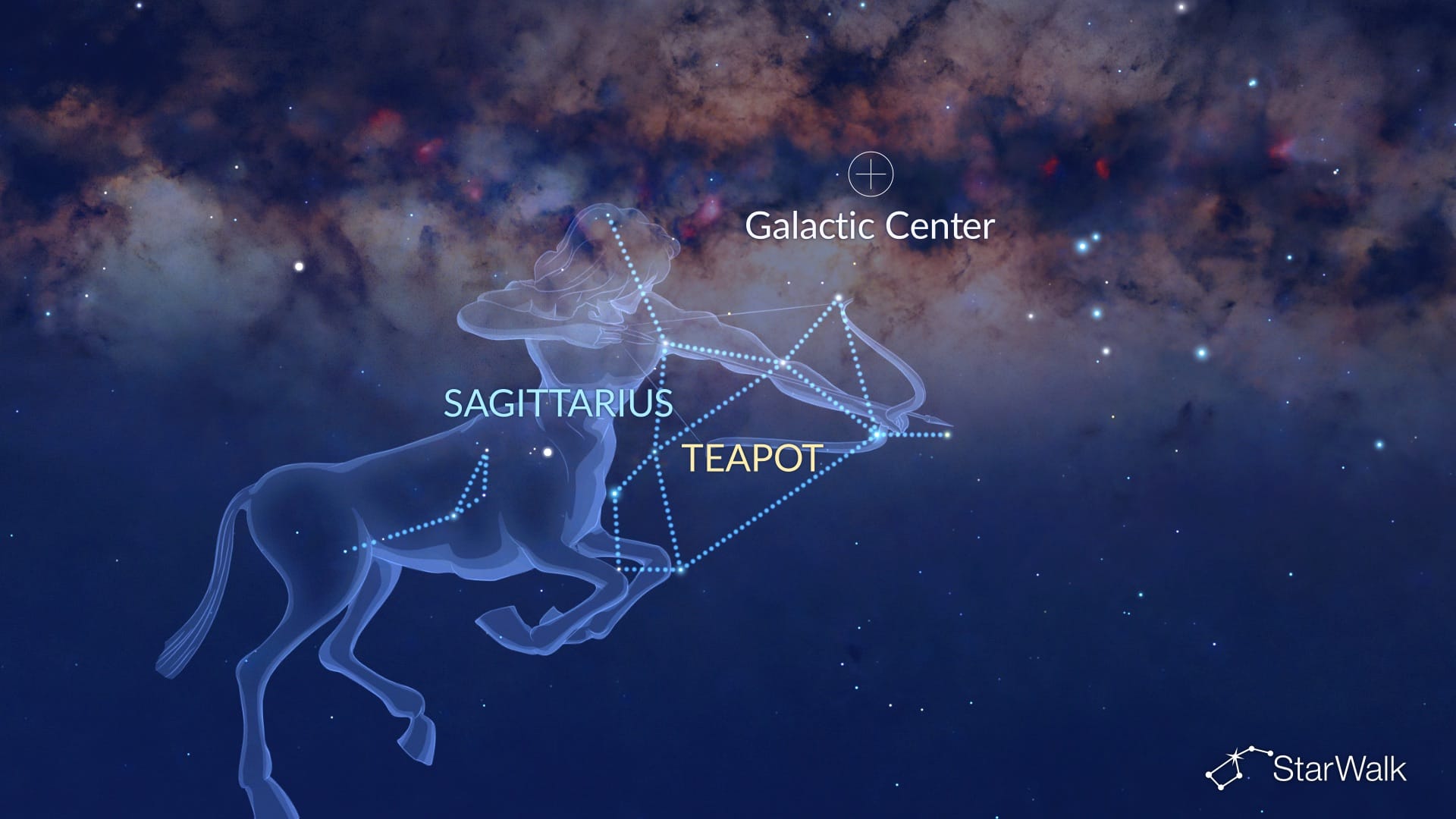
The central stars of Sagittarius form a recognizable pattern known as the Teapot. Once you identify its handle, lid, and triangular spout, finding the rest of the constellation becomes much easier.
The Teapot also points toward the center of the Milky Way Galaxy. Under dark skies, this region appears especially rich in stars, nebulae, and star clusters.
From the Northern Hemisphere, face south after the sky gets dark. Sagittarius stays relatively low above the horizon, especially from higher northern latitudes.
The Summer Triangle can help guide you. Imagine a line beginning at Deneb and passing through Altair toward the southern horizon. It will lead you toward Sagittarius. You can also look for bright red Antares in nearby Scorpius; Sagittarius lies to the east of the Scorpion.
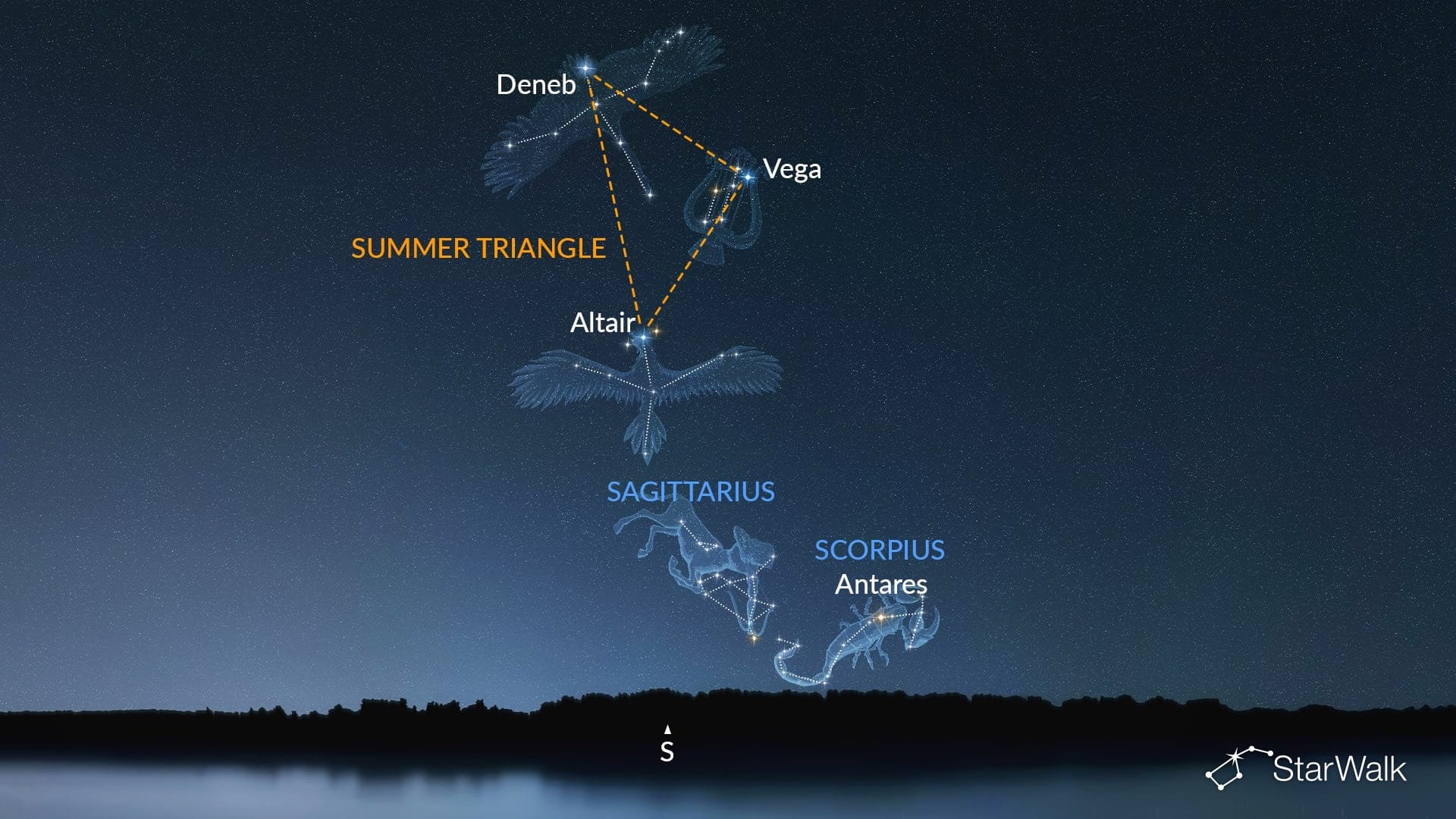
From the Southern Hemisphere, Sagittarius generally appears high in the sky. Near the equator, look toward the southern sky; around 25°–30°S, the constellation may pass close to the zenith; from farther south, it appears in the northern sky. To locate Sagittarius, find Scorpius and Antares first, then look nearby for the Teapot asterism.
Sagittarius: mythology
Sagittarius is traditionally depicted as an archer, usually with the body of a centaur. One Greek tradition associates the constellation with Crotus, a skilled hunter and archer who lived with the Muses on Mount Helicon. He was said to have invented archery and applause.
The constellation is also sometimes linked with Chiron, the wise centaur known for his knowledge of medicine, music, and hunting. However, Chiron is more commonly associated with the neighboring constellation Centaurus.
Lyra
- Brightness: ☆☆
- Visibility range: 90°N to 40°S
- Brightest star: Vega (mag 0.0)
- Notable deep-sky object: Ring Nebula (mag 8.8)
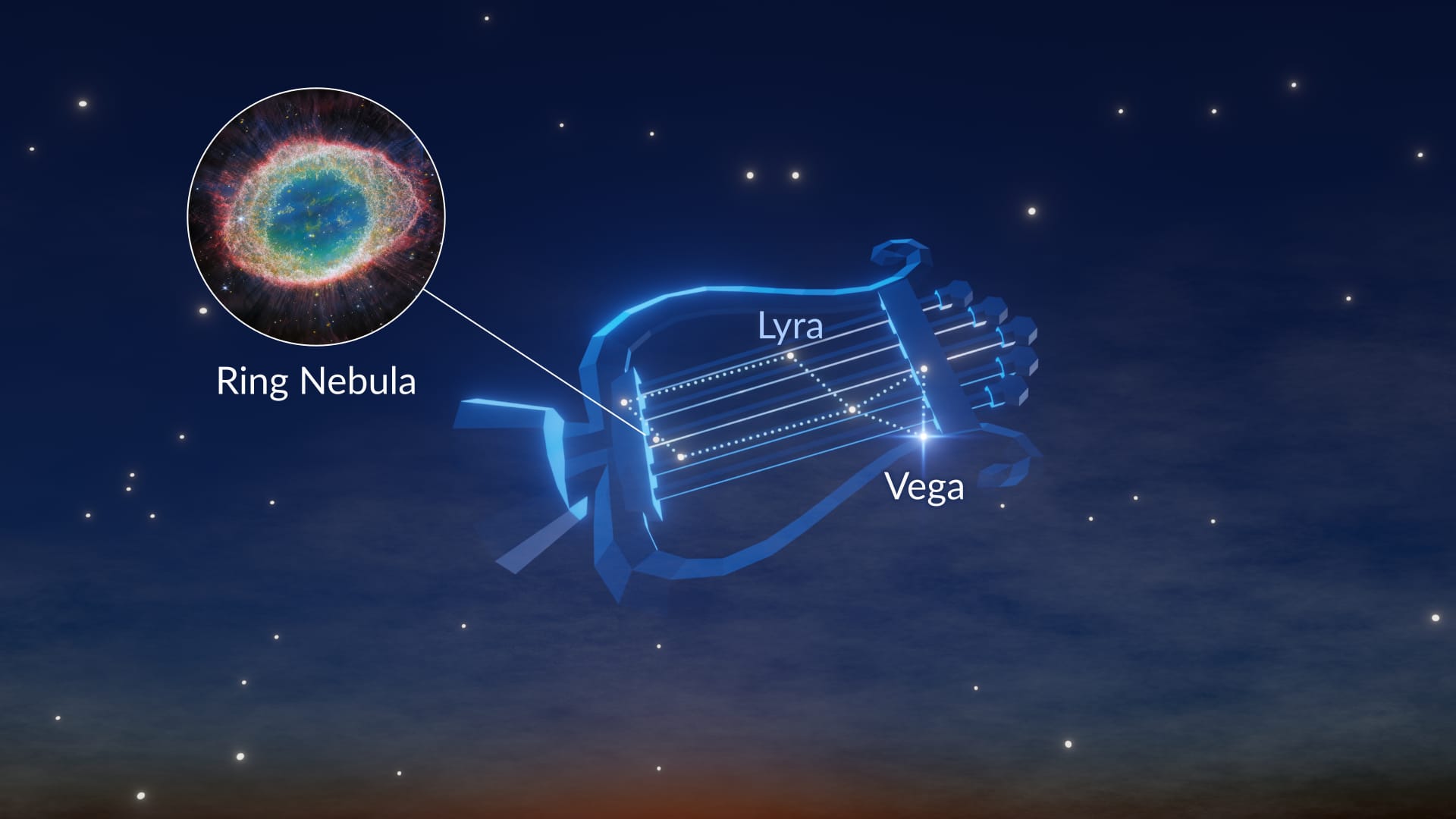
How to find Lyra in August
Start by finding the brilliant bluish-white star Vega. Next to it, look for a small parallelogram formed by four fainter stars. Vega and this compact star pattern form the main outline of Lyra.
Vega forms one corner of the Summer Triangle. Deneb in Cygnus and Altair in Aquila mark the other two corners.
From the Northern Hemisphere, Vega appears high in the sky on August evenings and may pass close to the zenith at mid-northern latitudes. After locating Vega, allow your eyes time to adjust to the darkness so that Lyra’s fainter stars become easier to see.
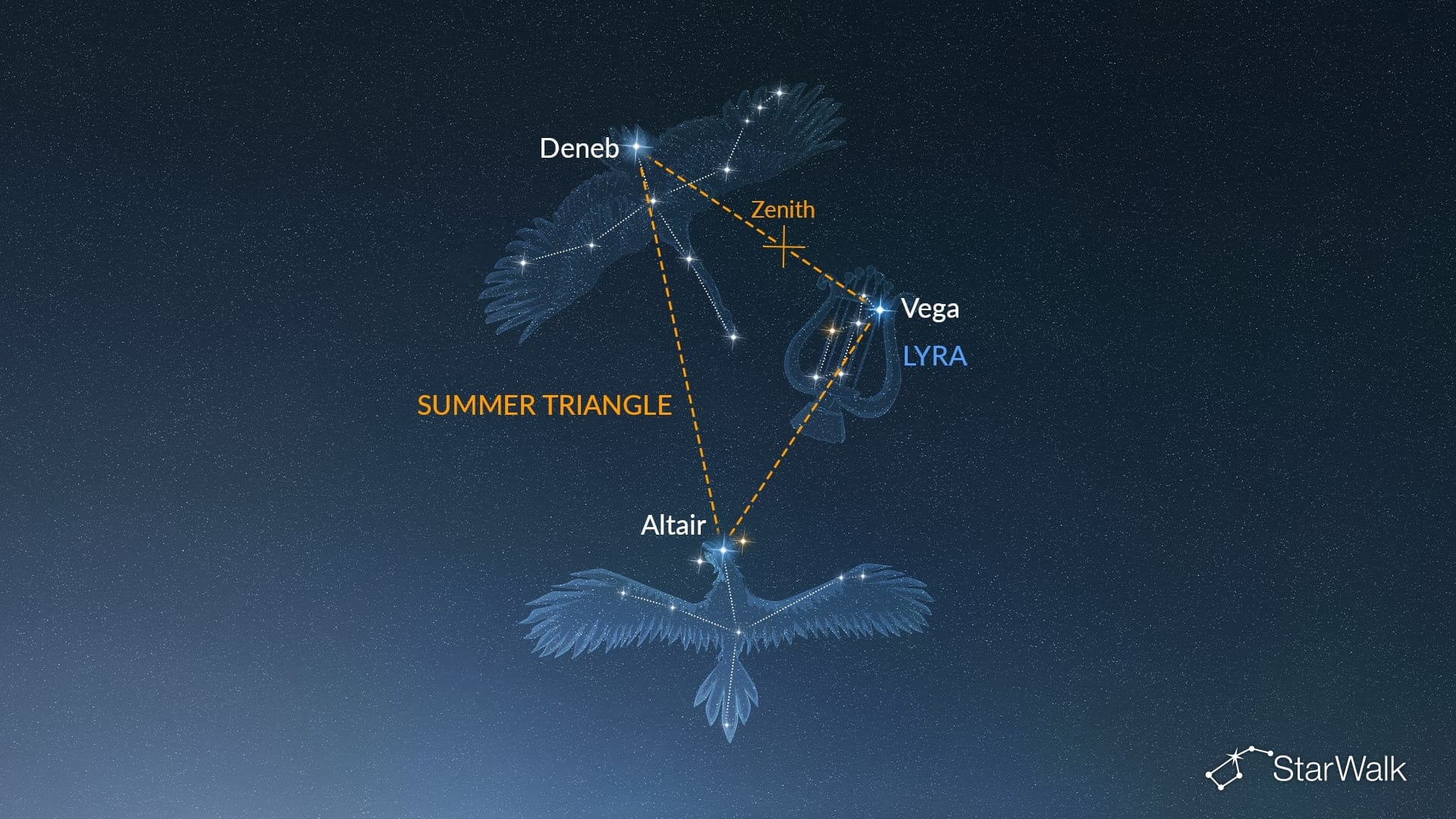
From the Southern Hemisphere, face north to find Vega and Lyra. The entire constellation is best viewed north of about 40°S; farther south, Vega and parts of Lyra may still appear very low above the northern horizon.
Lyra: mythology
The name Lyra means “lyre,” a stringed musical instrument. In Greek mythology, the constellation represents the lyre of Orpheus, a musician whose songs were said to charm people, animals, and even nature itself.
After Orpheus’s wife Eurydice died from a snakebite, he traveled to the Underworld and played his lyre for Hades and Persephone. Moved by his music, they allowed Eurydice to return with him on one condition: Orpheus could not look back at her until they had reached the surface.
He looked back too soon and lost her forever. After Orpheus’s death, his lyre was placed among the stars.
Telescopium
- Brightness: ☆
- Visibility range: 30°N to 90°S
- Brightest star: Alpha Telescopii (mag 3.5)
- Notable deep-sky object: NGC 6584 (mag 8.3)
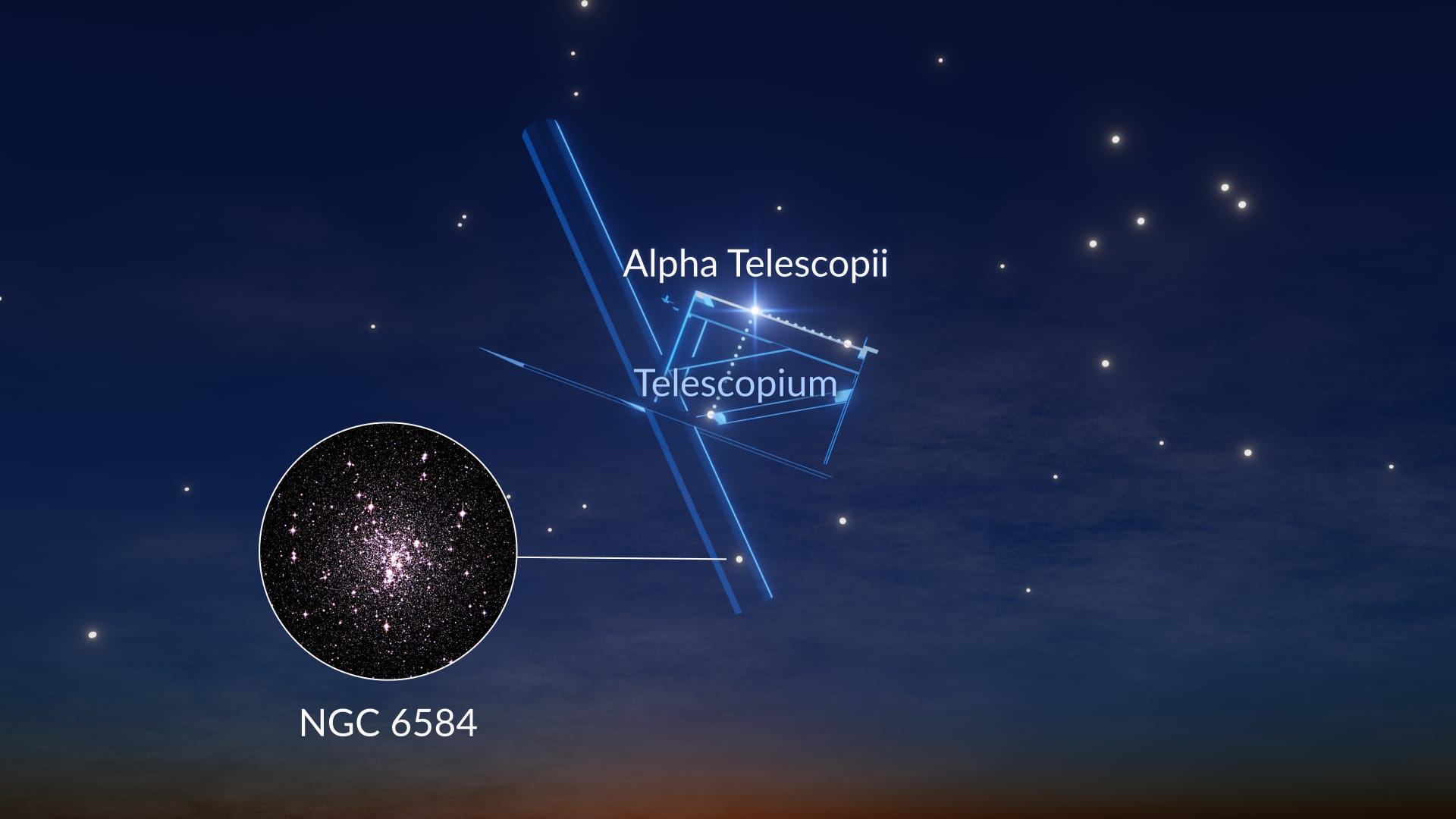
How to find Telescopium in August
Telescopium is faint, so observe it from a dark location away from artificial lights. Even its brightest star, Alpha Telescopii, may disappear in a heavily light-polluted sky.
From the Northern Hemisphere, Telescopium is visible only from lower northern latitudes. Face south and first locate the Teapot of Sagittarius and the curving tail of Scorpius. Telescopium lies below these brighter patterns and remains very low above the horizon. At mid-northern latitudes, only part of the constellation may rise, and it remains very low; at high northern latitudes, it stays entirely below the horizon.
From the Southern Hemisphere, Telescopium is much easier to observe. Find Sagittarius and Scorpius, then look in the area near them for Telescopium’s faint stars. The constellation appears high in the sky from many southern locations.
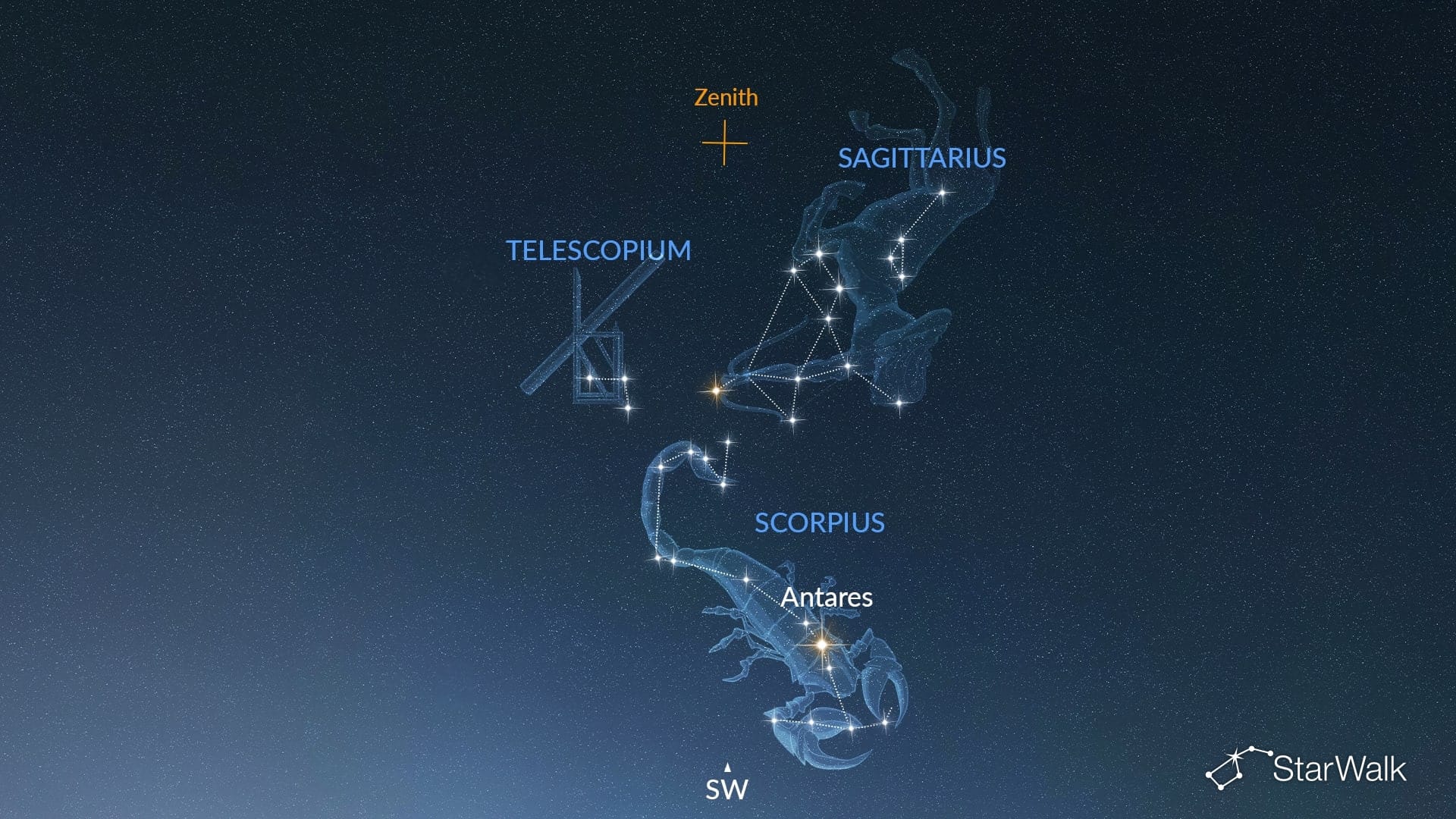
Telescopium: history and meaning
Telescopium has no ancient mythology associated with it. French astronomer Nicolas-Louis de Lacaille introduced the constellation in the 18th century after mapping stars in the southern sky.
Lacaille named several constellations after scientific and artistic instruments. Telescopium represents the refracting telescopes used by astronomers of his time.
Scutum
- Brightness: ☆
- Visibility range: 70°N to 90°S
- Brightest star: Alpha Scuti (mag 3.8)
- Notable deep-sky object: Wild Duck Cluster (mag 6.3)
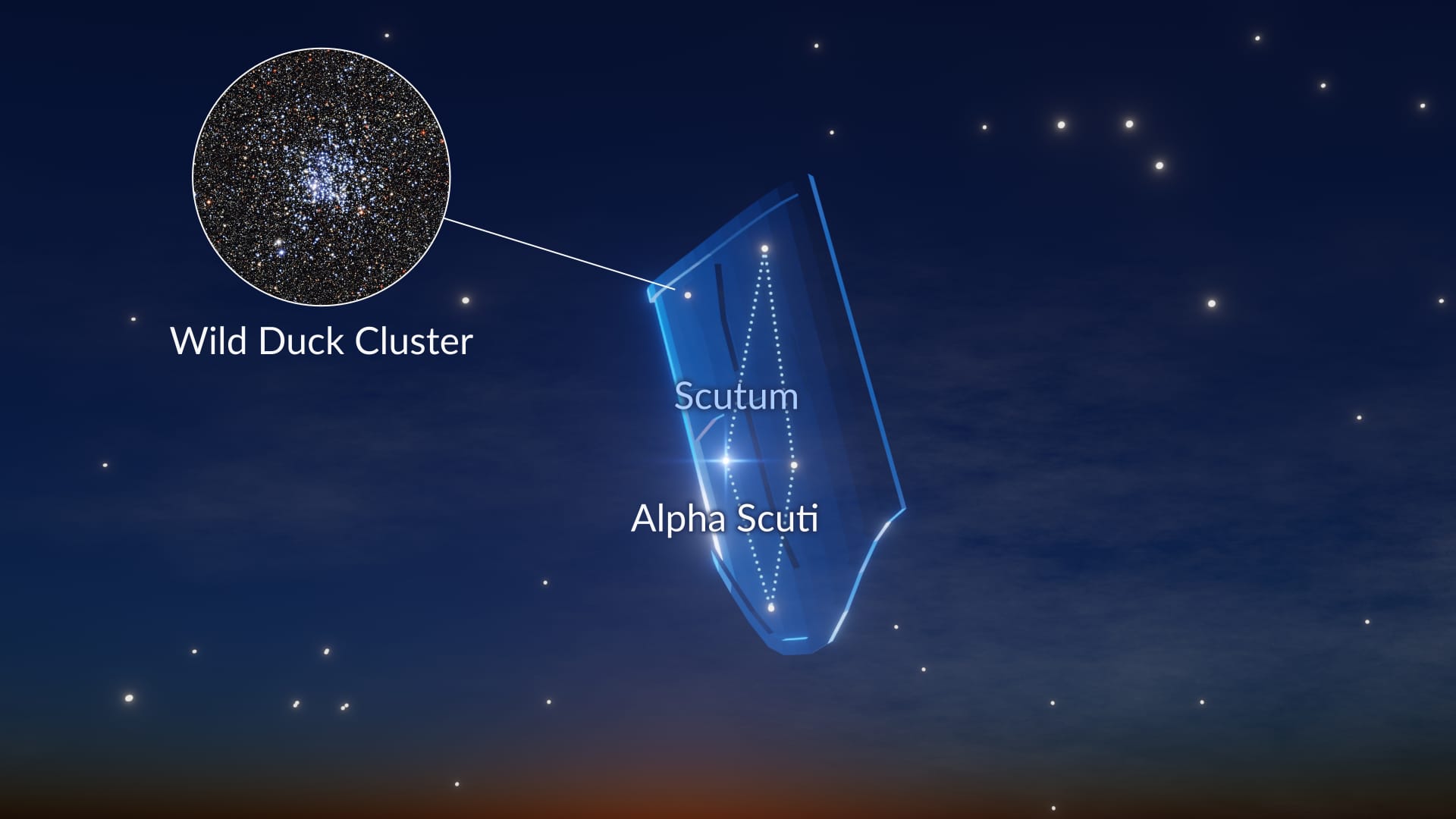
How to find Scutum in August
Scutum’s main pattern consists of only a few faint stars. However, the constellation lies against a particularly bright section of the Milky Way, which makes the surrounding region worth exploring under dark skies.
From the Northern Hemisphere, face south and find Altair, the brightest star in Aquila. Next, locate the Teapot of Sagittarius closer to the horizon. Scutum lies approximately halfway between Altair and the Teapot.
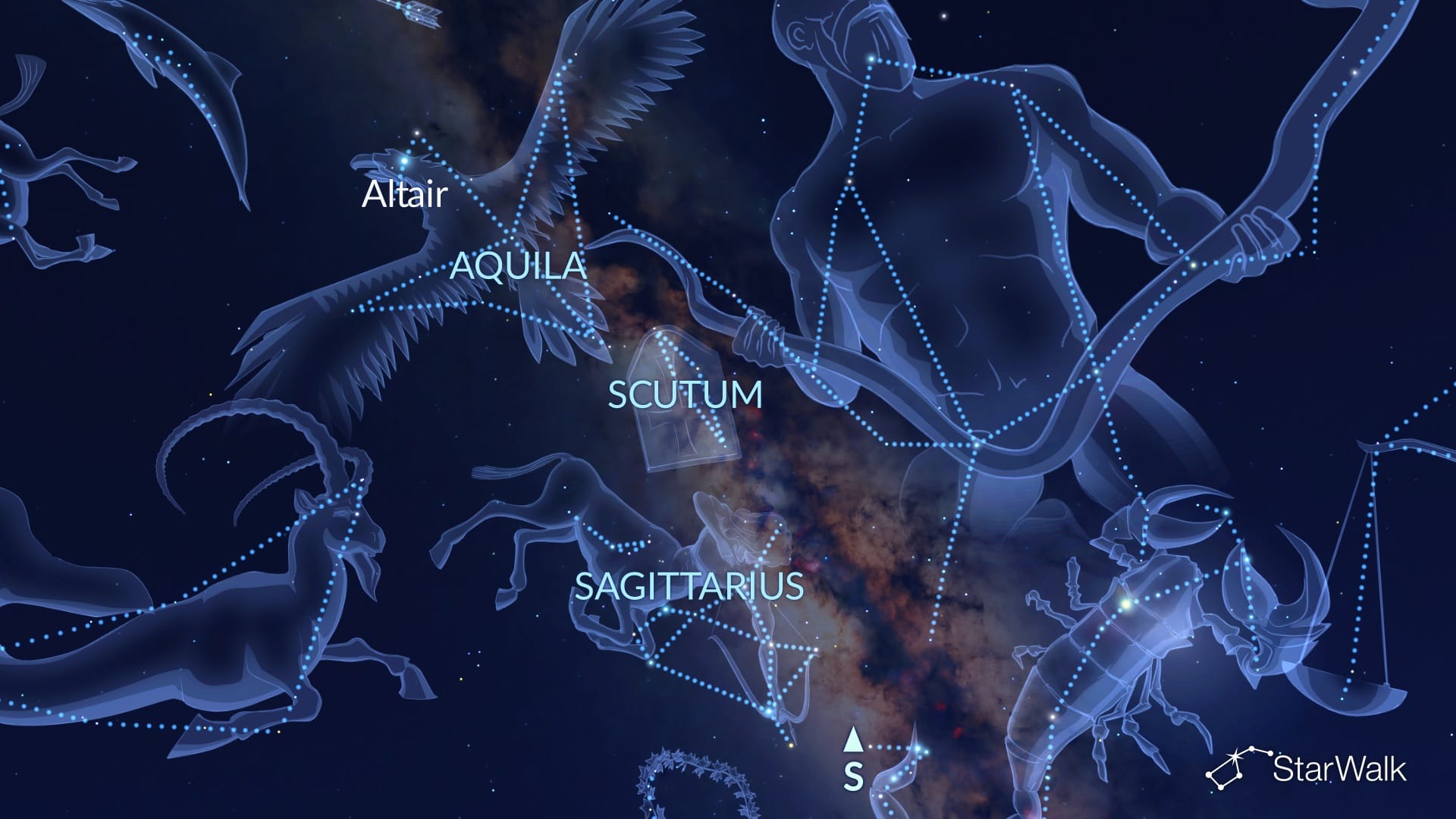
From most mid-southern latitudes, look toward the northern sky. Near the equator, Scutum may pass close to overhead. Find Altair and Sagittarius, then search the area between them for Scutum’s compact star pattern.
Scutum lies about 25° from Altair. To estimate this distance without equipment, hold your arm straight out: your outstretched hand spans roughly 20°, while three fingers held together cover approximately another 5°. Learn to measure distances in the sky using your fingers and outstretched hand in our angular distance infographic.

Scutum: history and meaning
The constellation Scutum is not associated with ancient mythology. Polish astronomer Johannes Hevelius introduced it in the late 17th century under the name Scutum Sobiescianum, meaning “Sobieski’s Shield.”
The constellation honored King John III Sobieski of Poland and his role in the 1683 Battle of Vienna. The name was later shortened to Scutum, the Latin word for “shield.”
People have created many unusual constellations throughout history, but not all of them remain officially recognized today. Cat, Fly, Electricity Generator — which of these constellations still exist on modern sky maps? Take our quiz and try to distinguish officially recognized constellations from forgotten ones.

Corona Australis
- Brightness: ☆
- Visibility range: 40°N to 90°S
- Brightest star: Meridiana (mag 4.1)
- Notable deep-sky object: NGC 6541 (mag 6.3)
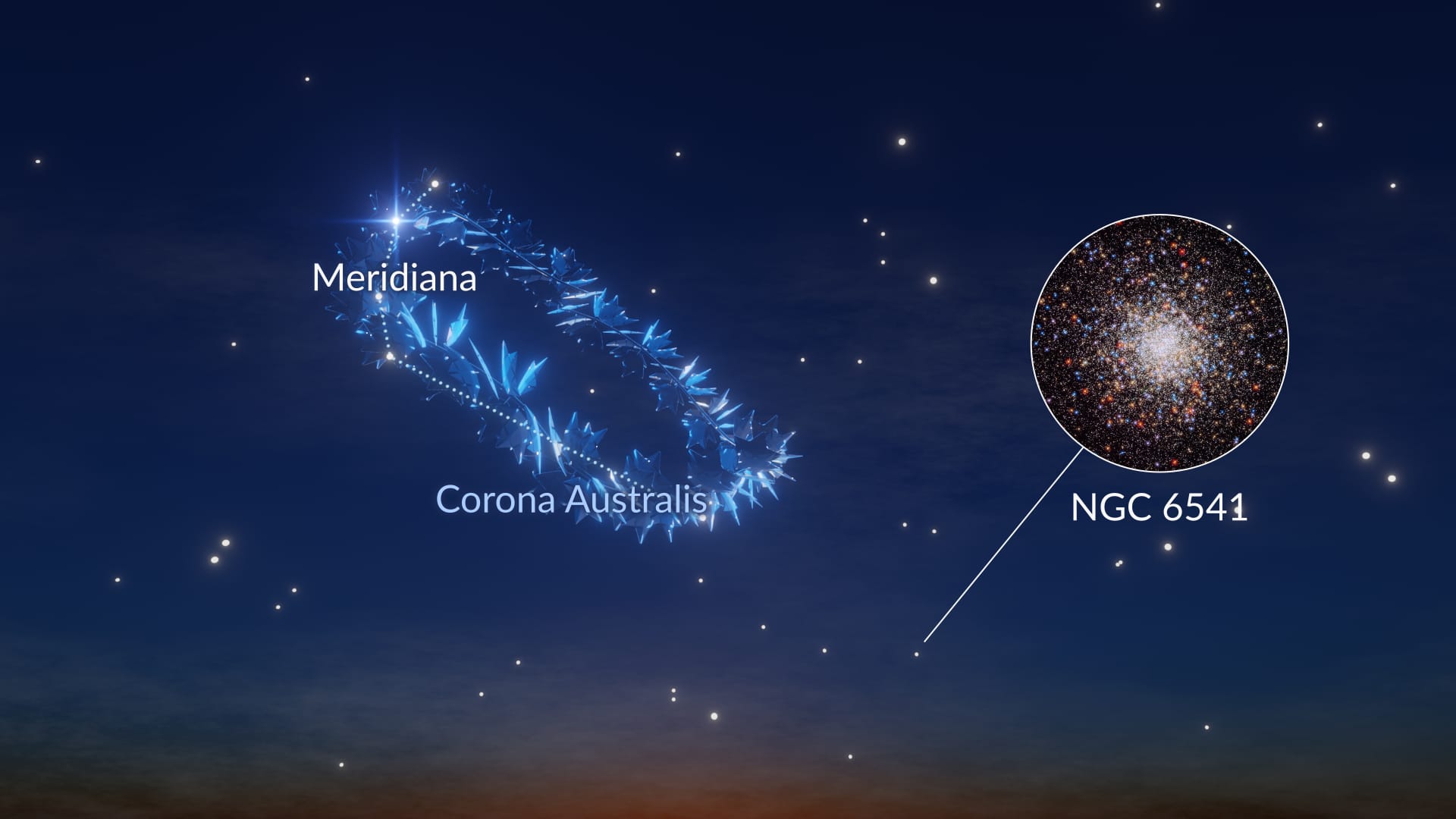
How to find Corona Australis in August
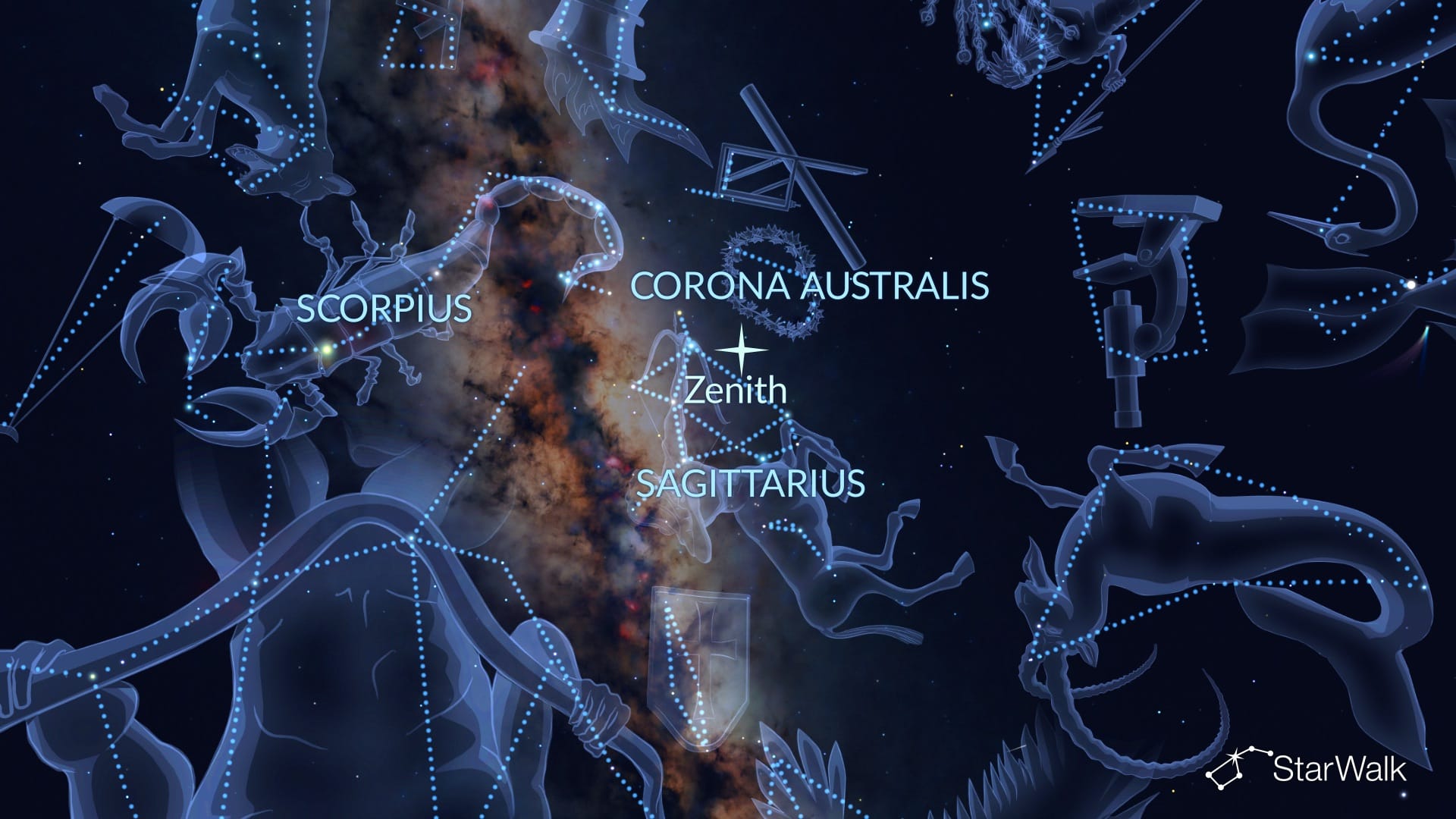
Corona Australis lies near Sagittarius and the tail of Scorpius. Because its stars are faint, choose a dark, moonless night and allow your eyes time to adjust.
From the Northern Hemisphere, face south and first find Sagittarius. Corona Australis lies below the Teapot, very close to the horizon. It is easiest to see from lower northern latitudes and may be partly or completely hidden from locations farther north.
From the Southern Hemisphere, Corona Australis generally appears high in the sky. It lies in the southern sky at tropical latitudes, passes close to the zenith around 40°S, and appears in the northern sky from farther south.
Corona Australis: mythology
Several myths are associated with Corona Australis. In one Greek tradition, the constellation represents a wreath belonging to Dionysus, the god of wine. According to the story, Dionysus traveled to the Underworld to rescue his mother, Semele. After returning safely, he placed his wreath among the stars.
Tips for observing constellations in August
- Best time: Observe after the sky becomes fully dark, generally between 9 p.m. and 2 a.m. local time. In the Northern Hemisphere, summer twilight may last late into the evening, especially at higher latitudes.
- Moon phase: Choose nights near the New Moon or when only a thin crescent Moon is present. Bright moonlight can hide the faint stars of Telescopium, Scutum, and Corona Australis. Check the current lunar phase in our Moon calendar.
- Location: Find a dark site away from light pollution. Northern observers will also benefit from an unobstructed southern horizon.
- Dark adaptation: Give your eyes at least 20 minutes to adjust to the darkness. Avoid looking at bright phone screens or use a red-screen mode.
- Equipment: The main constellation patterns can be observed with the naked eye. Binoculars will reveal more stars and help you explore clusters and nebulae in Sagittarius and Scutum.
- Sky map: Use Star Walk 2 to locate faint constellations in your sky.
More to see in the August 2026 night sky
August 12, 2026, will be an exceptional day for skywatchers. Six planets will share the morning sky before sunrise, a total solar eclipse will occur later in the day, and the Perseid meteor shower will peak after dark.
The exact events you can see will depend on your location. Read our complete guide to the August 12, 2026 sky events to plan your observations.
You can also learn more about the total solar eclipse on August 12, the six-planet alignment and the Perseid meteor shower in our dedicated articles.
FAQ: August constellations
What constellations can I see in August from the Northern Hemisphere?
From the Northern Hemisphere, Lyra is usually one of the easiest constellations to spot in August. Its bright star Vega appears high in the sky.
Sagittarius and Scutum are visible in the southern sky, although Sagittarius remains low above the horizon at higher northern latitudes. Corona Australis is best seen from lower northern locations, while Telescopium is difficult or impossible to observe from most mid- and high-northern latitudes.
What constellations can I see in August from the Southern Hemisphere?
From the Southern Hemisphere, August is an excellent month to observe Sagittarius, Telescopium, Scutum, and Corona Australis. Sagittarius and Corona Australis appear high in the sky, while Telescopium is much easier to see than it is from northern locations.
Lyra can also be seen from many southern locations, but it remains lower in the northern sky and is not visible from far-southern latitudes.
What bright stars can I see in August?
One of the brightest stars visible on August evenings is Vega in Lyra. Northern observers can also easily see Deneb and Altair, which form the Summer Triangle together with Vega.
Other notable stars include red Antares in Scorpius and Kaus Australis, the brightest star in Sagittarius. The exact height and direction of these stars depend on your latitude.
What is the easiest August constellation to find?
In the Northern Hemisphere, Lyra is generally the easiest to find because its brightest star, Vega, is exceptionally bright and forms part of the Summer Triangle.
In the Southern Hemisphere, Sagittarius is often the easiest because its Teapot asterism is relatively recognizable and appears high in the sky.
What is the best time to see August constellations?
The best time to see August constellations is after the sky becomes fully dark, roughly between 9 p.m. and 2 a.m. local time.
At around 9 p.m., the constellations featured in this guide are near their highest positions in the sky. At high northern latitudes, however, you may need to wait longer for the sky to become completely dark.
Can I see the Milky Way in August?
Yes. August is one of the best months to see the brightest part of the Milky Way, especially from a dark location with little or no moonlight.
The Milky Way passes through Sagittarius and Scutum. From the Northern Hemisphere, this region appears toward the southern horizon. From the Southern Hemisphere, it rises much higher in the sky.
Best August constellations and stars: bottom line
In the Northern Hemisphere, start with Lyra and its brilliant star Vega, then look toward the southern sky for Sagittarius and Scutum. Sagittarius is recognizable by its Teapot pattern, while Scutum lies in the Milky Way between Sagittarius and Altair.
Southern observers get excellent views of Sagittarius, Telescopium, Scutum, and Corona Australis. Lyra is also visible from many southern locations, although it appears lower in the northern sky.
To locate any of these constellations, open Star Walk 2, enter the constellation’s name in the search field, and follow the arrow on the sky map.