Interstellar Comet 3I/ATLAS: General Information and News Recap
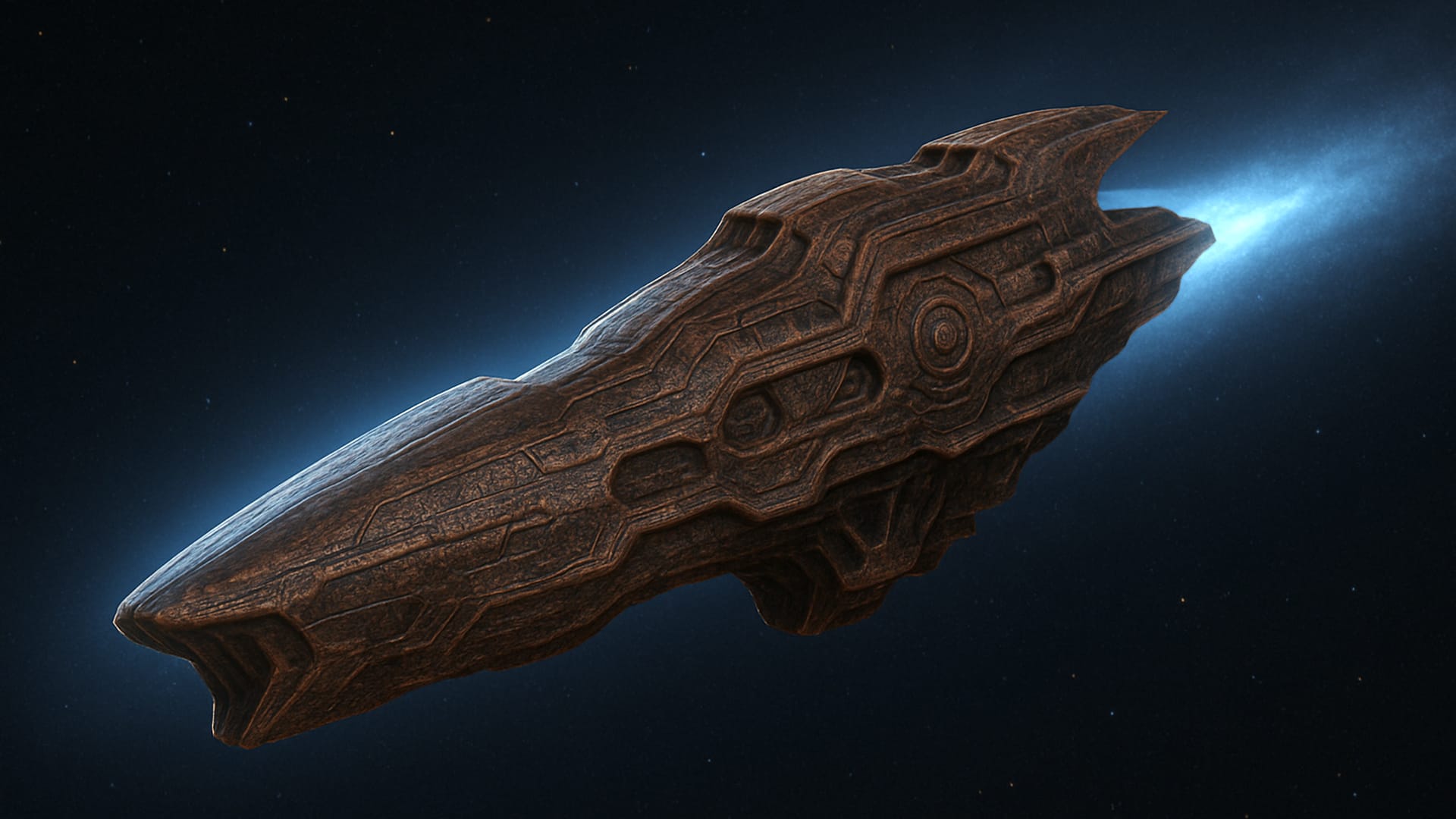
In 2025, our skies welcomed a rare guest — the interstellar comet 3I/ATLAS. It was only the third interstellar object ever discovered, making it a truly exceptional visitor. Some argued that we shouldn’t dismiss a wilder possibility: could it have been an alien probe passing through our Solar System? Whatever you believe, 3I/ATLAS gave astronomers a rare opportunity to study material from another star system. Here’s what happened during its passage through the Solar System and what scientists learned from this extraordinary object.
Contents
- What is 3I/ATLAS?
- Comet 3I ATLAS news recap
- Frequently asked questions about the comet 3I/ATLAS
- 31 ATLAS, 3AI ATLAS, ATLAS 3I, 3 Eye Atlas: what’s the correct name?
- Comet 3I/ATLAS discovery
- Comet 3I/ATLAS: to sum up
What is 3I/ATLAS?
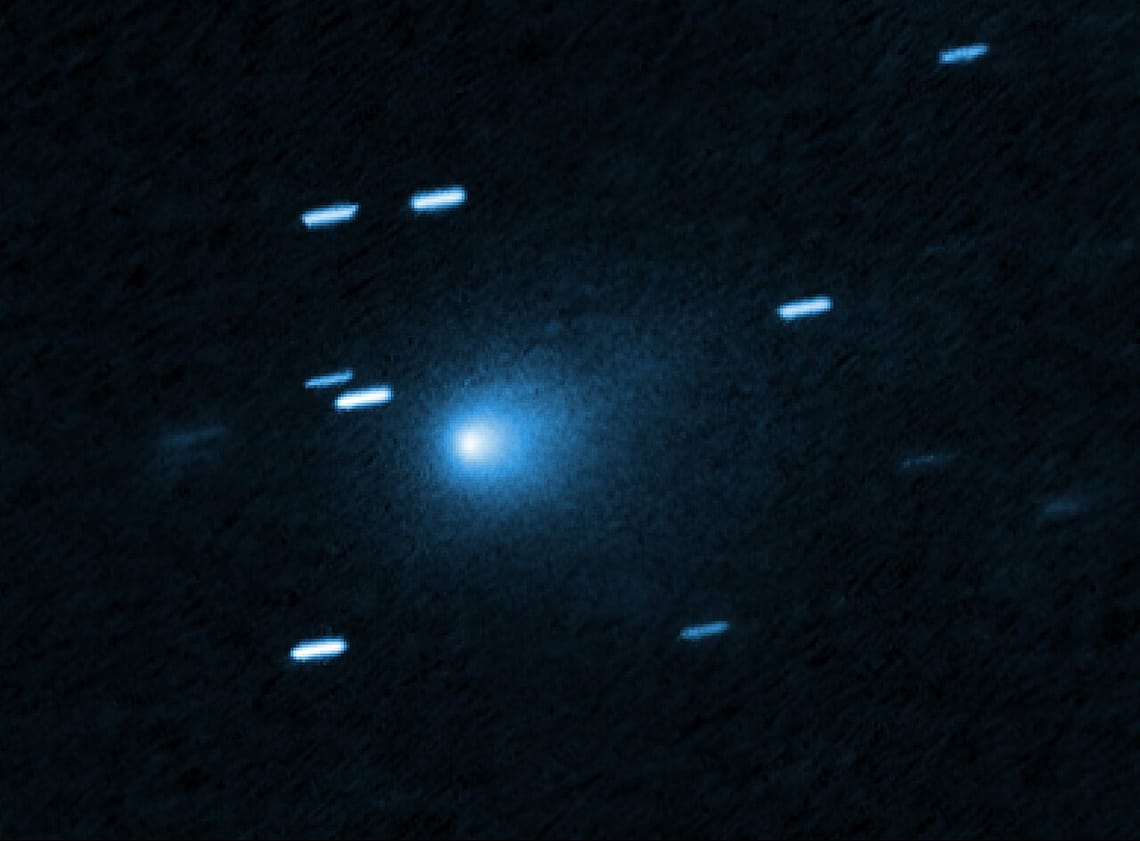
3I/ATLAS is the third known interstellar object — a rare visitor from beyond our Solar System. It was first spotted on July 1, 2025, by the ATLAS survey telescope in Chile. The official view, supported by NASA, ESA, and most astronomers, is straightforward: 3I/ATLAS is a natural comet — the third interstellar object ever confirmed, after ‘Oumuamua and comet 2I/Borisov. But not everyone is convinced, and some argue that its unusual properties leave room for more exotic explanations.
Is 3I/ATLAS an alien ship or a comet? Harvard professor vs scientific community
Ever since its discovery, Harvard astronomer Avi Loeb questioned whether 3I/ATLAS was a normal comet at all. He pointed to its unusual brightness, precise path through the Solar System, and lack of clear cometary outgassing early on — arguing that it didn’t behave like a comet. In later updates, Loeb also noted its unexpected stability and high mass, speculating that if the object ever changed course near the Sun, this could hint at technological propulsion rather than natural forces. He even joked that people should “take their vacation before October 29,” when the comet reached perihelion — in case it was something far stranger than expected.
Most astronomers, however, remained unconvinced. Observations from Hubble, SPHEREx, and ESA’s Mars orbiters showed signs of a classic comet: a small icy nucleus, a carbon-dioxide-rich coma, bursts of water vapor, and even a rare anti-tail caused by viewing geometry. The evidence strongly suggests that 3I/ATLAS was a remarkable natural comet, giving scientists an unprecedented look at the chemistry of interstellar objects.
Comet 3I ATLAS news recap
So much happened during 3I/ATLAS’s passage through the inner Solar System that it was easy to lose track. It changed appearance, passed behind the Sun, flew by Mars, and became the focus of a huge international observing campaign. Here’s a recap of the most important moments in the story of this mysterious visitor from another star system.
- Sep 20: Astronomers spotted a mysterious green glow around 3I/ATLAS — likely caused by unusual gases.
- Sep 23: A new theory suggested 3I/ATLAS could be a “planet-forming seed,” a remnant that helps build worlds in young star systems.
- Sep 23: A solar storm was predicted to hit the comet — the first-ever such event involving an interstellar visitor.
- Sep 25: Avi Loeb noted the comet showed no non-gravitational acceleration and could be anomalously massive — or even propelled.
- Sep 28: Loeb linked 3I/ATLAS to the legendary “Wow! Signal” from 1977, as the comet passed through the same region of the sky.
- Sep 29: The comet survived a solar storm unscathed, unlike many of its Solar System cousins.
- Sep 30: 3I/ATLAS slipped behind the Sun, vanishing from view until late November.
- Oct 1: The comet approached Mars, giving NASA orbiters and rovers a chance to observe it up close.
- Oct 5: A new Mars orbit photo confirmed the comet’s faint glow.
- Oct 7: ESA’s ExoMars and Mars Express missions captured new images, showing the comet’s delicate coma.
- Oct 7: NASA’s Swift observatory detected water vapor — the first confirmed detection of water vapor from an interstellar comet at such a large heliocentric distance using space-based ultraviolet observations.
- Oct 19: Keck Observatory spotted a rare anti-tail, appearing to point toward the Sun due to viewing geometry.
- Oct 21: As the comet hid behind the Sun, Loeb hinted it could use the Oberth effect to change course unseen.
- Oct 29: 3I/ATLAS survived its close pass to the Sun, suddenly brightening.
- Nov 2: 3I/ATLAS returned into view after being lost in the Sun’s glare.
- Nov 4: The interstellar comet 3I/ATLAS appeared to be changing color again — recent images showed the visitor turning bluish.
- Nov 5: As comet 3I/ATLAS left perihelion, researchers noted a small deviation in the comet’s trajectory that gave rise to rumors that the comet had changed course.
- Nov 10: Images from Spain clearly showed two distinct tails on 3I/ATLAS: a broad dust tail and a rarer anti-tail extending sunward.
- Nov 10: The MeerKAT radio telescope in South Africa detected a radio signal emanating from 3I/ATLAS — a steady background emission typical of gas and dust in space, not a modulated signal carrying information.
- Nov 11: New observations suggested that 3I/ATLAS had been transformed by galactic cosmic rays, leaving it with a processed outer shell rather than a pristine surface.
- Nov 11: Harvard astronomer Avi Loeb suggested that 3I/ATLAS might not have survived its close brush with the Sun.
- Nov 20: NASA unveiled the long-anticipated images of 3I/ATLAS taken during its close flyby of Mars in early October.
- Nov 25: The International Asteroid Warning Network (IAWN) announced its special comet astrometry campaign for 3I/ATLAS that lasted from November 27, 2025, through January 27, 2026.
- Dec 1: New images suggested 3I/ATLAS may have been covered in “ice volcanoes”, with spiraling jets bursting from its surface.
- Dec 1: Avi Loeb proposed that the comet’s brightness may have pulsed like a “heartbeat” every 16 hours, though no consensus interpretation emerged.
- Dec 10: A giant solar active region aligned with the comet’s path, raising the possibility that 3I/ATLAS could be hit by plasma from powerful solar eruptions.
- Dec 10: Astrophotographer Osama Fathi captured a striking image of 3I/ATLAS above Egypt’s Black Desert, showing the comet’s delicate fading glow.
- Dec 11: NASA reiterated that 3I/ATLAS posed no danger to Earth ahead of its December 19, 2025 closest approach at about 1.8 AU.
- Dec 19: 3I/ATLAS made its closest approach to Earth, remaining at a safe distance and giving astronomers one of their best final observing opportunities.
- Early 2026: The comet continued outward on its hyperbolic trajectory, while observations from space- and ground-based instruments moved from live tracking to data analysis.
Frequently asked questions about the comet 3I/ATLAS
Why is comet 3I/ATLAS special?
To begin with, it’s a true interstellar object, meaning it didn’t form in our Solar System but came from another star system entirely. Such objects are incredibly rare, so each new one causes a stir. On top of that, early estimates suggested its core could be up to 5 kilometers across, making it one of the largest interstellar bodies we’ve ever spotted.
Is comet 3I/ATLAS the only interstellar object found so far?
Nope! In fact, 3I/ATLAS is the third confirmed interstellar object to enter our Solar System. The very first was the oddly shaped object called ‘Oumuamua, discovered in 2017 — an elongated rock, which some thought looked like an alien spaceship. Then came 2I/Borisov in 2019, which behaved like a typical comet with a bright coma and tail.
How do we know that 3I/ATLAS is not from our Solar System?
Its unusual trajectory was the first big clue — it wasn’t closed, but had a hyperbolic shape, so astronomers suspected the comet wasn't local. Later, orbital calculations confirmed it: 3I/ATLAS follows a clearly hyperbolic path, with a speed and excess energy characteristic of interstellar objects and too high for an orbit gravitationally bound to the Sun.
Will the comet 3I/ATLAS hit Earth?
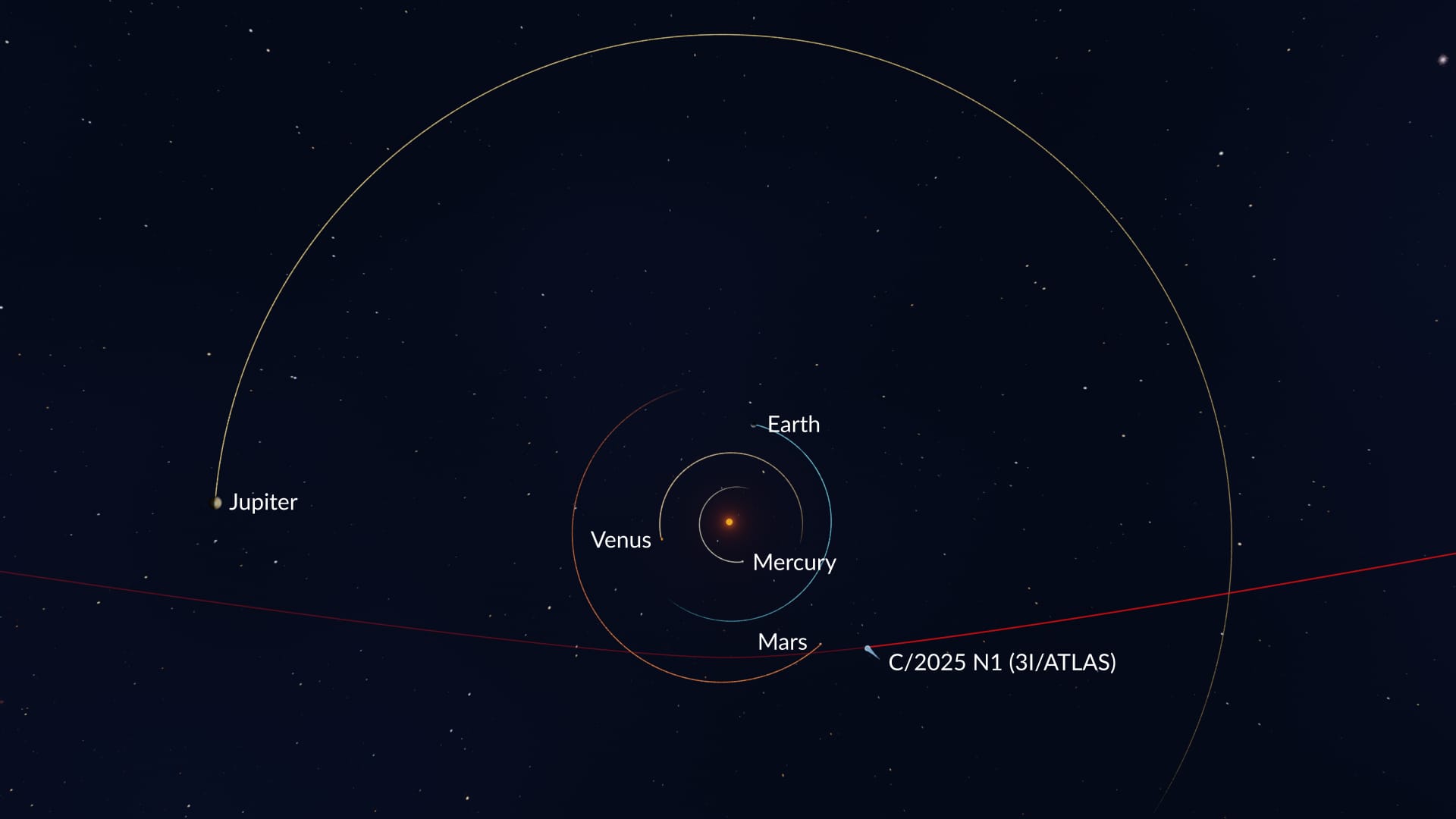
No need to worry — comet 3I/ATLAS passed through the inner part of our planetary system, but it remained very far from Earth. Its closest approach to our planet occurred on December 19, 2025. The distance between the two bodies was about 1.8 AU — that’s roughly 269 million km, nearly twice the average Earth–Sun distance.
When will 3I/ATLAS leave the Solar System?
After its closest approach to the Sun in late October 2025, 3I/ATLAS began its journey back into interstellar space. Traveling at around 30 km/s on a clearly hyperbolic trajectory, it is moving fast enough to escape the Sun’s gravity entirely. On its way out, the comet reached its closest approach to Earth on December 19, 2025, and crossed beyond Jupiter’s orbit in March 2026. By the early 2030s, it will have left the planetary region of the Solar System — continuing its silent voyage through the galaxy, just as it once arrived.
Is 3I/ATLAS for sure a comet? Can it be an alien spaceship?
Most likely, 3I/ATLAS is a comet. It has an icy nucleus, produces gas and dust, and grows a coma and tail — textbook comet behavior (you can check our special article about comets and see for yourself). We might have hoped for alien friends, but not this time.
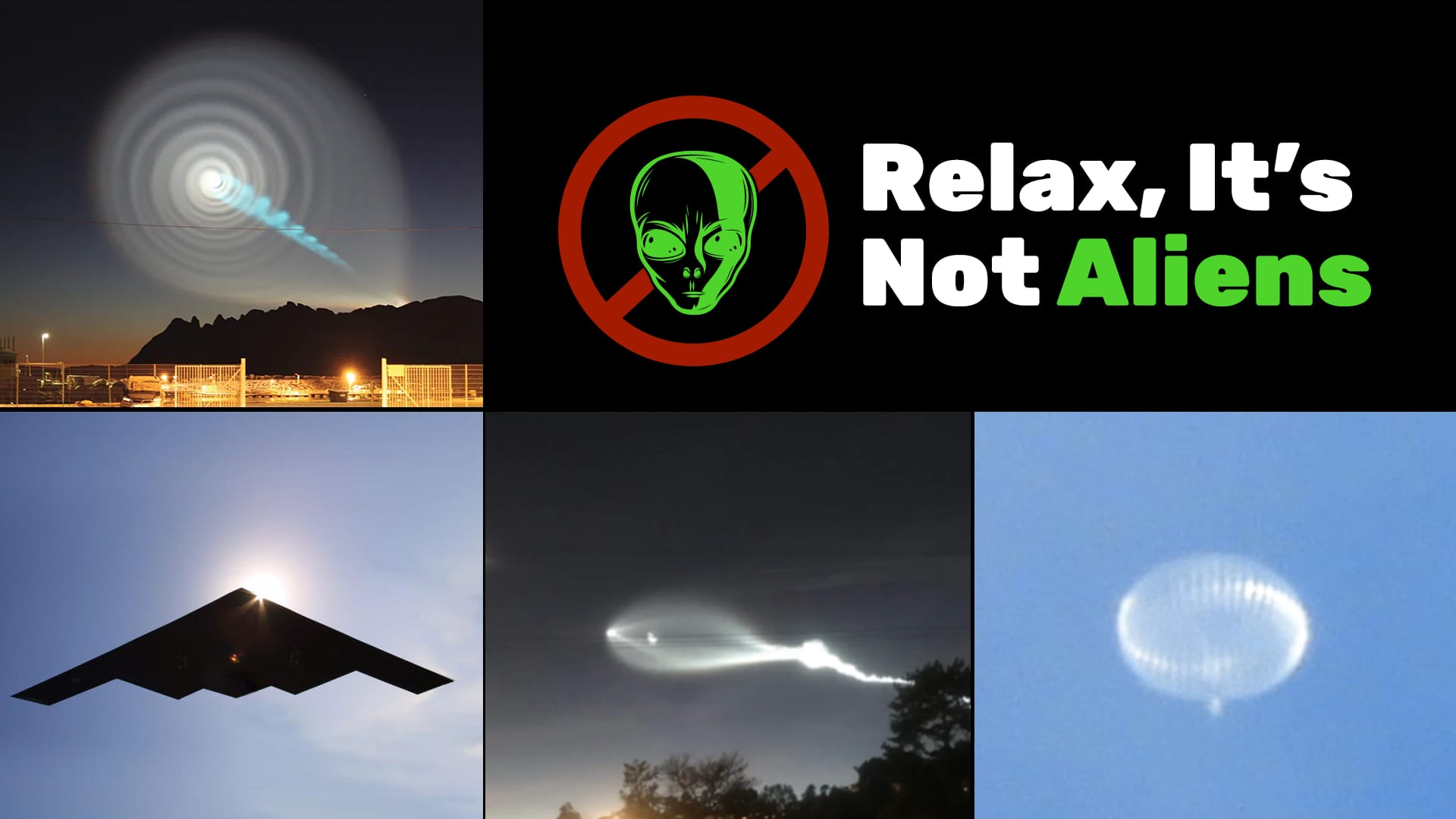
People want to believe, which is why so many ordinary things get mistaken for UFOs: from balloons to human-made satellites in the night sky. To help you out, we’ve collected the most common mix-ups in our infographic. Don’t let yourself be fooled!
31 ATLAS, 3AI ATLAS, ATLAS 3I, 3 Eye Atlas: what’s the correct name?
If you’ve seen people online calling it “31 ATLAS,” “3AI ATLAS,” or “3 Eye Atlas,” don’t worry — they all mean the same thing. The comet’s real designations are C/2025 N1 (ATLAS) and 3I/ATLAS, which may look different but refer to one and the same interstellar comet.
C/2025 N1 (ATLAS) is the comet’s provisional designation, following standard naming rules by the IAU:
- C/ — non-periodic comet.
- 2025 — the year of discovery.
- N1 — the first object discovered in the first half of July (the “N” period).
- ATLAS — the discovery project.
3I/ATLAS is the other designation, which also follows the IAU naming system, but emphasizes the comet’s interstellar nature:
- 3I shows it’s the third confirmed interstellar object (after 1I/‘Oumuamua and 2I/Borisov).
- ATLAS again refers to the discovery project.
So, C/2025 N1 (ATLAS) places the comet in the catalog of Solar System comets, while 3I/ATLAS emphasizes its unique status as an interstellar visitor. Both names are correct — they just tell the story from different angles.
Comet 3I/ATLAS discovery
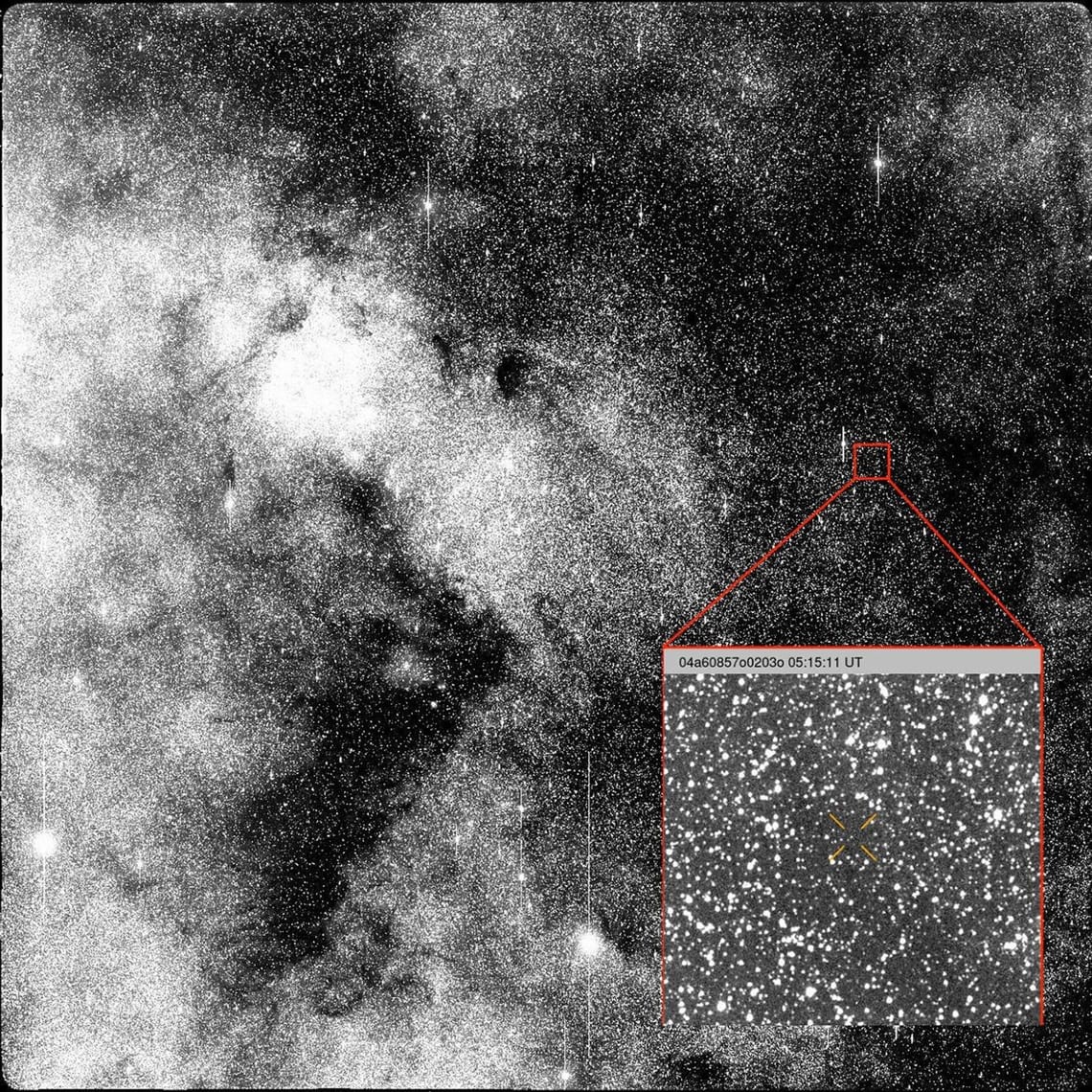
The comet was discovered on July 1, 2025, by an automated telescope of the ATLAS project in Chile, which was created to search for potentially hazardous asteroids. In the images, the object appeared as a very faint 20th-magnitude star, located about 4.5 billion kilometers from the Sun. Already the next day, calculations showed that its trajectory was not closed and had a hyperbolic shape. This meant the body had arrived from beyond the Solar System. On July 2, the Minor Planet Center officially confirmed its interstellar status.
Initially, the object was thought to be an asteroid, but subsequent observations revealed signs of cometary activity, including a small coma and a short tail. Over the following weeks, its brightness increased slowly, and it became clear that this was a full-fledged comet.
Why are interstellar comets like 3I/ATLAS so rare?
Most comets we see in the night sky belong to the Solar System. They were born billions of years ago in distant regions such as the Oort Cloud or Kuiper Belt and follow long, elliptical orbits around the Sun. Sometimes planetary gravity tweaks their paths, but they remain bound to our star.
An interstellar comet, however, has a completely different story. It forms in another planetary system and then receives such a strong gravitational “kick” from planets or passing stars that it is ejected forever. From that moment, it drifts through the galaxy for millions or even billions of years, until by sheer chance it passes through the Solar System. That chance is vanishingly small — which is why only three interstellar objects have been identified so far, with 3I/ATLAS among them.
Why do astronomers pay so much attention to interstellar objects?
Interstellar visitors like 3I/ATLAS are priceless to science because they act as natural messengers from other star systems. Unlike local comets, which were born in our own Solar System, these objects formed around entirely different stars and then wandered across the galaxy for millions or even billions of years before reaching us.
Studying them lets astronomers compare how planets and comets form under different conditions. Observations of 3I/ATLAS show that its composition most certainly includes water and carbon dioxide — the same ingredients we see in many Solar System comets. This suggests that the recipe for building comets, and perhaps even the raw materials for planets, may be surprisingly similar across the galaxy.
Comet 3I/ATLAS: to sum up
Comet 3I/ATLAS (C/2025 N1) is only the third interstellar object ever spotted in our Solar System, after ‘Oumuamua and 2I/Borisov. It was large — with a nucleus estimated at 0.6–5.6 km across — and fast, moving at about 210,000 km/h. During its passage through the inner Solar System, it gave astronomers a rare chance to study a messenger from another star system using both ground-based observatories and spacecraft. 3I/ATLAS has now continued outward on its hyperbolic path, but the data collected during its visit will keep scientists busy for years.
Other comets worth watching
Although 3I/ATLAS has already continued on its way out of the Solar System, there are always other interesting comets to follow. Check our regularly updated article about the best comets to see now to keep up with the sky’s brightest visitors.