Perseids 2026: August 12–13 Peak, Best Dates to View & Visibility Map
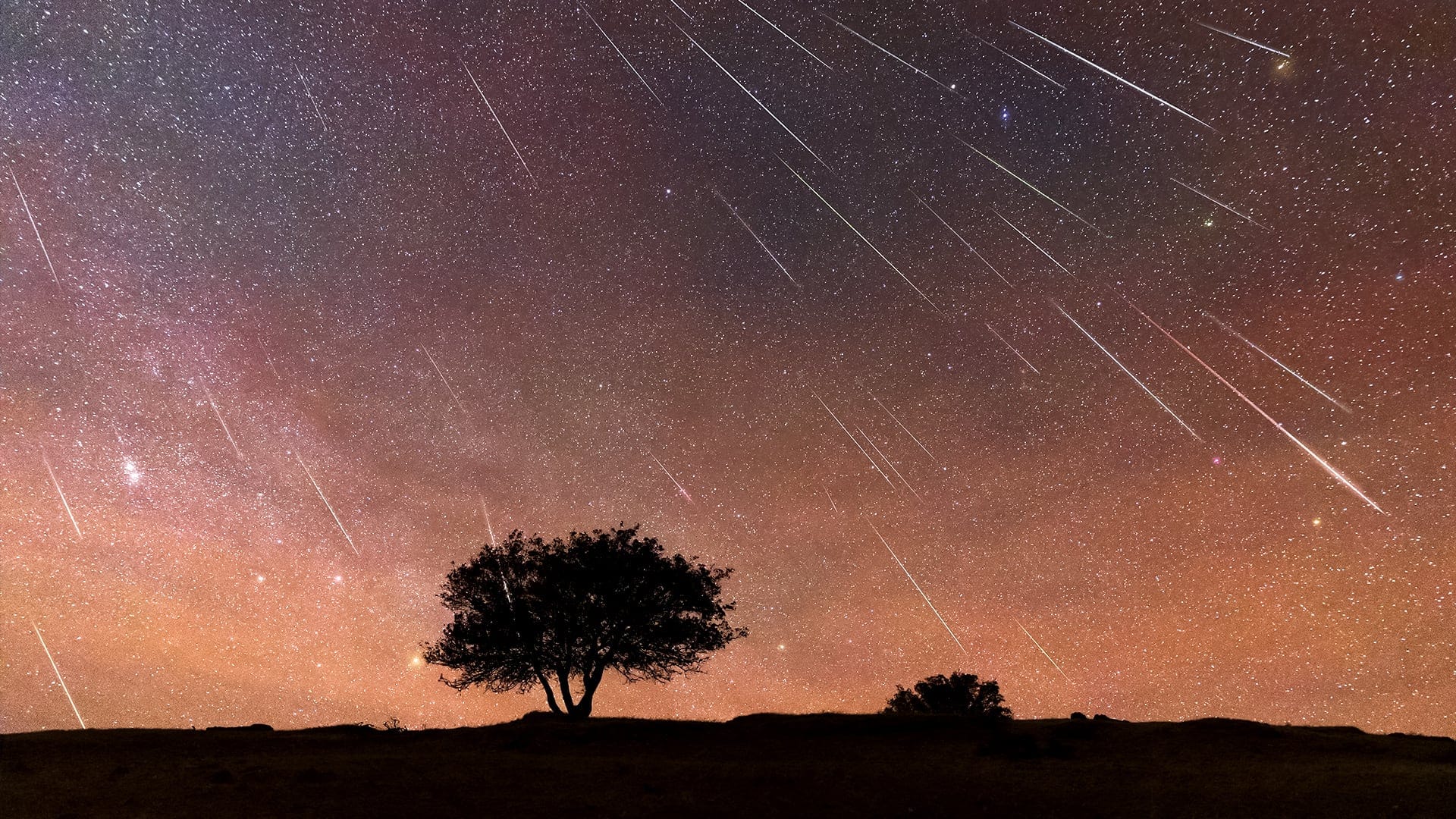
The Perseids – the most awaited meteor shower of the year – peak overnight on August 12–13, 2026. And the timing is great: a New Moon on August 12 means dark skies right when we want them. Read on to learn how to watch the Perseids this year — and use the Sky Tonight app to pinpoint prime viewing hours where you are.
Contents
- Key Facts About the Perseids 2026: Peak Date, Time & Visibility
- Perseid Meteor Shower Visibility Map – Where to See
- Best Dates & Times to See the Perseids in 2026
- Perseid Meteor Shower Viewing Tips
- What Causes the Perseid Meteor Shower?
- The Legend Behind the Perseids: Fiery Tears of St. Lawrence
- Other Sky Events on August 12, 2026
- Other Meteor Showers in August 2026
- Perseid Meteor Shower 2026: Conclusion
Key Facts About the Perseids 2026: Peak Date, Time & Visibility
- Active: July 17 – August 24
- Broad peak of activity: August 12, 21:00 GMT – August 13, 09:00 GMT
- Highest meteor rates: August 13, from 02:00 to 04:00 GMT.
- Meteors/hour: usually up to 100, though rates may be lower in 2026
- Moon illumination: New Moon, 0%
- Radiant location: Perseus
- Parent body: Comet 109P/Swift-Tuttle
- Best visible from: Mid-northern latitudes
The Perseids are probably the most beloved meteor shower of the year. Famous for high meteor rates and occasional fireballs, they can turn a dark August night into a celestial fireworks show.
Perseids 2026: Visibility Forecast
This year is one of those pretty rare ones when the Moon stays out of the way during the Perseids peak. A New Moon on August 12 provides an excellent chance to see not only the brightest meteors but also the faint streaks usually lost in moonlight. A New Moon won’t fall on August 12 again until 2045, so don’t miss this unusually favorable display.
The Perseids typically reach a ZHR of up to 100 during the peak. However, the International Meteor Shower Calendar notes that meteor shower activity may be lower in 2026, before increasing again in 2027 as Earth encounters parts of the stream disturbed by Jupiter. Even so, Earth may pass through a branch of a dust trail released in 1079 on August 12 at about 16:53 GMT, followed by a weak filament around August 13 at 01:00 GMT, with an uncertainty of roughly five hours and a modeled ZHR no higher than 43. Neither encounter guarantees an outburst, but both could produce noticeable extra activity.
Perseid Meteor Shower Visibility Map – Where to See
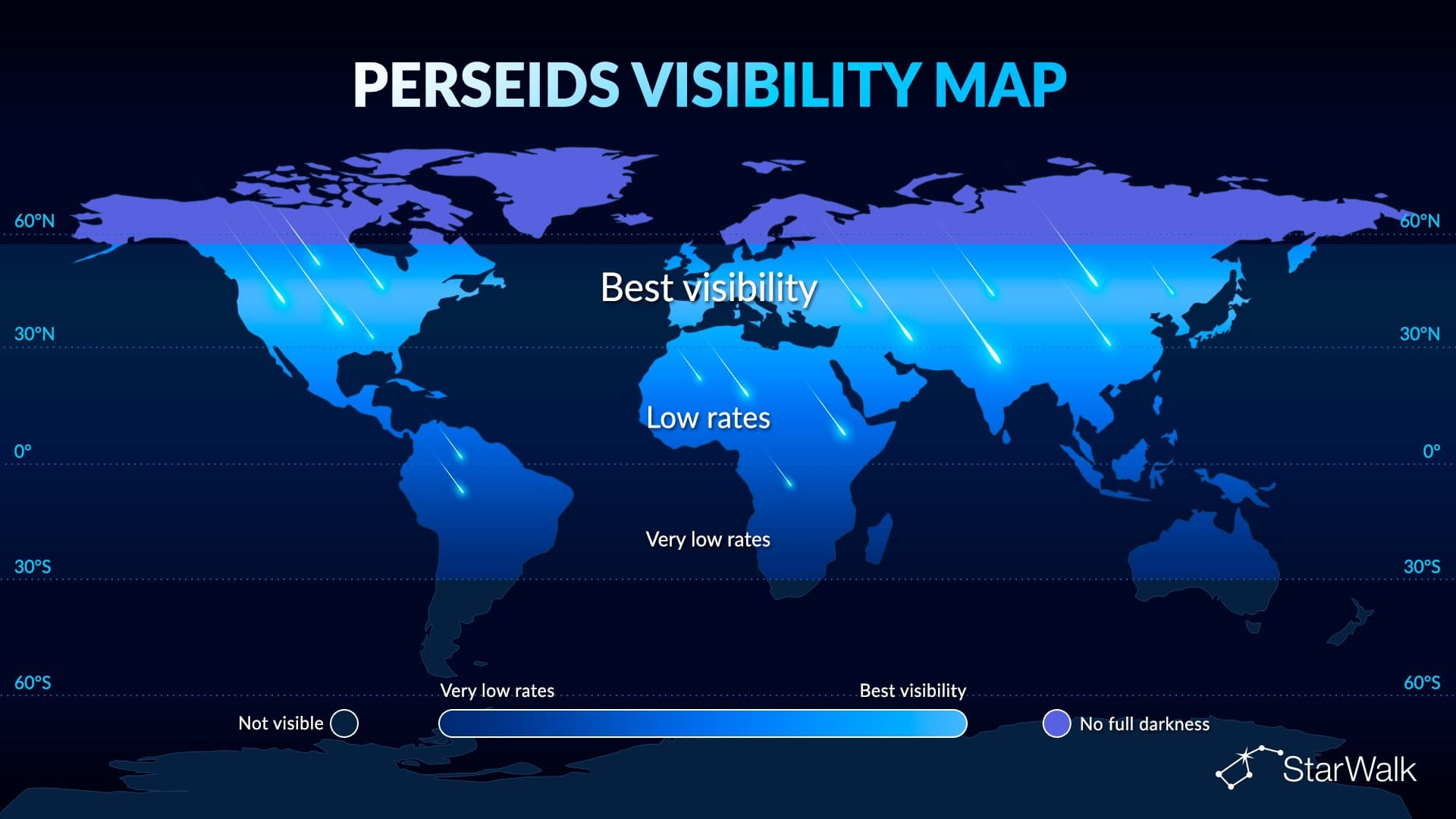
The Perseids are best observed at mid-northern latitudes. There, the meteor shower’s radiant reaches a reasonable elevation in the sky around 22:30 local time. Farther north than about 60°N, prolonged summer twilight may significantly reduce visibility.
The Perseids are poorly placed for much of the Southern Hemisphere because the radiant remains low or never rises. Observers in tropical and low southern latitudes may see a limited number of meteors low in the northern sky. Farther south, the radiant remains below the horizon.
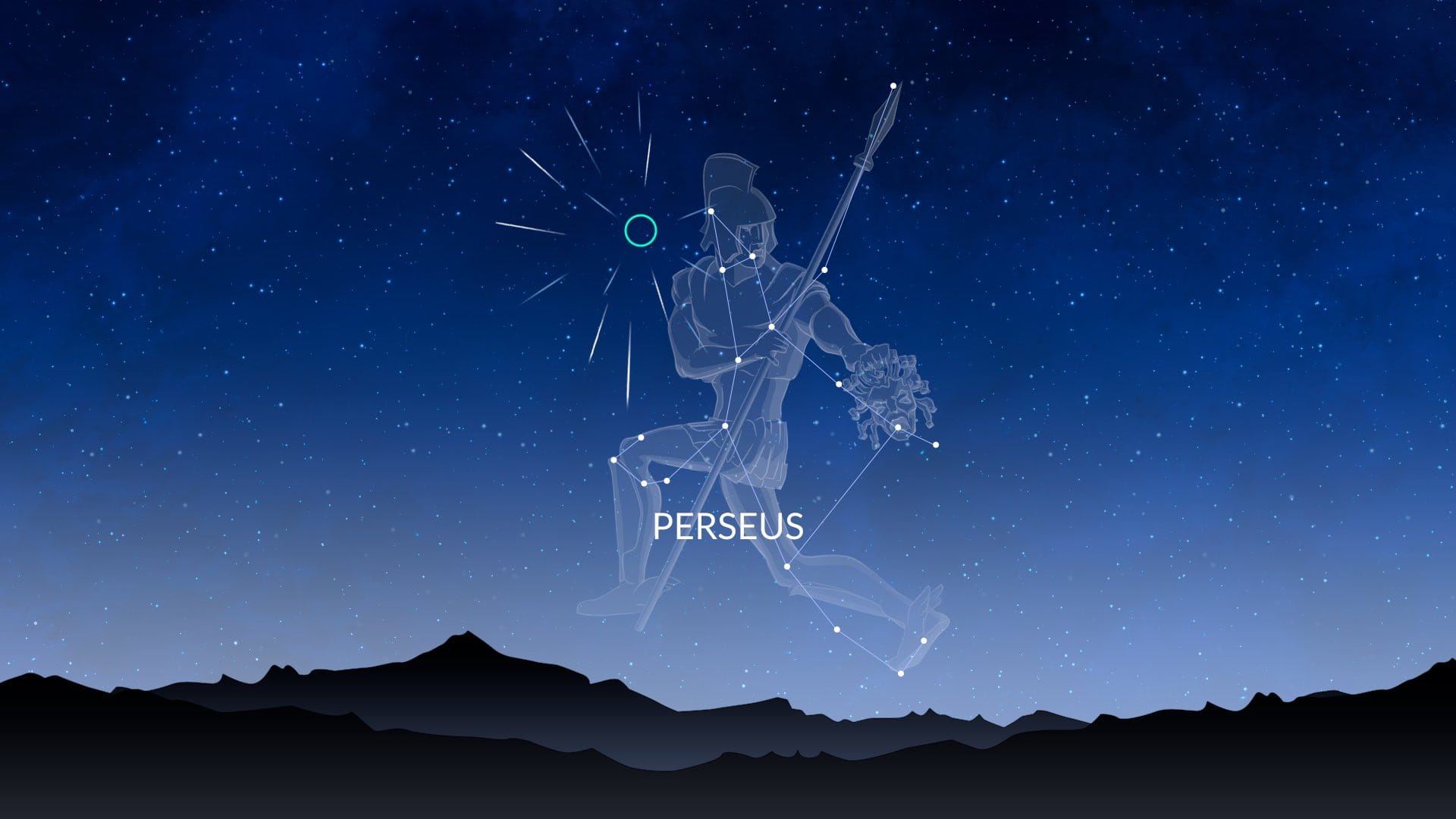
In the Northern Hemisphere, the Perseid meteors can appear anywhere in the sky, but their paths can be traced back to the constellation Perseus – that’s why they are called the Perseids. Within the constellation, there is a certain point where the meteors seem to come from. This point is called the radiant. The higher the radiant rises, the more meteors you see. To catch as many “shooting stars” as possible, target your observations around the time when the radiant is high in the sky.
Use Sky Tonight to find the Perseids’ radiant in the sky for your location. Search for “Perseids,” tap the blue target icon, and use the Time Machine to see when the radiant is highest. Learn more in the Sky Tonight video guide.
You can also find the radiant with the beginner-friendly Star Walk 2. See our Star Walk 2 tutorial for instructions.
Best Dates & Times to See the Perseids in 2026
The Perseids are active from July 17 to August 24, but the best display comes around August 12–13. In 2026, the broad peak will likely stretch from August 12, 21:00 GMT to August 13, 09:00 GMT, with the highest meteor rates expected on August 13, from 02:00 to 04:00 GMT.
For most observers, the sweet spot is the late night to pre-dawn hours, when the radiant in Perseus is highest. If you can, watch on both nights (August 12-13 and 13-14) — the Perseids sometimes show extra activity 0.7–1.5 days after the main maximum, although it’s not guaranteed in 2026.
| Location | Local peak time | Best time to watch |
|---|---|---|
| Los Angeles, US | Aug 12, 14:00 – Aug 13, 02:00 PDT | Aug 12, 21:45 – Aug 13, 02:00 PDT |
| New York, US | Aug 12, 17:00 – Aug 13, 05:00 EDT | Aug 12, 20:30 – Aug 13, 05:00 EDT |
| Toronto, Canada | Aug 12, 17:00 – Aug 13, 05:00 EDT | Aug 12, 21:00 – Aug 13, 05:00 EDT |
| Mexico City, Mexico | Aug 12, 15:00 – Aug 13, 03:00 CST | Aug 12, 23:30 – Aug 13, 03:00 CST |
| London, UK | Aug 12, 22:00 – Aug 13, 10:00 BST | Aug 12, 22:00 – Aug 13, 05:02 BST |
| Paris, France | Aug 12, 23:00 – Aug 13, 11:00 CEST | Aug 12, 23:00 – Aug 13, 06:03 CEST |
| Berlin, Germany | Aug 12, 23:00 – Aug 13, 11:00 CEST | Aug 12, 23:00 – Aug 13, 05:04 CEST |
| Dubai, UAE | Aug 13, 01:00–13:00 GST | Aug 13, 01:00–05:26 GST |
| New Delhi, India | Aug 13, 02:30–14:30 IST | Aug 13, 02:30–05:23 IST |
Perseid Meteor Shower Viewing Tips
We’ve gathered some tips to help you catch the best view of the meteors. With the proper preparation, the Perseids 2026 will bring you an unforgettable stargazing experience. Also, use our infographic on meteor showers as a quick reference: there, you’ll find these tips in the form of colorful illustrations.
How to Watch the Perseids
- Start your observations when the radiant rises in the sky. The Sky Tonight app will help you locate the radiant and determine the best time for viewing.
- Find a place with a dark sky, away from the city lights. Light pollution can hide most faint meteors, so move as far away from city lights as possible. An even better option would be to go up in the mountains, where haze and clouds are below the observer.
- Give this breathtaking event at least an hour of your time to see as many meteors as possible.
- Use a reclining chair, camp bed, or mat with a small pillow so you can watch a large area of the sky without straining your neck.
What to Avoid While Watching the Perseids
- Don’t look directly at the radiant, as there will be mostly short meteors.
- Don’t look low above the horizon either — there might be haze or clouds.
- Don’t make a fire or turn on bright flashlights. The bright light won’t allow your eyes to adapt to the darkness, so you won’t be able to see a significant part of the meteors. Better bring a flashlight with a red light instead — this light is more comfortable at night. Also, don’t forget to turn on the Night Mode in your stargazing app — it uses red tones that preserve your night vision.
- Don’t gaze up for 1 hour straight; make 5-10 minute breaks. This way, you’ll be able to stay focused and give your eyes a rest.
Do you want even more useful meteor-hunting tips? Take our quiz and learn how to spot shooting stars like a pro!
What Causes the Perseid Meteor Shower?
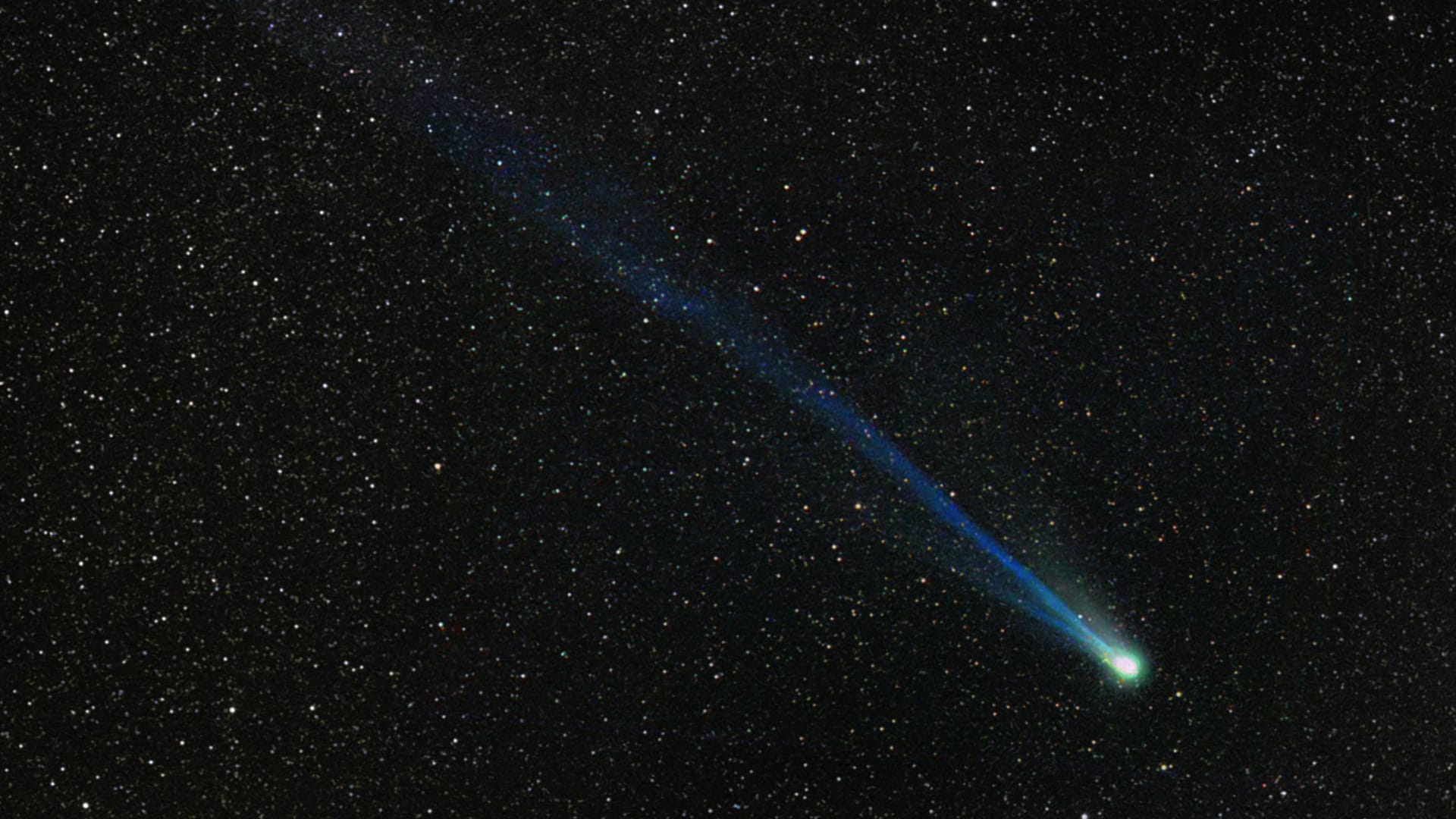
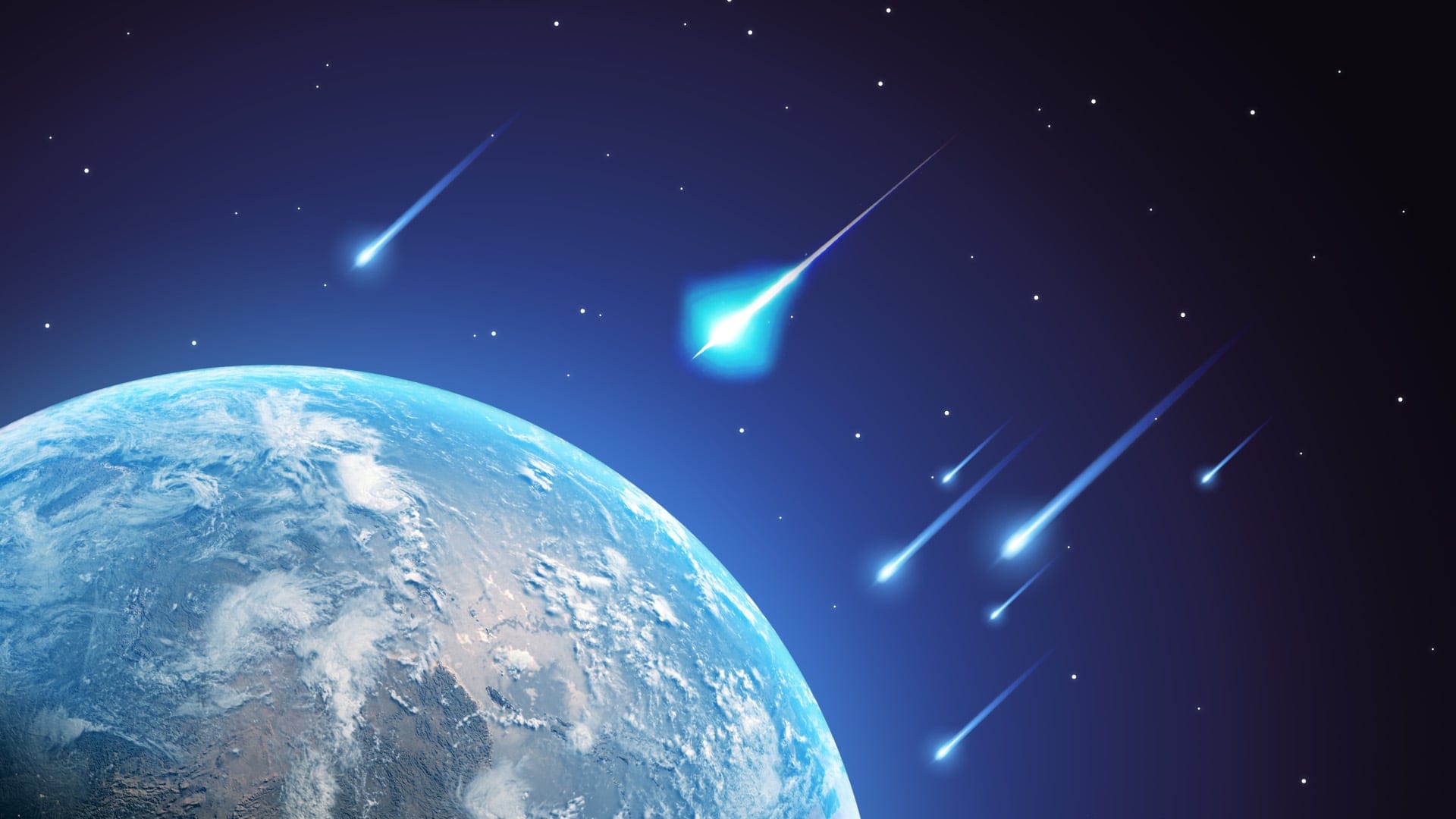
Meteor showers occur when the Earth passes through a trail of debris left by a comet or asteroid (in some special cases). Each meteor shower has a parent body; for the Perseids, it is the large periodic comet 109P/Swift-Tuttle. Although it returns to the inner Solar System roughly every 133 years, we observe the Perseids annually because the Earth crosses the comet’s trail every year.
Will Comet Swift-Tuttle hit the Earth?
No, Comet 109P/Swift-Tuttle poses no collision threat to Earth. Early calculations once raised concerns about a possible impact in 2126, but more precise orbital data later ruled it out. The comet last returned to the inner Solar System in 1992 and is expected back in 2126.
Do Perseid meteoroids hit the Earth’s surface?
Perseid meteoroids are tiny, fragile particles of dust and rock shed by Comet Swift–Tuttle. They burn up and disintegrate as they enter Earth’s atmosphere, so Perseid particles do not reach the ground. Larger space rocks can survive the fall; once they land, they are called meteorites. Want to learn the difference between a meteoroid, meteor, and meteorite? Take our space rocks quiz!
The Legend Behind the Perseids: Fiery Tears of St. Lawrence
The Perseids’ peak closely coincides with the feast day of Saint Lawrence, a Christian martyr who was executed on August 10, 258 AD. Lawrence was said to have been roasted alive on a gridiron, which is why he is often depicted in art holding a gridiron or being shown in flames. Legend has it that during his execution, he displayed remarkable courage and composure, even telling his executioners to turn him over, as he was done on one side. To this day, in some Catholic traditions, Perseid meteors are known as “the tears of St. Lawrence”.
Other Sky Events on August 12, 2026
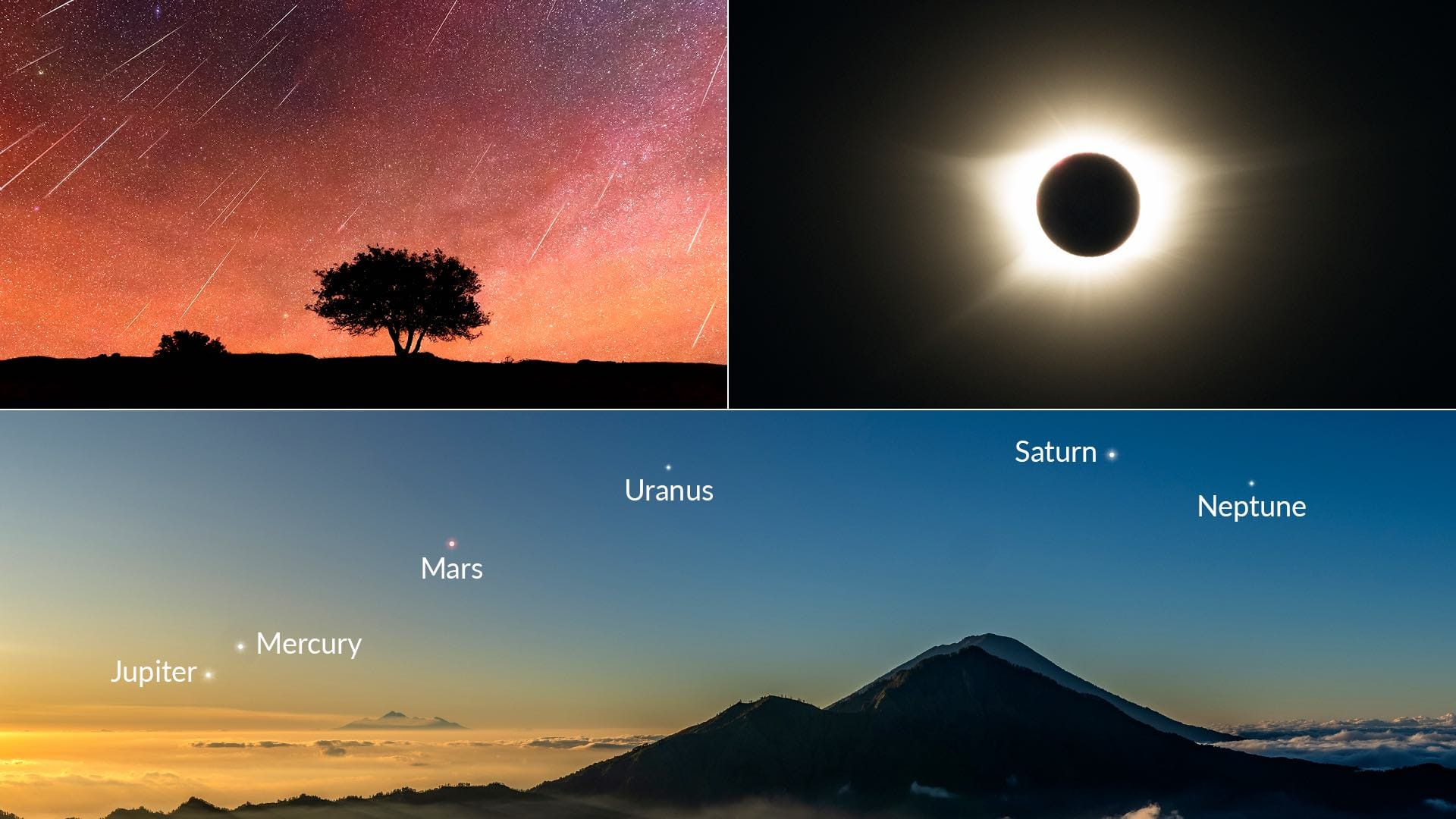
August 12, 2026, is a rare all-day skywatching date. Before sunrise, six planets will align in the sky; later, the path of a total solar eclipse will cross parts of Greenland, Iceland, Spain, and Portugal; after dark, the Perseids will peak under a New Moon. See the full schedule, maps, and local viewing tips in our guide to the three astronomy events of August 12, 2026.
Other Meteor Showers in August 2026
The Perseids are August’s main meteor shower, but they aren’t the only source of shooting stars this month. The Eta-Eridanids peak on August 7 and are best seen from the Southern Hemisphere, while the Kappa-Cygnids reach maximum activity on August 17 and may produce occasional bright fireballs for Northern Hemisphere observers. The Southern Delta-Aquariids and Alpha-Capricornids also remain active around the Perseid peak, so not every meteor you see in mid-August will necessarily be a Perseid.
Explore peak dates, expected meteor rates, Moon conditions, and visibility forecasts in our complete guide to the meteor showers in August 2026.
Perseid Meteor Shower 2026: Conclusion
The Perseids peak on August 12–13, 2026, and the New Moon makes this a fantastic year for viewing. For those of you in the mid-northern latitudes, the best time to watch is in the late evening on the peak night, when the radiant is best-placed in the sky. Keep an eye out for bright fireballs, which make the Perseids famous.
Download Sky Tonight to get an interactive sky map and handy astronomical calendar rolled into one. Wish you clear skies and good meteor hunting!