Solar Eclipse: What Is It and How Does It Happen?
The next solar eclipse will occur on February 6, 2027 — it will be an annular solar eclipse visible in parts of South America and West Africa, including Chile, Argentina, Uruguay, Brazil, Ivory Coast, Ghana, Togo, Benin, and Nigeria. Use the Sky Tonight app to check the eclipse's exact timing and explore an interactive eclipse map. In this article, we’ll explain why solar eclipses happen, explore the different types of eclipses, and give tips on how to observe them safely.
Contents
- What is a solar eclipse?
- Types of solar eclipses
- Baily’s Beads and the Diamond Ring effects
- How often do solar eclipses occur?
- How to watch a solar eclipse safely
FAQ: Solar eclipses 101
- When does a solar eclipse occur?
- Why don’t we have a solar eclipse every month?
- What’s the difference between a solar eclipse and a lunar eclipse?
- How long does a solar eclipse last?
- Can you see the stars during a solar eclipse?
- Is it safe to look at a solar eclipse?
- Do solar panels work during an eclipse?
- Solar eclipses: the key takeaway
What is a solar eclipse?
A solar eclipse is a natural phenomenon that occurs when the Moon blocks part or all of the Sun’s bright surface for observers in some parts of Earth. Solar eclipses always coincide with a New Moon, because that is when the Moon gets between Earth and the Sun.
What happens during a solar eclipse?
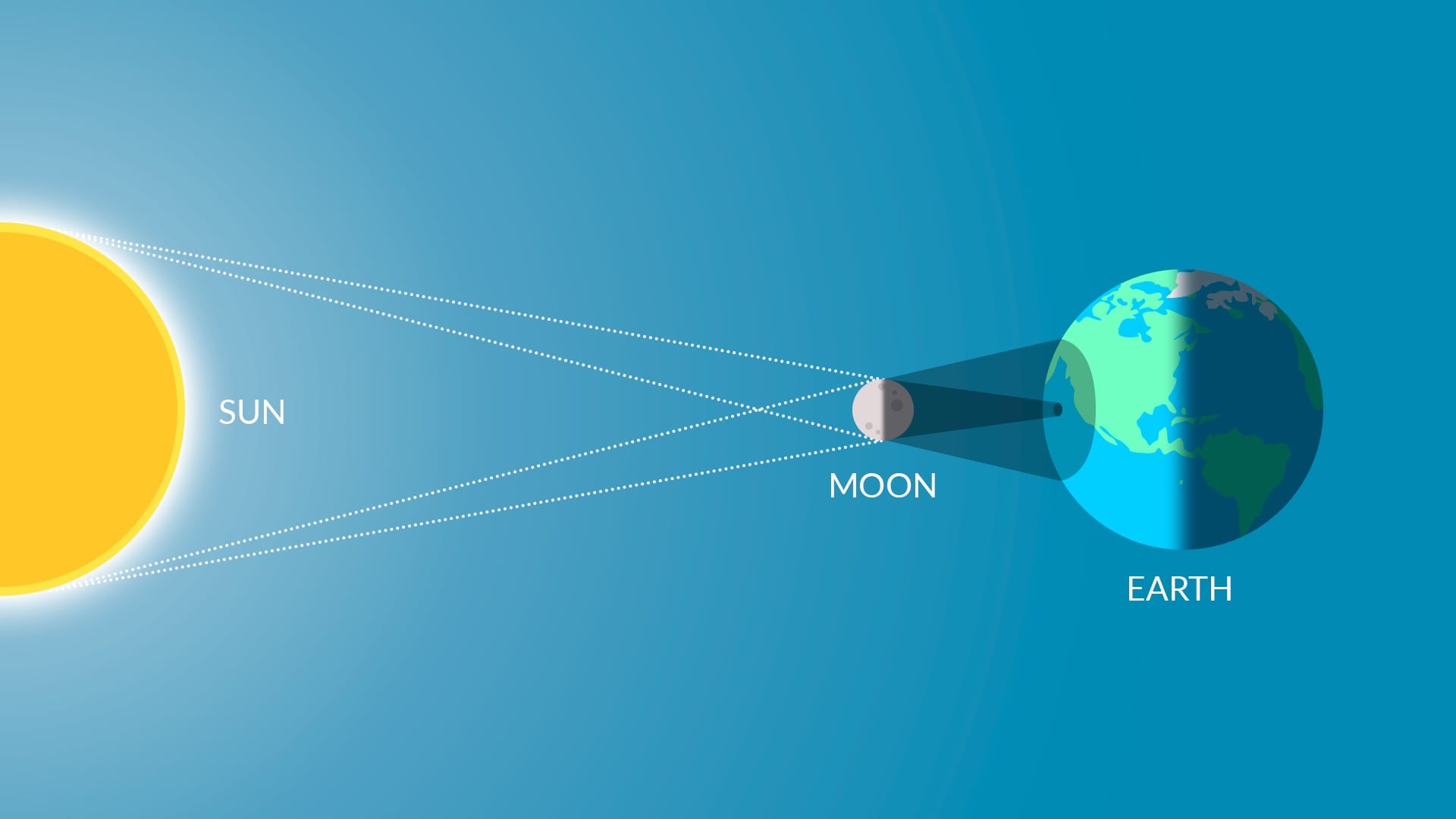
During a solar eclipse, the Sun, the Moon, and Earth line up in such a way that the Moon’s shadow falls on specific areas of our planet’s surface, creating a path of the eclipse. Since the Moon’s shadow is too small to cover the whole Earth, eclipses are only visible within this path.
Types of solar eclipses
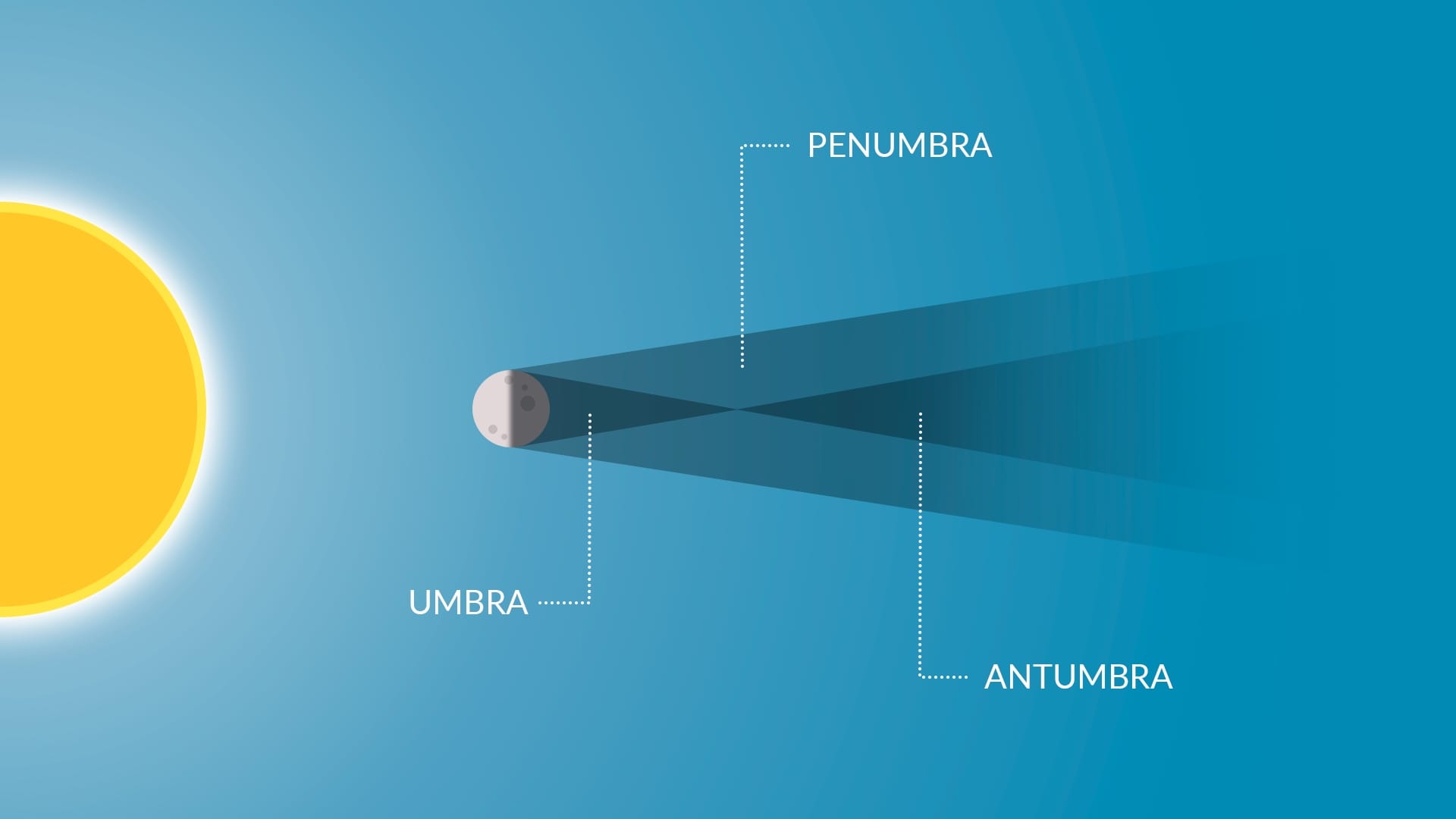
The Moon’s shadow can be divided into three parts: a penumbra, an umbra, and an antumbra. The type of eclipse we see depends on what part of the shadow falls on Earth.
Partial solar eclipse
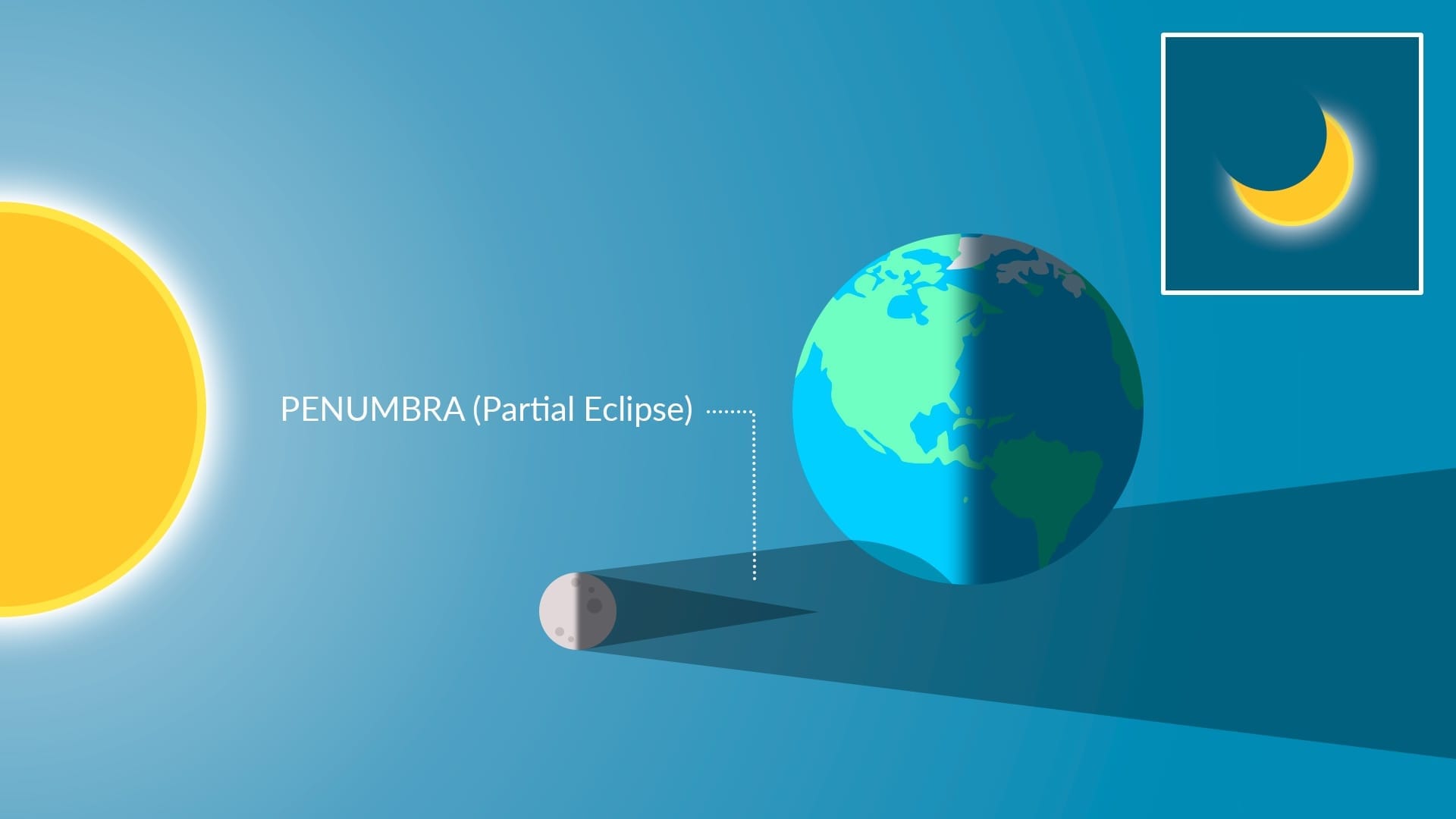
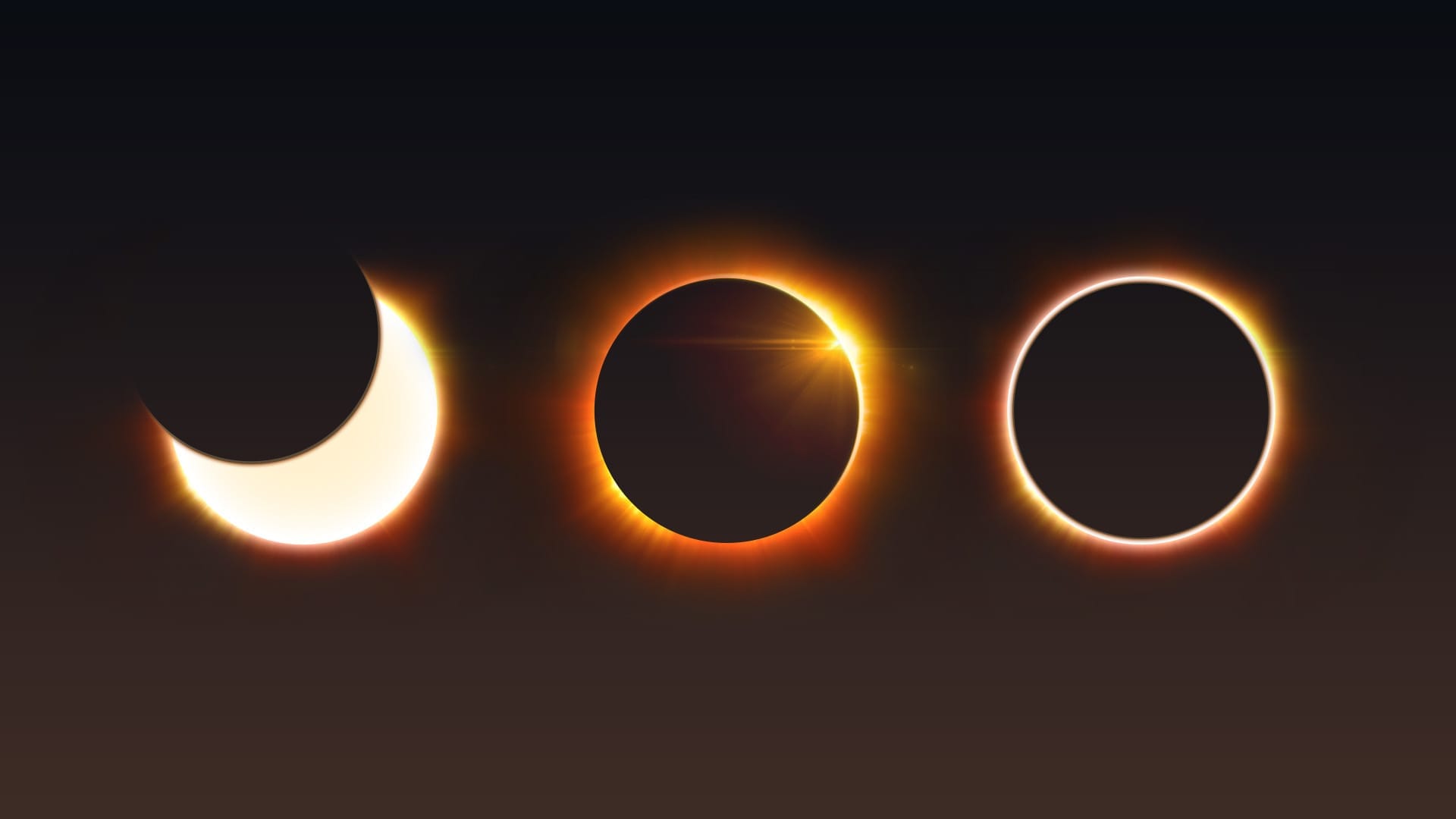
A partial solar eclipse is when the Moon covers only a part of the solar disc. This happens when the Sun, the Moon, and Earth do not form a perfectly straight line, so the umbra and antumbra miss Earth, but a partial shadow or penumbra falls on our planet. From the areas inside the penumbra, the Sun appears as a crescent or a partially covered disc.
Total solar eclipse
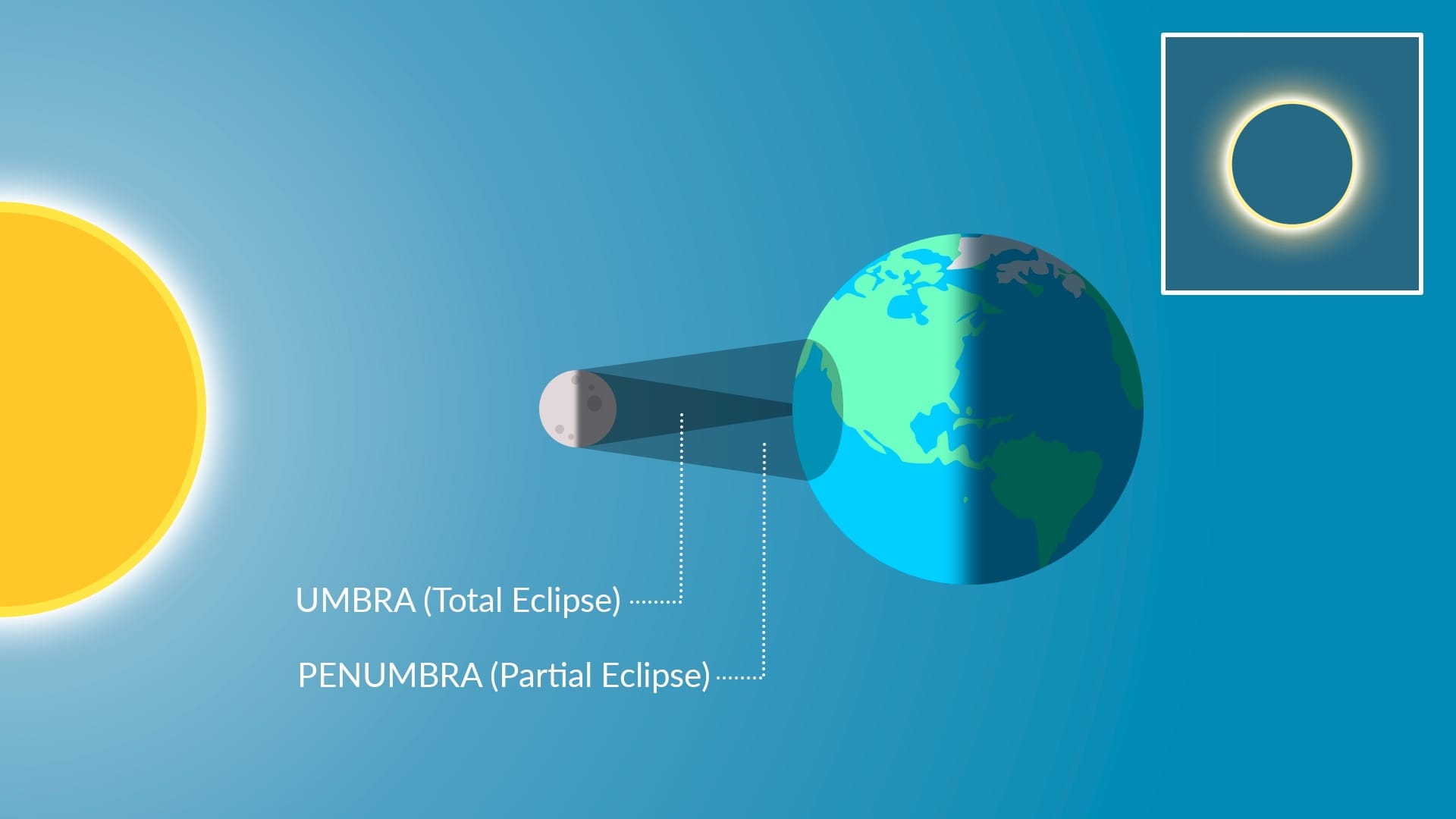
We observe a total eclipse when the Moon completely blocks the view of the Sun from Earth, creating a total shadow or umbra. This happens when the apparent size of the Moon is larger than that of the Sun. During a total solar eclipse, the sky darkens dramatically, resembling dawn or dusk, and the Sun's corona (outer atmosphere) appears in the sky. Also, the brightest stars and planets may become visible. Since the umbra is always surrounded by the penumbra, a partial eclipse is visible from the locations that lie just outside the totality path.
Annular solar eclipse
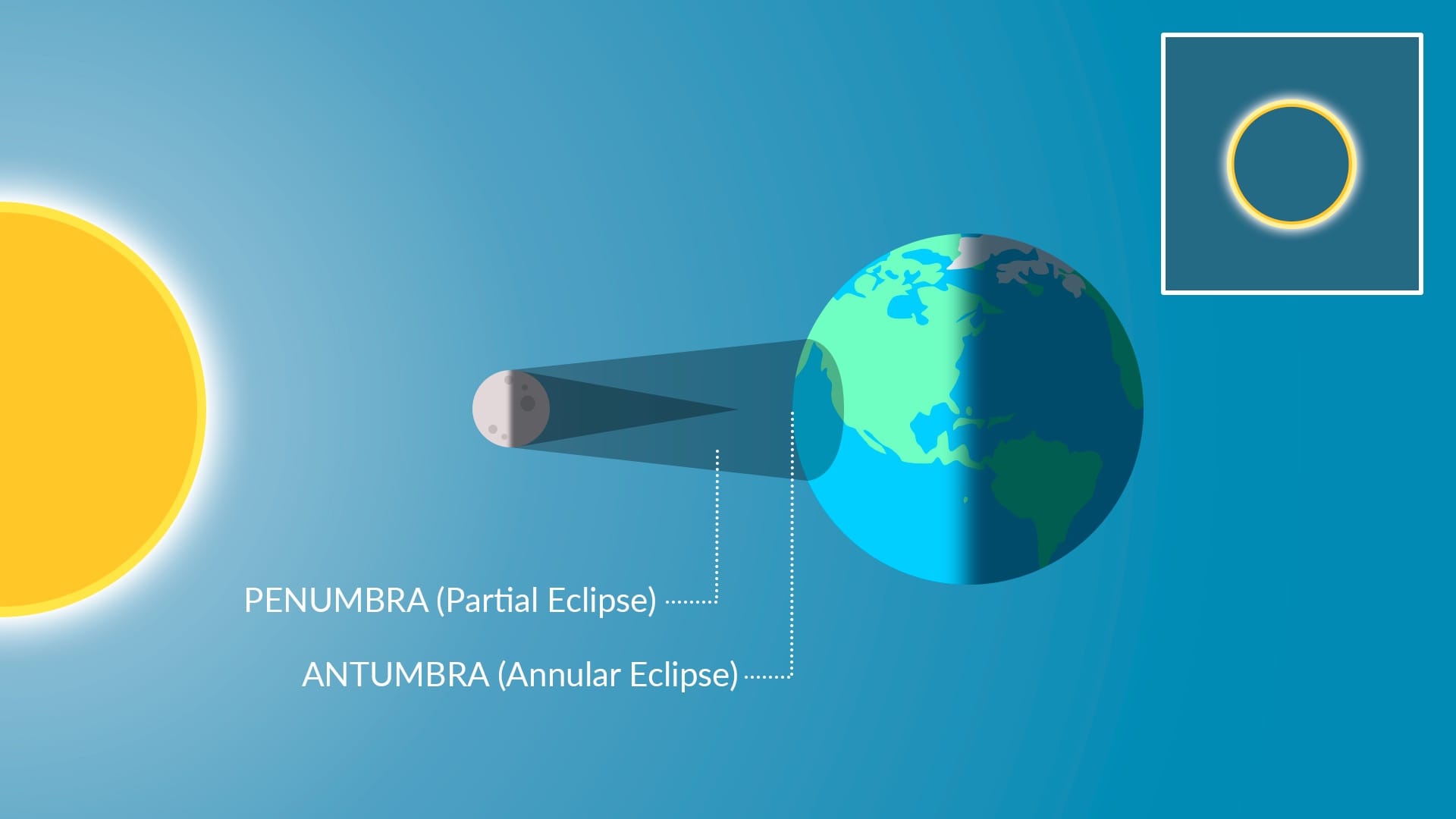
An annular solar eclipse occurs when the Moon passes between the Sun and Earth while being at apogee (the farthest distance from our planet) or close to it. During an annular solar eclipse, the Moon casts an antumbra – the type of shadow that only exists if the light source has a larger diameter than the object casting the shadow. When the Moon is far from Earth, its angular size is too small to cover the Sun completely. That’s why we see the “ring of fire” – a thin ring of sunlight around the dark lunar disc. Since the antumbra is always surrounded by the penumbra, a partial eclipse is visible from the locations that lie just outside the annularity path.
Hybrid solar eclipse
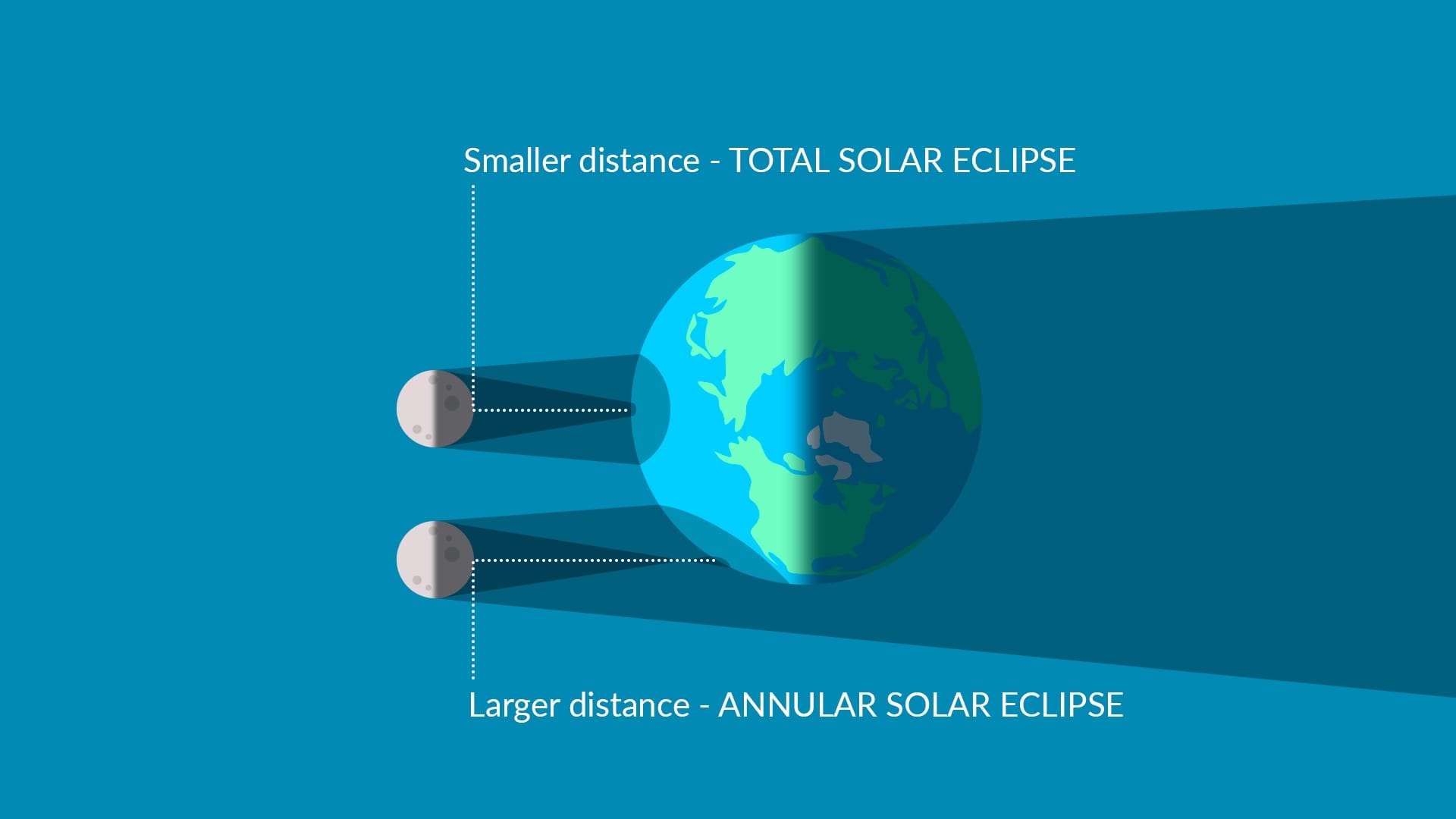
A hybrid solar eclipse, also known as an annular-total eclipse, changes from annular to total and vice versa along its path. As Earth is round, the distance to the Moon varies from one location to another. As a result, some places (which are closer to the Moon) stay within the path of the umbra, while others (which are farther from the Moon) pass through the antumbra. Therefore, observers at different points in the eclipse path can experience either a total or annular eclipse, depending on where they are. However, you can’t see both types at once, at least from one location. Since the umbra and antumbra are always surrounded by the penumbra, you can see a partial eclipse from the locations that are just outside the path of the hybrid eclipse.
Baily’s Beads and the Diamond Ring effects
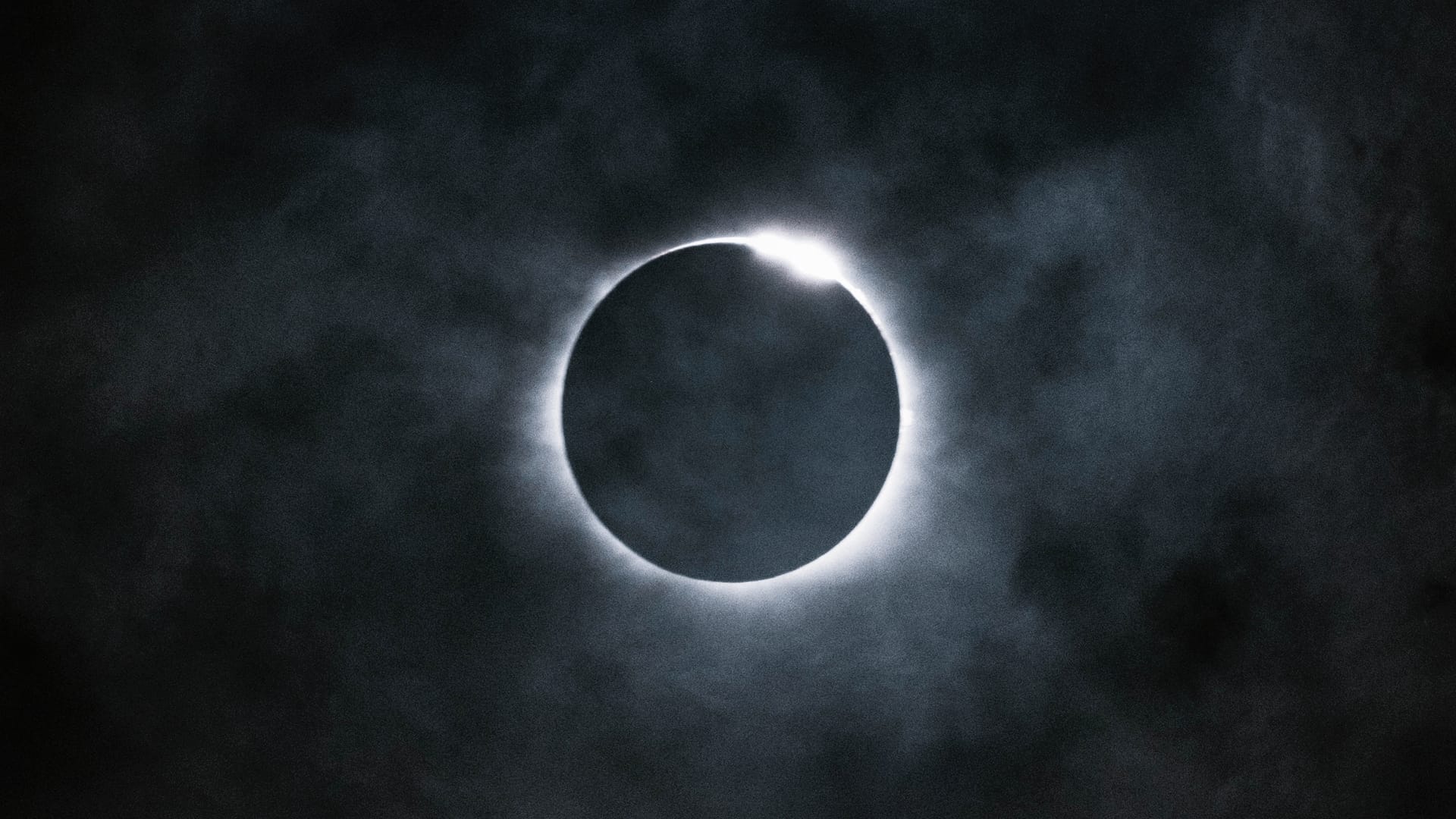
A total solar eclipse is spectacular on its own, but there are also special astronomical effects that can be observed at the same time. Since the Moon is cratered, the edge of the lunar surface is rugged. When the lunar disc is about to completely cover the Sun, the last bits of sunlight pass through the mountains and valleys of the Moon and create an array of spots, which resembles a string of beads. Hence the name Baily’s Beads – in honor of the English astronomer Francis Baily who explained this phenomenon. The Diamond Ring is observed when only one “bead” is left, appearing as a shining diamond in a glowing ring.
How often do solar eclipses occur?
Total eclipses occur on Earth approximately every 18 months, and annular eclipses – once every 1-2 years. Hybrid eclipses are the rarest, as they happen a handful of times per century, about once in a decade. In total, between two and five solar eclipses occur each year. The last year with five solar eclipses was in 1935, and the next will be in 2206.
When is the next solar eclipse?
The next solar eclipse will happen on February 6, 2027. It will be an annular solar eclipse, with the “ring of fire” visible in parts of South America and West Africa, including Chile, Argentina, Uruguay, Brazil, Ivory Coast, Ghana, Togo, Benin, and Nigeria. The eclipse path begins over the South Pacific, crosses southern South America and the South Atlantic, and then reaches western Africa.
A partial eclipse will be visible across large areas of South America, Africa, and Antarctica, as well as parts of the South Pacific and South Atlantic oceans.
To stay up to date on the next eclipse visible from your location, check out our infographic about the 5 upcoming eclipses.
How to watch a solar eclipse safely
Watching a solar eclipse can be an exciting experience, but it's important to do it safely to avoid damaging your eyes. Here are some tips:
- Use proper eclipse glasses or solar filters. Make sure they meet the ISO 12312-2:2015 international safety standard, which means they can reduce visible sunlight to safe levels and block solar UV and IR radiation.
- Don't use regular sunglasses or homemade filters. Regular sunglasses or homemade filters, such as smoked glass or exposed film, don’t provide enough protection.
- Check your eclipse glasses/solar filters before using them. Make sure they are not scratched or damaged, as this can compromise their safety. Follow the manufacturer's instructions regarding reuse or replacement.
- Use a solar filter for telescopes and binoculars. If you plan to use a telescope or binoculars to view the eclipse, make sure to use a solar filter that fits over the front of the lens. This will protect your eyes and equipment from damage.
- Use indirect viewing methods. If you don't have access to eclipse glasses or a solar filter, you can still view the eclipse indirectly using pinhole projectors or by projecting the image of the Sun onto a white surface.
- Don't look directly at the Sun. Look away from the Sun while putting on and taking off your eclipse glasses or solar filter.
By following these tips, you can safely enjoy a solar eclipse without putting your eyes at risk.
It’s time to check if you’re ready to see a solar eclipse! Take our quiz to see what you know about eclipses. Also, watch this short video to see how solar eclipses work.

FAQ: Solar eclipses 101
When does a solar eclipse occur?
A solar eclipse occurs when the Moon passes between the Sun and Earth, blocking all or part of the Sun's light. Solar eclipses can only occur during a New Moon phase when the Moon is positioned between the Sun and Earth.
Why don’t we have a solar eclipse every month?
Not every New Moon results in a solar eclipse because the Moon's orbit is slightly tilted relative to Earth's orbit around the Sun. Therefore, the Moon is not always in the direct line between Earth and the Sun to create an eclipse, so the shadow cast by the Moon misses Earth.
What’s the difference between a solar eclipse and a lunar eclipse?
A solar eclipse occurs when the Moon passes between the Sun and Earth, casting a shadow on Earth. A lunar eclipse occurs when Earth passes between the Sun and the Moon, casting a shadow on the Moon. Solar eclipses occur during a New Moon, while lunar eclipses coincide with the Full Moon. During a solar eclipse, we observe the dark lunar disc passing over the Sun. During a total lunar eclipse, the Moon appears reddish-orange. Get more details on lunar eclipses in this article.
How long does a solar eclipse last?
At one location, an eclipse from first to last contact usually lasts a few hours. Totality lasts from a few seconds to about 7.5 minutes, while annularity can last more than 12 minutes.
Can you see the stars during a solar eclipse?
During a total solar eclipse, when the Moon completely covers the Sun, it becomes dark enough to see the brightest stars and planets. However, the sky won’t be as dark as it is at night. Also, because totality only lasts a few minutes, your eyes won’t have enough time to adjust to the change in light levels, so you’re unlikely to see more than the most prominent objects.
Is it safe to look at a solar eclipse?
It is unsafe to look directly at the Sun as it can damage your eyes with its UV and IR radiation. However, you can keep your eyes safe by using solar filters or eclipse glasses.
Do solar panels work during an eclipse?
As the solar eclipse approaches its maximum phase, there will be a noticeable drop in your panels' energy output. The lowest point will be reached near maximum eclipse, after which the power levels will start to increase again as the Moon shifts away from the Sun.
Solar eclipses: the key takeaway
Solar eclipses occur when the Moon passes between the Sun and Earth, blocking sunlight partially or completely. Depending on the position of the Moon and the observer's location, one of the three eclipse types – partial, total, or annular – is visible. Rarely, a hybrid eclipse occurs, and some locations experience a total eclipse, while others see an annular eclipse.
The next solar eclipse will be an annular one — it will occur on February 6, 2027, and the “ring of fire” will be visible in parts of South America and West Africa. Use Sky Tonight to check the eclipse timing and visibility for your location.