Looking for what to see in the sky this week? This guide highlights the upcoming astronomical events. Scroll down for sky maps and viewing tips, and use the Sky Tonight app to check when and where each object will appear in your sky.
Planets visible tonight: Evening — Saturn and Neptune; late evening to dawn — Uranus; before dawn — Mars and Jupiter. Mercury and Venus are visible after sunset mainly from the Southern Hemisphere. Details: Planets Visible Tonight
Constellations visible tonight: Northern Hemisphere — Aquarius, Pegasus, Cepheus, Lacerta, Piscis Austrinus, and, from lower northern latitudes, Grus; Southern Hemisphere — Aquarius, Piscis Austrinus, Grus, and Octans. Details: Constellations in October 2026
Upcoming Astronomical Events: October 30-November 5, 2026
Date
Event
Best time
Equipment
October 29–30
Moon, Aldebaran & Betelgeuse triangle
Late evening/early morning
Naked eye
October 31–November 1
Moon near Pollux
Late night/before dawn
Naked eye
October 31–November 1
Mars, Jupiter & Regulus line up
Late night/before sunrise
Naked eye
November 1–2
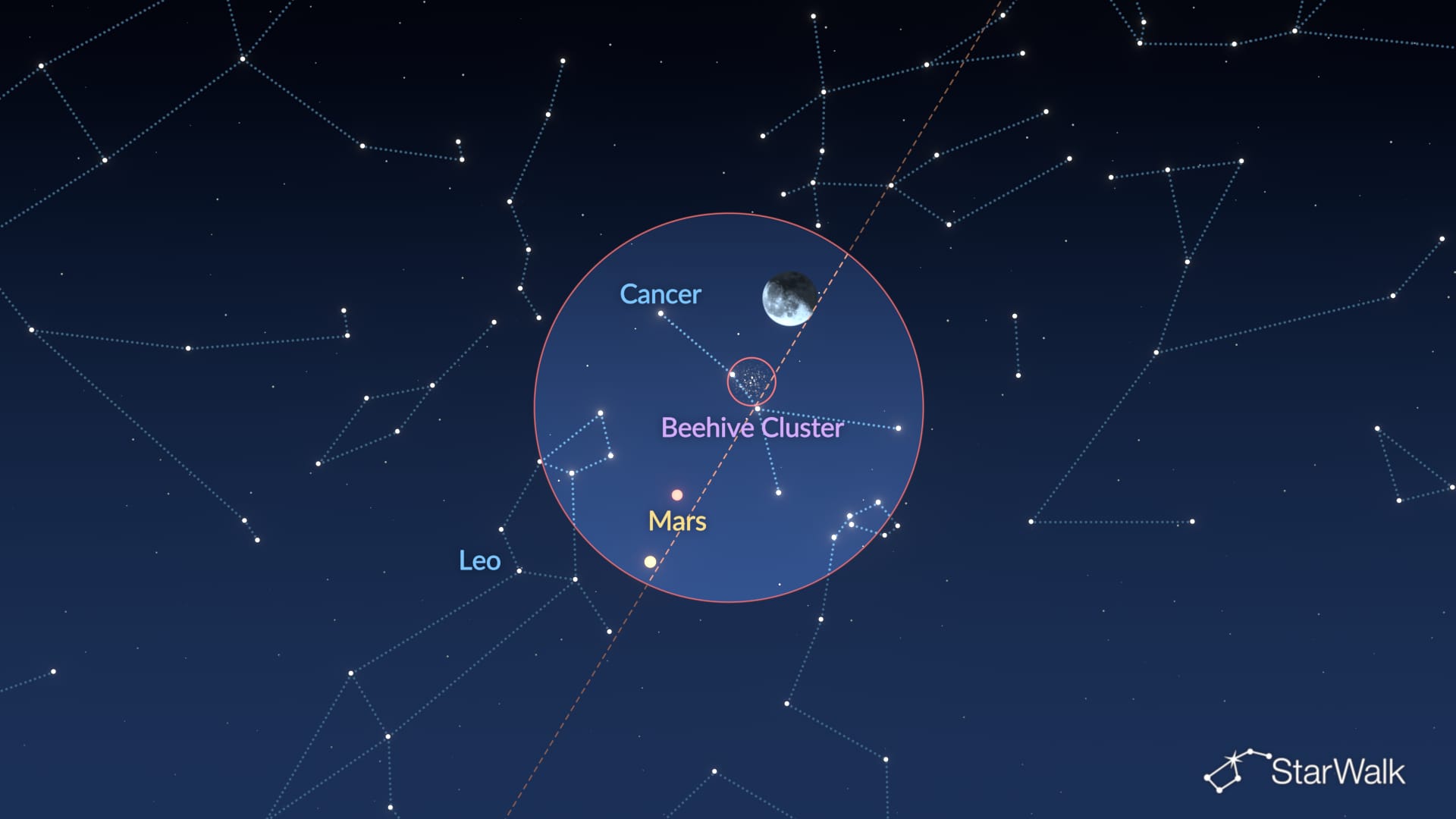
Mars, Moon & Beehive Cluster line up
Night
Naked eye/binoculars
November 1–2
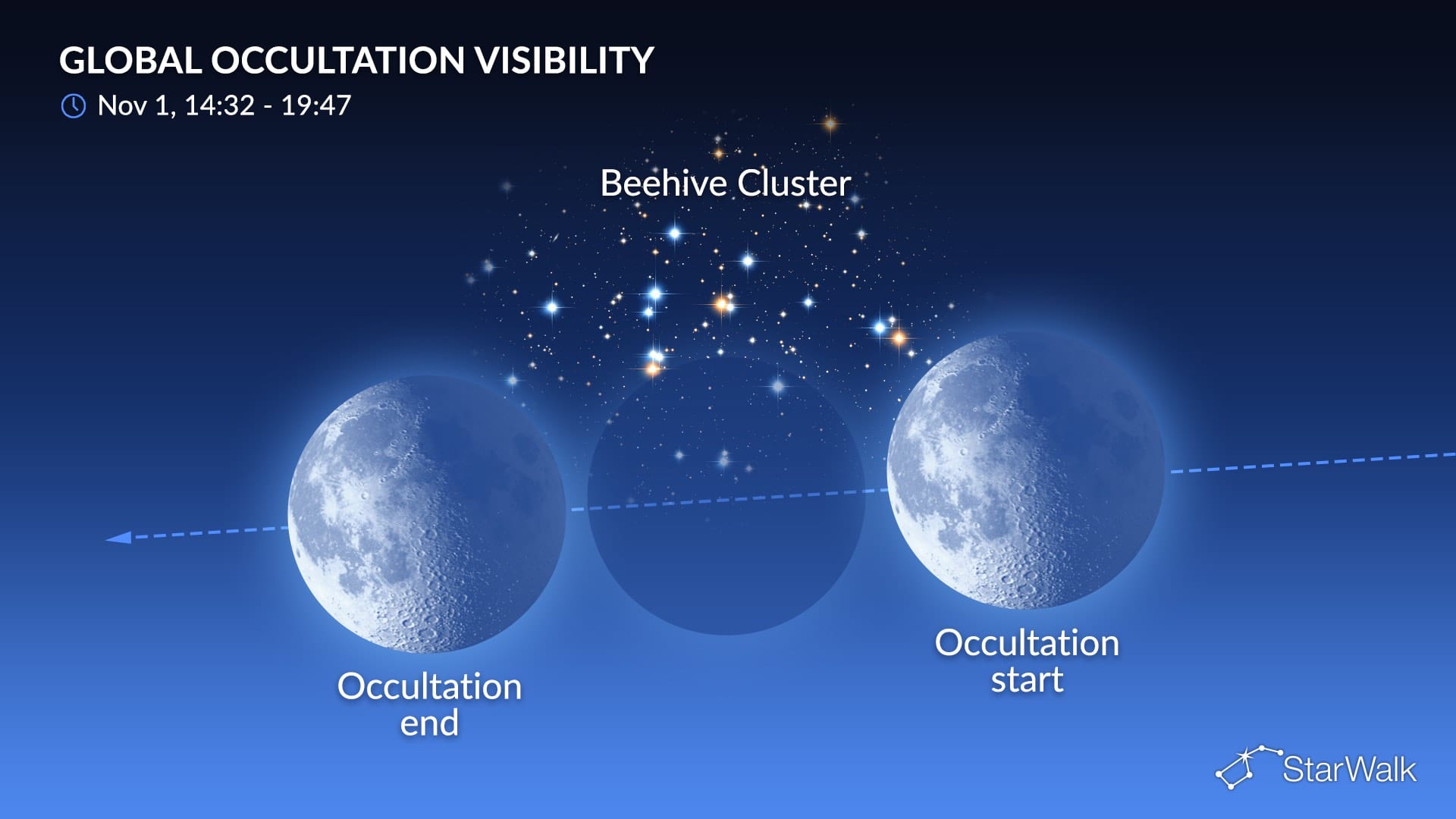
Lunar occultation of the Beehive Cluster
Late night
Binoculars/telescope
November 2–3
Moon near Mars, Jupiter & Regulus
Late night/before sunrise
Naked eye
November 2
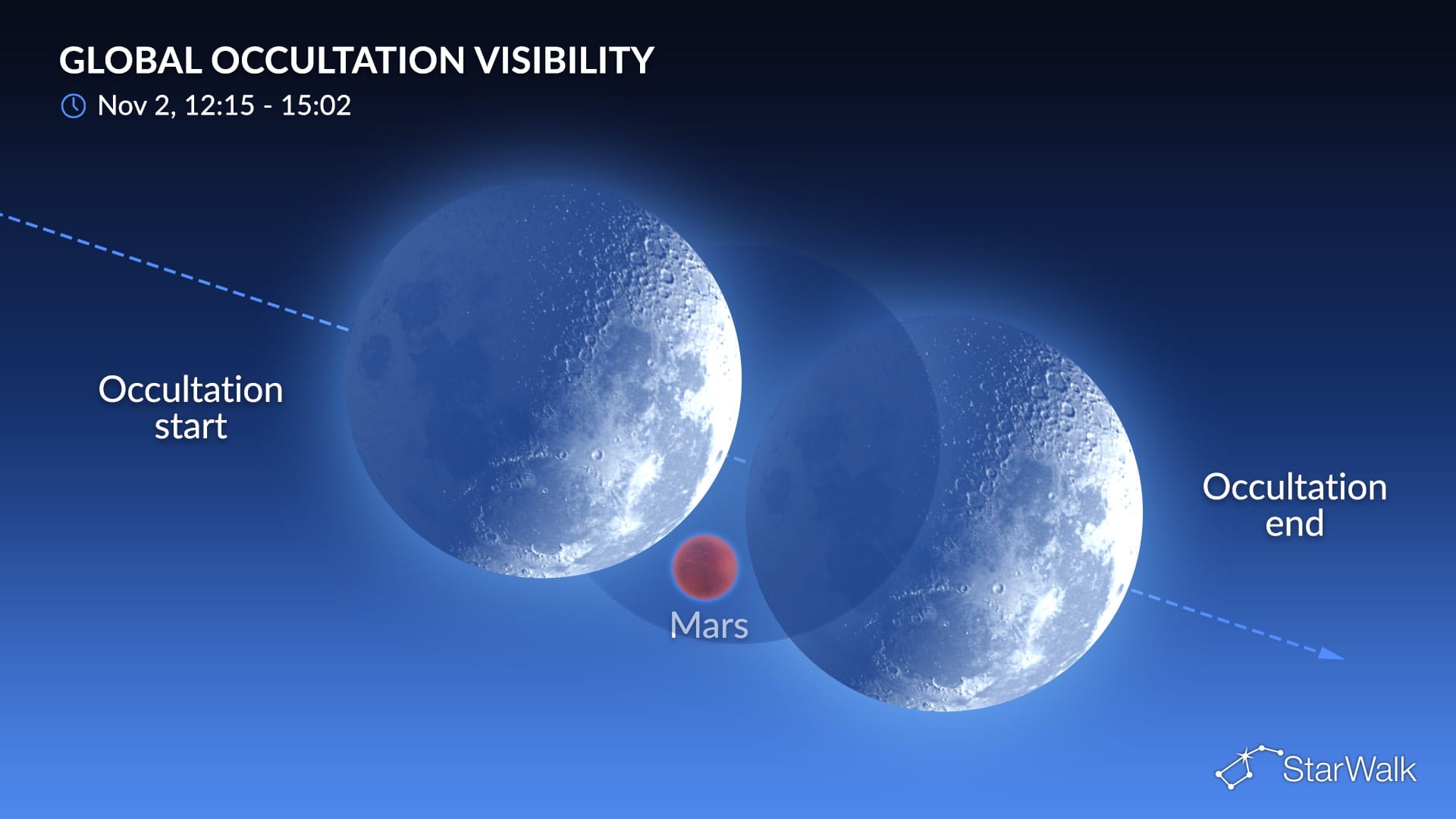
Lunar occultation of Mars
Before dawn
Naked eye
November 2–3
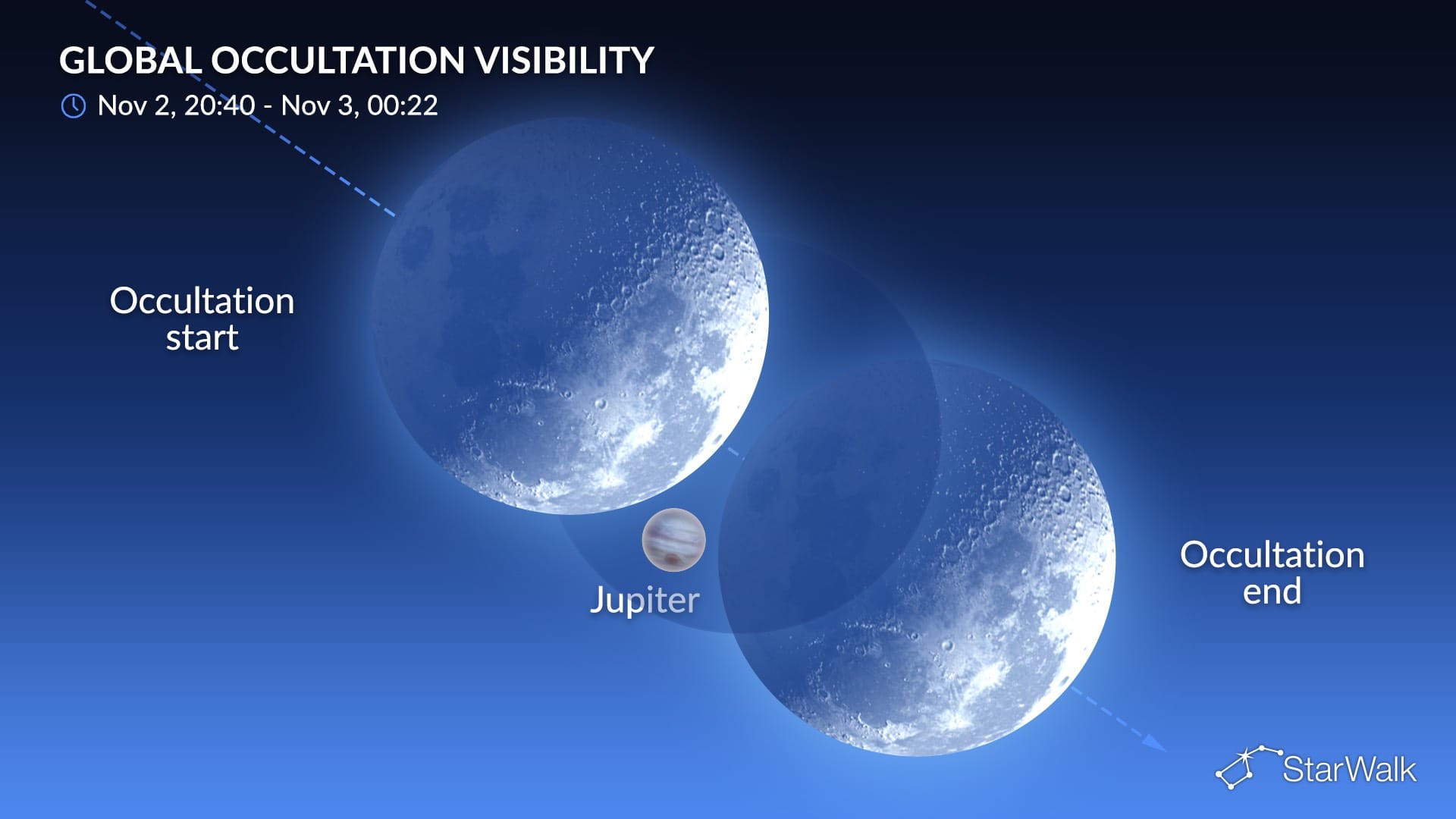
Lunar occultation of Jupiter
Before dawn/daytime
Binoculars/telescope
November 3
Moon near Regulus
Before dawn
Naked eye
November 3
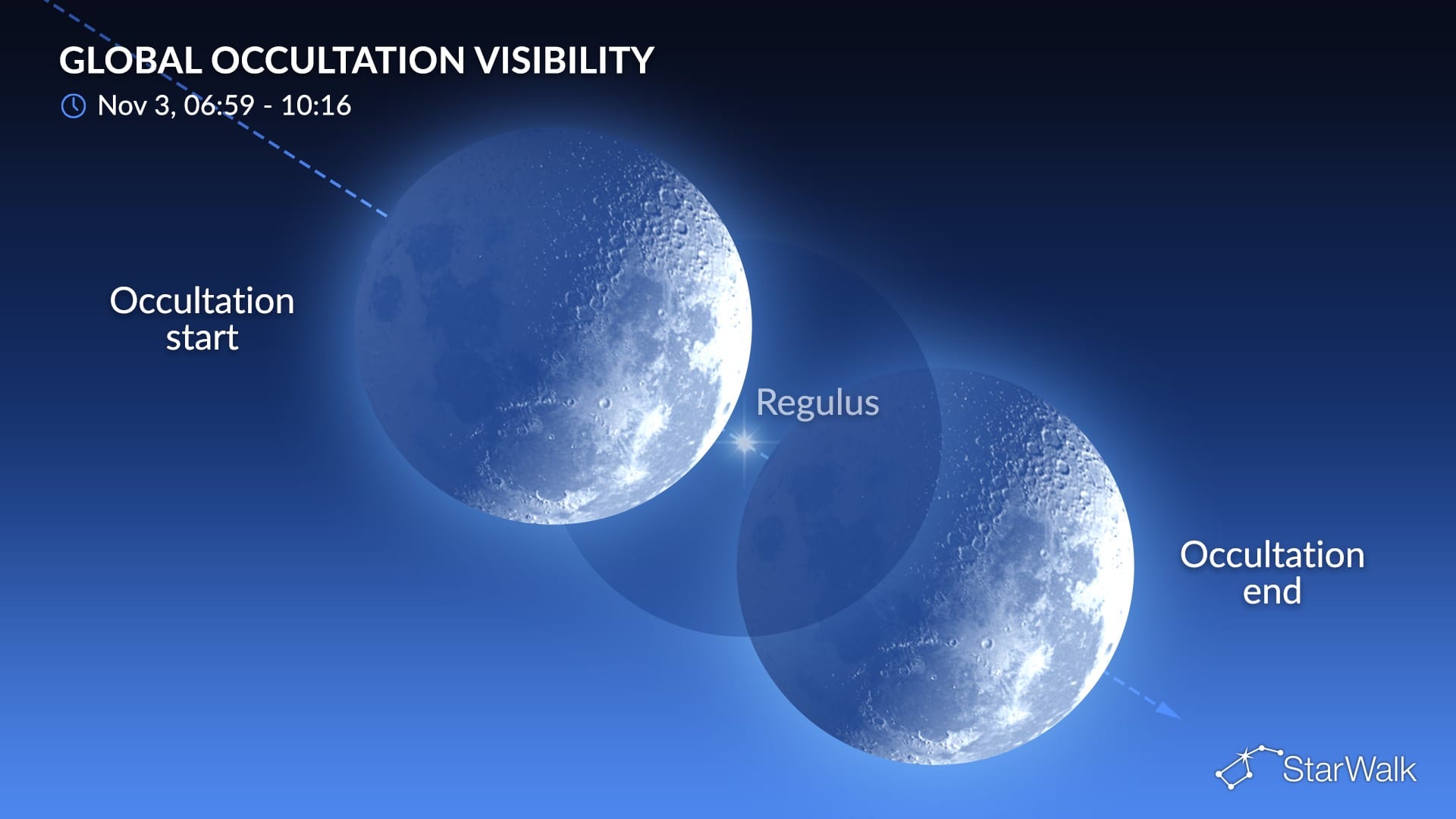
Lunar occultation of Regulus
Before dawn
Naked eye
November 3–4
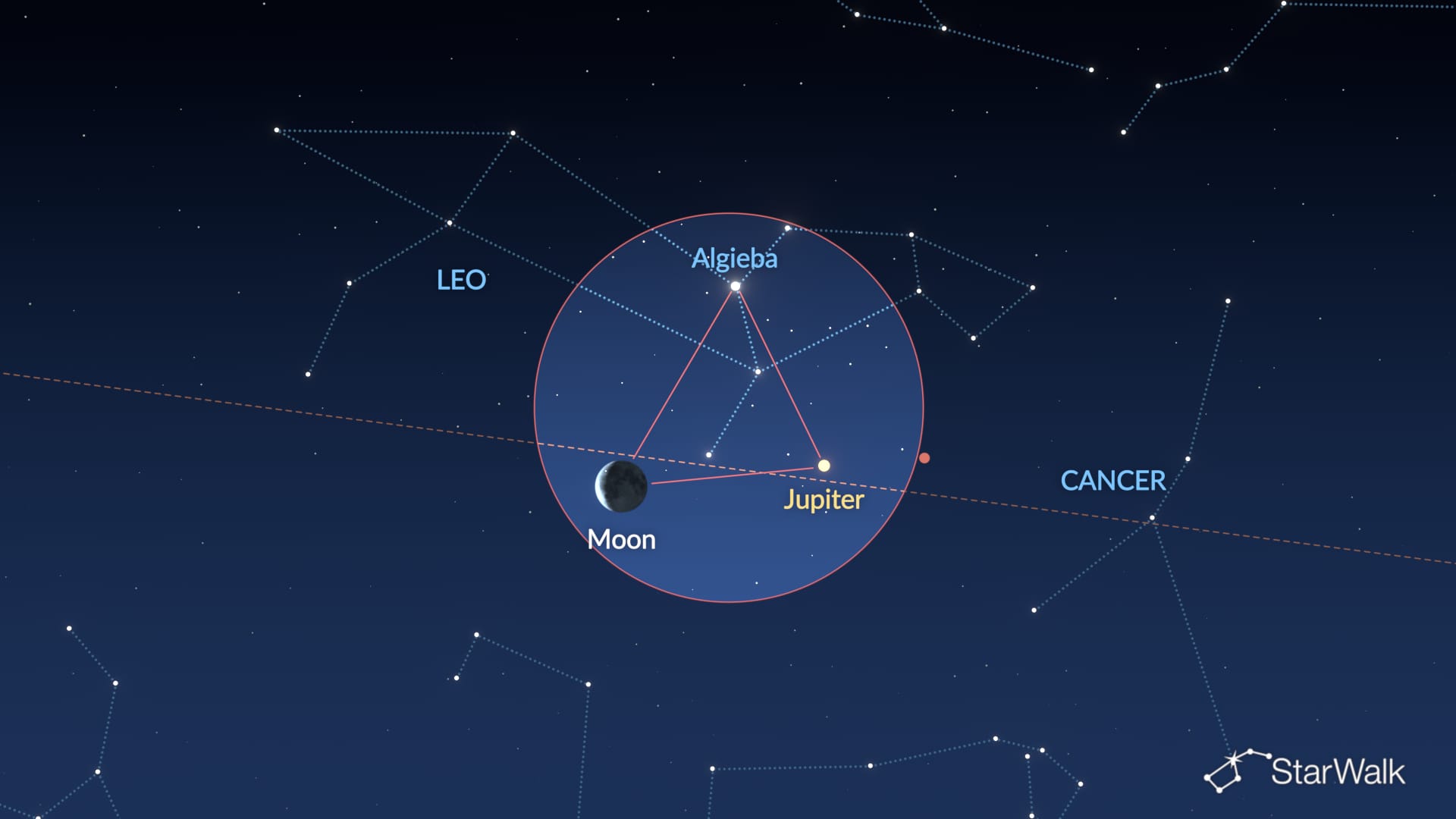
Moon, Jupiter & Algieba form a near-equilateral triangle
Before dawn
Naked eye
November 4–5
Southern Taurids peak
Late night
Naked eye
Below, you’ll find sky events arranged by date, with quick viewing tips to help you choose the best nights for stargazing. All dates are listed in GMT, so the exact calendar date may differ in your local time zone.
October 29–30: Moon, Aldebaran, and Betelgeuse form a triangle
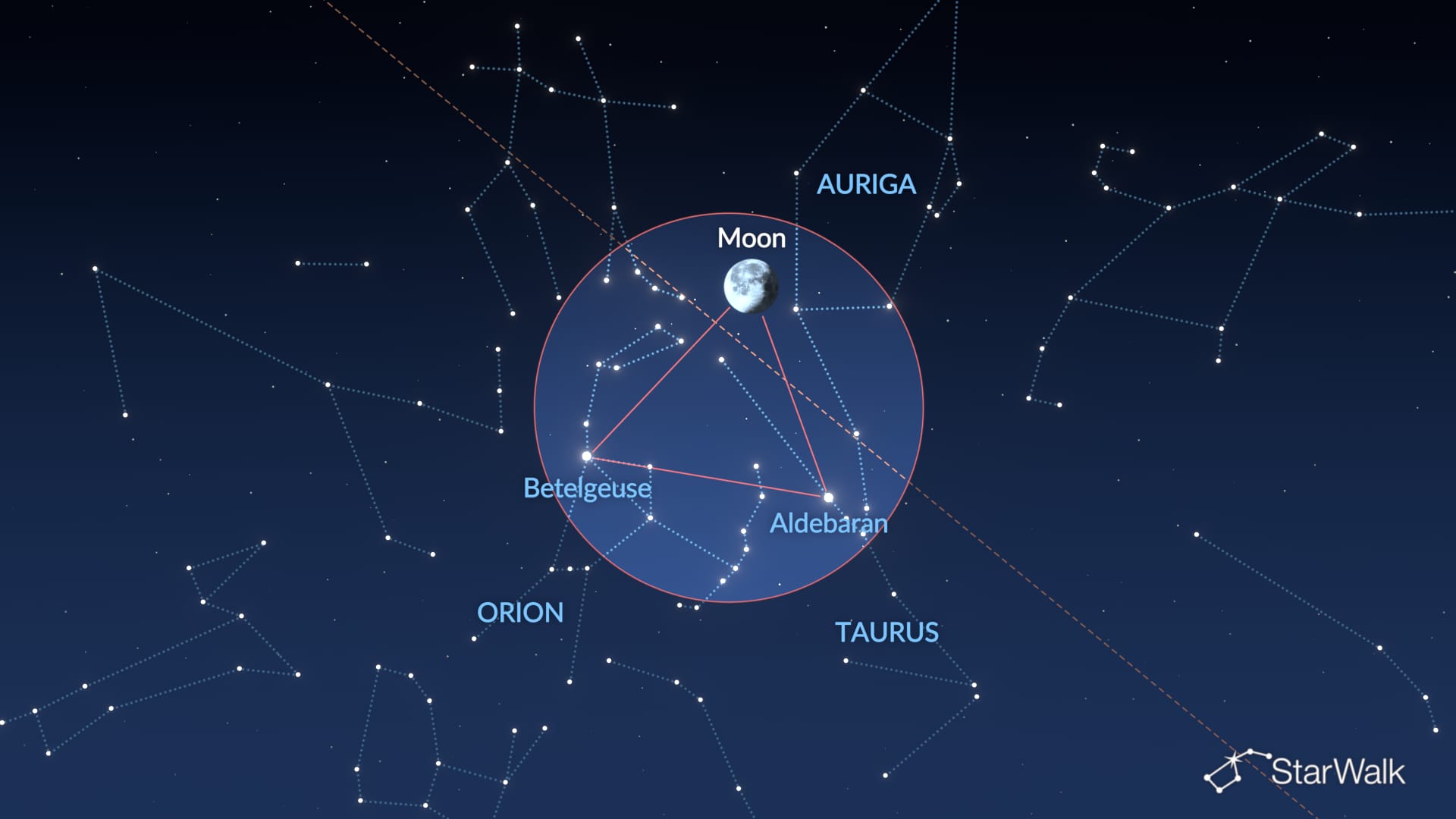
Late on October 29 and before dawn on October 30, the waning gibbous Moon, Aldebaran, and Betelgeuse will form a large triangle across Taurus and Orion. From parts of Europe, Africa, and South Asia, the Moon will appear almost equally far from the two bright orange-red stars, creating a nearly isosceles triangle. The trio is easy to see with the naked eye, and the shape will slowly change as the Moon moves eastward through the night.
October 31–November 1: Pollux near the Moon; Mars, Jupiter, and Regulus line up
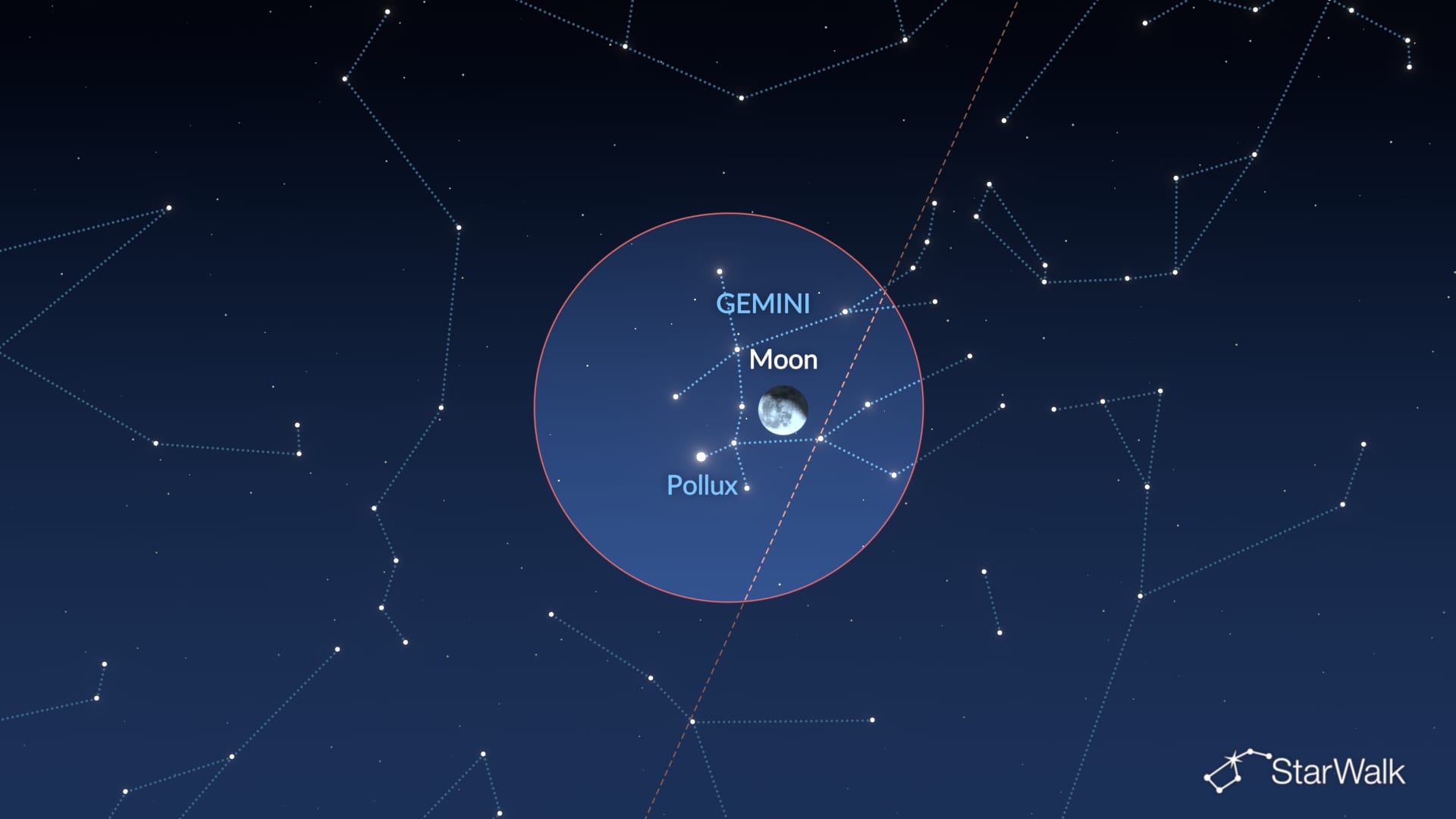
The waning gibbous Moon will shine near Pollux, the brightest star in Gemini. In the Americas, the pair is best seen before dawn on October 31, while in Europe, Africa, and much of Asia, the better view comes late on October 31 and into the early hours of November 1. The pair will be easy to spot with the naked eye. Pollux is bright enough to remain visible beside the Moon, while binoculars can give you a closer look at the pairing.
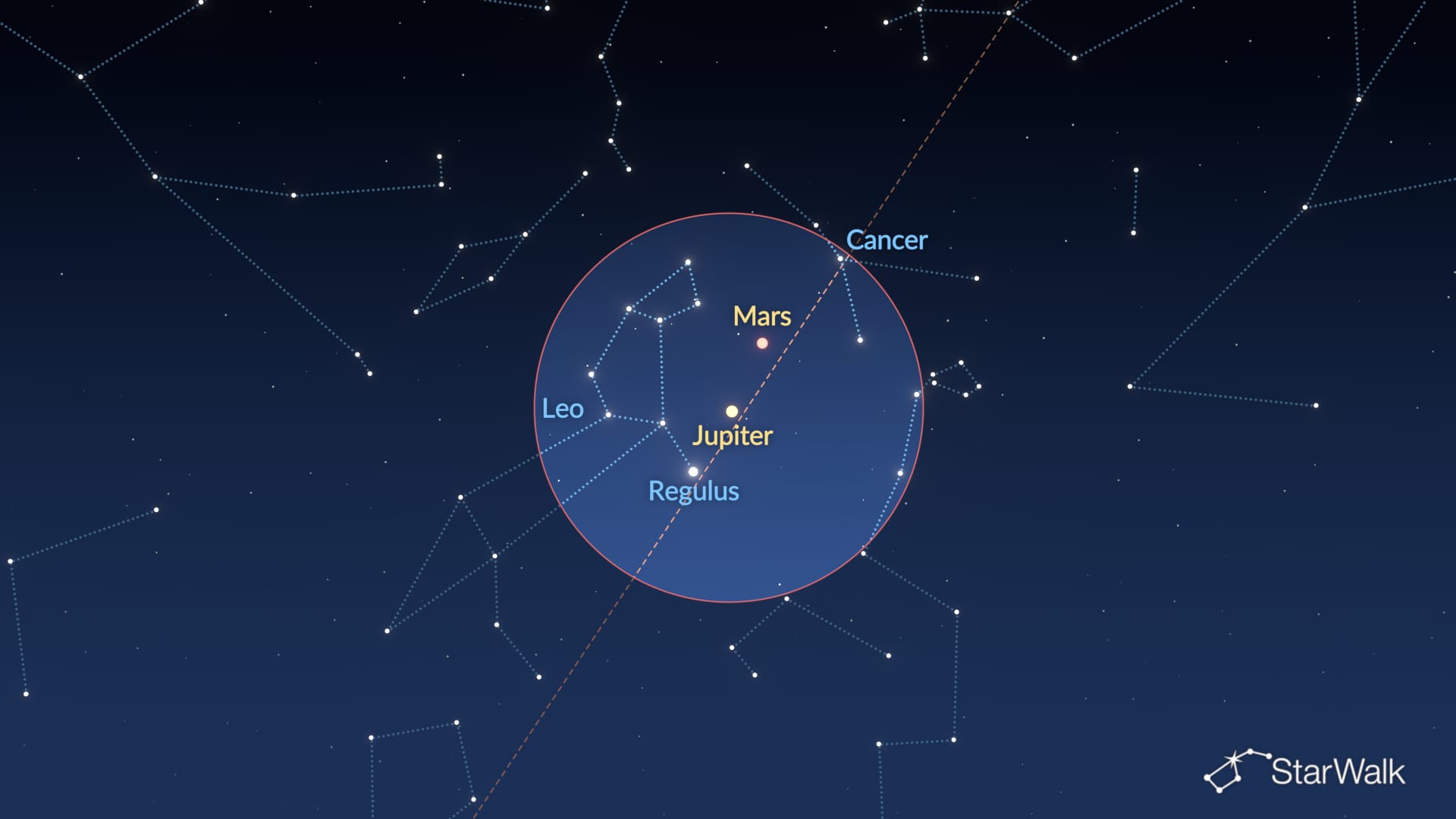
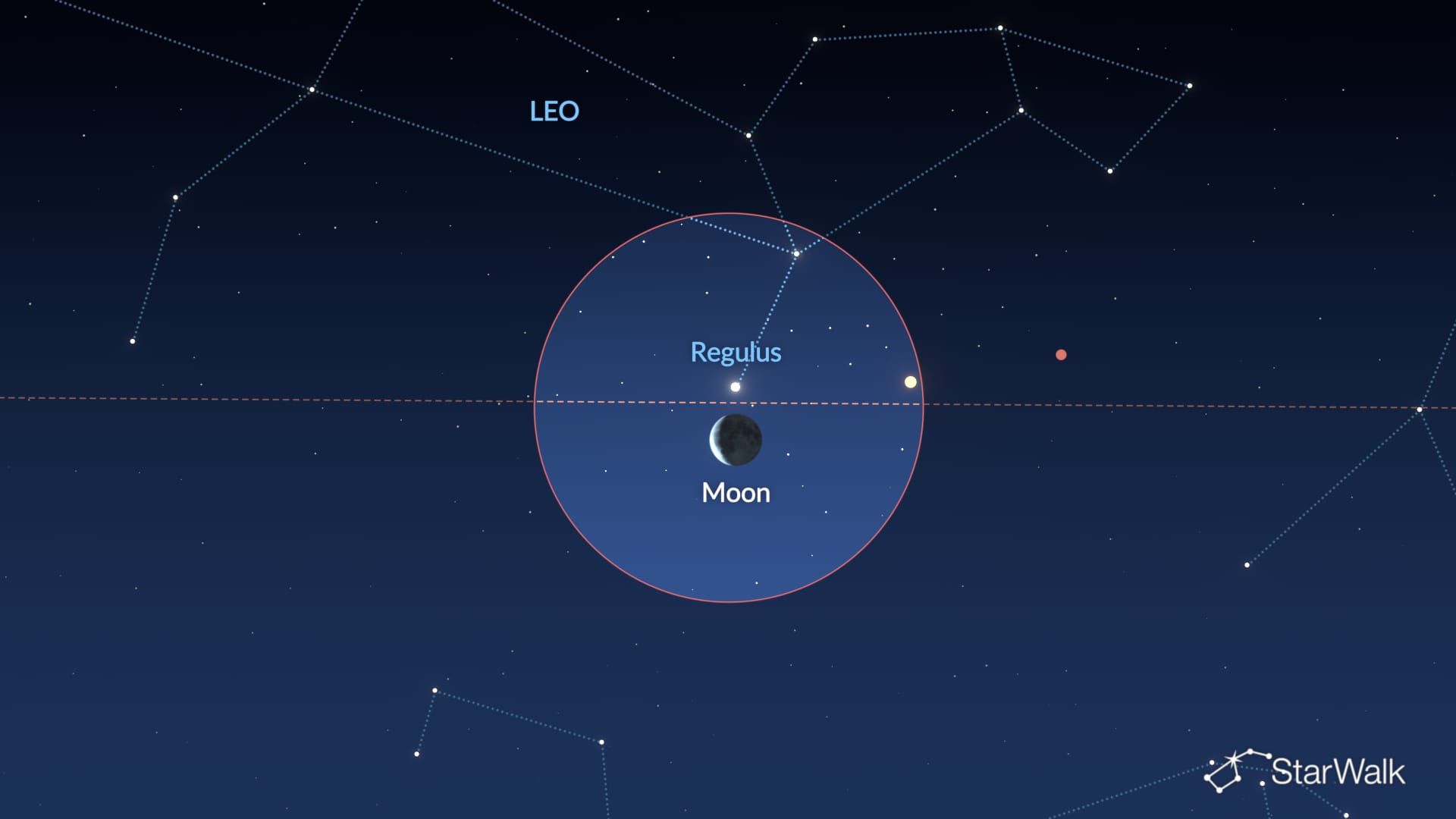
Late at night and before dawn, look east for Mars, Jupiter, and Regulus forming an almost evenly spaced line across Cancer and Leo. Mars and Jupiter will be about 5.6° apart, with another 5.8° separating Jupiter from Regulus, making the entire lineup roughly 11.4° long — a little more than the width of your fist held at arm’s length. All three objects are bright enough to see with the naked eye, and the lineup will look best in the hours before morning twilight, when the trio climbs higher in the sky.
The Last Quarter Moon will pass extremely close to the Beehive Cluster in Cancer, with Mars shining nearby. At around 23:20 GMT on November 1, the Moon will sit between Mars and M44, forming an almost straight line across about 11° of the sky. Mars is easy to see with the naked eye, while binoculars will help reveal the Beehive Cluster through the Moon’s glare.
From parts of East and Southeast Asia and the Pacific, the Moon will move directly across the Beehive Cluster and hide some of its stars one by one. This is a lovely binocular or small-telescope event, as faint cluster stars will disappear behind the lunar disk and then reappear later on the other side. Japan, Taiwan, Hong Kong, and the Philippines are especially well placed to watch the occultation under a dark sky.
November 2–3: Moon near Mars, Jupiter, and Regulus
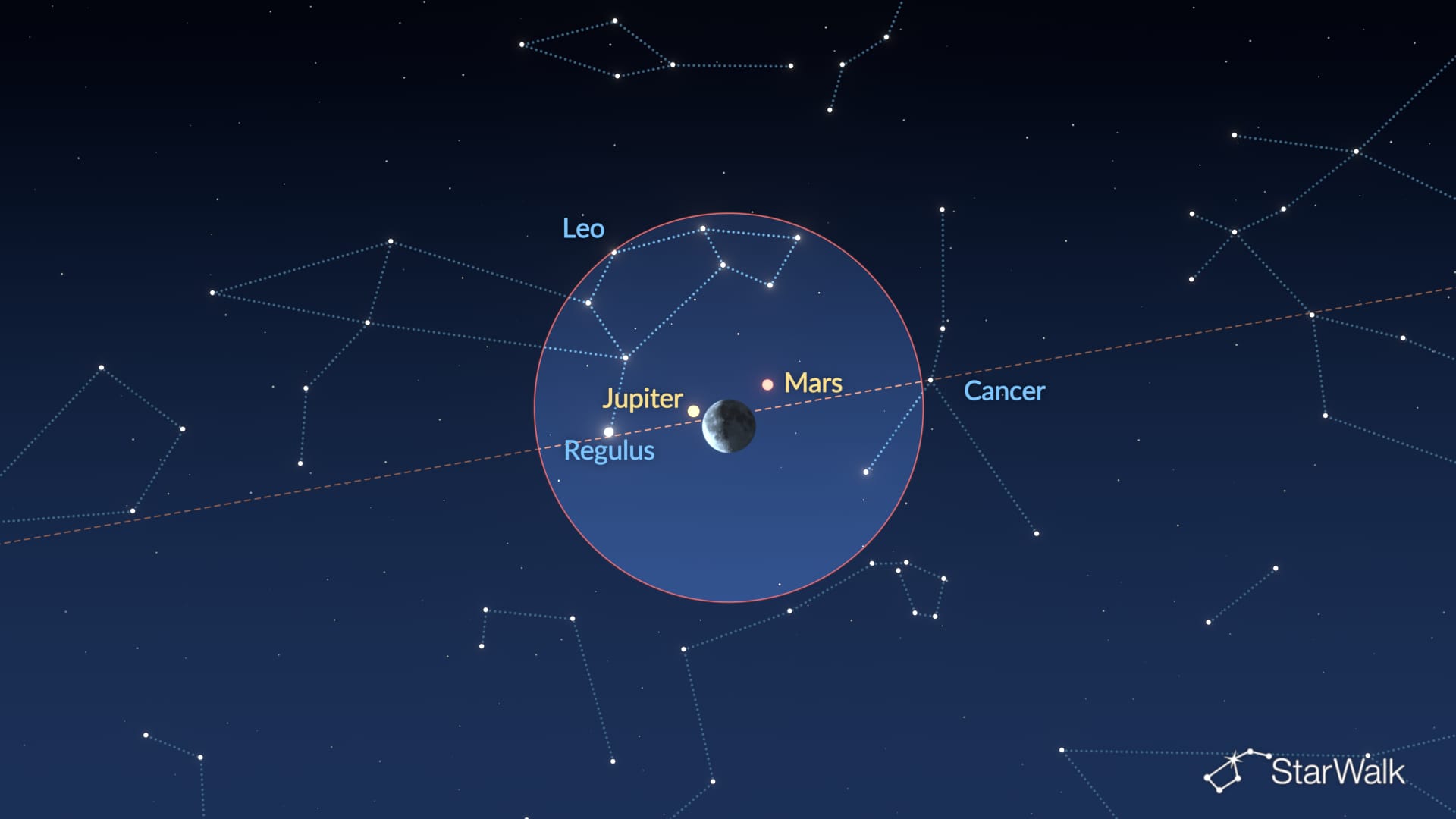
During the night of November 2–3, the waning crescent Moon will move through Leo, passing from Mars toward brilliant Jupiter and Regulus. Mars, Jupiter, and Regulus form a noticeable line, and the Moon will briefly join that pattern as it travels eastward. All four objects are easy to see with the naked eye; the best view comes in the second half of the night and before dawn.
Before dawn on November 2, observers in parts of French Polynesia, the Cook Islands, and Pitcairn will see the Moon slide in front of Mars and temporarily hide the Red Planet from the sky. Because Mars is much fainter than Jupiter, the event will look more subtle, but the close pairing itself is worth watching even outside the occultation path. Binoculars or a small telescope will help you follow Mars right up to the lunar edge.
On the morning of November 3 (local time), the Moon will pass in front of brilliant Jupiter for observers in parts of Australia, Indonesia, India, and Malaysia. The event occurs before dawn in southern India and parts of Southeast Asia, but in daylight in Australia, where a small telescope will be especially helpful. Through a telescope, Jupiter’s disk will gradually disappear behind the Moon and then reappear on the opposite side. Elsewhere, the two objects will still form a very tight and eye-catching pairing.
November 3–4: Moon near Regulus; Moon, Jupiter, and Algieba form a triangle
The waning crescent Moon will first pass very close to Regulus, the bright blue-white star marking the heart of Leo. The pair will make an easy naked-eye sight where they are visible, with binoculars giving an even better view of the tight encounter.
From parts of South America, the close encounter becomes an occultation: the Moon will pass directly in front of Regulus and briefly hide the star from view. Binoculars or a small telescope will make the sudden disappearance and reappearance especially striking.
As the Moon continues eastward through Leo, it will move on from Regulus and form a compact triangle with brilliant Jupiter and Algieba. From Australia and much of East Asia, the three objects can appear close to a near-equilateral arrangement. Jupiter and the Moon are obvious to the naked eye, and Algieba is bright enough to complete the pattern without optical aid.
November 4–5: Southern Taurids meteor shower main peak
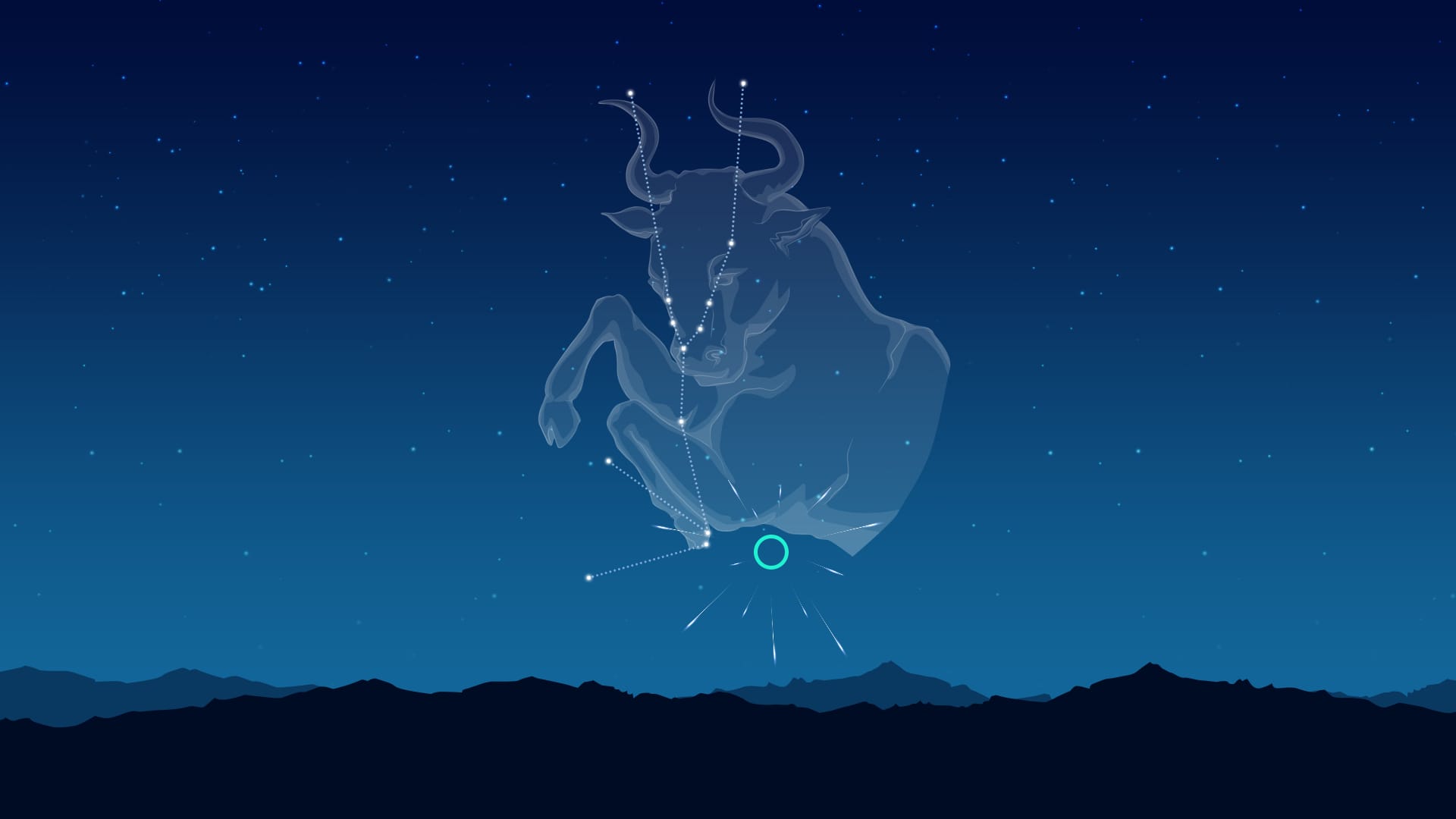
The Southern Taurids reach their main peak on the night of November 4–5, offering a better chance to catch their slow, bright meteors and occasional fireballs. The shower is not very active — expect around 5–10 meteors per hour under ideal conditions — but the waning crescent Moon will cause little interference this year. The radiant lies in Taurus, and the shower can be seen from both hemispheres; no equipment is needed.
There is almost always something worth seeing in the night sky. Use this guide to choose the best events for tonight and the coming days, but remember that visibility depends on your location, local time, weather, and light pollution. For the most accurate view, check the exact position of each object in the Sky Tonight app before you go outside.