Monoceros Constellation: Stars and Facts & How to Find the Unicorn

Monoceros is a faint constellation that many people miss — even though it sits in a sky region packed with famous stars. The good news is that Monoceros isn’t hard to find once you know the trick: use bright neighbors — Orion, Sirius, Procyon — to “frame” the area. In this guide, you’ll learn where the Monoceros constellation is, when it’s best to see it, and the best deep-sky objects hiding inside it. If you want the fastest route, simply open Star Walk 2, search “Monoceros,” and follow the on-screen pointer to the exact spot in your sky.
Contents
- Quick Facts About the Monoceros Constellation
- When to see Monoceros
- Where is Monoceros in the sky
- Notable Stars in Monoceros
- Best Deep-Sky Objects in Monoceros
- History: Monoceros Isn’t an Ancient Constellation
- F.A.Q: Monoceros Constellation
- What is special about the constellation Monoceros: Bottom line
Quick Facts About the Monoceros Constellation
Monoceros (latinized from the Greek word for “unicorn”) is a faint constellation on the celestial equator. It covers 482 square degrees, making it the 35th largest of the 88 modern constellations.
- Name: Monoceros
- Abbreviation: Mon
- Best visibility: around 9 PM in February
- Size: 482 sq. deg. (35th largest constellation)
- Right ascension: 7h 10m 12s
- Declination: −1° 18' 00"
- Visible between: 75°N and 85°S
- Brightest star: Beta Monocerotis (combined mag 3.7)
- Main stars: 4
- Messier DSO: 1
- Meteor showers: 2
- Bordering constellations: Canis Major, Canis Minor, Gemini, Hydra, Lepus, Orion, Puppis
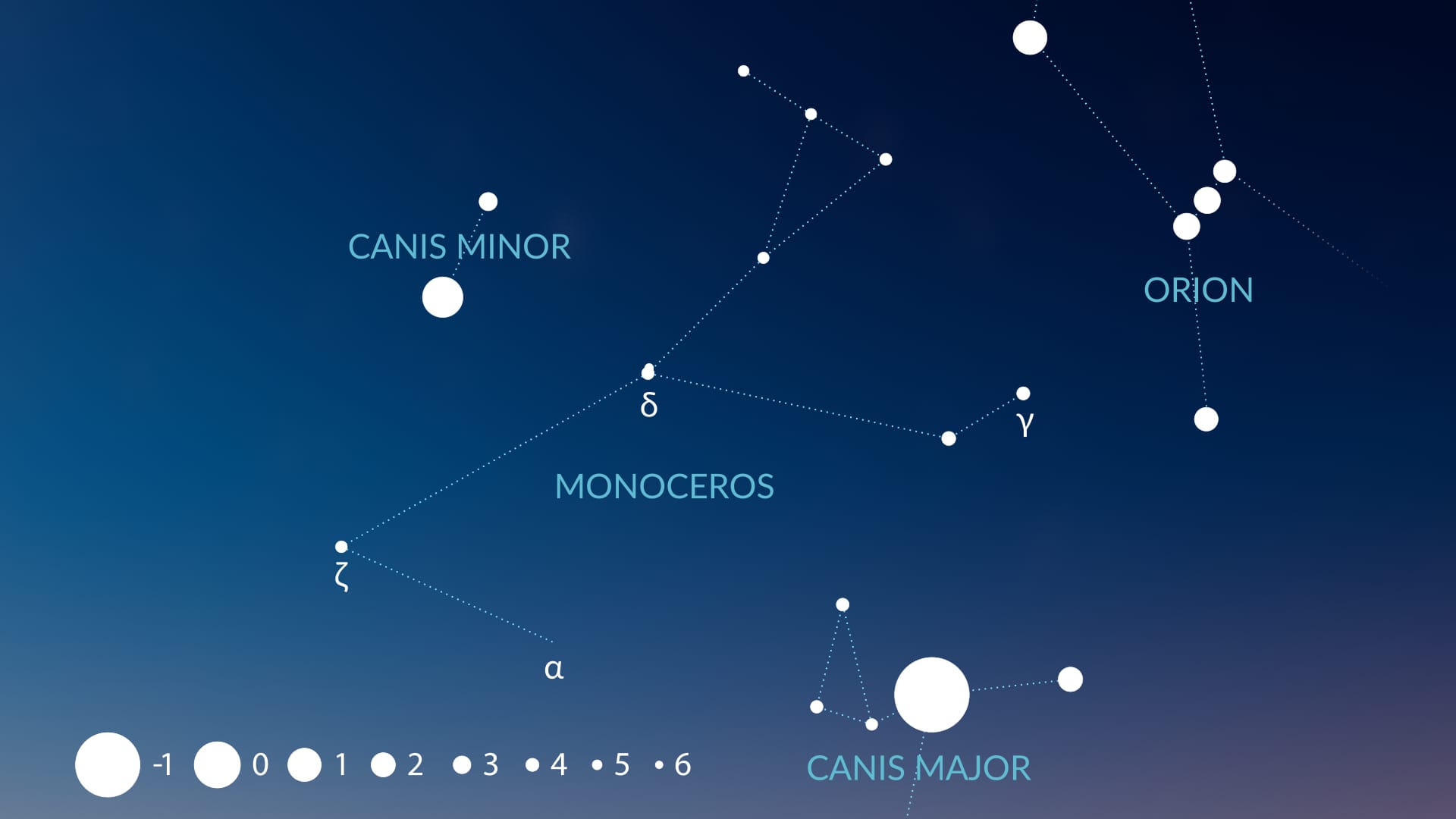
Note: Monoceros isn’t an easy target. It contains only three stars brighter than 4th magnitude, so the “unicorn shape” can vanish under city lights. That’s okay — not all the constellations have to shine bright like Orion. Binoculars help a lot, and a stargazing app makes it much easier to confirm you’re looking at the right pattern.
When to see Monoceros
Monoceros is a winter constellation for the Northern Hemisphere and a summer constellation for the Southern Hemisphere. It is best viewed in February. A practical rule: if Orion is high enough to look impressive and Sirius is shining like a headlamp, Monoceros is nearby and worth hunting.
Best time of night
For mid-northern locations, the best time to see Monoceros is around 9 p.m. local time in February, when the constellation is well above the horizon. In the southern latitudes, you’ll need to wait a bit longer until the Sun fully sets.
Want the exact best time tonight for your location? Star Walk 2 can show when Monoceros is highest in your sky, so you can time it perfectly.
Where is Monoceros in the sky
Monoceros sits on the celestial equator, hiding in a busy part of the winter sky. The easiest way to describe its location is that it lies between several bright and famous constellations. It is bordered by Orion to the west, Canis Major to the south, Gemini to the north, and Hydra to the east. Canis Minor, Lepus, and Puppis are also nearby.
How to find Monoceros
To find Monoceros, start with what’s easiest to find — Sirius, the brightest star in the night sky, and Orion’s Belt (three bright stars in a row). Together with Procyon, the brightest star in Canis Minor, they help you "frame" the region where Monoceros is hiding.
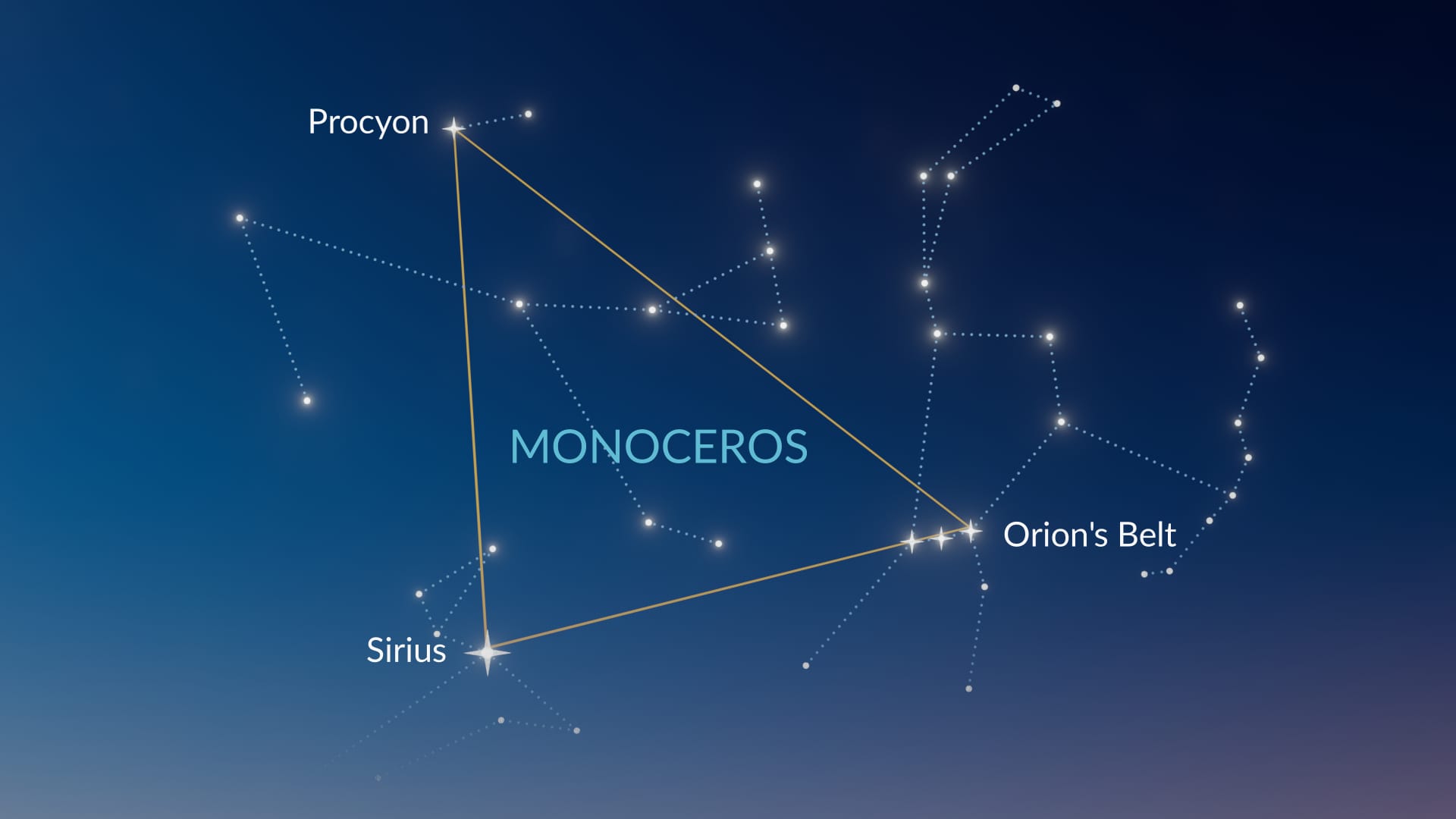
Here is a step-by-step guide on finding Monoceros:
- Find Sirius low in the southern sky. It’s a bright dot that appears to twinkle and change colors, so you won’t mistake it for anything else.
- Locate Orion’s Belt a bit to the west — the three stars shining in a row.
- Find Procyon slightly to the east to complete the bright-star “frame.”
- Now look in the region inside this triangle — this is where Monoceros lies.
- Use binoculars to bring out fainter stars. Once you see more stars, the constellation’s pattern becomes much easier to trace.
Want to locate the constellation in seconds? Open Star Walk 2, search “Monoceros,” and follow the white arrow to the constellation’s exact position in your skies.
This way is especially useful in cities, where Monoceros can be nearly invisible without guidance.
Monoceros and the Winter Triangle
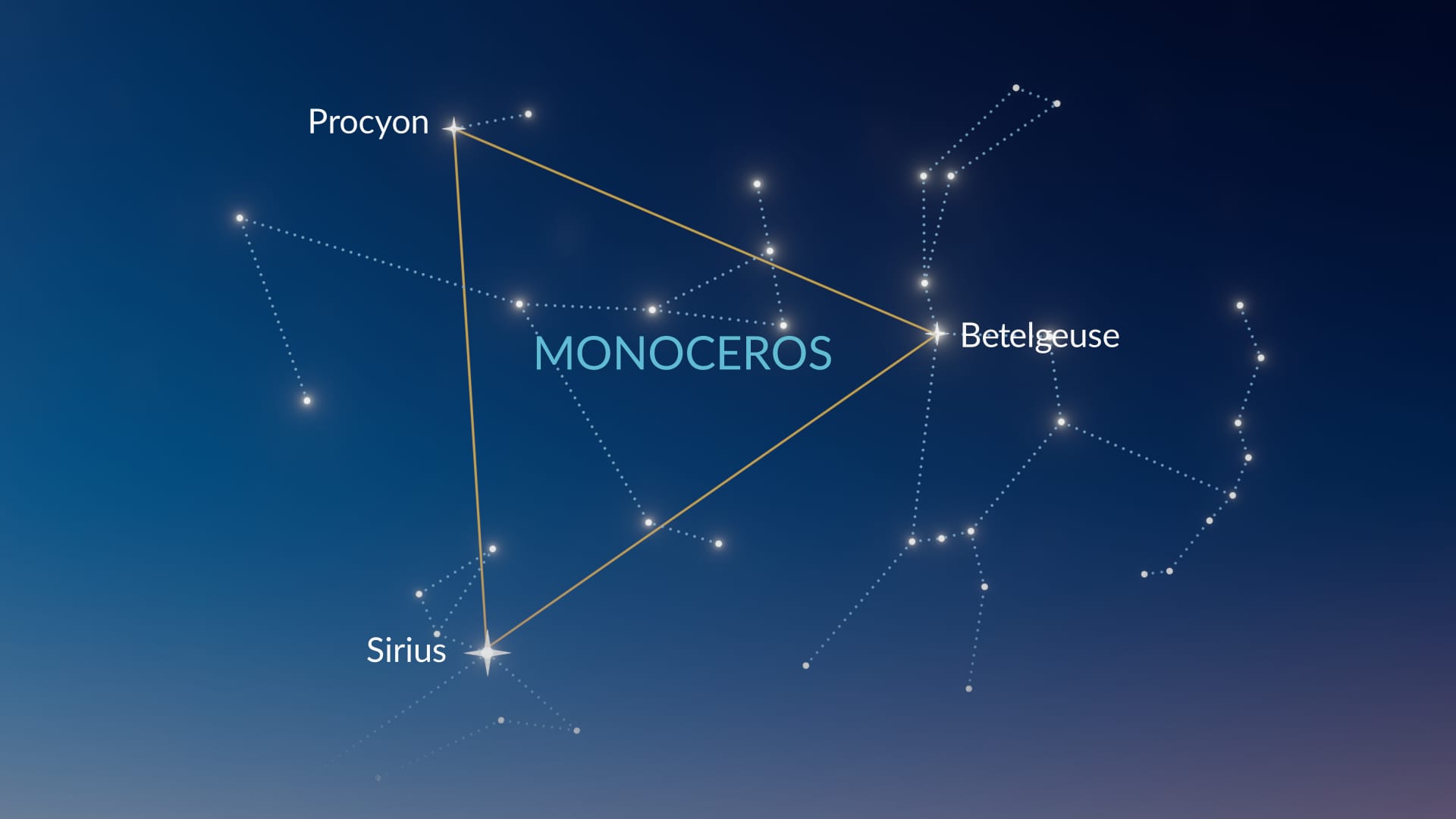
You might have heard of the Winter Triangle — a prominent asterism made up of three bright stars — Sirius, Betelgeuse, and Procyon. On winter evenings in the Northern Hemisphere, the Winter Triangle rises above the southern horizon, revealing the elusive constellation Monoceros.
Face south and look for the twinkling star Sirius. Then, scan the sky for the orange star Betelgeuse, which is located above and a bit to the west of Sirius. Add Procyon to complete the triangle, and you've found the Winter Triangle!
The Winter Triangle, by the way, is part of a much larger asterism: the Winter Hexagon, also known as the Winter Circle. Consisting of six stars from six different constellations, the apparent distance between the two opposite vertices of the hexagon covers about one-third of the sky.
Notable Stars in Monoceros
Monoceros doesn’t have a single star that dominates the way Sirius dominates Canis Major — but it has some excellent targets once you’re in the right area.
Beta Monocerotis (β Mon): a telescope showpiece

Beta Monocerotis, the brightest star in the constellation Monoceros, is a famous triple-star system. To the naked eye, it looks like one star, but even a small telescope can reveal the three stars forming a triangle. The stars have visual magnitudes of 4.7, 5.2, and 6.1, while the combined magnitude is about 3.76.
If you’re new to telescopes, β Mon is a perfect “reward target”: it’s not too hard to find, and it feels instantly special. William Herschel observed Beta Monocerotis in 1781 and called it “one of the most beautiful sights in the heavens.”
Alpha Monocerotis (α Mon) and Gamma Monocerotis (γ Mon): relatively bright anchors
Alpha Monocerotis (mag 3.93) and Gamma Monocerotis (mag 3.98) are among the easiest naked-eye stars in the constellation and make good starting points for star-hopping to deep-sky objects.
There are no other stars brighter than magnitude 4 in the constellation Monoceros.
Best Deep-Sky Objects in Monoceros
The real treasure of the Monoceros constellation is the deep-sky objects within it, so it's a great gateway constellation. Once you've located Monoceros, it's worth pulling out your telescope to observe some of the beautiful deep-sky objects within the constellation.
Here's one more useful fact to help you understand what you'll see in this region: Monoceros lies along the plane of the Milky Way. Interstellar dust can hide background galaxies, so this area is better suited for observing nebulae and clusters than for hunting galaxies.
Rosette Nebula (Caldwell 49): the headline target
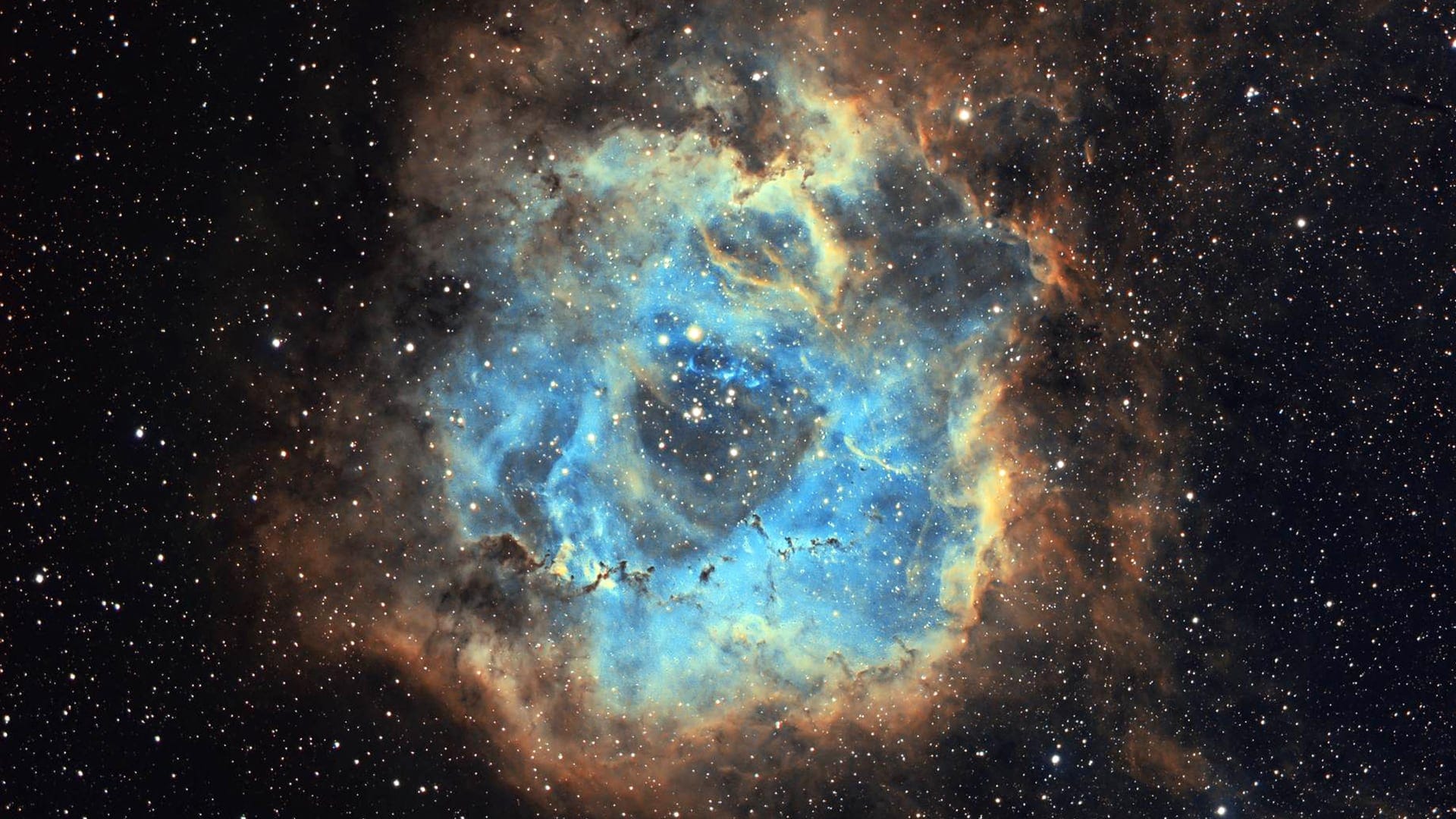

The Rosette Nebula is one of the most famous nebulae in the winter sky and a top reason to seek out Monoceros. It’s large, photogenic, and paired with a bright open cluster in its center.
The Rosette Nebula is a large diffuse nebula with a magnitude of 9.0, and it’s about 4,900 light-years away. It also contains dark “Bok globules” — dense dust pockets where stars can form.
What you’ll see:
- Binoculars: the central star cluster is often easier to see than the nebula itself.
- Telescope: the cluster is prominent; nebula detail improves under dark skies and with filters.
- Astrophotography: wide-field images reveal the full “rosette” structure.
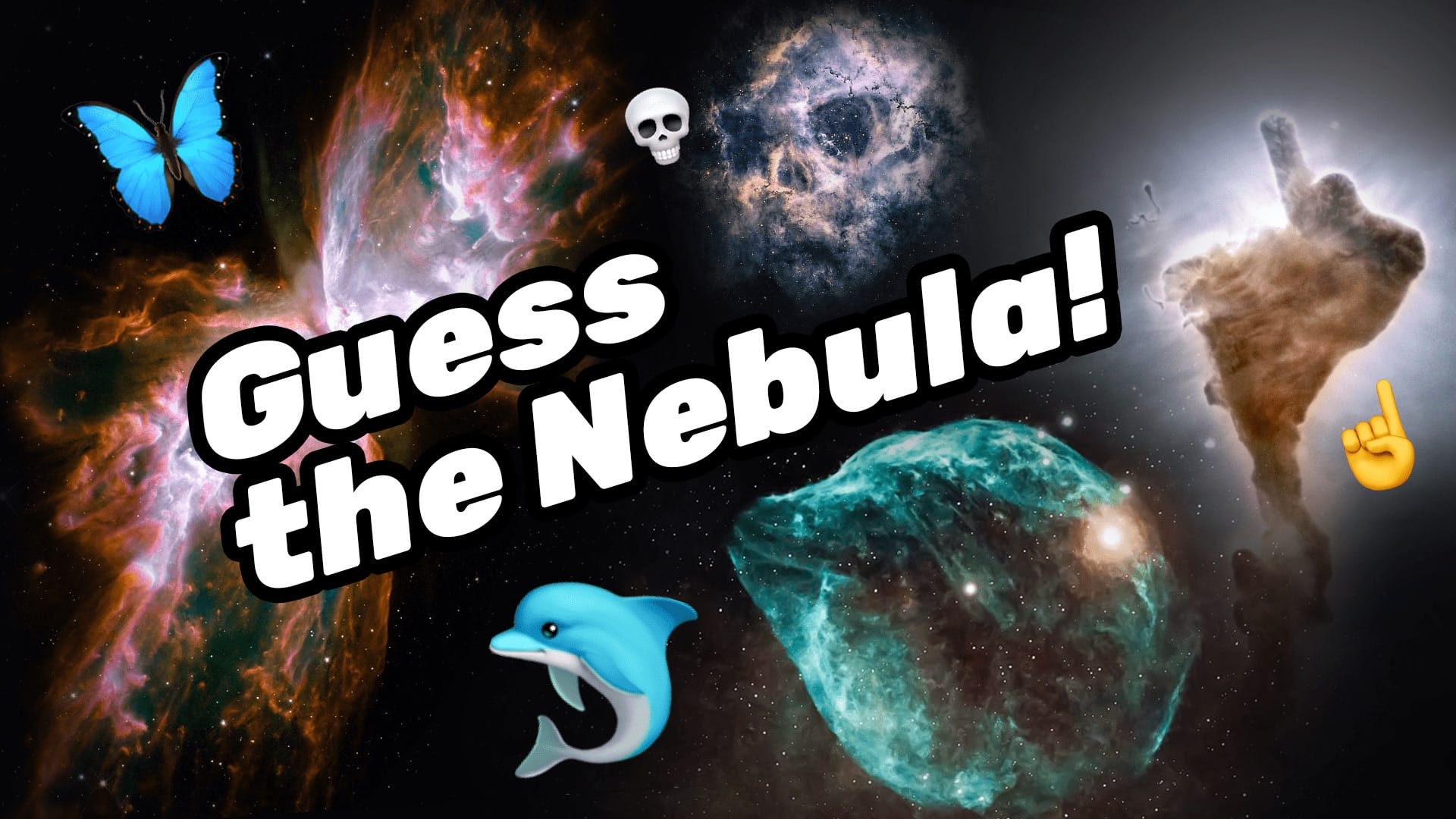
The nebula's shape resembles a human skull, so it is sometimes referred to as the "Skull Nebula". But don’t confuse it with NGC 246, which is also famously known as the “Skull Nebula”. Nebulae often take bizarre forms that result in equally bizarre names. Can you guess the name of a nebula just by looking at its picture? Take our quiz to find out!
Messier 50 (M50): the Heart-Shaped Cluster
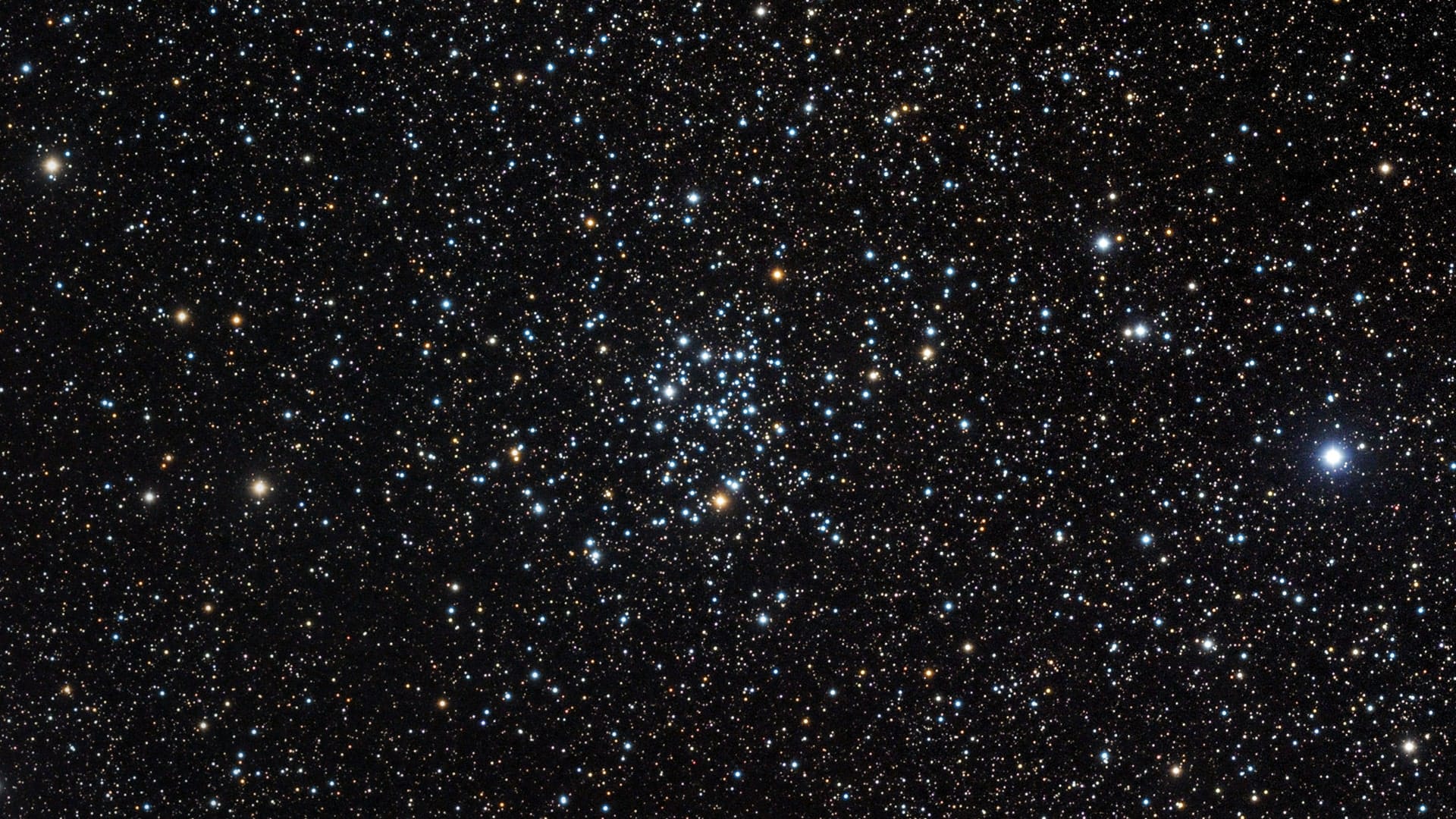
M50 is the only Messier object in the constellation Monoceros. This bright open star cluster is a rewarding target because it breaks up into many individual stars even in a small telescope.
M50 lies approximately 3,200 light-years away near the border of Monoceros and Canis Major. It covers an area about half the size of the full moon and is often described as heart-shaped.
With a 150-mm telescope at around 100× magnification, you can typically resolve 70 or more stars out of its approximately 600 total members. The view becomes even richer in larger instruments: a 250 mm telescope can reveal about 150 stars across an area about 25 arcminutes wide. Many of the stars are blue-white, which adds to the cluster’s charm.
NGC 2264: the Christmas Tree Cluster and the Cone Nebula
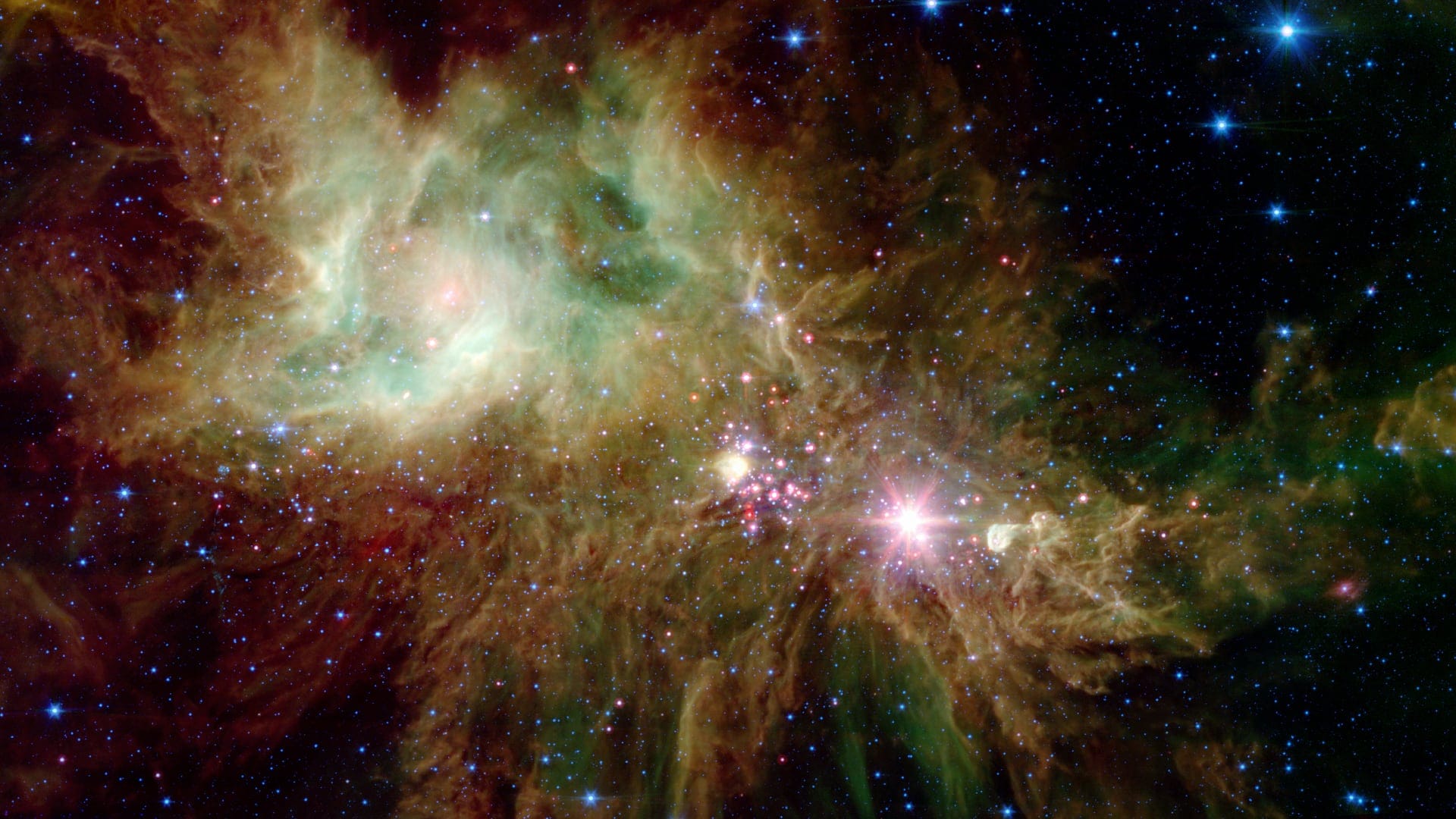
NGC 2264 is a catalog name that’s used for a whole region in Monoceros. The region is best known for two features: the Christmas Tree Cluster, a group of young stars, and the Cone Nebula, a nearby cloud of gas and dust. You may also hear about the Snowflake Cluster and the Fox Fur Nebula in the same area. However, they are not always listed as part of NGC 2264 in astronomical catalogs.
This complex lies about 2,300 light-years from Earth. Because it is relatively close and spread out across a large area of the sky, astronomers have studied it in great detail.
With binoculars or a small telescope, you can see the brighter stars of the cluster and a faint, misty glow from the surrounding nebula. Dark, moonless winter nights are especially ideal for viewing it. Just keep in mind: NGC 2264 is much easier to capture in photos than to see clearly with optics.
NGC 2261: Hubble's Variable Nebula
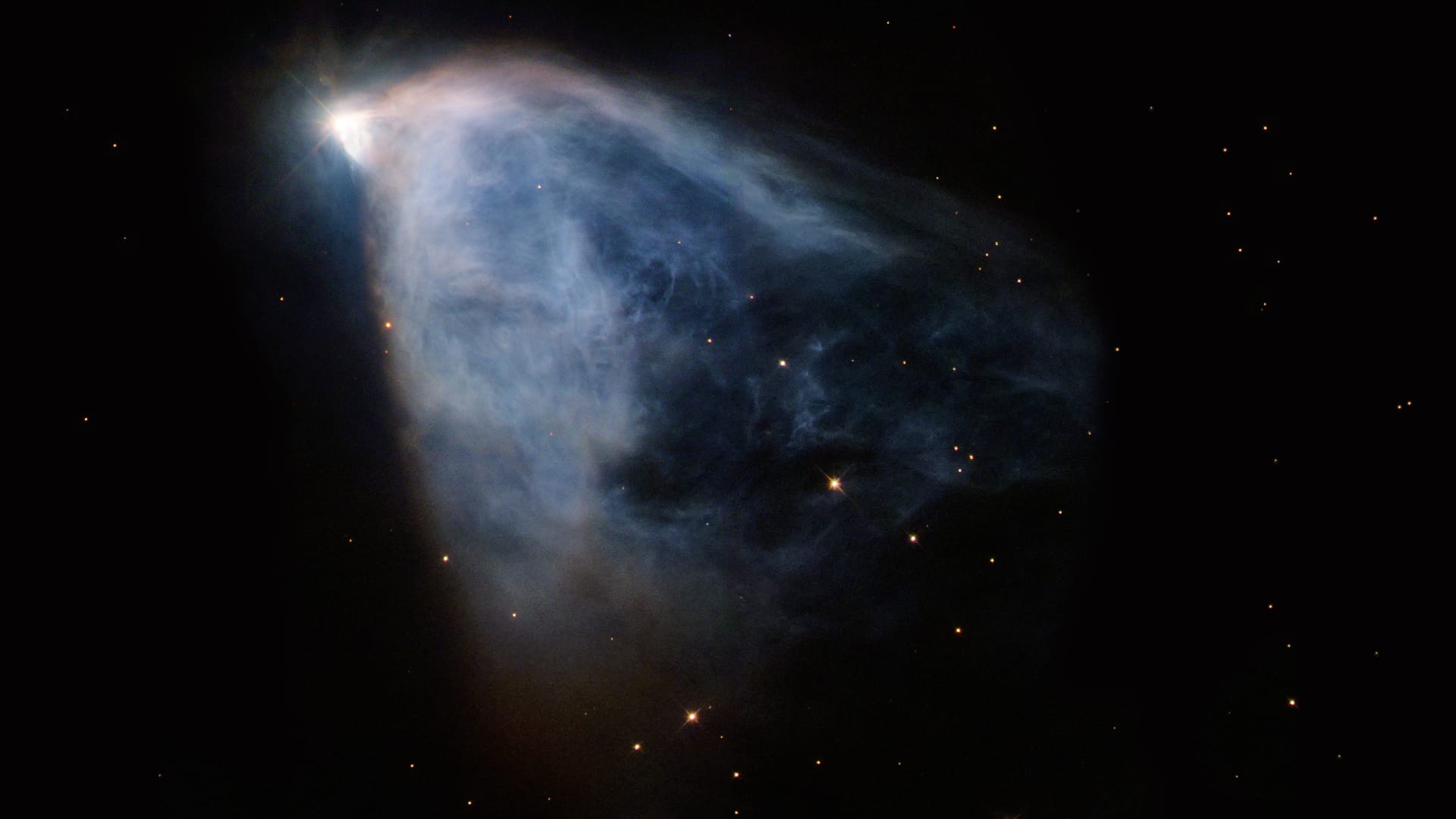
NGC 2261 is a small variable nebula in Monoceros. It’s also known as Hubble’s Variable Nebula and Caldwell 46. It’s named after Edwin P. Hubble, who was among the first astronomers to study it.
The nebula shines because it reflects light from a young star called R Monocerotis. The star itself is hard to see directly, but its light illuminates the surrounding dust, creating the nebula’s distinctive fan-like glow. Over time, the nebula can change in brightness and appearance, which is why it’s called “variable.”
NGC 2261 is sometimes nicknamed the Santa Claus Nebula: its shape can look like a long-bearded figure in a heavy winter coat, and it’s conveniently placed for winter observing around the holiday season.
At about magnitude 9, it’s a challenging target. You’ll usually need a telescope with an aperture of around 8 inches (200 mm) or larger to spot it clearly.
History: Monoceros Isn’t an Ancient Constellation
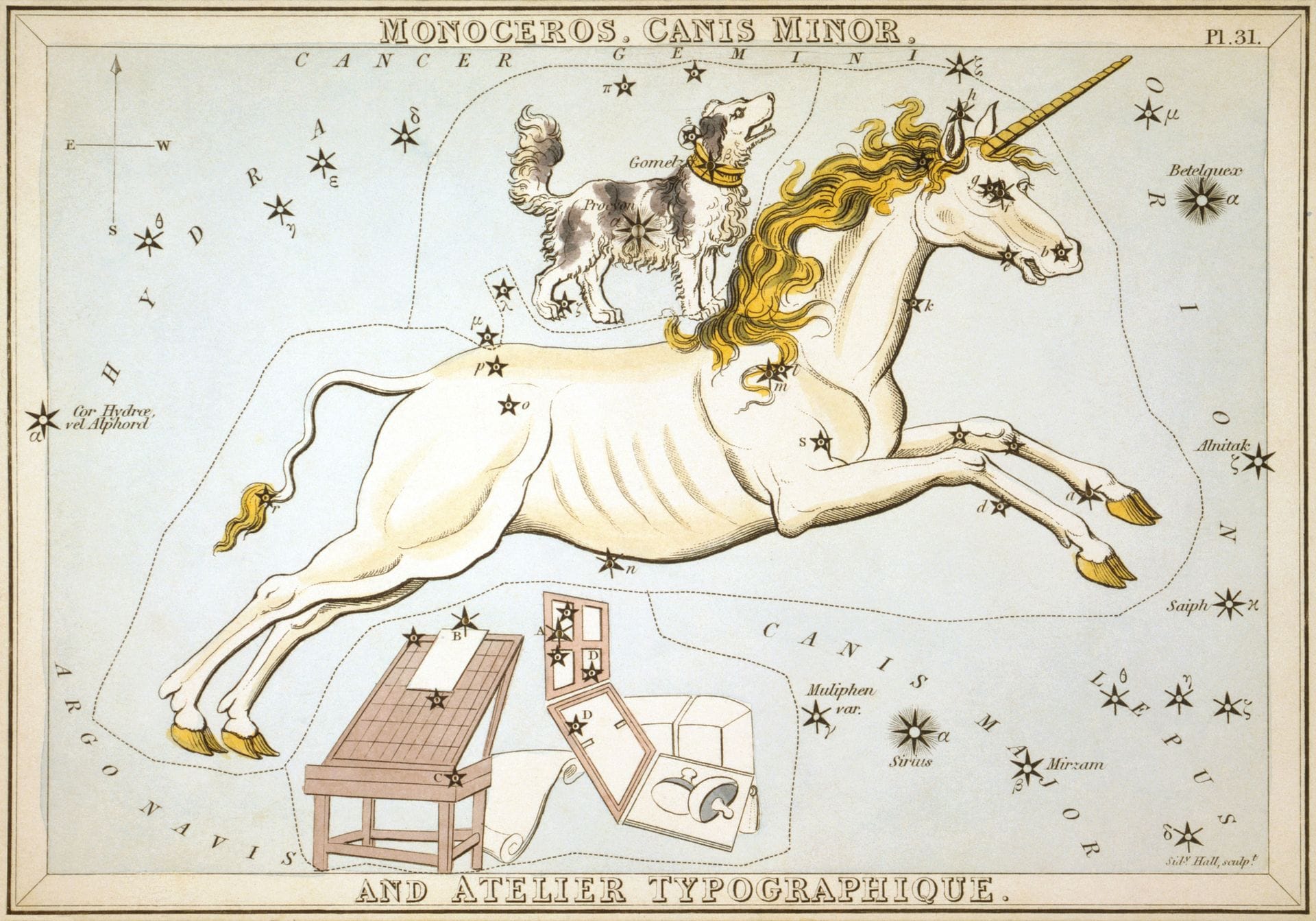
Monoceros is a fairly modern constellation that doesn’t have a traditional Greek myth behind it. That’s not too surprising: most of its stars are faint, and the “unicorn” outline is easier to spot on detailed star maps than with the naked eye.
The constellation was introduced by the Dutch cartographer Petrus Plancius around 1612. Later, Jakob Bartsch included it on a star chart in 1624, using the name “Unicornu”.
Brown University’s “Unicorn Found” project mentions that some authors have suggested there may have been older, horse-like figures in Persian sources. However, there’s no solid proof that those refer specifically to Monoceros.
And Monoceros isn’t the only horse-themed figure in the sky. Many other star patterns and objects have inspired horse-related names in different eras and cultures. Check our dedicated article to see where horses appear across the night sky.

F.A.Q: Monoceros Constellation
Is Monoceros visible to the naked eye?
Yes, Monoceros is visible to the naked eye, but it’s rather faint. In bright urban skies, you may not see a clear pattern. Binoculars or an astronomical app overlay help a lot.
Where is Monoceros in the sky?
The constellation Monoceros lies on the celestial equator between several bright neighbors: Orion to the west, Canis Major to the south, Gemini to the north, and Hydra to the east. Monoceros is also bordered by Canis Minor, Lepus, and Puppis.
When is the best time to see Monoceros?
The best time to see Monoceros is in late winter in the Northern Hemisphere, and February is commonly cited as the best month for evening viewing.
What is the best deep-sky object in Monoceros?
The most famous target is the Rosette Nebula, which is highly favored by astrophotographers for its rose-like shape. For visual observers, it is best seen under dark skies with binoculars or a wide-field telescope.
What is the meaning of the Monoceros constellation?
Monoceros is Greek for “unicorn,” and the constellation is commonly depicted as a unicorn on star charts.
What is special about the constellation Monoceros: Bottom line
Monoceros is special because it’s a “hidden” constellation that looks unimpressive at first — yet it sits in one of the richest deep-sky regions of the winter sky. It has no bright landmark star, so many people overlook it, but once you locate it (using Orion, Sirius, and Procyon as guides), it rewards you with outstanding binocular and telescope targets: the Rosette Nebula, the Christmas Tree Cluster region, Hubble's Variable Nebula, which changes over time, and the easily visible Messier open cluster M50. In other words, Monoceros isn't special for its star pattern; it's special for what's hidden deep inside.
Want to find it fast (and jump straight to its best targets)? Download Star Walk 2, search “Monoceros,” and follow the white arrow to the constellation.
Happy Stargazing!