Gemini Constellation: How to Find the Twins in the Night Sky
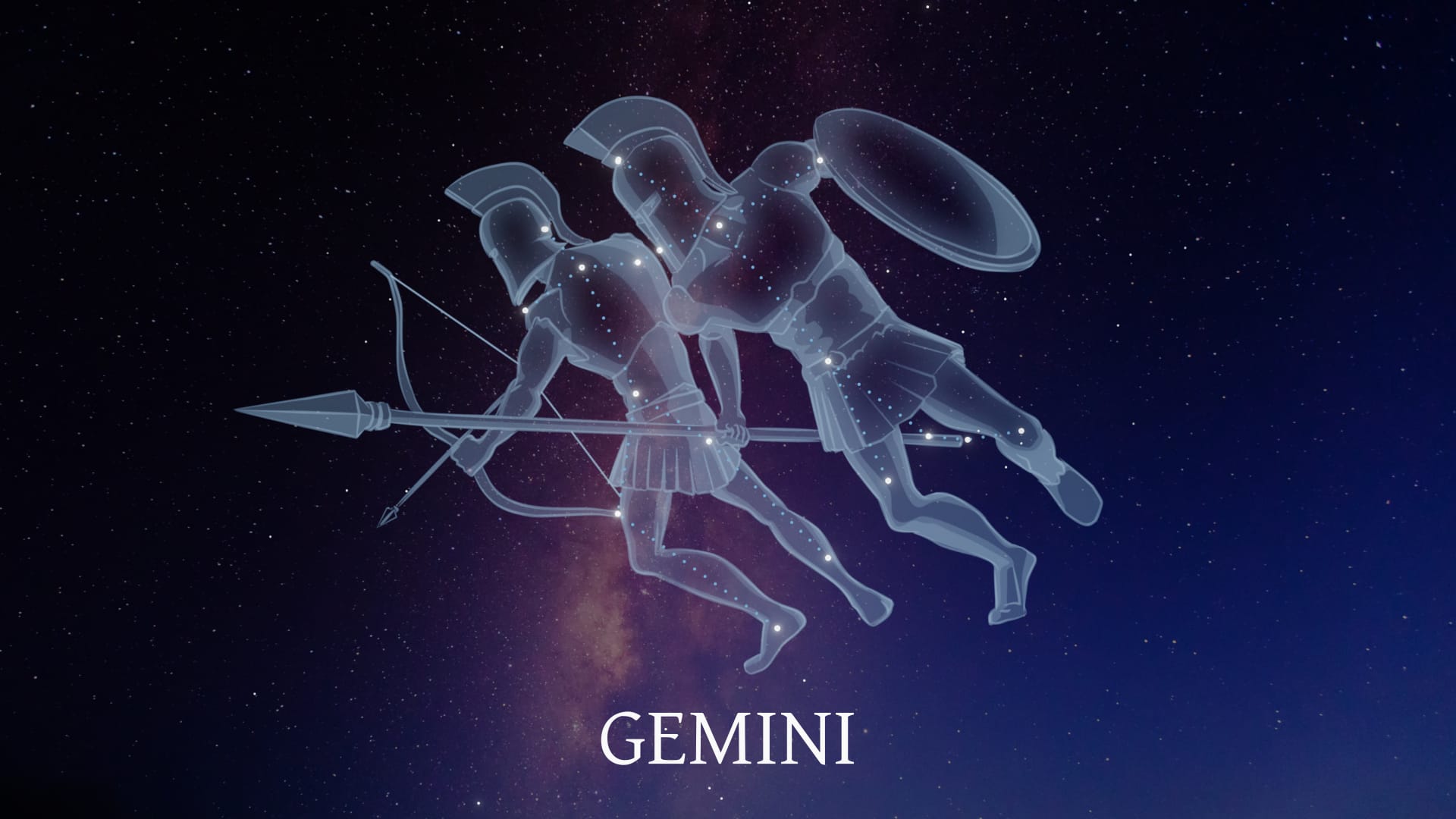
Gemini is one of the easiest zodiac constellations to recognize once you know where to look. Marked by two bright stars, Castor and Pollux, it represents the twin brothers from Greek mythology. In this article, you’ll learn where to find Gemini, when to see it, and the stories associated with it. And if you want to locate Gemini instantly from your city, open the Star Walk 2 app: it will show you the constellation on an interactive sky map and help you identify Castor, Pollux, and other nearby objects in real time.
Contents
- Gemini Constellation Facts
- June 2026: Gemini Hosts Two Bright Guests, Venus and Jupiter Shine After Sunset
- Where Is Gemini in the Sky?
- How to Find Gemini: Other Methods
- When Can You See the Constellation Gemini?
- Main Stars in Gemini: Castor and Pollux
- Messier 35: The Bright Star Cluster in Gemini
- Gemini Constellation Myth
- Gemini Zodiac Constellation vs Gemini Zodiac Sign
- Gemini FAQ
- Constellation Gemini: Key Facts
Gemini Constellation Facts
- Name: Gemini
- Abbreviation: Gem
- Size: 514 sq. deg.
- Right ascension: 7h
- Declination: +20°
- Visible between: 90°N – 55°S
- Brightest star: Pollux
- Messier objects: M35
- Bordering constellations: Lynx, Auriga, Taurus, Orion, Monoceros, Canis Minor, Cancer
Gemini is one of the 88 officially recognized constellations and one of the 12 zodiac constellations. The constellation is best known for its two bright stars, Castor and Pollux, which mark the heads of the Twins. These stars make Gemini easier to find than many other zodiac constellations.
The constellation Gemini is located along the ecliptic — the apparent path of the Sun across the sky throughout the year. Because of this, the Moon and planets sometimes pass through Gemini, making it a great skywatching target.
June 2026: Gemini Hosts Two Bright Guests, Venus and Jupiter Shine After Sunset
In early June, Gemini gets an extra sparkle as Venus and Jupiter — the brightest dots in the sky — show up together in the constellation after sunset. No telescope needed: just turn toward the sunset and enjoy the view! To find out when and where exactly to see the event in your city, check the event details in the free Star Walk 2 app’s calendar. Then try snapping a picture of this bright little sky meet-up!
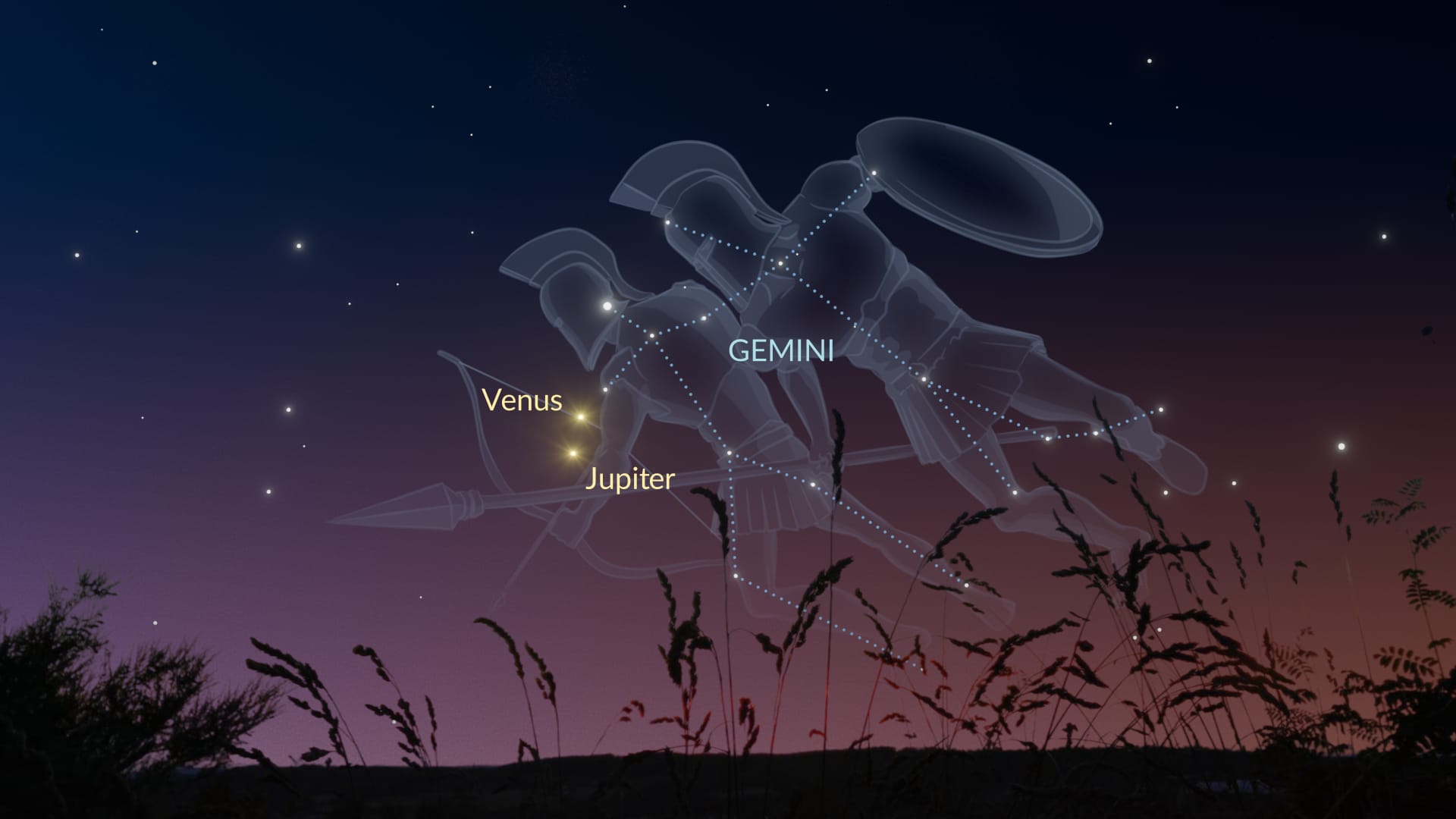
Read more: Conjunction of Planets 2026: When to See Planets Close Together in the Sky
Where Is Gemini in the Sky?
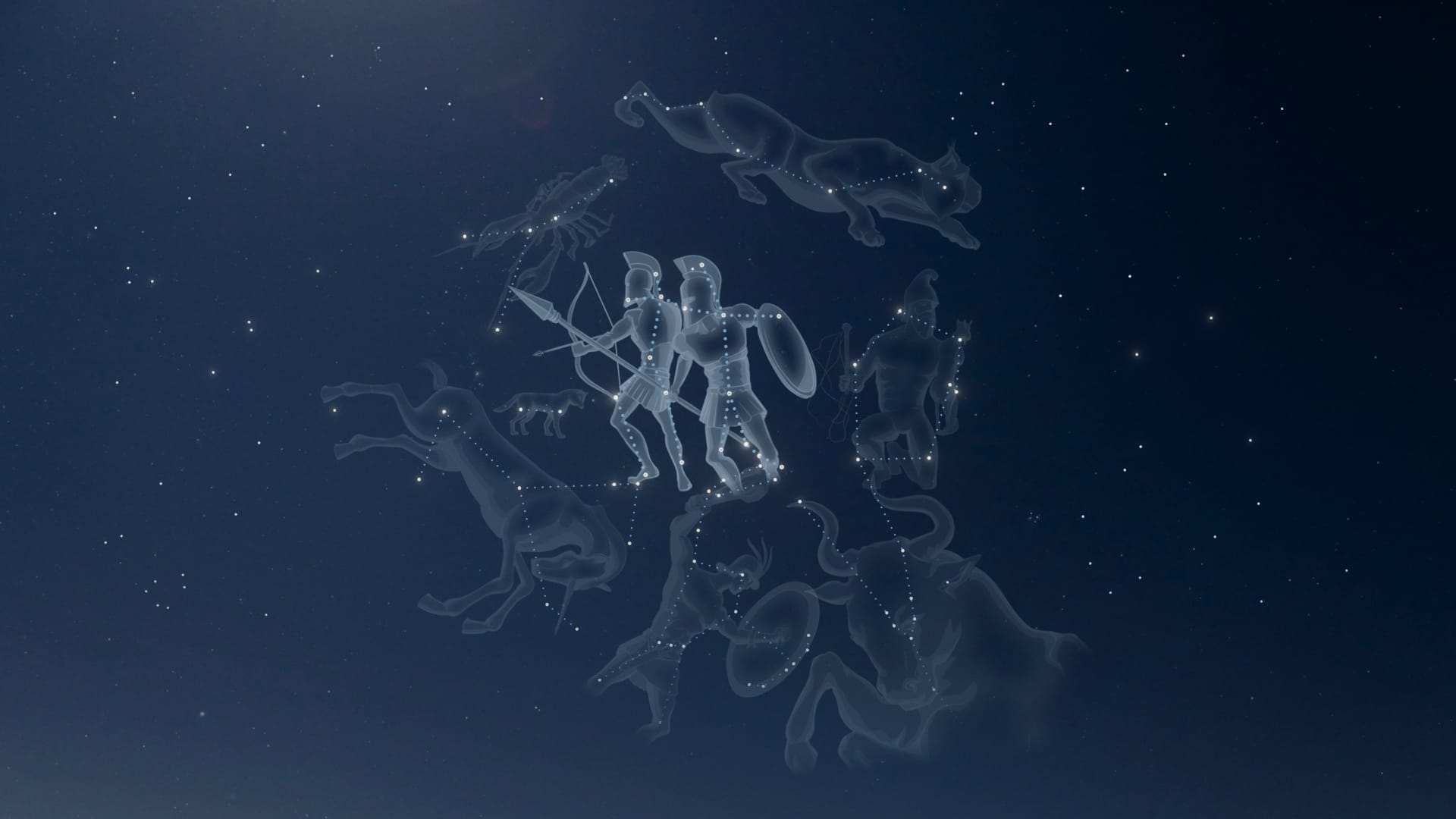
The Gemini constellation is located in the northern celestial hemisphere, which means it’s best seen from the northern latitudes. It sits near several well-known constellations, including Orion, Taurus, Cancer, Auriga, and Canis Minor.
For observers in the Northern Hemisphere, Gemini appears high in the winter evening sky. It slowly moves closer to the western horizon in spring, and disappears from the dark sky by the June solstice. For observers in the Southern Hemisphere, the Gemini constellation appears flipped upside down and is best observed low in the north during the summer months.
How to Find Gemini in the Night Sky – From Orion’s Belt
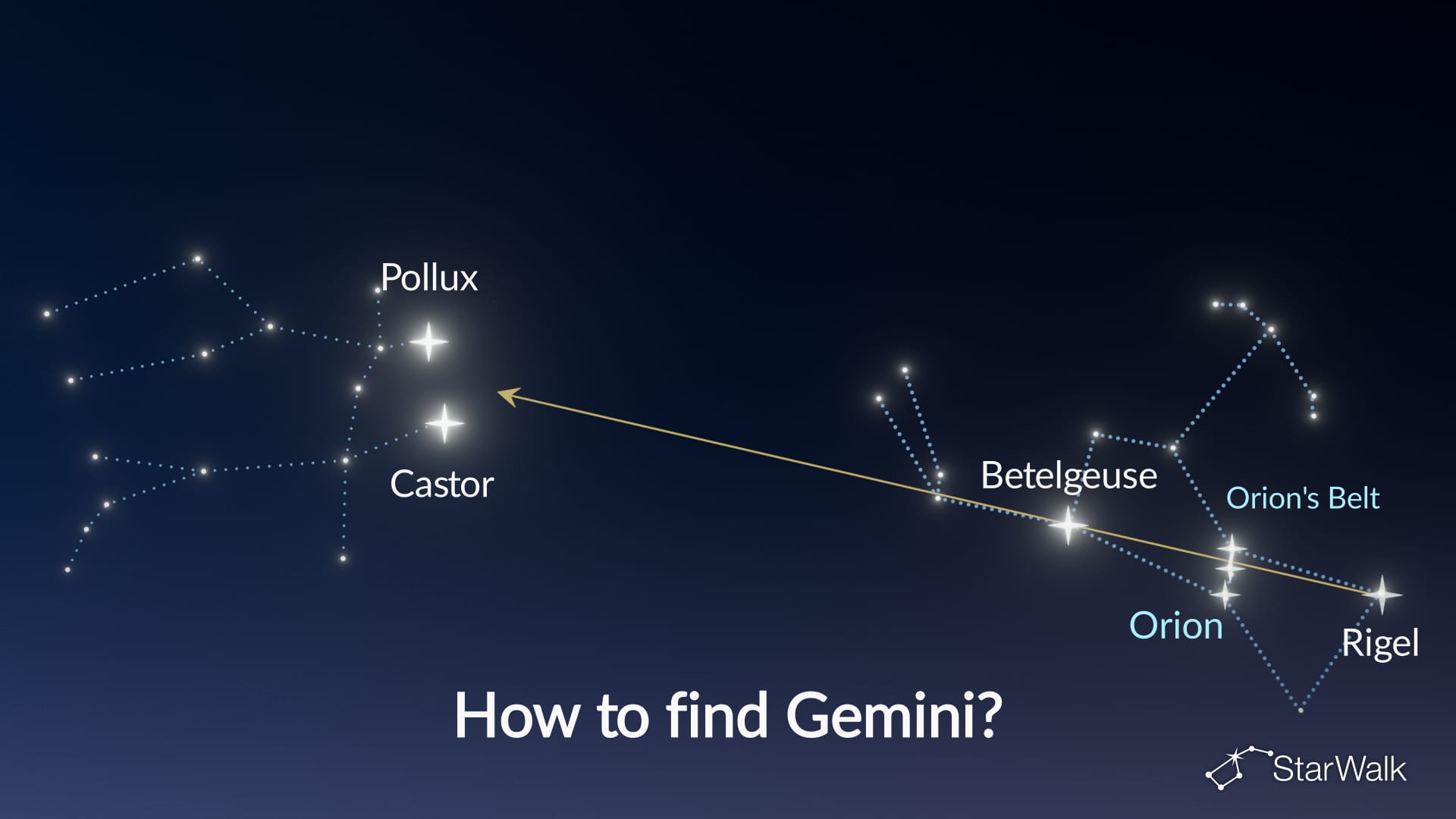
One of the easiest ways to find Gemini is by starhopping from Orion, one of the most recognizable constellations in the sky. Look for Orion’s Belt — three bright stars in a straight line — then locate bright Rigel and reddish Betelgeuse on opposite sides of it. Now imagine a line running from Rigel through Betelgeuse and continue it farther across the sky. It will lead you toward Castor and Pollux. These are the heads of the Twins and the most important landmarks of the constellation Gemini.
Pollux is the brighter of the two and has a warm golden-orange color. Castor appears slightly fainter and whiter. From Castor and Pollux, the rest of Gemini extends away in two loose, nearly parallel lines of stars, forming a simplified stick-figure shape.
How to Find Gemini in the Night Sky – From the Big Dipper
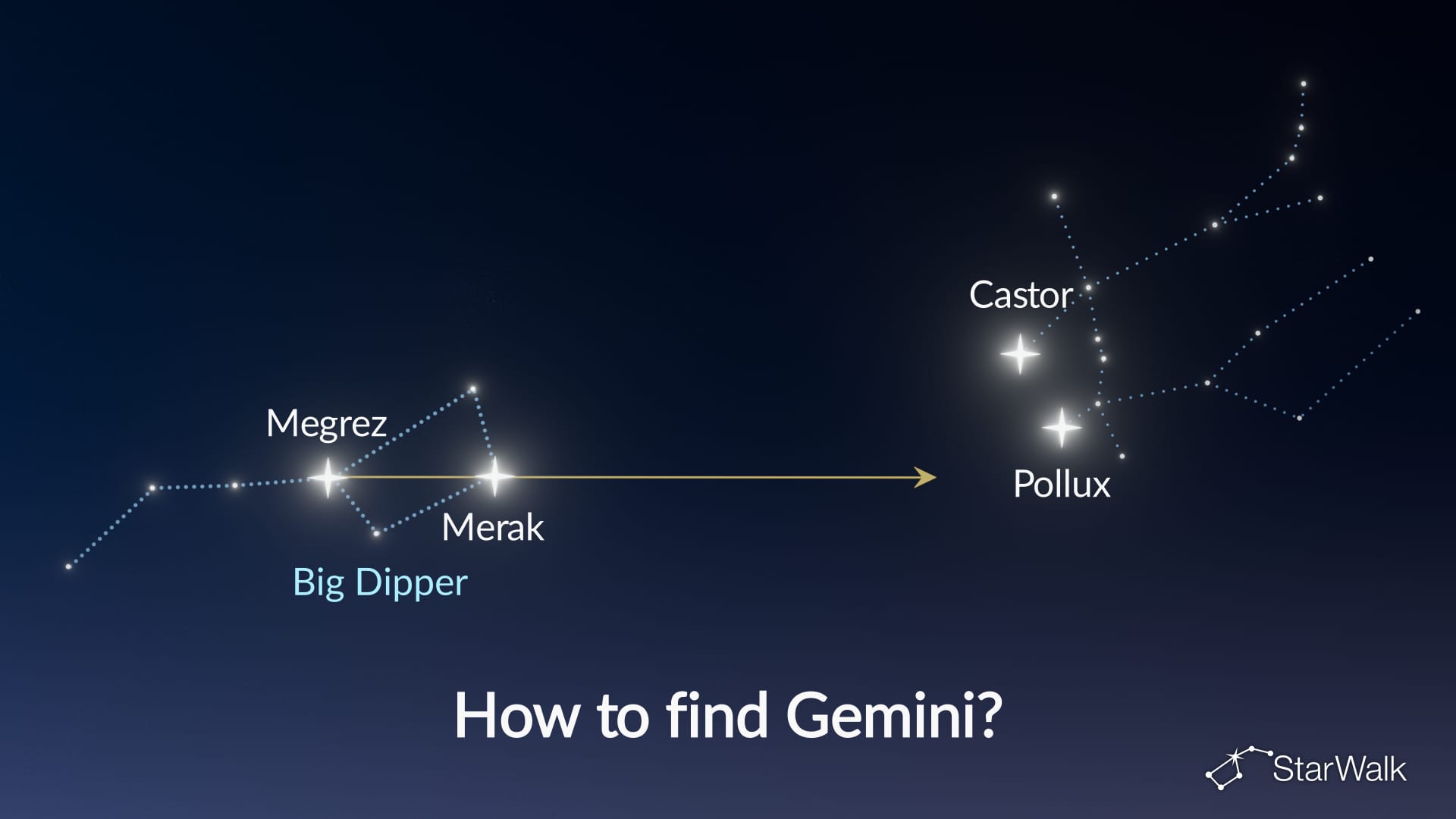
From the Northern Hemisphere, you can also use the Big Dipper asterism in the constellation Ursa Major to find Gemini. Find the bowl of the Big Dipper, then imagine a diagonal line running from Megrez (the star connecting the handle to the bowl) through Merak (the bottom-outer star in the bowl), and extend it away from the handle. Continue that line across the sky, and it will point you toward Castor and Pollux — the two bright stars that mark the heads of the Gemini Twins.
How to Find Gemini: Other Methods
If Orion or the Big Dipper aren’t convenient to locate from your city, try using other bright landmarks. Gemini is part of the Winter Hexagon, so if you already know this large seasonal pattern, look for Pollux between Procyon in Canis Minor and Capella in Auriga. Pollux is the brighter of Gemini’s two “head” stars, and Castor shines close beside it.
You can also start from Canis Minor. Find Procyon, the constellation’s brightest star, then look nearby for the bright pair of Castor and Pollux.
For the fastest method, just open the free Star Walk 2 app and type “Gemini” in the search. The app will show you exactly where the constellation is from your location, help you identify Castor and Pollux, and let you see how Gemini fits among nearby constellations.
When Can You See the Constellation Gemini?
Gemini is best visible in the evening sky from December through March, when it climbs higher in the sky after dark. By the end of May, Gemini gradually shifts toward the western sky after sunset, and by mid-June, it disappears into the Sun’s glare.
As a zodiac constellation, Gemini hosts the Sun from about June 21 to July 20, making it impossible to observe during this period. You may notice that astrologers give different dates, saying the Sun is in the sign Gemini from about May 22 to June 21. Why the mismatch? Check out our infographic on zodiac signs and constellations to see how astronomical constellations and astrological signs differ — and what they still have in common.
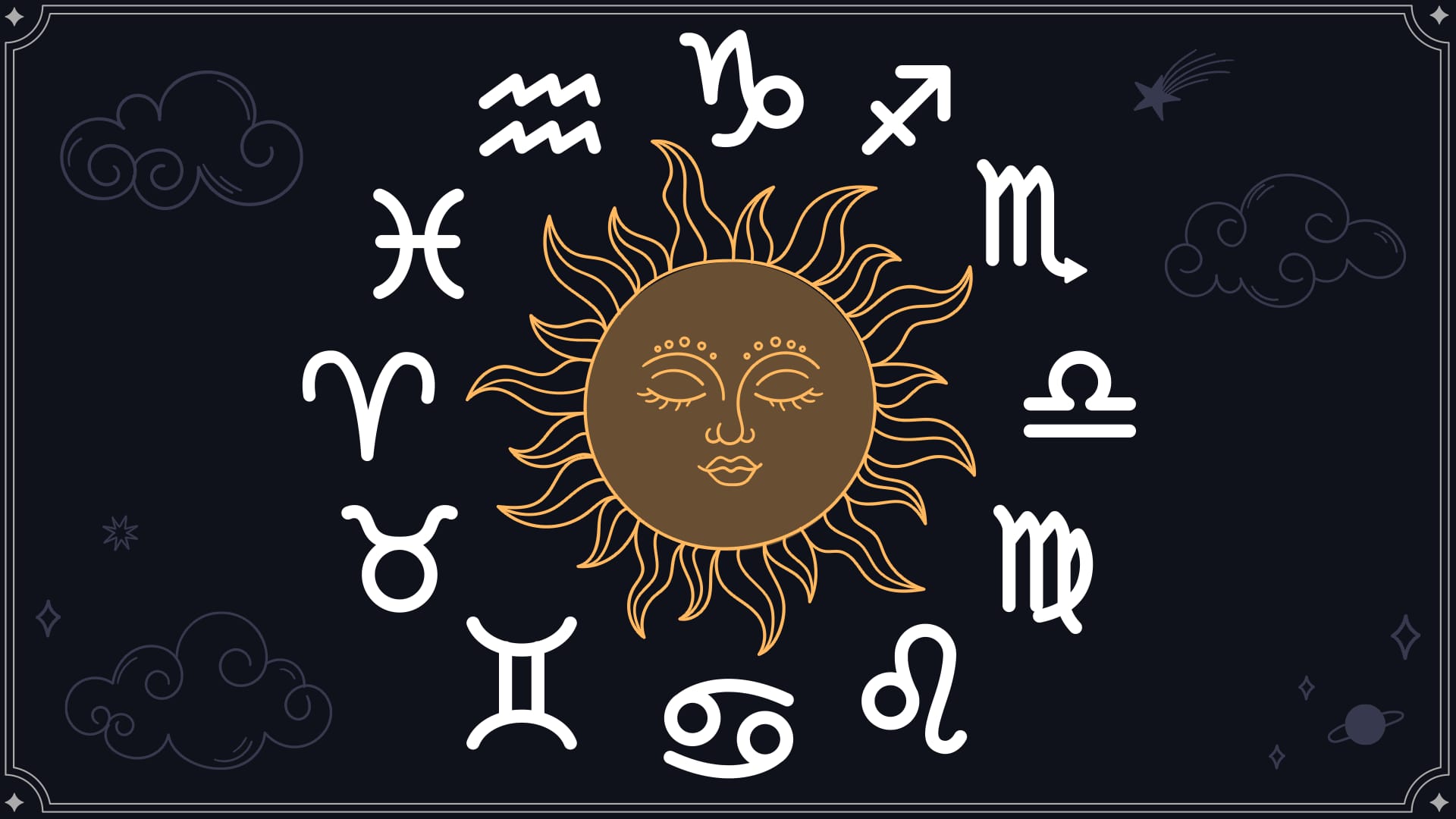
By August, Gemini returns to view in the eastern sky before sunrise. Its exact visibility depends on your latitude, date, local time, light pollution, and how clear your horizon is.
Main Stars in Gemini: Castor and Pollux
The two most famous stars in Gemini are Castor and Pollux. They are often called the “twin stars,” although they are not identical and are not physically related to each other.
Pollux (mag 1.14) is the brightest star in the Gemini constellation. This orange giant appears brighter than Castor from Earth. Due to its brightness and warm color, Pollux is usually easier to identify than Castor. Learn more about this bright twin star in the dedicated article on Pollux.
Castor (mag 1.6) is the second-brightest star in Gemini. Castor may look like a single star to the naked eye, but it is actually a complex system of six stars. Through telescopes, astronomers see three main visual components, and each of them is itself a spectroscopic binary.
Other notable stars in Gemini include Alhena, Wasat, Mebsuta, Mekbuda, and Tejat. These stars form the bodies and feet of the Twins.
Messier 35: The Bright Star Cluster in Gemini
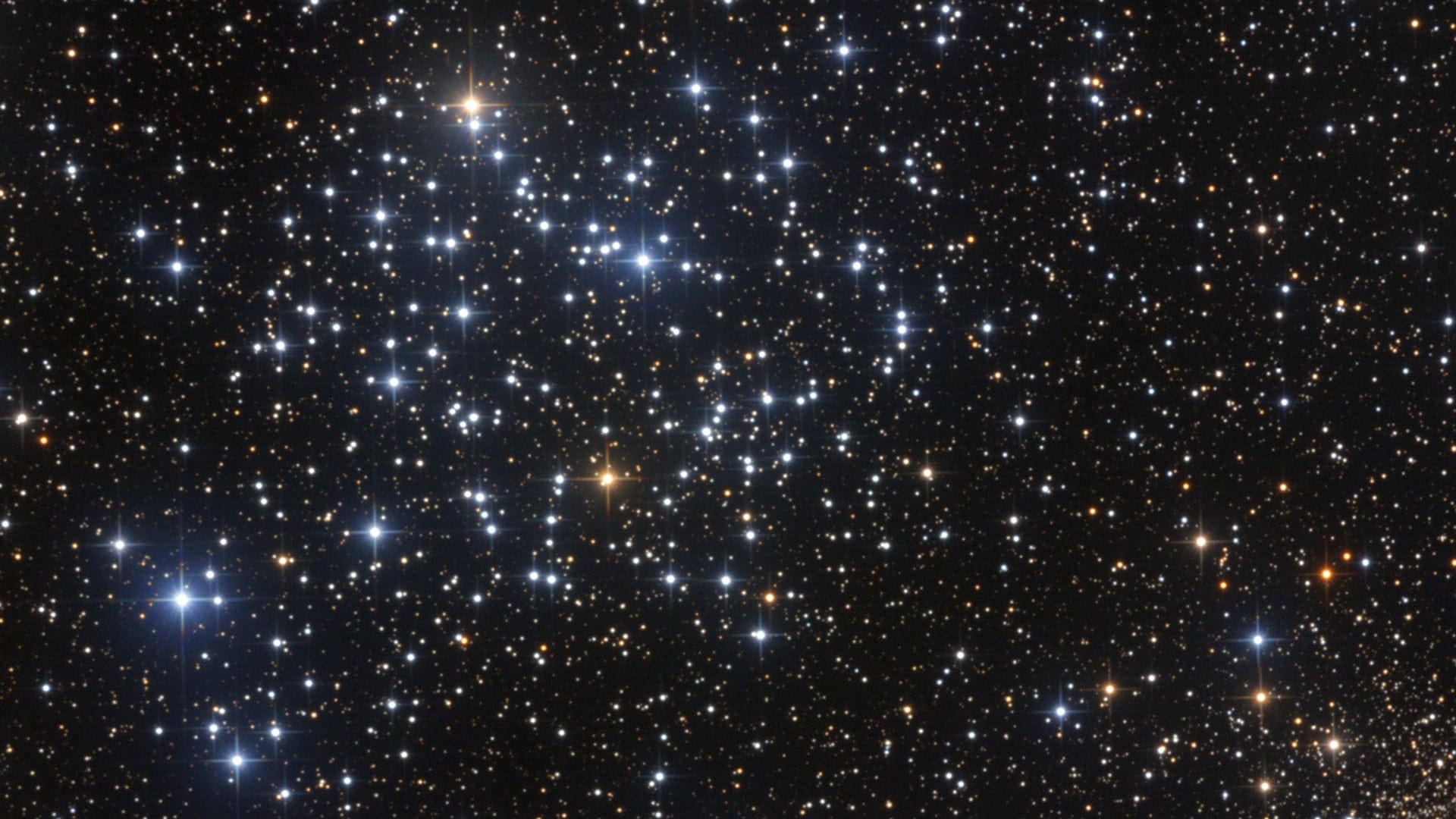
Gemini is not only home to Castor and Pollux — it also contains Messier 35 (M35), a beautiful open star cluster near the feet of the Twins. The cluster lies in the western part of the constellation, close to the star Tejat, and is one of the easiest deep-sky objects to find within the constellation.
Under dark skies, M35 is potentially visible to the naked eye as a small hazy patch. Through binoculars, it reveals individual stars, and a small telescope shows a rich cluster spread across an area of sky almost as wide as the Full Moon. M35 is located about 2,800 light-years from Earth and contains hundreds of stars.
A telescope may also show another cluster nearby: NGC 2158. It appears smaller, dimmer, and more compact than M35 because it is much farther away, located around 11,000 light-years from Earth. Seeing both clusters in the same field of view is a great reminder that objects that look close together in the sky can actually lie at very different distances from us.
Having trouble picturing distances like that? Check out our infographic on measuring distances in space to get a better sense of the universe's enormous scales.

Gemini Constellation Myth
In Greek mythology, Gemini represents the twin brothers Castor and Pollux, also known as the Dioscuri. Their mother was Leda, but they had different fathers: Castor was the mortal son of King Tyndareus of Sparta, while Pollux was the divine son of Zeus. This made Pollux immortal, while Castor remained mortal.
The brothers were famous as brave warriors, skilled horsemen, and loyal companions. They joined Jason and the Argonauts on the voyage of the Argo, helped rescue their sister Helen after she was abducted by Theseus, and were later honored as protectors of travelers and sailors.
Their story became a constellation after Castor was killed in a conflict with his cousins Idas and Lynceus. Grieving for his brother, Pollux asked Zeus not to separate them. Zeus allowed Pollux to share his immortality with Castor, and the twins were placed in the sky as Gemini. This is why the constellation is often seen as a symbol of brotherhood, loyalty, and devotion.
Gemini Zodiac Constellation vs Gemini Zodiac Sign
By the way, are you a Gemini? ♊️

Gemini is both an astronomical constellation and a zodiac sign, but these are not exactly the same thing.
The constellation Gemini is a real, officially defined region of the sky that contains the familiar star pattern of the Twins. You can observe its brightest stars with your eyes, binoculars, or a telescope.
The zodiac sign Gemini is an astrological concept that is said to influence people’s personalities. Unlike the constellation, which has an irregular shape, the zodiac sign Gemini occupies one of the 12 imagined equal sectors of the celestial sphere.
Zodiac signs and zodiac constellations share the same ancient roots, but today they no longer match exactly. To learn why, read our article on the differences between zodiac signs and constellations.
Gemini FAQ
What does the constellation Gemini look like?
Gemini looks like two loose, nearly parallel chains of stars extending from the two brightest stars of the constellation, Castor and Pollux. These bright stars mark the heads of the Twins, while the fainter stars form their bodies and legs. Depending on your hemisphere and the time of night, the pattern may appear upright, tilted, or upside down.
Where is Gemini in the sky?
Gemini is located in the northern celestial hemisphere, surrounded by Lynx, Auriga, Taurus, Orion, Monoceros, Canis Minor, and Cancer. The constellation lies near the ecliptic, the Sun’s apparent path across the sky throughout the year, so the Moon and planets often pass through its borders.
How many stars are in the constellation Gemini?
The Gemini constellation is home to over 80 stars that are visible without a telescope, while its official area includes many more cataloged stars. Its two brightest stars, Castor and Pollux, are easy to spot with the naked eye and can often be seen even in light-polluted skies.
What is the brightest star in Gemini?
The brightest star in Gemini is Pollux. It shines with a magnitude of 1.14, has a noticeable golden-orange color, and is visible to the naked eye.
What are the twin stars in Gemini?
The twin stars of Gemini are Castor and Pollux. They represent the heads of the mythological Twins and are the easiest markers for finding the constellation.
Constellation Gemini: Key Facts
The constellation Gemini is a great starting point for exploring the night sky. Its bright twin stars, Castor and Pollux, make it easy to recognize, while nearby Orion, Taurus, Auriga, Canis Minor, and Cancer turn the area around it into a rich celestial neighborhood. Since Gemini also lies near the ecliptic, the Moon and bright planets often pass through it, giving skywatchers something new to observe each time they return to the Twins.
To explore Gemini without guessing, open Star Walk 2, search for “Gemini,” and point your device at the sky. The app will show where the constellation is right now, help you identify Castor, Pollux, nearby constellations, planets, and other celestial objects, and make your journey through this starry neighborhood much easier.