Best Deep-Sky Objects By Month: December 2025
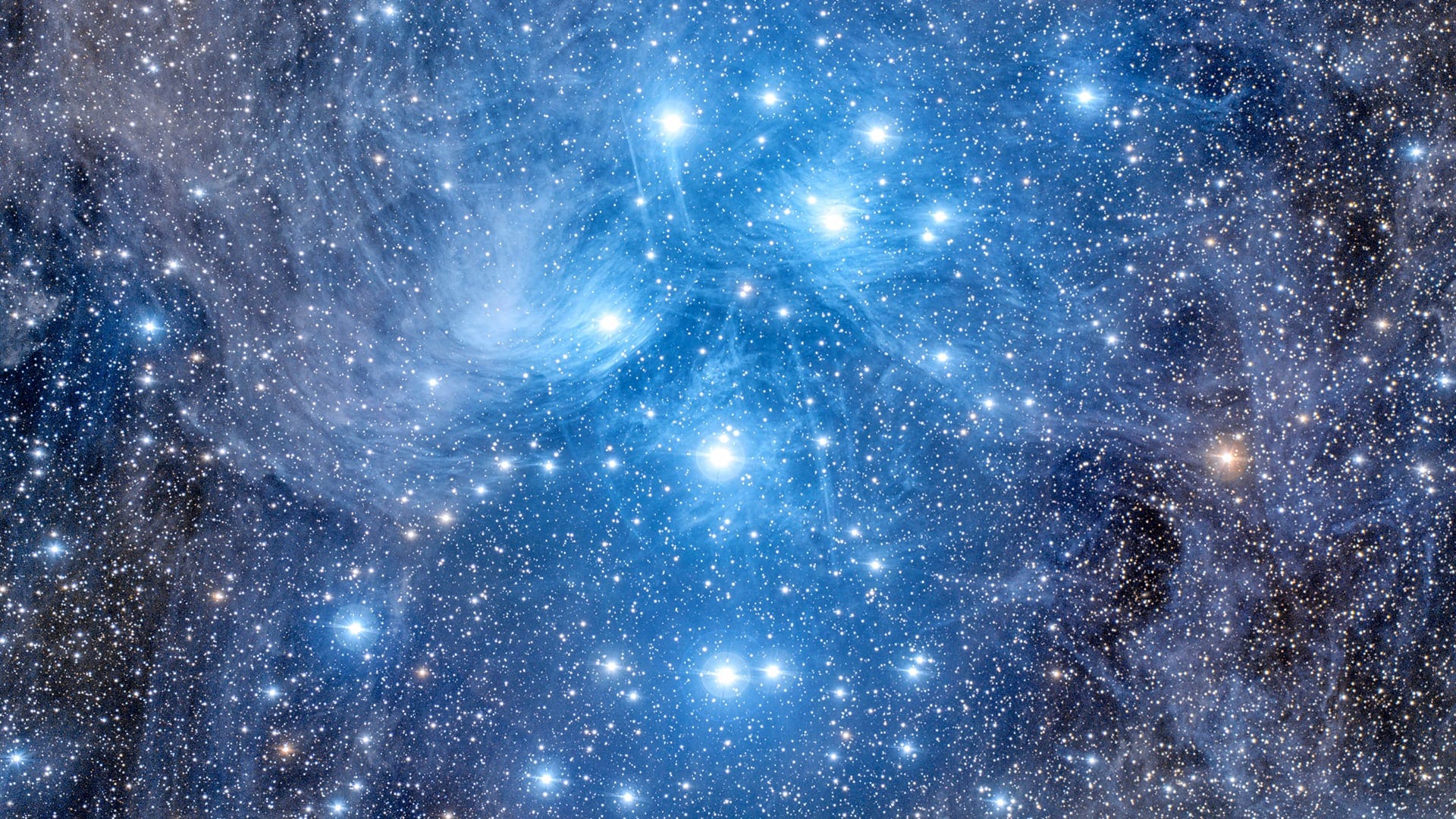
December is a great month to observe the sky! Long nights and crisp air create excellent observing conditions across much of the world. Whether you're taking your first steps into stargazing or planning your next astrophotography session, download Sky Tonight and let it guide you to the season’s most awe-inspiring objects.
Contents
- December deep-sky targets for the naked eye and binoculars
- Best deep-sky objects for a telescope in December
- December Astrophotography Targets
- Deep-sky objects in December: Bottom line
December deep-sky targets for the naked eye and binoculars
Even without some fancy optical equipment, December’s night sky is rich with bright and famous deep-sky objects. All you need is a dark location away from city lights and a few minutes for your eyes to adapt. Many of these targets serve as perfect starting points for beginners before they move on to telescopes or astrophotography.
Orion Nebula
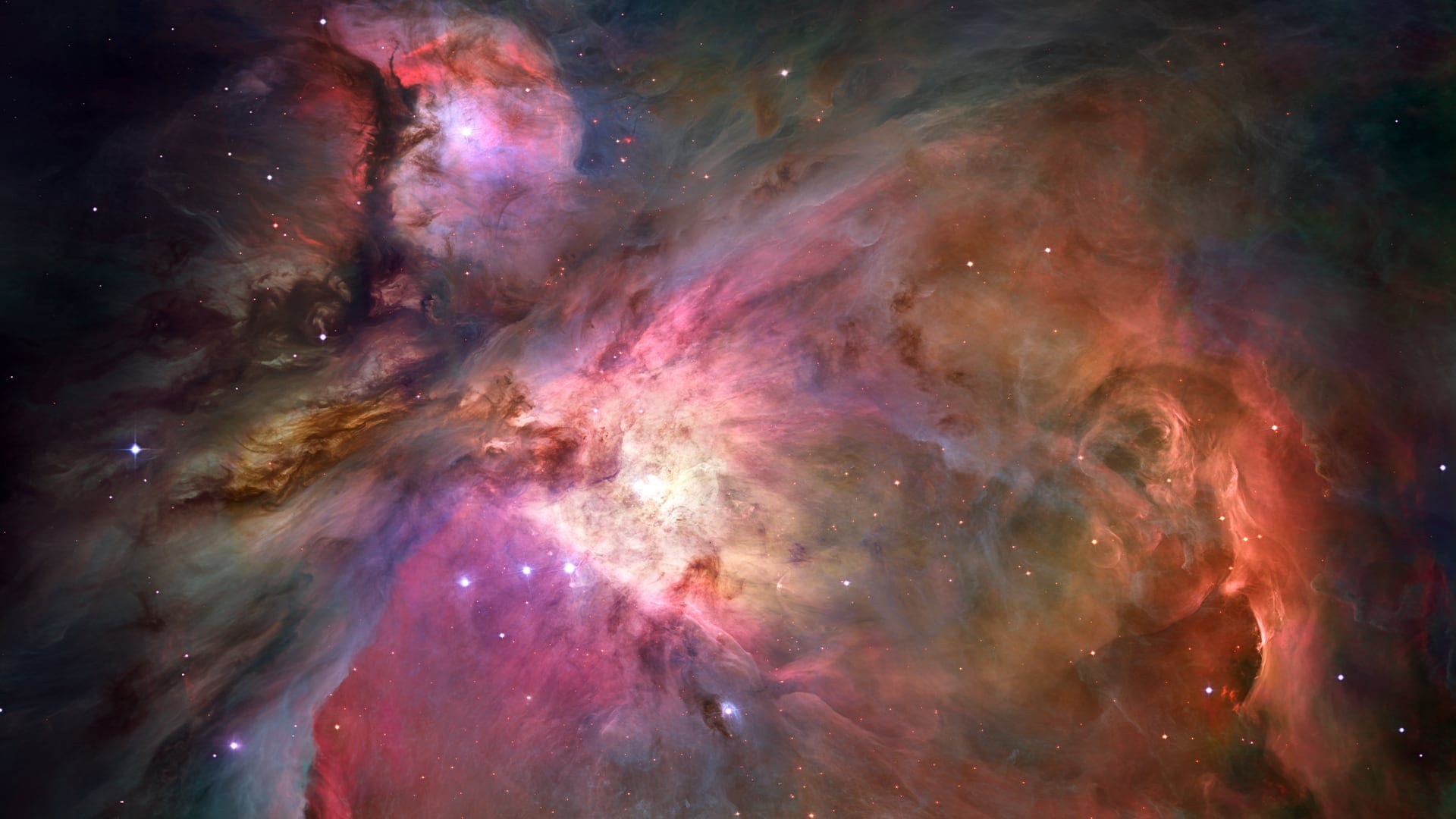
- Alternative names: M42, NGC 1976
- Apparent size: 65′ × 60′ (2 x Moon)
- Apparent magnitude: 4.0
- Constellation: Orion
- Where to observe: Northern hemisphere
- How to observe: You can see the Orion Nebula with the naked eye as a fuzzy patch of light. With the help of a medium-sized telescope, you can observe the Trapezium Сluster in the heart of the nebula — it looks like an asterism of four main bright stars.
- Description: The Orion Nebula is a diffuse nebula located in the middle of the Orion’s Sword asterism, near Orion’s Belt. It is one of the most well-known and brightest nebulae in the night sky. You can learn about other deep-sky objects located in the constellation Orion from our article.
Double Cluster
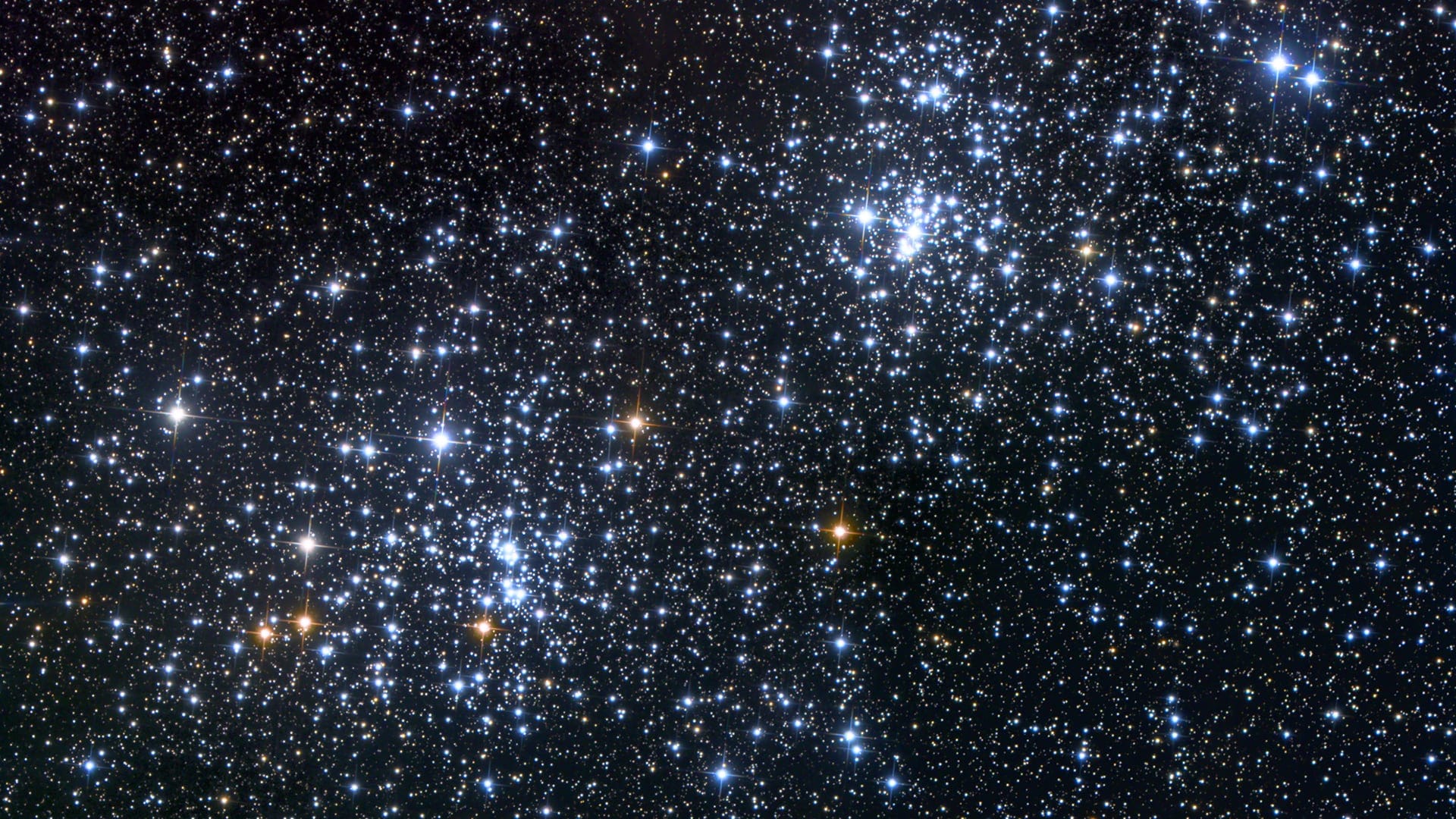
- Alternative names: Caldwell 14, NGC 884, NGC 869
- Apparent size: 1° (2 x Moon)
- Apparent magnitude: 3.7
- Constellation: Perseus
- Where to observe: Northern hemisphere
- How to observe: The Double Cluster is easily visible to the naked eye and appears as two fuzzy patches of light. Binoculars or a small telescope will help you see individual stars in the two clusters.
- Description: The Double Cluster is a pair of open star clusters located in the constellation Perseus. The cluster lies at a distance of about 7,500 light years from us and occupies an area about twice the size of the Full Moon in the sky.
Andromeda Galaxy
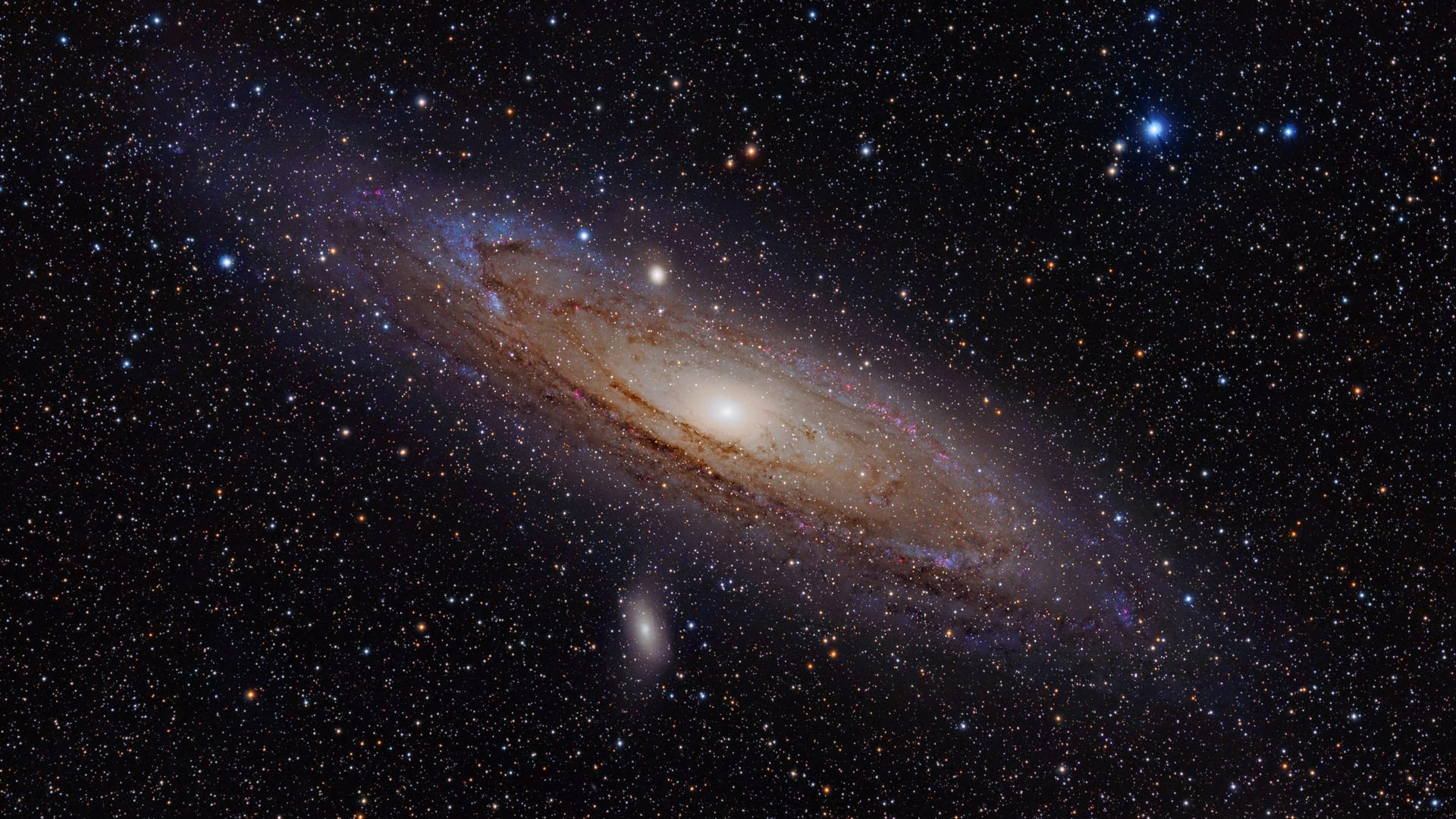
- Alternative names: M31, NGC 224
- Apparent size: 3° × 1° (6 x Moon)
- Apparent magnitude: 3.4
- Constellation: Andromeda
- Where to observe: Northern hemisphere, but also visible from southern latitudes
- How to observe: The Andromeda Galaxy is easily visible to the naked eye in a dark sky and is one of the few galaxies that can be seen without optical aid. To the naked eye, the galaxy appears as a faint, elongated patch of light. Binoculars or medium-magnification telescopes will reveal more details, such as its elongated glow, subtle hints of structure, and its satellite galaxies.
- Description: The Andromeda Galaxy is the nearest major galaxy to the Milky Way, located approximately 2.5 million light-years away from us. To learn more about the Andromeda Galaxy, read our dedicated article.
Pleiades
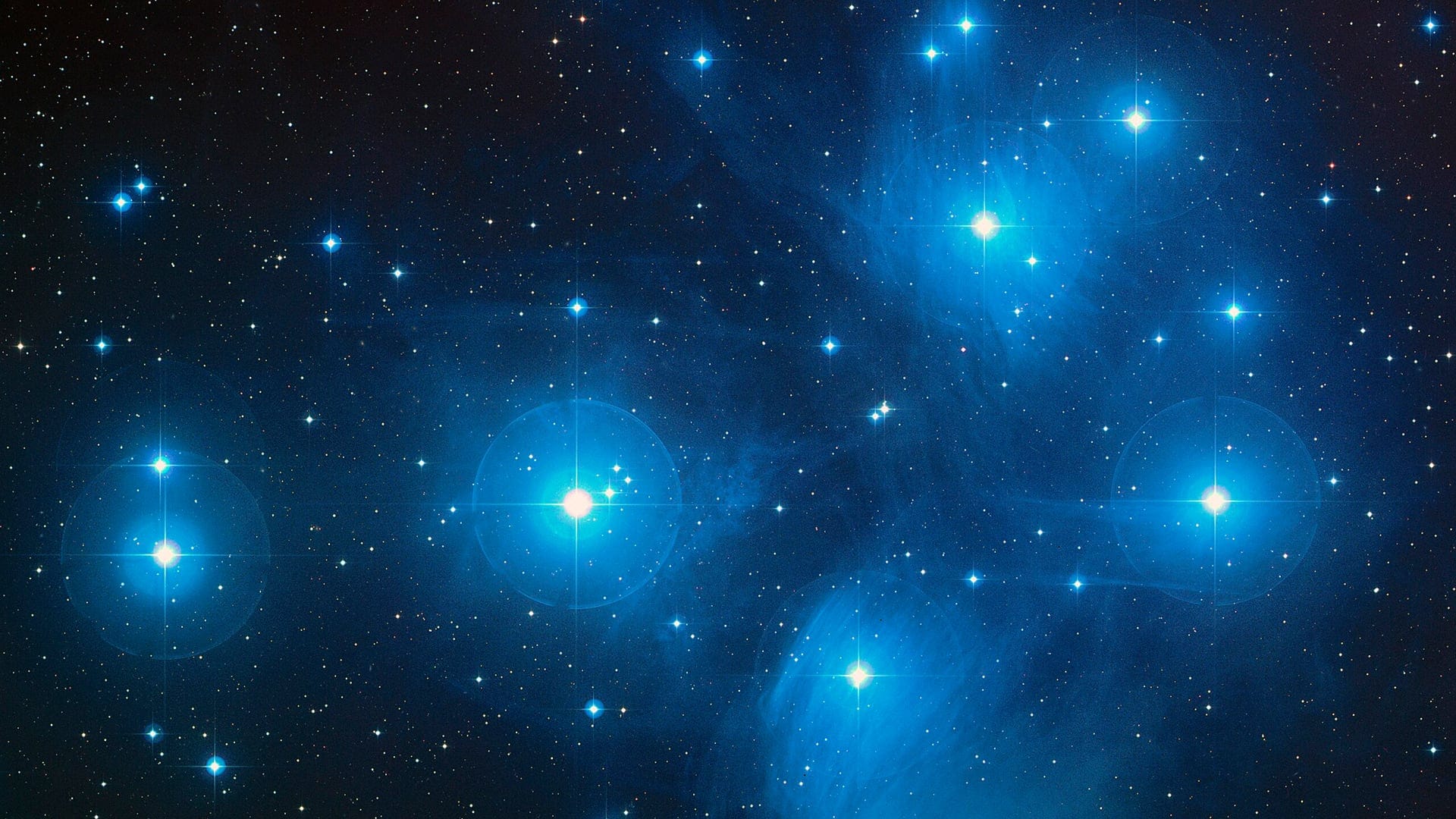

- Alternative names: M45, Seven Sisters
- Apparent size: 1°50' (3.7 x Moon)
- Apparent magnitude: 1.2
- Constellation: Taurus
- Where to observe: Northern hemisphere
- How to observe: To the naked eye, the Pleiades look like a hazy grouping of six stars resembling a small copy of the Big Dipper. Binoculars or a small telescope will reveal many more stars in the cluster.
- Description: The Pleiades are an open star cluster and one of the most famous and easily recognizable deep-sky objects in the night sky. Located just 444 light years away, it is also one of the nearest star clusters to the Earth. You can read more about the Pleiades in our article.
Best deep-sky objects for a telescope in December
A telescope opens the door to even more December wonders. This month features open clusters, nebulae, and galaxies — all of which show different structures depending on magnification. Don’t forget to let your telescope cool down before observing and use averted vision to catch subtle details.
NGC 1365
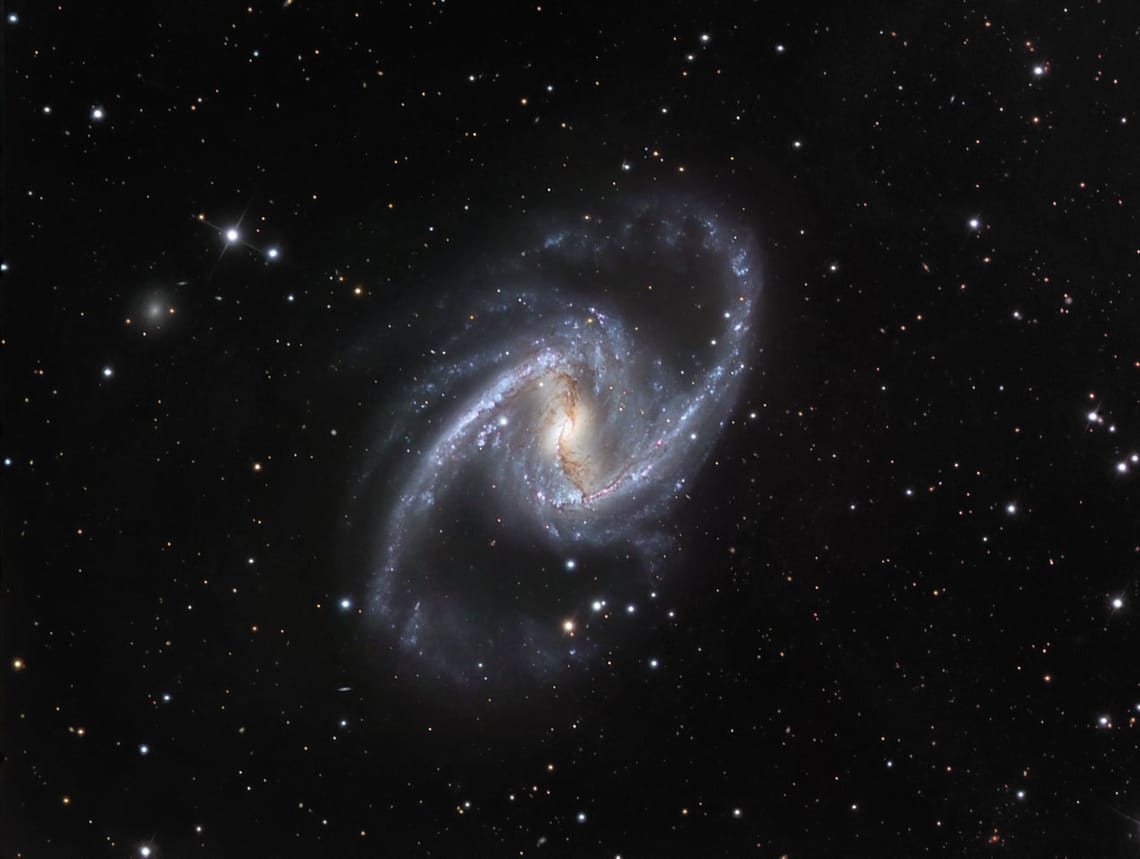
- Alternative names: Great Barred Spiral Galaxy, UGC 5887
- Apparent size: 11′ × 6.2′ (0.35 x Moon)
- Apparent magnitude: 10.3
- Constellation: Fornax
- Where to observe: Southern Hemisphere
- How to observe: The galaxy is best observed through telescopes with an aperture of 200 mm (8”) or larger under dark skies. With smaller telescopes, you’ll see only its bright bar and central core.
- Description: NGC 1365 is a double-barred spiral galaxy located about 56 million light-years from Earth. It’s known for its prominent central bar and symmetrical spiral arms.
Flame Nebula
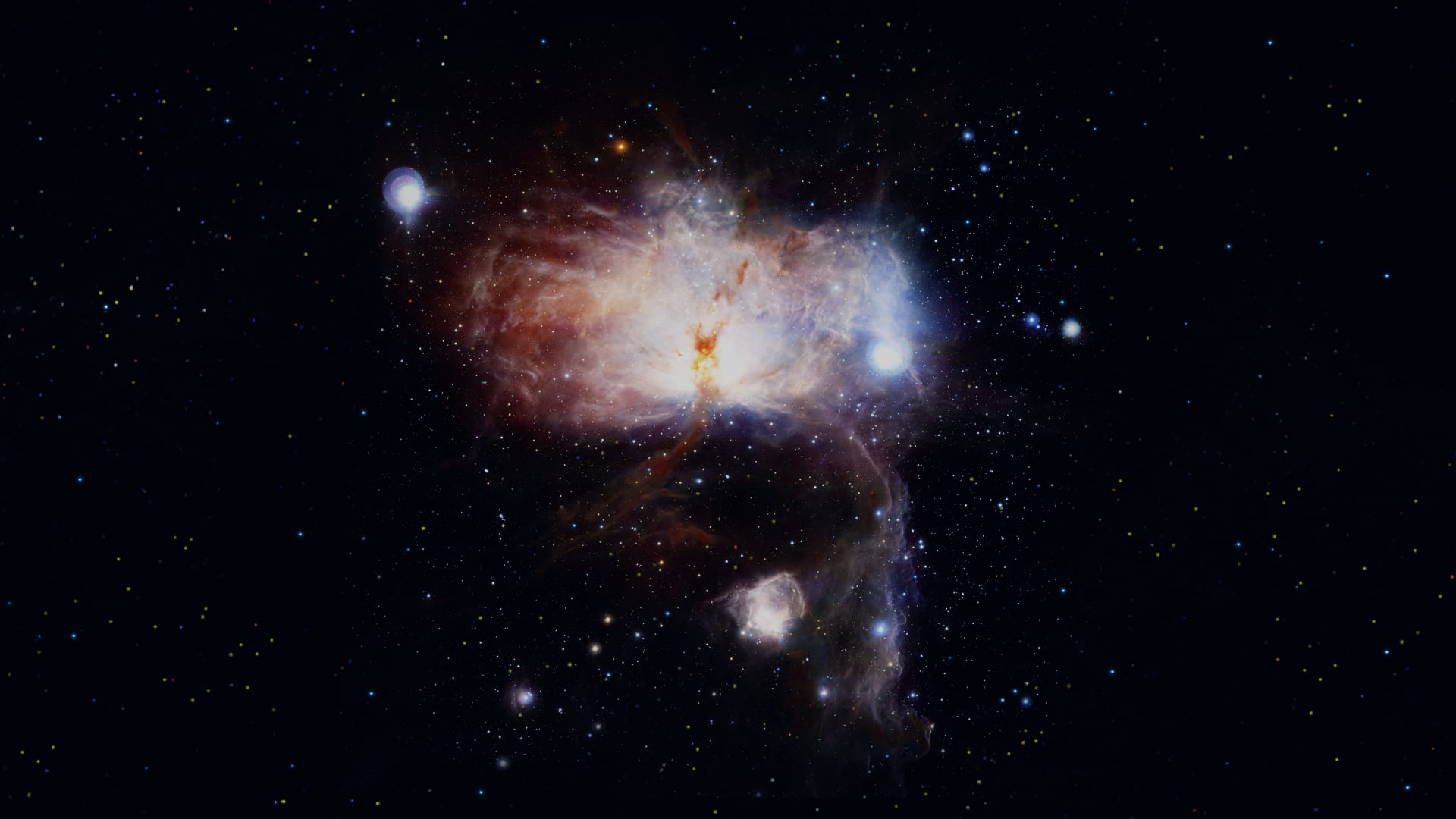
- Alternative names: NGC 2024, Sh2-277
- Apparent size: 30' (1 x Moon)
- Apparent magnitude: 10.0
- Constellation: Orion
- Best observed from: Northern Hemisphere
- How to observe: You’ll need at least a small telescope to see the Flame Nebula. It is located close to Alnitak — one of the three stars of Orion’s Belt.
- Description: Flame Nebula is an emission nebula discovered by British astronomer William Herschel in 1786. It is a part of a large star-forming region called the Orion Molecular Cloud Complex.
NGC 891
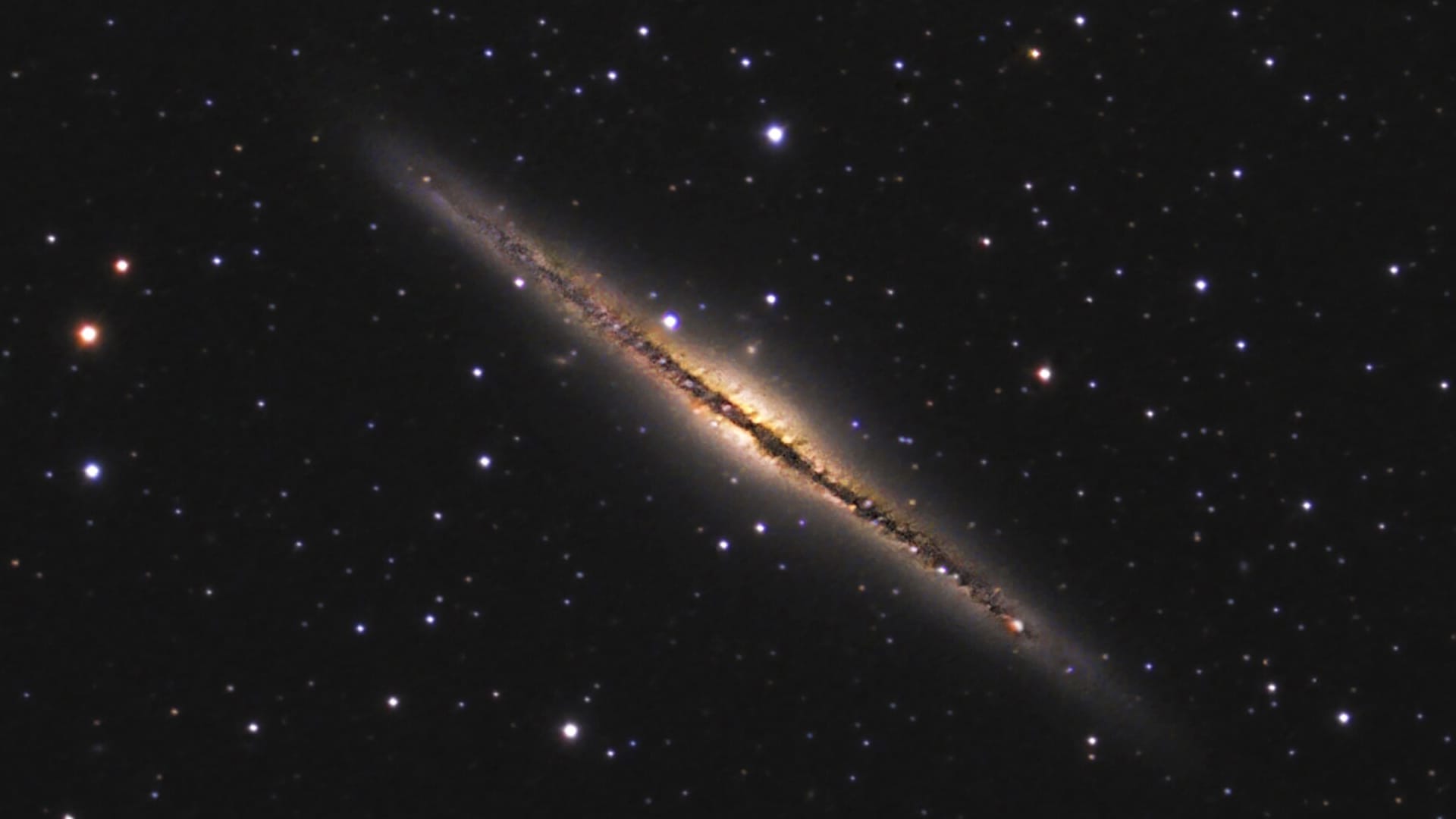

- Alternative names: Caldwell 23, Outer Limits Galaxy
- Apparent size: 13.5′ × 2.5′ (0.45 x Moon)
- Apparent magnitude: 10.0
- Constellation: Andromeda
- Where to observe: Northern Hemisphere
- How to observe: This galaxy is best seen through a telescope with an aperture of at least 100 mm (4”). Also, choose a location far from light pollution.
- Description: NGC 891 is a spiral galaxy located about 30 million light-years away in the constellation Andromeda. From Earth, we see it almost perfectly edge-on.
NGC 2158
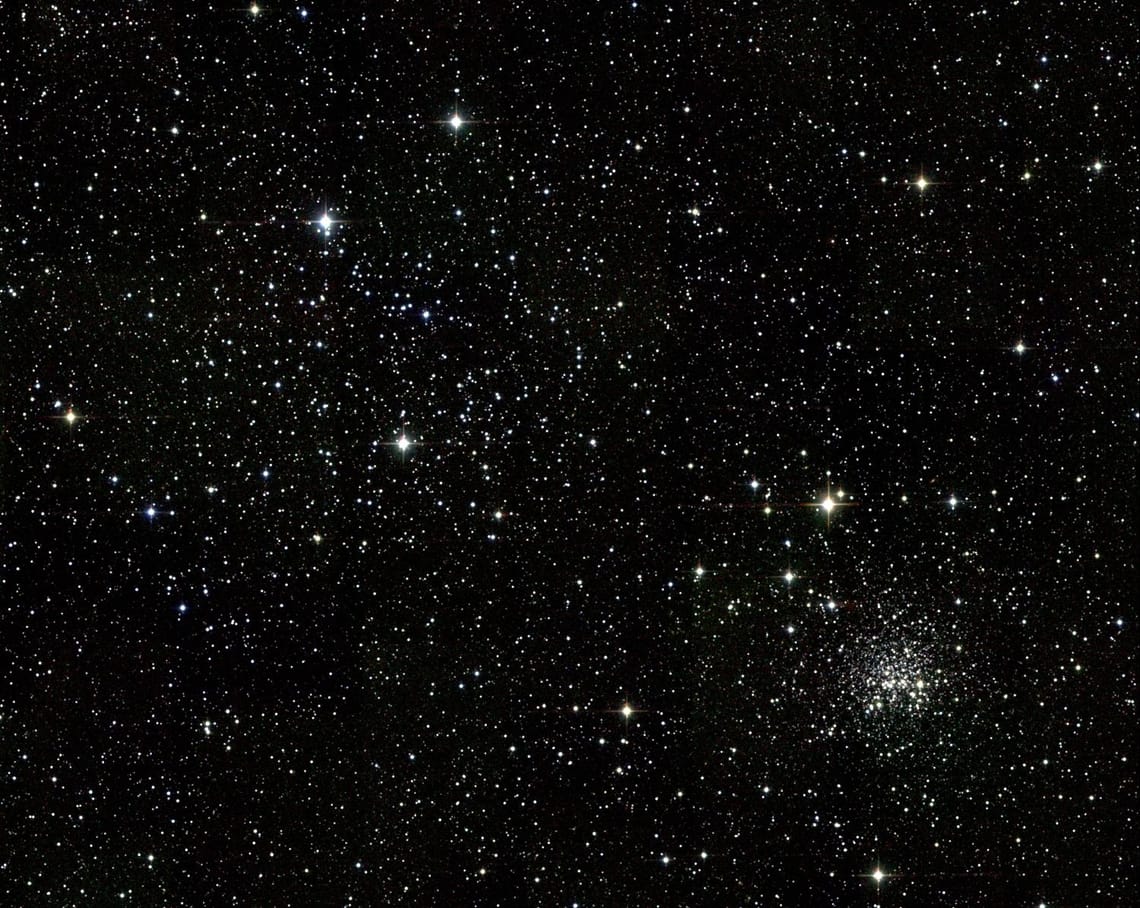

- Apparent size: 5′ (0.17 × Moon)
- Apparent magnitude: 8.6
- Constellation: Gemini
- Where to observe: Northern Hemisphere
- How to observe: NGC 2158 is a compact open cluster located right next to the brighter and larger M35 cluster. Through medium-sized telescopes, it appears as a small, dense, hazy patch. Larger apertures (8” and above) begin to resolve it into numerous faint stars.
- Description: NGC 2158 is an open cluster situated about 11,000 light-years from Earth. Because of its distance and density, the cluster looks almost like a small globular cluster in amateur telescopes.
M35
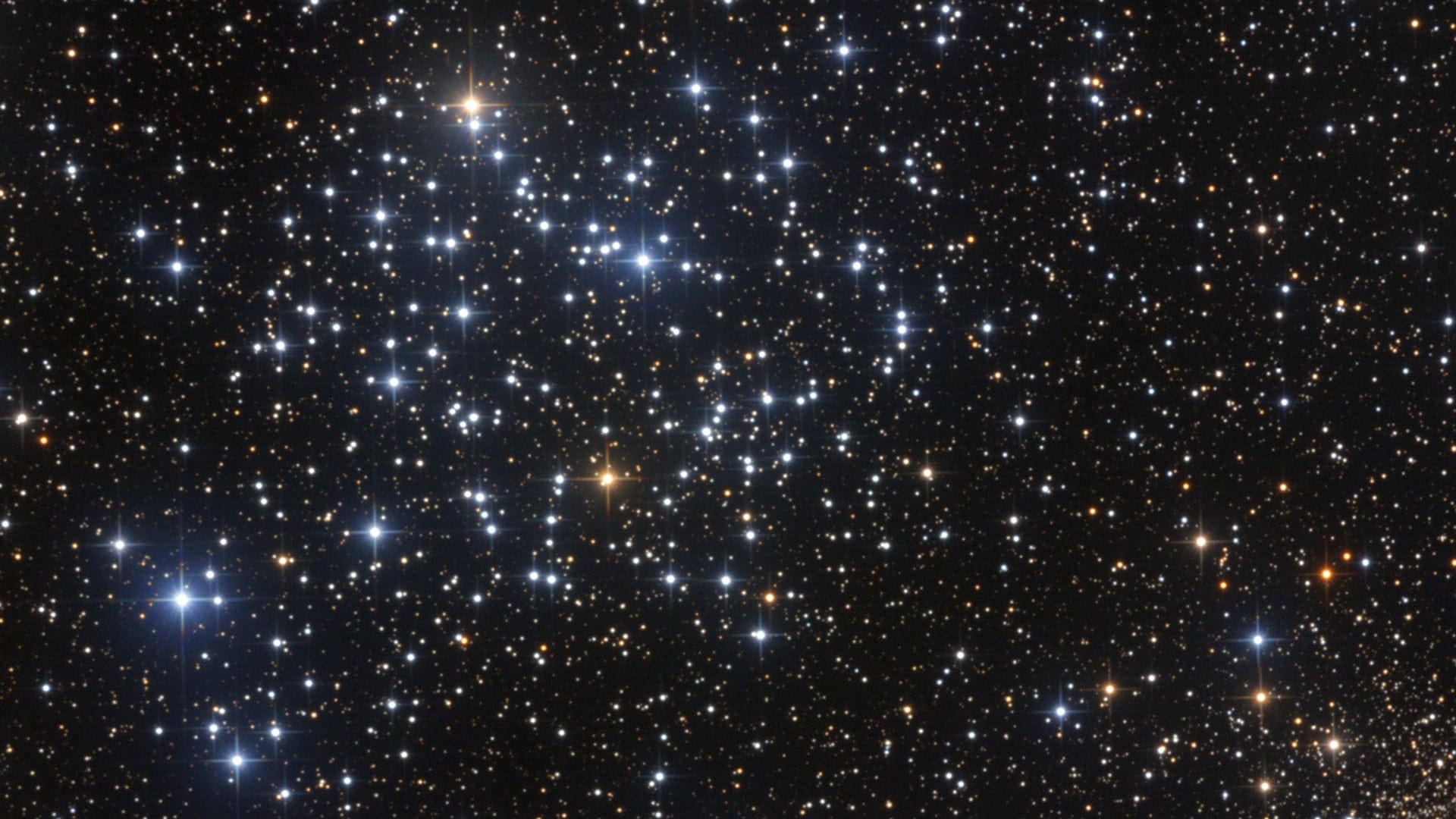
- Alternative names: NGC 2168
- Apparent size: 28′ (1 x Moon)
- Apparent magnitude: 5.1
- Constellation: Gemini
- Where to observe: Northern hemisphere
- How to observe: You can easily see M35 through binoculars as a fuzzy patch of light. A telescope will help you see individual stars in the star cluster. If you have really sharp eyes, you can even spot M35 with the naked eye in a dark sky!
- Description: M35 is an open star cluster relatively close to us — it is located 2,800 light years away from the Earth. Its angular size in the sky roughly equals the size of the Full Moon.
December Astrophotography Targets
December offers some of the clearest and darkest nights of the year, making it perfect for deep-sky astrophotography. Many nebulae and star clusters visible this month are large, bright, and forgiving for beginners. Try using a tripod-mounted DSLR or mirrorless camera with long exposures — you’ll be surprised how much detail appears!
Eskimo Nebula
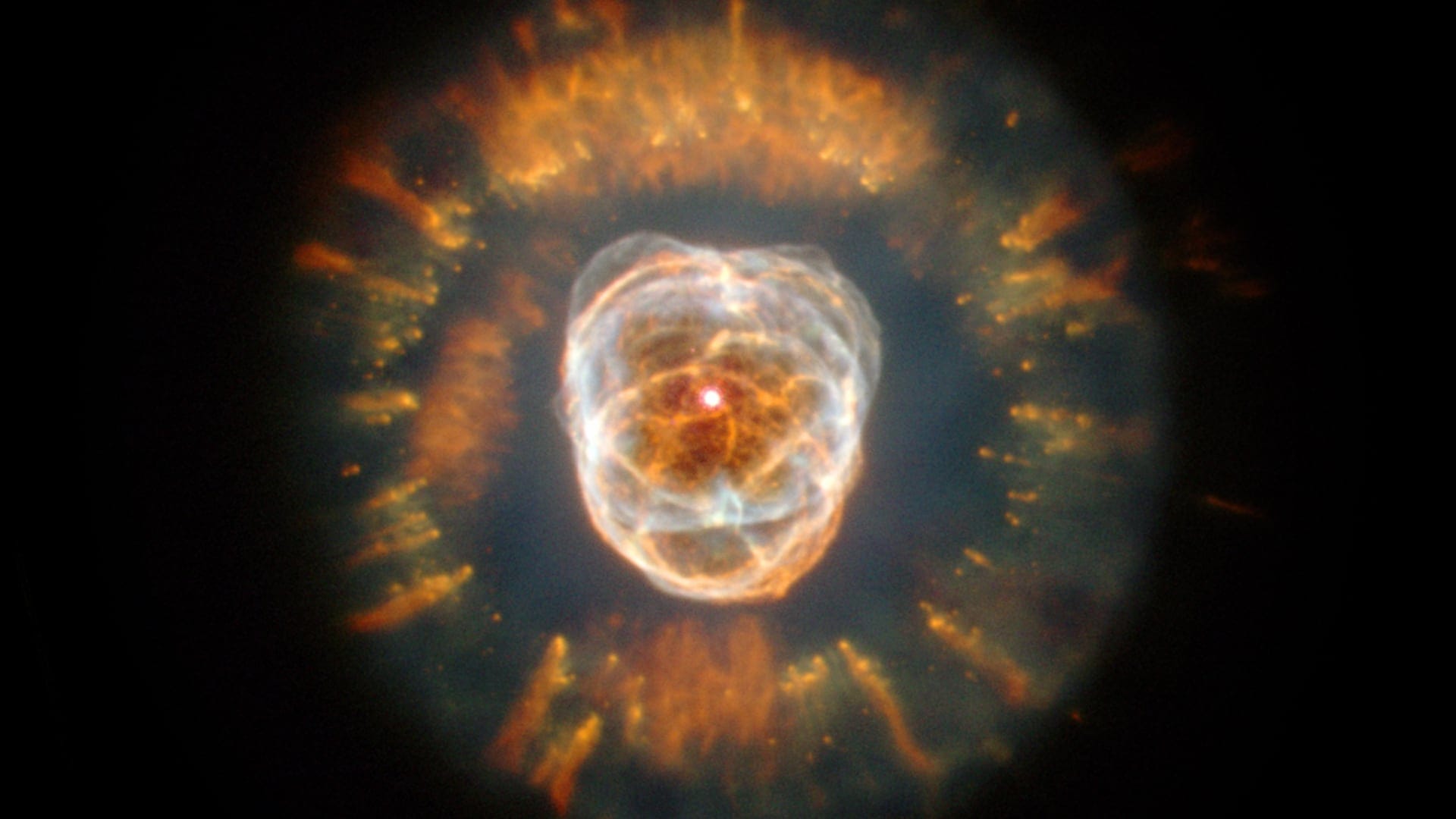
- Alternative names: NGC 2392, Clown-faced Nebula, Lion Nebula, Caldwell 39
- Apparent size: 48″ (0.02 x Moon)
- Apparent magnitude: 10.1
- Constellation: Gemini
- Where to observe: Northern Hemisphere
- How to observe: The Eskimo Nebula can be observed in medium-sized telescopes — it will look like a circular greenish smudge with a bright star in the center. Larger telescopes will provide a clearer view of its details.
- Description: The Eskimo Nebula is a bipolar planetary nebula with a dying Sun-like star in its center. The nebula got such a name because, from the Earth, it looks like a face surrounded by a fur-lined hood.
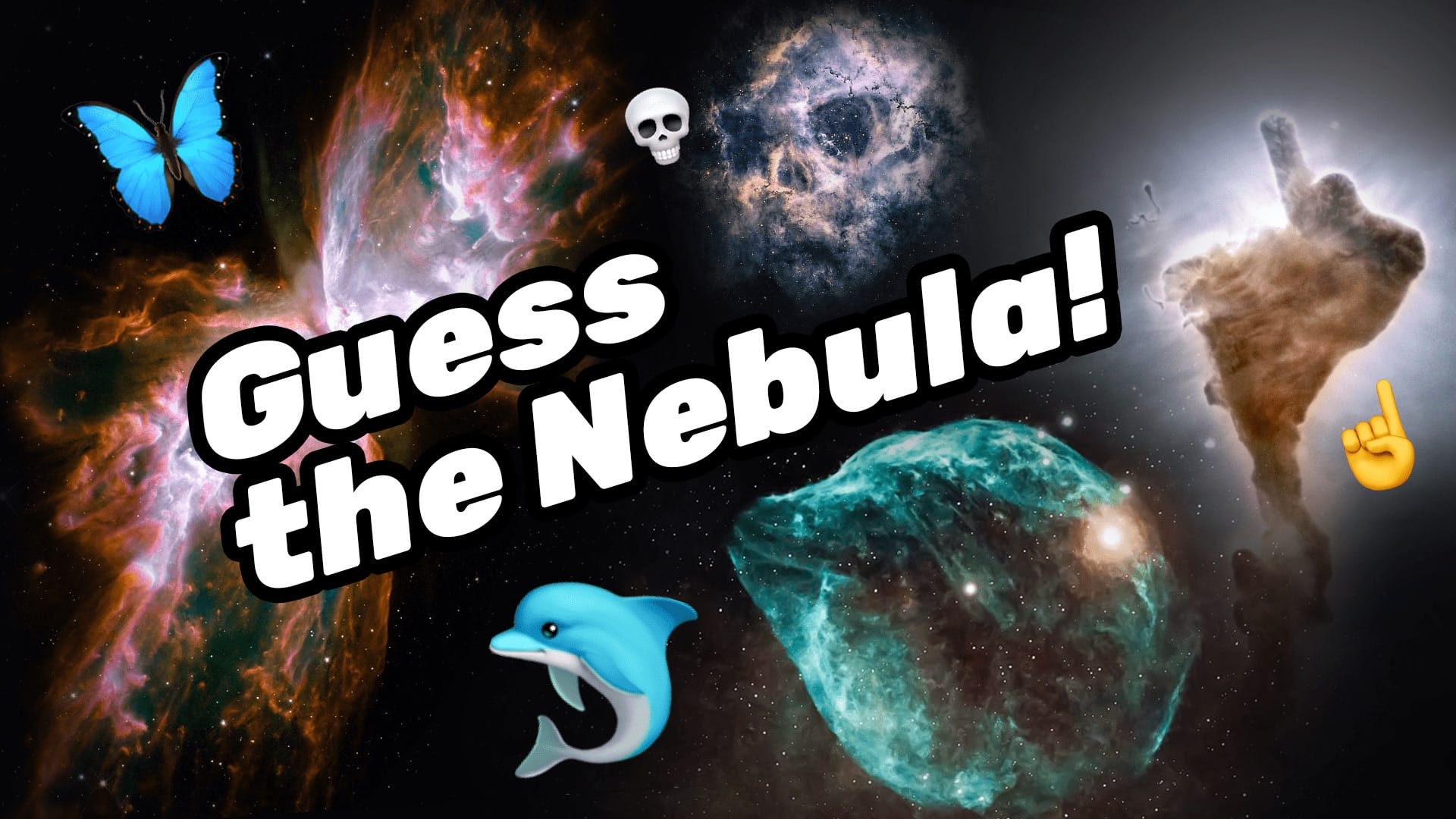
If we hadn’t told you, would you have guessed the name of the Eskimo Nebula? We bet you wouldn’t! Take our quiz to see how many weird nebula names you can guess correctly just by looking at their photos. There’s also a short video version of this quiz on our YouTube channel.
Rosette Nebula
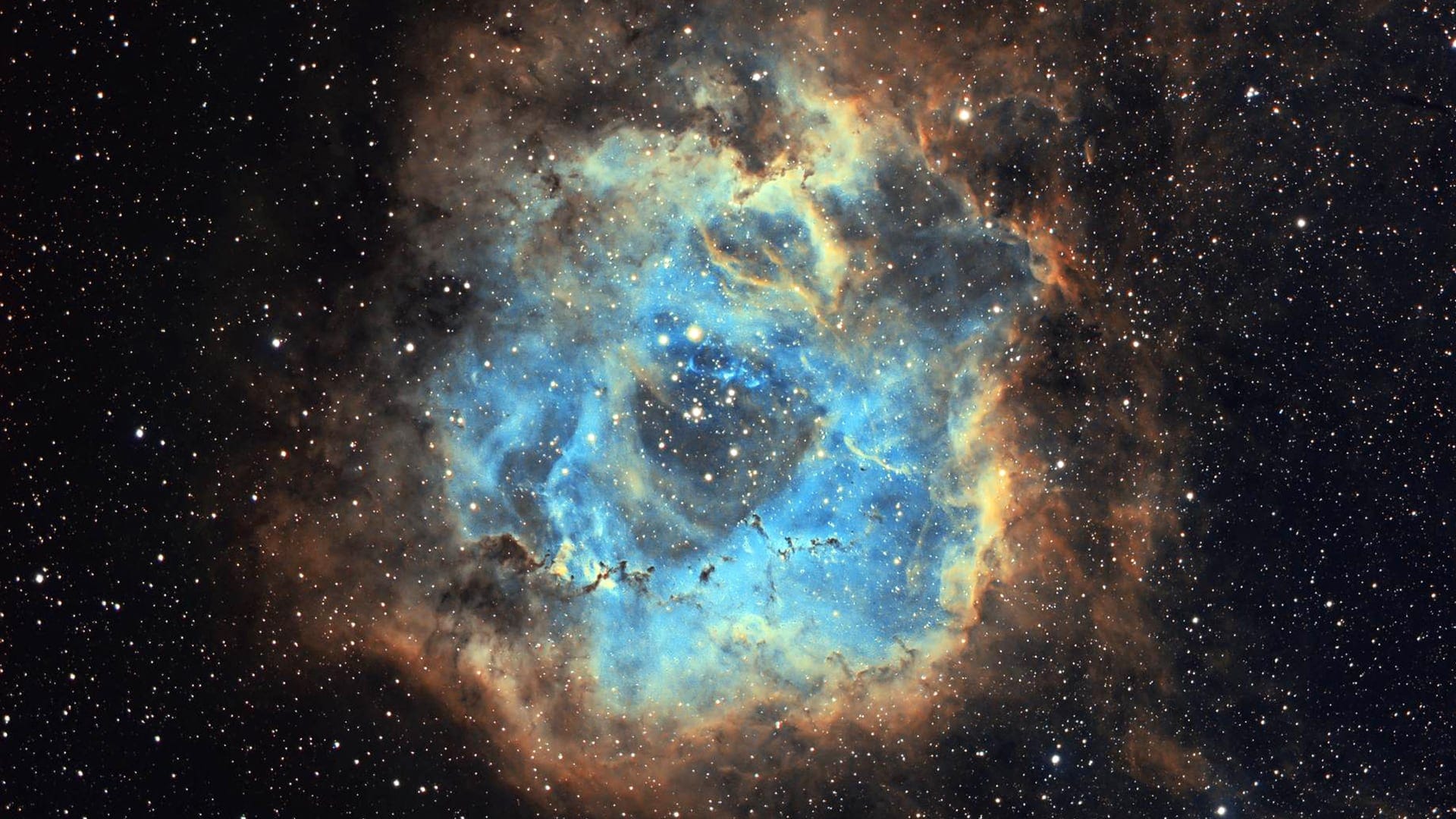

- Alternative names: NGC 2237, Skull Nebula, Caldwell 49
- Apparent size: 1.3° (2.6 x Moon)
- Apparent magnitude: 9.0
- Constellation: Monoceros
- Where to observe: Both hemispheres
- How to observe: Because of its relatively large size, the Rosette Nebula is best observed in a telescope with a wide field of view — it will look like a circular patch of light with a star cluster in its center.
- Description: The Rosette Nebula is a so-called H II region — an emission nebula containing ionized hydrogen in which active star formation takes place. The nebula is named so because its appearance resembles that of a rose. Some observers also noticed its resemblance to a human skull, so it’s sometimes called the Skull Nebula.
Crab Nebula
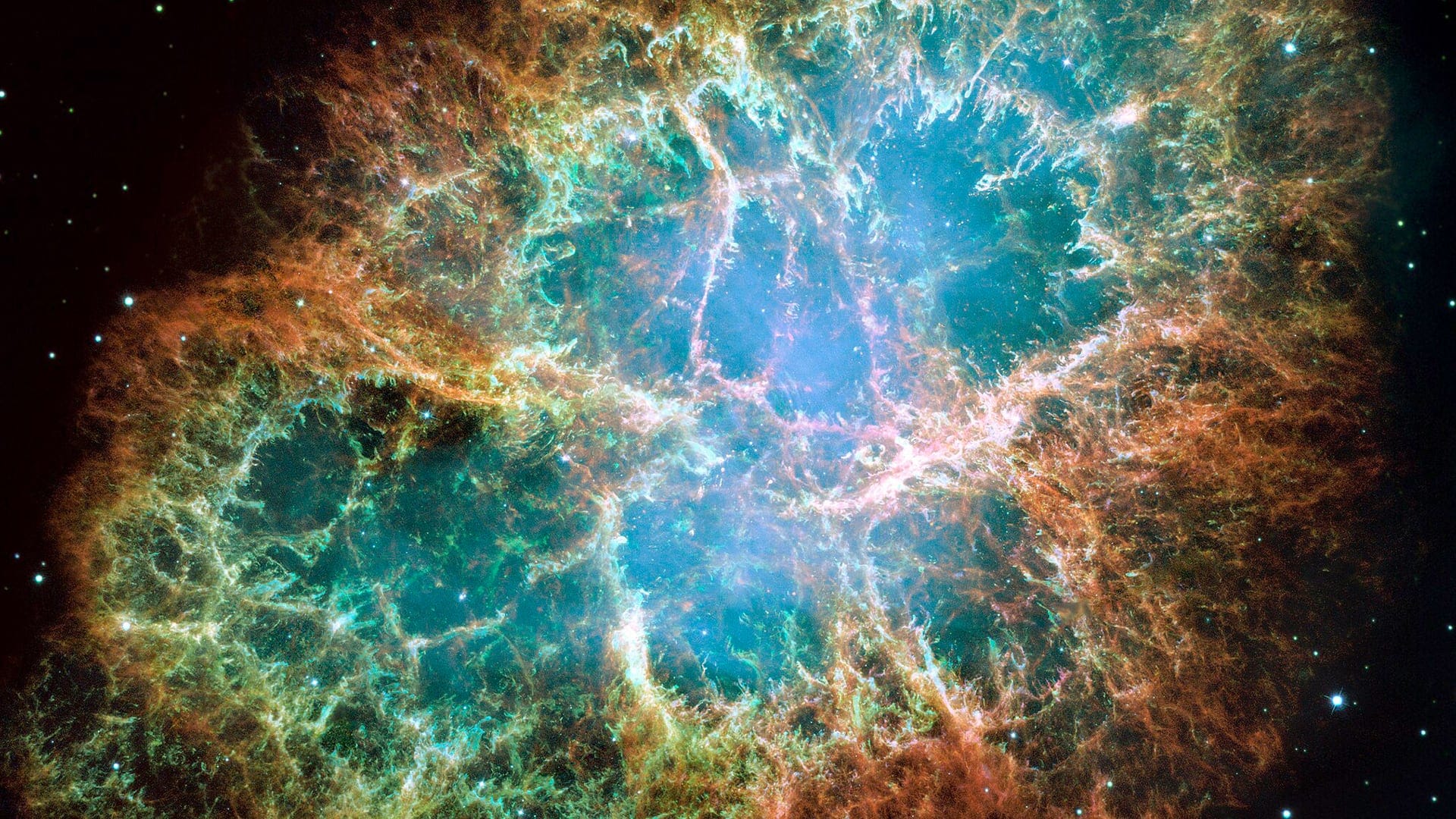

- Alternative names: M1, NGC 1952, Taurus A
- Apparent size: 6' x 4' (0.1 x Moon)
- Apparent magnitude: 8.4
- Constellation: Taurus
- Where to observe: Northern hemisphere
- How to observe: The Crab Nebula is a popular target for amateur astronomers — through a small telescope, it looks like a faint smudge of light. The nebula is also bright enough to be visible in binoculars under dark skies.
- Description: The Crab Nebula is a supernova remnant powered by winds of a central pulsar. It resembled a crab to 19th-century observers, hence its name. The Crab Nebula originated from a supernova explosion observed by Chinese astronomers in 1054 AD. The explosion was so bright that the new “star” was visible even in the daytime!
The Running Man Nebula
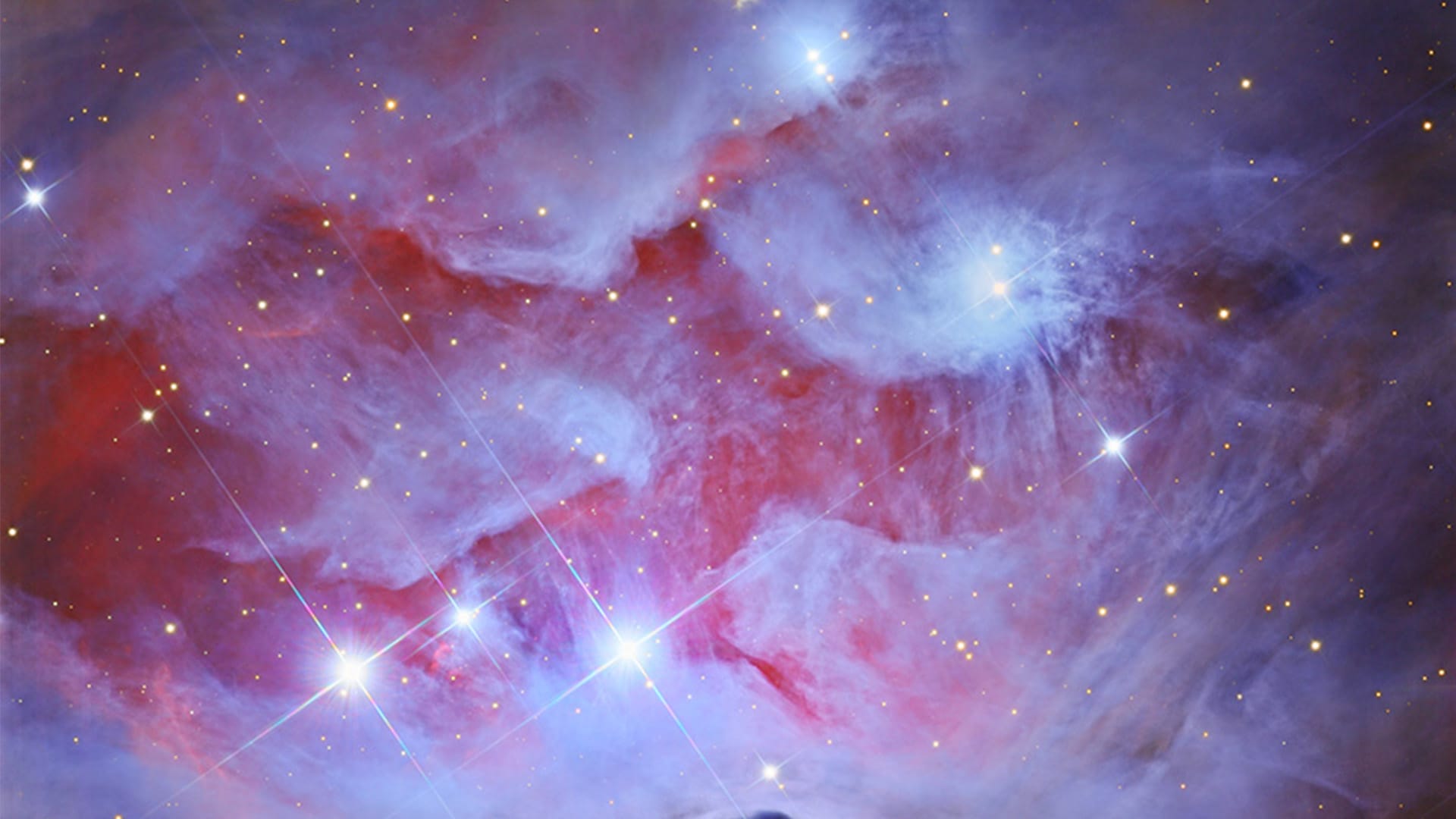

- Alternative names: Sh2-279, NGC 1973, NGC 1975, NGC 1977
- Apparent size: 40′ × 25′ (1 x Moon)
- Apparent magnitude: 7.0
- Constellation: Orion
- Where to observe: Northern hemisphere
- How to observe: The Running Man Nebula can be glimpsed in small and medium telescopes, but it’s unlikely that you’ll see the outline of the running man — it shows up primarily in photographs.
- Description: The object known as the Running Man Nebula comprises three reflection nebulae: NGC 1973, NGC 1975, and NGC 1977. It is a part of the Orion’s Sword asterism and is located close to the Orion Nebula. Many observers think the nebula bears a resemblance to a running human figure, hence its name.
Christmas Tree Cluster and Cone Nebula
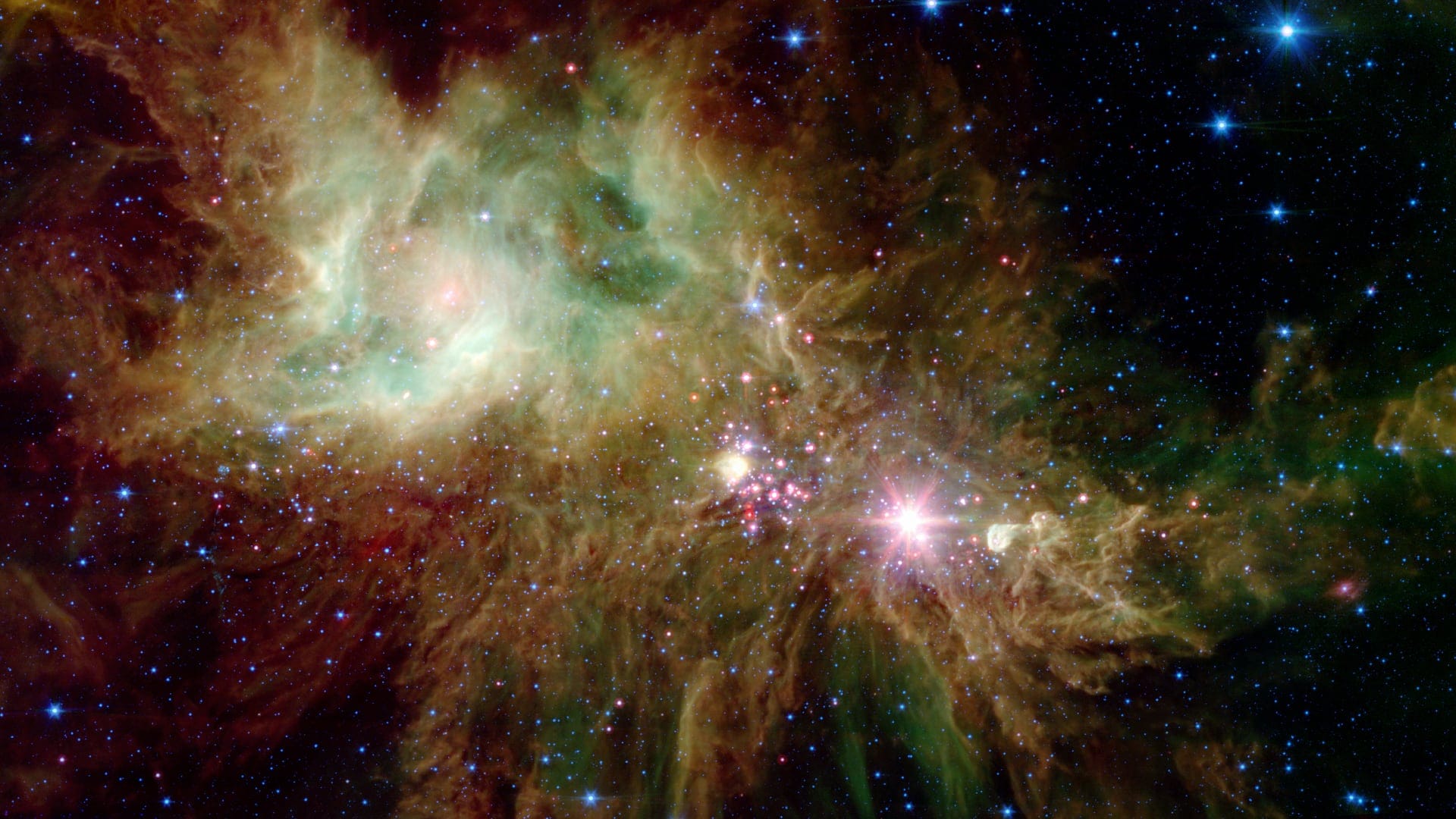
- Alternative names: NGC 2264
- Apparent size: 20′ (0.7 x Moon)
- Apparent magnitude: 3.9
- Constellation: Monoceros
- Where to observe: Both hemispheres
- How to observe: Despite their “favorable” apparent magnitude, the cluster and nebula are challenging to see with the naked eye, so it’s better to use binoculars or a telescope for their observation.
- Description: What would December be without a Christmas tree? Meet the object NGC 2264, which is actually two deep-sky objects in one — a star cluster and a nebula. The Christmas Tree Cluster is an open star cluster that resembles a Christmas tree when viewed through a telescope. The Cone Nebula is a dark conical nebula located within the Christmas Tree Cluster.
Best deep-sky objects in December: F.A.Q.
What is a deep-sky object?
The term “deep-sky object” (DSO) is used to denote astronomical objects outside the Solar System that are not individual stars. DSOs include galaxies, nebulae (emission, reflection, dark), supernova remnants, and star clusters (open and globular).
What is a galaxy?
A galaxy is a massive collection of stars, gas, dust, and dark matter held together by gravity. Galaxies come in various shapes — spiral, barred spiral, elliptical, and irregular. December showcases beautiful examples like the Andromeda Galaxy and NGC 891, both of which can be spotted even with modest equipment.
What is a nebula?
A nebula is a cloud of interstellar gas and dust, often illuminated by nearby stars. Some nebulae — such as the Orion Nebula or the Rosette Nebula — are stellar nurseries where new stars form. Others, like the Eskimo Nebula or Crab Nebula, are remnants of dying stars. Depending on how they interact with light, nebulae can appear as emission, reflection, or dark patches.
What is a star cluster?
A star cluster is a gravitationally bound group of stars that formed from the same molecular cloud. Open clusters — such as M35, Pleiades, and the Christmas Tree Cluster — contain young stars spread across a loose pattern. Globular clusters are much older and denser.
What do the letters NGC and M mean?
These letters come from astronomical catalogs — lists that help astronomers identify and organize objects in the night sky.
- M stands for the Messier Catalog, created by the French astronomer Charles Messier in the 18th century. It includes some of the most famous objects visible from the Northern Hemisphere, such as the Andromeda Galaxy (M31), the Orion Nebula (M42), and the Pleiades (M45).
- NGC means New General Catalogue, compiled later in the 19th century. It lists thousands of nebulae, galaxies, and star clusters — including NGC 891 and NGC 1365 mentioned above.
If you’d like to know more about how these catalogs were created and how astronomers use them today, read our article on the astronomical catalogs.
Which deep-sky objects are best seen in December from the Northern Hemisphere?
Some of the brightest and most beginner-friendly deep-sky objects visible from the Northern Hemisphere in December include the Andromeda Galaxy (M31), the Double Cluster in Perseus, and the Orion Nebula (M42). These objects are easy to locate, shine brightly even under moderate light pollution, and can be observed with the naked eye or simple optical equipment.
We’ve also gathered the best and brightest Northern Hemisphere targets in our dedicated infographic — it explains when to look for each object, how to find them in the sky, and why they’re perfect for beginners.
Which deep-sky objects are best seen in December from the Southern Hemisphere?
Observers in the Southern Hemisphere can also enjoy excellent December targets. Some of the most accessible objects include the Rosette Nebula, the Christmas Tree Cluster (NGC 2264), and the spectacular NGC 1365 galaxy in Fornax. These objects are bright, visually striking, and well-placed in the December sky. You can explore more bright and easy Southern Hemisphere objects in our infographic — it highlights the top targets, their ideal observing time, and simple tips for finding them.
Deep-sky objects in December: Bottom line
The brightest deep-sky objects you can see in December include the Pleiades, Andromeda Galaxy, Double Cluster in Perseus, and Orion Nebula. All of these objects can be observed with the naked eye outside light-polluted cities. To locate the objects in the sky, use the Sky Tonight astronomy app.
Best deep-sky targets by month: year-ahead calendar
Deep-sky wonders aren’t limited to December. Discover what the universe has to offer each month with our guides to deep-sky objects: