Looking for what to see in the sky this week? This guide highlights the upcoming astronomical events, from Moon phases and planetary groupings to meteor showers, bright stars, and seasonal sky changes.
Some events are easy to see with the naked eye, while others require binoculars, a telescope, or a clear horizon away from city lights. Visibility also depends on your location and local time, so use the Sky Tonight app to check when and where each object will appear in your sky.
Below, you’ll find sky events arranged by date, with quick viewing tips to help you choose the best nights for stargazing. All dates are listed in GMT, so the exact calendar date may differ in your local time zone.
For simple targets like the Moon, bright planets, and first-magnitude stars, the naked eye is often enough. For fainter objects — such as star clusters, Uranus, Neptune, or lunar surface details — binoculars or a small telescope will give a much better view.
June 19: Moon occults Regulus; Venus meets the Beehive Cluster
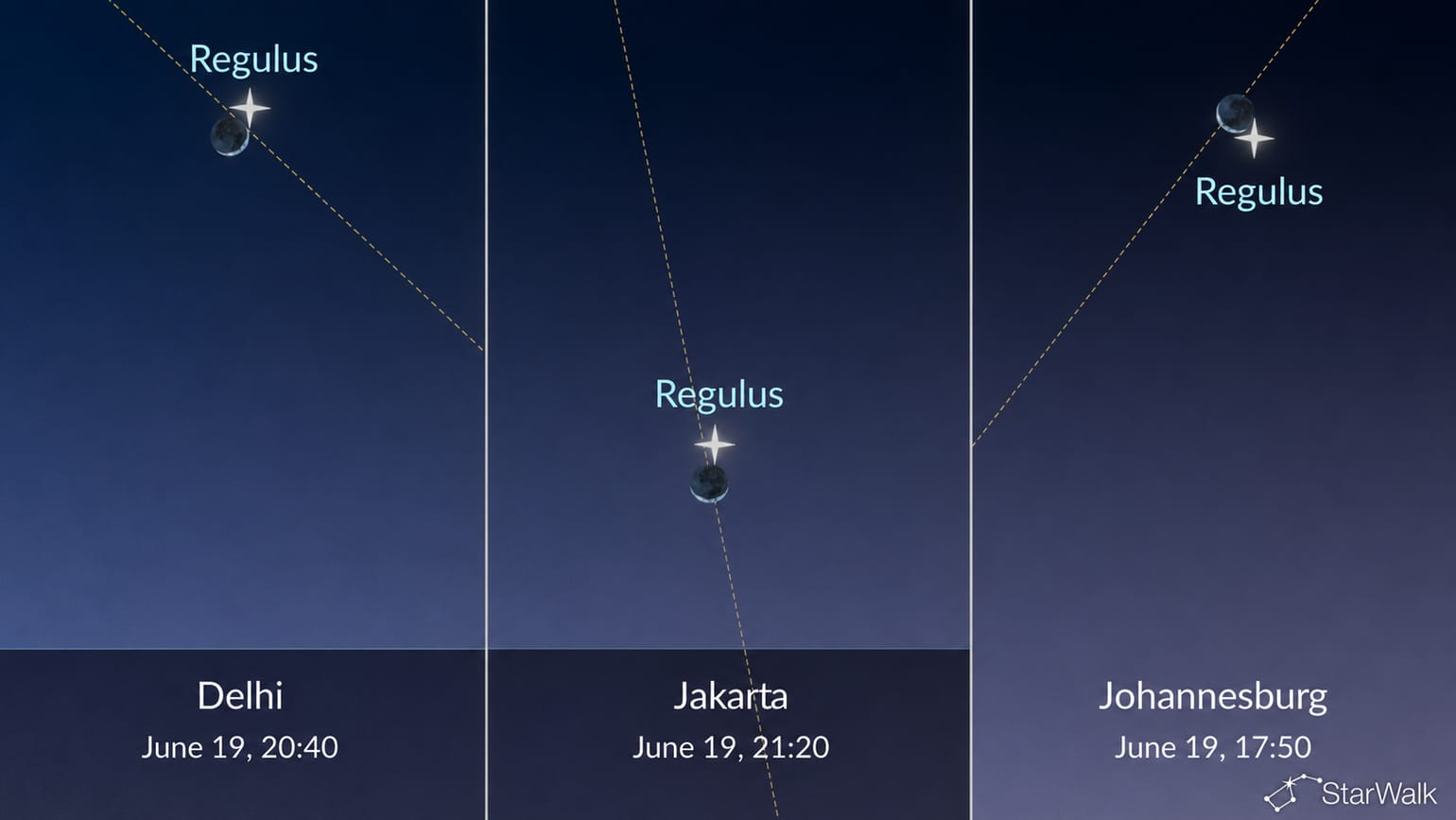
On June 19, 2026, the Moon will appear near Regulus, the brightest star in Leo. Look for the pair in the evening sky after sunset; Regulus will appear as a bright bluish-white point close to the Moon. The event is visible to the naked eye, but binoculars can make the star easier to spot in the moonlit sky.
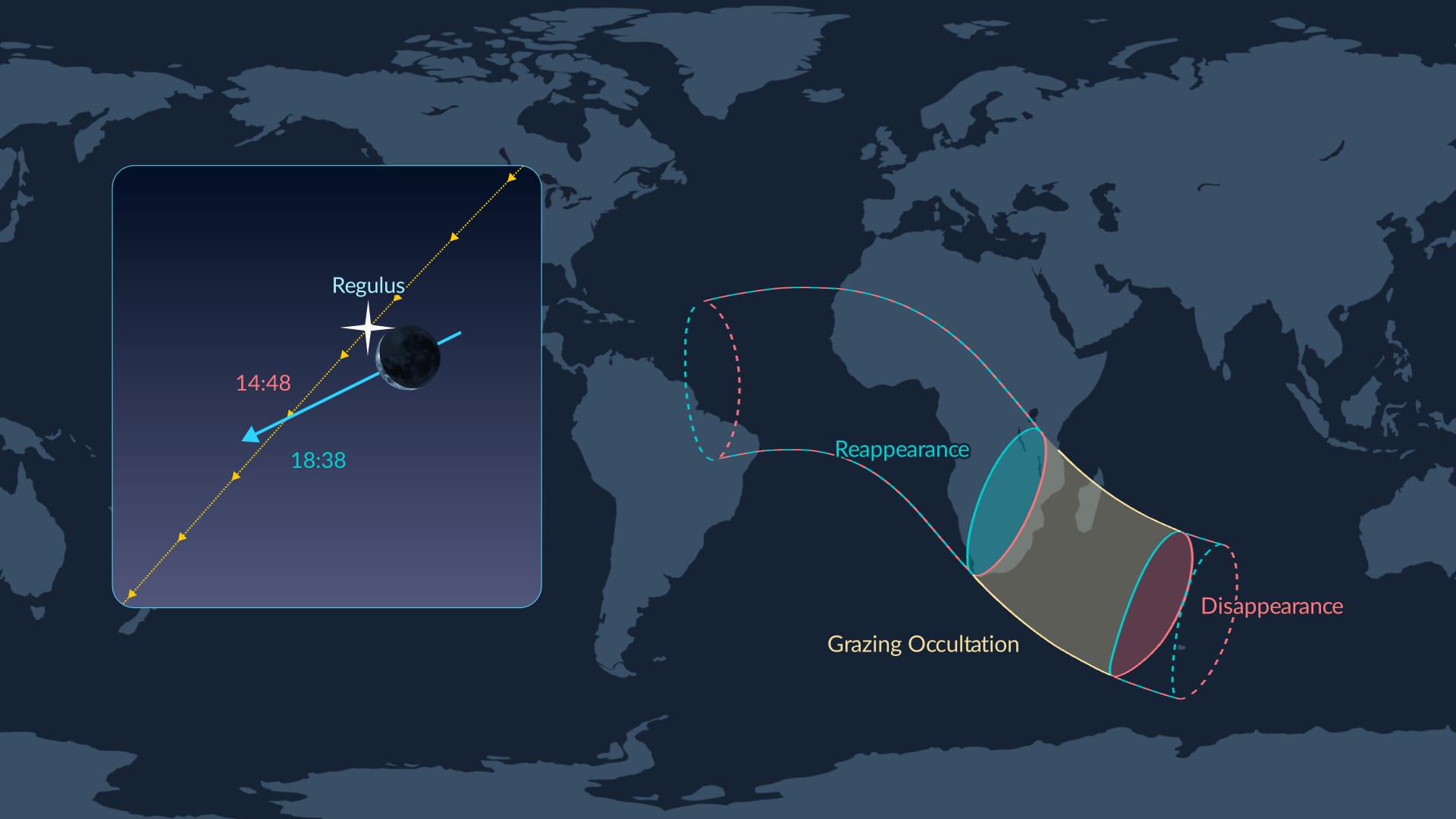
Observers in South Africa, Mozambique, Madagascar, and Zimbabwe will be able to see the Moon pass in front of Regulus, briefly hiding the star from view. Watch closely: Regulus will disappear behind the Moon’s edge and later reappear on the other side. Binoculars or a small telescope will make the occultation easier to follow.
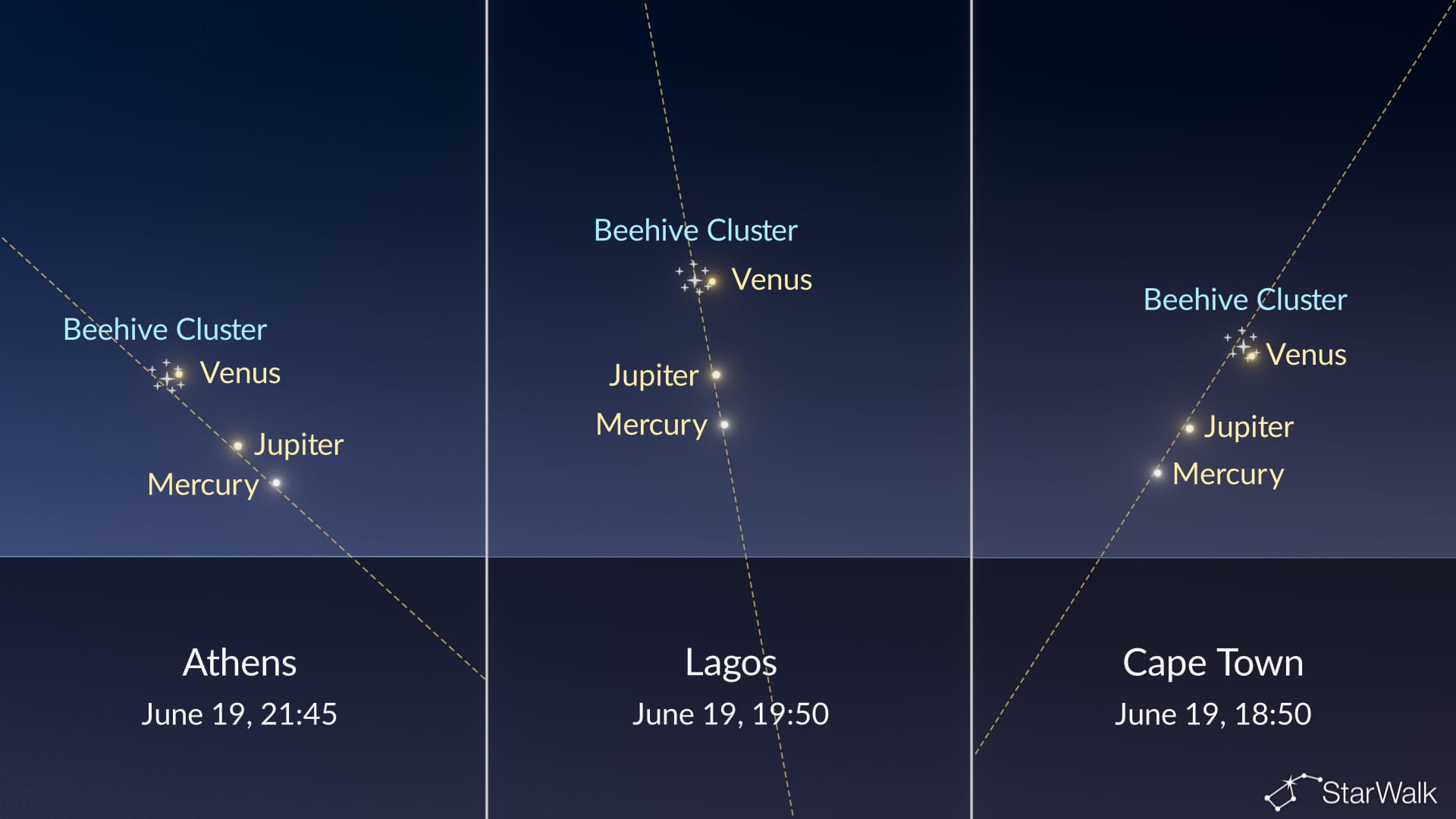
On June 19-20, 2026, brilliant Venus will shine near the Beehive Cluster in Cancer. Look low above the western horizon after sunset: Venus will be easy to spot even in twilight, while binoculars will help reveal the cluster’s faint stars nearby. Jupiter and Mercury will also be visible closer to the horizon, adding to the evening lineup.
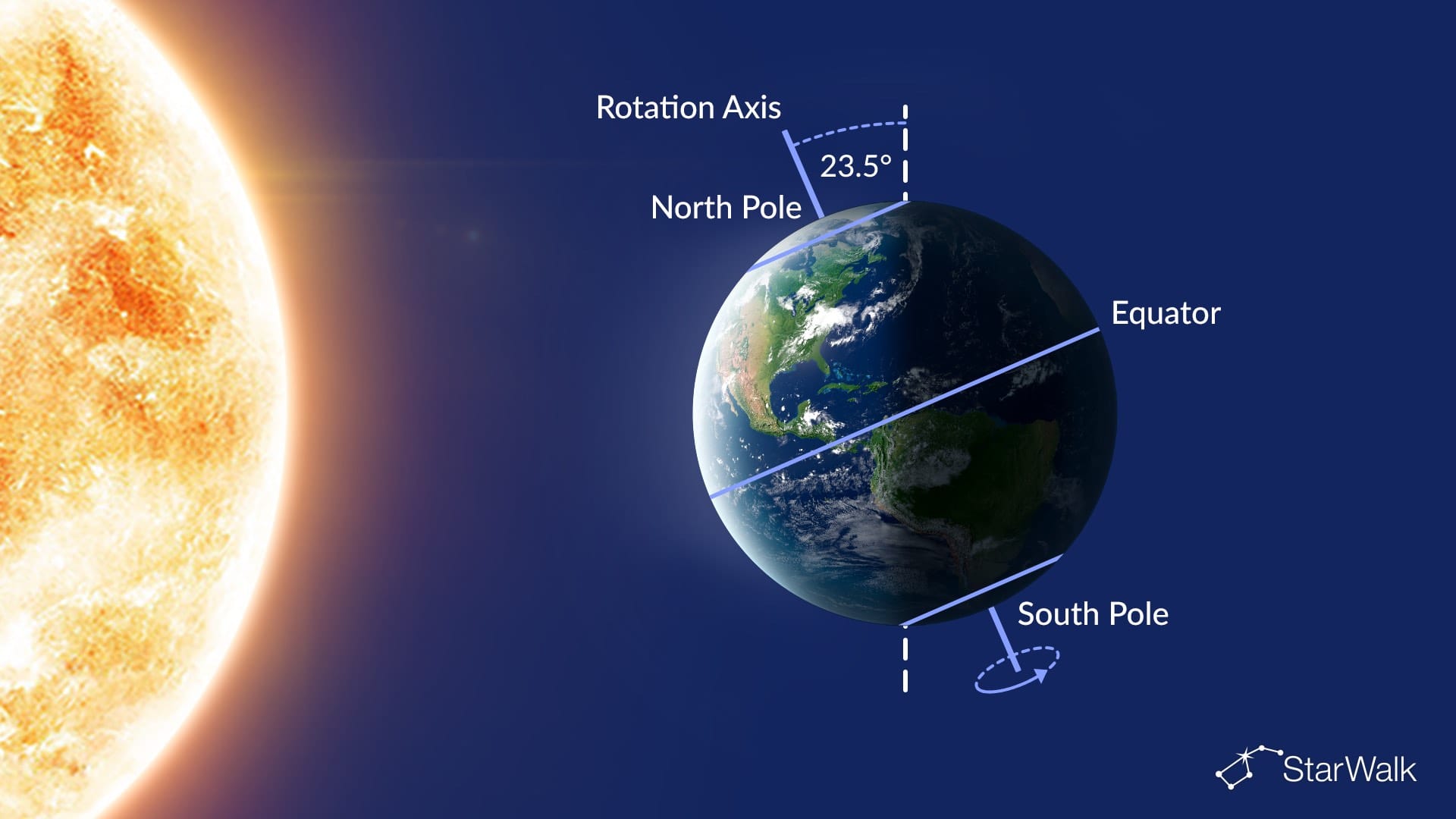
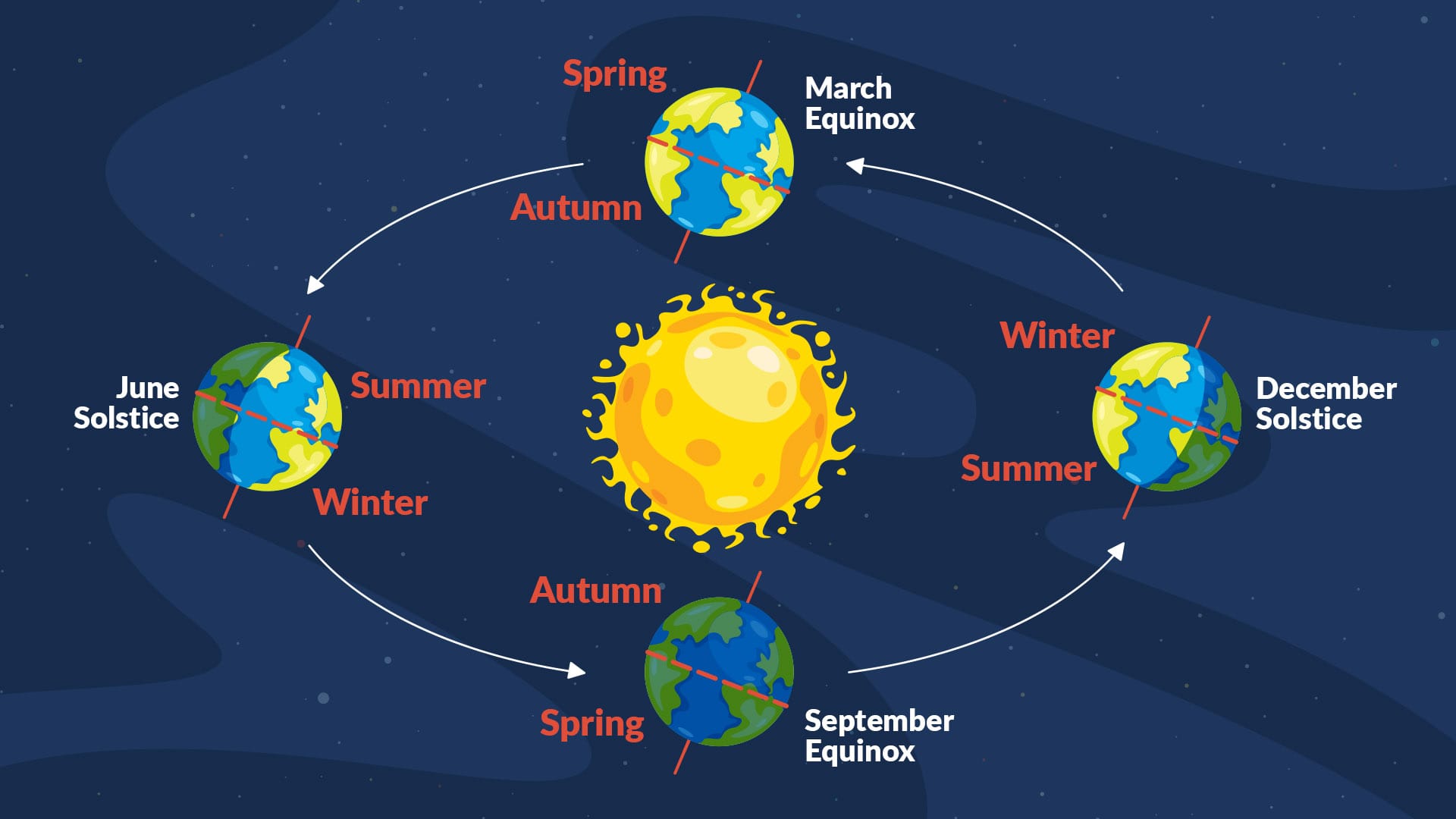
On June 21, 2026, the June solstice occurs at 08:24 GMT. It marks the beginning of astronomical summer in the Northern Hemisphere and winter in the Southern Hemisphere, bringing the year’s longest day north of the equator and shortest day south of it. Learn what causes the solstice and how it affects daylight in our guide to the June solstice.
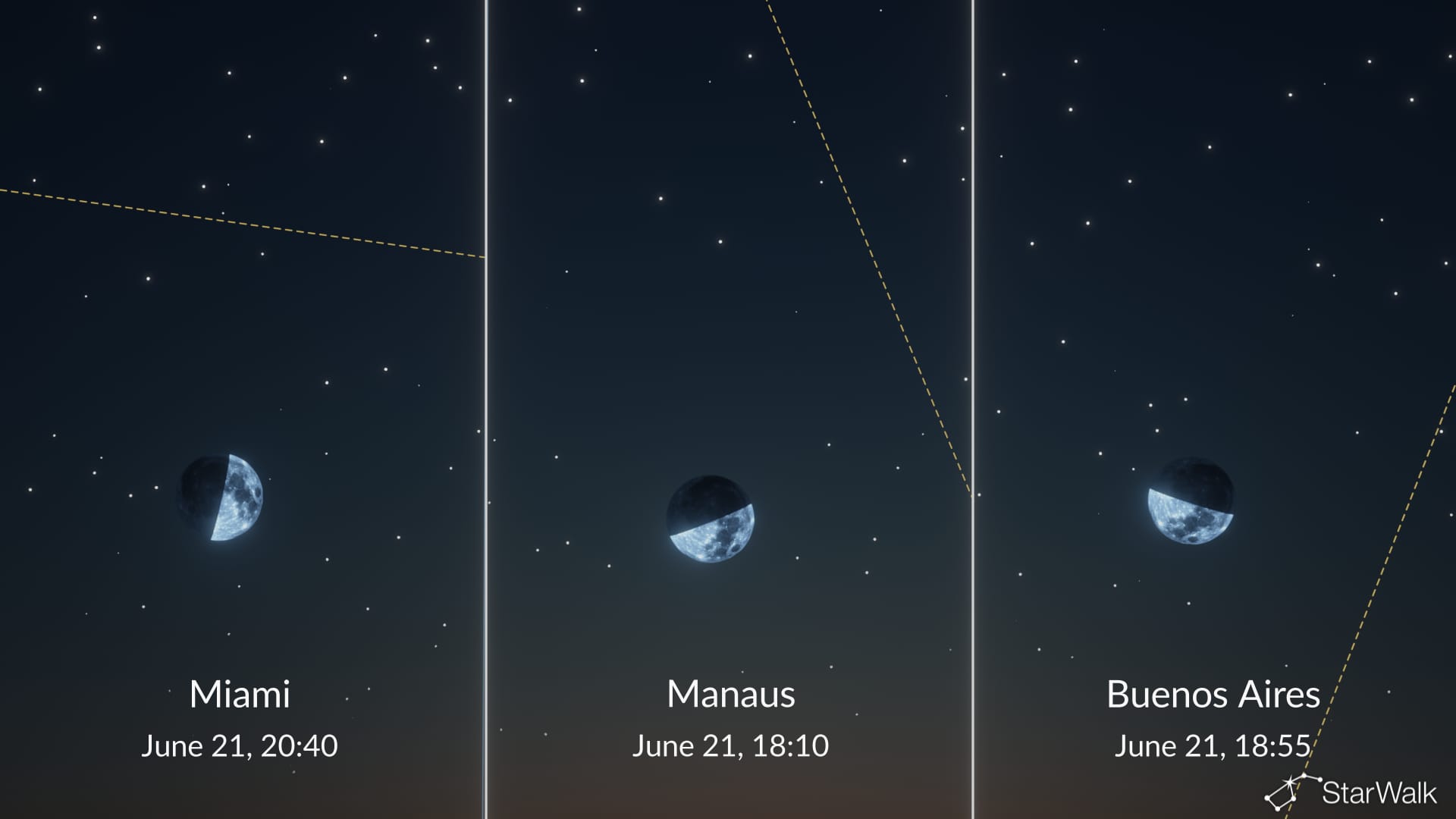
On June 21, 2026, the Moon reaches its First Quarter phase. The half-lit Moon will be easy to spot in the evening sky, and a telescope or binoculars will show sharp shadows along the terminator, where lunar craters and mountains stand out best.
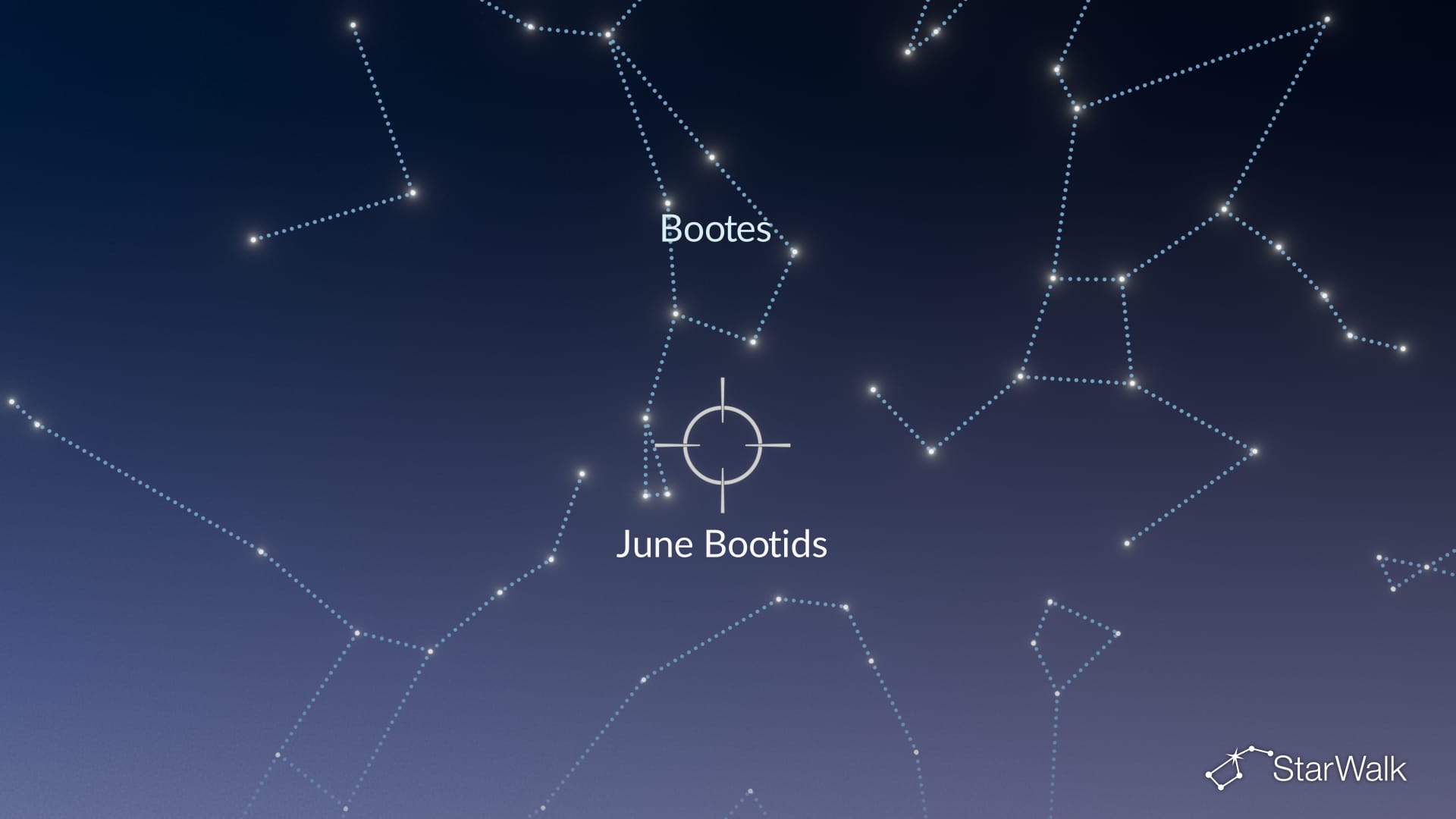
On June 22, 2026, the June Bootids meteor shower will reach its peak around 01:00 GMT. The shower is unpredictable, but in most years it produces only a few meteors per hour. No major outburst is expected in 2026, and the waxing Moon may hide faint meteors, so treat the Bootids as a possible bonus rather than the main event of the night.
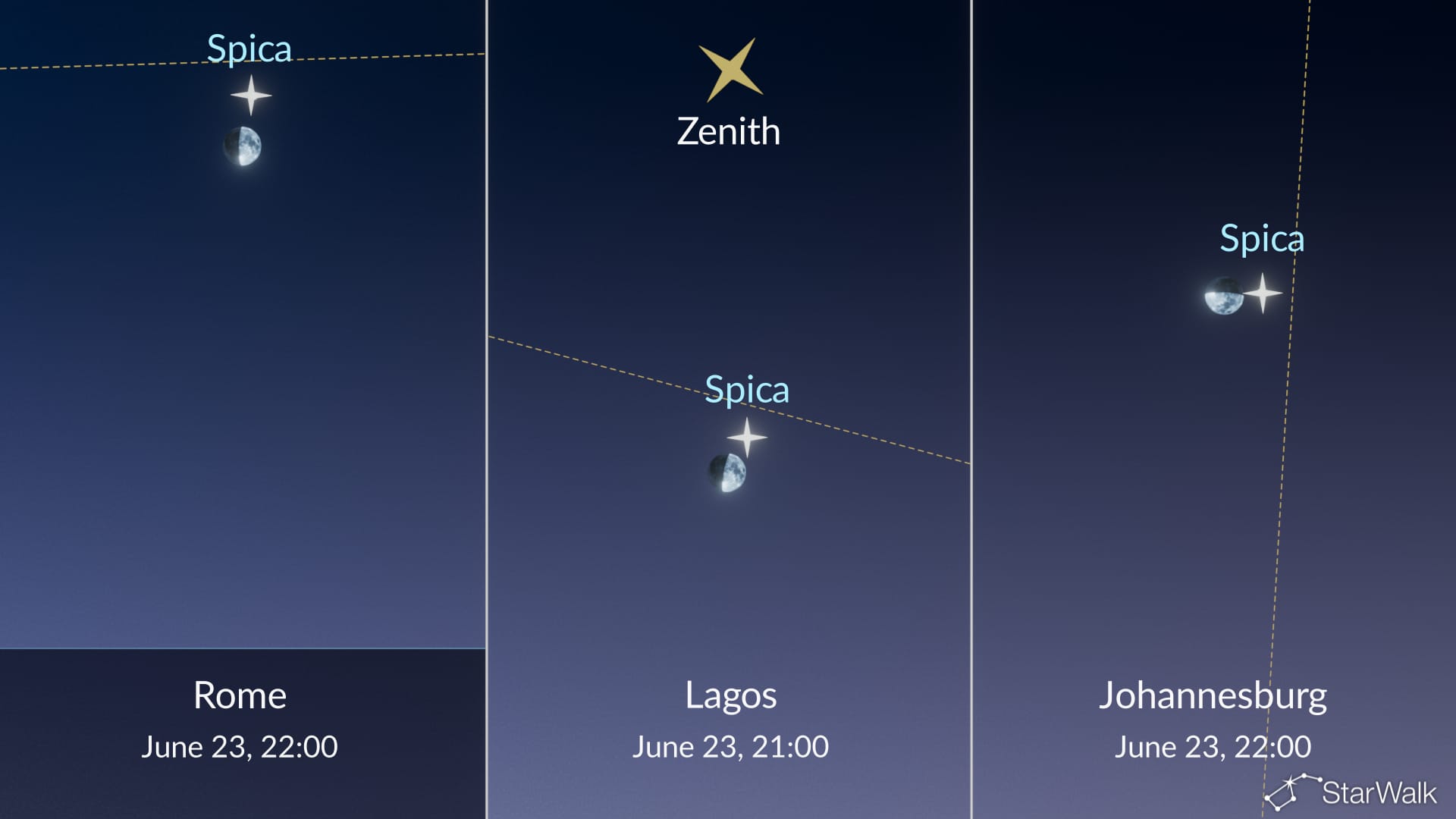
On June 23, 2026, the Moon will appear near Spica, the brightest star in Virgo. The pair will be easy to find after sunset and visible without any equipment: the Moon will dominate the view, while Spica will shine nearby as a bright bluish-white point.
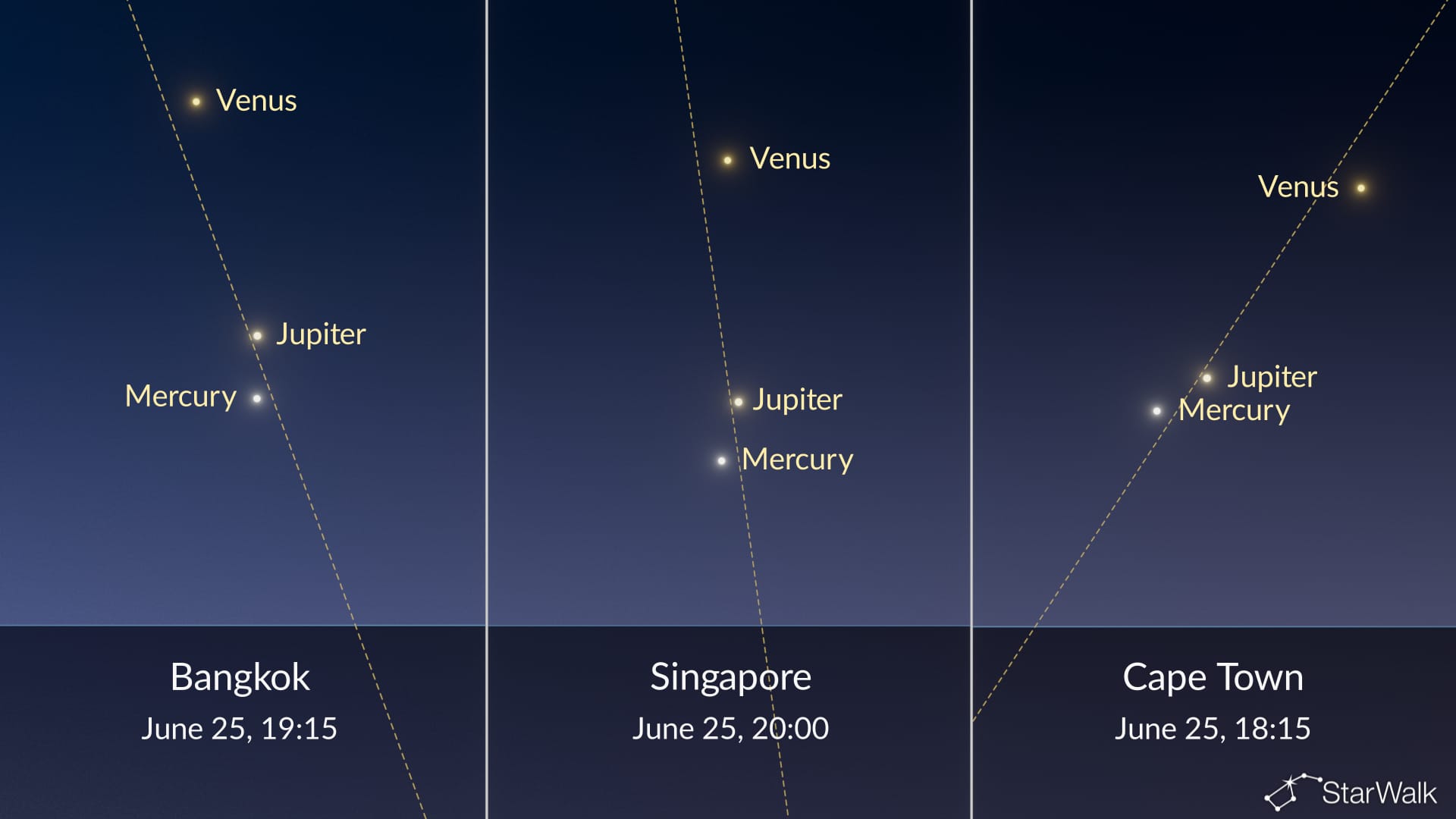
On June 25, Mercury will appear close to Jupiter low above the western horizon after sunset. Jupiter will be much easier to spot, while Mercury may be tricky in the twilight glow, so choose a place with a clear view to the west. Bright Venus will shine nearby and complete the evening planet grouping.
There is almost always something worth seeing in the night sky. Use this guide to choose the best events for tonight and the coming days, but remember that visibility depends on your location, local time, weather, and light pollution. For the most accurate view, check the exact position of each object in the Sky Tonight app before you go outside.