January Meteor Showers 2027: When and Where to Watch
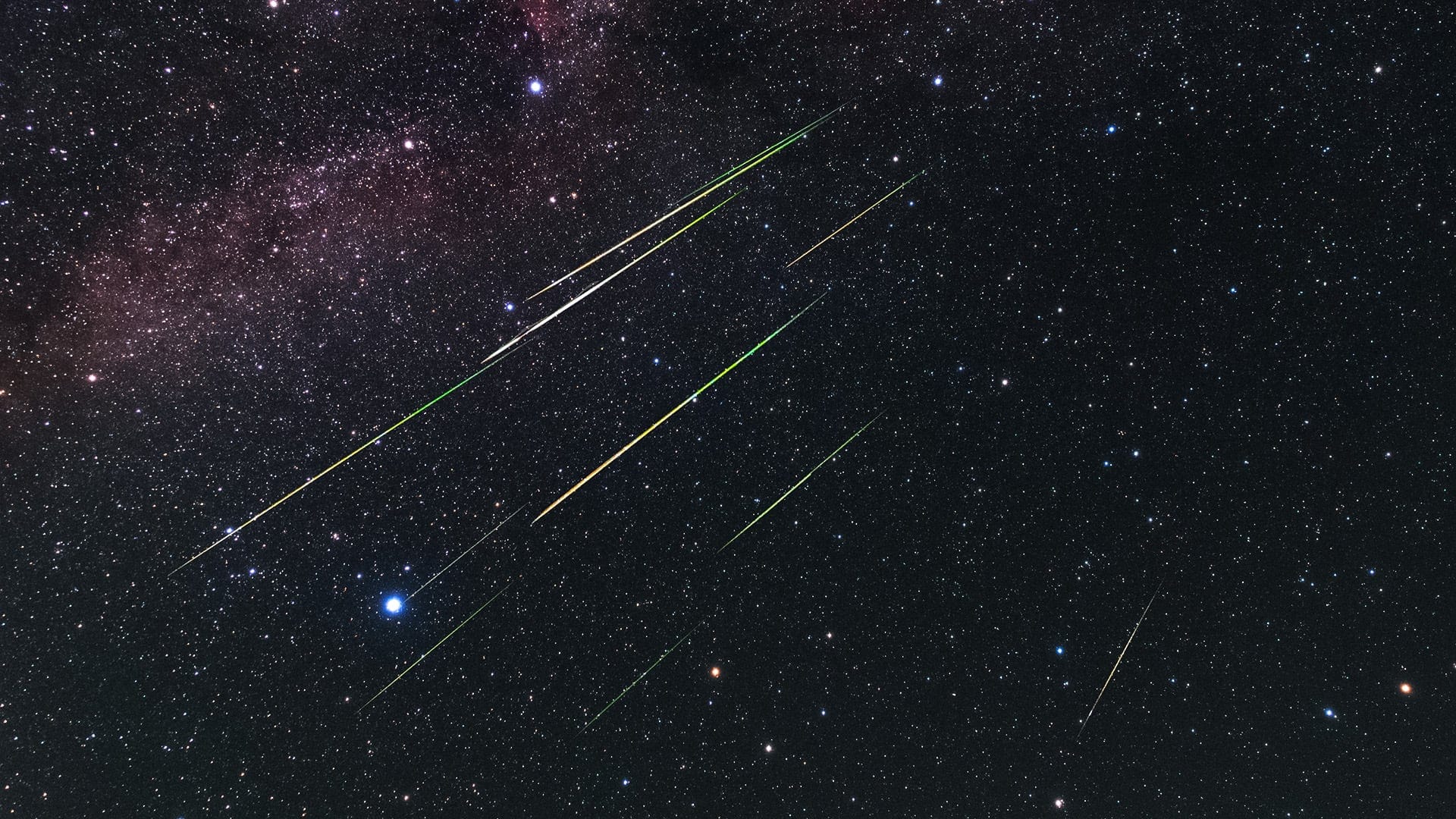
In January 2027, two notable meteor showers will reach their peaks of activity: the Quadrantids and Gamma-Ursae Minorids. Read on to learn when you can see them. To find out the best time for observations in your location, use the free Sky Tonight app.
Contents
- January 3-4: Quadrantids
- January 18-19: Gamma-Ursae Minorids
- How to see the most shooting stars in January 2027?
- Shooting stars in January 2027: Conclusion
January 3-4: Quadrantids
- Designation QUA
- Meteors/hour (ZHR): 120
- Moon illumination: thin waning crescent
- Peak: January 3-4
- Active: Dec 28 – Jan 12
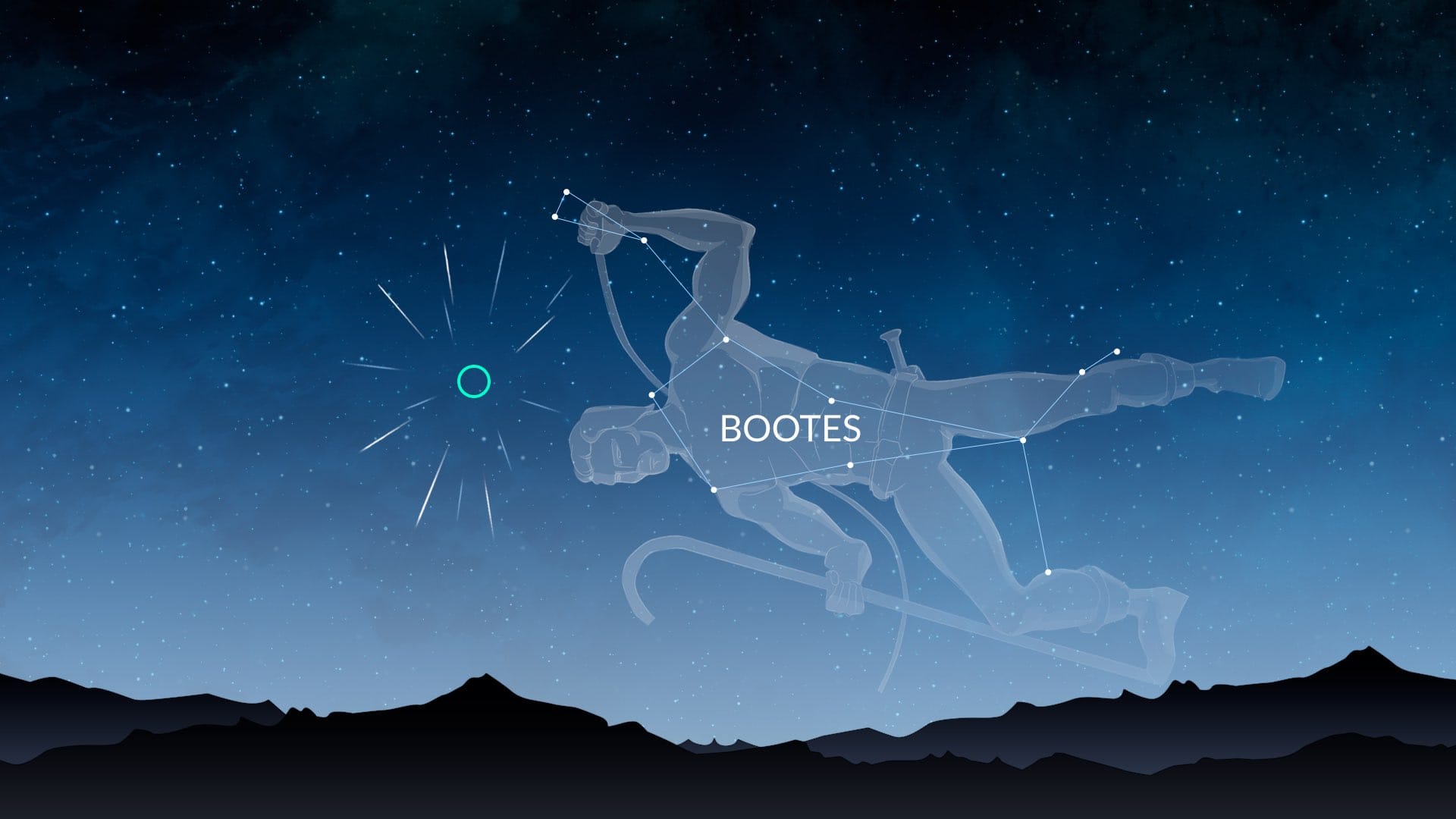
- Radiant location: Constellation Bootes (near the border with Hercules)
- Visible from: Northern Hemisphere (best viewed in Europe and Western Asia)
Here and later in the article, “meteors per hour” refers to the theoretical maximum of meteors that can be seen under ideal viewing conditions, astronomically called ZHR (Zenithal Hourly Rate).
The Quadrantids are one of the strongest meteor showers of the year, capable of producing over 100 meteors per hour at their best. However, their brief and sharp peak makes them easy to miss. Learn more about this unique meteor shower in our detailed article.
Visibility forecast
In 2027, the Quadrantids are predicted to peak at around 03:30 GMT/UTC on January 4. Since the peak lasts only about six hours, this timing is especially favorable for observers in Europe and Western Asia. Elsewhere in the Northern Hemisphere, the Quadrantids will also be visible, though fewer meteors may be seen. For the best view, observe from after local midnight to the pre-dawn hours of January 4. Moonlight won’t be a major problem this year. The Moon will be a thin waning crescent, so the sky should stay dark enough for meteor watching.
Want to give yourself the best chance of catching the Quadrantids? Read our dedicated guide on the Quadrantids 2027 and get ready for meteor hunting!
January 18-19: Gamma-Ursae Minorids
- Designation GUM
- Meteors/hour: 3
- Moon illumination: waxing gibbous Moon
- Peak: January 18-19
- Active: January 15–25
- Radiant location: Constellation Ursa Minor
- Best visible from: Northern Hemisphere
The Gamma-Ursae Minorids (γ-Ursae Minorids) are a weak meteor stream with a peak rate of only three meteors per hour. The International Meteor Organization began monitoring it fairly recently, in 2017. The shower remains under study, and its exact activity period and characteristics may change as new data emerge.
Visibility forecast
In 2027, observing conditions won’t be ideal. The meteor shower peaks a few days before the Full Moon, so moonlight will wash out many faint meteors. This makes the Gamma-Ursae Minorids a poor target for casual observers, especially after the much stronger Quadrantids earlier in the month.
Still, if you’re already outside under a clear sky, you might spot a few meteors from this stream. Try watching in the early morning hours, when the radiant is higher above the horizon, and choose the darkest possible location.
How to see the most shooting stars in January 2027?
For any meteor shower, the higher the radiant in the sky, the more meteors you are likely to see. If you want to know the position of the radiant for your location, use our stargazing app Sky Tonight:
- Open the app and type the name of the meteor shower in the search field.
- Tap on the radiant of the fitting meteor shower and go to the “Events” tab.
- The middle time in the “Visible Passes” section shows when the radiant reaches its highest point in the sky. Tap on it to see where the radiant will be on the sky map.
For more tips on observing meteor showers, read our dedicated article. And take our quiz about shooting stars to test your meteor hunting skills!
Shooting stars in January 2027: Conclusion
The best January meteor shower in 2027 is the Quadrantids, which peak on the night of January 3 to 4. This year, the thin waning crescent Moon won’t interfere much with the observations. Under ideal conditions, the Quadrantids can produce up to 120 meteors per hour, but their peak is short, so plan your observing session carefully.
The Gamma-Ursae Minorids peak around January 18, but they’re much weaker and will be affected by bright moonlight. For most observers, the Quadrantids are the only must-see January meteor shower of 2027.
Use the Sky Tonight app to plan your meteor viewing, check radiant positions, and find the best local times for meteors in your location. We wish you clear skies and happy observations!