Night Sky Tonight: What to See This Week
~2 min

Looking for what to see in the sky this week? This guide highlights the upcoming astronomical events. Scroll down for sky maps and viewing tips, and use the Sky Tonight app to check when and where each object will appear in your sky.

Contents

Sky Events Tonight: August 10

  • Main astronomy event tonight: Pollux near the Moon.
  • Moon tonight: Waning crescent Moon.
  • Planets visible tonight: Evening — Venus. Morning — Mercury, Jupiter (very low above the horizon), Saturn, Mars, Uranus, Neptune. Details: Planets Visible Tonight
  • Constellations visible tonight: Northern Hemisphere — Sagittarius, Lyra, Scutum. Southern Hemisphere — Sagittarius, Telescopium, Scutum, Corona Australis. Details: Constellations in August 2026

Upcoming Astronomical Events: August 10-16, 2026

DateEventBest timeEquipment
August 10Pollux near the MoonBefore sunriseNaked eye
August 11Mercury near the thin lunar crescentBefore sunriseNaked eye
August 12Six-planet alignmentAbout 1 hour before sunriseNaked eye for Mars, Saturn, Mercury, and Jupiter; binoculars or telescope for Uranus and Neptune; sky map or stargazing app
August 12Total solar eclipseAt the local eclipse maximumCertified eclipse glasses; properly filtered camera, binoculars, or telescope
August 12–13Perseids meteor shower peakAfter midnight until dawnNaked eye; reclining chair or blanket
August 15Venus at greatest elongationSoon after sunsetNaked eye; optional telescope
August 16Venus near the MoonSoon after sunsetNaked eye; optional binoculars

Below, you’ll find sky events arranged by date, with quick viewing tips to help you choose the best nights for stargazing. All dates are listed in GMT, so the exact calendar date may differ in your local time zone; however, the times shown on the sky maps are given in local time.

August 10-11: Pollux near the Moon

Night sky tonight: Pollux near the Moon on August 10
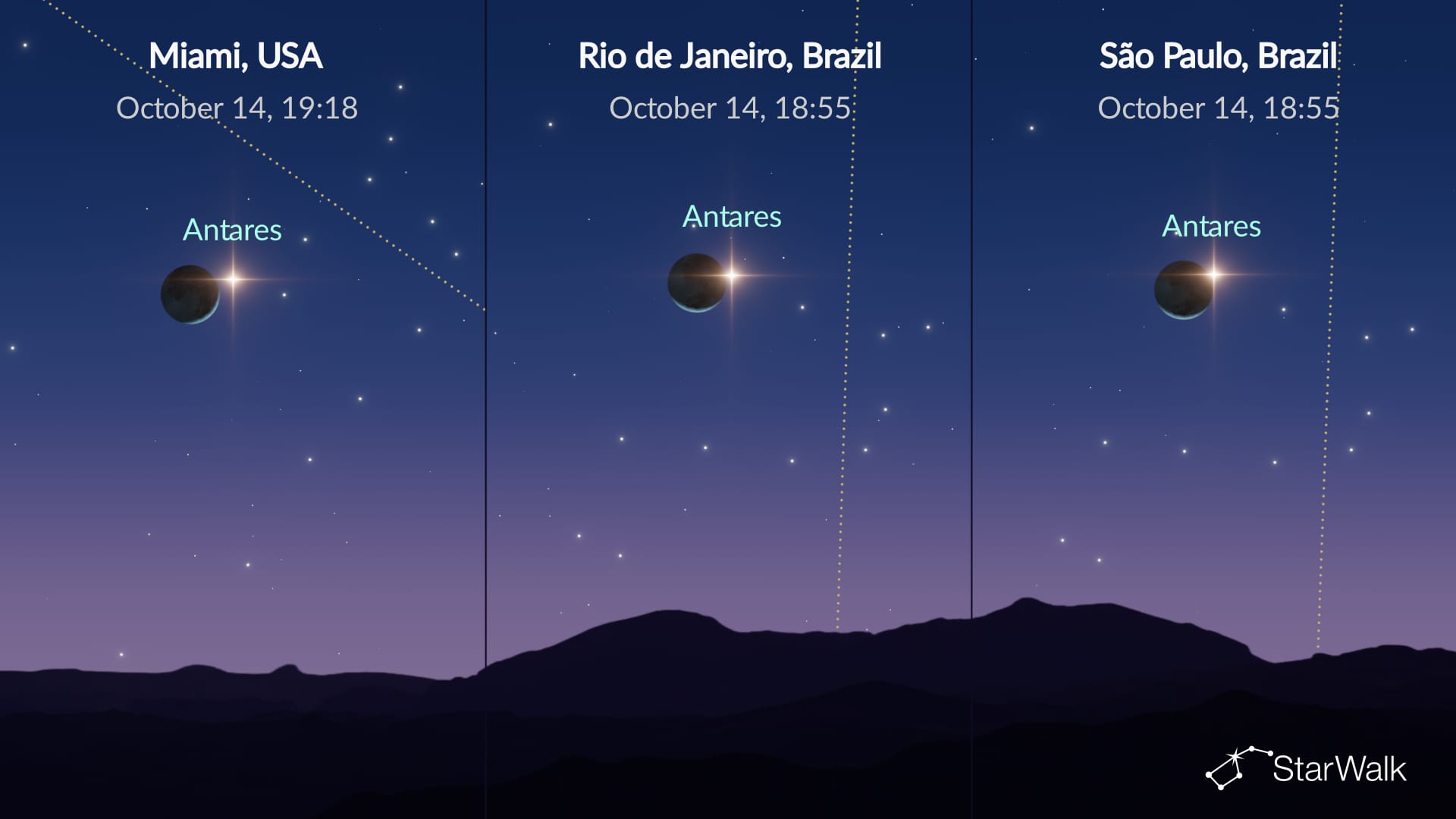
On August 10-11, look toward the eastern horizon before sunrise to see a very thin crescent Moon near Pollux, a bright star in the constellation Gemini. Under good observing conditions, both objects will be visible to the naked eye, but you will need a clear, unobstructed view of the horizon to spot them.

August 11: Mercury near the Moon

Night sky tonight: Mercury near the Moon on August 11
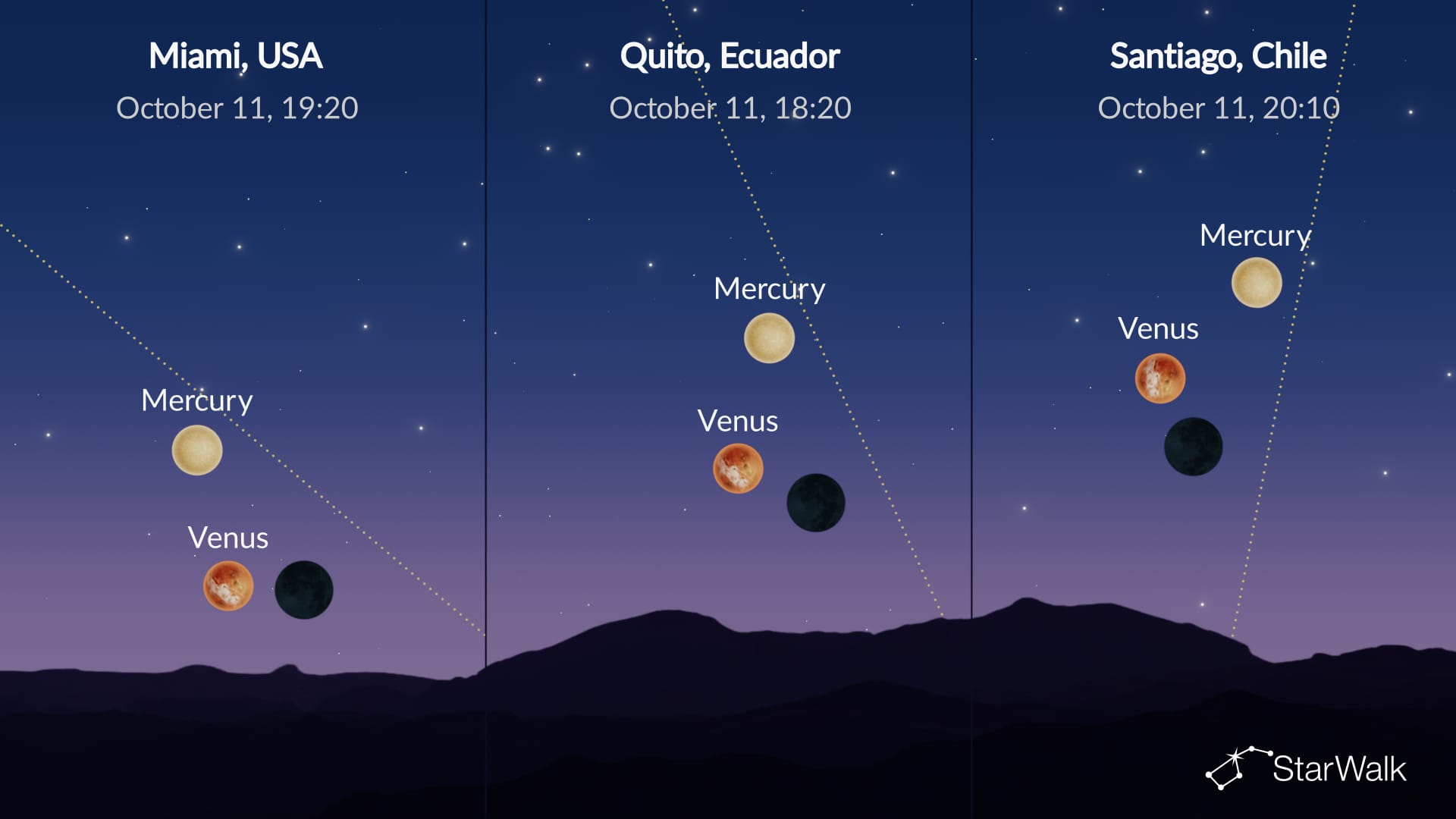
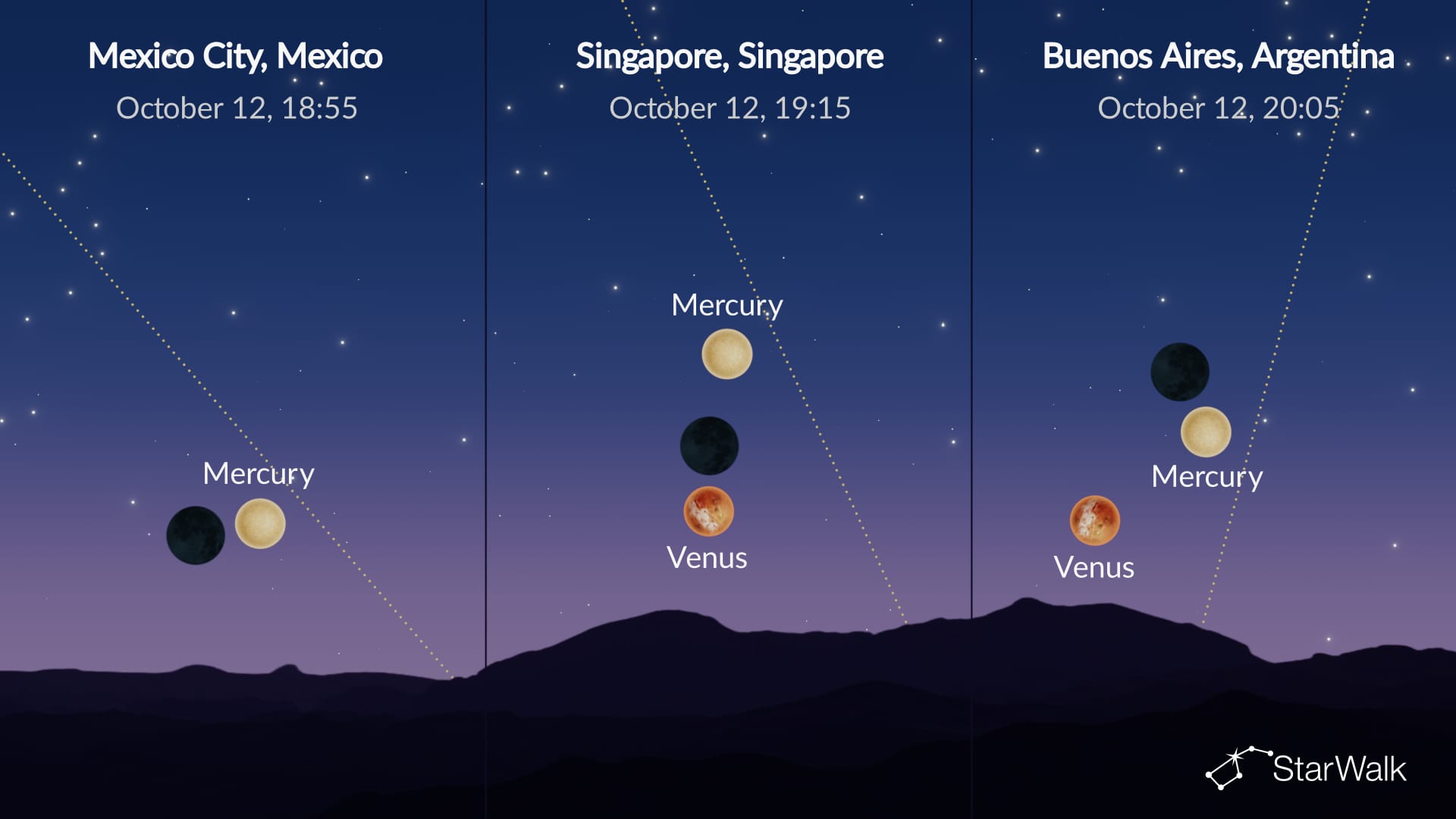
On August 11, the Moon will pass close to Mercury in the morning sky. The pair will be challenging to observe because both objects will rise shortly before the Sun, leaving only a brief viewing window. Mercury will be visible to the naked eye, while the Moon, just one day before its new phase, will appear as an extremely thin and barely visible crescent.

August 12: 6-planet alignment; total solar eclipse; Perseids meteor shower peak

Night Sky Tonight: Six planet alignment on August 12
August 12 begins with a challenging sight: six planets will spread across the morning sky. Mars and Saturn will be the easiest to find, while Mercury and Jupiter will stay low near the horizon. Uranus and Neptune are much fainter, so binoculars, a small telescope, and a sky map will help. Details: Planetary alignment on August 12
Night Sky Tonight: total solar eclipse on August 12
Later that day, the Moon will move in front of the Sun and create a total solar eclipse along a narrow path across Greenland, Iceland, a small corner of Portugal, northern part of Russia, and northern Spain. To avoid eye damage, use certified eclipse glasses, and never look at the Sun through ordinary sunglasses or unfiltered binoculars. Details: Total solar eclipse on August 12
Night Sky Tonight: Perseids on August 12
When night falls, the Perseids will bring the final show of the day. Under dark skies, you may see up to 100 meteors per hour streaking overhead. A telescope will not help — quite the opposite: the more sky you can see, the better, since meteors may appear anywhere. Find a place away from city lights, lie back, and give your eyes about 20 minutes to adjust to the darkness. The best time to watch is usually after midnight, when the number of visible meteors increases. Details: Perseids meteor shower 2026

August 15: Venus at greatest elongation

Night Sky Tonight: Venus at greatest elongation on August 15
Venus will reach its greatest eastern elongation, marking the point when it appears most widely separated from the Sun in the evening sky. However, this does not mean it will be high above the horizon everywhere: the view will be best from the Southern Hemisphere, while observers farther north will find Venus lower in the west. Look for an extremely bright white point soon after sunset from a place with a clear western horizon. No equipment is needed, though a telescope can show Venus as a tiny, roughly half-lit disk.

August 15-16: Venus near the Moon

Night Sky Tonight: Venus near the Moon on August 16
Venus will appear close to a thin crescent Moon, making a beautiful pair above the western horizon. Look soon after sunset, before they move too low. Both objects are visible to the naked eye, while binoculars may also reveal earthshine — a faint glow across the unlit part of the Moon’s visible disk.

Night Sky Tonight: Bottom Line

There is almost always something worth seeing in the night sky. Use this guide to choose the best events for tonight and the coming days, but remember that visibility depends on your location, local time, weather, and light pollution. For the most accurate view, check the exact position of each object in the Sky Tonight app before you go outside.

Want to plan beyond the dates listed here? Check the full monthly calendar of astronomical events in August 2026.

Trustpilot