World Space Week 2026: Dates, Theme & How to Celebrate
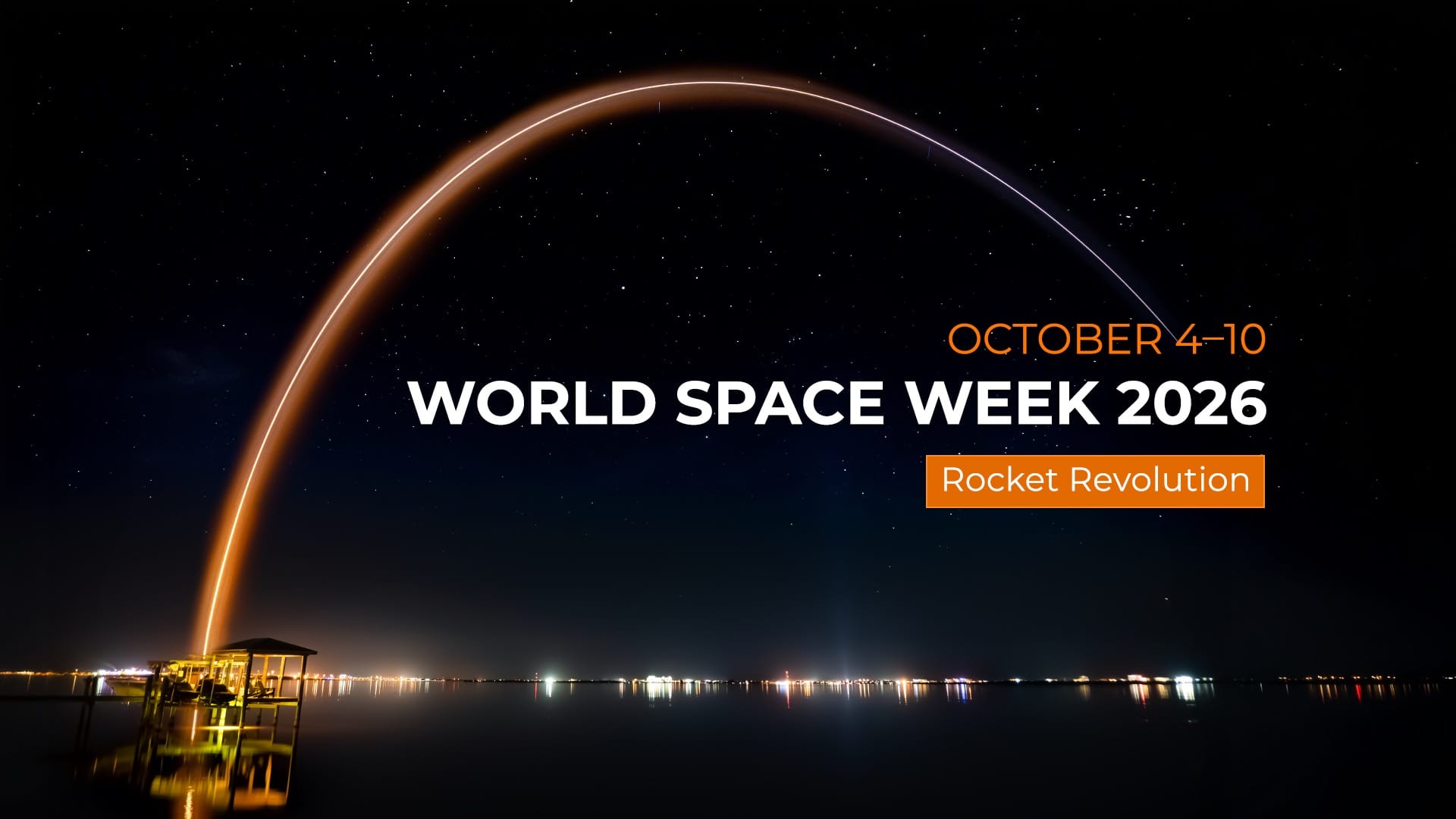
World Space Week 2026 takes place on October 4–10 under the theme “Rocket Revolution.” Celebrate by learning about space exploration and discovering what’s above your head! The Star Walk 2 app can help you identify stars, planets, and constellations. Read on for celebration ideas and skywatching highlights for this year’s Space Week.
Contents
- When is World Space Week 2026?
- What is the World Space Week 2026 theme?
- World Space Week activities: how to celebrate
- What can you see in the night sky during World Space Week 2026?
- World Space Week: brief history
- Celebrate World Space Week 2026 under the stars
When is World Space Week 2026?
World Space Week 2026 begins on Sunday, October 4, and ends on Saturday, October 10. The dates of World Space Week are fixed, regardless of the days of the week.
What is the World Space Week 2026 theme?
Each year, a theme is chosen for World Space Week. The theme for World Space Week 2026 is “Rocket Revolution.” The theme explores how reusable rockets, commercial launch providers, and the growing number of countries and organizations involved in spaceflight are changing how we reach and use space.
These changes also raise a question: could traveling to space one day become affordable for more people? For now, space travel remains largely limited to professional astronauts and wealthy private passengers. In our article about Space Tourism in 2026, we explore how much a trip to space costs today.
You don’t have to follow the annual theme to take part in World Space Week. Any space-related event held on October 4–10 can be registered on the official World Space Week website. If you need ideas, explore the past themes from 2000 to 2025 for inspiration.
World Space Week activities: how to celebrate
You don’t need special equipment or a science background to join in. Here are a few ideas:
- Visit a space event near you. Check local planetariums, science museums, observatories, and astronomy clubs for talks, exhibitions, and stargazing sessions.
- Explore this year’s rocket theme. Watch a rocket launch recording, learn how reusable rockets land, or try a simple paper-rocket activity with your family. The official Rocket Revolution Toolkit offers activities for classrooms, families, and clubs.
- Celebrate from home. Watch a space documentary, read a sci-fi book, try an astronomy quiz, or explore NASA’s space activities for kids.
- Go stargazing. Choose a clear evening and invite someone to join you. Use the free Star Walk 2 app to find out which objects you can see. Start with one bright planet or a recognizable constellation.
Pokémon joins World Space Week 2026
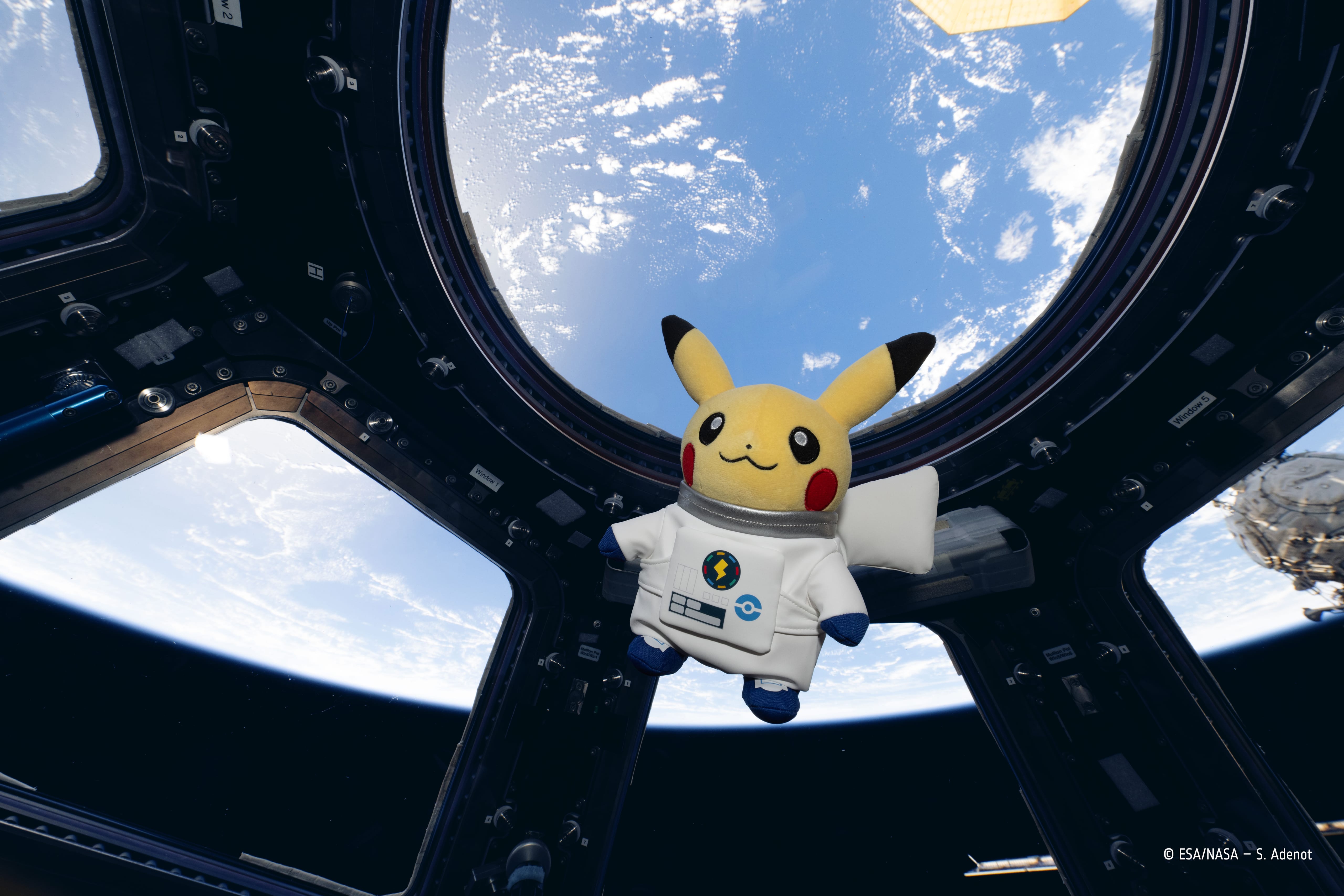
Pikachu has already been to space! As part of a collaboration between the European Space Agency (ESA) and The Pokémon Company International, a Pikachu plush spent 67 days aboard the International Space Station in 2026.
To celebrate World Space Week, the partners are bringing space-themed exhibitions to ESA sites and museums across Europe. Visitors can explore real space missions through displays featuring Pokémon characters.
Pokémon GO players can also encounter Astronaut Pikachu at participating European museums from October 4, 2026, to April 30, 2027, with additional activities during October 4–10. Check the official event guide for participating locations and details.
What can you see in the night sky during World Space Week 2026?
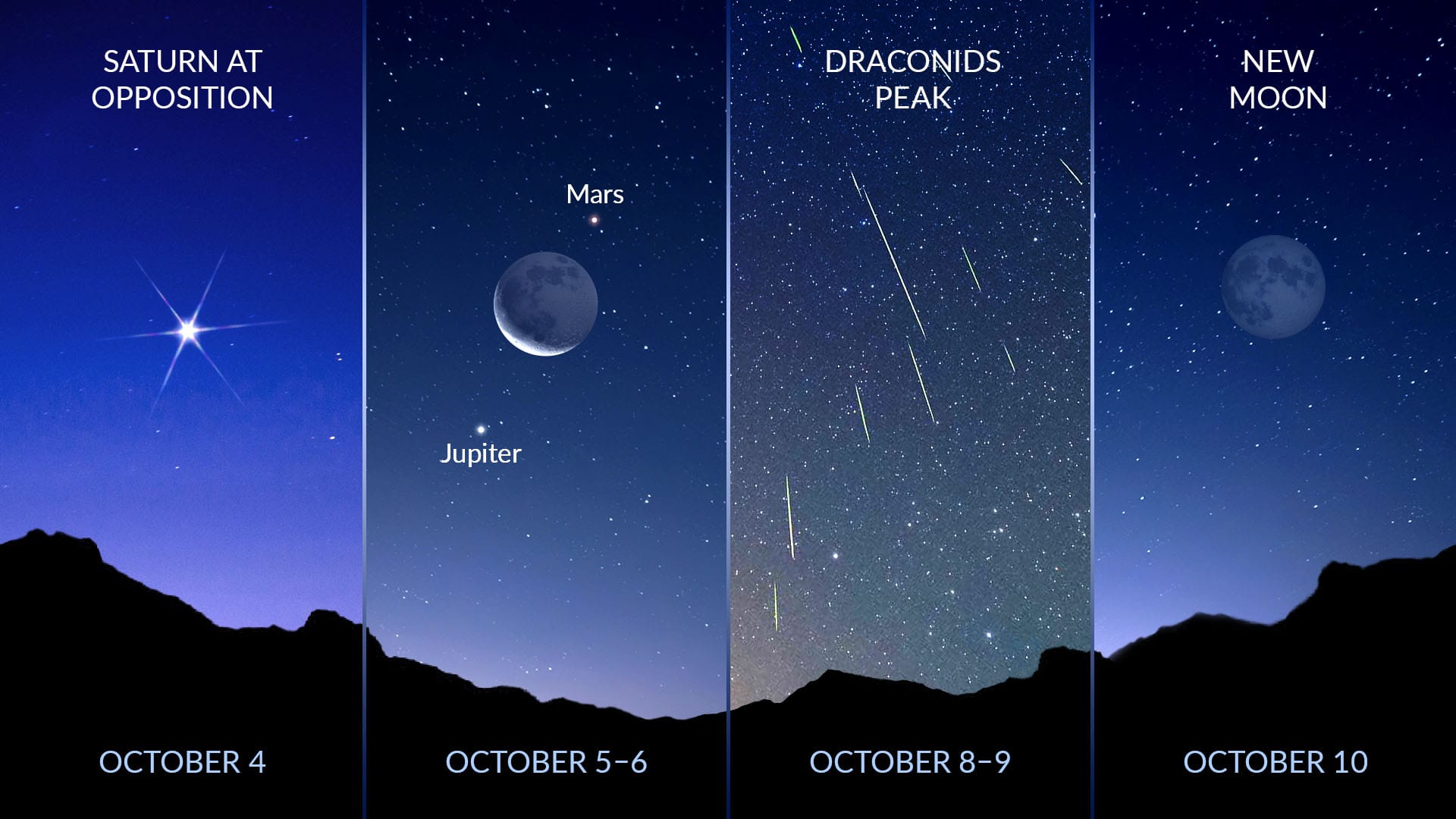
- October 4 — Saturn at opposition. World Space Week opens with one of the year’s best opportunities to observe Saturn. The planet rises around sunset and remains visible through the night. You can spot it with the naked eye, but you’ll need a telescope to see its rings.
- October 5–6 — The Moon near Mars and Jupiter. Look before sunrise for the waning crescent Moon near Mars around October 5 and Jupiter around October 6. From parts of North America, the Moon will hide Jupiter in a pre-dawn lunar occultation. Visibility and timing depend on your location.
- October 8–9 — Draconid meteor shower peak. This modest shower is best viewed from the Northern Hemisphere, usually in the evening. Expect only a few meteors per hour under good conditions. The Moon will be close to its new phase, giving observers dark skies. Find a spot with an open view and let your eyes adjust to the darkness.
- October 10 — New Moon. With little moonlight interfering toward the end of the week, it’s a good opportunity to explore October stars and deep-sky objects away from city lights.
For more events and observing tips, explore our October night sky guide. Check local visibility in Star Walk 2 before heading outside.
World Space Week: brief history
World Space Week is an international celebration held annually from October 4 to October 10. It celebrates how space science and technology help us understand the Universe and improve life on Earth. The United Nations General Assembly established this annual observance in 1999.
The dates of World Space Week were chosen to commemorate two important milestones in space history:
- October 4, 1957: The launch of Sputnik 1, the first artificial satellite to orbit Earth.
- October 10, 1967: The Outer Space Treaty entered into force, establishing basic principles for the peaceful exploration and use of outer space.
Celebrate World Space Week 2026 under the stars
Whether you learn how a rocket works, visit a planetarium, or spot Saturn for the first time, there are plenty of ways to take part in World Space Week on October 4–10. Pick an activity, invite a friend, and make time for space. Happy stargazing!