Stargazing for Kids: How to Get Them Excited About Astronomy
Stargazing with kids can start with the Moon, a clear patch of sky, and 15–20 minutes outside. You don’t need a telescope or a head full of constellation names. Pick one thing to find, give your child something to do, and let their questions lead the way. Before heading out, use the free Star Walk 2 app to check which objects will be visible from your location at a time that works for your family.
Below, you’ll find nine activities, practical equipment tips, fun space facts, and ideas for connecting the sky with nature, mythology, literature, and science. Warm clothes and snacks also have an important role in astronomy. Especially the snacks.
How old are the kids you’d like to get excited about astronomy?
How to Start Stargazing With Kids
“Look, another dot!” will only keep a child entertained for so long. To get them interested, help them imagine what those dots actually are.
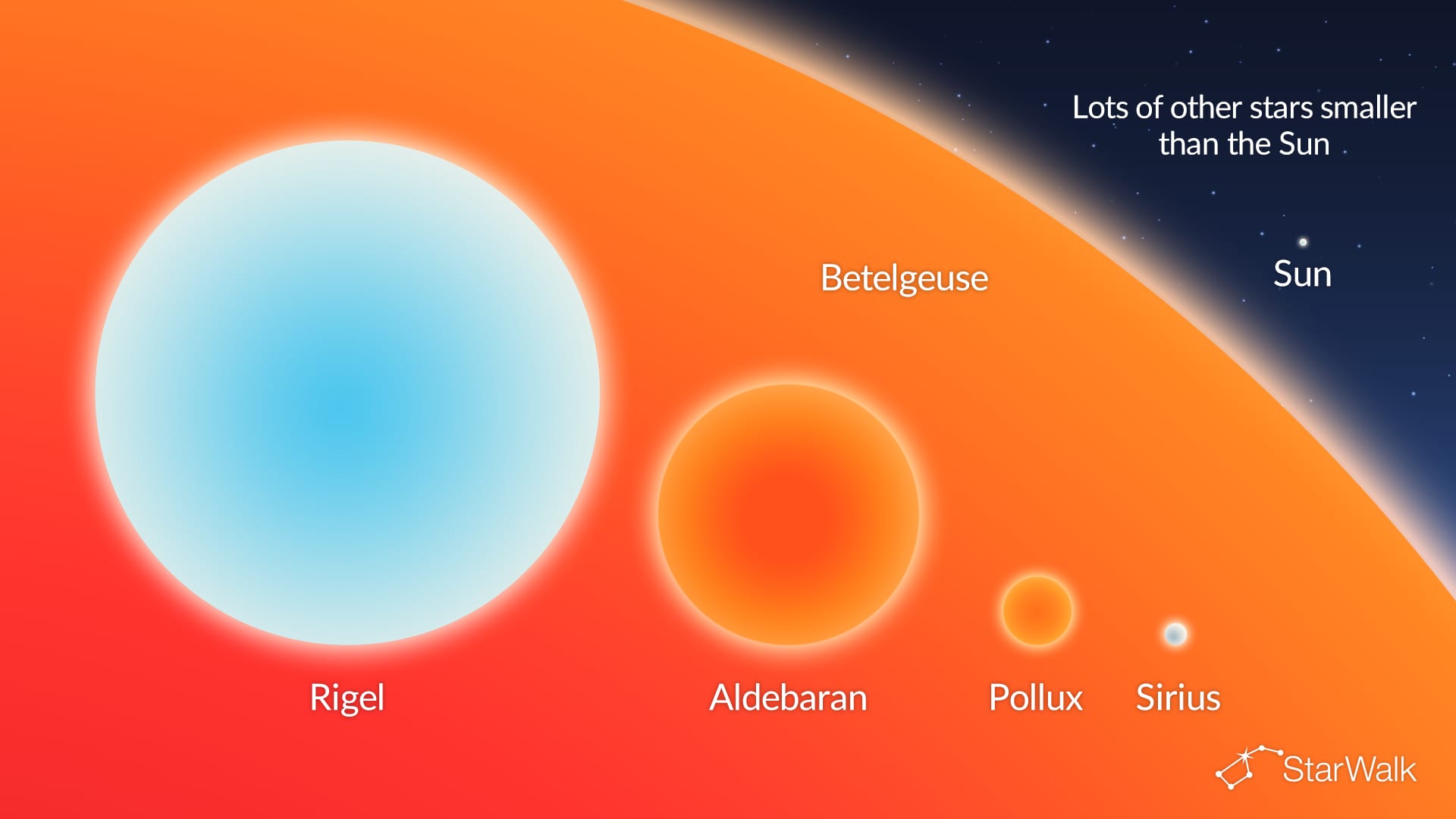
Space is enormously, vastly huge. That little light might be a planet bigger than Earth, a star bigger than the Sun, or even a spacecraft with people inside. Once your child knows that, the same patch of sky can suddenly look much more interesting.
Start with a surprising fact. For example:
Did you know those tiny points of light are actually huge balls of hot gas? Our Sun is a star, too — and some of the stars we can see are much bigger than it.
Or try a little time travel:
Did you know we can see the past? Light takes time to travel. We see Jupiter as it looked roughly half an hour to almost an hour ago. The light from some stars has been traveling for hundreds of years — it set off long before you, your parents, or even your grandparents were born.
You could even ask:
If someone far away could see Earth, would they be seeing us — or people who lived here long ago?
You don’t have to explain everything at once. Give your child one surprising idea, then let them try something themselves. Would they like to invent a constellation, find a planet, or spot a shooting star? Let them choose — here are nine activities to get you started.
9 Stargazing Activities for Kids
Choose one or two activities for your first evening. Before heading out, check the cloud forecast and what will be visible from your location. Then let your child pick a favorite. You can always try something else if a different part of the sky catches their attention.
Before you head out, brush up on the basics with our astronomy quiz for kids. It’s a quick way to refresh your own knowledge and get ready for the questions your child might ask.

1. Invent a star pattern
People have been finding pictures in the stars for thousands of years. Your child can have a turn, too.
Ask them to pick a few bright stars and draw them as dots on a piece of paper. Let your kid connect them into an animal, a vehicle, or something that makes sense only to them. Give the pattern a name and a story. Small tip: when Orion is visible, the three stars of its Belt are an easy place to start.
Then open Star Walk 2 and compare their drawing with the constellations in the app. Star Walk 2 shows both the star patterns and the figures people imagined among them. Tap a constellation’s name to explore its 3D model and the myth behind it.
For another surprise, look up the distances to two stars in the pattern. They may look like neighbors, but one could be much farther away than the other. Your child’s dinosaur might stretch across an enormous amount of space.
2. Find a planet among the stars
Your child has picked a few bright dots. But are all of them stars?
Find a visible planet in Star Walk 2 — Jupiter is a good choice when it’s in view — and ask your child to compare it with the stars nearby. Does its light look steadier? Is it brighter?
Explain that stars make their own light, while planets such as Earth and Jupiter reflect light from a star. That bright dot is another world traveling around the Sun, just as we are. The Sun, by the way, is our nearest star.
Stars usually twinkle more noticeably than planets. Sirius is a good example when it’s visible. (Planets can twinkle near the horizon, too, so this clue isn’t foolproof.) Venus and Jupiter are especially bright and can stand out even before many stars appear.
Let your child make a guess, then check the answer together in Star Walk 2.
You can explore more differences between stars and planets when the next question comes along.
3. Find a familiar constellation
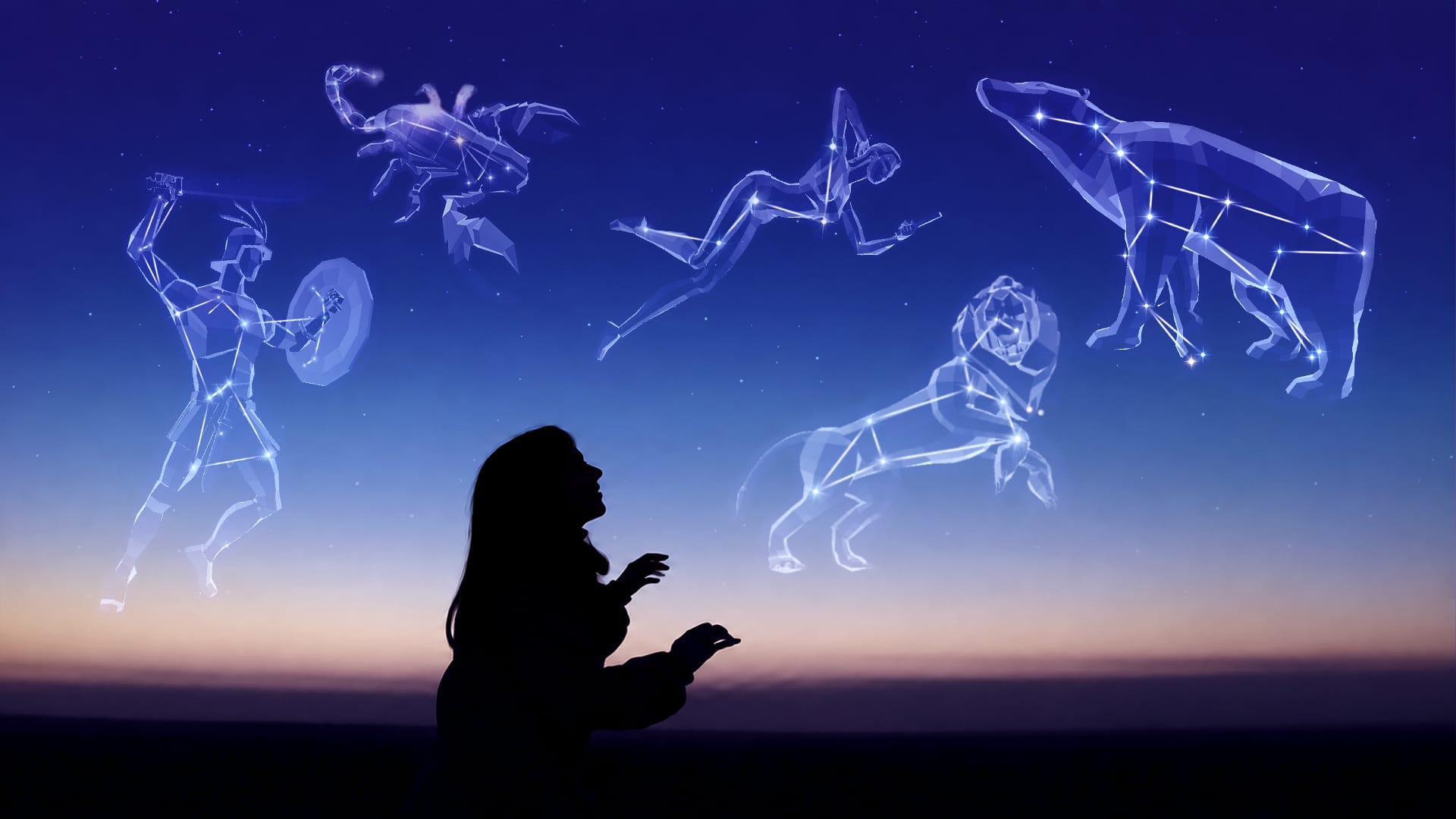
Your child has already invented a star pattern. Now try finding one that people named long ago.
Start with a simple shape that’s visible from your location:
- The Big Dipper: seven stars shaped like a ladle. It belongs to the constellation Ursa Major. For northern observers, the two stars on the outer edge of its bowl point toward Polaris, the North Star.
- Orion: start with the three stars of his Belt, then find his shoulders and feet. Try evening skies around December–February across much of both hemispheres.
- Cassiopeia: five bright stars form a zigzag like a W or an M. This is a useful pattern for northern observers; its orientation changes as the sky turns.
- Leo: a backward question mark marks the Lion’s head, with a triangle farther along his body. Look in the evening around March–May.
- Scorpius: reddish Antares and a long, curved tail. Evening views around June–August favor southern observers; from far-northern locations, much of the Scorpion stays out of sight.
Check your discoveries in Star Walk 2. On the next outing, let your child guide you and show you the pattern first.
4. Make a wish on a shooting star

A flash across the sky, a quick wish, and then the inevitable question: what was that?
A “shooting star” is a meteor — a bright streak made when a tiny piece of rock or dust from space rushes into Earth’s atmosphere. Many of these pieces are no bigger than grains of sand. Quite a performance for something so small!
For a better chance of seeing one, plan around an active meteor shower. The Perseids in August and Geminids in December are two prolific examples. They return each year as Earth passes through trails of debris. Our meteor shower calendar explains when and where to watch.
Choose a dark spot with little light pollution, lie back on a blanket, and keep as much sky in view as possible. No telescope needed. Many showers are best after midnight, but check the dedicated guides for the best time to view a specific meteor shower. Keep the session short if your child gets tired — you can always try again another night.
5. Catch the International Space Station
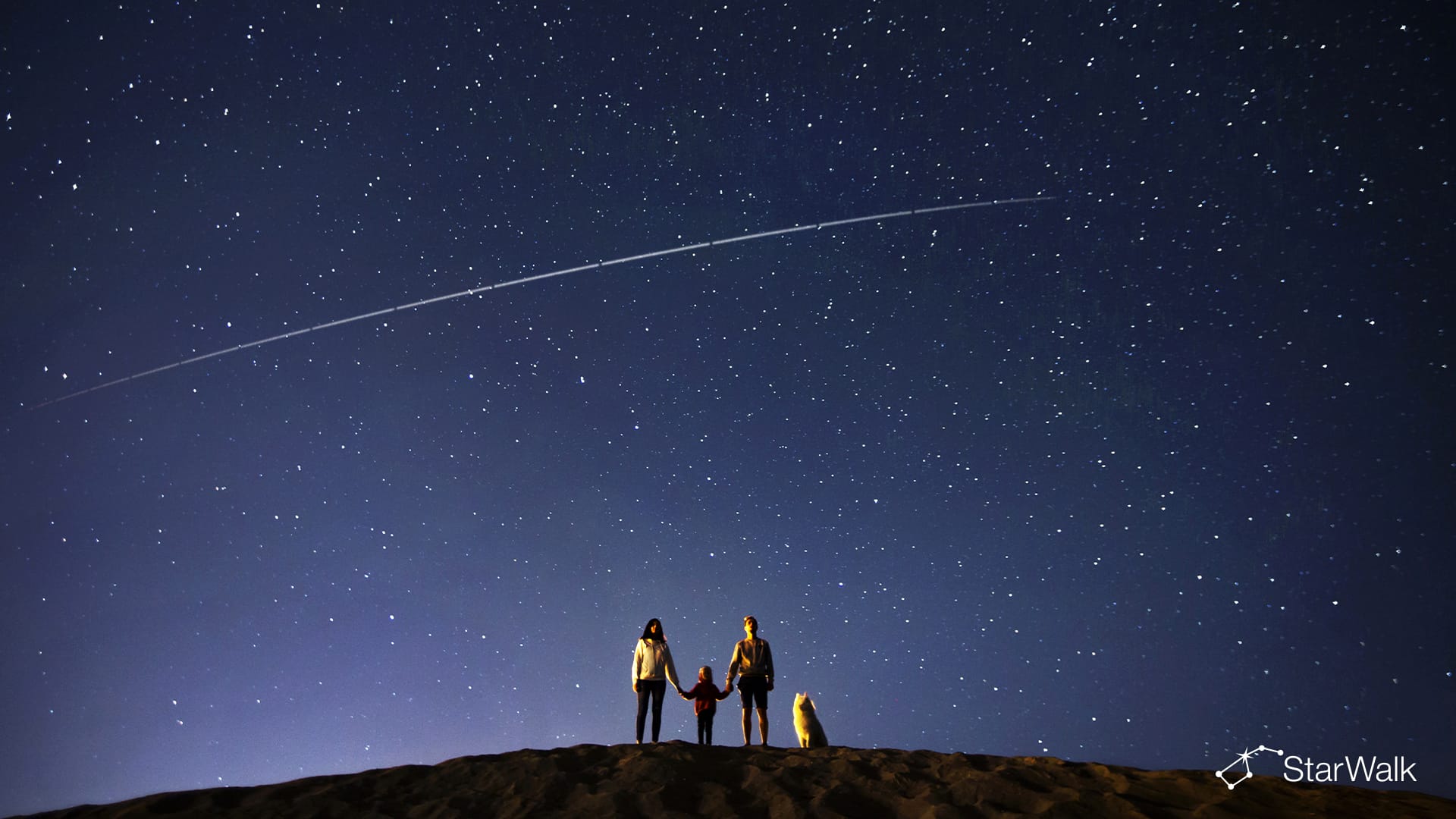
There’s a moving light crossing the sky. It looks a little like an airplane, but it doesn’t flash. Ask your child what they think it is.
Then share the best part: there are people inside it.
The International Space Station, or ISS, is a home and science laboratory orbiting about 400 km (250 miles) above Earth. And it’s one of the most surprising things a child can see without a telescope! We can see it from the ground because it reflects sunlight.
Including its solar panels, the station is roughly the size of a football field. That tiny moving dot suddenly seems a lot less tiny. It circles Earth about every 90 minutes, so the astronauts experience roughly 16 sunrises and sunsets a day. Ask your child how they’d decide when it was bedtime up there.
However, ISS is easy to confuse with an airplane or another artificial satellite (there’re plenty of those). Here is a guide on how to find the International Space Station in the sky:
- In the Satellite Tracker app, check when the ISS is visible in your location. Turn on ISS alerts by tapping the bell icon next to the visible pass.
- Go outside a few minutes early and show your child where the station will appear. A clear view above nearby roofs and trees helps.
- Look for a bright point moving steadily across the sky. The ISS reflects sunlight and usually doesn’t flash like an airplane.
6. Watch the Moon move above a roof
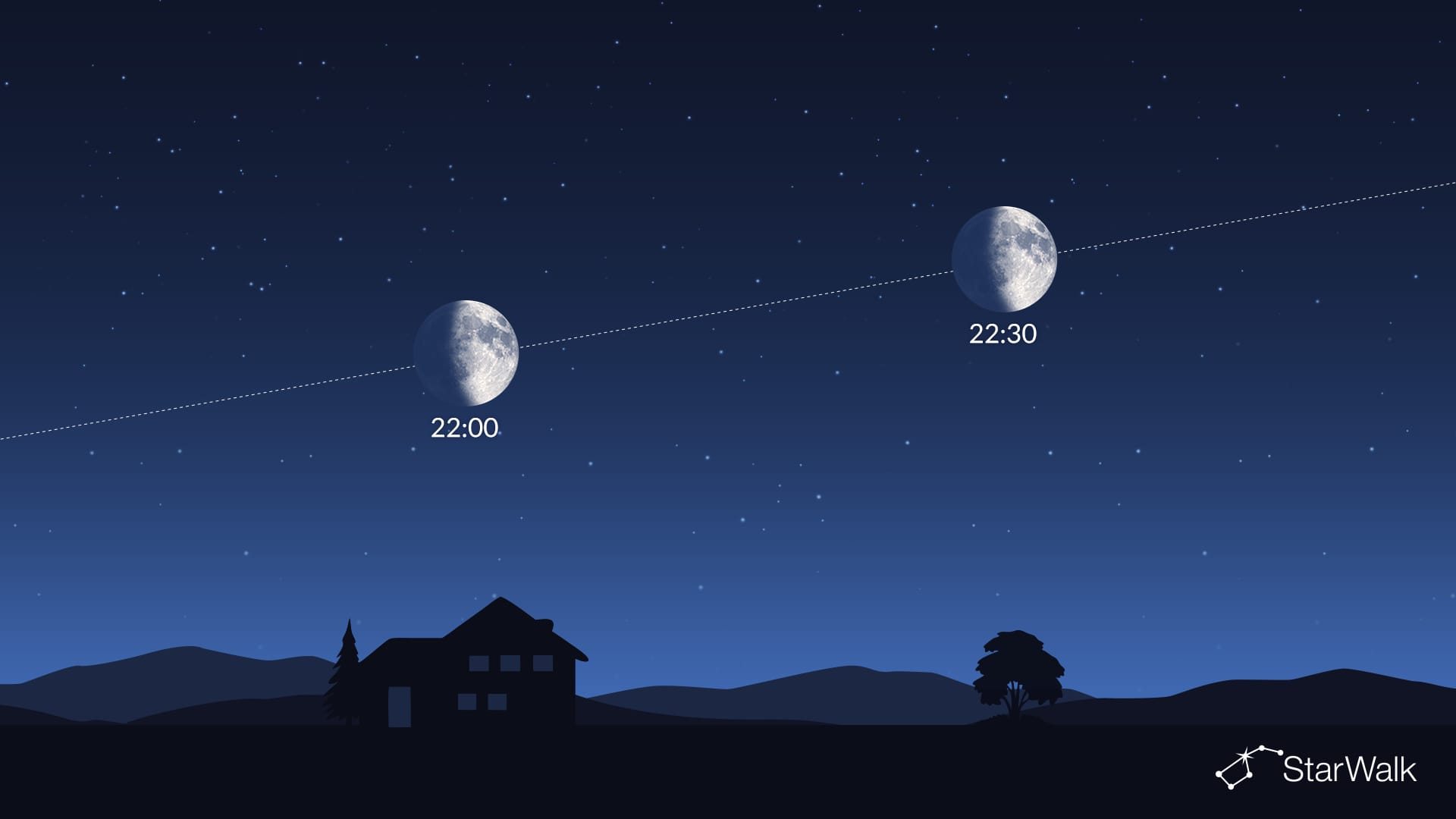
The Moon looks as though it’s sitting quietly above the house. Will it still be there in half an hour?
Let your child make a prediction. Then take a photo showing the Moon beside a roof, chimney, or tree. About 30 minutes later, take another from the same spot, with the same framing and zoom.
Compare the pictures. The Moon has moved!
Most of that shift across the sky happens because Earth is turning beneath your feet. You couldn’t feel the movement, but your photos caught its effect.
The Moon also travels around Earth. To notice that separate movement, compare its position among the stars over several nights.
Use the Time Machine in Star Walk 2 to preview where the Moon will be later. Your child can make a prediction first, then check it against the app and the real sky.
7. Find the rest of a crescent Moon
A few evenings after the New Moon, look for a thin crescent low above the western horizon after sunset. Ask:
Where do you think the rest of the Moon has gone?
Look closely. You may be able to see the whole round disk, with the part outside the bright crescent glowing faintly. That gentle glow is called earthshine. Sunlight bounces off Earth, reaches the Moon, and then bounces back to us. Our planet is helping to light up its neighbor.
Binoculars can make the faint glow easier to see. Wait until the Sun has fully set before using them.
8. Explore mountains and craters on the Moon

Through binoculars or a small telescope, the Moon suddenly becomes a place with a landscape.
Try this during the First Quarter phase — when the evening Moon looks roughly half lit. Look along the boundary between its bright and dark parts, where long shadows make craters and mountains easier to spot. That boundary even has a dramatic name: the terminator.
Let your child choose a crater and sketch it. Return on another evening and try to find it again. Does it look the same? Changing sunlight can make familiar features look surprisingly different.
A Full Moon is bright and beautiful, but its surface can look flatter because the shadows are harder to see. For Moon phases, use our interactive Moon calendar. The lunar atlas in Star Walk 2 will help you identify the lunar features.
9. Count the Pleiades twice

Find the Pleiades, a small group of stars in Taurus. They’re visible from much of both hemispheres and are convenient evening targets around November–February. Pick a dark evening when the cluster is well above the horizon.
First, ask your child to count the stars with just their eyes. Then try again with binoculars. Where did all those extra stars come from?
They were there all along — the binoculars collect more light, helping you see stars that were too faint before. The cluster is nicknamed the Seven Sisters, although many people see about six stars without equipment. The number depends on eyesight and sky conditions, so there’s no wrong score.
Here’s the surprising part: these stars formed from the same vast cloud of gas and dust. They really are a stellar family. At southern latitudes, you can also try counting the stars in the Southern Pleiades, or IC 2602 — a different cluster with a similar nickname.
What Equipment Do You Need for Stargazing With Kids?
Here’s a simple packing list. Binoculars, a telescope, and a laser pointer are optional.
| What to bring | Tips |
|---|---|
| Warm clothes and snacks | Pack extra layers, a blanket or chairs, a hot drink, and snacks. Choose somewhere close to home so you can head inside when everyone has had enough. |
| A dim red flashlight | Red light disturbs night vision less than white light, but keep it dim. To make one at home, cover a cool-running LED flashlight with red cellophane or red filter material, making sure no white light leaks around the edges. |
| A sky map and a notebook | Use a printed star chart or Star Walk 2 to identify objects. Bring a notebook for drawings and questions. A wobbly Moon with “I SAW CRATERS” underneath is a perfectly good observation! |
| A laser pointer — adults only | Can help you point out a particular star. Follow local rules and the observing site’s policy. Never aim at people, animals, aircraft, vehicles, reflective surfaces, or anyone using binoculars or a telescope. Store out of children’s reach. Lasers are not toys. |
| Binoculars that fit your child | Choose a lightweight pair with eyepieces that adjust close enough together to give one circular view. 7× or 8× magnification is a useful starting point. Rest elbows on a stable surface to steady the view. Find targets in our binocular stargazing guide. |
| A borrowed or rented telescope | Try an astronomy club, a library loan, or a public observing night before buying. A 60–80 mm refractor on a steady mount is enough to explore lunar craters. Practice focusing, start with low magnification, and find the target before your child looks. Set expectations: Saturn may look small, but those are its real rings. |
Give your eyes time to adjust. Allow about 20–30 minutes when looking for faint objects. Dim your phone, switch on Night Mode in your stargazing app, and put it away once you’ve found your target.
Never look at the Sun through unfiltered binoculars or a telescope. Solar observing requires suitable special filters and expert supervision. Eclipse glasses cannot replace those filters. The red filter on your flashlight offers no protection.
Space Facts to Share With Kids
Save a few facts for a pause between activities, or let your child pick a favorite to tell someone at home.
- Sunlight takes time to reach us. The Sun is a huge ball of hot, glowing gas. Its light travels for about 8 minutes and 20 seconds before reaching Earth.
- New stars are still being born. One of the famous star-forming regions is the Orion Nebula. It’s a huge cloud of gas and dust where stars are forming. In a dark sky, it can look like a faint, fuzzy patch even without a telescope.
- The Moon is slowly moving away. Its average distance from Earth currently increases by about 3.8 cm (1.5 inches) a year. Find that length on a ruler — a very small step on a very long journey.
- Space explosions wouldn’t sound like they do in movies. Sound needs something, such as air, to travel through. It can’t cross empty space. Astronauts use radios to talk to one another.
What Can Stargazing Teach Beyond Astronomy?
A question about a star can lead almost anywhere. You might end up talking about animals, ancient sailors, Greek heroes, or how scientists work out what’s inside something they can’t touch.
Follow whichever subject interests your child. There’s no need to fit the whole school timetable into one evening.
Mythology: who put those characters in the sky?
Find Cassiopeia, Andromeda, or Perseus and tell a child-friendly version of their connected Greek stories. Then ask your child which character they would add to the sky. Would their hero need a pet? A spaceship? Somewhere to live?
Different cultures have imagined different pictures in the same stars. Compare one of those stories with the constellation your child invented earlier.
Classical literature: sail by the stars
In Homer’s Odyssey, Odysseus watches the Pleiades and the Great Bear while sailing. Read that part in a children’s retelling, then step outside and look for one of those patterns. Your child is looking at stars that also appear in a story told thousands of years ago.
Ask how they would find their way across the sea without a phone. Which stars might help?
Nature: listen to the night
While you wait for a meteor or an ISS pass, listen.
Can you hear insects, an owl, or leaves moving in the wind? Does the garden sound different after sunset? Which animals are still awake?
Notice the cooler air and watch for wildlife from a distance. Keep your lights low. There may be plenty happening around your blanket as well as above it.
History: make a discovery with Galileo

In 1610, Galileo noticed tiny points of light changing position beside Jupiter. They were moons traveling around another planet — evidence that not everything revolved around Earth.
If you have a small telescope or 10× binoculars on a tripod, look for those moons together. Ask your child to imagine seeing them before anyone has explained what they are. What would they guess? How could they check?
Math: measure the sky with your hand
How far is the Moon above the horizon? Your child can make a rough measurement without a ruler.
Hold a hand at arm’s length:
- A little finger covers about 1° of the sky.
- Three middle fingers together cover about 5°.
- A fist covers about 10°.
Try counting how many fists fit between the horizon and the Moon. These measurements are approximate because hands and arms differ, but they’re useful for describing where things are.
You’ll find examples in our guide to measuring distances in the sky.

Chemistry: find the ingredients in a star
Ask your child:
How could we find out what a star is made of if we can’t bring a piece of it home?
The clue is in its light. Astronomers spread starlight into a rainbow of colors and study the patterns within it. Different ingredients leave different clues.
For an older child, explore NASA’s examples of these patterns. It’s detective work with evidence arriving from space.
Physics: make a Moon indoors
In a dim room, use a lamp as the Sun and a pale ball as the Moon. Your child’s head will stand in for Earth.
Have them hold the ball at arm’s length, slightly above eye level, and slowly turn around while the lamp stays still. Keeping the ball raised helps prevent their head from blocking the light.
The lamp always lights half the ball. But as your child turns, they see different amounts of that bright half: a crescent, a half Moon, a full Moon.
That’s how lunar phases work. The Moon hasn’t changed shape — our view of its sunlit half has changed. Earth’s shadow causes lunar eclipses, not the ordinary phases.
Stargazing With Kids: FAQ
A few common questions before you head outside.
What age is best for starting stargazing?
Start when your child shows an interest. Here are a few ideas for each age group from the poll above:
- Under 6: find the Moon, notice its shape, and wave goodnight to it.
- 6–9 years old: invent a star pattern, learn a constellation story, or hunt for a bright planet.
- 10–12 years old: sketch lunar craters or photograph the Moon’s movement above a roof.
- 13–17 years old: let them choose the targets and plan a stargazing evening themselves.
- Kids of different ages: choose one target together and give everyone a role — spotting, drawing, or finding out more.
Let their curiosity set the pace. A few happy minutes outside give you something to build on next time.
What if my child asks a question I can’t answer?
“I don’t know — let’s find out” is a good answer. Write the question down and investigate together. Your child gets to see that asking questions is part of astronomy, even for adults.
And sometimes their question will send you looking for something you’ve never wondered about before.
Can we observe the sky before it gets dark?
Yes! The Moon is often visible during the day. An afternoon Moon hunt can work well for children whose bedtime comes before darkness.
Start with just your eyes and keep attention away from the Sun. Never scan the daytime sky with binoculars or a telescope.
What can we do if it’s cloudy?
Try the lamp-and-ball Moon activity, read a constellation story, or explore the sky in Star Walk 2.
A space encyclopedia or a planetarium visit can also give your child ideas for the next clear evening. Let them choose something they’d like to see for real.
Make Stargazing a Family Tradition
On your next clear evening, open the notebook and pick up where you left off. Can your child find their constellation again? Has the Moon changed shape? Is that bright planet still in the same place? Let them take a turn as the guide. Showing a friend or grandparent what they’ve discovered gives them another reason to look up.
World Children’s Day on November 20 can be a nice excuse to begin. After that, let clear skies and curiosity choose the dates.
There’s still so much in space waiting to be discovered. Some comets bear the names of the people who found them. Who knows — perhaps one day there’ll be a comet named after your child.
For now, open Star Walk 2, choose something to look for, and head outside together. The first question may be “What’s that?” See where the next one takes you.
For older kids and teens, try our space memes quiz together. It mixes astronomy questions with internet humor — a fun way to test your knowledge and share a few laughs after heading back indoors.

