July Constellations: Best Stars to See in the Night Sky This Month
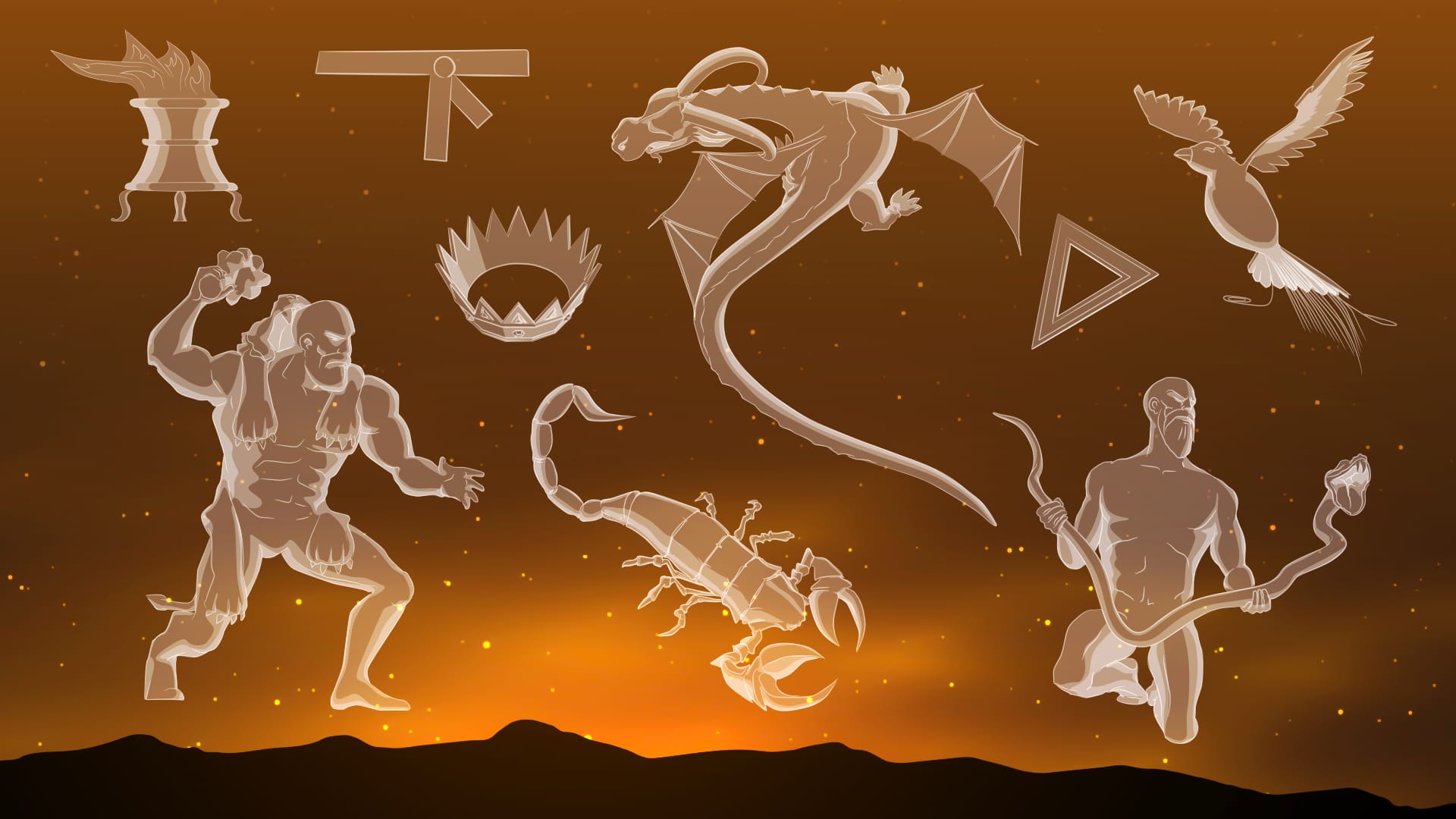
The best constellations to see on July evenings are Scorpius, Triangulum Australe, Ophiuchus, Draco, and Hercules. The first three are especially well placed for southern observers, while the last two are easier to see from the Northern Hemisphere. For easy stargazing, use the free Star Walk 2 app to locate any constellation instantly.
Contents
- List of July constellations
- Faint July constellations
- Pro tips for astronomical observations
- FAQ: July constellations
- What constellations can I see in July from the Northern Hemisphere?
- What constellations can I see in July from the Southern Hemisphere?
- What bright stars can I see in July?
- What is the easiest July constellation to find?
- What is the best time to see July constellations?
- Can I see the Milky Way in July?
- Best July constellations and stars: bottom line
List of July constellations
| Constellation | Visibility | Brightest star | How to find it |
|---|---|---|---|
| Scorpius | 40°N to 90°S | Antares | Find the bright reddish star Antares and trace the constellation’s J-shaped curve. In the Northern Hemisphere, look low in the southern sky; in the Southern Hemisphere, look higher overhead. |
| Triangulum Australe | 15°N to 90°S | Atria | Find Alpha Centauri and Beta Centauri near the Southern Cross, then look nearby for a small bright triangle. From northern tropical latitudes, it stays low above the southern horizon; in the Southern Hemisphere, face south and look higher in the sky. |
| Ophiuchus | 80°N to 80°S | Rasalhague | Find Scorpius and look for the large, faint constellation next to it. From the Northern Hemisphere, look above Scorpius in the southern sky; from the Southern Hemisphere, look above the Scorpion’s head and claws. |
| Draco | 90°N to 15°S | Eltanin | Use the Big and Little Dippers to find Draco winding between them. From the Southern Hemisphere, only observers near the equator can see part of Draco low above the northern horizon. |
| Hercules | 90°N to 50°S | Kornephoros | Look between Vega and Arcturus for the Keystone asterism. In the Northern Hemisphere, Hercules appears high in the sky; in the Southern Hemisphere, face north and look lower above the northern horizon. |
Constellations are listed from the most prominent to the faintest in the evening sky:
- ☆☆☆ — very bright and easy to see.
- ☆☆ — moderately bright; visible with some effort.
- ☆ — faint; best seen under dark skies, and binoculars may help.
Scorpius
- Brightness: ☆☆☆
- Visible between: 40°N to 90°S
- Brightest star: Antares (mag 1.0)
- Notable deep-sky objects: Butterfly Cluster (mag 4.2), Ptolemy Cluster (mag 3.3)
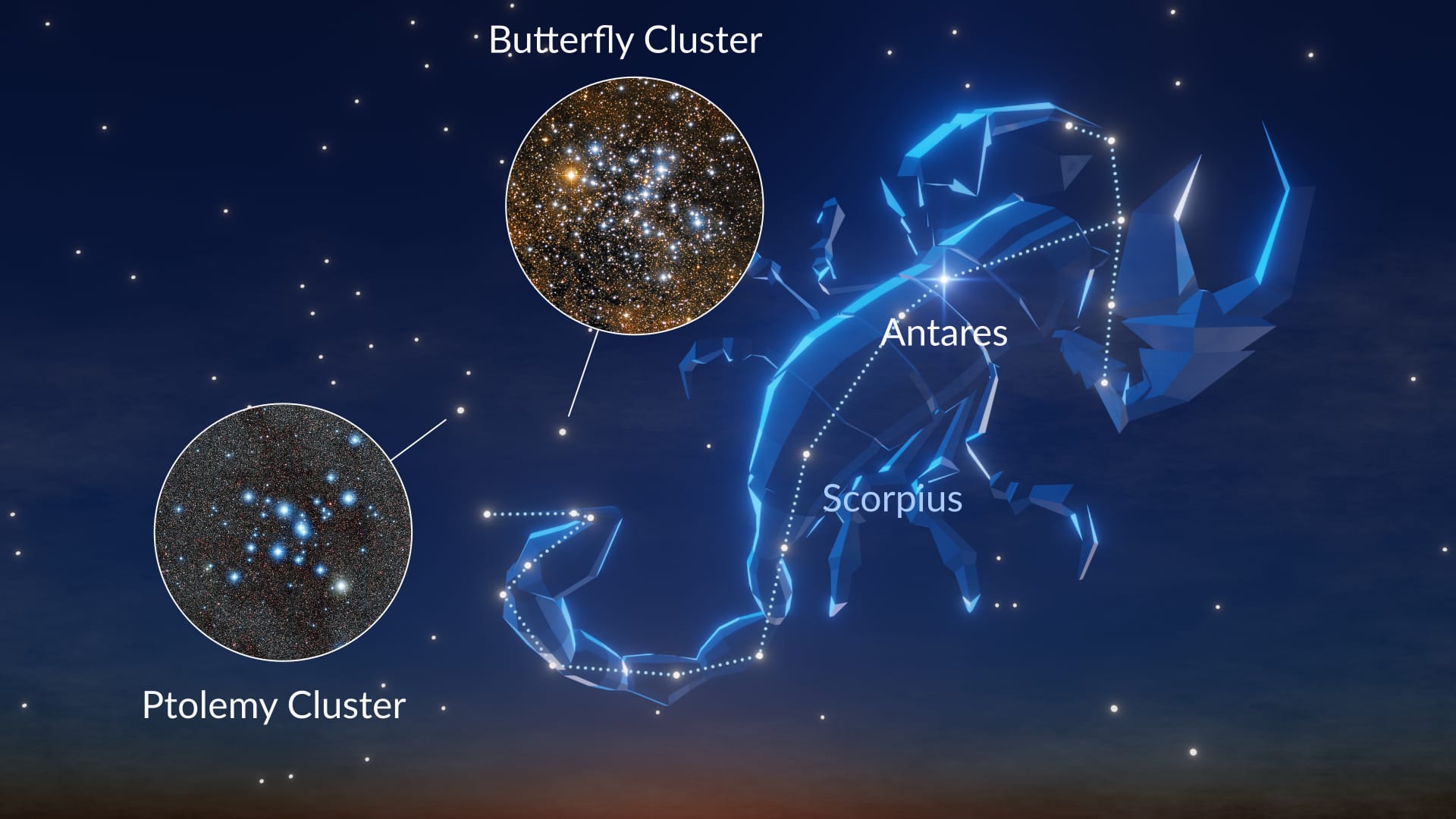
How to find Scorpius in the July night sky
Scorpius is one of the easiest zodiac constellations to identify. Its stars form a clear pattern resembling the letter "J" (or a hook), representing a scorpion with a curved tail.
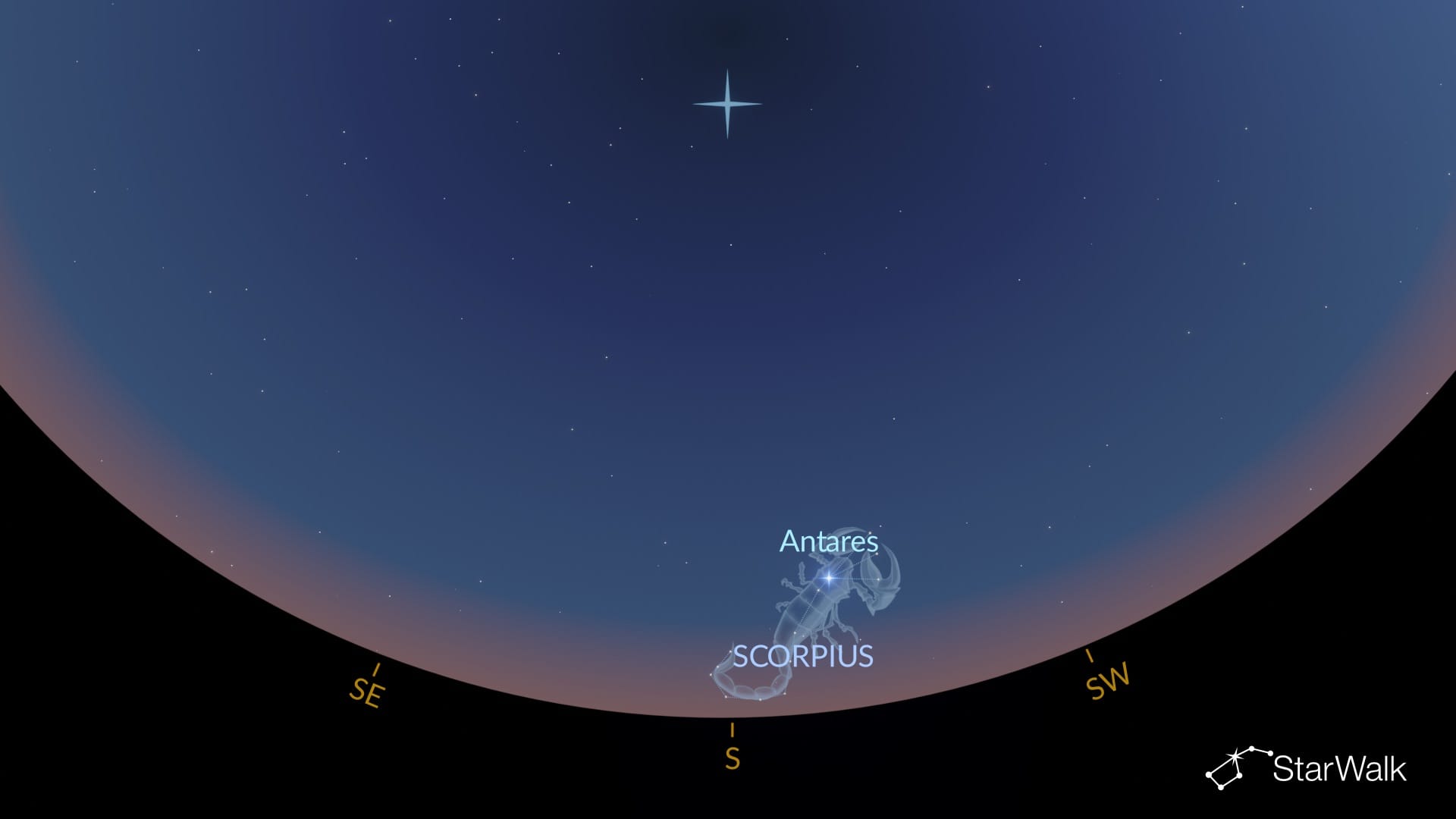
From the Northern Hemisphere, face south and look low above the horizon for the bright red star Antares. This is the “scorpion’s heart”. From there, trace a J-shaped curve of stars to see the tail.
Note: If you are north of 40° N (for example, in France, Germany, the UK, or Canada), part of Scorpius remains below your horizon.
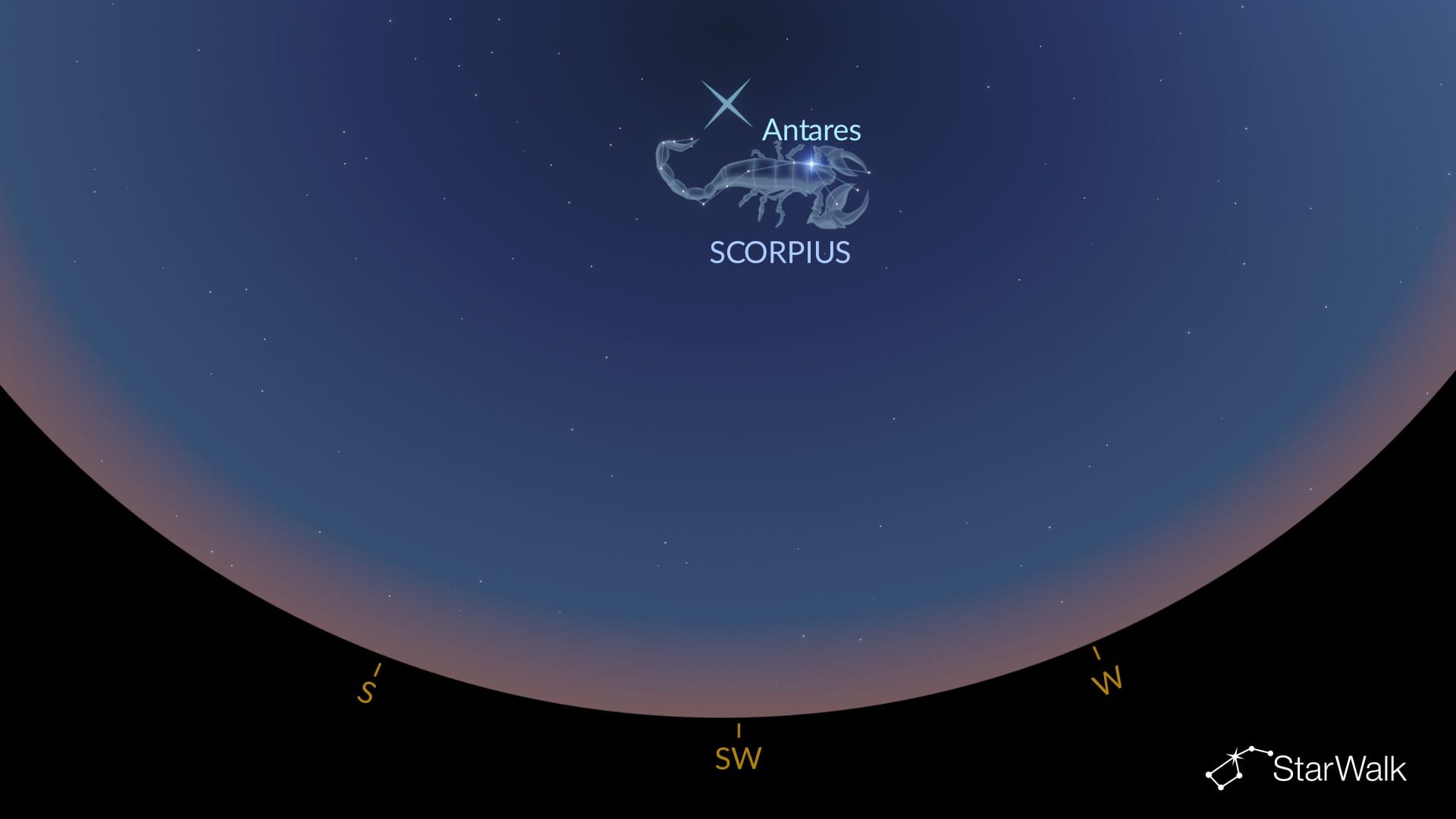
From the Southern Hemisphere, look high in the sky after dark for ruby red Antares and follow the J-shape from Antares to map the Scorpion’s body and tail.
The Milky Way runs through Scorpius, making this view even better!
Since Scorpius lies along the ecliptic, the Moon, Sun, and planets sometimes pass through it. On July 24, 2026, the Moon will pass very close to Antares — an event you can easily observe with the naked eye or binoculars.
Mythology
In Greek mythology, Scorpius was a giant scorpion sent by Gaia to punish Orion. Orion had boasted that no creature could escape his hunt and that he would kill every animal. To stop him, Gaia sent Scorpius to sting and kill Orion.
So Orion and Scorpius became mortal enemies — Zeus even placed them on opposite sides of the sky so they never met each other. That’s why, according to mythology, these two constellations never appear in the sky at the same time. When Scorpius rises, Orion has already set below the horizon, and vice versa.
Triangulum Australe
- Brightness: ☆☆
- Visible between: 15°N to 90°S
- Brightest star: Atria (mag 1.9)
- Notable deep-sky object: NGC 6025 (mag 5.1)
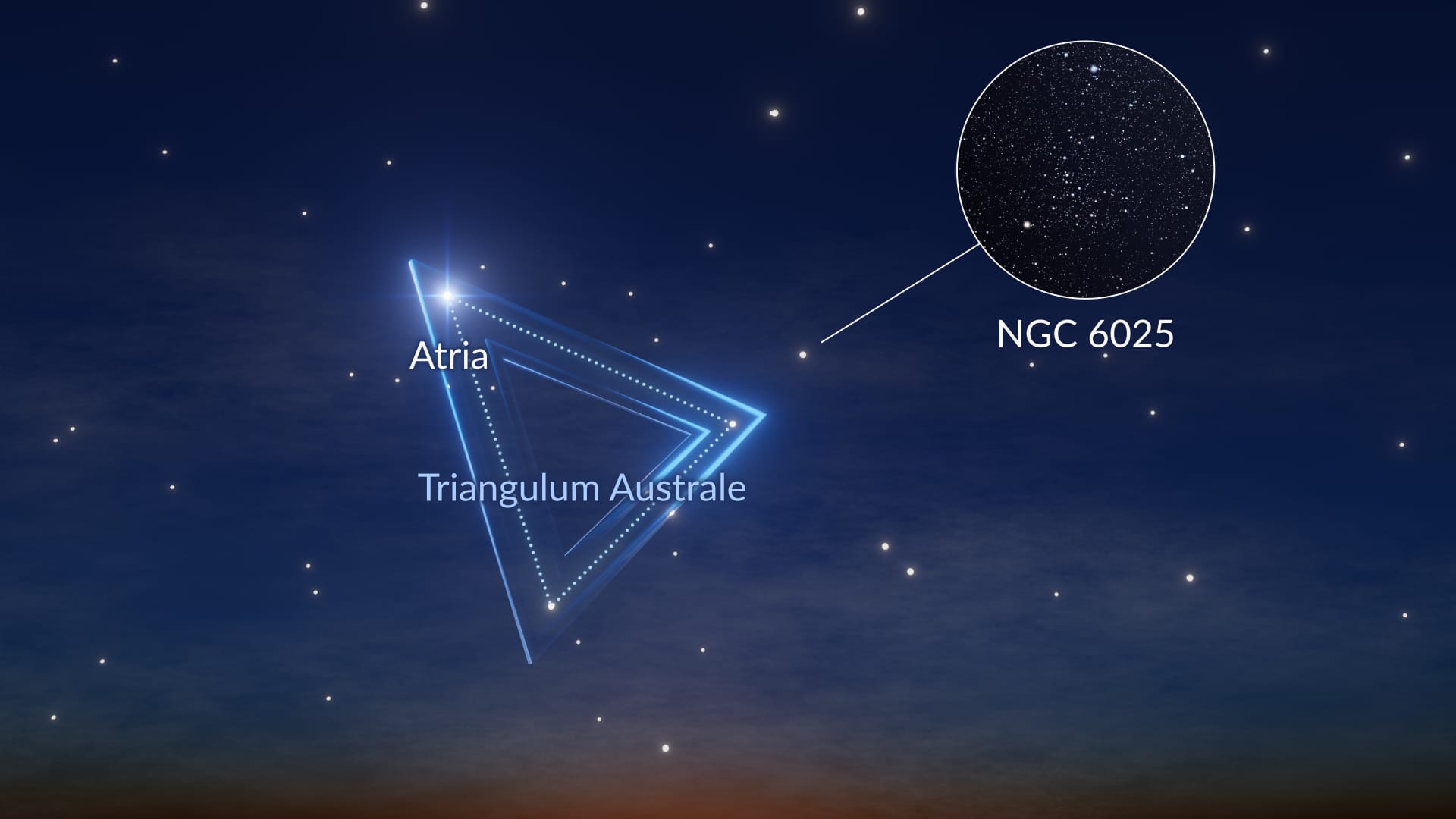
How to find Triangulum Australe in the July night sky
Triangulum Australe (sometimes also called the Southern Triangle) lies close to the south celestial pole. From many southern locations, it is circumpolar — meaning it never sets below the horizon.
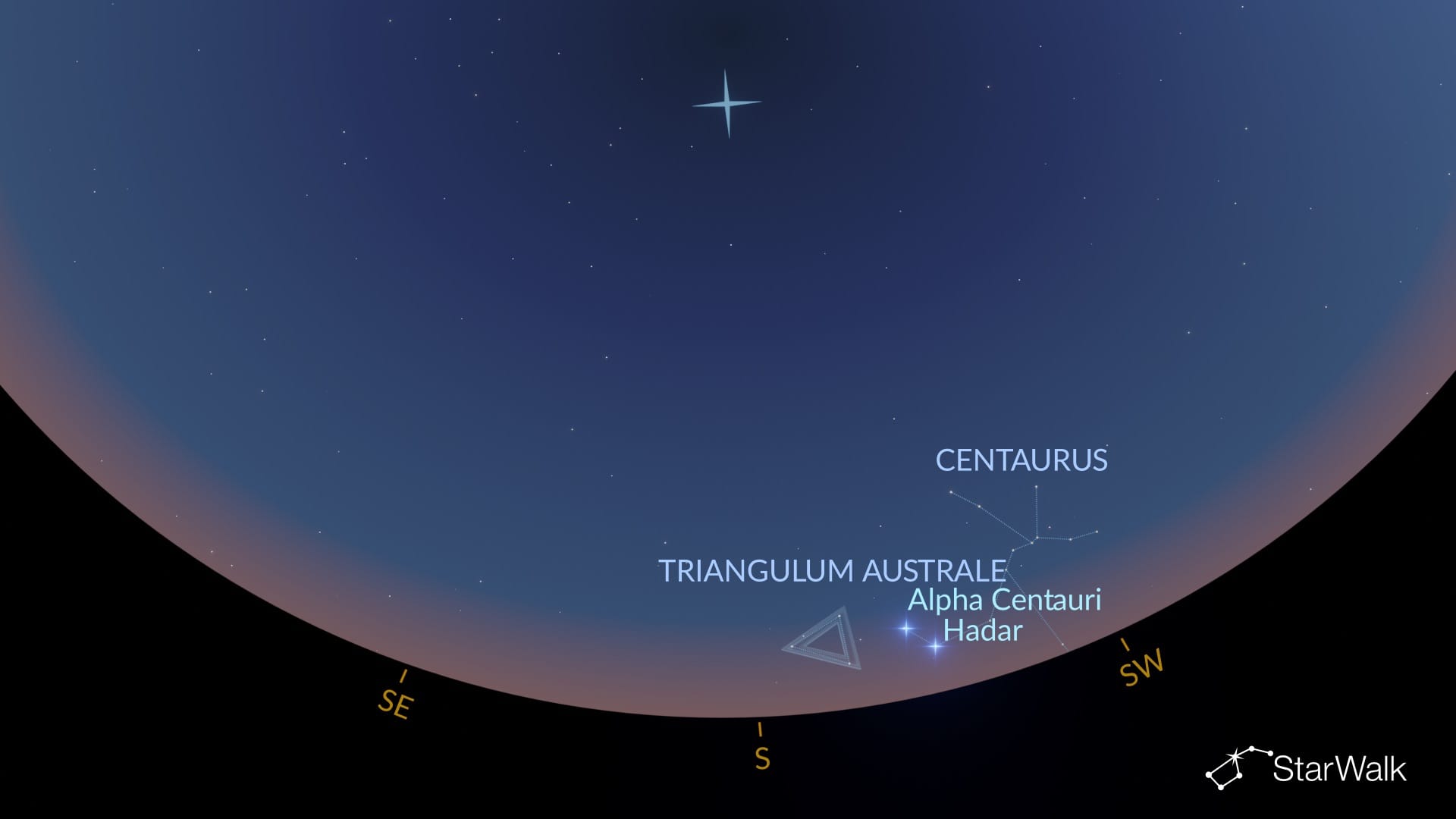
In the Northern Hemisphere, Triangulum Australe is challenging to see. Observers must be near the equator, for example, in Thailand, Vietnam, the Philippines, or southern Colombia and Venezuela, to see the constellation entirely. From these locations, it will appear low above the southern horizon — look for a small, equilateral triangle. Bright stars Alpha and Beta Centauri in Centaurus might help you find it.
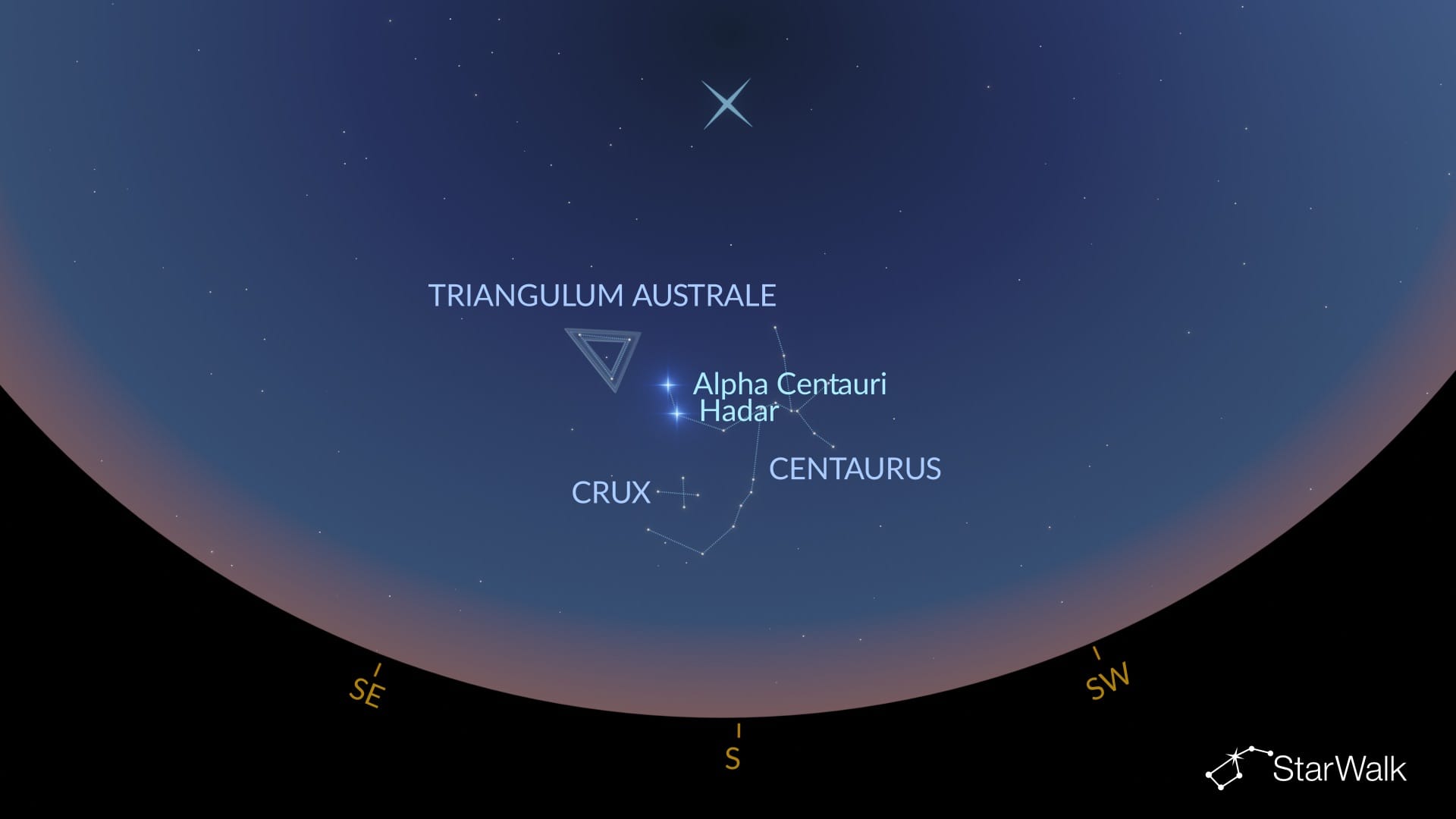
In the Southern Hemisphere, spotting Triangulum Australe is much easier. Face south and first find Alpha Centauri and Beta Centauri (also known as Hadar), the two bright “Pointer Stars” near the Southern Cross. Triangulum Australe lies nearby, just beyond Circinus; look for a small, bright triangle formed by its three main stars. Its brightest star, Atria, marks one corner of the triangle.
Mythology
Triangulum Australe has no association with any ancient myth. It is the smallest of 12 constellations created by Dutch navigators Frederick de Houtman and Pieter Dirkszoon Keyser in the late 16th century.
Ophiuchus
- Brightness: ☆☆
- Visible between: 80°N to 80°S
- Brightest star: Rasalhague (mag 2.1)
- Notable deep-sky object: Gumball Cluster (mag 7.6)
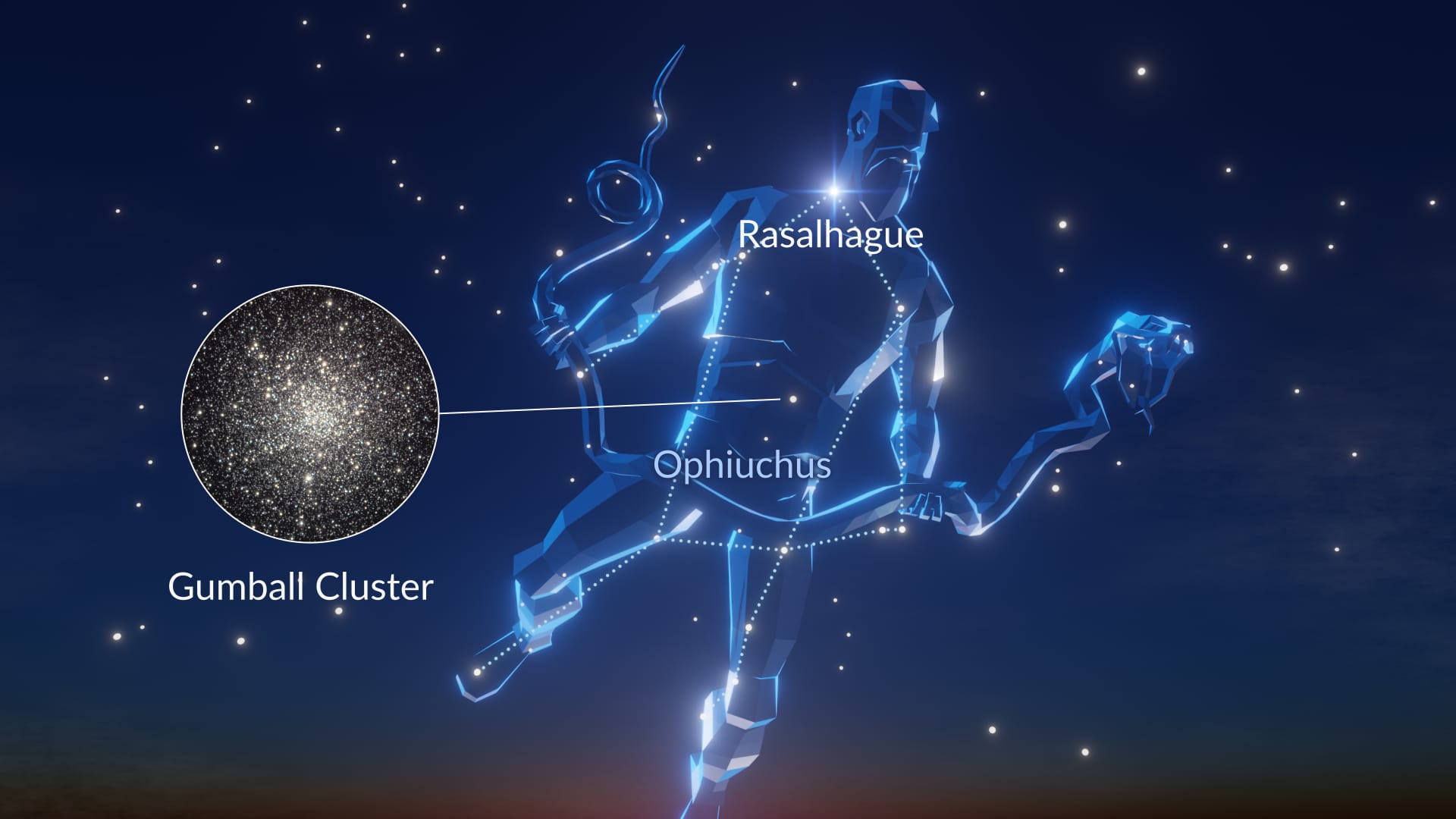
How to find Ophiuchus in the July night sky
Ophiuchus is a faint, large constellation along the celestial equator. Because its stars are rather dim, choose a clear, dark night with little or no moonlight.
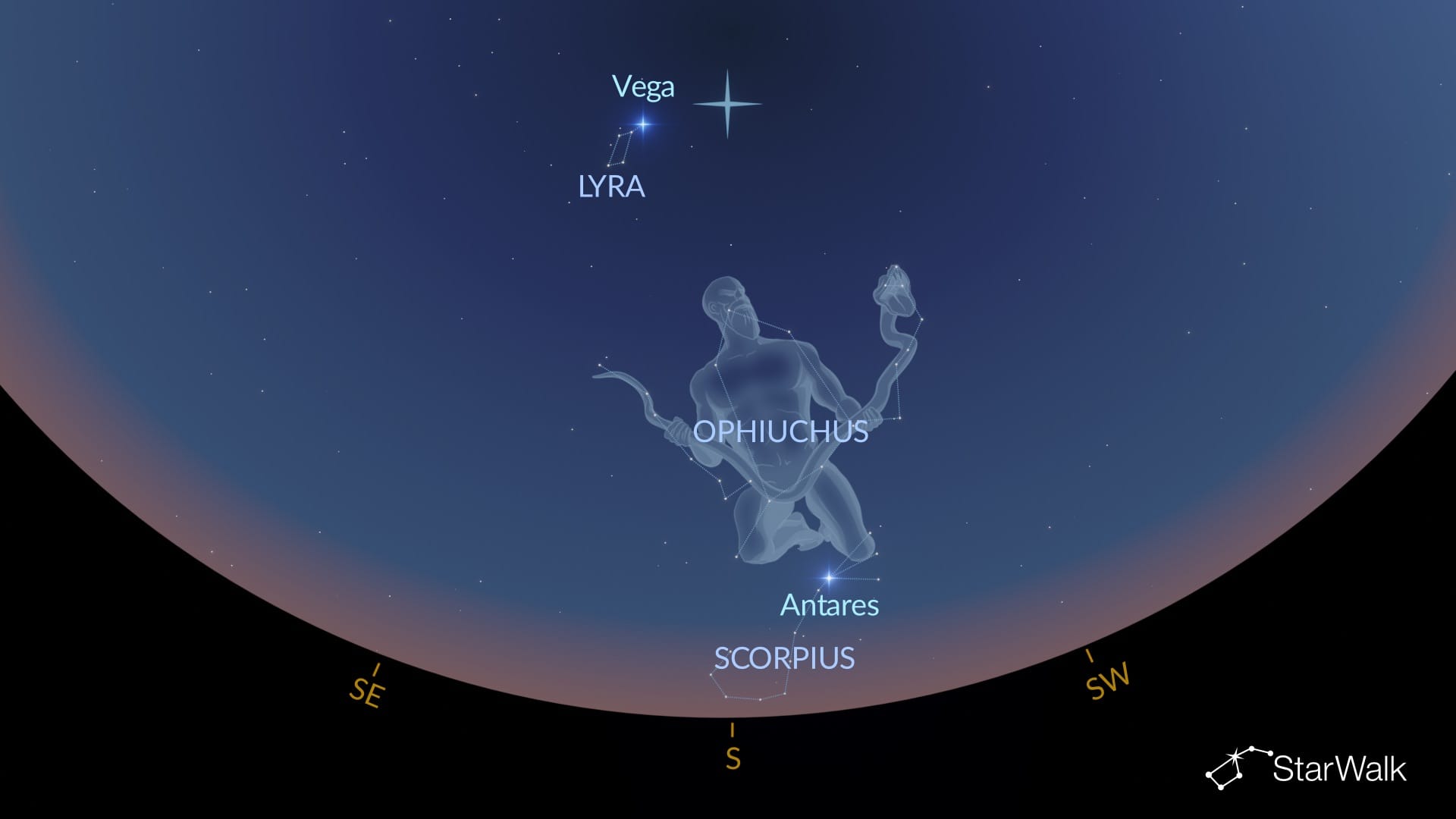
In the Northern Hemisphere, face south at dusk and locate Antares, the bright red heart of Scorpius. Look upward and slightly east of Antares, toward bluish-white Vega, which sits much higher in the sky; this large, faint region is where Ophiuchus lies.
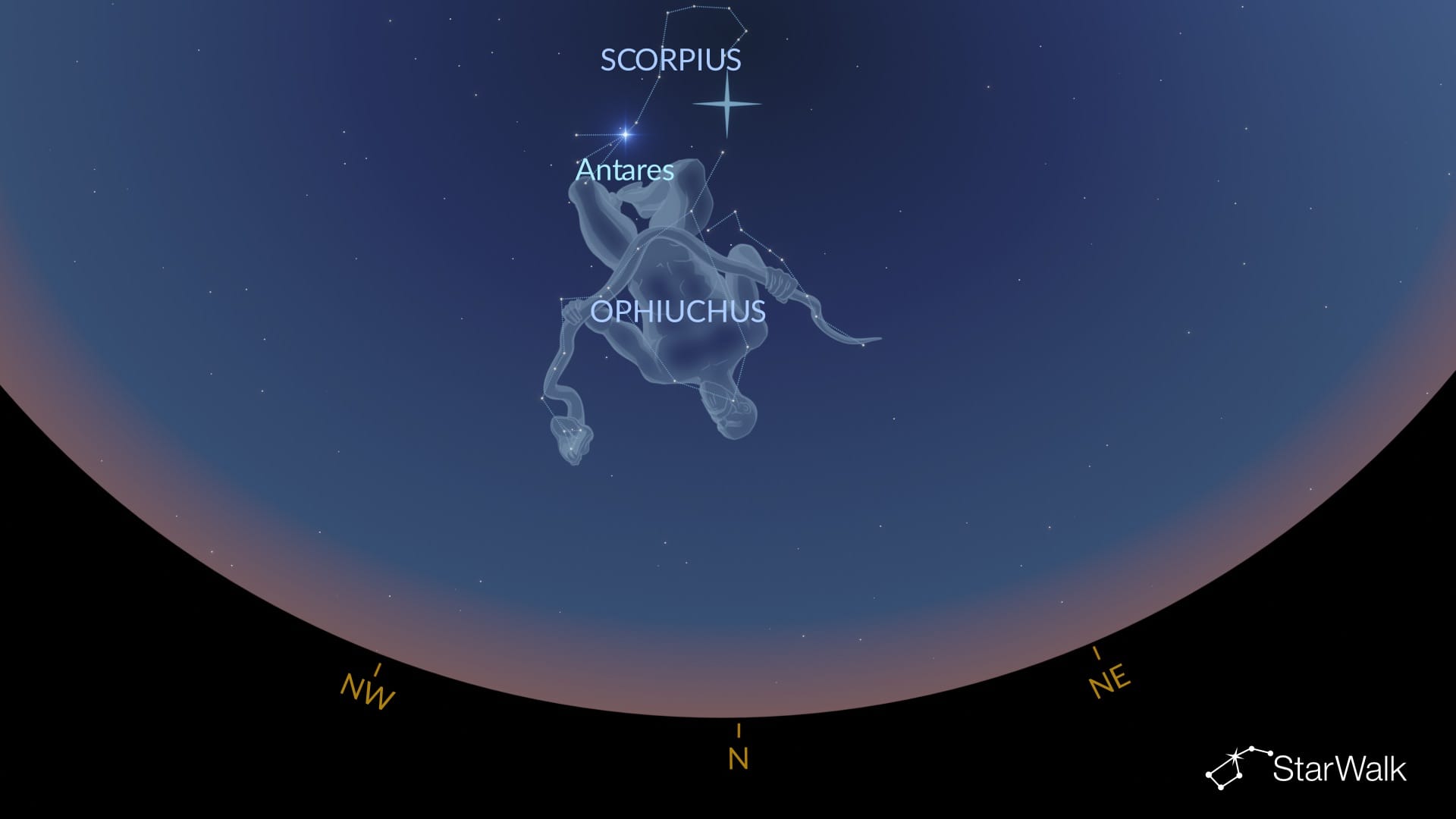
In the Southern Hemisphere, first spot Scorpius, which sits high overhead. Its notable features are red Antares and a distinctive hook-like shape. Ophiuchus lies next to Scorpius, stretching above the Scorpion’s head and claws.
Mythology
Ophiuchus, which means "serpent-bearer" in Ancient Greek, is depicted on celestial maps holding Serpens, a separate constellation. According to one Greek myth, Ophiuchus represents Asclepius, the legendary physician. Asclepius crafted a potion by blending serpent venom, the blood of a Gorgon, and a secret herb. This potion granted mortals temporary immortality. Alarmed by Asclepius's newfound power over life and death, Hades appealed to Zeus, who then cast Asclepius into the sky and forbade any further use of the potion.
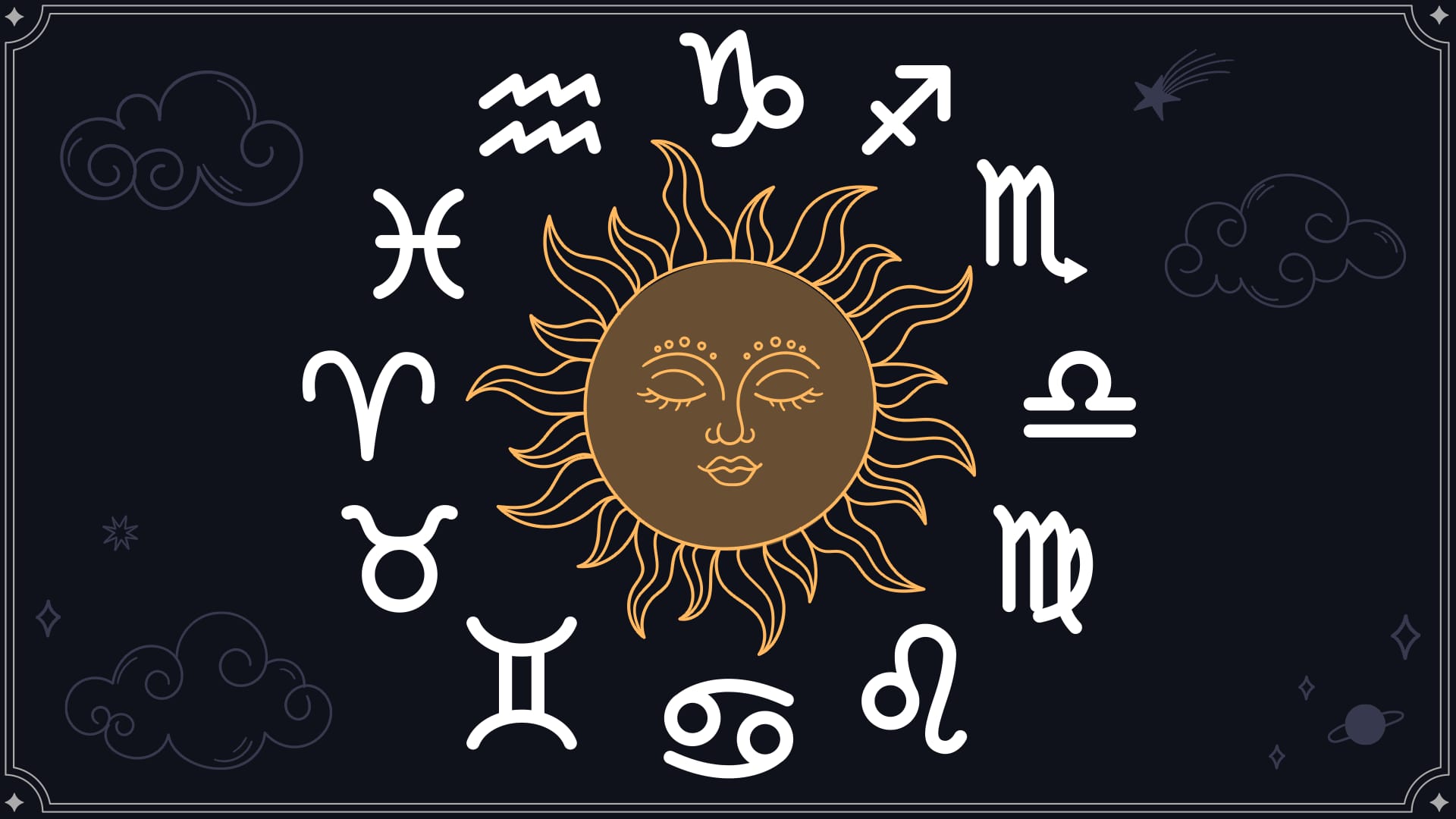
Incidentally, Ophiuchus is one of the 13 constellations of the ecliptic. The Babylonians omitted it from the zodiac, which is why there are only 12 zodiac signs. Technically, some of you might be Ophiuchus instead of Scorpio. What other discrepancies exist between zodiac signs and ecliptic constellations? Check out our infographic to find out!
Draco
- Brightness: ☆☆
- Visible between: 90°N to 15°S
- Brightest star: Eltanin (mag 2.2)
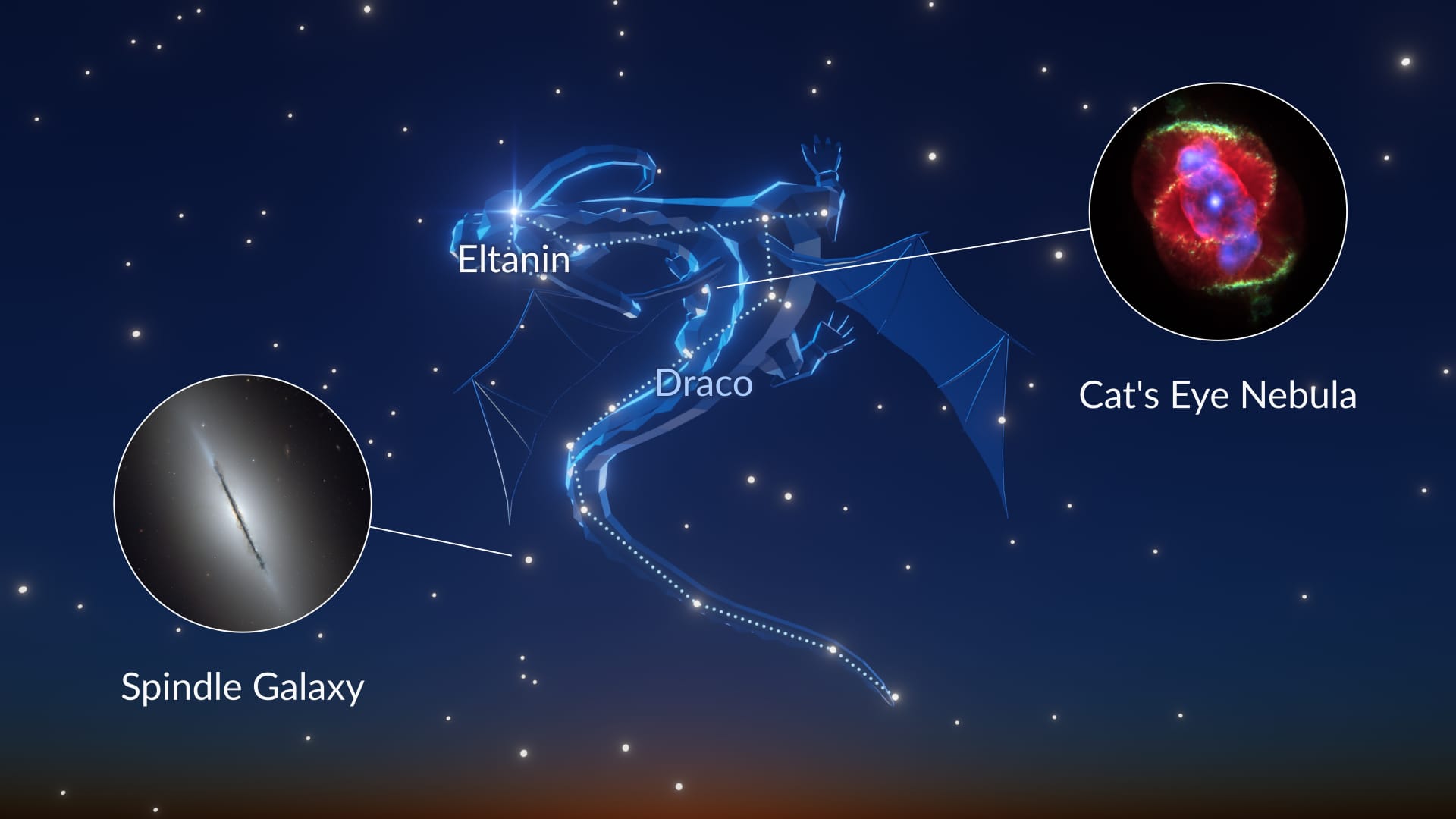
- Notable deep-sky objects: Cat's Eye Nebula (mag 8.2), Spindle Galaxy (mag 9.9)
How to find Draco in the July night sky
Draco is a circumpolar constellation at mid-northern latitudes, looping around Polaris, the North Star. Because it never sets, you can spot it on any clear night of the year.
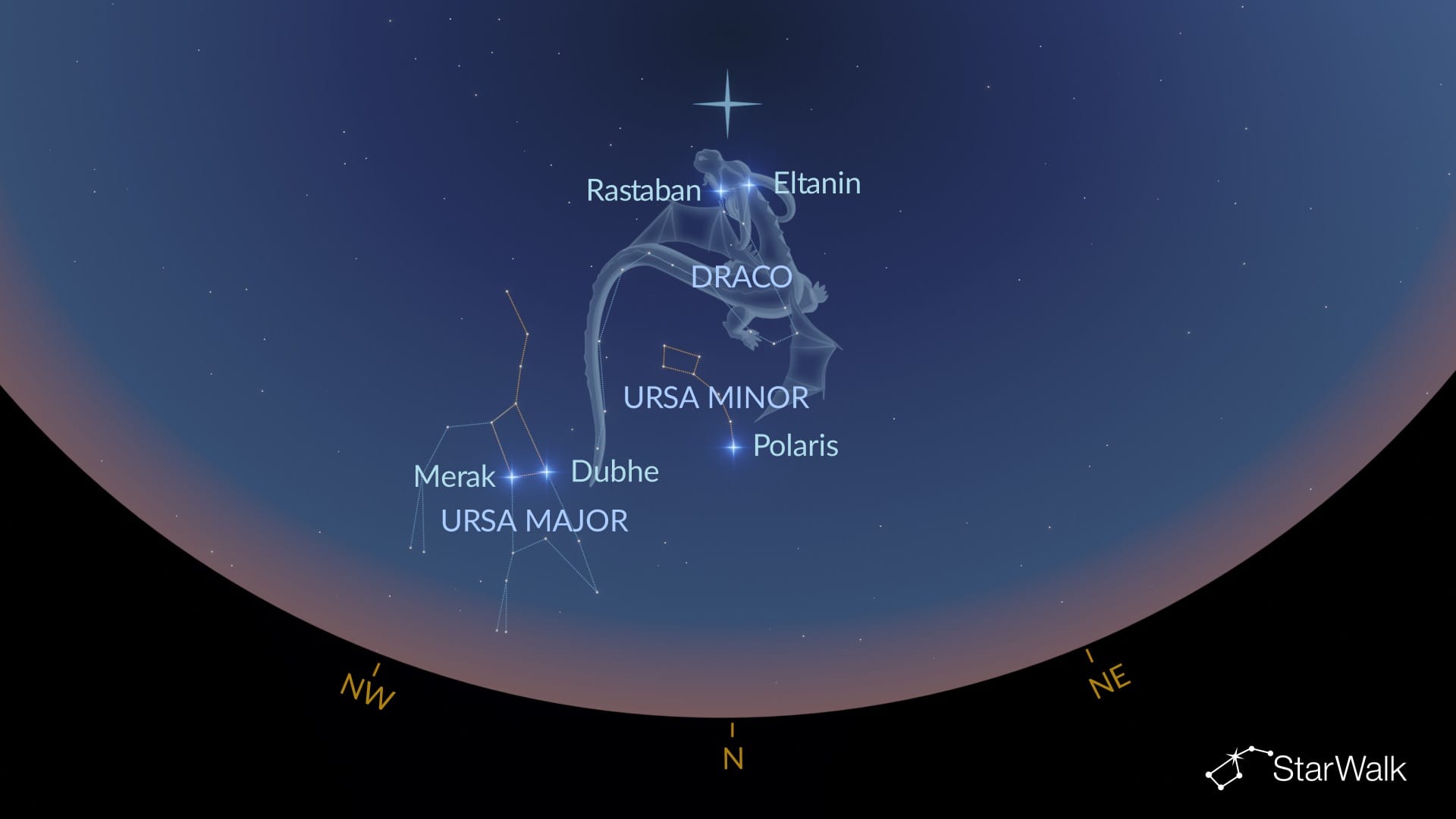
To locate Draco in the Northern Hemisphere, first find the Big Dipper. Use the two outer stars of its bowl, Merak and Dubhe, to point to Polaris, the North Star; Polaris marks the end of the Little Dipper’s handle. Draco winds between the Big and Little Dippers and curves around Polaris. Its tail begins near the Big Dipper, while its head lies closer to Vega in Lyra. Look for Eltanin and Rastaban, the two stars that mark the Dragon’s eyes.
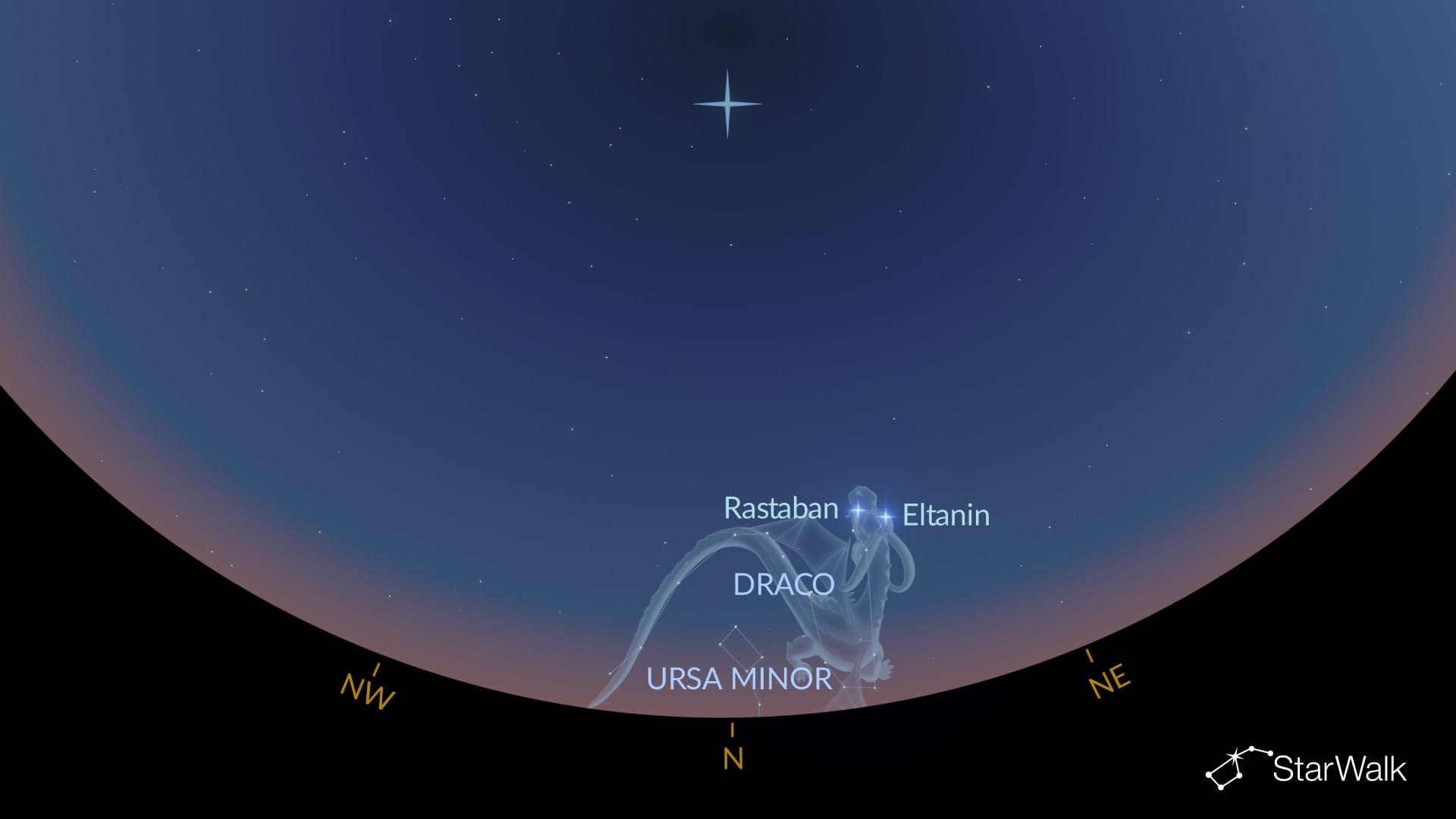
From the Southern Hemisphere, Draco is difficult or impossible to see from most locations. Only observers near the equator — for example, in Indonesia, northern Peru, northern Brazil, or Ecuador — can catch the constellation or its part low above the northern horizon.
Mythology
In Greek mythology, Draco represents Ladon, the dragon that guarded the golden apple tree in the garden of the Hesperides. The tree was a wedding gift from Hera to Zeus. Ladon wrapped his coils around the tree to prevent anyone from stealing its fruit.
As one of his twelve labors, Heracles fought Ladon and defeated him with poisoned arrows to claim the golden apples. To honor the dragon’s devotion, Hera placed Ladon’s image among the stars. In star charts, Draco is often shown coiled around the celestial north pole, with one of Heracles’s feet pressing on its head.
Hercules
- Brightness: ☆☆
- Visible between: 90°N to 50°S
- Brightest star: Kornephoros (mag 2.8)
- Notable deep-sky objects: M13 (mag 5.8), M92 (mag 6.4)
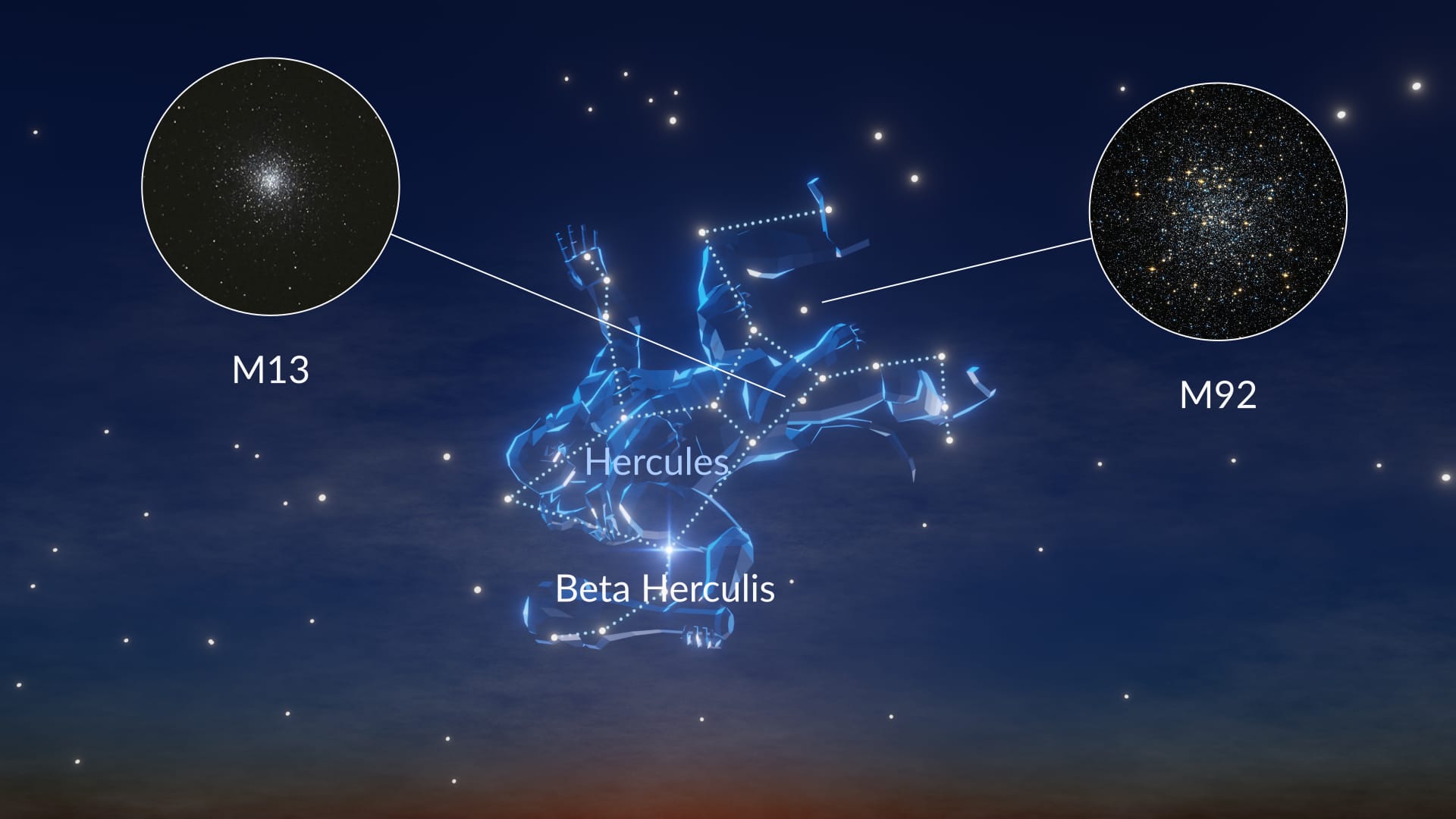
How to find Hercules in the July night sky
Hercules occupies a region between the bright stars Vega and Arcturus.
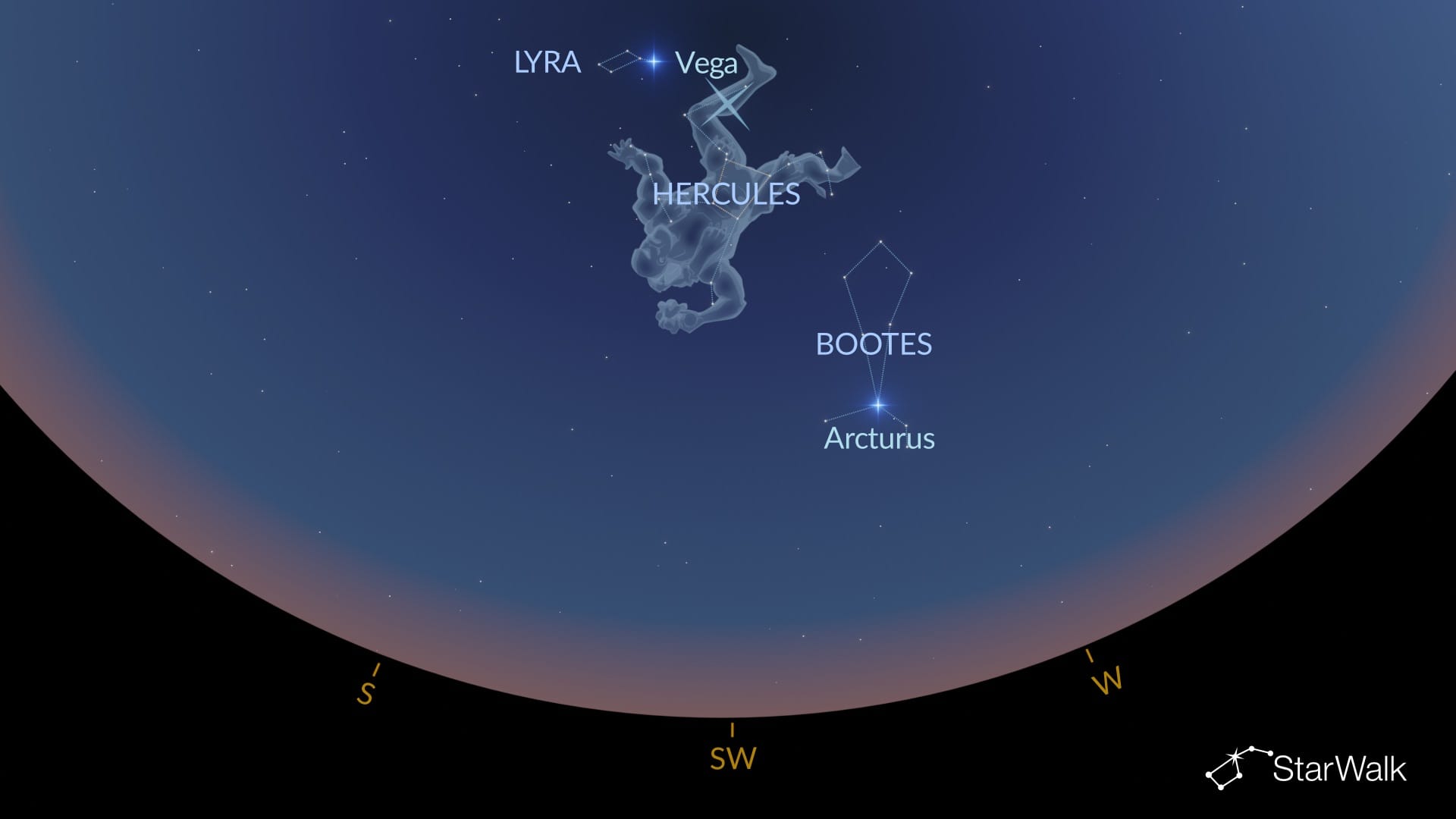
In the Northern Hemisphere, look high in the sky for bluish-white Vega. Then find orange Arcturus, much farther to the west. Draw an imaginary line between these two bright stars; near the middle of this line, look for the Keystone, a distinctive four-star pattern that marks Hercules’s torso. If you have already located Draco, Hercules lies near the Dragon’s head, close to Vega.
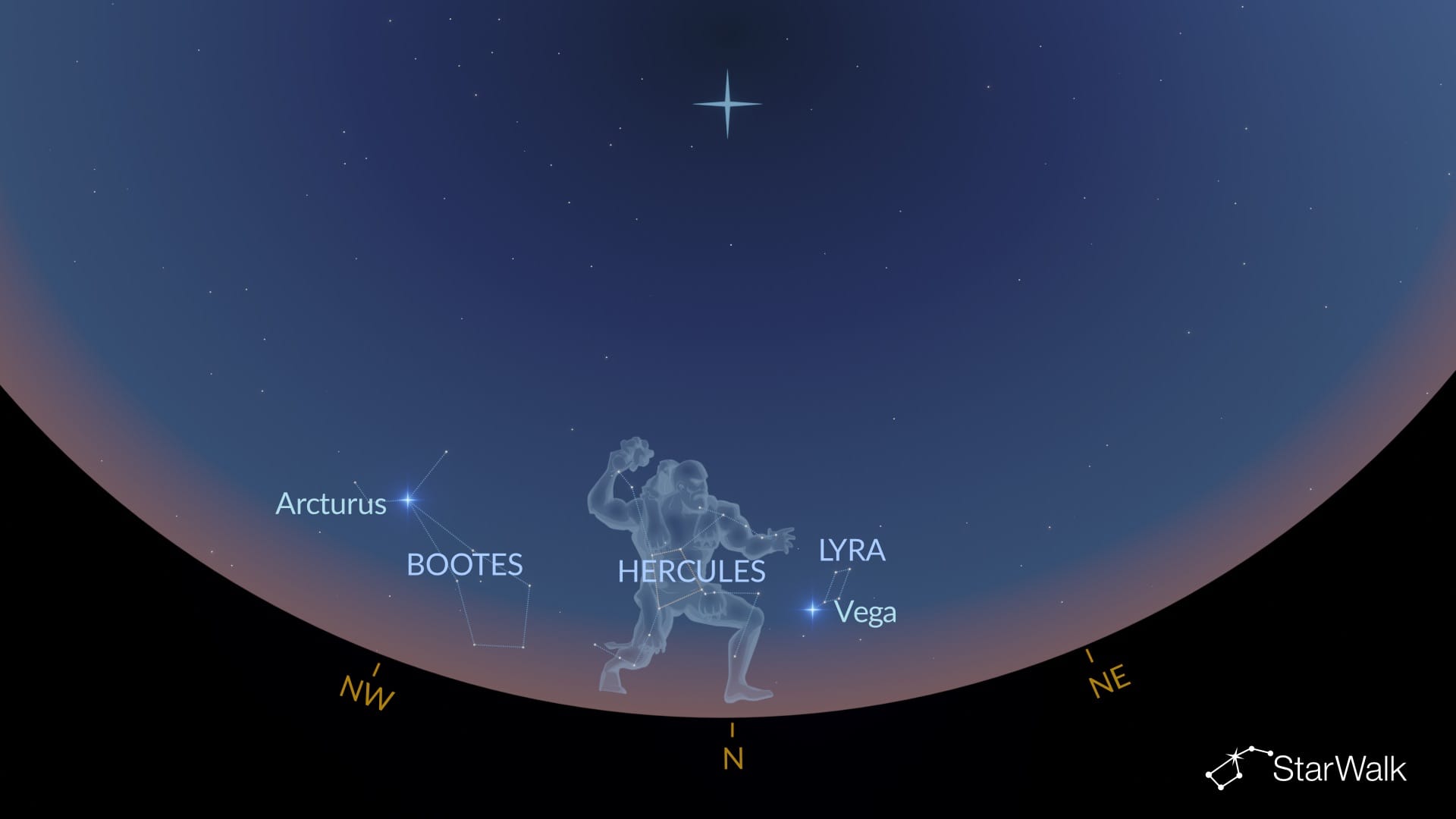
In the Southern Hemisphere, Hercules appears in the northern sky and stays lower than it does for northern observers. After dark, face north and look for the region between Vega and Arcturus — the Keystone asterism lies between them.
Mythology
Originally known as “The Kneeling Man” in Ptolemy’s Almagest in the 2nd century AD, the figure was later identified with Heracles (latinized as Hercules) the great hero of Greek mythology. According to legend, Heracles was the son of Zeus and the mortal Alcmene. As an infant, he inexplicably gained immortality by nursing on Hera’s divine milk — an act that stirred the queen’s wrath.
Driven mad by Hera, Heracles tragically killed his own children. To atone, he consulted the Oracle at Delphi and was ordered to serve King Eurystheus for twelve years. This period became famous for the Twelve Labors, including slaying the Nemean Lion and defeating Ladon, who represents the constellation Draco. After his final trial, Heracles built his own pyre, ending his mortal life. In recognition of his trials and heroism, Zeus placed him among the stars as the constellation Hercules.
Faint July constellations
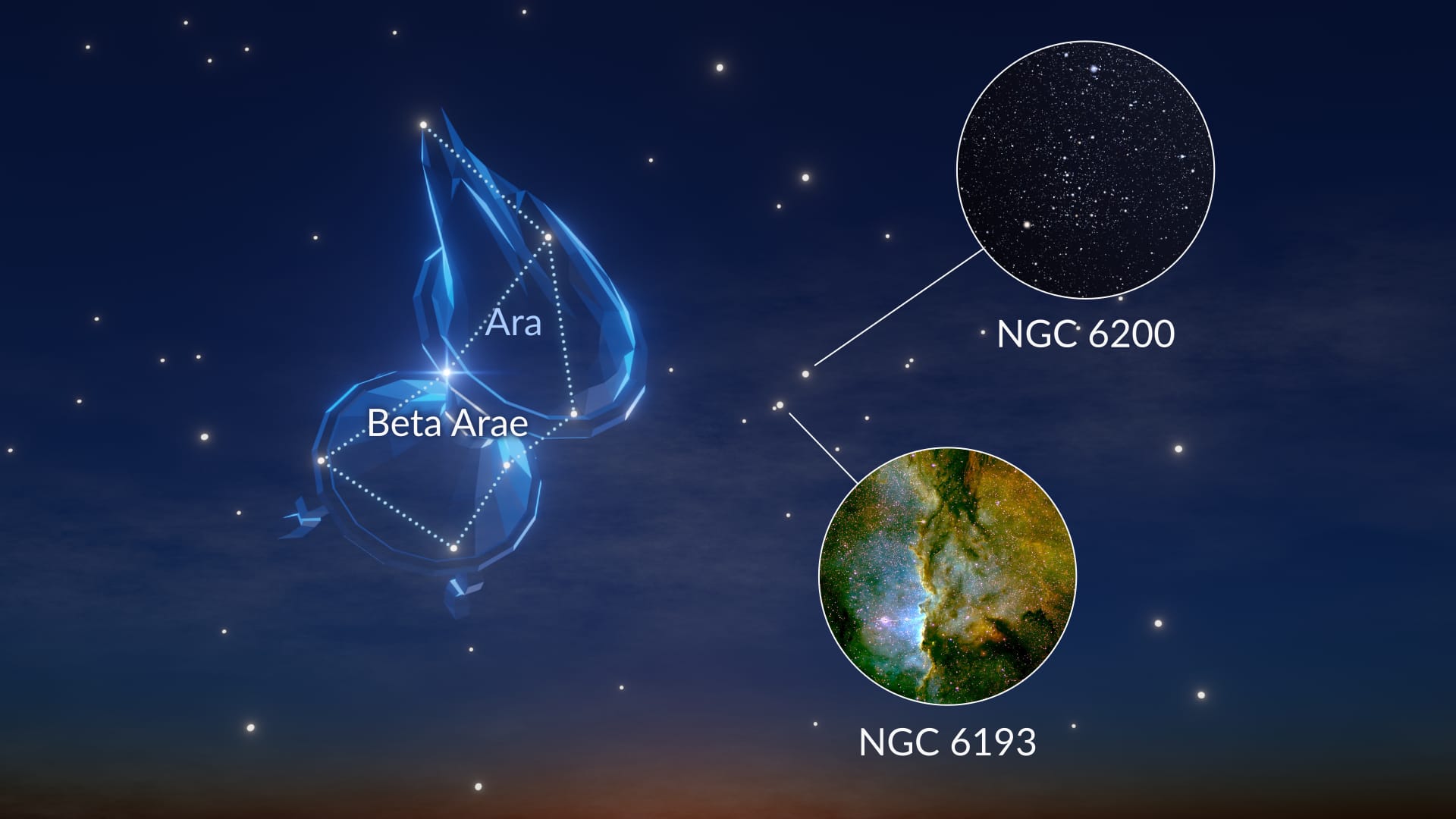
Ara
- Brightness: ☆
- Visible between: 25°N to 90°S
- Brightest star: Beta Arae (mag 2.8)
- Notable deep-sky object: NGC 6200 (mag 7.4), NGC 6193 (mag 5.2)
Corona Borealis
- Brightness: ☆
- Visible between: 90°N to 50°S
- Brightest star: Alphecca (mag 2.2)
- Notable deep-sky object: NGC 6086 (mag 12.7)
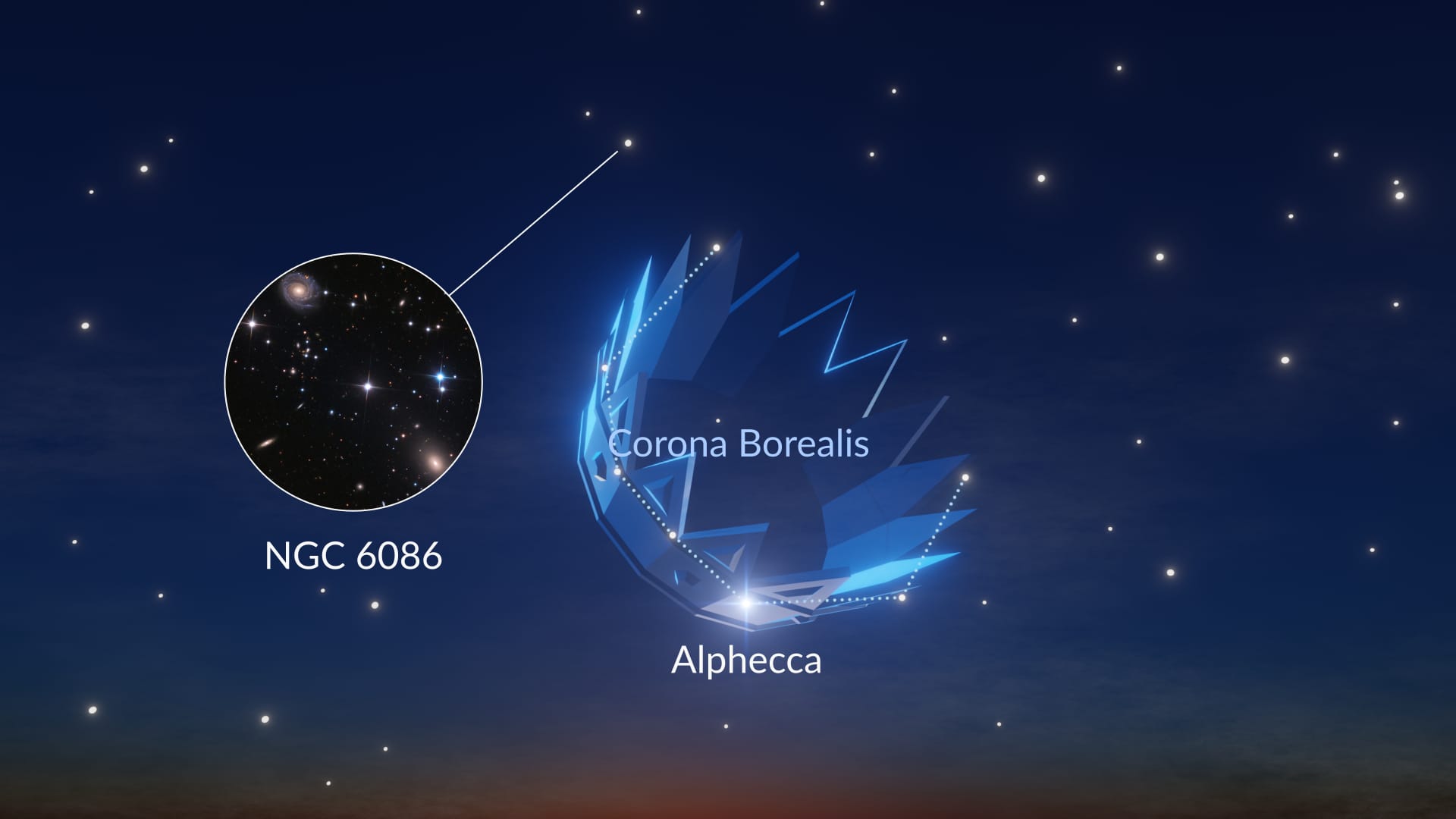
Corona Borealis is home to T Coronae Borealis, a recurrent nova that may become visible to the naked eye during its next outburst. Learn where to look for it and how not to miss the rare event in our article: T Coronae Borealis Explosion 2026.
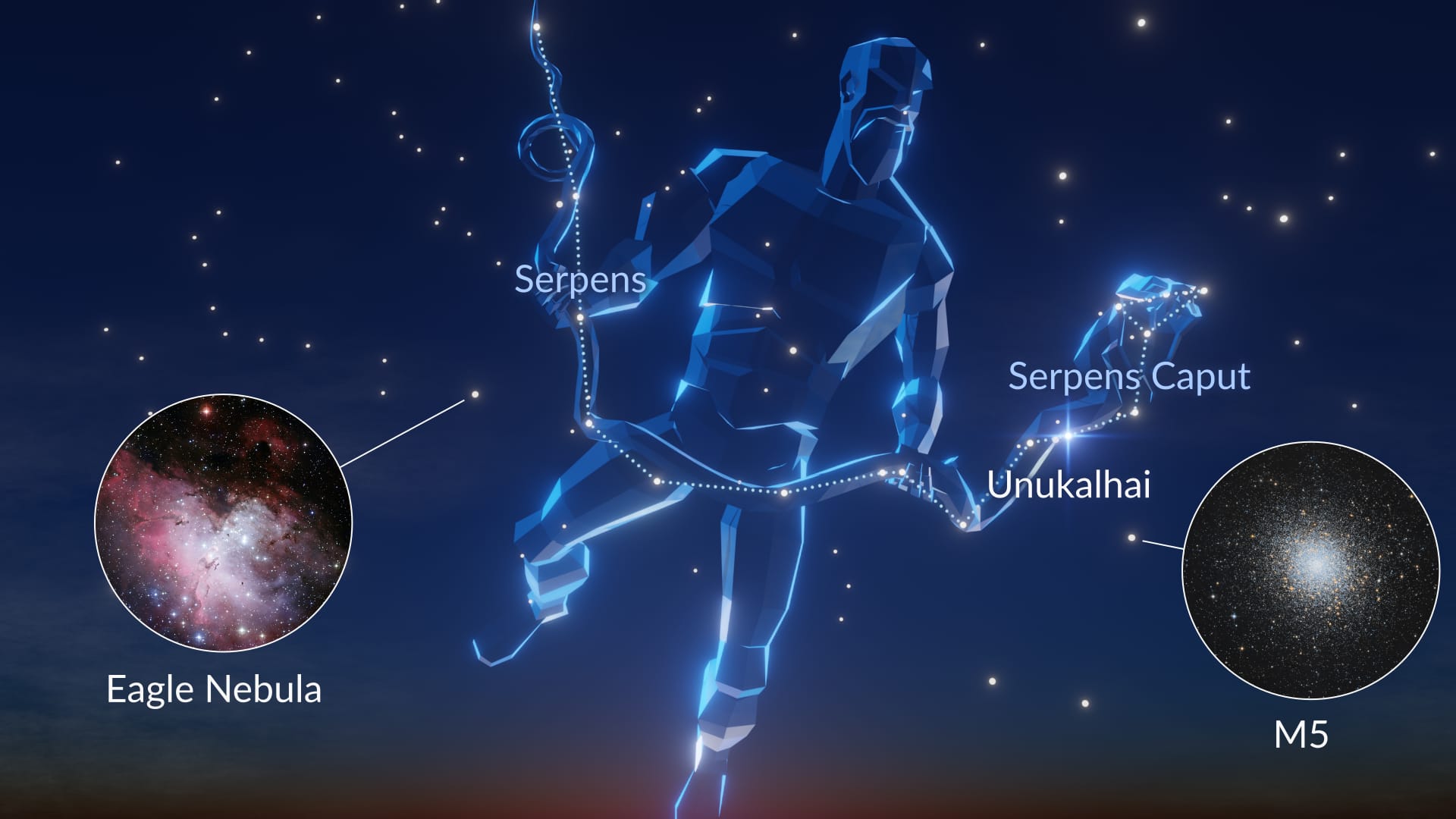
Serpens
- Brightness: ☆
- Visible between: 80°N to 80°S
- Brightest star: Unukalhai (mag 2.6)
- Notable deep-sky objects: Eagle Nebula (mag 6.4), M5 (mag 6.7)
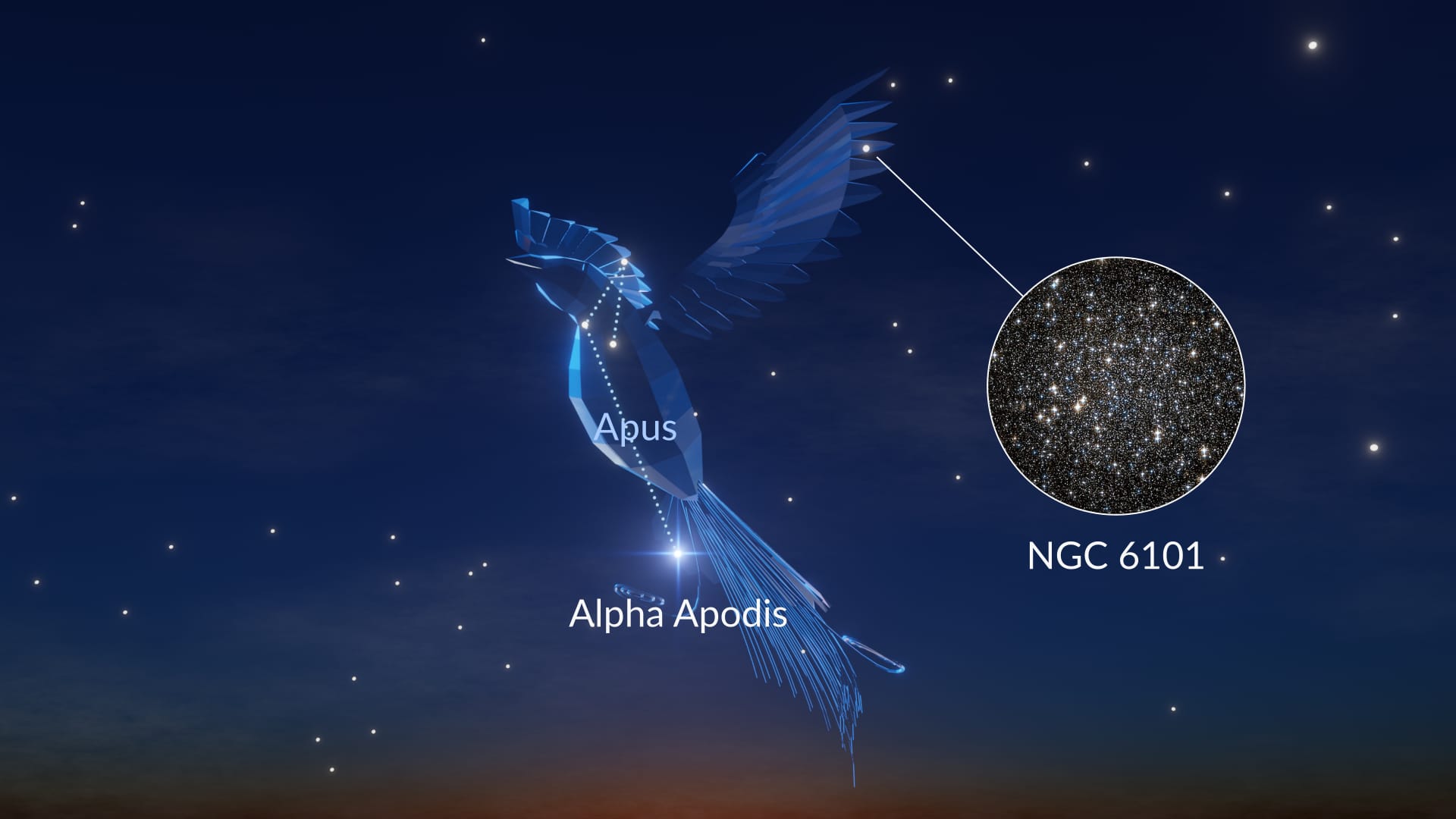
Apus
- Brightness: ☆
- Visible between: 5°N to 90°S
- Brightest star: Alpha Apodis (mag 3.8)
- Notable deep-sky object: NGC 6101 (mag 9)
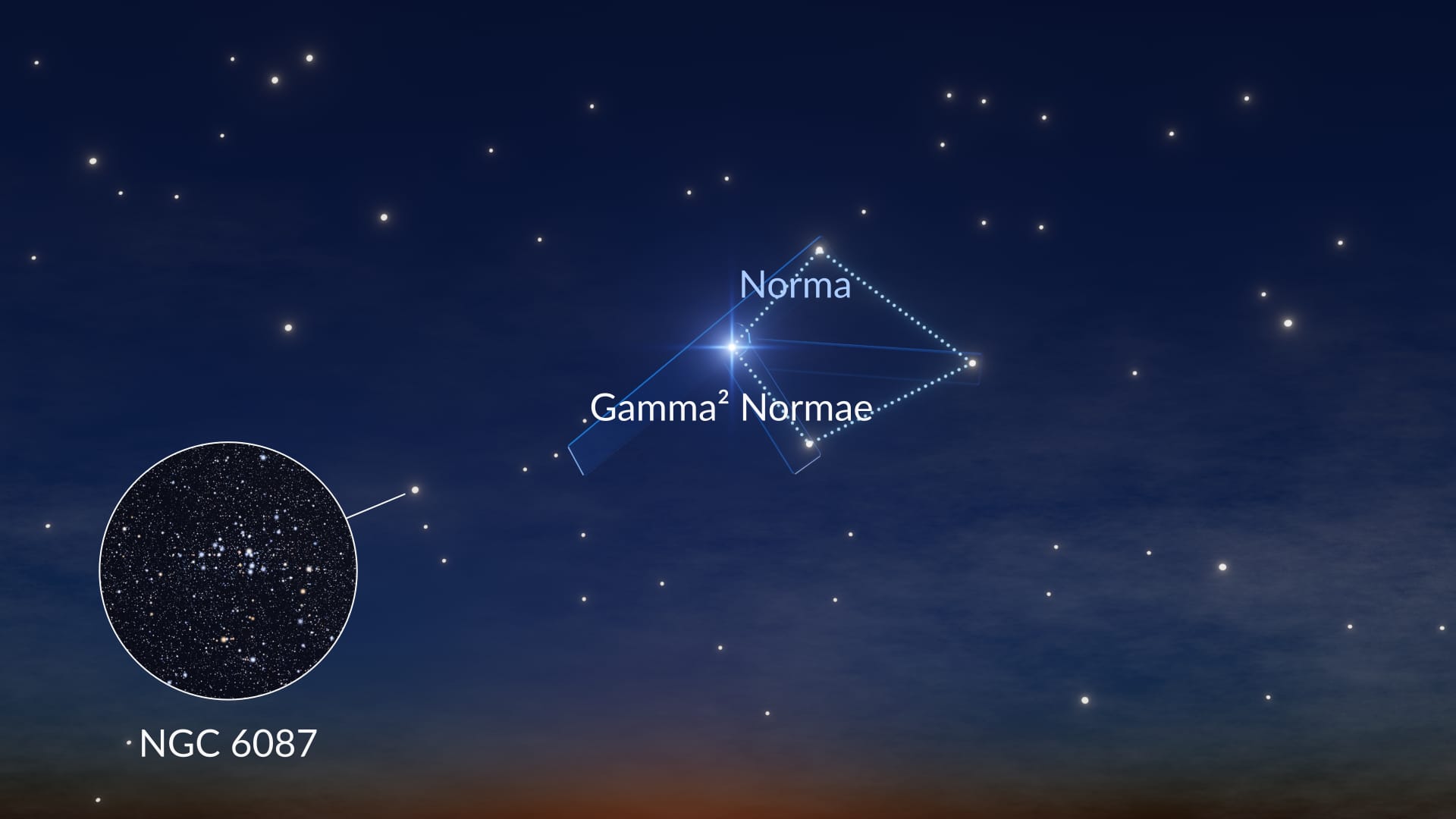
Norma
- Brightness: ☆
- Visible between: 30°N to 90°S
- Brightest star: Gamma² Normae (mag 4.0)
- Notable deep-sky object: NGC 6087 (mag 5.4)
Pro tips for astronomical observations
- Best time: 9 p.m. – 2 a.m. local for darkest skies. In the Northern Hemisphere, where it’s summer, full darkness arrives later. In the Southern Hemisphere, during the southern winter, the sky becomes dark enough earlier.
- Moon phase: Aim for the new or crescent Moon phase to spot fainter stars.
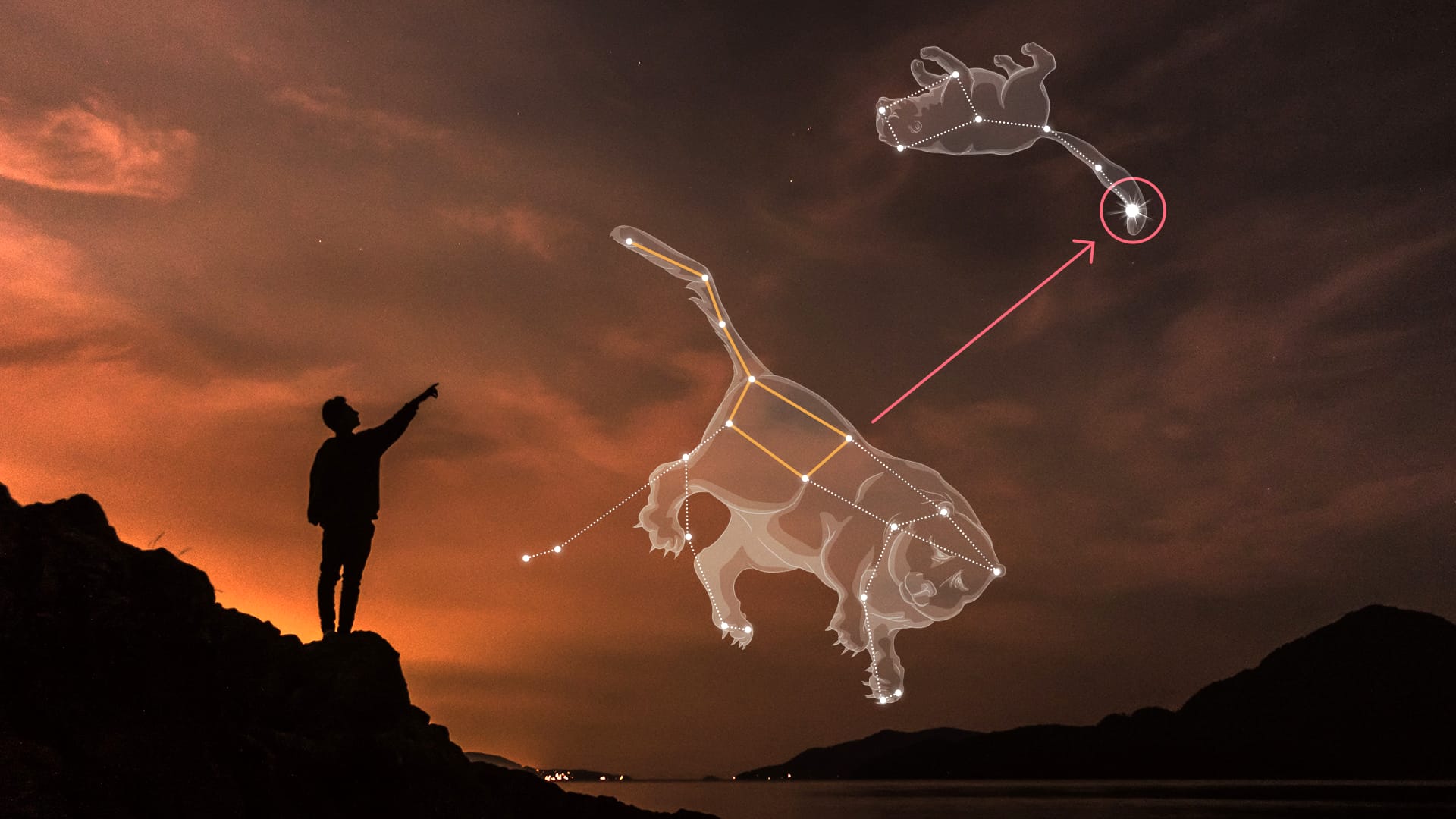
- Learn more: For all the astronomical events happening in July 2026, check our July Night Sky Guide. Learn how to identify the most famous stars — Polaris, Sirius, Arcturus, and many others — with our infographic.
FAQ: July constellations
What constellations can I see in July from the Northern Hemisphere?
From the Northern Hemisphere, July is a good month to see Draco, Hercules, and Ophiuchus. Scorpius is also visible from many northern locations, but it stays low above the southern horizon, and some of its stars may be hidden if you are far north.
What constellations can I see in July from the Southern Hemisphere?
From the Southern Hemisphere, July is a great time to see Scorpius, Triangulum Australe, and Ophiuchus. Scorpius appears high in the sky, while Triangulum Australe is easy to spot as a small bright triangle near Alpha Centauri.
What bright stars can I see in July?
Some of the brightest stars visible on July evenings are Antares in Scorpius, Vega in Lyra, Arcturus in Boötes, and Altair in Aquila. Southern observers can also look for Atria in Triangulum Australe and nearby Alpha Centauri in Centaurus.
What is the easiest July constellation to find?
Scorpius is usually the easiest July constellation to recognize because of its bright star Antares and its hook-shaped pattern. In the Northern Hemisphere, Draco is also a good target if you know how to find the Big and Little Dippers.
What is the best time to see July constellations?
The best time to see July constellations is after the sky gets fully dark, roughly between 9 p.m. and 2 a.m. local time. In northern summer locations, darkness comes later, so you may need to wait until around 10 p.m. or later.
Can I see the Milky Way in July?
Yes, July is one of the best months to see the Milky Way, especially from dark-sky locations. The Milky Way passes through the region of Scorpius and nearby constellations, making the southern sky especially rich in stars and deep-sky objects.
Best July constellations and stars: bottom line
In the Northern Hemisphere, July is a great time to look for Draco winding between the Big and Little Dippers and Hercules near the bright stars Vega and Arcturus. Southern observers get the best view of Scorpius, marked by bright red Antares, as well as Triangulum Australe and the large constellation Ophiuchus above Scorpius. To find any of these constellations instantly, open Star Walk 2, search for the constellation’s name, and follow the arrow on the sky map.