Best Astrophotography Targets by Month: October Deep Sky Objects
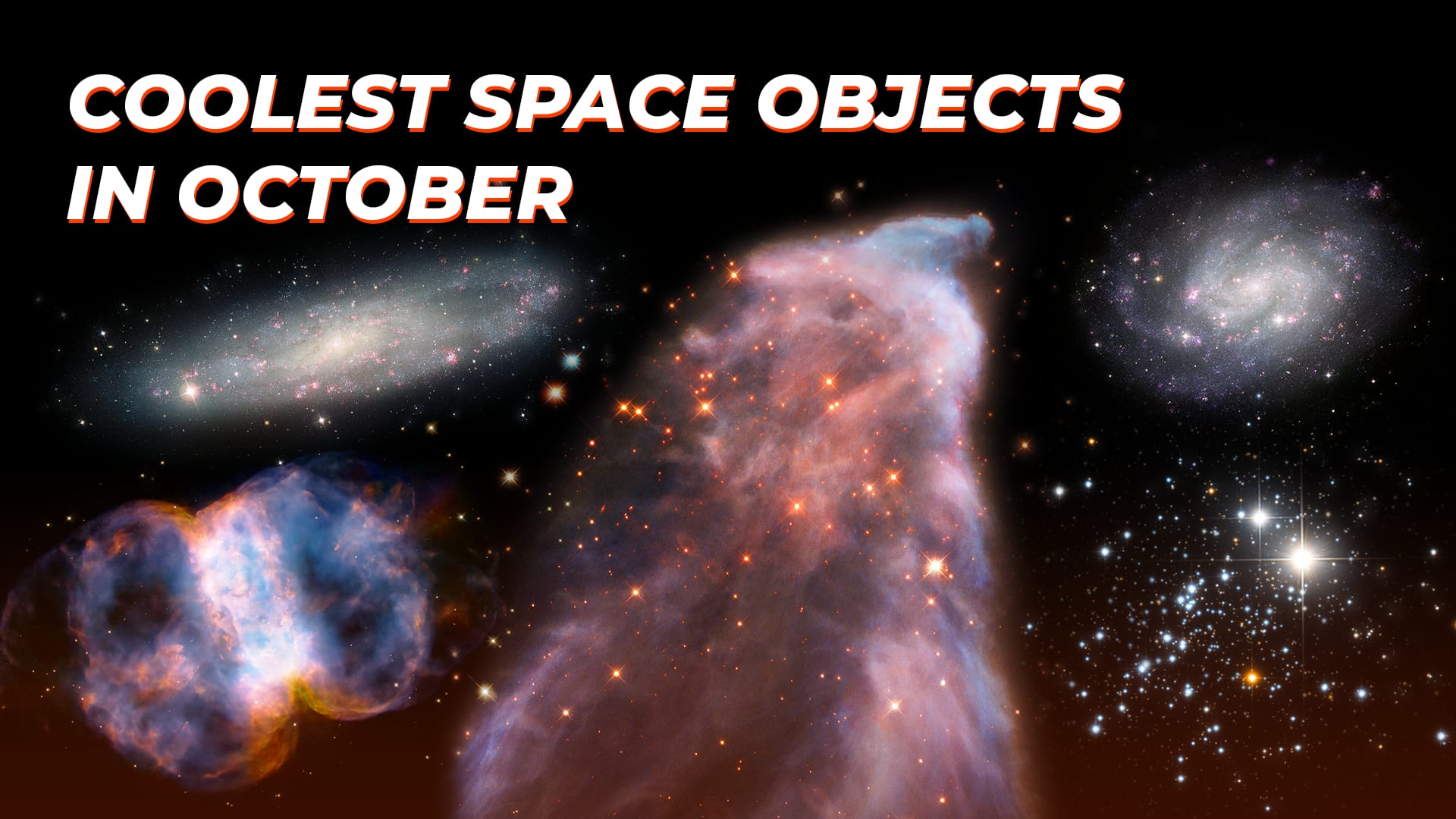
October is very diverse in terms of deep-sky targets – you can see all kinds of them in the night sky! In this article, you’ll learn about galaxies, nebulae, and star clusters to observe and photograph in October. Use the Sky Tonight app to easily locate any of these objects in your sky.
Contents
- Check the Moon Phase Before Shooting Deep-Sky Objects
- Best Astrophotography Targets in October: Nebulae
- Best Astrophotography Targets in October: Galaxies
- Best Astrophotography Targets in October: Star Clusters
- Deep-Sky Objects: Frequently Asked Questions
- October Deep-Sky Objects: Key Facts
Check the Moon Phase Before Shooting Deep-Sky Objects
Dark skies matter most when photographing faint galaxies and extended nebulae. Bright moonlight lowers contrast and can make low-surface-brightness targets such as the Cave Nebula much harder to capture.
In October 2026, the New Moon falls on October 10 at 15:50 GMT, making roughly October 6–14 the best period for deep-sky astrophotography. The Last Quarter occurs on October 3 at 13:25 GMT, so the first part of the month can also provide many dark-sky hours. Avoid photographing dim objects on the nights around the Full Moon, which occurs on October 26 at 04:12 GMT.
For exact Moon phase dates, illumination, moonrise, and moonset times for your location, check our Moon Calendar online.
Best Astrophotography Targets in October: Nebulae
California Nebula
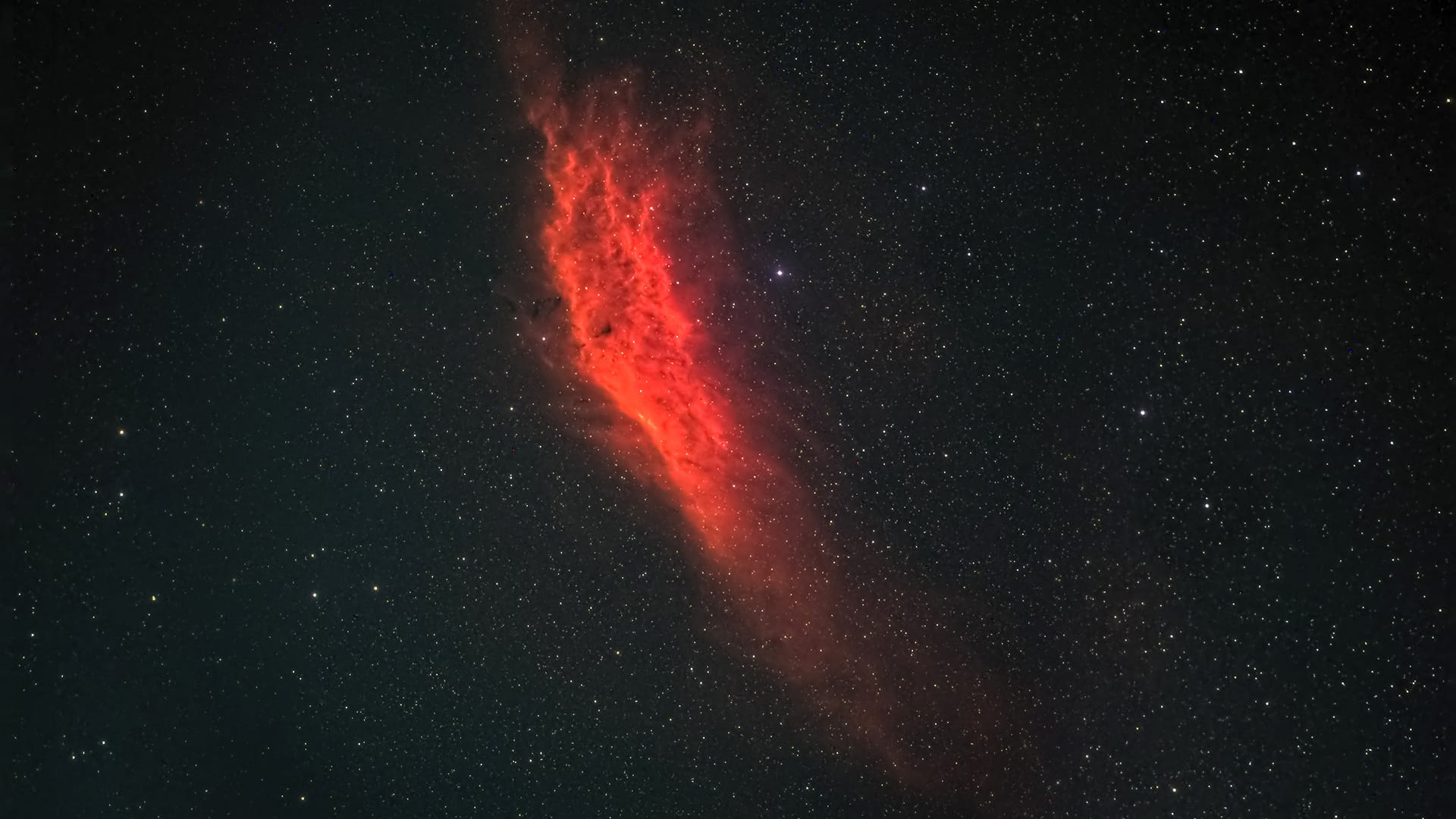
- Alternative names: NGC 1499, Sh2-220
- Apparent size: 2°40′ × 40′ (5.3 × Moon)
- Apparent magnitude: 4.1
- Constellation: Perseus
- Best viewed from: Northern Hemisphere
The California Nebula is an emission nebula located about 1,000 light-years away from Earth. Its glow likely comes from Xi Persei and other hot stars nearby.
Tips for Observing and Astrophotography
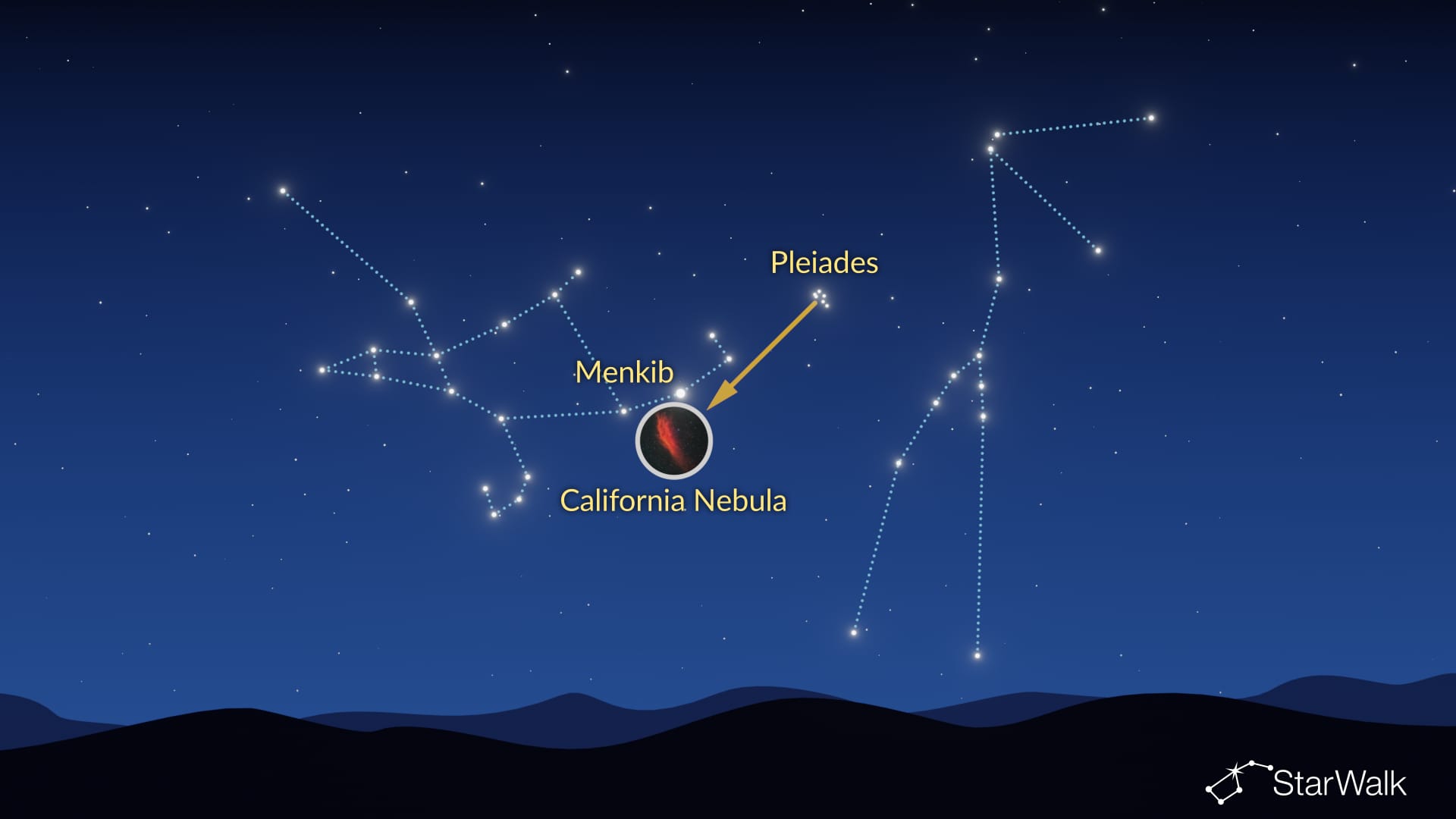
Due to its very low surface brightness, the California Nebula is a challenging visual target; an H-beta or a good UHC filter and a wide field of view are recommended. However, this is a dream target for wide-field astrophotography setups (100–200 mm lenses or small refractors). Long Hα exposures beautifully reveal its red glow and shape. Narrowband filters make a huge difference under light-polluted skies.
Cave Nebula
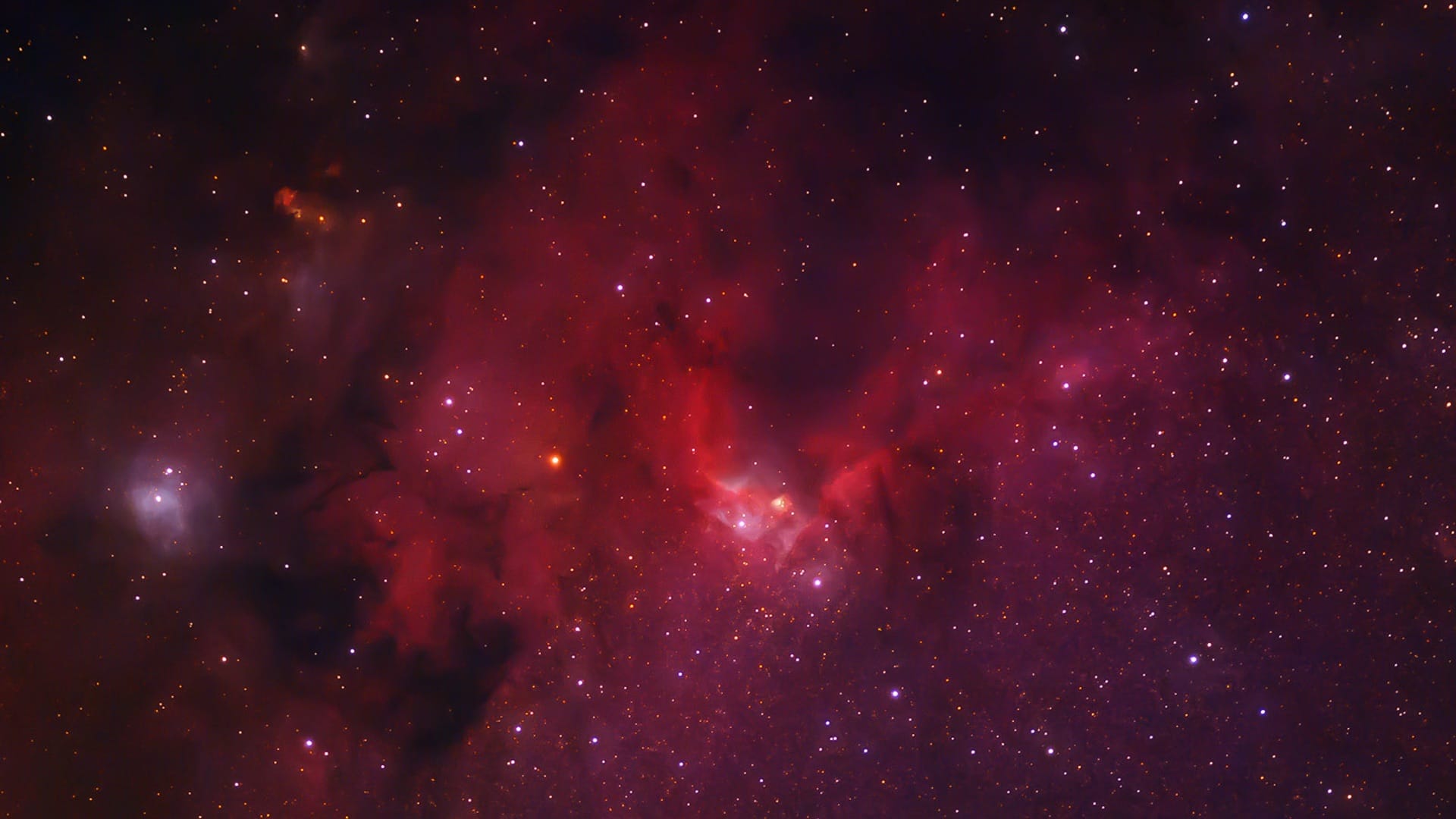
- Alternative names: Caldwell 9, Sh2-155
- Apparent size: **50′ × 30′ (1.7 × Moon)
- Apparent magnitude: 8.0
- Constellation: Cepheus
- Best viewed from: Northern Hemisphere
The Cave Nebula is a diffuse nebula located about 3,000 light-years away from us. It is part of a much larger cloud of gas and dust called Cepheus B.
Tips for Observing and Astrophotography
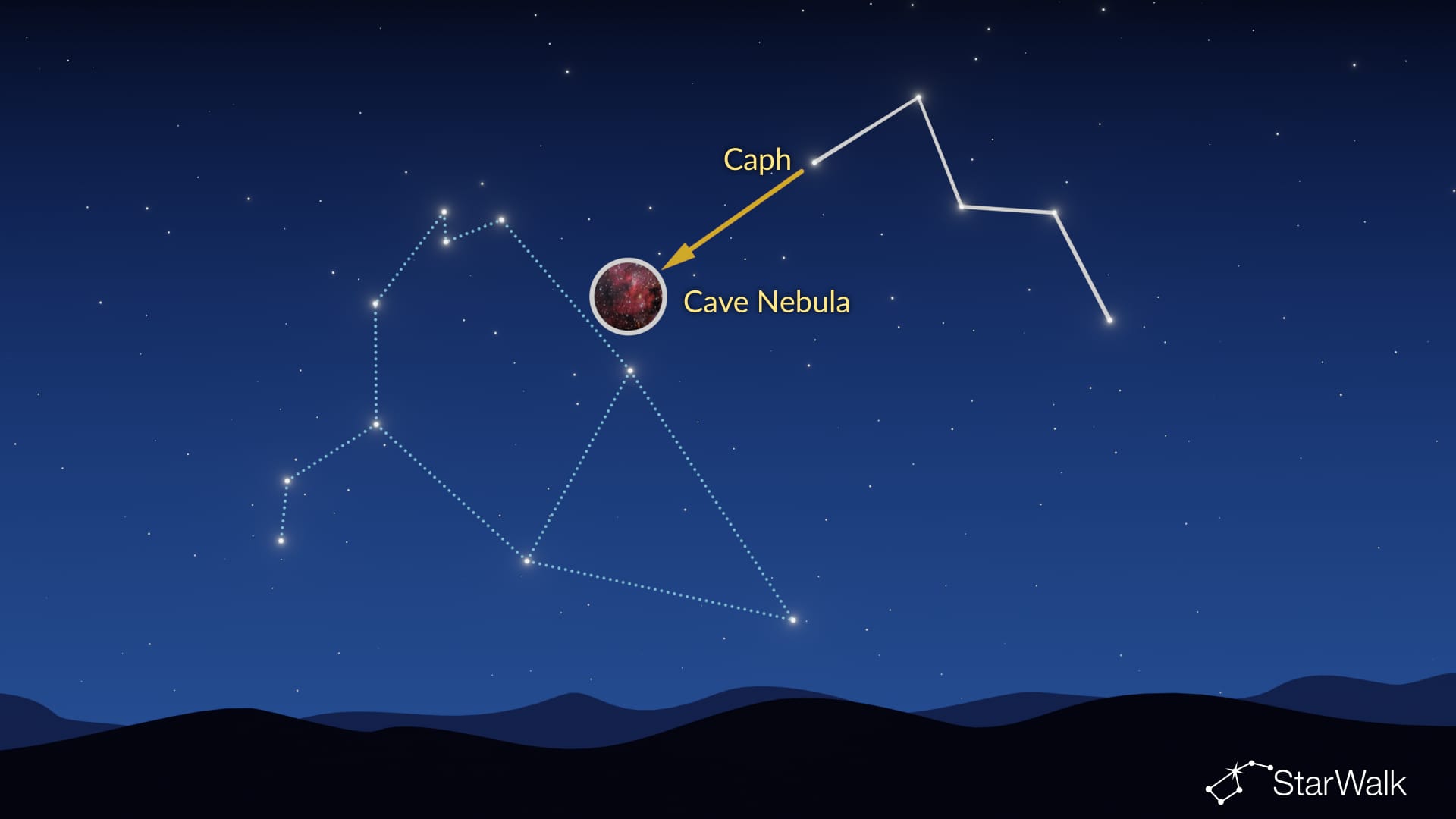
The Cave Nebula is an extremely challenging visual target. A large telescope, very dark skies, and a nebula filter offer the best chance of detecting its faint glow. However, this nebula is a great astrophotography target! With narrowband filters (Hα, O-III, S-II), the “cave-like” dark dust lanes show up spectacularly. Best with focal lengths of 300–600 mm.
Little Dumbbell Nebula

- Alternative names: M76, NGC 650/651, Cork Nebula, Barbell Nebula
- Apparent size: about 2.7′ × 1.8′ (0.1 × Moon)
- Apparent magnitude: 12.0
- Constellation: Perseus
- Best viewed from: Northern Hemisphere
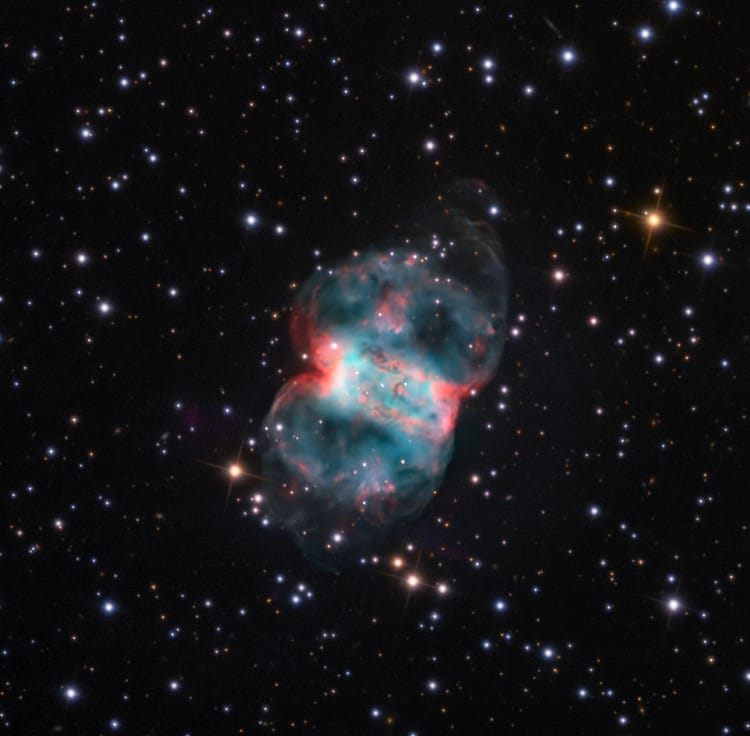
The Little Dumbbell Nebula (M76) is one of only four planetary nebulae in the Messier catalog. Its two glowing lobes are expanding outward from a dying star at the center, giving the nebula its distinctive pinched, dumbbell-like appearance.
Tips for Observing and Astrophotography
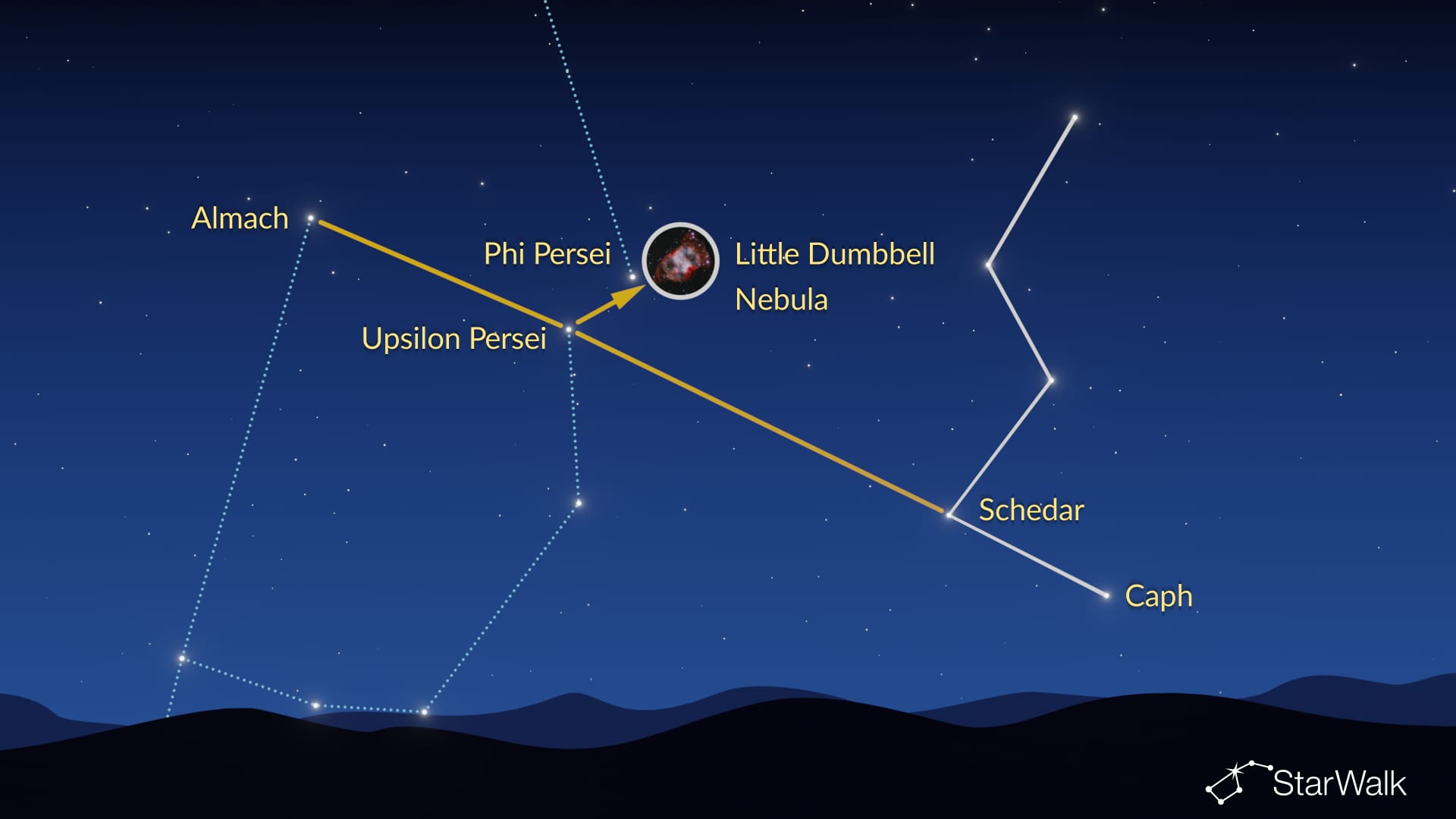
The Little Dumbbell Nebula is one of the more difficult Messier objects to observe. Large binoculars may reveal it from a very dark location, but an 8-inch (200 mm) or larger telescope gives a much better chance of seeing its two-lobed structure.
For astrophotography, M76 is a good target even for beginners. You can photograph it with many different telescope focal lengths, but shorter setups will make the small nebula look tiny in the frame. A medium or long focal length will show more detail. Broadband imaging captures the nebula and natural star colors, while H-alpha and OIII filters can reveal more of its faint outer structure.
NGC 40
- Alternative names: Caldwell 2, Bow-Tie Nebula
- Apparent size: about 38″ × 35″ (0.02 × Moon)
- Apparent magnitude: 12.3
- Constellation: Cepheus
- Best viewed from: Northern Hemisphere
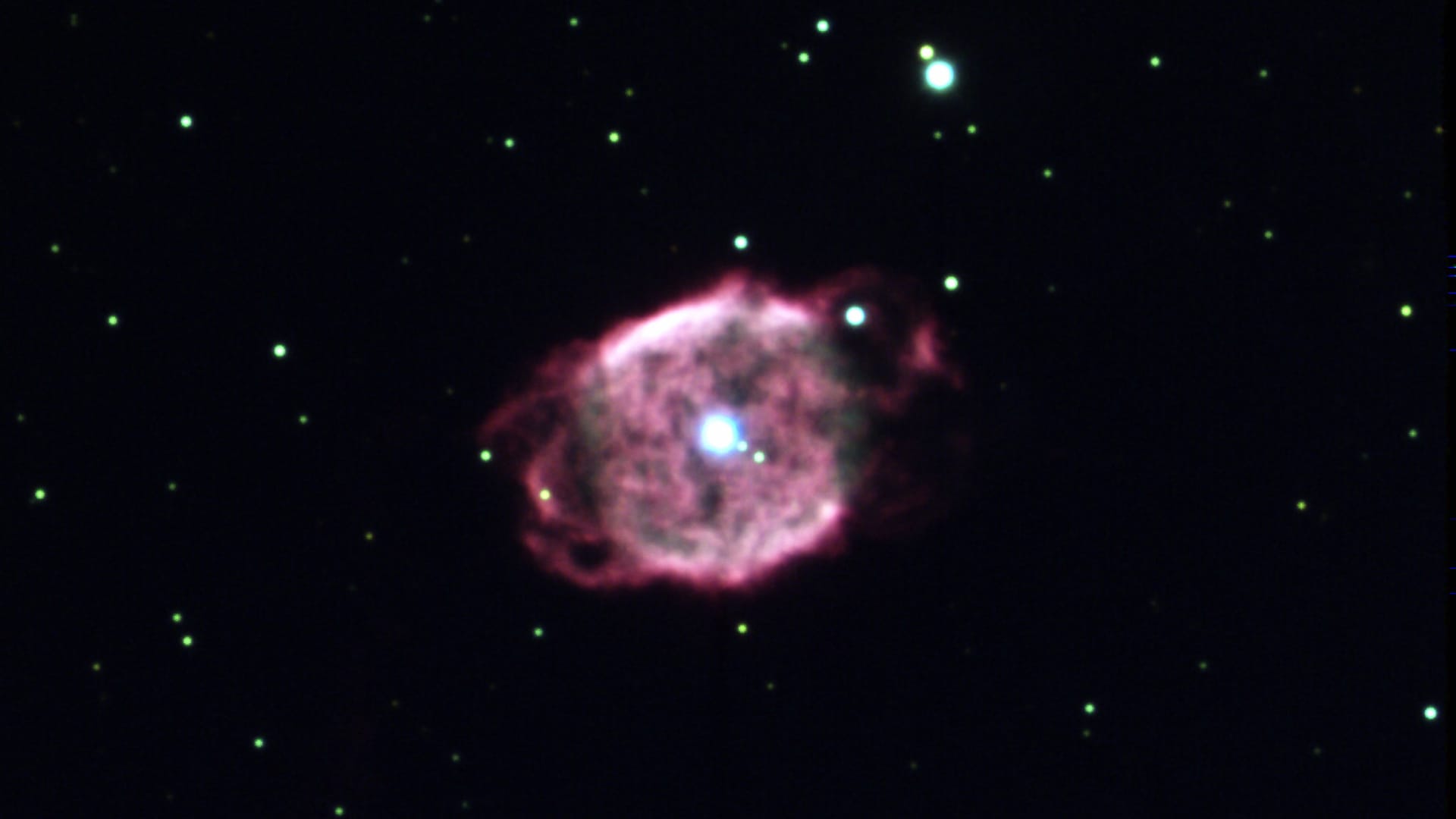
NGC 40 is a small planetary nebula in the constellation Cepheus. The star at its center has reached the final stages of its life and expelled its outer layers, creating an expanding shell of glowing gas. Eventually, the nebula will disperse and leave behind a white dwarf.
Tips for Observing and Astrophotography
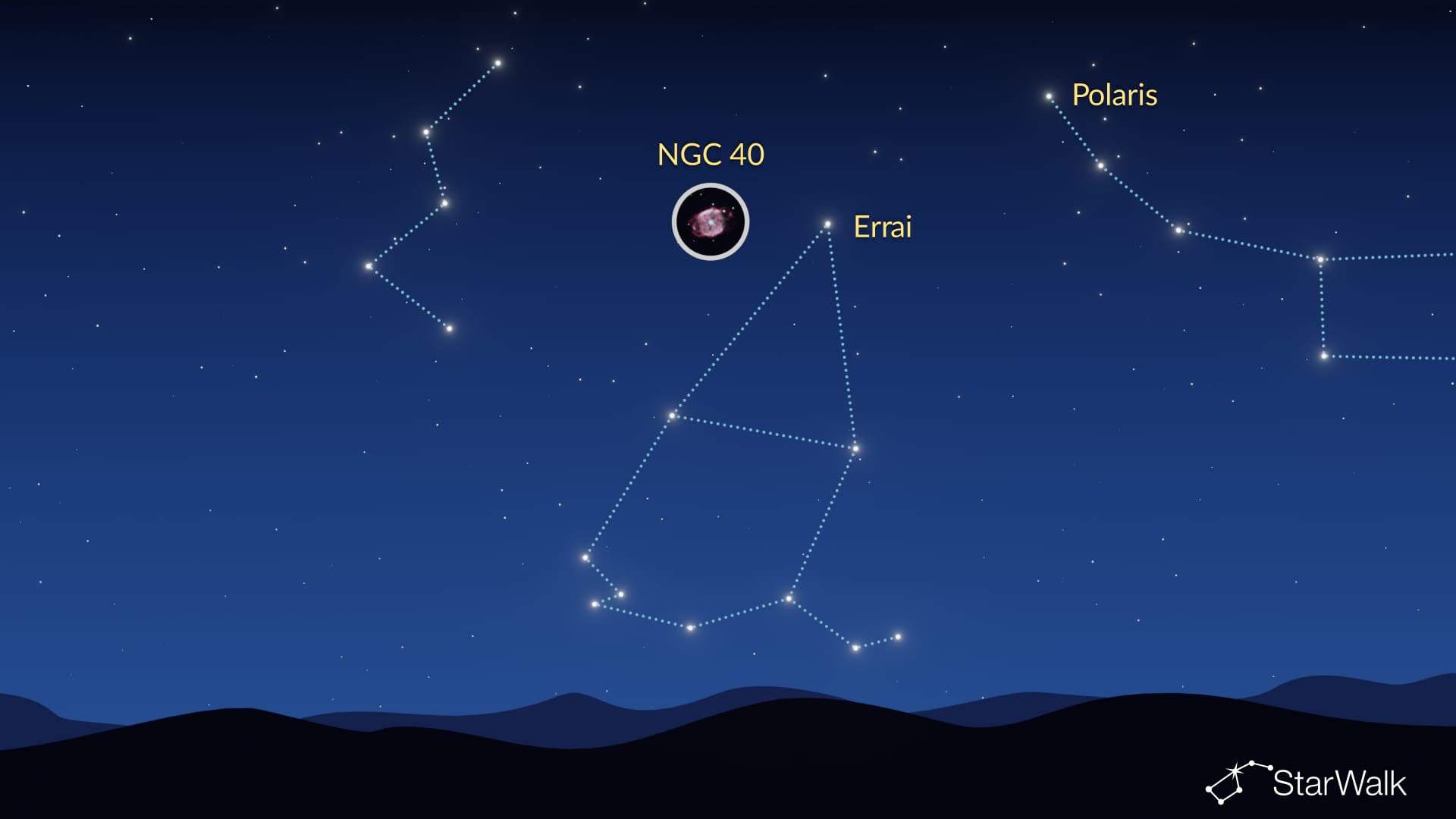
NGC 40 is both small and faint, so a telescope is required to observe it. Use moderate-to-high magnification to separate the nebula from the surrounding stars; its relatively bright central star can make the surrounding shell harder to detect. For astrophotography, use a long-focal-length setup to give this tiny object enough image scale.
Ghost of Cassiopeia
- Alternative names: IC 63, Ghost Nebula
- Apparent size: about 10′ × 3′ (0.33 × Moon)
- Apparent magnitude: 13.3
- Constellation: Cassiopeia
- Best viewed from: Northern Hemisphere
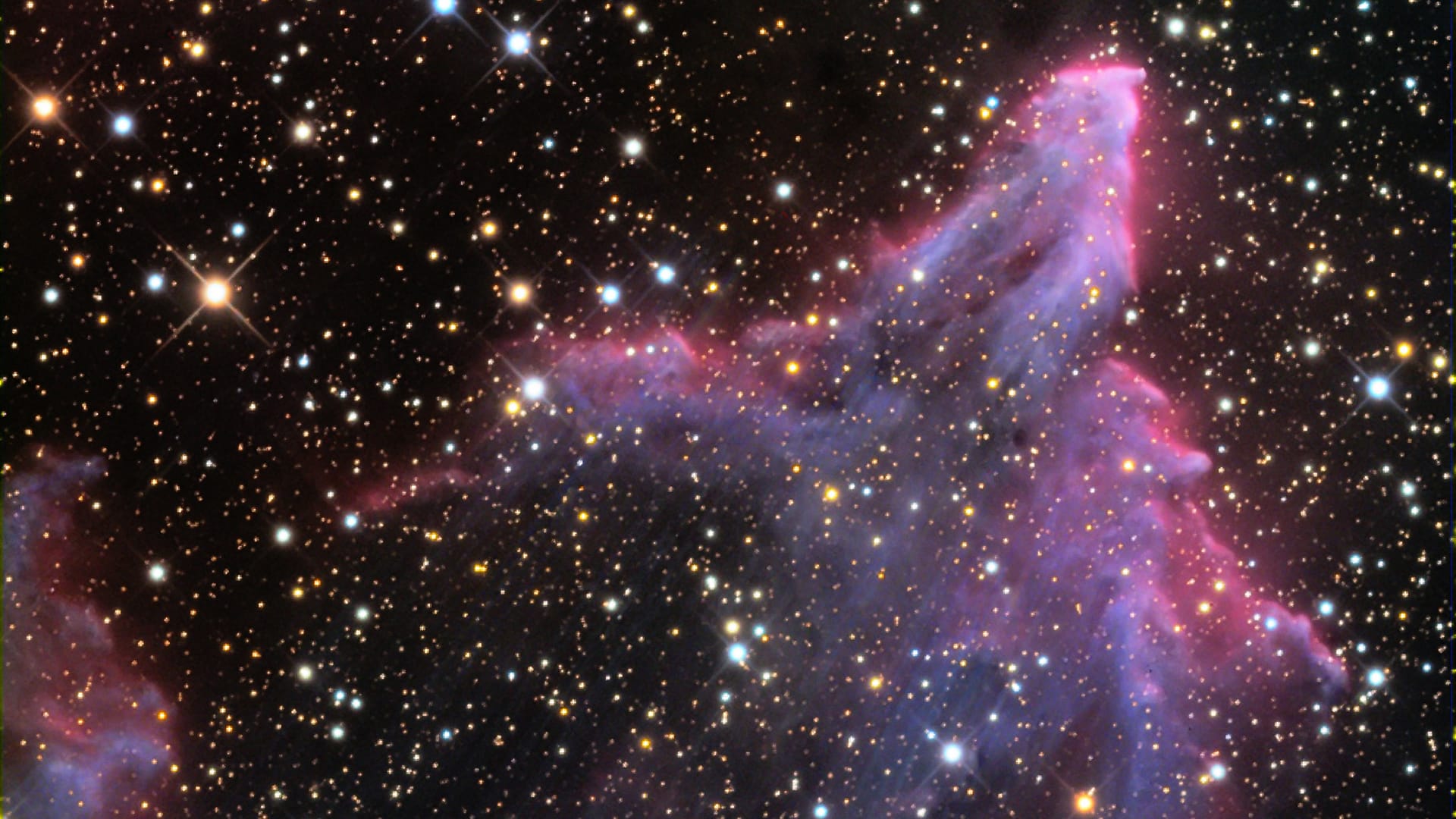
The Ghost of Cassiopeia (IC 63) is a faint reflection and emission nebula. Together with nearby IC 59, it lies close to the bright star Gamma Cassiopeiae. The star lights up the surrounding gas and dust: hydrogen produces the reddish glow, while reflected starlight creates blue-gray regions. Both nebulae can easily fit into the same astrophotography frame.
Tips for Observing and Astrophotography
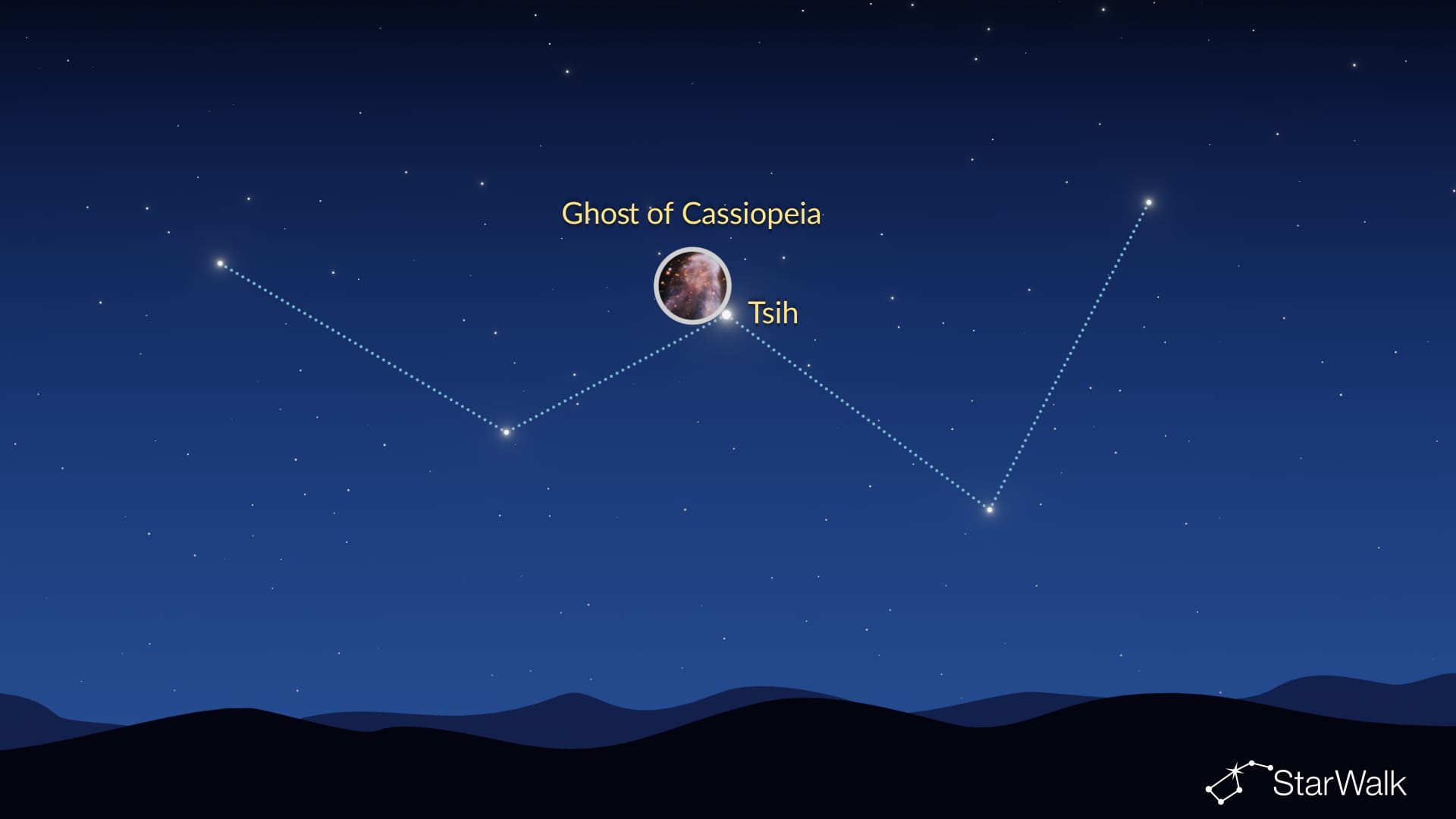
Even under very dark skies, you can't see IC 63 with the naked eye or binoculars. You can only observe it through a telescope.
The nebula suits experienced astrophotographers. It is faint, and the extremely bright nearby star Gamma Cassiopeiae makes image processing more difficult. With a telescope or camera lens, you can capture both IC 63 and the nearby IC 59 in the same field of view. From very dark locations, broadband imaging can reveal both reflected light and hydrogen emission. From brighter locations, an H-alpha or dual-band filter makes the glowing gas easier to capture. Plan for several hours of exposure time, and be careful not to overexpose Gamma Cassiopeiae while capturing the faint nebulae.
Best Astrophotography Targets in October: Galaxies
NGC 300

- Alternative names: Caldwell 70
- Apparent size: 21.9′ × 15.5′ (0.7 × Moon)
- Apparent magnitude: 8.1
- Constellation: Sculptor
- Best viewed from: Southern Hemisphere
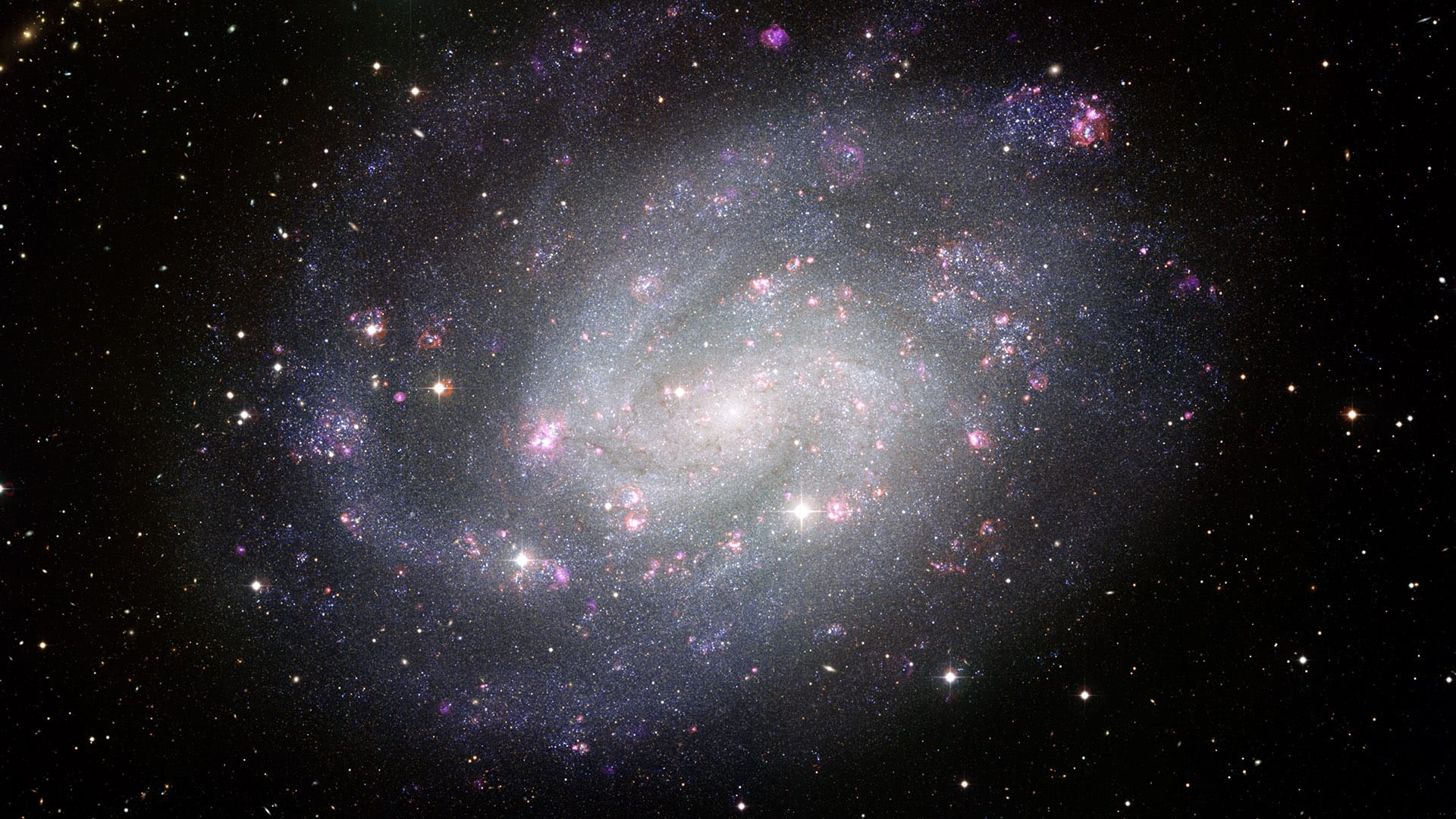
NGC 300 is a late-type spiral galaxy smaller than the Milky Way. About 6 million light-years away, it is one of the closest galaxies to the Local Group, which also includes the Milky Way and the Andromeda Galaxy.
Tips for Observing and Astrophotography
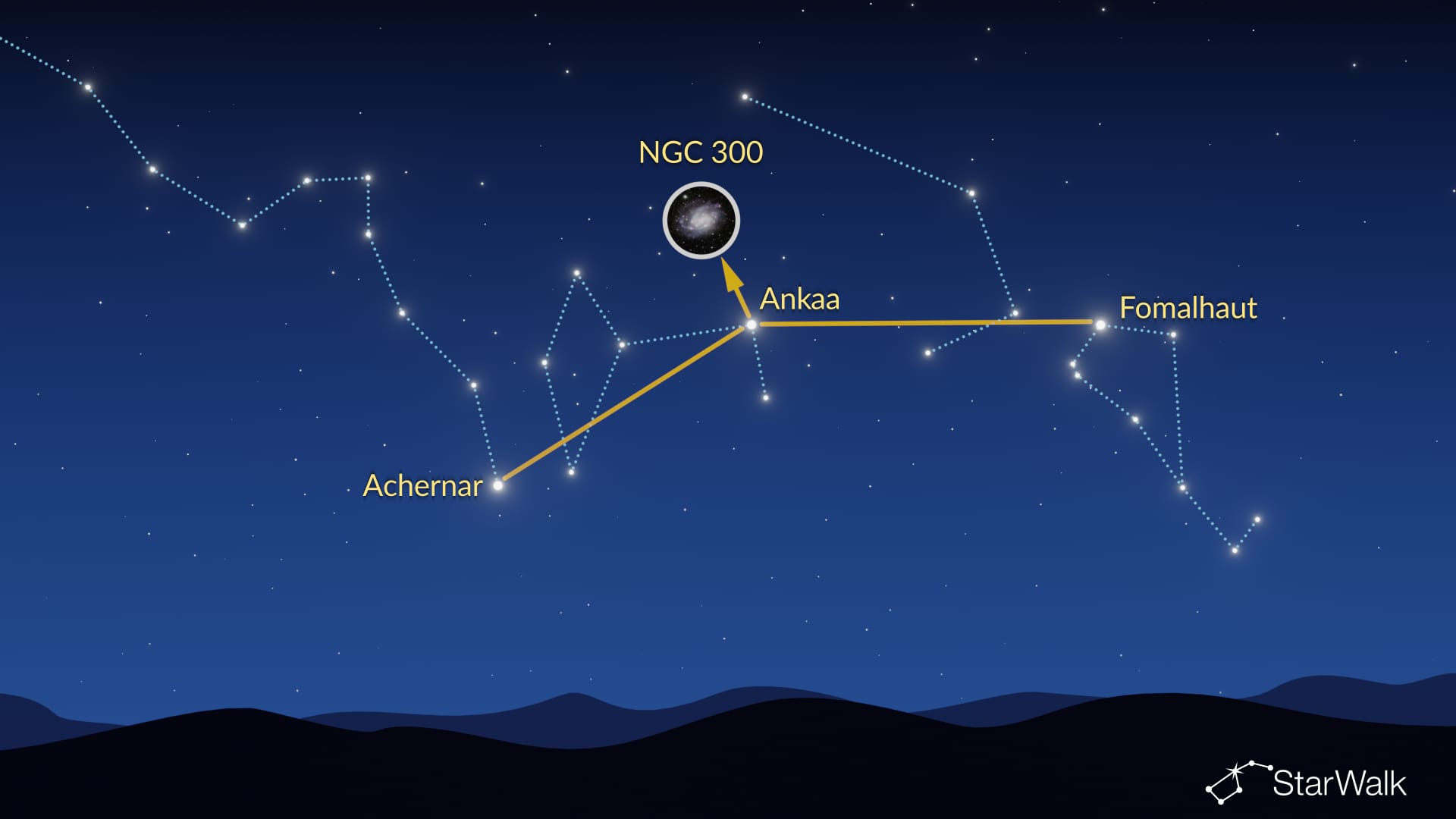
Under very dark skies, you can see NGC 300 with 10×50 binoculars. In an 8-inch (200 mm) telescope, the galaxy will appear as a round, nebulous patch with a slightly brighter center.
For astrophotography, NGC 300 benefits from long exposure times. A focal length of about 500–800 mm shows the galaxy at a good scale, and stacking many exposures can reveal its spiral arms and brighter star-forming regions.
Needle’s Eye Galaxy
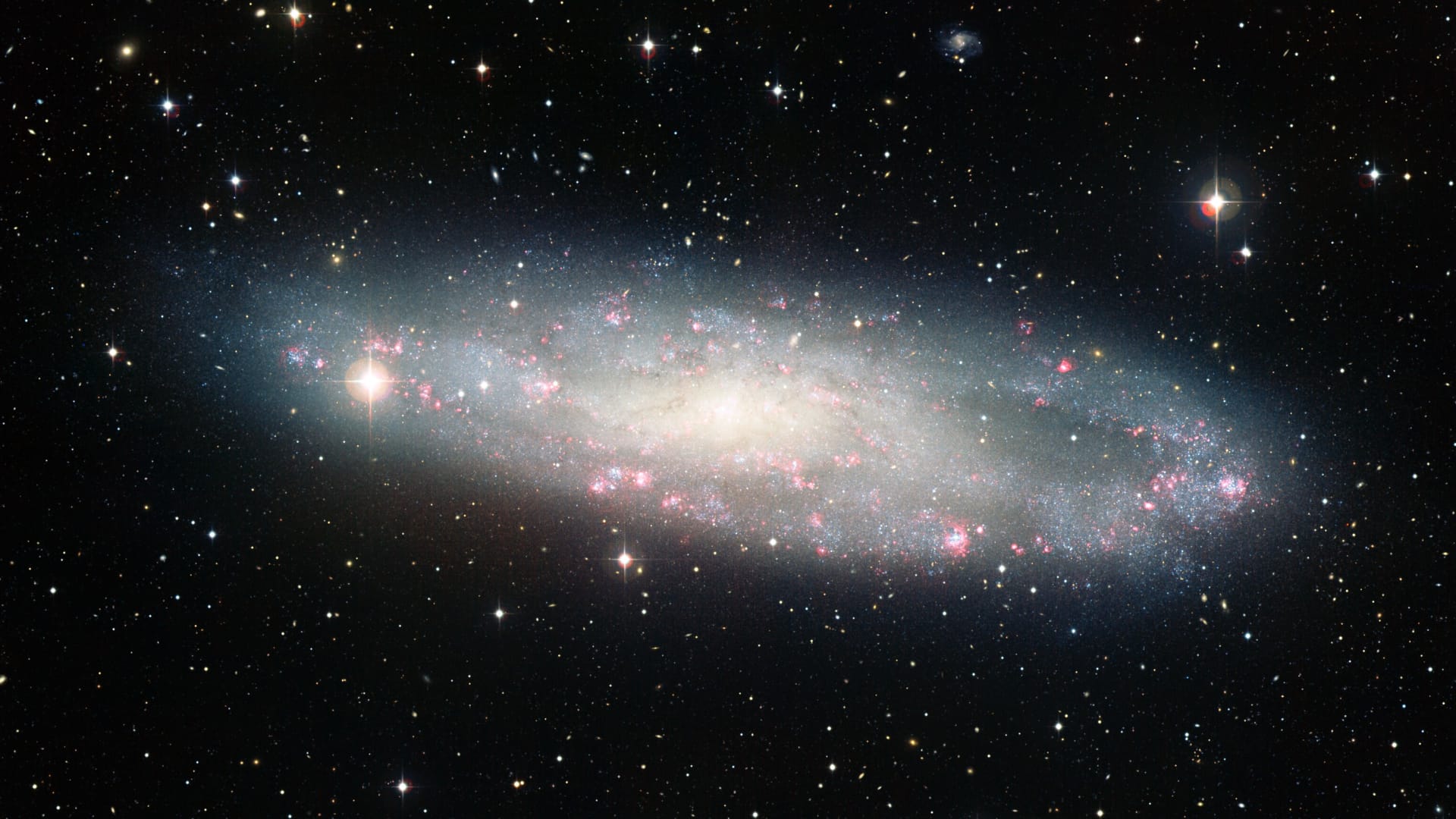
- Alternative names: NGC 247, Caldwell 62
- Apparent size: 21.4′ × 6.9′ (0.7 × Moon)
- Apparent magnitude: 9.2
- Constellation: Cetus
- Best viewed from: Southern Hemisphere
The Needle’s Eye Galaxy is a dwarf spiral galaxy in the Sculptor Group. Its nickname comes from an unusual star-poor void near one end of its disk. The region contains little gas, so star formation there is much weaker than in the rest of the galaxy.
Tips for Observing and Astrophotography
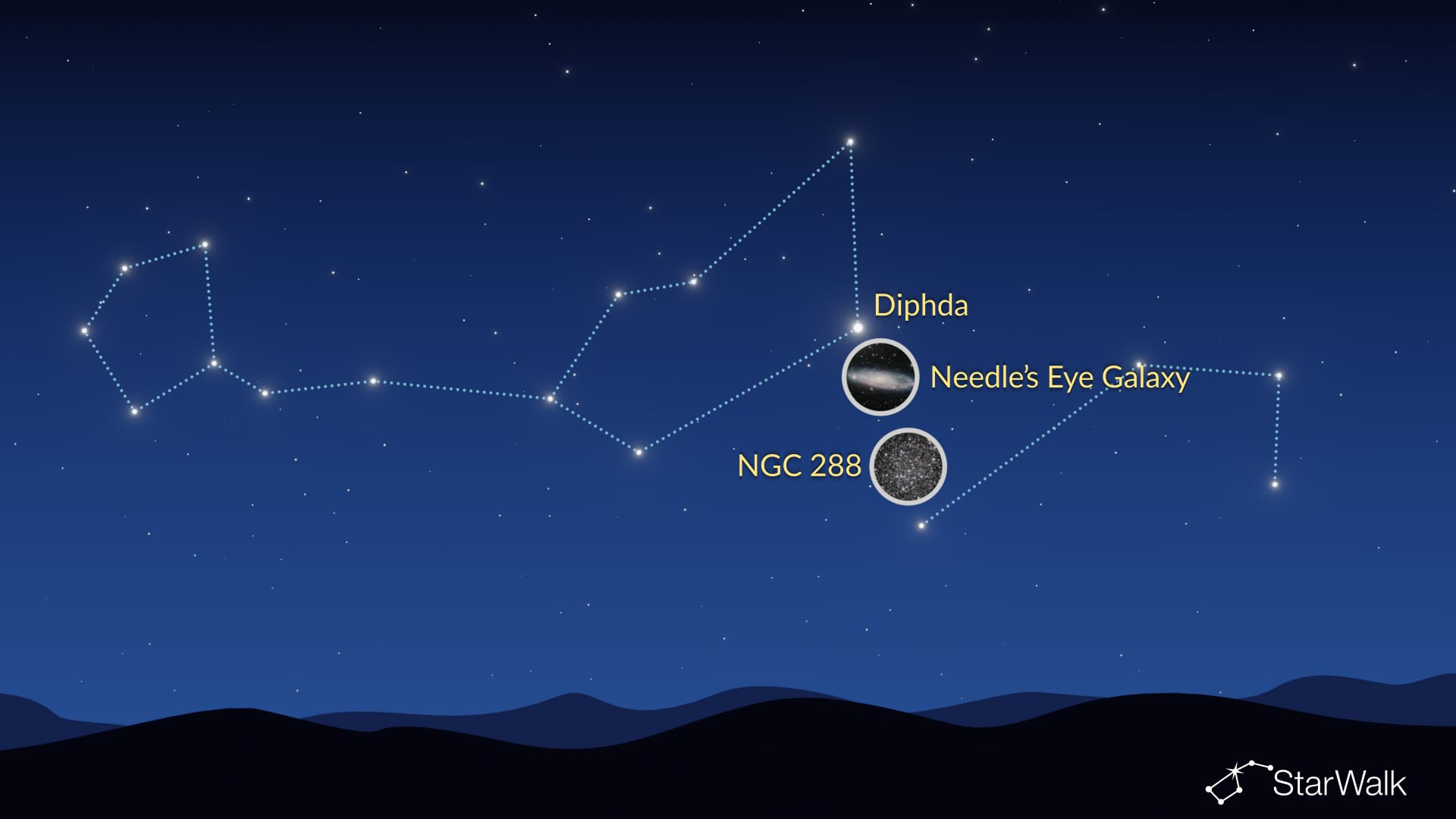
NGC 247 is a challenging visual target because its light is spread across a large, elongated disk. A dark sky and a medium or large telescope will give you the best chance of seeing it.
For astrophotography, use a medium focal length to frame the entire narrow disk. Broadband imaging and a long total exposure time will help reveal its faint outer regions, dust structure, and the distinctive dark “hole” that inspired the galaxy’s nickname.
Best Astrophotography Targets in October: Star Clusters
NGC 288
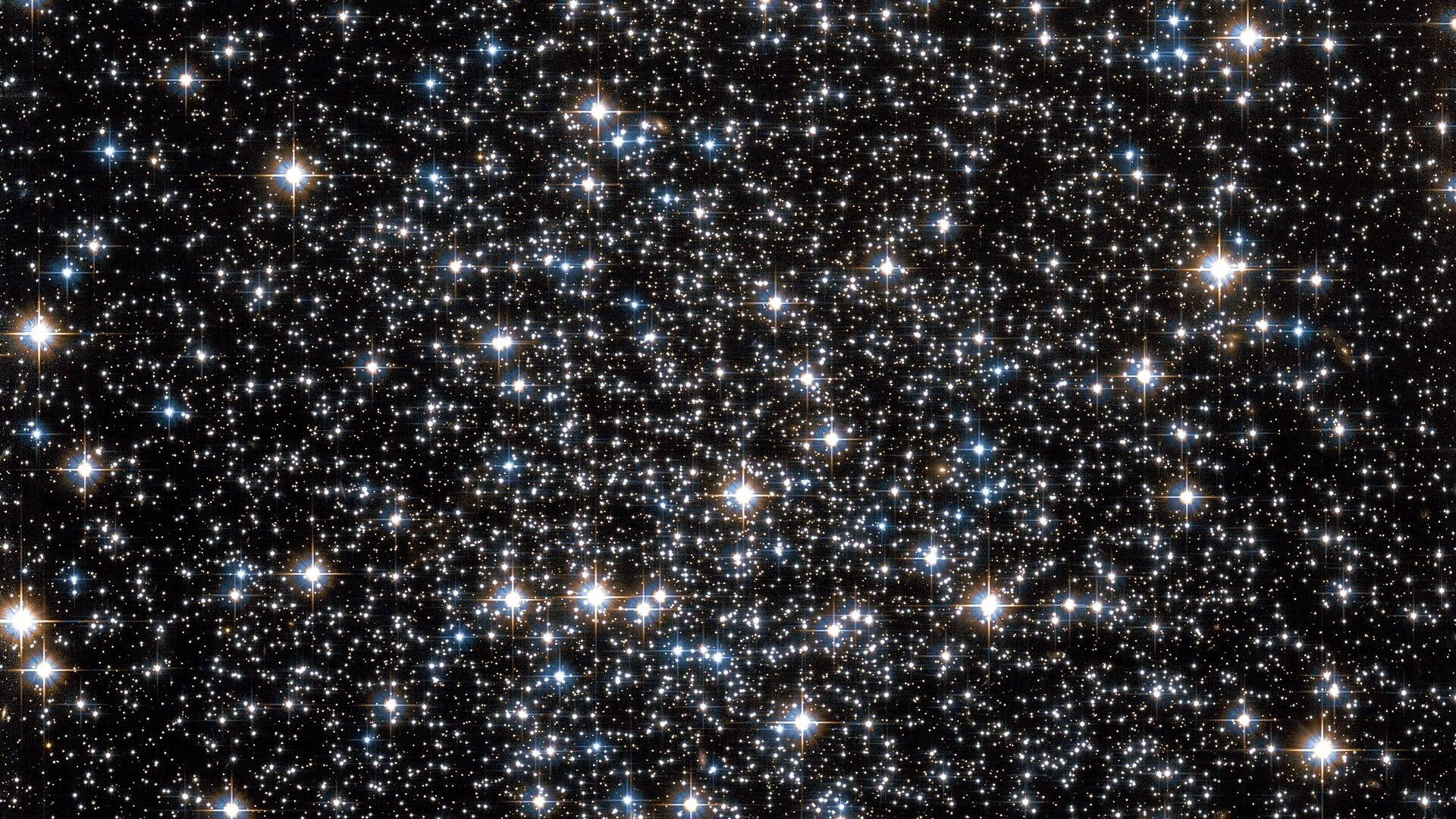
- Alternative names: Melotte 3
- Apparent size: about 13′ (0.4 × Moon)
- Apparent magnitude: about 8.1
- Constellation: Sculptor
- Best viewed from: Southern Hemisphere
NGC 288 is a globular cluster in the constellation Sculptor. Unlike many globular clusters with extremely crowded cores, its stars are spread more evenly.
Tips for Observing and Astrophotography
Under a dark southern sky, you can detect NGC 288 with binoculars as a small, hazy patch. A telescope resolves stars around the cluster, and its relatively loose structure makes it look noticeably different from more compact, typical globular clusters. For astrophotography, use a medium or long focal length to show the cluster in good detail. No special filters are needed.
M2
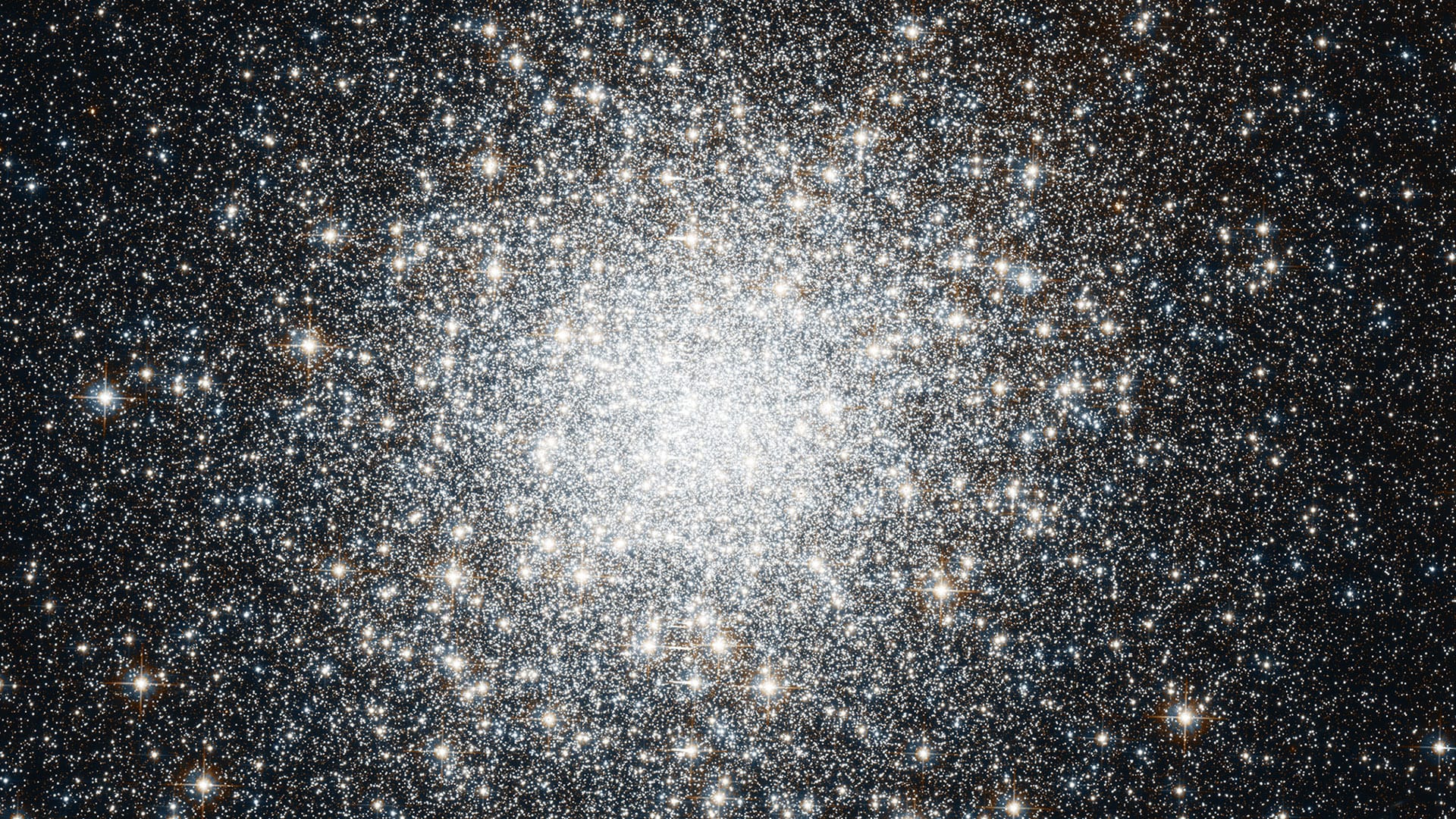
- Alternative names: NGC 7089
- Apparent size: about 13′ (0.4 × Moon)
- Apparent magnitude: 6.3
- Constellation: Aquarius
- Best viewed from: Both hemispheres
M2 is a globular star cluster located around 40,000 light-years from Earth. It is one of the brightest clusters.
Tips for Observing and Astrophotography
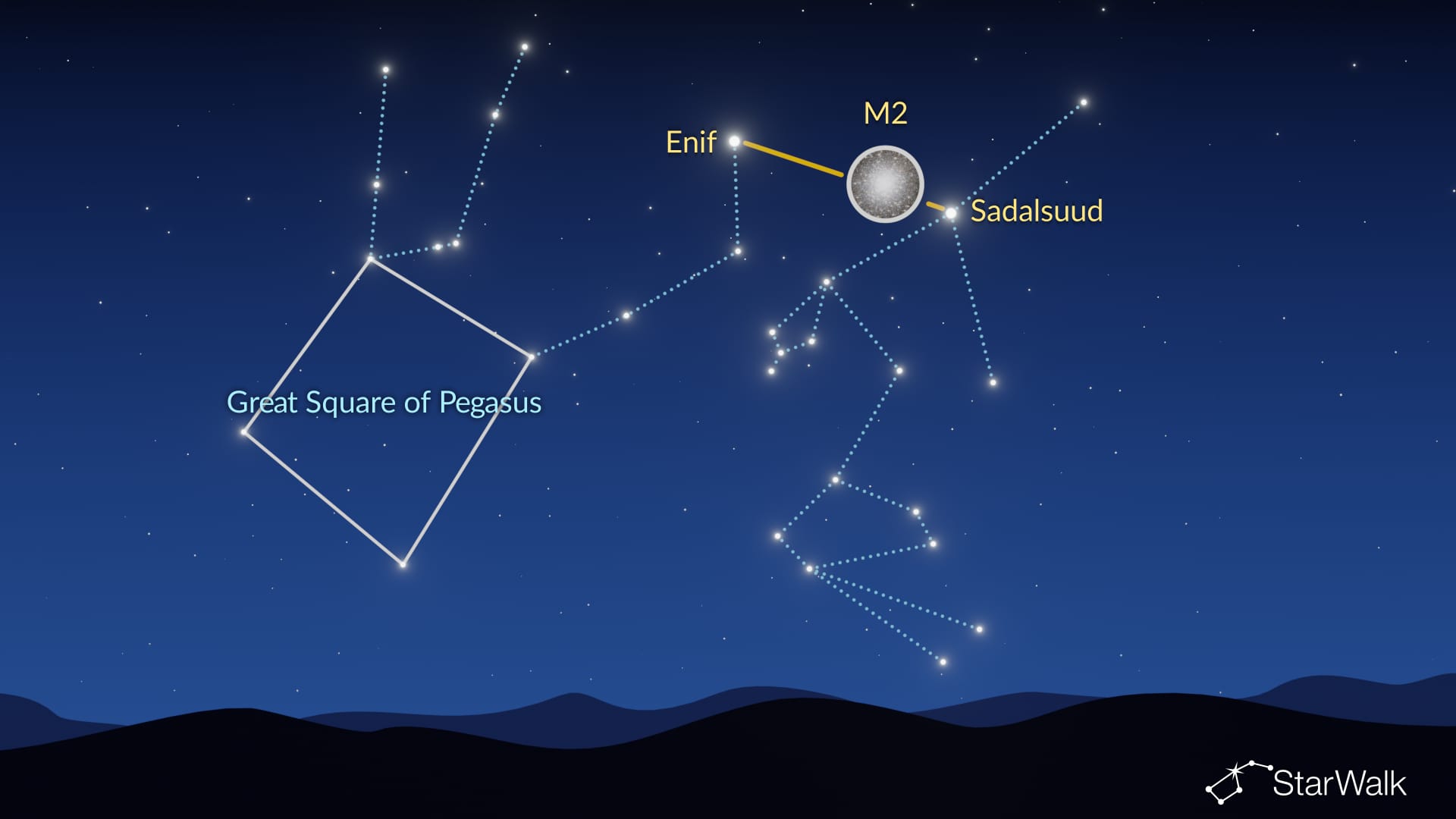
Under a perfectly dark sky, you can see M2 with the naked eye. However, it’s still better to use 10×50 binoculars or a small telescope to observe it.
For astrophotography, use a medium or long focal length. Combine shorter exposures for the bright core with longer exposures for the fainter halo of stars, and avoid making the center appear as one featureless white patch.
NGC 752
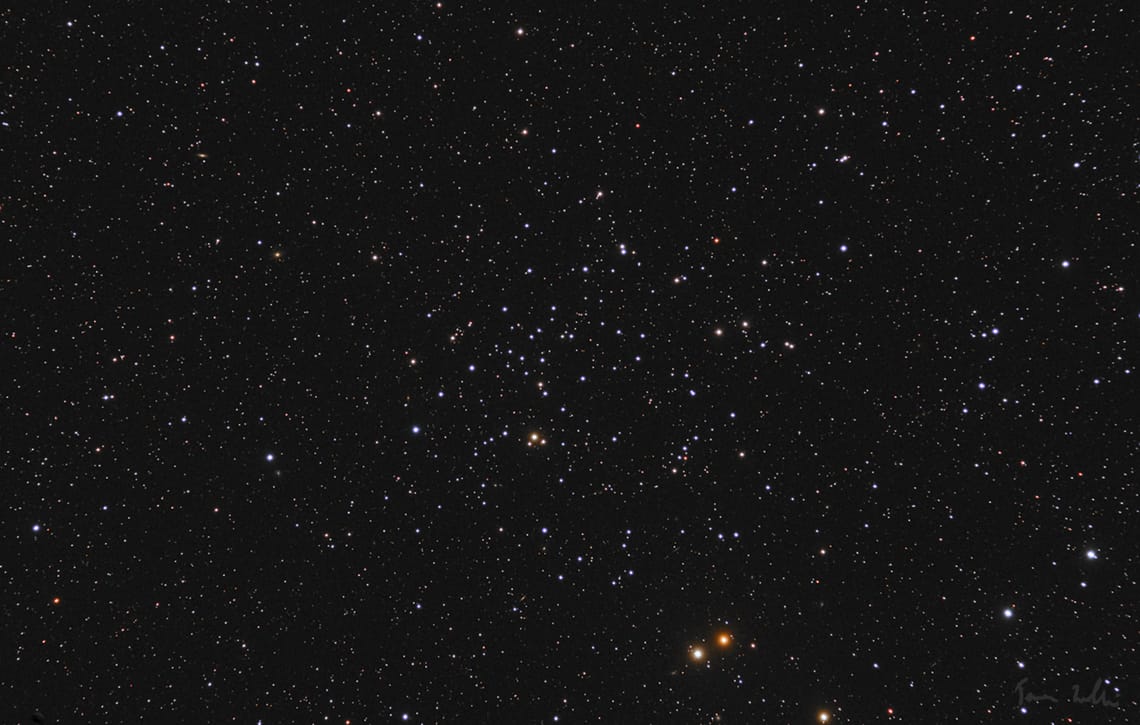

- Alternative names: Caldwell 28
- Apparent size: about 58′ (1.9 × Moon)
- Apparent magnitude: 5.7
- Constellation: Andromeda
- Best viewed from: Northern Hemisphere
NGC 752 is a large open cluster in the constellation Andromeda. Its stars are spread across almost 1° of sky, making the cluster much larger in apparent size than many other well-known open clusters.
Tips for Observing and Astrophotography
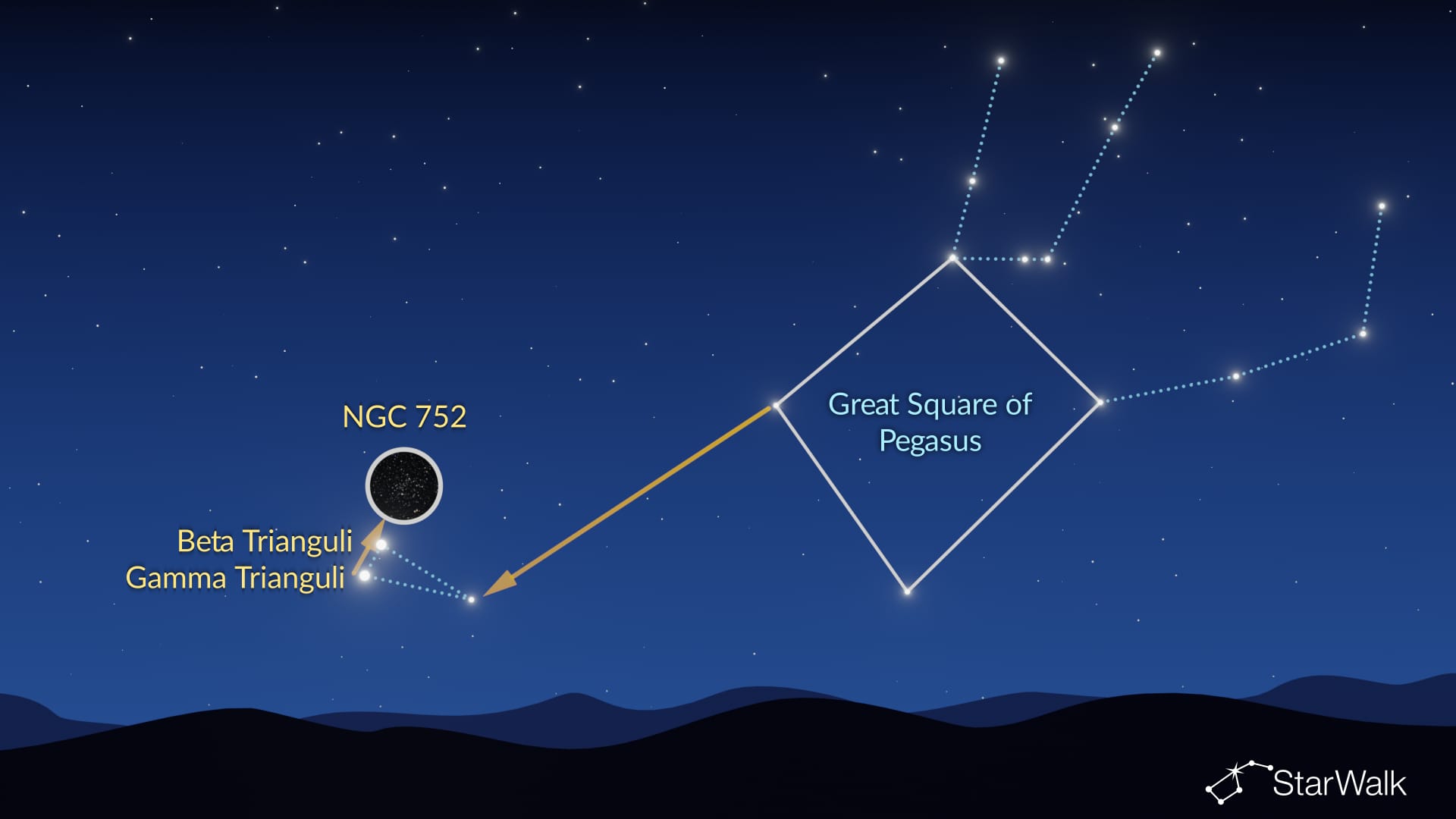
Under a dark sky, NGC 752 is barely visible to the naked eye as a faint, hazy patch, but binoculars provide a much better view. Its large apparent size makes low magnification preferable to a narrow telescopic field.
For astrophotography, use a telephoto lens or small refractor with a wide field of view. No special filters are needed. Moderate exposures will record the cluster and surrounding stars while helping preserve the colors of its brighter members.
Owl Cluster
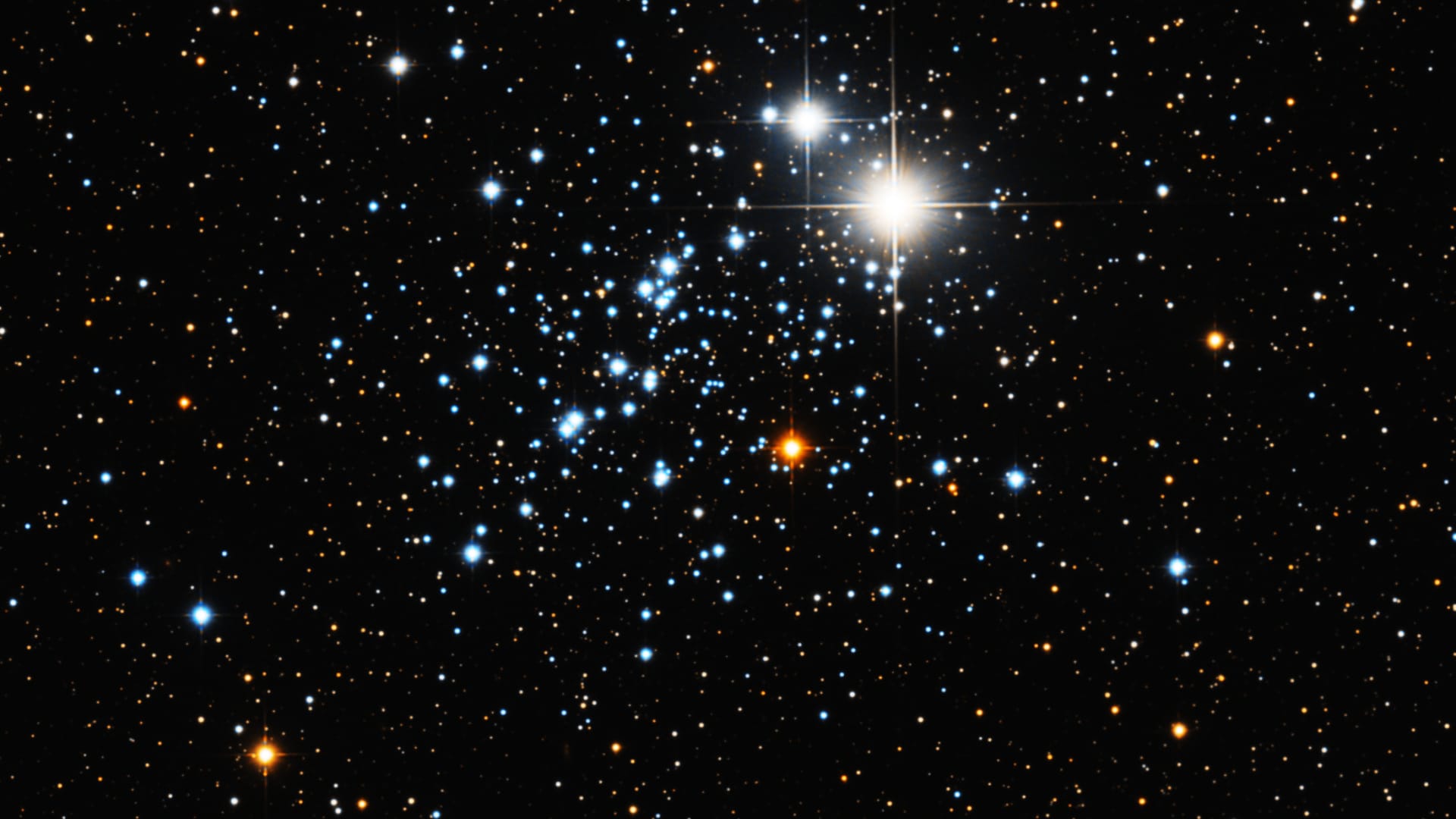
- Alternative names: NGC 457, E.T. Cluster, Caldwell 13
- Apparent size: about 15′ (0.5 × Moon)
- Apparent magnitude: 6.4
- Constellation: Cassiopeia
- Best viewed from: Northern Hemisphere
The Owl Cluster (NGC 457) is a stunning open star cluster in Cassiopeia. Its brightest stars form a distinctive pattern that observers often interpret as an owl with two bright eyes and outstretched wings.
Tips for Observing and Astrophotography
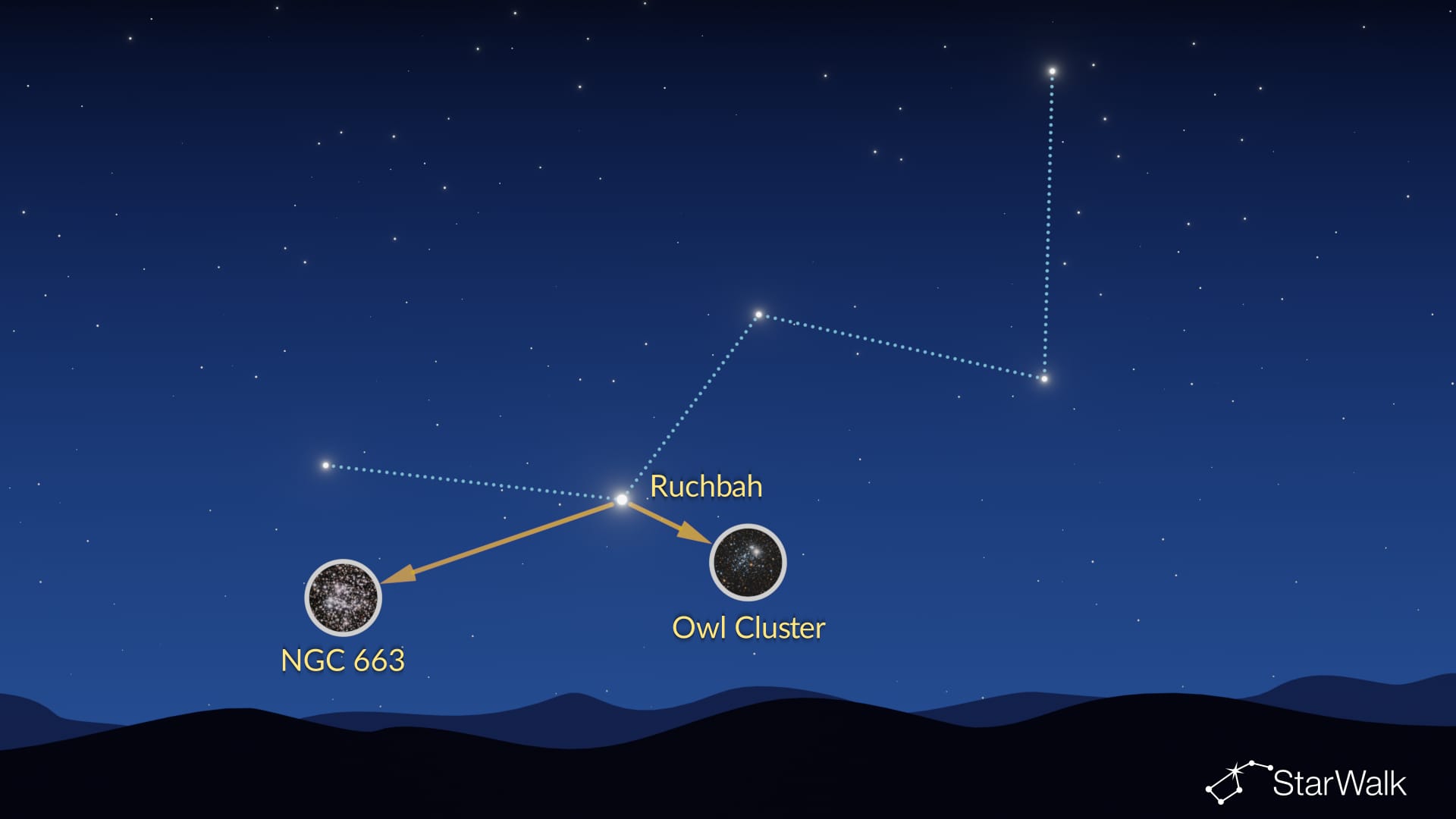
NGC 457 is an easy target for a small telescope. Even small binoculars reveal it as a dense group of stars. Low-to-medium magnification works best because it keeps the entire owl-shaped pattern in the field of view.
For astrophotography, use a small telescope or medium focal length to give the cluster enough scale while keeping its full shape in the frame. No special filters are needed; short-to-moderate exposures will preserve the bright “eyes” and reveal the fainter stars forming the body and wings.
NGC 663
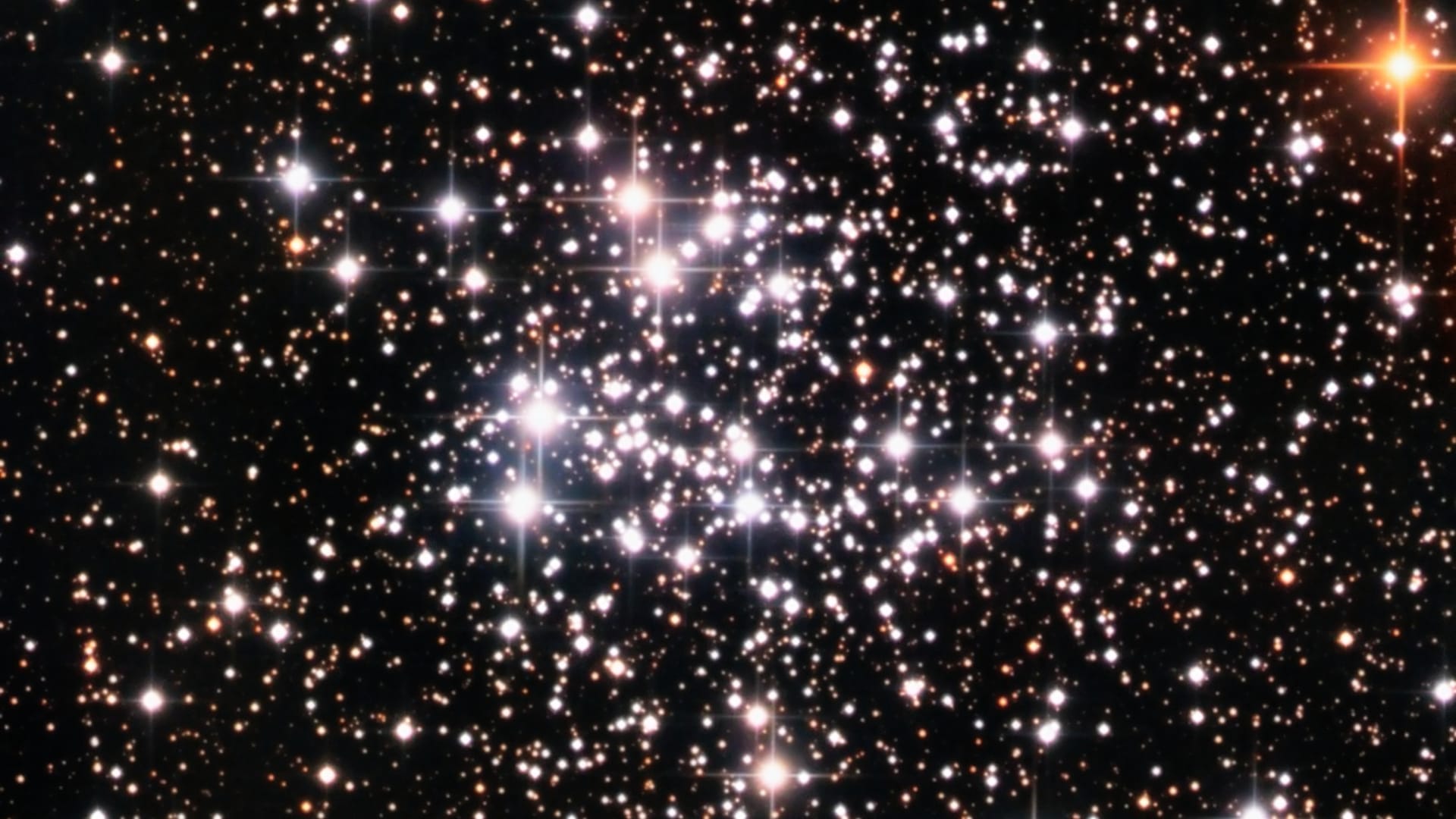
- Alternative names: Caldwell 10
- Apparent size: about 16′ (0.5 × Moon)
- Apparent magnitude: 7.1
- Constellation: Cassiopeia
- Best viewed from: Northern Hemisphere
NGC 663 is a young open star cluster in Cassiopeia. It contains hundreds of stars and lies in one of the richest cluster fields of the autumn Milky Way.
Tips for Observing and Astrophotography
Binoculars show NGC 663 as a small, bright patch of stars. A small telescope reveals many more individual stars, and low to medium magnification works best for viewing the whole cluster.
For astrophotography, use a small refractor or a medium focal length to fit the cluster comfortably in the frame. No special filters are needed. Keep the stars sharply focused, and use moderate exposures to reveal fainter members without overexposing the brightest stars.
Deep-Sky Objects: Frequently Asked Questions
What Is a Deep-Sky Object?
Deep-sky objects (DSOs) are astronomical objects beyond our Solar System that are not individual stars or planets. They include galaxies, nebulae, and star clusters — all fascinating targets for observers and astrophotographers.
What Is a Nebula?
A nebula is a vast cloud of gas and dust in space. Some nebulae are stellar nurseries where stars are born, while others are remnants of dying stars. Many glow in vibrant colors when photographed through telescopes and filters. Check our infographic on stellar evolution to explore the role of nebulae in the life cycle of stars.
What Is a Galaxy?
A galaxy is a massive system of stars, gas, dust, and dark matter bound together by gravity. We are part of the Milky Way Galaxy, and from Earth, we can also see nearby galaxies such as Andromeda and Triangulum under dark skies.
What Is a Star Cluster?
A star cluster is a group of stars formed from the same molecular cloud and bound together by gravity. Open clusters (like the Double Cluster) contain younger, loosely bound stars, while globular clusters (like M2 or M15) are dense, ancient spheres of stars.
Can I See a Deep-Sky Object With the Naked Eye?
Yes! Some of the brightest DSOs, such as the Andromeda Galaxy, the Double Cluster, and the Magellanic Clouds, are visible without any equipment under dark skies (Class 1–5 on the Bortle Scale). To see them best, get as far away from big cities as possible to avoid light pollution. Binoculars or small telescopes reveal even more detail.
How to Find Deep-Sky Objects in the Sky?
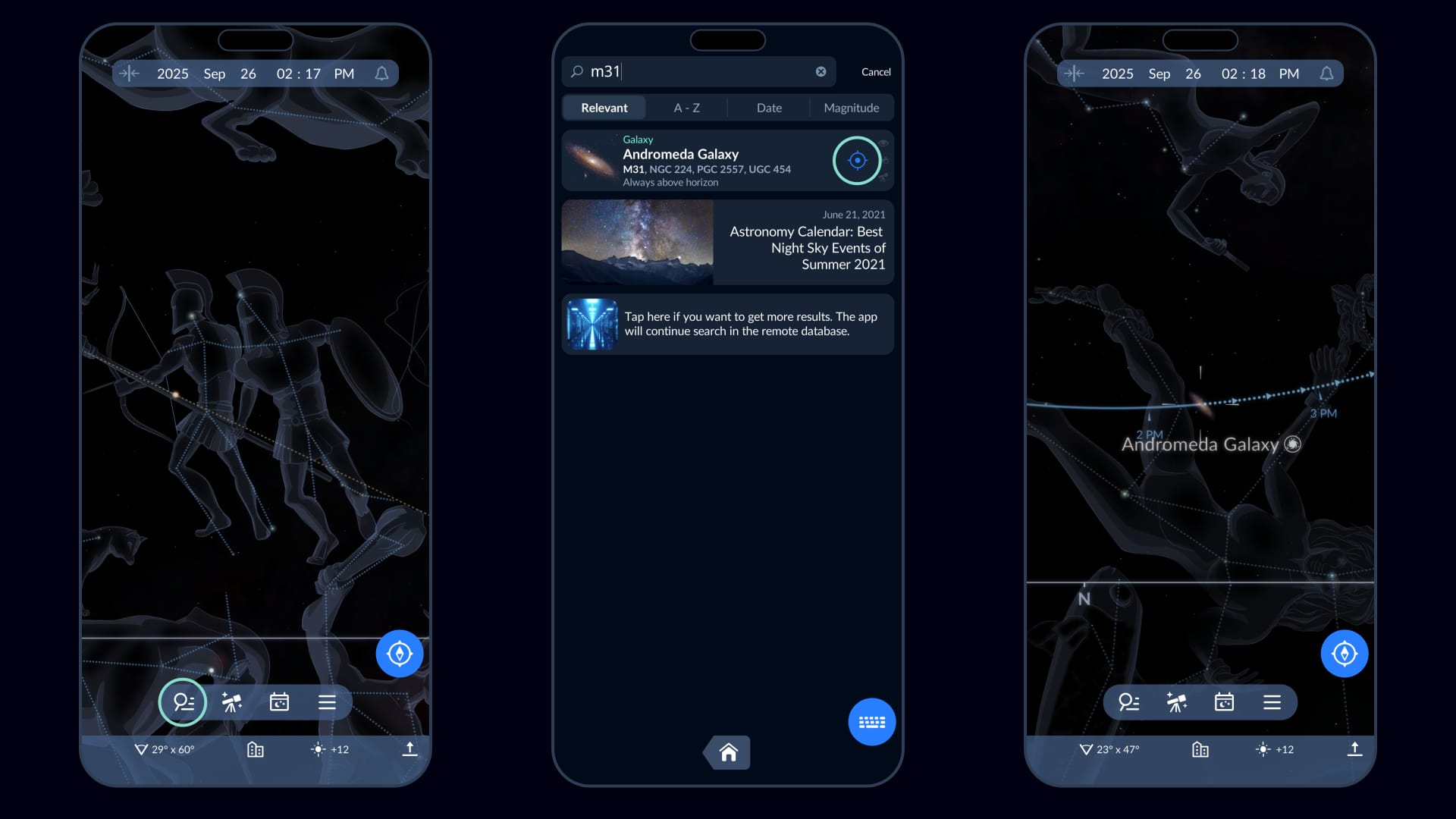
To quickly locate any of the celestial objects listed above, you can use the astronomy app Sky Tonight. It has a database of more than 90,000 deep-sky objects, all available for free! To find the object you’re interested in, tap the magnifier icon on the main screen, enter the object’s name or catalog designation (for instance, “Andromeda Galaxy”, “M31”, or “NGC 224”) in the search field, and tap the blue target icon on the object’s info card. Sky Tonight will immediately show you the object’s location in the sky above you.
October Deep-Sky Objects: Key Facts
In October, multiple deep-sky objects, including colorful nebulae, bright star clusters, and beautiful galaxies, will be favorably positioned for observation and photography. Try to capture as many of them as possible with the help of the Sky Tonight app. If you’re interested in deep-sky objects, make sure to take our “Guess the Nebula!” quiz; it will amaze you!
Best Astrophotography Targets by Month: Year-Ahead Calendar
Deep-sky wonders aren’t limited to October. Discover what the universe has to offer each month with our guides to deep-sky objects: