Geminids 2025: How to See December’s Best Meteor Shower
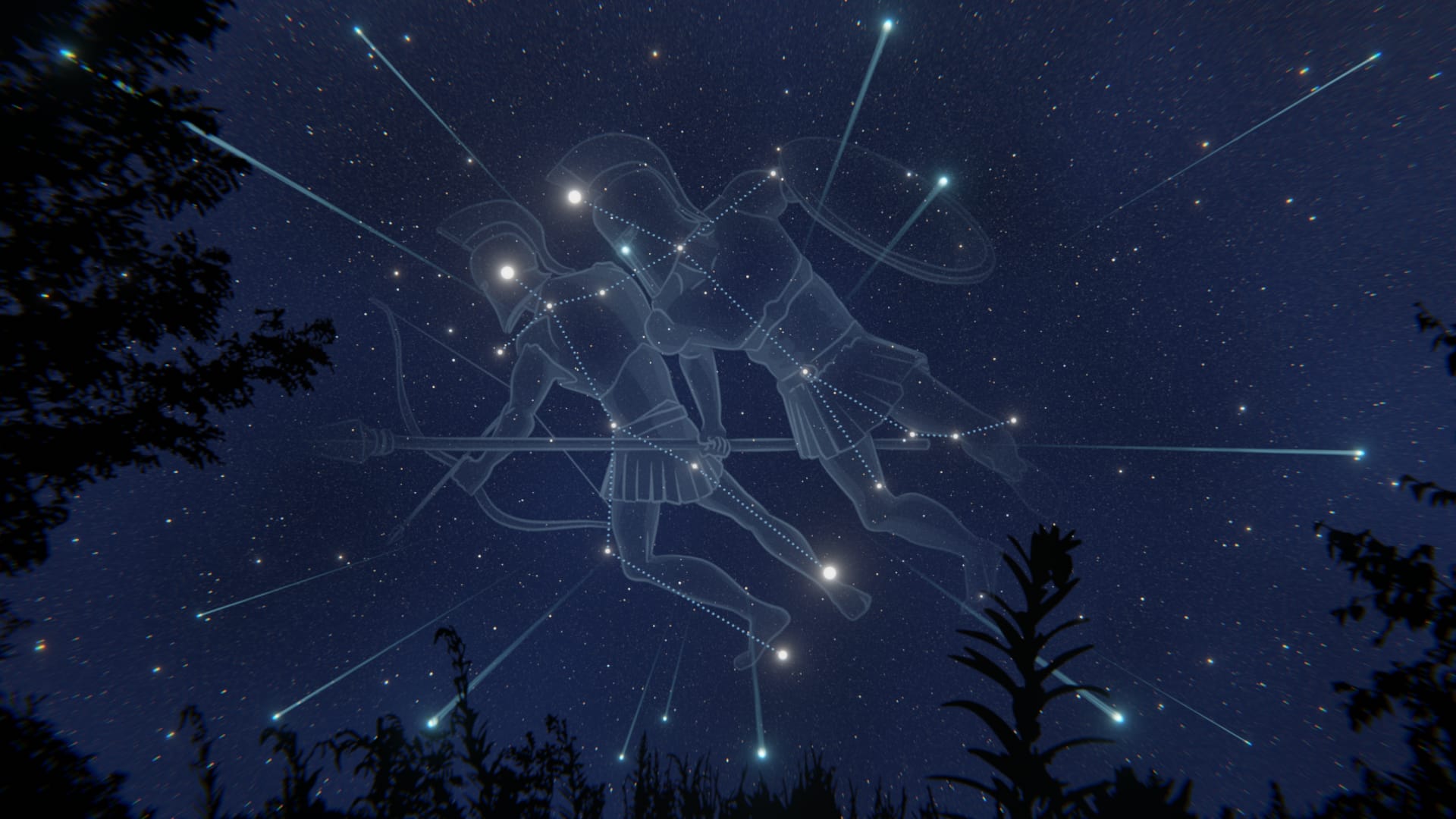
Mid-December brings the Geminids — one of the most prolific and reliable meteor showers of the year. In 2025, they peak on December 13–14 under favorable observing conditions. Set a reminder in the stargazing app Sky Tonight so you don’t miss this sky show. Below, you’ll find key dates, visibility details for both hemispheres, and practical tips to help you catch more meteors.
Contents
- Geminids 2025: When and where to see
- What is the Geminid meteor shower?
- The Geminids 2025: Conclusion
Geminids 2025: When and where to see
- Active: December 4–17
- Peak of activity: December 13–14
- Meteors/hour: up to 150
- Moon illumination: 27%
- Radiant location: Gemini
- Parent body: Asteroid 3200 Phaethon
- Best visible from: Northern Hemisphere
- Description: The Geminids are one of the year’s most anticipated meteor showers, known for bright, often multicolored meteors. Their maximum is broad, so viewers usually get many hours of high meteor activity.
Geminids 2025: Visibility forecast
In 2025, the Geminids peak under a waning crescent Moon, so the sky will be fairly dark and moonlight won’t be a major obstacle. Expect a long, strong maximum: rates of more than 100 meteors per hour can last 10–12 hours.
When and where to watch the Geminids in 2025?
The Geminids’ broad peak will last from about 15:00 GMT on December 13 until about 12:00 GMT on December 14. The maximum number of meteors is expected around 08:00 GMT on December 14. Because this shower has a peak that lasts several hours, you don’t need to catch a single moment.
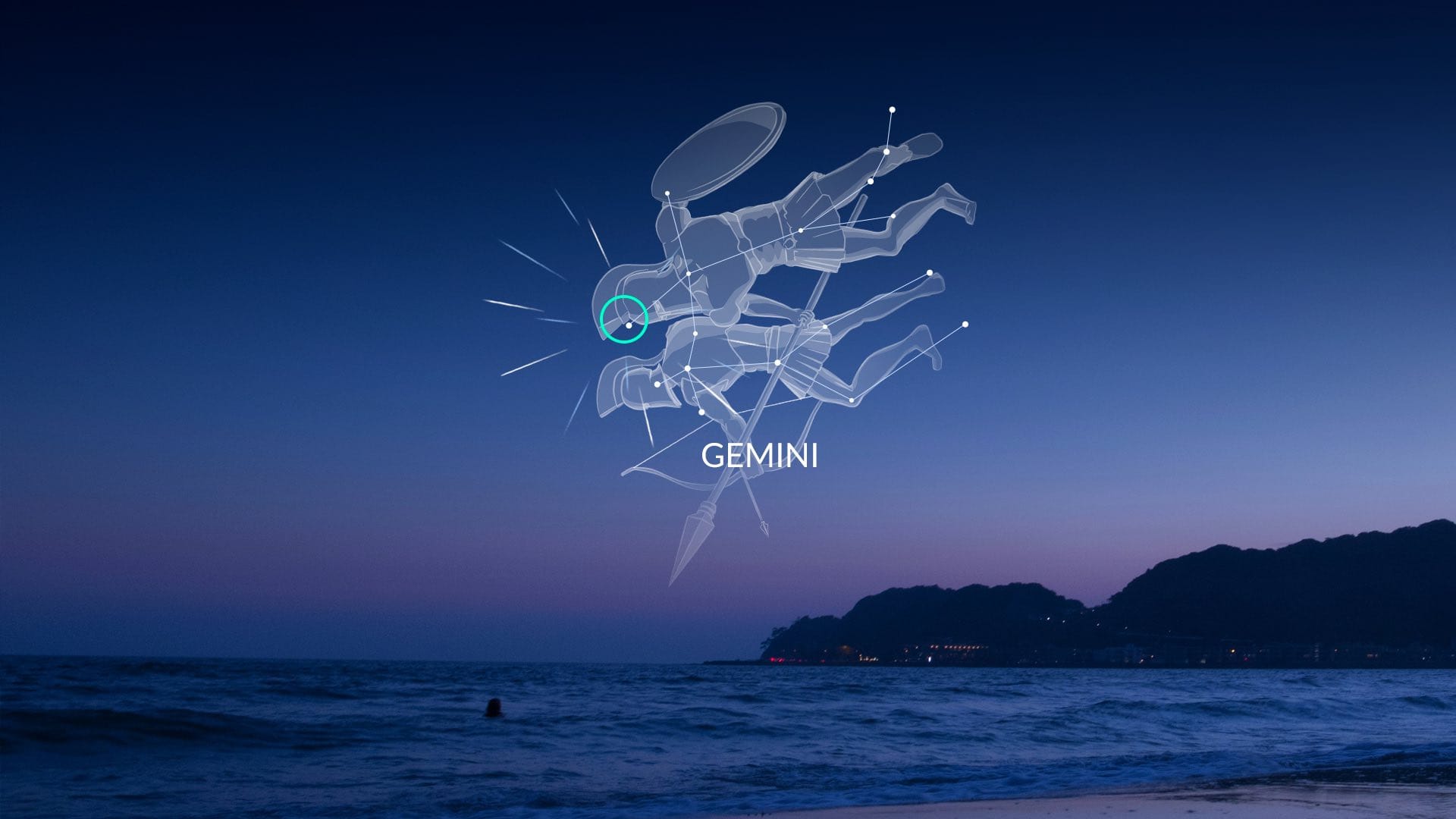
In the Northern Hemisphere, the radiant in Gemini rises around sunset, so you can begin watching in the evening of December 13. Activity builds through the night and is usually strongest near 2 a.m. local time, when the radiant is highest.
In the Southern Hemisphere, the radiant appears only around local midnight, so the best observing period is from midnight into the pre-dawn hours of December 14, with activity also peaking around 2 a.m. local time.
Where is the Geminid meteor shower visible?
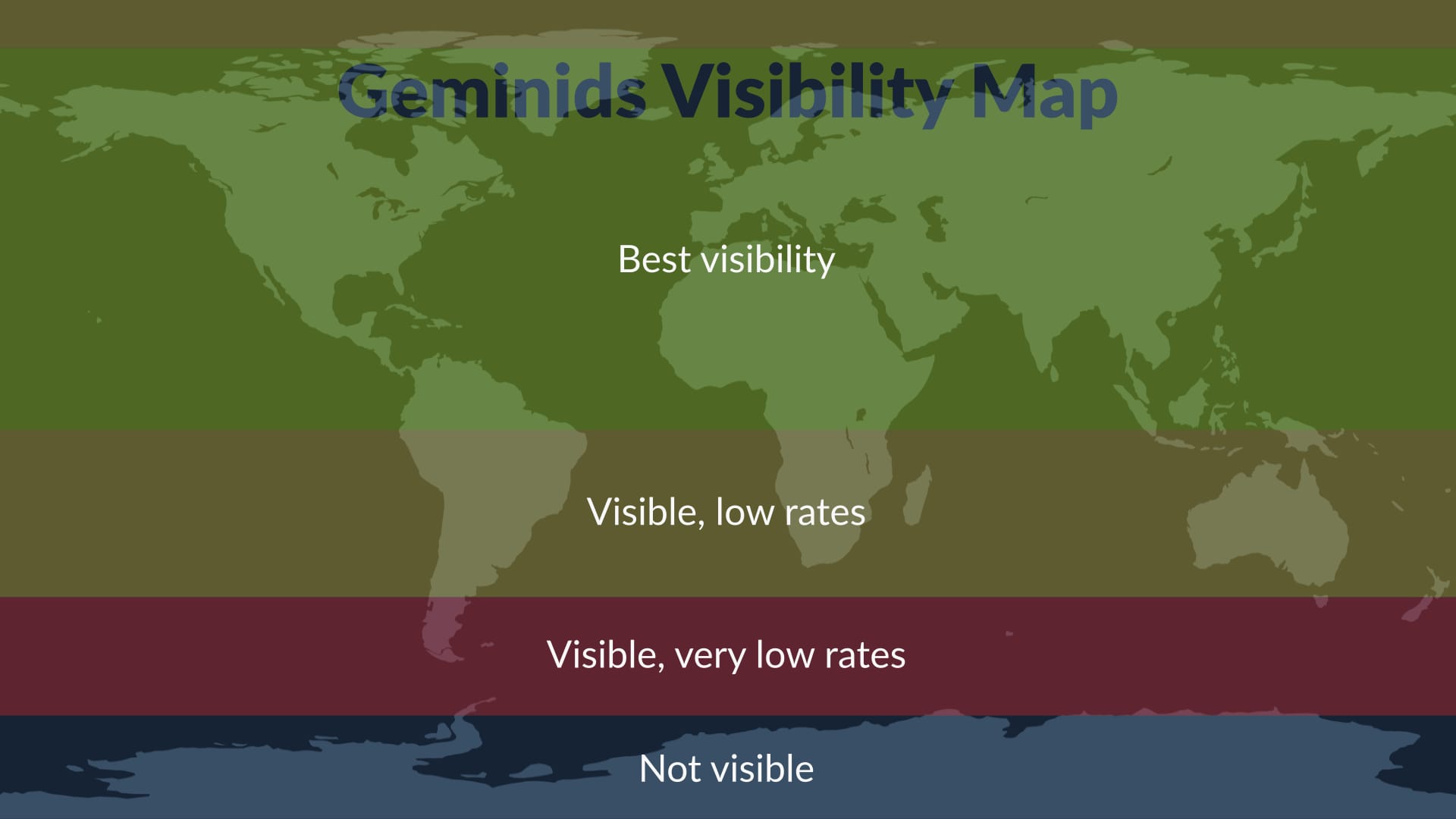
Under conditions of dark, clear skies, the Geminids are visible from almost anywhere on the Earth, but observers in the Northern Hemisphere will have a better view. Those who watch the meteor shower from the Southern Hemisphere will witness fewer Geminids since the radiant point doesn’t climb very high there.
Tips for observing the Geminids
-
First off, find a place away from the city lights. This is the main rule that helps you catch more meteors. Remember that you don’t need any special equipment unless it’s a thermos with hot coffee or tea and a blanket to keep you warm. As soon as your eyes adapt to the darkness, they’ll become your perfect observational tool.
-
Check the weather forecast and the Moon phase. In 2025, during the Geminids’ peak, the Moon will be in the waning crescent phase and won’t hinder your observations.
-
Learn when the meteor shower’s radiant is highest in the sky. It’s the best time to observe the meteor shower. You can find it out in the Sky Tonight app. Type “Geminids” in the search bar, tap on the matching result, and go to the “Events” tab. You’ll see the “Visible Passes” section – the time in the middle indicates when the radiant is highest in the sky.
-
Let your eyes adjust to the dark. The astronomy app Sky Tonight has a night mode — the soft red theme will help you preserve night vision when stargazing.
We've prepared a comprehensive guide to observing meteor showers for you. Read it and then test your knowledge of shooting stars with our fun quiz.
What is the Geminid meteor shower?
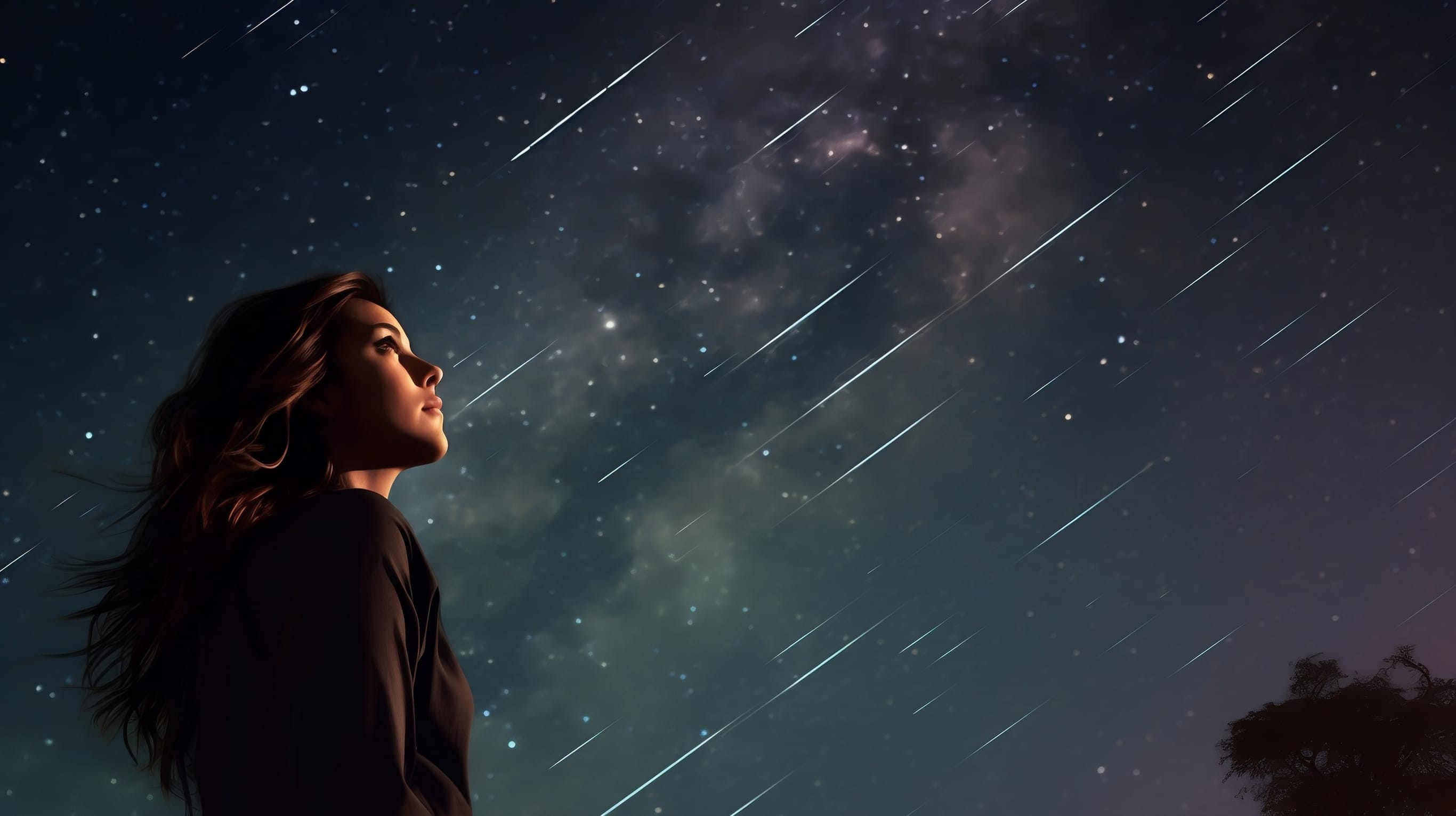
The Geminid meteor shower is one of the last major meteor showers of the year and one of the most prolific ones. The meteor shower is active from December 4 to December 20 and reaches its peak on December 13-14. The Geminid meteors are very bright, sometimes leave brief trains, and have a wide variety of colors: mostly white, some yellow, and a few red, blue, and green. One of the reasons for this multicolored appearance is that meteoroids of this stream contain traces of metals like sodium and calcium. The very same effect is used to make fireworks colorful.
This meteor shower is one of a kind due to its multicolored appearance and because it’s the only major meteor shower that doesn’t originate from a comet. The Geminids are debris left by asteroid 3200 Phaethon. This asteroid is a large space rock about 6 km in diameter, named after the Greek myth of Phaethon, son of the Sun god Helios. 3200 Phaethon’s orbit is highly elongated, reminiscent of some comets. Phaethon completes an orbit every 1.4 years and leaves behind a trail of debris. However, it doesn’t have a tail of dust or gas typical for comets — this is why it’s not considered a comet.
Note that not all the meteors you’ll see on the night of December 13-14 are members of the Geminid stream. Some of them can be random sporadic meteors, others belong to much weaker meteor showers such as Monocerotids, Comae Berenicids, etc. You can read more about the other December meteor showers in our dedicated article.
The Geminids 2025: Conclusion
The Geminids are the last prolific meteor shower of the year. They can produce up to 150 meteors per hour during their peak night of December 13-14. This year is favorable for observing the Geminids, as the waning Moon won’t interfere with observations much. Find out the best time to observe the meteor shower in your location with the stargazing app Sky Tonight and check out our infographic to get prepared for the meteor hunt.